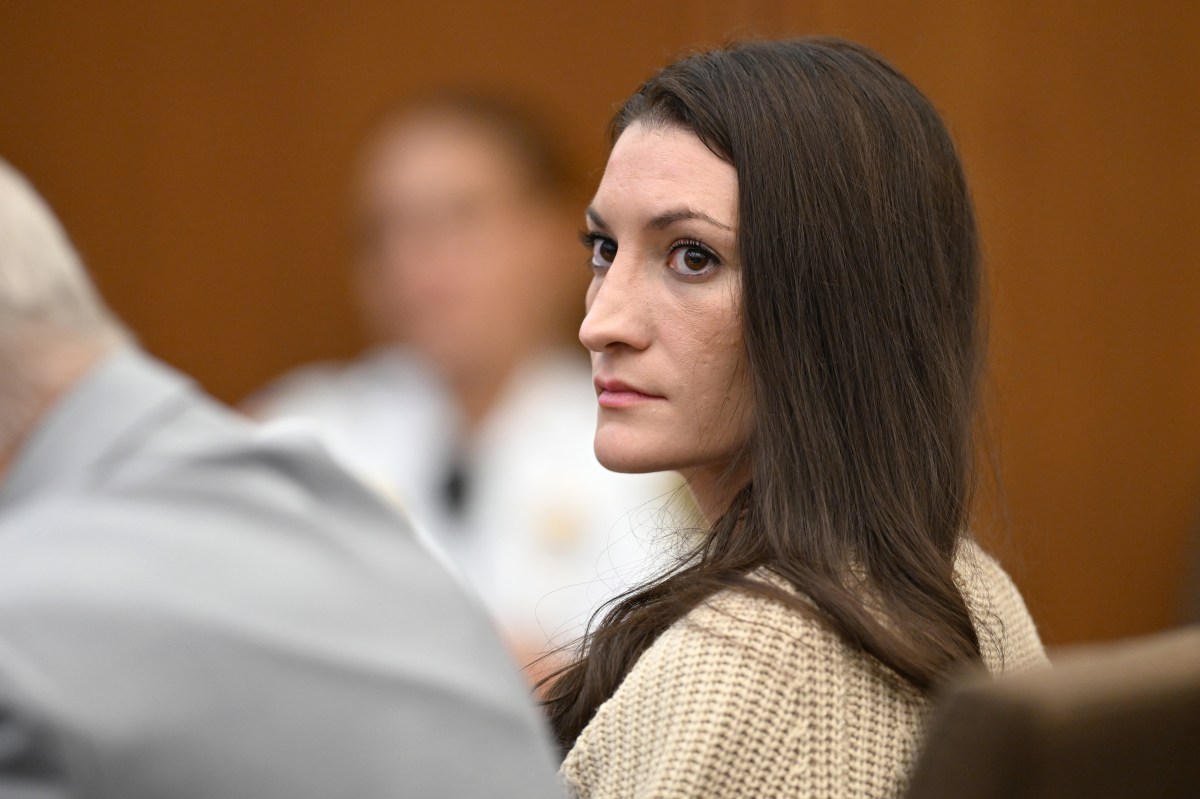
Erin Patterson was convicted of killing three people by serving them poisonous mushrooms at a lunch in Australia’s Gippsland region. Her lawyers are now asking for a new trial because the jury stayed in the same hotel as prosecution staff and a key police witness, which they say could have affected the fairness of the trial.
Key Facts
Erin Patterson was convicted for the deaths of three people and injury to another in July 2023.
The murders involved poisonous mushrooms served at a lunch in Gippsland, Australia.
The jury was supposed to be kept isolated during deliberations to avoid outside influence.
Due to a large table tennis tournament, hotel rooms were scarce, and the jury stayed at the same hotel as prosecution lawyers and a lead detective.
The jury had exclusive use of a hotel floor and ate separately, but shared common areas with prosecution staff.
There was no reported direct contact between the jury and prosecution members, according to the jury custodian.
Patterson’s legal team argues this arrangement "fatally undermined" the trial's fairness and is seeking a re-trial.
The trial judge had ordered jury sequestration to prevent contamination from the intense public and media attention.
Read the Original
Want the full story? Tap a source to open the original
article.
Federal agents arrested 11 foreign cruise ship workers in Boston for allegedly possessing and sharing child sexual abuse material. The arrests happened during an operation involving searches of two cruise ships and resulted in the workers being processed for removal from the U.S.
Key Facts
The arrests took place between August 14 and 16 during "Operation Tidal Wave."
Agents boarded two cruise ships: Volendam (Holland America Line) and Norwegian Breakaway.
Nine workers arrested are from the Philippines, one from Indonesia, and one from Nicaragua.
Authorities searched the workers’ living areas and electronic devices for evidence.
The workers were processed under a U.S. immigration law related to crimes involving moral wrongdoing.
All 11 individuals are scheduled to leave the United States with help from the shipping agent.
Previous actions in 2024 by the same operation arrested 41 crew members from nine other ships.
Both cruise lines said they are cooperating with law enforcement and have taken action against those involved.
Read the Original
Want the full story? Tap a source to open the original
article.
Blerim Skoro, a man born in Kosovo who says he worked with the CIA against terrorist groups, was detained by U.S. Immigration and Customs Enforcement (ICE) in New Jersey while renewing his immigration papers. He previously helped U.S. authorities by providing information about drug traffickers and terrorists but now faces deportation amid ongoing immigration enforcement actions.
Key Facts
Blerim Skoro is 55 years old and was born in Kosovo (formerly part of Yugoslavia).
He was arrested by ICE on August 3 in Newark, New Jersey, while attending an immigration appointment.
Skoro says he worked with the CIA and other U.S. agencies to fight al-Qaeda, ISIS, and drug trafficking.
In 2000, he was convicted of drug-related crimes but cooperated with the government, assisting in arrests of traffickers.
He was sentenced to seven years in prison and started working with the FBI and CIA after the 9/11 attacks while in prison.
Skoro claims he was promised U.S. residency for his help but was deported to Kosovo in 2007.
He now lives in Staten Island with his American wife and three children and works as a cab driver.
His lawyers argue that immigration law protections should prevent his deportation, but ICE says legal immigration issues are the reason for his detention.
President Donald Trump’s administration has increased immigration enforcement and deportations, affecting many with various legal statuses.
Read the Original
Want the full story? Tap a source to open the original
article.
Research from the University of Pennsylvania shows that couples where the woman earns more money have a higher chance of breaking up. This suggests that changes in money roles and ongoing household issues are linked to increasing divorce rates.
Key Facts
The study is from the University of Pennsylvania.
Couples with women earning more are more likely to separate.
Economic roles in families are shifting.
Domestic imbalances are still common in many homes.
These factors seem to raise the rate of divorce.
The research connects money dynamics to relationship stability.
Read the Original
Want the full story? Tap a source to open the original
article.
President Donald Trump has asked a federal court to reject a BBC request to subpoena his children Ivanka Trump, Donald Trump Jr., and son-in-law Jared Kushner. This move is part of a $10 billion lawsuit Trump filed against the BBC over a documentary that he says unfairly edited his January 6, 2021, speech.
Key Facts
President Trump sued the BBC for $10 billion claiming defamation over a Panorama documentary episode.
The documentary showed edited parts of Trump’s January 6, 2021, speech, which Trump says changed its meaning.
The BBC removed the episode and apologized for the editing mistake.
The lawsuit is currently in a federal court in southern Florida.
The BBC wants testimony from Ivanka Trump, Donald Trump Jr., and Jared Kushner, who were close to the events of January 6.
The BBC argues the family members’ testimony is important to show if Trump incited violence at the Capitol on January 6.
Secret Service protection has made it difficult for the BBC to serve subpoenas to the family.
Trump’s legal team calls the BBC’s attempt to subpoena his family a “politically charged discovery campaign” and beyond the case’s scope.
Read the Original
Want the full story? Tap a source to open the original
article.
Nancy Kassebaum Baker, a former U.S. senator from Kansas and the first woman elected to the Senate without following a spouse, died at age 94. She served three terms from 1978 to 1997 and was known for her moderate Republican views and ability to work across party lines.
Key Facts
Nancy Kassebaum Baker died on a Friday at age 94, confirmed by her son Bill Kassebaum.
She was the first woman elected to the U.S. Senate without succeeding a husband.
Kassebaum Baker served three Senate terms from 1978 until her retirement in 1997.
She was known for being an independent, moderate Republican who sometimes voted against her party.
She married former Senator Howard Baker in 1996; he passed away in 2014.
She co-sponsored a 1996 health insurance law with Senator Ted Kennedy.
Before the Senate, she worked in radio, served on a local school board, and was on a Kansas senator’s staff.
Kassebaum Baker held a political science degree from the University of Kansas and a master’s in diplomatic history from the University of Michigan.
Read the Original
Want the full story? Tap a source to open the original
article.
President Donald Trump is threatening to sue the Center for American Progress, a nonprofit think tank, because it published a report saying his use of the National Guard in some cities did not reduce crime. The think tank refused to retract the report, which said the crime drop was already happening before the deployments.
Key Facts
President Trump sent a letter threatening a $5 billion lawsuit to the Center for American Progress.
The center's report argued that National Guard deployments did not lower violent crime rates as Trump claimed.
The report was published on July 13 and based on crime data analysis.
The Center for American Progress is a left-leaning nonprofit based in Washington, D.C.
The center’s president, Neera Tanden, said the lawsuit aims to silence their research.
The report stated the decline in violent crime was already in progress before the National Guard involvement.
The center refused to retract the report by the given deadline.
Read the Original
Want the full story? Tap a source to open the original
article.
President Donald Trump responded strongly to GOP members who criticized his decision to remove some tariffs on imported ground beef. He was upset about a meeting between conservative podcaster Tucker Carlson and two Republican Congress members, Rep. Thomas Massie and Rep. Marjorie Taylor Greene, who disagreed with his policy.
Key Facts
President Trump decided to lift certain tariffs on imported ground beef.
Some Republicans, including Rep. Thomas Massie and Rep. Marjorie Taylor Greene, opposed this decision.
Conservative podcaster Tucker Carlson met with Massie and Greene.
President Trump expressed anger over this meeting.
The criticism came from within the GOP, the president’s own party.
The issue centers on trade policy related to tariffs, which are taxes on imports.
The conflict highlights divisions among Republicans about trade and economic policies.
The president is defending his administration’s approach to tariffs amid party disagreements.
Read the Original
Want the full story? Tap a source to open the original
article.
The trial of Massachusetts mother Lindsay Clancy, accused of killing her three children, is nearing its end. During the trial, private notes and app entries revealing her struggles with postpartum mental health were shared, leading many women to relate and discuss their own postpartum experiences.
Key Facts
Lindsay Clancy is on trial for the deaths of her three children in January 2023.
Her private notes and phone app entries showed feelings of depression, anxiety, guilt, and hopelessness.
Many women on social media said they recognized their own postpartum challenges in Clancy’s writings.
Mental health experts say postpartum conditions vary from normal adjustments to postpartum depression and the rare postpartum psychosis, which requires urgent treatment.
Hundreds of women gathered outside the courthouse wearing supportive messages for Clancy.
The public and advocates hope the case raises awareness about postpartum mental health issues.
Testimony included Clancy’s fears about her parenting and her severe mental health symptoms before the deaths.
Read the Original
Want the full story? Tap a source to open the original
article.
TikTok has agreed to pay $400 million to settle a 2024 lawsuit from the U.S. Department of Justice. The lawsuit claimed TikTok broke laws protecting children’s privacy by collecting information from kids under 13 without proper parental consent.
Key Facts
TikTok will pay $300 million now and $100 million later after an order clears a previous consent agreement related to Musical.ly.
The lawsuit accused TikTok and its parent company ByteDance of not getting permission before collecting data from children under 13.
TikTok allegedly did not delete accounts even when it knew they belonged to kids under 13.
TikTok restructured ownership in the U.S. by forming a joint venture with Oracle, Silver Lake, and MGX in January 2024.
The Department of Justice said protecting children online is its priority and called the settlement a major win for families.
Other companies like Meta are also facing legal actions over children’s online privacy under the same federal law called COPPA.
The settlement ends this lawsuit but social media companies continue to face scrutiny over kid’s safety and privacy online.
Read the Original
Want the full story? Tap a source to open the original
article.
The U.S. Department of State released its September 2026 Visa Bulletin, which shows when people applying for family-based and employment-based green cards can proceed with their cases. Some employment-based categories, especially for applicants from India, may face delays or temporary unavailability before the end of the fiscal year due to high demand and visa limits.
Key Facts
The September 2026 Visa Bulletin sets dates for when green card applicants can move forward.
The fiscal year 2026 ends in September, and some visa categories may reach their annual limits soon.
Family-sponsored categories like F2A (spouses and children of permanent residents) have favorable dates, with some countries facing older cutoffs.
Employment-based categories EB-1, EB-2, and unreserved EB-5 are under pressure, especially for applicants from India and China.
EB-1 India applicants might see their category become unavailable before September 30.
The Dates for Filing chart allows early document submission if enough visas are available; otherwise, the Final Action Dates chart applies.
USCIS had not announced which chart it will use for September as of late August.
The State Department may adjust final-action dates or categories if visa use reaches limits before the fiscal year ends.
Read the Original
Want the full story? Tap a source to open the original
article.
The article argues that pregnant women in California should receive personalized medical care. It suggests that following the principles in the U.S. Constitution, care should be tailored to each individual rather than applying a one-size-fits-all approach.
Key Facts
The article focuses on care for pregnant women in California.
It calls for individual treatment plans for expectant mothers.
The argument is based on principles from the U.S. Constitution.
It opposes discrimination in medical care for pregnant women.
The overall message is that personalized care leads to better health outcomes.
Read the Original
Want the full story? Tap a source to open the original
article.
The article discusses baby names that are popular in only one U.S. state each. It shows how some names are common in specific areas but not nationwide, highlighting trends within states.
Key Facts
Some baby names are very popular in only one U.S. state.
These names are not widely used in other states.
The data reveals unique naming habits across different states.
The article aims to show how baby name popularity varies locally.
This can help parents looking for unique or regionally popular names.
Read the Original
Want the full story? Tap a source to open the original
article.
Erik Slavin, editor-in-chief of the US military newspaper Stars and Stripes, and two other staff members were fired by the Department of Defense for insubordination. The firings followed comments about media censorship and come amid tensions between the Pentagon and the press during President Donald Trump’s administration.
Key Facts
Erik Slavin was dismissed as editor-in-chief of Stars and Stripes after 21 years with the paper.
The Department of Defense cited "insubordination" as the reason for firing Slavin, reporter Lara Korte, and publisher Max Lederer.
Slavin had said in an interview that censorship would be a "red line" in a hypothetical situation.
Stars and Stripes, partly funded by the Pentagon, operates with editorial independence under a law and DoD rules.
The Pentagon has not held a press conference since May, raising concerns about transparency.
Publisher Max Lederer retired, citing fundamental differences with the Pentagon on the newspaper’s mission.
The firings happened during a period of friction between the Trump administration and US media over press access and coverage.
The National Press Club president called for reversing Slavin's firing, calling it an attempt to control military news coverage.
Read the Original
Want the full story? Tap a source to open the original
article.
Police in Worcester, Massachusetts, issued an arrest warrant for Karen Solomon after the death of her husband, longtime police officer Kurt Solomon. Karen Solomon has been missing since shortly after police found Kurt Solomon fatally injured in their home.
Key Facts
Karen Solomon is wanted on charges of assault and battery with a dangerous weapon.
Kurt Solomon was a Worcester police officer with 31 years of service.
Kurt Solomon died from injuries caused by a sharp object.
Karen Solomon was last seen on a doorbell camera wearing casual clothes early the morning police responded.
Authorities continue to search public areas near Coes Pond using dive teams and police dogs.
Karen Solomon is known for her work supporting mental health for first responders and co-founded an advocacy group called First H.E.L.P.
Kurt and Karen Solomon were married and lived together.
Police did not share details about their relationship due to domestic violence privacy laws.
Read the Original
Want the full story? Tap a source to open the original
article.
Federal prosecutors have used passages from a novel written by former FBI director James Comey in a legal case accusing him of threatening President Donald Trump. A free speech group criticized this move, saying it threatens constitutional free expression, while Comey’s lawyers argue the social media post at issue was not a true threat.
Key Facts
Prosecutors accuse Comey of threatening President Trump through a social media post showing seashells arranged to read "8647."
They argue the number "86" means "get rid of," and Trump is the 47th president, implying a threat.
Prosecutors also cited Comey’s novel, where a prosecutor targets a far-right media figure, to support their case.
Comey’s legal team says the post is protected free speech and not a real threat.
PEN America, a free-expression group, criticized the use of Comey’s novel in the prosecution.
Comey denied making any threats and said he opposes violence, removing the post after complaints.
The case is part of a long-standing conflict between Comey and President Trump involving past investigations.
Comey’s lawyers claim the prosecution is biased and not based on sound legal grounds.
Read the Original
Want the full story? Tap a source to open the original
article.
President Donald Trump has asked a federal judge to deny the BBC's request to get testimony and documents from three of his family members in his $10 billion defamation lawsuit against the broadcaster. The case involves accusations that the BBC edited his January 6, 2021 speech in a misleading way, and the judge has not yet made a decision on the BBC's request.
Key Facts
President Trump filed a $10 billion defamation lawsuit against the BBC.
The lawsuit claims the BBC edited his January 6, 2021 speech to misrepresent what he said.
The BBC wants testimony and documents from Ivanka Trump, Jared Kushner, and Donald Trump Jr.
President Trump’s lawyers argue the BBC’s requests are politically motivated and too broad.
The BBC has apologized for the misleading edit but denies defamation.
A federal judge in Miami, Jeffrey Kuntz, who was nominated by President Trump, is handling the case.
The previous judge set a trial date for February, but the case was recently reassigned.
The BBC tried to serve subpoenas in person but faced obstacles from Secret Service agents.
Read the Original
Want the full story? Tap a source to open the original
article.
As the 2026 US midterm elections get closer, groups that support Israel are spending millions of dollars on campaigns. These pro-Israel organizations, like AIPAC, use their money to influence races, especially those involving candidates who question US support for Israel.
Key Facts
The 2026 US midterms are upcoming elections for members of Congress.
Pro-Israel groups such as AIPAC are active in US politics.
These groups spend large amounts of money to support candidates aligned with their views.
Candidates challenging US support for Israel often face heavy spending against them.
Financial power from these groups can affect election outcomes.
The influence of pro-Israel lobbying is noticeable in recent US elections.
Campaign funding is a key way political groups shape elections.
Read the Original
Want the full story? Tap a source to open the original
article.
Conservative party leader Kemi Badenoch criticized members who left the party to join Nigel Farage’s Reform UK, calling them dishonest and ruling out cooperation or coalition deals with Reform. She said she would prefer another election over working with Reform or allowing defectors who left during difficult times to return.
Key Facts
Kemi Badenoch, leader of the Conservative party, spoke against defectors who joined Reform UK.
She described these defectors as some of the most dishonest people she has met.
Badenoch ruled out forming any coalitions or deals with Reform UK.
Some defectors include former Conservative MPs like Suella Braverman and Robert Jenrick.
Jenrick left the Conservatives and criticized the party after being removed by Badenoch.
Badenoch refused to allow “drama queens” or defectors back into the Conservative party.
According to an Ipsos poll, Labour leads with 28%, Reform UK has 25%, and Conservatives are at 18%.
Badenoch said it would be better to have another election than work with Reform or have a coalition involving them.
Read the Original
Want the full story? Tap a source to open the original
article.
Starting in December 2028, thousands of male sex offenders in England and Wales could be offered drugs that lower their sex drive to help reduce reoffending. The treatment will be voluntary and is part of a pilot program expanding to more prisons, with experts cautioning against making the treatment mandatory due to trust and practical concerns.
Key Facts
About 3,750 male sex offenders in prison (one in four) might be eligible for libido-suppressing drugs.
The pilot program on these drugs will increase from 10 to 20 prisons and expand to additional NHS regions by November.
The medication includes SSRIs like sertraline, which reduce obsessive sexual thoughts, and anti-androgens, which lower testosterone and sex drive.
The program targets prisoners with strong, persistent sexual urges or intrusive sexual thoughts.
Officials may launch the program across England and Wales by December 2028 if pilot results are positive.
The treatment is voluntary and includes clinical and psychological support alongside medication.
Experts warn mandatory treatment could harm trust between prisoners and officials, and it has not been proven safe or effective on a large scale.
The drugs are not permanent like surgical castration and require continuous use to work.
Read the Original
Want the full story? Tap a source to open the original
article.