Liberia received the first group of about 20 deportees sent from the United States to a "third country," meaning a place where they have no direct connections. Some of these deportees refused to get off the plane when it landed in Liberia.
Key Facts
Liberia welcomed roughly 20 deportees from the U.S. on a plane arrival day.
These deportees are called "third country" deportees because they are sent to a country they are not originally from and have no clear ties to.
Some passengers on the plane refused to leave the aircraft after it landed in Liberia.
The Trump administration arranged agreements with at least 35 countries to accept such deportees.
The deportation program involves moving people to countries other than their home country or the U.S.
Read the Original
Want the full story? Tap a source to open the original
article.
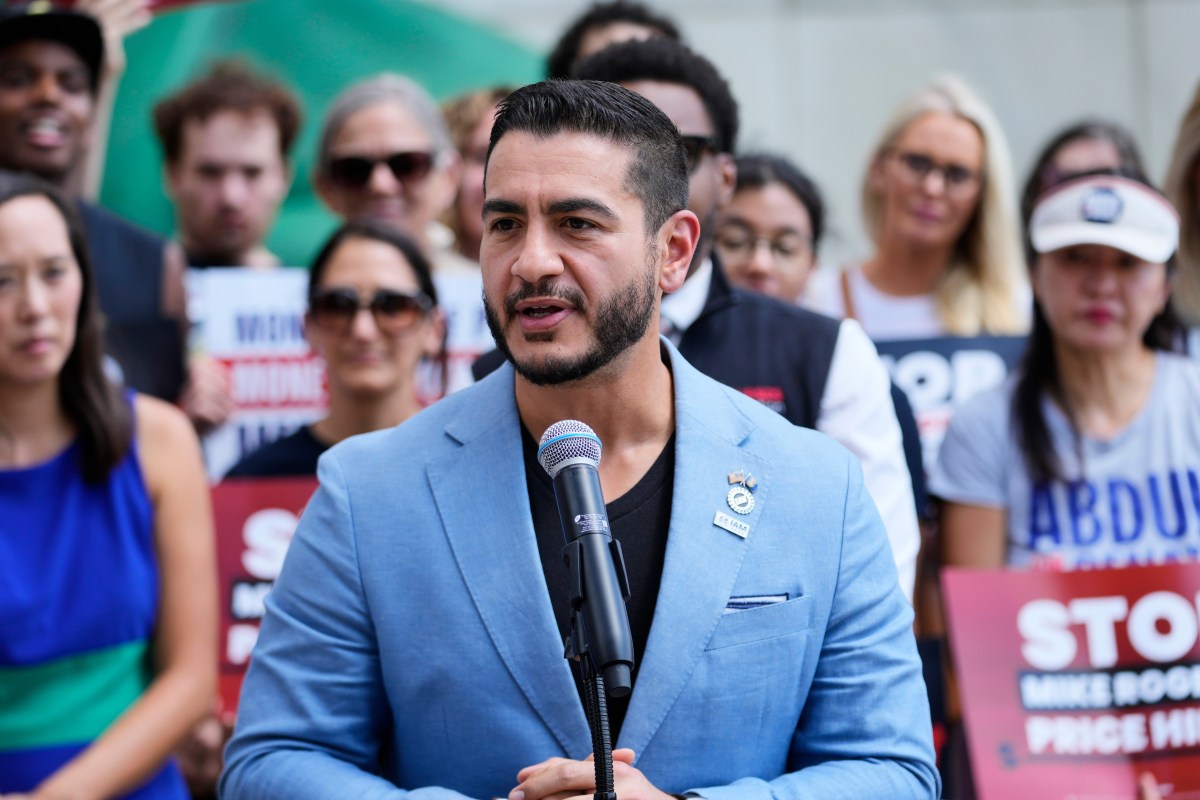
Democratic primary voters have recently chosen several candidates who won against opponents supported by the American Israel Public Affairs Committee (AIPAC). This shift reflects changing opinions within the Democratic Party about U.S. support for Israel and the conflict in Gaza.
Key Facts
Several Democratic candidates won primary races despite heavy financial support for their opponents from AIPAC and related groups.
These wins occurred in states including Michigan, Minnesota, New York, Illinois, and California.
Some progressive Democratic candidates openly criticize the Israeli government’s actions and still secured victories.
AIPAC is a major pro-Israel advocacy group that spends money to support favored candidates through political action committees and super PACs.
Public opinion in the U.S. about Israel has become more divided since the October 7, 2023, Hamas attack on Israel and Israel’s military response in Gaza.
A recent AP-NORC poll shows 58% of Democrats believe the U.S. is too supportive of Israel, up from 45% earlier in 2024.
Support for Palestinians has increased among Democrats, with 62% saying the U.S. does not support Palestinians enough.
Among Jewish Americans surveyed, 32% view Israeli Prime Minister Netanyahu favorably, while 59% hold an unfavorable opinion.
Read the Original
Want the full story? Tap a source to open the original
article.
Powerful storms caused multiple tornadoes and record rainfall across the East Coast and other parts of the United States. These severe weather events led to significant damage in several areas.
Key Facts
The storms produced several tornadoes on the East Coast.
There was record-breaking rainfall in multiple locations.
The severe weather affected a wide region, not just one state.
The storms caused damage and disruption for residents.
Emergency services responded to the tornadoes and flooding.
These events are part of unusual and intense weather patterns recently seen in the U.S.
Read the Original
Want the full story? Tap a source to open the original
article.
Dr. Phillip Resnick, a psychiatrist known for his role in the Andrea Yates case, testified in the trial of Lindsay Clancy. His testimony was part of Clancy’s defense in a child-killing case.
Key Facts
Dr. Phillip Resnick is a psychiatrist who previously helped in the Andrea Yates case in 2001.
Andrea Yates was acquitted in her child-killing case after his testimony.
Dr. Resnick testified on behalf of Lindsay Clancy.
Lindsay Clancy is currently on trial for a child-killing case.
The testimony took place on a Friday.
The case is high profile, meaning it has drawn a lot of public attention.
CBS News reported this information.
Read the Original
Want the full story? Tap a source to open the original
article.
President Donald Trump defended Republican Senator Darline Graham after she said she was “not that informed” about national security during a debate. Trump praised her as honest and smart and said she focuses on issues like grocery prices while relying on experts for security matters.
Key Facts
Senator Darline Graham openly admitted limited knowledge about national security in a recent Republican debate.
Her comment came during a question about U.S. interests in Taiwan and the South China Sea.
Graham faces a runoff election against Representative Ralph Norman in South Carolina on August 25.
President Trump publicly supported Graham, calling her response honest and emphasizing she is surrounded by knowledgeable people.
Trump said Graham focuses on everyday issues such as grocery prices rather than foreign policy.
Graham was appointed to the Senate seat after her brother, Senator Lindsey Graham, passed away.
The White House highlighted Trump’s record on tax cuts, border security, crime, and energy ahead of his visit to South Carolina.
Graham acknowledged critics who say she is not a politician but pointed out that President Trump hadn’t held elected office before becoming president.
Read the Original
Want the full story? Tap a source to open the original
article.
An 8-year-old boy named Fletcher Merkel was killed in a school shooting at Annunciation Catholic Church and School in Minneapolis on August 27, 2025. His parents keep his bedroom as it was to remember him and show what was lost in such tragedies. A Netflix short documentary called "All the Empty Rooms" captures these spaces to raise awareness about the impact of school shootings.
Key Facts
Fletcher Merkel was 8 years old and died in a school shooting in Minneapolis.
The shooting happened at Annunciation Catholic Church and School on August 27, 2025.
Fletcher’s parents keep his bedroom unchanged as a memorial to him.
The room shows his interests, like Legos, the Green Bay Packers, Cub Scouts, and a journal.
Photographer Lou Bopp and a filmmaker created a Netflix short documentary called "All the Empty Rooms" featuring the bedrooms of children who died in school shootings.
The documentary won an Academy Award in March 2026.
The project continues to document these rooms to help others understand the personal loss of gun violence in schools.
Fletcher’s parents hope that seeing his room might make people feel the impact and work to prevent future shootings.
Read the Original
Want the full story? Tap a source to open the original
article.
A year ago, a shooting happened at Annunciation Catholic Church in Minneapolis. Two children died and many people were hurt. The news story shows the bedroom of one of the boys who was killed.
Key Facts
The shooting took place at Annunciation Catholic Church in Minneapolis.
Two children were killed in the shooting.
Many others were injured during the incident.
The article focuses on the bedroom of one boy who died.
This event happened one year before the article was published.
The story is covered by CBS News.
Read the Original
Want the full story? Tap a source to open the original
article.
Nine people were hurt when a ride broke down at the largest state fair in Tennessee. Officials said the ride had passed a safety check just a few days before the accident.
Key Facts
The accident happened at Tennessee’s biggest state fair.
Nine individuals were injured due to a ride malfunction.
The ride had a safety inspection only days before the incident.
State officials confirmed the ride passed this recent inspection.
No further details about the cause of the malfunction were provided.
Emergency services responded to the scene after the accident.
The fair continued its operations with added safety reviews.
Read the Original
Want the full story? Tap a source to open the original
article.
The Pentagon fired the editor-in-chief and a top reporter of the Stars and Stripes, a United States military newspaper, after they spoke out about keeping the paper independent from government influence. The newspaper has faced increasing pressure and changes under President Donald Trump’s administration, which wants the paper to focus more on military topics and less on other kinds of reporting.
Key Facts
Erik Slavin, editor-in-chief of Stars and Stripes, and reporter Lara Korte received termination notices from the Pentagon.
Max Lederer, the longtime publisher, also received a notice but was already planning to retire.
The firings followed the staff speaking publicly to defend editorial independence.
Stars and Stripes is funded by the Pentagon but was intended to report independently on military matters.
The Trump administration has restricted Pentagon press access and sued several media organizations over coverage.
The newspaper recently reported on crew struggles aboard the USS Abraham Lincoln during its long deployment.
Pentagon officials want the paper to focus exclusively on military content like weapons and fitness.
Changes also include firing the newspaper’s ethics advocate and appointing a Pentagon official as deputy publisher.
Read the Original
Want the full story? Tap a source to open the original
article.
President Trump’s administration is thinking about changing or adding new categories for vaccines. This move is meant to support a recent executive order on vaccines issued by the President.
Key Facts
President Trump issued a vaccine-related executive order earlier this month.
The administration is reviewing vaccine categories as part of this order.
The intent is to update or create new vaccine classifications.
Some critics believe this is part of the White House’s broader vaccine strategy.
The changes are linked to healthcare policy decisions by the current administration.
Read the Original
Want the full story? Tap a source to open the original
article.
Republican Michael Whatley is close behind Democrat Roy Cooper in the race for North Carolina's open U.S. Senate seat. A recent poll shows Cooper leading by a small margin, making the race competitive as the 2026 midterm elections approach.
Key Facts
The Senate seat is open because Republican Senator Thom Tillis is not running again.
Roy Cooper was North Carolina’s governor from 2017 to 2024 and is running to return to elected office.
Michael Whatley is a former chairman of the Republican National Committee and the North Carolina Republican Party.
A new poll shows Cooper leading Whatley 50% to 45% among likely voters, but the margin is within the poll's error range.
The Cook Political Report rates the race as "Lean Democrat," meaning Cooper has a slight advantage.
The Senate currently has a Republican majority of 53-45, excluding two independents who side with Democrats.
Midterm elections often reflect public approval of the sitting president, and President Trump has endorsed Whatley.
Political experts say the race is close and changes in voter opinion could affect the outcome.
Read the Original
Want the full story? Tap a source to open the original
article.
The Trump administration has deported some immigrants to the Central African Republic, a country considered dangerous. Two men who were sent there spoke to CBS News about their experience.
Key Facts
The U.S. government removed immigrants and sent them to the Central African Republic.
The Central African Republic is seen as a dangerous place.
Two deported men shared their stories with CBS News correspondent Camilo Montoya-Galvez.
The deportations happened under President Donald Trump’s administration.
The article focuses on the risks these immigrants face after being sent there.
Read the Original
Want the full story? Tap a source to open the original
article.
New information has come out about the firing of journalists who worked for Stars and Stripes, a military news outlet funded by taxpayers. The changes relate to concerns about focusing on social and cultural topics within the publication.
Key Facts
Stars and Stripes is a news organization funded by the U.S. government to cover military topics.
Several journalists working there were recently fired.
The firings are connected to a shift away from covering social and cultural issues, described as "woke distractions."
The story was reported by Nancy Cordes from CBS News.
The changes may reflect new priorities in military-related news under current government direction.
The exact details of who was fired and their roles have been reported in the media.
The developments have raised questions about editorial direction in government-funded news outlets.
Read the Original
Want the full story? Tap a source to open the original
article.
The Pentagon fired the editor-in-chief, a top reporter, and the publisher of the military newspaper Stars and Stripes. They were dismissed for refusing to accept possible military interference in the paper's editorial independence after publicly opposing such interference.
Key Facts
Stars and Stripes is a military newspaper partly funded by the Pentagon.
The editor-in-chief, Erik Slavin, was fired for insubordination after an interview opposing military censorship.
Reporter Lara Korte and publisher Max Lederer were also dismissed.
Max Lederer had recently announced his retirement before being fired.
The Pentagon wants to eliminate what it called "woke distractions" from the newspaper.
The newspaper has a long history of editorial independence from the military.
This action is part of a broader pattern of tension between the current administration and the news media.
Read the Original
Want the full story? Tap a source to open the original
article.
Hayden Panettiere, a former child star known for the TV show Heroes, died at age 36. Her death has brought attention to the pressures child actors face and the risk of addiction and mental health problems linked to early fame.
Key Facts
Hayden Panettiere began using drugs at age 16, starting with a pill given to her before a red carpet event.
She wrote in her memoir about how the drug gave her energy but led to addiction struggles.
The coroner reported no trauma found in her autopsy; the exact cause of death is still under investigation.
Police responded to a cardiac arrest call and suspected a possible overdose.
Two men were with Panettiere when emergency services arrived, but police said there was no suspicion of wrongdoing.
The US Drug Enforcement Agency is involved in investigating her death.
Experts say child actors face unique risks for addiction due to early exposure to adult experiences and easy access to drugs.
Panettiere openly discussed her battles with addiction, postpartum depression, and personal losses before her death.
Read the Original
Want the full story? Tap a source to open the original
article.
President Donald Trump signed a new national space transportation policy to support over 1,000 rocket launches and reentries each year by 2030. The policy updates federal spaceport use, encourages building new launch sites on federal land, and promotes better scheduling and infrastructure to meet growing commercial and military space needs.
Key Facts
The new policy replaces a 2013 space transportation policy from President Barack Obama.
The U.S. had 176 rocket launch attempts last year, almost 10 times more than in 2013.
SpaceX conducted 165 orbital launches of its Falcon 9 rocket last year.
The policy calls for the Pentagon and NASA to improve launch infrastructure and coordination at federal spaceports.
Federal spaceports include Cape Canaveral and Kennedy Space Center in Florida, Vandenberg Space Force Base in California, and Wallops Flight Facility in Virginia.
Only the Florida and California sites currently support heavy rocket launches.
The Department of the Interior will identify federal lands for a new spaceport and reentry site.
The government aims to increase transparency by regularly publishing launch schedules and prioritize airspace for space launches.
Read the Original
Want the full story? Tap a source to open the original
article.
The CDC reports that 4.2% of kindergarten children, about 155,000 kids, were exempt from vaccine requirements during the 2025-2026 school year. This is the highest rate of vaccine exemptions recorded so far.
Key Facts
Vaccine exemption rate among kindergarteners reached 4.2% in 2025-2026.
Approximately 155,000 children nationwide were exempt from vaccines.
The CDC tracks vaccine exemption data for school-aged children.
This exemption rate is the highest ever recorded by the CDC.
Vaccine exemptions mean children did not get required vaccines to attend school.
Experts like Dr. Michael Bigham discuss the implications of this trend.
Vaccinations are usually required to protect public health and prevent disease outbreaks.
Read the Original
Want the full story? Tap a source to open the original
article.
The United States national debt has reached over $40 trillion for the first time ever. This means the country owes more money than ever, and it continues to increase quickly.
Key Facts
The US national debt is now more than $40 trillion.
This is the highest level the debt has ever reached.
The debt is growing rapidly.
The debt includes money the US government owes to others, like investors and foreign countries.
This large debt affects the financial situation of the United States and its citizens.
The article explains how the country reached this high debt level.
It also discusses why having a large debt matters for the economy.
Read the Original
Want the full story? Tap a source to open the original
article.
The Pentagon’s latest report shows a drop in both reported and estimated sexual assaults in the U.S. military for fiscal year 2025. More victims are reporting assaults, which the Pentagon views as a positive step toward accountability and support.
Key Facts
Official reports of sexual assault in the military fell to 7,998 in 2025 from 8,195 in 2024 and 8,515 in 2023.
The estimated number of service members affected by sexual assault in 2025 was about 20,492.
Active duty women reporting unwanted sexual contact dropped from 6.8% in 2023 to 4.3% in 2025.
Active duty men reporting unwanted sexual contact decreased from 1.3% in 2023 to 1% in 2025.
Reporting rate increased from 25% in 2023 to 33% in 2025, showing more victims feel comfortable coming forward.
The data includes results from a confidential survey conducted every other year to measure sexual assault prevalence more accurately.
Pentagon officials emphasize the importance of respect and discipline to maintain trust and military readiness.
The report is required by Congress and was published online without the usual media briefing.
Read the Original
Want the full story? Tap a source to open the original
article.
President Donald Trump is actively supporting Senator Darline Graham in the upcoming South Carolina Republican Senate runoff election. He is campaigning in South Carolina to help Graham win votes as the election approaches.
Key Facts
President Trump is campaigning for Senator Darline Graham in South Carolina.
The election is a Republican Senate runoff, meaning voters must choose between top candidates again.
The runoff election is happening soon, within days.
The South Carolina GOP (Republican Party) voters will decide the winner in this runoff.
CBS News and Wall Street Journal reporters discussed the event and its political significance.
Read the Original
Want the full story? Tap a source to open the original
article.