President Donald Trump gave reporters a tour of the White House grounds, showing off renovations like a new granite driveway, restored columns, and a new helipad. He highlighted the quality of the work and materials used and mentioned a grass donation from Scotts Miracle-Gro while defending his focus on building projects during ongoing national challenges.
Key Facts
The U.S. national debt surpassed $40 trillion during the tour day.
President Trump has been personally overseeing major renovations at the White House.
Renovations include a new granite driveway, refurbished columns, new top-quality grass, and an ornate helipad.
The helipad may also serve as a patio for events and parties.
Scotts Miracle-Gro donated grass to the White House lawn project and contributed to Trump’s campaign.
Trump repeated a statement that "grass has a life," which he has said multiple times in the past year.
Senator Jon Ossoff criticized Trump’s focus on building projects instead of presidential duties during the Iran conflict.
Trump also noted that he donated two large flag poles to the White House, emphasizing their high quality.
Read the Original
Want the full story? Tap a source to open the original
article.
New York City Mayor Zohran Mamdani is suing the City Council over a law that gives $10,000 bonuses to teachers’ aides. He says the law breaks rules about how employee agreements should be made.
Key Facts
The City Council passed the RESPECT Check Act in mid-July.
The law gives $10,000 bonuses to school paraprofessionals, who assist teachers.
Mayor Mamdani claims the law violates collective bargaining laws.
Collective bargaining laws are rules about how employers and employee groups must negotiate over pay and benefits.
Mayor Mamdani announced he is suing the City Council over this issue.
The City Council approved the bill unanimously, meaning all members agreed.
The bonus is described as a “workforce stabilization” measure to keep school aides employed.
Read the Original
Want the full story? Tap a source to open the original
article.
Body camera footage shows a deck collapsing during a police raid in Huntsville, Missouri. Several law enforcement officers were injured in the accident.
Key Facts
The incident happened during a warrant operation in Huntsville, Missouri.
The Moberly Area SWAT Team took part in the raid.
U.S. Marshals and other support personnel were also involved.
Body camera videos have been released to the public.
Multiple officers were hurt when the deck collapsed.
Read the Original
Want the full story? Tap a source to open the original
article.
Pentagon officials have talked about firing Max Lederer, the long-serving publisher of Stars and Stripes, before his planned retirement in September. The military news outlet is undergoing changes under the Trump administration, which wants to modernize it and focus more on military topics while cutting what it calls distractions.
Key Facts
Max Lederer has been the publisher of Stars and Stripes for 19 years and plans to retire on September 30.
Pentagon officials have discussed removing Lederer before his retirement due to differences with the Trump administration.
Stars and Stripes receives about 65% of its funding from the Defense Department.
The Trump administration aims to modernize Stars and Stripes, focusing on military subjects like weapons, fitness, and combat readiness.
The paper has seen declining readership: print copies dropped from 7 million in 2019 to 6.2 million in 2024, and website visitors fell by 30% in the same period.
Some Pentagon staff feel the newspaper repeats news instead of creating original stories and spends around $400,000 on news subscriptions.
Historically, Stars and Stripes has reported on problems inside the military and maintained editorial independence.
General Eisenhower once defended the newspaper’s freedom from military censorship during World War II.
Read the Original
Want the full story? Tap a source to open the original
article.
More than a week after a storm hit Indiana, thousands of people still do not have electricity. Many residents are having trouble staying warm and getting enough food.
Key Facts
A storm caused power outages in several towns in Indiana.
The outages occurred over a week ago.
Thousands of residents remain without power.
People without electricity are finding it hard to prepare warm meals.
Local authorities and utility companies are working to restore power.
The situation is affecting daily life and comfort for many families.
Read the Original
Want the full story? Tap a source to open the original
article.
President Donald Trump said he plans to meet North Korean leader Kim Jong Un later this year to improve relations. He noted that North Korea has about 57 nuclear weapons and wants to reduce military drills with South Korea to show goodwill toward Kim.
Key Facts
President Trump announced he will meet Kim Jong Un later in 2026, possibly during a trip to China for an economic summit.
Trump stated it is important to "get along" with Kim and described North Korea’s 57 nuclear weapons as "very powerful."
The U.S. and South Korea conduct joint military drills, but Trump ordered these to be scaled back, calling them "very insulting" to North Korea.
Trump previously met Kim three times during his first term; their last meeting was in 2019.
Despite their meetings, little progress was made on the issue of North Korea’s nuclear program.
North Korea supports Russia in the Ukraine conflict and has a mutual defense treaty with Russia.
Kim Yo Jong, Kim Jong Un’s sister, said she is unaware of recent communications between the two leaders.
Trump made these comments during ongoing U.S. military actions against Iran, contrasting his approach to North Korea and Iran's nuclear ambitions.
Read the Original
Want the full story? Tap a source to open the original
article.
A U.S. Army unit in Georgia is giving soldiers four days off to play the new video game Grand Theft Auto VI when it comes out in November. This time off is being used to encourage soldiers to sign up for another term in the Army.
Key Facts
The Army unit is located in Georgia.
Soldiers will get four days of leave to play Grand Theft Auto VI.
The game is set to release in November.
The leave is an incentive to encourage soldiers to reenlist.
This offer connects a popular video game to Army recruitment efforts.
The information comes from CBS News and Pentagon reporter Eleanor Watson.
Read the Original
Want the full story? Tap a source to open the original
article.
Ava-Grace Britton is a 17-year-old student in London who takes care of her father, Paul, who has health problems after strokes. Many young people like her provide care for family members, which can affect their school life and social activities. Support for young carers exists but varies depending on where they live.
Key Facts
Ava-Grace cares for her father, who has memory and mobility issues caused by strokes and diabetes.
She helps with his medication, meals, and monitors his health daily while attending college.
Official data shows about 130,000 carers under 18 in England and Wales, but estimates suggest up to 1 million young carers exist.
Young carers often spend over 50 hours a week caring for family members.
Caring duties can reduce young people's time for social life, hobbies, and school attendance.
Young carers are less likely to pass important school exams and more likely to be out of education or work.
Support for young carers includes assessments by local councils and services like respite breaks and counseling.
The help available depends a lot on the local area and often comes after many years of caring.
Read the Original
Want the full story? Tap a source to open the original
article.
President Donald Trump is stopping the building of a border wall in Big Bend National Park in Texas. This decision comes after leaders from both political parties raised worries about how the wall could harm the natural environment.
Key Facts
President Trump paused the border wall construction in Big Bend National Park, Texas.
The pause follows concerns from both Republicans and Democrats about environmental damage.
CBP Commissioner Rodney Scott made the announcement about the pause.
Big Bend National Park is a protected natural area known for its landscapes and wildlife.
The border wall project has been a part of President Trump's border security plans.
Leaders, including Texas Governor Greg Abbott, had expressed opposition to building in the park.
The government was originally planning to build more sections of the wall in this area.
Read the Original
Want the full story? Tap a source to open the original
article.
Five reporters and two military members invited to an event at Vandenberg Space Force Base in California were briefly stopped at gunpoint by security who thought they were trespassers. The incident happened before a private groundbreaking ceremony and was caused by a communication error, according to base officials.
Key Facts
The incident took place Monday at Vandenberg Space Force Base near Santa Barbara, California.
The people involved were part of an invited group traveling in a government minivan escorted by public affairs staff.
Security officers thought they were unauthorized and ordered them out of the vehicle with guns drawn.
Sirens sounded, barricades were set up, and two military members were handcuffed temporarily.
Reporters came from news outlets including Noozhawk, KEYT, KSBY-TV, and the Santa Maria Times/Lompoc Record.
They were held for over 30 minutes and missed the event.
A Space Launch Delta 30 spokesperson said the base has had more unauthorized entry attempts lately and treats all potential threats seriously.
The reporters’ editor hopes to speak with base leaders soon to prevent such incidents again.
Read the Original
Want the full story? Tap a source to open the original
article.
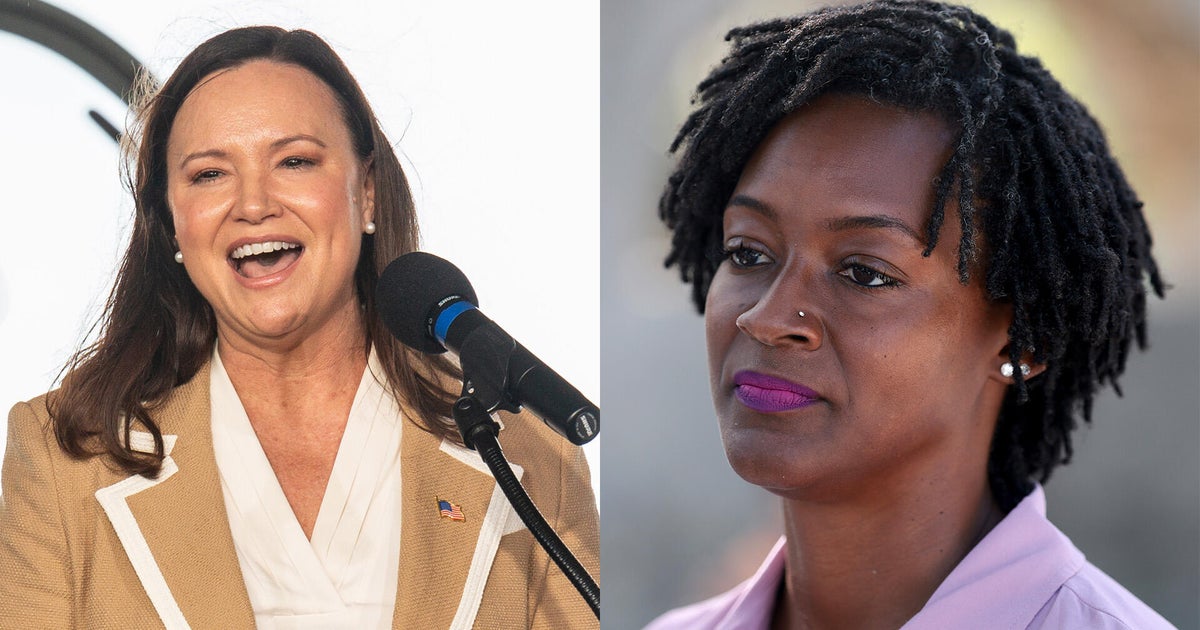
Senate election races in Alaska and Florida have been decided ahead of the upcoming midterm elections. In Florida, the race changed significantly when Angie Nixon, a democratic socialist, unexpectedly won her party’s primary.
Key Facts
Senate races in Alaska and Florida are confirmed for the midterm elections.
Midterm elections will influence which party controls the Senate.
Angie Nixon won the Democratic primary in Florida by surprise.
Nixon identifies as a democratic socialist.
These races are part of the broader midterm election process in the United States.
Results in these races could impact the balance of power in the U.S. Senate.
Coverage and updates are provided by CBS News.
Read the Original
Want the full story? Tap a source to open the original
article.
Max D Lederer Jr., the longtime publisher of the military newspaper Stars and Stripes, resigned due to disagreements with the Defense Department's leadership under President Donald Trump’s administration. The conflict centered on government efforts to increase control over the newspaper’s editorial content, which has historically maintained independence despite government funding.
Key Facts
Max D Lederer Jr. announced his resignation as publisher of Stars and Stripes.
Lederer cited fundamental differences with the Defense Department’s leadership under President Trump.
The Defense Department, led by Secretary of Defense Pete Hegseth, accused the newspaper of promoting “woke distractions.”
The Trump administration criticized Stars and Stripes for reporting on poor conditions and morale on the USS Abraham Lincoln.
Stars and Stripes is a military newspaper founded in 1861 that receives significant government funding but seeks editorial independence.
The Pentagon recently moved to align the newspaper more closely with government priorities and fired the paper’s ombudsman, Jacqueline Smith, who protected editorial independence.
Press restrictions have increased at the Pentagon under Hegseth, including bans on journalist access and rules challenged as limiting First Amendment rights.
The Pentagon is engaged in an ongoing war on Iran, which has caused strain on US forces and military supplies.
Read the Original
Want the full story? Tap a source to open the original
article.
Erin Patterson is appealing her convictions for three murders and one attempted murder linked to poisoning with death cap mushrooms. The court is reviewing if certain evidence should have been allowed at trial and considering a request from prosecutors to impose a life sentence without parole. A decision will be made later.
Key Facts
Erin Patterson was sentenced to life in prison with a 33-year minimum before parole for killing three people and attempting to kill a fourth with poison mushrooms.
The murders involved her estranged husband’s parents and his aunt; one victim survived after hospital treatment.
Patterson is appealing seven grounds against her convictions.
Prosecutors are appealing her sentence, saying it is too lenient and asking for life without parole.
Evidence discussed includes mobile phone tower data and reports of poisonous mushrooms from a public website.
The prosecution argued this evidence showed Patterson could have obtained the lethal mushrooms.
The appeal hearing is taking place via video link from a maximum security women’s prison.
A verdict on the appeal will be announced at a future date.
Read the Original
Want the full story? Tap a source to open the original
article.
Five news reporters and two military members invited to an event at Vandenberg Space Force Base in California were briefly held at gunpoint by base security, who thought they were unauthorized visitors. The incident happened before a private groundbreaking ceremony and was later called a communication error by base officials.
Key Facts
The incident occurred at Vandenberg Space Force Base near Santa Barbara, California.
Five reporters from local news outlets and two military personnel assigned to the base were detained.
Security officers believed the group was trying to enter the base without permission.
The detained group was escorted by public affairs staff but was still ordered out of their vehicles with guns drawn.
The reporters were held for over 30 minutes, causing them to miss the event.
Base officials said the area has had many unauthorized entry attempts, so they acted to protect the base.
All individuals were released without further issues after the situation was explained.
The news outlets hope to meet with base leaders to avoid similar events in the future.
Read the Original
Want the full story? Tap a source to open the original
article.
David Elliott Pritt, a former West Virginia delegate and teacher, was indicted on federal child exploitation charges. This happened months after he co-sponsored a bill to increase penalties for adults committing sexual offenses against minors in trusted positions.
Key Facts
Pritt is charged with three felonies: sexual exploitation of a child, coercion and enticement of a child, and witness tampering.
The alleged offenses occurred between March 2024 and January 2026 and involved a 15-year-old student at Oak Hill High School.
Pritt changed his political party from Democrat to Republican in 2023.
He co-sponsored West Virginia House Bill 4695, which sought to double prison sentences and fines for sexual offenses against minors by trusted adults.
The bill passed the West Virginia House but did not pass the Senate Judiciary Committee.
Pritt was removed from his legislative roles after his arrest on July 22, 2024.
He voluntarily withdrew from his reelection campaign on August 4, 2024.
Pritt remains in custody and waived his preliminary hearing on July 27, 2024.
Read the Original
Want the full story? Tap a source to open the original
article.
Florida state Representative Angie Nixon, who won her party’s Senate primary against Alex Vindman, said the differences within the Democratic Party are less about labels and more about addressing people's needs. She spoke on “CBS Mornings,” emphasizing that the focus should be on what helps people rather than on political labels like socialist or progressive.
Key Facts
Angie Nixon is a Florida state Representative and a Democrat.
She recently won the Democratic Senate primary in Florida.
Nixon defeated Alex Vindman, known for whistleblowing against President Trump.
Nixon said the divisions in the Democratic Party are not about political labels.
She believes the real focus should be on the needs of people.
Nixon made these remarks during an interview on “CBS Mornings.”
The statement reflects ongoing discussions within the Democratic Party about its direction.
Read the Original
Want the full story? Tap a source to open the original
article.
Natalie Harp is a close and loyal aide to President Donald Trump who often travels with him and manages the information he receives. She recently gained public attention after secretly swapping planes with Trump during a security threat in Turkey.
Key Facts
Natalie Harp is 35 years old and works closely with President Donald Trump.
She carries a portable printer and manages documents and information for the president.
Harp types posts for Trump's Truth Social account as he dictates them.
She has frequent access to Trump, traveling with him by helicopter, presidential jet, and in the Oval Office.
Trump values her loyalty highly, saying she is as devoted to him as his family.
Harp has shown strong personal loyalty, including writing emotional notes to Trump.
She once insisted on traveling in the trunk of an SUV so she could accompany Trump to a New York courthouse.
The White House defends her role as hardworking and loyal amid media scrutiny.
Read the Original
Want the full story? Tap a source to open the original
article.
Angie Nixon, a Florida state representative and democratic socialist, won the Democratic nomination for a Florida Senate seat by defeating a more moderate candidate. Political strategists believe that candidates like Nixon and others from the Democratic Socialists of America (DSA) could make it harder for Democrats to win in general elections.
Key Facts
Angie Nixon is a Florida state representative.
She identifies as a democratic socialist.
Nixon won the Democratic nomination for a Florida Senate race.
She defeated a more moderate Democratic opponent.
Some political strategists worry that candidates like Nixon may reduce Democrats’ chances in general elections.
The discussion included both Democratic and Republican political strategists.
The topic was covered on CBS News’ program called "The Takeout."
The analysis focused on the potential impact of DSA candidates on election outcomes.
Read the Original
Want the full story? Tap a source to open the original
article.
Three 17-year-old boys were charged after a 17-year-old girl was allegedly raped at a home in southwest Sydney. Police arrested the boys, searched multiple homes, and seized electronic devices as part of their investigation.
Key Facts
The incident involved a 17-year-old girl and three 17-year-old boys.
The alleged attack happened at a home in Sydney’s southwest on Saturday.
Police arrested the three boys on Wednesday.
Several homes in the Macarthur area were searched by police.
Electronic devices were seized during the searches.
One boy faces 11 charges, including six counts of aggravated sexual assault and three counts of rape.
Another boy faces six charges, including sexual assault, rape, and common assault.
The third boy faces two counts of aggravated sexual assault.
All three boys were kept in custody and scheduled to appear in children’s court.
Read the Original
Want the full story? Tap a source to open the original
article.
The United States national debt has passed $40 trillion for the first time, doubling since President Donald Trump’s first term began in 2017. Both President Trump and President Joe Biden have contributed to the increase, especially due to pandemic spending and other government programs.
Key Facts
US national debt crossed $40 trillion, about $117,000 per person.
Debt was $19.95 trillion in January 2017 when President Trump first took office.
About one-third of the debt growth happened during the two years after the COVID-19 pandemic began.
Debt grew by $11.6 trillion across President Trump’s two terms and $8.4 trillion during President Biden’s term.
Spending increases included pandemic relief, infrastructure, and clean energy investments.
The government spends more money than it collects in revenue, especially on mandatory programs like Social Security and Medicare.
Interest on the debt cost $1.1 trillion, and it rises as debt and interest rates increase.
President Trump’s second-term plan, the One Big Beautiful Bill Act, could add $4.7 trillion more to the debt.
Read the Original
Want the full story? Tap a source to open the original
article.