A preservation group asked the Supreme Court to reject President Trump’s request to continue building a ballroom at the White House. The group wants the current court order stopping the construction to stay in place while the case goes on.
Key Facts
President Trump’s administration asked the Supreme Court to allow construction of a ballroom at the White House to continue.
A lower court ordered that the construction be paused starting Friday.
The preservationist group opposes the construction and supports keeping the pause in place.
The preservation group described the administration’s emergency request as “astonishing.”
The Supreme Court has not yet decided whether to approve or deny the emergency request.
The dispute concerns the impact of the construction on the White House’s historic features.
Read the Original
Want the full story? Tap a source to open the original
article.
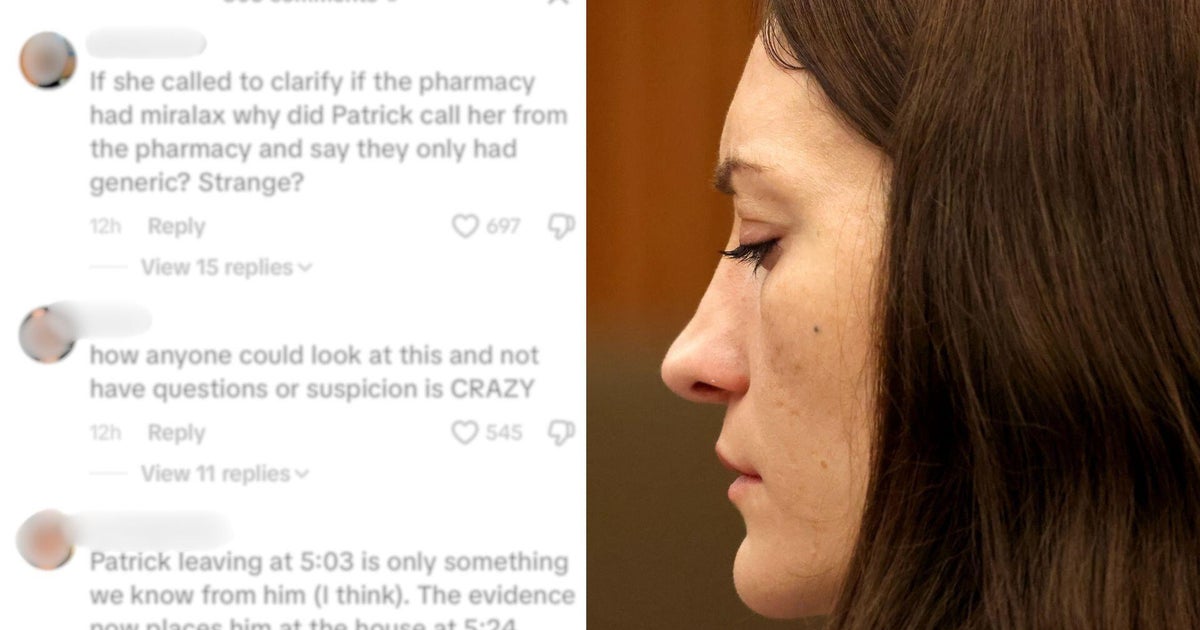
Lindsay Clancy admitted to killing her children, but many true crime fans online are spreading different ideas about what happened. Experts say the case has gained a lot of attention and discussion on social media.
Key Facts
Lindsay Clancy admitted to killing her children.
The case is the subject of a murder trial.
True crime fans online are creating and sharing different theories about the case.
There is misinformation spreading on social media related to this trial.
Kathryn Coduto, a Boston University expert, studied why the case has become very popular online.
The case is causing widespread discussion beyond just the legal facts.
CBS News has covered the story and is providing updates.
Read the Original
Want the full story? Tap a source to open the original
article.
Rep. Pat Fallon, a Republican from Texas, said he does not give much importance to reports about crew members on the USS Abraham Lincoln having mental health problems and supply shortages because the ship has been deployed for a long time. He made these remarks during an interview on Fox Business.
Key Facts
Rep. Pat Fallon represents Texas in the U.S. House of Representatives.
Fallon responded to news about mental health issues and supply shortages on the USS Abraham Lincoln.
The USS Abraham Lincoln has been deployed at sea for a long period.
Reports claim crew members are experiencing declining mental health.
There are concerns about shortages of supplies aboard the ship.
Fallon said he does not consider these reports very significant.
Fallon made these comments on the Fox Business show "Morning with Maria."
The show is hosted by Cheryl Casone.
Read the Original
Want the full story? Tap a source to open the original
article.
A judge stopped President Donald Trump’s plan to move the FBI headquarters to a new location in Washington, D.C. The court ruled against changing the FBI’s main office as proposed by the administration.
Key Facts
The plan aimed to relocate the FBI headquarters within Washington, D.C.
A judge legally blocked this plan from going forward.
The plan was developed during President Donald Trump’s administration.
The FBI headquarters currently operates at its existing location.
The judge’s decision prevents immediate relocation efforts.
The case was reported by CBS News.
Read the Original
Want the full story? Tap a source to open the original
article.
A federal appeals court has kept in place a block on a Department of Homeland Security policy that allowed immigration officers to make arrests at certain houses of worship. The court found that the policy created a burden on religious groups by scaring people away from attending services.
Key Facts
The U.S. Court of Appeals for the 4th Circuit upheld a preliminary injunction preventing immigration arrests at specific houses of worship.
The case involves Quaker, Sikh, and Cooperative Baptist Fellowship congregations.
The judges ruled the DHS policy interfered with the free exercise of religion.
The policy caused declines in attendance at services due to fear of immigration enforcement.
The policy change was made during President Donald Trump’s second administration, rolling back protections from the Biden era.
The plaintiffs filed a lawsuit claiming the policy violated the Religious Freedom Restoration Act and the First Amendment.
The court noted that DHS stated criminals would no longer avoid arrest by hiding in schools or churches, increasing the enforcement threat.
The religious groups said the ruling supports their right to worship without fear of immigration raids.
Read the Original
Want the full story? Tap a source to open the original
article.
Disney and its ABC television unit sued the Federal Communications Commission (FCC), accusing it of targeting ABC because of its news coverage that opposes President Donald Trump. The lawsuit asks a court to stop the FCC from reviewing ABC’s broadcast licenses early, claiming this review is meant to pressure ABC and violates free speech rights.
Key Facts
Disney and ABC filed a lawsuit against the FCC in a federal court in Washington, D.C.
The lawsuit claims the FCC is punishing ABC for airing news and shows critical of President Trump.
The FCC started an early review of eight ABC broadcast licenses, which were not due for renewal soon.
Disney says the timing and actions of the FCC show an attempt to intimidate ABC, violating the First Amendment.
The FCC says all broadcasters, including Disney, must operate in the public interest and is investigating claims about ABC's diversity policies.
President Trump has criticized ABC and asked the FCC to revoke its licenses in the past.
The case could clarify how much power the government has over media companies’ speech and programming.
Read the Original
Want the full story? Tap a source to open the original
article.
Minnesota Governor Tim Walz has paused state work on mining projects near the Boundary Waters Canoe Area Wilderness after the federal government lifted a ban on such mining. The move stops state involvement in reviewing or permitting mining activities in the area while legal challenges continue.
Key Facts
Governor Walz suspended Minnesota’s participation in mining projects in the Boundary Waters wilderness area.
This action came four months after Congress and President Trump lifted a federal ban on mining in the area.
The Boundary Waters is a large, protected wilderness area known for canoeing, kayaking, and camping.
Twin Metals Minnesota, owned by a Chilean company, has planned to mine copper and nickel near the forest since 2019.
Mining opponents are concerned that waste from mining could pollute the Boundary Waters.
President Trump supported lifting the mining ban to create jobs and boost the mining industry.
The state will not conduct environmental reviews or issue permits for mining projects while legal disputes about mining rules continue.
Some politicians criticized Walz’s decision, while environmental groups praised it for protecting the wilderness and clean water.
Read the Original
Want the full story? Tap a source to open the original
article.
Lindsay Clancy is on trial in Massachusetts for killing her three children and attempting suicide in January 2023. Her former mother-in-law and family members testified that Lindsay was struggling with mental health issues and asked for help before the killings. The trial focuses on whether Lindsay was mentally ill at the time and should be held responsible for her actions.
Key Facts
Lindsay Clancy killed her three children in January 2023 and tried to kill herself.
She was left paralyzed after the suicide attempt.
Lindsay and her husband Patrick Clancy are divorced.
Her former mother-in-law, Susan Clancy, said Lindsay was asking for help and was struggling.
Family members described Lindsay’s mental health decline, including anxiety, paranoia, and suicidal thoughts in late 2022.
Texts show Lindsay worried about dependence on medications called benzodiazepines.
The defense says Lindsay had postpartum psychosis, a serious mental illness after childbirth.
The prosecution says Lindsay planned the killings and knew what she was doing.
Read the Original
Want the full story? Tap a source to open the original
article.
Disney and ABC have sued the Federal Communications Commission (FCC) to stop an early renewal of their TV broadcast licenses. They say the FCC's action is unfair and linked to President Donald Trump's complaints about their news and shows.
Key Facts
Disney and ABC filed a lawsuit against the FCC and its chairman.
The FCC is pushing for early renewal of Disney-owned ABC stations’ broadcast licenses, a move not seen in over 50 years.
Disney claims this is retaliation because of their editorial content and critical coverage of President Trump.
FCC Chairman Brendan Carr says the early renewal focus is on serving the public interest, not punishment.
The early renewal request followed a joke by ABC’s Jimmy Kimmel about First Lady Melania Trump.
President Trump had publicly criticized ABC’s coverage, calling it "almost 100% negative" and suggested their licenses should be ended.
Disney had to pause Jimmy Kimmel’s show briefly after controversial remarks, but he returned after public backlash.
Disney and ABC say they need months to prepare for license renewal but only have 30 days as ordered by the FCC.
Read the Original
Want the full story? Tap a source to open the original
article.
Planned Parenthood’s political action committee (PAC) is spending over $600,000 on ads in Maine to criticize Senator Susan Collins. The ads focus on her abortion record as Democrats try to win the Senate seat in the upcoming election.
Key Facts
Planned Parenthood Votes is a super PAC that supports abortion rights.
They are spending more than $600,000 on advertising in Maine.
The ads criticize Senator Susan Collins, a Republican, for her abortion-related voting record.
Democrats aim to flip the Maine Senate seat from Republican to Democrat.
The ad campaign started with digital ads released on a Monday.
The focus of the ads is on Collins’s stance and actions related to abortion issues.
This effort is part of the larger Senate race happening in Maine during the fall election.
Read the Original
Want the full story? Tap a source to open the original
article.
A new bill proposed by Senator Bernie Sanders aims to stop the government from taking Social Security payments to repay defaulted federal student loans. The bill would protect millions of older Americans and people with disabilities from losing part of their benefits due to student loan debt.
Key Facts
The bill is called the Stop Social Security Garnishment Act of 2026.
It is cosponsored by Senators Elizabeth Warren and Ed Markey.
The bill would change federal law to prevent Social Security payments from being used to collect defaulted student loans.
About 9.5 million people in the U.S. are in default on their federal student loans.
Older Americans owe nearly $457 billion in student loans, with many defaulted borrowers receiving Social Security benefits.
Current rules allow up to 15% of certain Social Security benefits to be withheld for debt collection, but only $750 per month is fully protected.
The number of Social Security beneficiaries losing money to student loan collections rose from about 6,200 in 2001 to over 190,000 in 2019.
Many borrowers rely heavily on Social Security income and face financial hardship when benefits are garnished.
Read the Original
Want the full story? Tap a source to open the original
article.
The Justice Department plans to send a record 1,000 federal monitors to U.S. voting locations for the midterm elections. These monitors will help ensure that voting rights laws are followed and prevent discrimination or unfair treatment at polling places.
Key Facts
The Justice Department’s Civil Rights Division announced the plan to send 1,000 monitors, the highest number ever deployed.
Monitors help enforce the Voting Rights Act, a law that bans discrimination based on race, gender, or other protected groups.
Usually, the department sends only dozens of civil rights attorneys as monitors, but this time it will also ask federal employees to volunteer.
In 2024, monitors checked voting rights compliance in 86 areas across 27 states.
The Civil Rights Division lost over 70% of its career staff after leadership changes under Assistant Attorney General Harmeet Dhillon.
The DOJ has filed 31 lawsuits to get full voter data from states to check for voter registration problems, but judges have blocked these requests in most cases.
Some states are suspicious of the DOJ’s increased monitoring due to these lawsuits and concerns about election integrity claims.
President Donald Trump has claimed without proof that the 2020 election was stolen, and federal investigations related to the 2020 election continue in some states.
Read the Original
Want the full story? Tap a source to open the original
article.
Disney has filed a lawsuit against the Federal Communications Commission (FCC) to stop an early review of broadcast licenses for eight ABC TV stations. The company claims the early review is a political move by President Donald Trump's administration to punish ABC after it angered the president.
Key Facts
Disney sued the FCC in a federal court in Washington, DC.
The FCC asked ABC stations to renew their licenses early, even though some licenses still had years left.
Disney says this early review is political retaliation by President Trump’s administration.
The lawsuit includes examples of President Trump’s social media posts threatening ABC over its news coverage.
The FCC said the early renewal request was linked to diversity and inclusion practices at Disney and an investigation of ABC’s show The View.
FCC Chairman Brendan Carr has warned broadcasters that airing “fake news” could lead to losing their licenses.
President Trump has publicly criticized ABC and demanded the firing of Jimmy Kimmel, an ABC talk show host.
Disney asked the court for a fast hearing and a temporary stop to the license review process.
Read the Original
Want the full story? Tap a source to open the original
article.
The UK government's Prevent program, designed to stop terrorism, is not able to help many children who are focused on violence but do not have a clear extremist belief. The children’s commissioner said more help is needed because many children show worrying behavior online and are often sent back to schools without further support.
Key Facts
Referrals of children to the Prevent program rose from 2,918 in 2016-17 to 4,715 in 2024-25.
Most children referred do not show clear extremist beliefs, but are fixated on violence.
The Prevent program mainly deals with terrorism linked to extremist ideologies like far-right or jihadist views.
About 71% of child referrals had no specific extremist ideology identified.
The children’s commissioner said many children are influenced by harmful online groups and illegal content about self-harm and school shootings.
Prevent is effective for children involved in ideological extremism but struggles with cases focused on violence without ideology.
The commissioner suggests that referrals should go through local teams that include police and safeguarding experts, not just Prevent.
She also called on media regulators to better control harmful content online.
Read the Original
Want the full story? Tap a source to open the original
article.
Fourteen people, mostly Penn State students, have been charged for running a cocaine drug trafficking ring mainly at two fraternity houses. The operation involved buying, cutting, packaging, and selling cocaine mostly to other students during 2023 and 2024.
Key Facts
The Pennsylvania attorney general charged 14 people linked to a cocaine trafficking ring at Penn State.
Most of those charged were students at Penn State during 2023-2024; four are still enrolled.
Two main suppliers regularly traveled to New York and Philadelphia to collect large amounts of cocaine.
Charges include felony corrupt organizations, conspiracy, drug dealing, and evidence tampering.
Eight defendants face misdemeanor counts for drug paraphernalia and possession.
A student’s father was charged with tampering with evidence and hindering the investigation.
The drug operation was linked to two off-campus fraternities: Delta Upsilon and Sigma Chi.
Penn State and the fraternities are cooperating with law enforcement and taking steps to address the situation.
Read the Original
Want the full story? Tap a source to open the original
article.
Sarah Matthews, a former White House deputy press secretary, said that Natalie Harp’s close relationship with President Donald Trump caused concern among the Secret Service and the 2024 campaign staff. Georgia Senator Jon Ossoff criticized Trump for spending time with Harp instead of focusing on presidential duties, leading to a tense exchange between Trump and reporters.
Key Facts
Natalie Harp is a White House aide very close to President Trump.
Secret Service and campaign staff were uneasy about Harp’s relationship with Trump.
Campaign staff tried to keep Harp from staying with Trump at his golf club, but she stayed nearby in the women’s locker room.
Senator Jon Ossoff accused Trump of prioritizing time with Harp over presidential responsibilities.
Trump dismissed Ossoff’s comments and defended his White House ballroom construction project.
Trump told CNN reporter Kristen Holmes to be quiet and called her names after she asked about Ossoff’s remarks.
White House spokesman Davis Ingle criticized Ossoff’s political record in response.
Harp first met Trump after he signed a law that helped her get experimental cancer treatment; she joined his 2024 campaign after working for a news network.
Read the Original
Want the full story? Tap a source to open the original
article.
The Hill is providing live coverage of the 2026 primary elections in Florida, Wyoming, and Alaska on August 18. The coverage includes real-time analysis by reporters and experts from NewsNation and Decision Desk HQ.
Key Facts
The event is the 2026 primary elections in three states: Florida, Wyoming, and Alaska.
Coverage lasts for one and a half hours on August 18.
Cory Smith from NewsNation will anchor the program.
The team includes reporters from The Hill and political experts from Decision Desk HQ.
The broadcast offers live, real-time updates and election results.
The focus is on in-depth analysis of the primary races.
This event is important for U.S. domestic politics and election tracking.
Read the Original
Want the full story? Tap a source to open the original
article.
A federal trial in California is starting against Meta Platforms, where several states are suing the company for harming children through its social media apps. The states want billions of dollars in damages and changes to how Meta runs Facebook and Instagram.
Key Facts
Four states (California, Colorado, Kentucky, New Jersey) are leading the trial against Meta.
The lawsuit claims Meta designed features to make children addicted to its apps.
The states say Meta collects data from children under 13 without their parents’ permission, breaking federal law.
The lawsuit could seek up to $1.4 trillion in penalties, but experts think the actual amount will be much less.
The trial will last six to eight weeks and include testimony from Meta CEO Mark Zuckerberg and others.
The judge overseeing the trial is Yvonne Gonzalez Rogers, known for handling major tech lawsuits.
Meta denies wrongdoing and says it has worked to protect teens on its platforms for years.
This case is part of many lawsuits against social media companies over child safety and addiction concerns.
Read the Original
Want the full story? Tap a source to open the original
article.
Reports say the USS Abraham Lincoln is facing poor conditions due to supply chain problems while it stays at sea longer than normal. President Donald Trump disagrees with these reports. Families of the soldiers on the ship have shared their concerns with a Pentagon reporter.
Key Facts
The USS Abraham Lincoln, a U.S. Navy ship, has been at sea longer than usual.
Supply chain issues may be causing poor conditions on the ship.
Families of sailors have expressed worries about these conditions.
Pentagon correspondent Natalie Oliverio reported on the situation.
President Donald Trump denies the reports about the poor conditions.
The news was covered by CBS News and Military Times.
Read the Original
Want the full story? Tap a source to open the original
article.
Newly released FBI records show that Christine Fang, suspected of spying for China, had a close relationship with former California Congressman Eric Swalwell. Fang worked as an unpaid volunteer on Swalwell’s campaigns, and U.S. officials say China tries to influence American politics at local levels to gain long-term advantages.
Key Facts
Christine Fang, also called Fang Fang, was suspected of being a Chinese spy.
She had “physical relations” with Eric Swalwell while volunteering for his campaigns.
Fang enrolled at a Bay Area university in 2011 and got involved in local politics through Asian American groups.
The FBI investigated Fang under the code name “Rusty Thumbs” and thought she might be a double agent.
Fang allegedly violated U.S. election laws by arranging illegal donations for China.
Swalwell was cleared of wrongdoing but ended his campaign for California governor and resigned from Congress amid separate allegations.
China’s intelligence aims to influence U.S. politics from local levels up, focusing on rising political figures.
This influence effort is secretive and unregistered, different from normal lobbying or public political donations.
Read the Original
Want the full story? Tap a source to open the original
article.