President Donald Trump said the aircraft carrier USS Abraham Lincoln is well maintained, despite reports of poor conditions on the ship during its long time at sea. He criticized CNN's reporting and told a reporter to "be quiet" during a White House event. Families of sailors disagreed with Trump's statements and expressed frustration that their concerns were dismissed.
Key Facts
President Trump claimed he heard from a retired admiral that the USS Abraham Lincoln is "beautifully maintained."
Trump called CNN's reports on poor ship conditions "fake news."
The USS Abraham Lincoln left San Diego on November 21, 2025, and has been at sea for over 250 days without a port visit.
Reports from Navy Times and Stars and Stripes describe shortages of supplies, water problems, and plumbing issues on the ship.
Some sailors have reportedly tried to jump from the ship because of harsh conditions.
Democratic lawmakers asked the Pentagon for explanations about the reported problems.
Families of sailors are upset that President Trump and Defense Secretary Pete Hegseth dismissed the sailors’ experiences and concerns.
Some family members fear retaliation for speaking about the issues on the USS Abraham Lincoln.
Read the Original
Want the full story? Tap a source to open the original
article.
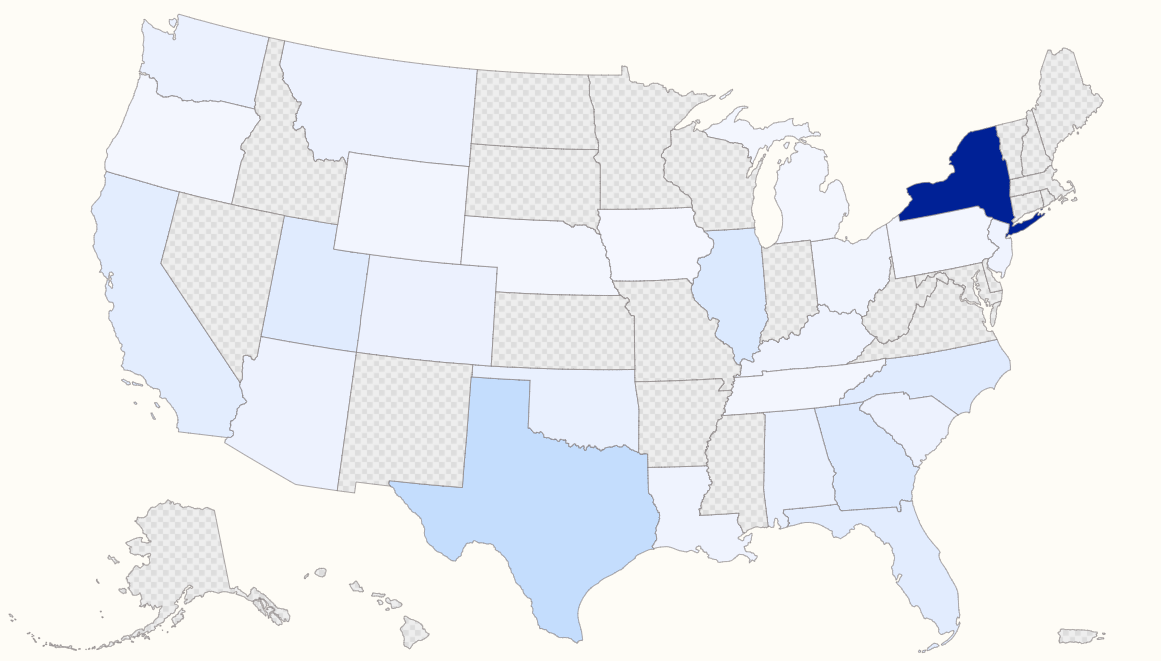
A map shows that political action committees (PACs) focused on artificial intelligence (AI) have spent tens of millions of dollars in the 2026 U.S. election races. These AI-linked groups are trying to influence which candidates will write future laws about AI technology at both federal and state levels.
Key Facts
More than $107 million has been raised and $55.5 million spent in federal races by AI-related PACs so far in this election cycle.
An additional $20 million-plus has gone toward state-level contests, focusing on places with important AI regulations or competitive primaries.
States like New York, Texas, Illinois, Georgia, North Carolina, and Utah have received over $2 million each in AI-linked political spending.
Leading the Future, supported by Silicon Valley investors including Andreessen Horowitz and OpenAI’s president, has raised over $125 million and spent $24 million in federal primaries.
Leading the Future supports a national AI regulatory framework but has opposed stricter AI laws in some states.
Public First Action, led by former U.S. representatives and supported by AI company Anthropic, has raised $80 million to promote stronger AI regulation at the state level.
Both groups have heavily funded candidates in races where AI rules are being debated, such as New York’s 12th District and governor races in Florida and Kansas.
AI-related spending is shaping election contests in many states, signaling a push to influence how AI technology will be governed in the future.
Read the Original
Want the full story? Tap a source to open the original
article.
Several cities and counties in Wisconsin are ending their contracts with Flock, a company that provides automated license plate cameras. These cancellations are due to concerns about privacy and trust, and as more local areas stop using Flock, the value of the shared camera network decreases for those who remain.
Key Facts
Dane County in Wisconsin stopped funding Flock’s license plate cameras and banned further spending on the system.
The Dane County Board cited concerns about privacy and possible violations of Fourth Amendment rights.
After Dane County left, nearby communities found the Flock network less useful because they lost access to that data.
The cities of Monona and Fitchburg reviewed or ended their Flock contracts due to privacy and data use concerns.
The town of McFarland decided not to start using Flock cameras because the network had shrunk and wasn’t worth the investment.
The University of Wisconsin police also chose not to renew their Flock contract but still support the use of similar technology from another vendor.
Madison, the state capital, never used Flock cameras and avoids automated surveillance technologies like license plate readers.
Flock’s network had shared data among 140 law enforcement agencies across multiple states before these cancellations.
Read the Original
Want the full story? Tap a source to open the original
article.
Newt Gingrich, a former Speaker of the House, shared his opinion about the upcoming midterm elections. He said the choice is between big government socialism and unusual values or Republican leadership, and he urged the GOP to clearly explain this difference to voters.
Key Facts
Newt Gingrich is a former Speaker of the U.S. House of Representatives.
He spoke about the 2024 midterm elections, which are less than three months away.
Gingrich said the GOP has a chance to win a historic victory this fall.
He emphasized that Republicans need to clearly define the election's main issues.
Gingrich described the election as a choice between "big government socialism and weird values" or Republicans.
His comments were made in a post on X (formerly known as Twitter).
Read the Original
Want the full story? Tap a source to open the original
article.
A federal appeals court has ruled that Sigal Chattah cannot serve as the U.S. attorney in Nevada because the Justice Department tried to appoint her without Senate approval. The court said bypassing the Senate confirmation process is against the law.
Key Facts
A three-judge panel of the 9th U.S. Circuit Court of Appeals made the decision.
The ruling was explained in a detailed 36-page opinion.
Sigal Chattah was disqualified from holding the top federal prosecutor job in Nevada.
The Justice Department attempted to appoint her without the Senate's OK.
The court said this method violates the legal process for appointing U.S. attorneys.
The case deals with the proper way to confirm federal prosecutors.
This decision affects how future appointments might be handled in Nevada or elsewhere.
Read the Original
Want the full story? Tap a source to open the original
article.
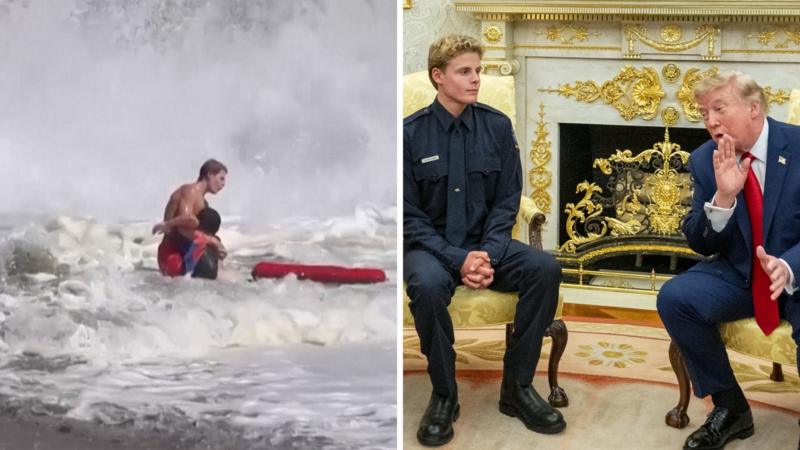
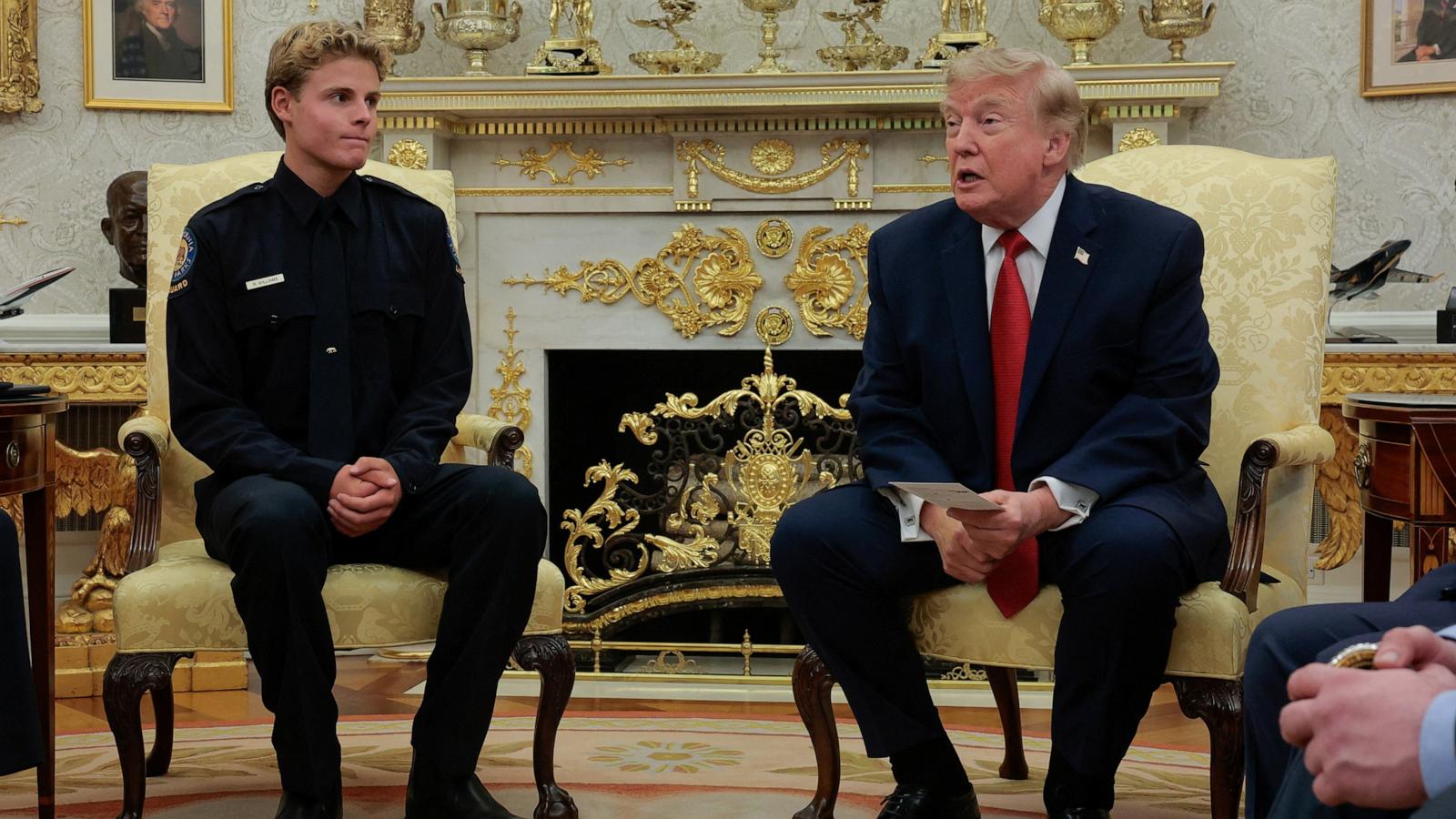
President Donald Trump met with a 16-year-old lifeguard named Ryder Williams at the White House. Williams rescued a 10-year-old boy named Nathaniel Rai from the ocean in California after he was swept about 15 yards offshore.
Key Facts
Ryder Williams is a 16-year-old lifeguard.
He saved 10-year-old Nathaniel Rai, who was swept about 15 yards (13.7 meters) into the water.
Several other beachgoers helped with the rescue.
The rescue took place on July 25 at a California beach.
President Trump hosted both Williams and Rai at the White House.
The president said he will give Williams a "High Civilian Honour" for his actions.
The event was reported shortly after the meeting.
Read the Original
Want the full story? Tap a source to open the original
article.
Lindsay Clancy's mother and sister testified that Lindsay showed signs of worsening mental health before she killed her three children and tried to take her own life. Her mother described Lindsay as a caring mother who became anxious, paranoid, and suicidal starting in October 2022.
Key Facts
Lindsay Clancy killed her three children and then tried to kill herself.
Her mental health declined beginning around October 2022, about three months before the incident.
Clancy's mother, Paula Musgrove, testified about Lindsay’s increasing anxiety and paranoia.
Lindsay sent her mother a text asking for help, saying she was very sick and scared.
She experienced severe insomnia and felt worse after starting anxiety medication.
The testimony was part of a court case where family members shared what they observed.
The story includes sensitive topics like suicide and mental health struggles.
Read the Original
Want the full story? Tap a source to open the original
article.
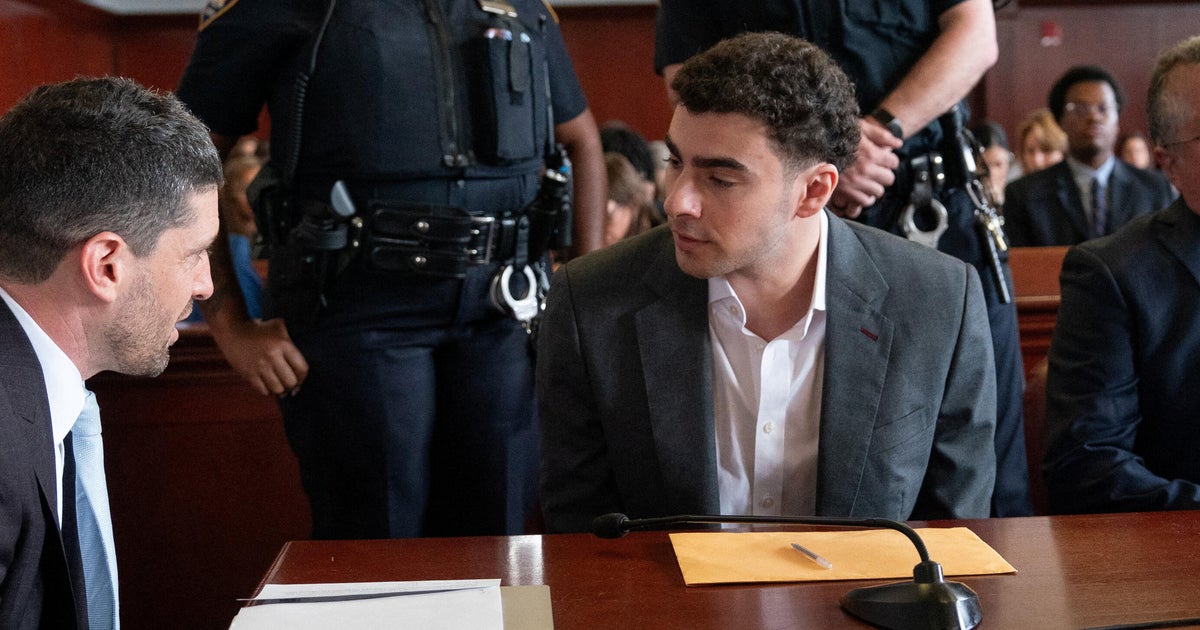
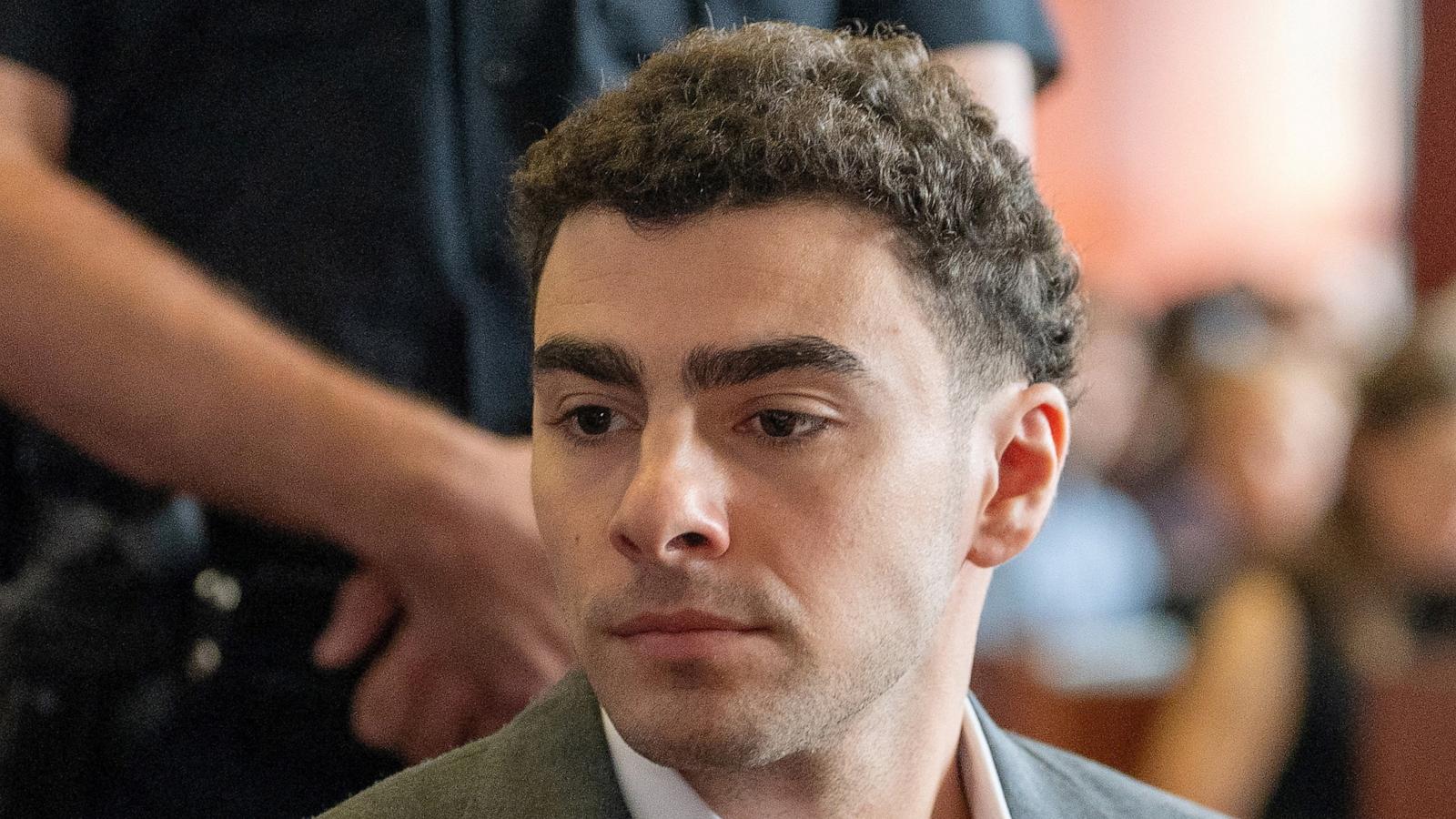
Luigi Mangione’s New York state trial has been delayed to December 10 to allow time for legal arguments about whether his federal guilty plea stops the state from prosecuting him again. Mangione pleaded guilty to federal charges related to the 2024 killing of UnitedHealthcare CEO Brian Thompson but still faces state charges including second-degree murder.
Key Facts
Mangione pleaded guilty last week to federal stalking charges connected to Brian Thompson’s death.
His legal team filed a motion to dismiss the New York state trial based on double jeopardy, which prevents being tried twice for the same crime.
The state trial was originally scheduled for September 8 but is now postponed until December 10.
The judge requested prosecution responses by October 9 and defense replies by October 30 on the dismissal motion.
Mangione faces second-degree murder, weapons, and forgery charges at the state level.
A first-degree murder charge was dropped last year.
Legal experts say the double jeopardy claim is complicated because federal and state charges have different legal elements.
Mangione’s federal sentencing is set for December 18, with a possible life sentence.
Read the Original
Want the full story? Tap a source to open the original
article.
Some public school districts in Pennsylvania are stopping traditional yellow bus rides for charter school students and instead giving them public transit cards to get to school. This change follows a state Supreme Court ruling that allows districts to replace bus service with alternative free transportation, such as public transit.
Key Facts
Woodland Hills School District will no longer provide yellow bus service to over 140 students at LIFE Male STEAM Academy charter school.
Instead, students will receive Pittsburgh Regional Transit bus passes to travel to and from school.
Pennsylvania law requires school districts to provide free transportation for most charter school students living in their boundaries.
The state Supreme Court ruled that districts can end bus service for charter students if they provide free alternatives like public transit.
Some districts, especially in cities like Philadelphia and Pittsburgh, already use public transit for transporting students.
School districts face rising costs and a shortage of bus drivers, which drives efforts to change transportation methods.
Charter school advocates worry that public transit is less safe and reliable in rural and suburban areas and could pressure families to avoid charter schools.
Pennsylvania reimburses around half of the transportation costs for school districts that provide student transport.
Read the Original
Want the full story? Tap a source to open the original
article.
President Donald Trump said stopping Iran from getting nuclear weapons is the top priority for the U.S., contradicting Vice President JD Vance’s recent statement that keeping oil and gas prices low is the main focus. The White House emphasized that both goals are important but highlighted the president’s commitment to preventing Iran from acquiring nuclear weapons.
Key Facts
President Trump stated the number one goal is to prevent Iran from getting a nuclear weapon.
Vice President JD Vance previously said keeping oil and gas prices low was the administration’s top priority.
Vance placed preventing Iran’s nuclear weapons as the second priority.
The White House press secretary said both goals—low gas prices and stopping Iran’s nuclear program—are important to the president.
President Trump has said in the past that preventing Iran’s nuclear weapon development is more important than worrying about Americans’ financial situation.
The conflict in Iran has affected global oil markets and gas prices in the U.S., with prices around $4.02 a gallon.
The president rejected the idea that the U.S. economy should influence military decisions regarding Iran.
White House officials responded to calls for clearer U.S. objectives by reaffirming the priority of stopping Iran’s nuclear weapons program.
Read the Original
Want the full story? Tap a source to open the original
article.
President Donald Trump said that vandals caused damage to the grass near the World War II Memorial on the National Mall. This area was where he held a July 4 celebration and built a stage. He shared a photo showing the damaged grass but did not explain why he thinks vandals were responsible.
Key Facts
The damaged grass is located near the World War II Memorial on the National Mall in Washington, D.C.
President Trump held a July 4 celebration there and built a stage on the spot.
Large areas of the grass have turned brown and patchy.
President Trump blamed vandals for the damage in a social media post.
He did not provide a reason for blaming vandals instead of normal wear from the event.
The photo shared shows a wide area of dead grass.
This statement came shortly after the Independence Day festivities.
Read the Original
Want the full story? Tap a source to open the original
article.
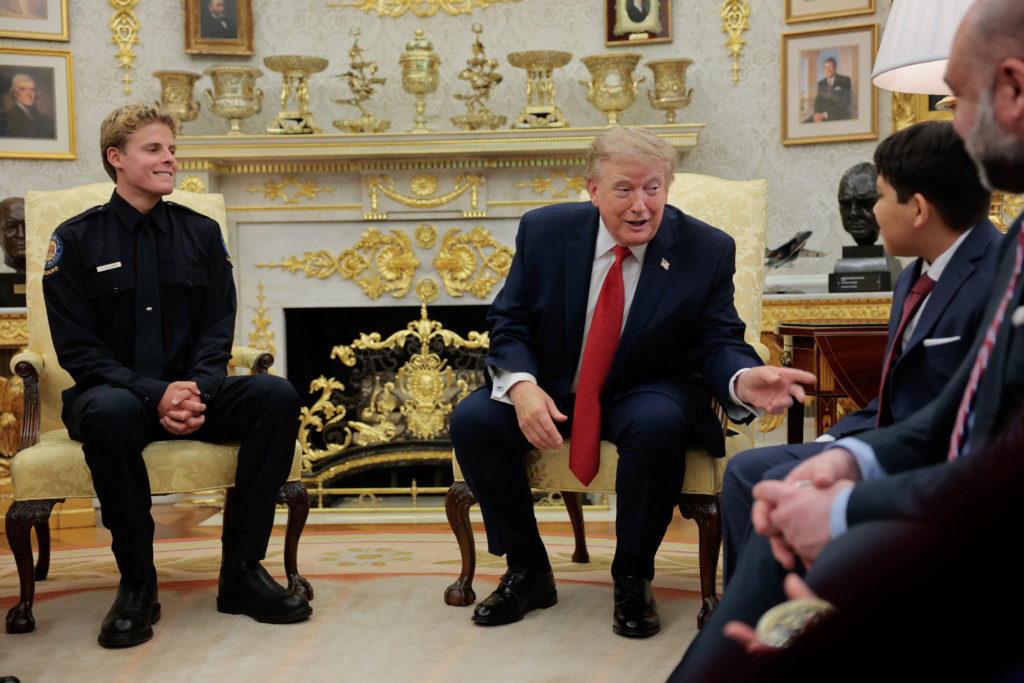
President Donald Trump honored a 16-year-old lifeguard, Ryder Williams, at the White House for rescuing a 10-year-old boy from dangerous waves in California. The rescue video went viral, and the president praised Williams, calling him a hero during the Oval Office event.
Key Facts
Ryder Williams, a teenage lifeguard, saved 10-year-old Nathaniel Rai from strong waves at Seabright Beach in Santa Cruz, California.
A second lifeguard helped bring both Williams and Rai safely back to shore.
President Trump invited Williams to the White House to recognize his bravery.
During the event, Trump described the rescue video and said he might not have been able to do the same.
Nathaniel Rai, the rescued boy, sat with his father and President Trump on a gold couch in the Oval Office.
President Trump also discussed other topics during the event, including Flock Safety cameras, North Korea communications, and military exercises with South Korea.
Trump mentioned he is reviewing Flock Safety cameras, which some call helpful for solving crimes while others see as privacy threats.
Trump confirmed that North Korean leader Kim Jong Un has responded to a request for conversation.
Read the Original
Want the full story? Tap a source to open the original
article.
A judge in New York delayed Luigi Mangione's state murder trial to allow time for prosecutors to respond to a request to dismiss the charges. Mangione has pleaded guilty in federal court to stalking and admitted to shooting UnitedHealthcare CEO Brian Thompson, who died from the shooting.
Key Facts
Luigi Mangione is accused of murdering UnitedHealthcare CEO Brian Thompson in December 2024.
Mangione pleaded guilty to federal stalking charges and admitted to shooting Thompson.
A New York judge postponed Mangione's state murder trial, originally set for September 8, until at least December 10.
Prosecutors have until October 9 to respond to Mangione’s request to dismiss the state charges.
Mangione’s defense argues the state charges violate New York’s double jeopardy law, which prevents someone from being tried twice for the same crime.
Mangione faces a maximum federal sentence of life in prison, with his sentencing scheduled for December 18, 2026.
In the state case, Mangione pleaded not guilty to second-degree murder and weapon-related charges.
Read the Original
Want the full story? Tap a source to open the original
article.
The House Ethics Committee is investigating Congressman Jimmy Gomez from California for alleged sexual misconduct. The panel is reviewing whether he violated rules of official conduct.
Key Facts
The investigation involves Rep. Jimmy Gomez, a Democrat from California.
The House Ethics Committee announced the investigation on a Monday.
The inquiry focuses on possible sexual misconduct allegations against Gomez.
The committee is checking if Gomez broke the Code of Official Conduct or other standards.
The investigation is currently ongoing with no final decision reported yet.
The Ethics Committee is the body responsible for overseeing behavior of House members.
The case involves claims that need careful examination before conclusions are made.
Read the Original
Want the full story? Tap a source to open the original
article.
The American Civil Liberties Union (ACLU) asked the U.S. Supreme Court to review a Texas law. The law requires public schools to display the Ten Commandments in classrooms, and the ACLU argues this breaks the First Amendment's rule about religion and government.
Key Facts
Texas has a law that says public school classrooms must post the Ten Commandments.
The ACLU filed a request for the Supreme Court to hear a case challenging this law.
The challenge comes from parents of different religions who oppose the law.
The ACLU says the law violates the First Amendment, which protects religious freedom.
The Supreme Court will decide whether to take up the case and review the law.
Read the Original
Want the full story? Tap a source to open the original
article.
Congressional Democrats are preparing to introduce a resolution to limit President Trump's ability to use military force after he threatened to bomb Oman. Senator Tim Kaine plans to lead this effort when the Senate returns, aiming to gain support from both parties.
Key Facts
President Trump threatened to bomb Oman during a Fox News interview if Oman interferes with reopening the Strait of Hormuz.
Oman is a U.S. ally with a strong diplomatic relationship and a free trade agreement with the United States.
Democrats see war powers resolutions as a way to control what they view as President Trump's frequent threats of military action.
Rep. Ro Khanna joked about needing to file war powers resolutions for many countries due to the President’s behavior.
Senator Tim Kaine will introduce a war powers resolution targeting the Oman threat next month.
Kaine hopes some Republican senators will join Democrats in limiting the President’s military authority.
The White House did not respond immediately to requests for comment on the matter.
President Trump said Oman has “not behaved very well” but insisted the U.S. could handle them easily if needed.
Read the Original
Want the full story? Tap a source to open the original
article.
Senator Tammy Baldwin from Wisconsin said there should be no federal immigration officers, specifically ICE agents, at voting locations before the November elections. She made this statement on the social media platform X. This comment relates to concerns about immigration enforcement affecting voters.
Key Facts
Senator Tammy Baldwin represents Wisconsin and is a member of the Democratic Party.
She specifically mentioned ICE, which stands for Immigration and Customs Enforcement.
Baldwin called for no ICE presence at polling places during the upcoming November elections.
Her comment was posted on the social platform X.
The issue connects to worries about federal immigration enforcement influencing voter turnout or behavior.
The Department of Homeland Security oversees ICE.
The article implies there is ongoing debate about immigration enforcement near voting sites ahead of elections.
Read the Original
Want the full story? Tap a source to open the original
article.
A 16-year-old lifeguard named Ryder Williams saved a 10-year-old boy, Nathaniel Rai, from the ocean surf at Seabright Beach in Santa Cruz, California. President Donald Trump invited Williams and the boy to the White House to honor Williams with a High Civilian Honor for his brave rescue.
Key Facts
Ryder Williams is a 16-year-old lifeguard who rescued Nathaniel Rai, age 10, from the surf on July 25, 2026.
The rescue took place at Seabright Beach, where high surf conditions existed that day.
Williams noticed Nathaniel struggling in ankle-deep water about 20 yards from his lifeguard tower.
Williams radioed for help, quickly ran to the boy, and saved him before he lost consciousness.
President Donald Trump met with Williams and Nathaniel at the White House on August 17, 2026.
Trump announced that Williams would receive a High Civilian Honor for his actions.
Nathaniel’s father expressed deep gratitude for the lifeguard’s heroic efforts.
Williams said keeping the public safe and performing rescues is part of his job and that he appreciates his fellow lifeguards’ work.
Read the Original
Want the full story? Tap a source to open the original
article.
President Donald Trump invited 16-year-old lifeguard Ryder Williams and the 10-year-old boy he rescued, Nathanial Rai, to the White House to honor Williams’s bravery. The rescue took place on a California beach and was captured on video that became popular online.
Key Facts
Nathanial Rai, age 10, was swept away by waves on a California beach.
Ryder Williams, a 16-year-old lifeguard, rescued Rai from the water.
The rescue video showed Williams holding onto Rai while waves crashed over them.
Another lifeguard, Aaron Bohnen, helped bring them safely to shore.
President Trump called Williams a hero and said he might not have done the rescue himself.
Trump invited Williams to the White House to recognize his courage.
California lawmakers are considering a bill to make lifeguards official first responders.
Designating lifeguards as first responders could provide them with more support and benefits, but training and funding questions remain.
Read the Original
Want the full story? Tap a source to open the original
article.
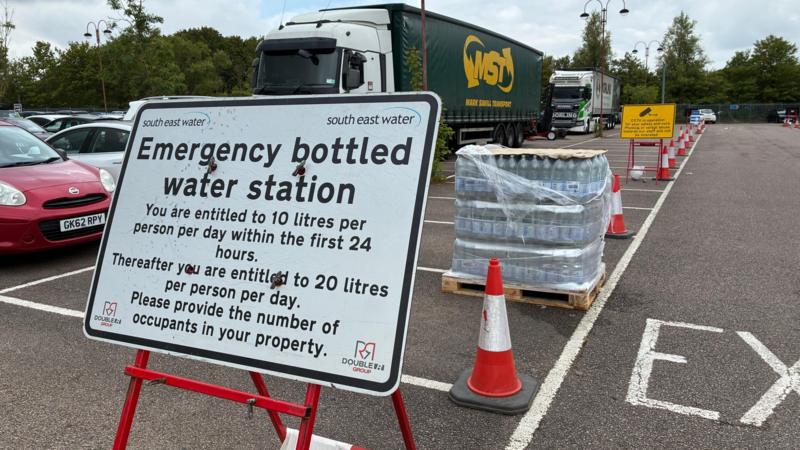
More than 8,000 customers in Kent, UK, have faced water supply problems due to hot weather, pipe bursts, and power issues. South East Water is working hard to fix the problems but warns some people may take a few days to get full water service again.
Key Facts
Over 8,000 people in Kent, including Herne Bay, Blean, and Brabourne, have had water supply issues.
Problems include pipe bursts, high water demand during heat, and power outages.
A storage tank in Wraik Hill is critically low, affecting water supply.
Around 400 properties in Benenden and nearby areas have little or no water.
South East Water staff are tired and working hard to restore water.
Some customers are upset and have been rude to water company staff.
Bottled water stations have been set up in affected locations.
Officials say the company must improve to prevent future water outages in dry weather.
Read the Original
Want the full story? Tap a source to open the original
article.