In England, hundreds of parents are being taken to court for not making sure their children regularly attend school. The courts are issuing fines or other penalties if children miss too much school without good reasons, aiming to improve attendance rates which have worsened since the Covid pandemic.
Key Facts
Several parents in Margate, England, were summoned to court for their children’s poor school attendance.
Parents can be fined or, in extreme cases, face up to three months in prison for not ensuring their children attend school.
One parent admitted to taking a child on a 10-day trip during term time, causing attendance to fall below 75%.
The court reminded parents that low-cost travel is not a valid reason to take children out of school.
School attendance rates in England have not fully recovered since Covid closures, with absence rates rising to nearly 7% in 2025-26.
Persistent absence means missing at least 10% of school, which now affects nearly one in five children.
In 2024-25, a record 492,825 penalty notices were issued to parents for unauthorized absences, well above pre-pandemic levels.
Read the Original
Want the full story? Tap a source to open the original
article.
The term "Woke 1.0" refers to a period from 2018 to 2021 when social justice ideas were very common in public discussion. Some progressive politicians, like Alexandria Ocasio-Cortez, use the term to show they want a new, more moderate approach to politics. The conversation has sparked debate about past and present political views in the U.S.
Key Facts
"Woke 1.0" describes a peak time for social justice language between 2018 and 2021.
New York City councilmember Chi Ossé used the phrase first, calling "Woke 1" crazy.
Alexandria Ocasio-Cortez mentioned "Woke 1.0" on TV to explain that some past ideas are no longer supported.
Some people have misinterpreted AOC’s comments to say she makes light of serious issues.
Stephen Miller criticized "Woke 1.0" policies, linking them to rising crime, though experts note many factors affect crime rates.
Media outlets say Republicans use past "woke" excesses to criticize Democrats now.
The writer advises focusing on current problems rather than only on “Woke 1.0” mistakes.
An example of excessive reaction from that period was a wrongful firing over a misunderstood hand gesture.
Read the Original
Want the full story? Tap a source to open the original
article.
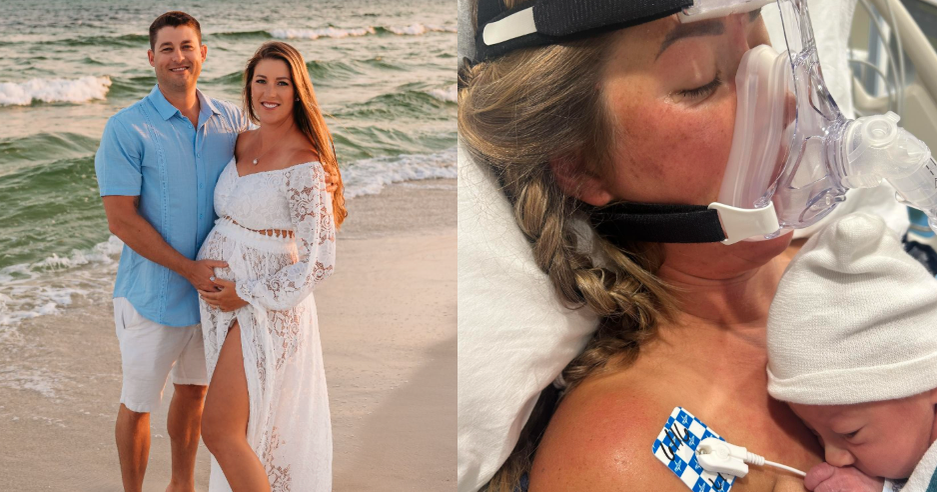
Candice Davis, who was near her due date, developed a rare and dangerous pregnancy complication called HELLP syndrome. She had to have an emergency cesarean section after her liver began bleeding, but doctors managed to save her and her baby despite serious health risks.
Key Facts
Candice Davis had a mostly smooth pregnancy until June 14, 2025, when symptoms worsened suddenly.
She developed HELLP syndrome, a rare condition related to preeclampsia that damages the liver and can cause severe bleeding.
Davis had severe pain, very high blood pressure, and elevated liver enzymes, prompting emergency hospital care.
Doctors planned a cesarean section, as natural birth was too risky given her liver condition.
During delivery, a 17-centimeter liver injury caused heavy bleeding that was hard to control.
Surgeons had to temporarily pack her liver with sterile material to control the bleeding and waited for her to stabilize.
After 24 hours, bleeding stopped, and Davis slowly recovered, with her baby safely delivered.
Davis faced further complications like blood clots but continued treatment while avoiding blood thinners due to bleeding risks.
Read the Original
Want the full story? Tap a source to open the original
article.
The Metropolitan Police apologized after accidentally revealing the email addresses of about 140 women who say they were abused by the late Mohamed Al Fayed. The mistake happened when the police sent an update email without hiding recipients’ addresses, exposing the group to each other. The police are investigating the error and have notified the Information Commissioner’s Office.
Key Facts
Around 140 women who say they were abused by Mohamed Al Fayed signed up to get monthly email updates from the police.
On August 11, the Metropolitan Police sent an email update about the investigation, called Operation Cornpoppy, revealing details about suspects.
The police accidentally showed all recipients’ email addresses instead of hiding them, exposing survivors’ contact information.
The police quickly noticed the error, apologized, and contacted everyone affected the same day.
The Information Commissioner’s Office has been informed about the data breach.
The police said they are reviewing their processes to prevent this kind of mistake from happening again.
Operation Cornpoppy is investigating people who may have helped Al Fayed commit sexual offenses.
Campaigners and survivors stressed the importance of protecting personal information in sensitive cases like this one.
Read the Original
Want the full story? Tap a source to open the original
article.
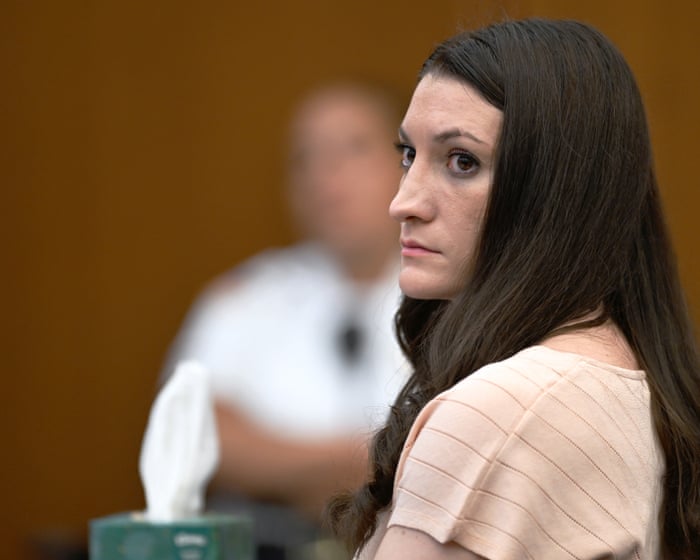
Prosecutors in the Lindsay Clancy murder trial argued that Clancy planned the deaths of her three children and then faked a suicide attempt. Clancy’s defense says she had postpartum psychosis, a serious mental illness after childbirth, and was struggling with multiple health issues and medications.
Key Facts
Lindsay Clancy is accused of strangling her three children and then faking a suicide attempt.
Prosecutors pointed to internet searches Clancy made about suicide methods, psychiatric medications, and mental health issues before the killings.
Clancy searched her phone for terms like “can you treat a sociopath?” and wrote notes expressing depression and exhaustion.
She had been prescribed 13 different medications and reported trouble sleeping.
On the day of the murders, Clancy sent her former husband out for takeout and medicine, which prosecutors say shows planning.
Clancy admits to the killings but pleads not guilty by reason of insanity, citing postpartum psychosis.
Defense says Clancy suffered from bipolar disorder and postpartum depression and was overmedicated by healthcare providers.
Clancy did not report hearing voices before the crimes but told a nurse about “intrusive thoughts” and hopelessness; she revealed hearing voices only after the murders.
Read the Original
Want the full story? Tap a source to open the original
article.
Sailors aboard the USS Abraham Lincoln have been at sea for over eight months supporting US operations in the Middle East, leading to concerns about poor living conditions and declining mental health. The Navy and military officials say they are aware of the strain but maintain that support and supplies remain available to the crew.
Key Facts
The USS Abraham Lincoln has been deployed at sea for more than 250 days without a major port visit.
The ship was redirected to the Middle East from its original Pacific route due to the US-Israel conflict involving Iran.
Reports mention shortages of supplies, water issues, plumbing problems, and low morale among the roughly 5,000 sailors.
Multiple sailors have reportedly attempted to jump overboard, raising mental health concerns.
The Navy claims no increase in suicide attempts or suicidal thoughts has been confirmed and says mental health support is provided.
The Department of Defense secretary stated that resources are continuously provided to the ship and praised the sailors.
Prolonged deployments without returning ashore can increase physical and psychological stress on sailors.
Retired navy experts describe life on the ship as stressful with occasional equipment and maintenance problems affecting morale.
Read the Original
Want the full story? Tap a source to open the original
article.
Luigi Mangione pleaded guilty in federal court to stalking charges related to the death of UnitedHealthcare CEO Brian Thompson. Because Mangione admitted to shooting Thompson, legal experts say New York’s law against double jeopardy may prevent the state from prosecuting Mangione again for murder.
Key Facts
Luigi Mangione pled guilty to federal stalking charges linked to Brian Thompson’s death.
Mangione admitted in court that he shot Thompson in Manhattan.
New York’s double jeopardy law forbids someone being tried twice for the same crime.
Experts say the federal stalking charges and state murder charge involve the same criminal act.
Mangione’s lawyers have asked the state court to dismiss the murder case due to double jeopardy.
A state judge will decide if the state case can continue or must be dropped.
Legal experts believe the state case against Mangione will likely be dismissed.
The state trial, originally planned for early September, will be delayed or canceled.
Read the Original
Want the full story? Tap a source to open the original
article.
Katie Miller hosts a podcast that is becoming popular among women who support President Trump and the Republican Party. She frequently interviews important members of President Trump’s team, including top cabinet officials and close advisers.
Key Facts
Katie Miller hosts a podcast aimed at Republican women supporters.
The podcast features interviews with key people in President Trump’s administration.
Miller is married to Stephen Miller, a senior aide to President Trump.
The podcast highlights voices and topics relevant to the MAGA movement.
Miller is involved in Republican political activities and supports President Trump’s agenda.
The show has gained attention for its exclusive interviews with high-ranking officials.
It serves as a platform for sharing views within President Trump’s inner circle.
Read the Original
Want the full story? Tap a source to open the original
article.
The article discusses how a large U.S. tax bill called the One Big Beautiful Bill Act (OBBBA) provided big tax cuts mostly benefiting wealthy business owners called "pass-through" businesses. These pass-through business owners, many of whom are millionaires, pay lower taxes on their profits compared to regular wage earners. This tax policy favors rich individuals and affects government revenue and social programs.
Key Facts
The OBBBA combined over $5 trillion in tax cuts with more than $1 trillion in cuts to food stamps and Medicaid.
Pass-through businesses are a type of business where profits go directly to owners and they avoid paying the corporate income tax.
About 95% of U.S. businesses are pass-throughs, employing half of all workers and generating over half the business income.
A 20% tax deduction for pass-through income, made permanent by the OBBBA, will reduce the government budget by $820 billion over 10 years.
More than half of pass-through income goes to the richest 1% of Americans, many of whom are millionaires.
The top tax rate for pass-through business owners after deductions is about 29.6%, compared to 37% for regular wage earners.
Political leaders supporting this tax policy have personal or financial ties to pass-through businesses or wealthy donors.
Research shows there are about 4,000 millionaires for every billionaire, and their combined wealth is much larger, giving them strong political influence.
Read the Original
Want the full story? Tap a source to open the original
article.
In western Wisconsin, a group called Groww is using "deep canvassing" to talk to voters about healthcare issues. These long conversations focus on healthcare problems and potential solutions like expanding BadgerCare, Wisconsin’s Medicaid program. This area is politically important as Democrats try to unseat Republican Representative Derrick Van Orden in the upcoming elections.
Key Facts
Bill Hogseth, a co-director of Groww, shares his personal health challenges while talking with voters door-to-door.
Deep canvassing means having a 15-20 minute conversation about political issues, aiming to listen and influence opinions.
Healthcare is a key concern in western Wisconsin, where two hospitals closed in 2024 and others face cuts.
Democrats criticize Van Orden for supporting a Trump-backed bill that will cut $1 trillion from healthcare over ten years.
Rebecca Cooke is the Democratic candidate running against Van Orden, focusing on fixing healthcare as her main priority.
Groww plans to have 4,000 conversations about healthcare, especially expanding BadgerCare for low-income families.
Wisconsin did not expand Medicaid under the Affordable Care Act, and many could lose coverage with upcoming cuts.
The area is also important for state legislative and governor races, which may impact healthcare policies.
Read the Original
Want the full story? Tap a source to open the original
article.
Alexandria Ocasio-Cortez (AOC) said that the first wave of "woke" politics was extreme and sometimes unreasonable. The term "woke" started as a warning to stay aware of racial injustice but has been used negatively by some groups. Some strict left-wing policies about language and education have caused debate and even led some people, like a Black college professor, to leave academia.
Key Facts
AOC described "Woke 1.0" as extreme, especially in ideas like defunding the police and military.
The word "woke" originally meant staying alert to racial prejudice but has changed in meaning over time.
Some on the left pushed strict rules on language and cancelling people for past mistakes related to racial or social issues.
These strict policies made some critics feel that freedom of speech and individual rights were threatened.
Bates College required all departments to offer courses examining white supremacy and bias in their subjects, including science and math.
Such policies included students correcting perceived insensitive comments with words like "oops" or "ouch."
A Black professor, Tyler Austin Harper, left academia because he felt these policies harmed academic freedom and personal integrity.
Some extreme policies have since been rolled back, but the controversy helped critics on the right mock "woke" politics.
Read the Original
Want the full story? Tap a source to open the original
article.
Many Americans are rethinking the value of a college degree due to high costs, debt, and uncertain job prospects, especially with new technologies like AI changing the job market. Despite doubts, most families still encourage going to college, while vocational and trade schools are gaining attention as alternative career paths.
Key Facts
College used to be seen as a guaranteed way to achieve the American dream.
Today, students worry about debt and whether degrees lead to good jobs, especially as AI may reduce job opportunities.
Confidence in higher education has dropped across political parties and education levels.
Only 19% of college graduates think it will be easy to find a quality job by the end of 2025.
Many students feel pressure from schools, parents, and culture to attend college despite rising doubts.
Key concerns include affordability, getting value for money, and uncertain job outcomes.
Vocational and trade programs offer clear career paths and industry certifications as alternatives to college.
Experts suggest schools should update education to focus more on skills and proven student success rather than just marketing.
Read the Original
Want the full story? Tap a source to open the original
article.
A father and son went metal detecting on a beach for the first time together and found a gold tooth. They had the tooth tested and found it was about 14-karat gold, worth around $300.
Key Facts
Metal detecting is a popular hobby in the U.S. with over 3 million people participating.
Robbie Komrs started metal detecting about three years ago after being inspired by a YouTuber.
Komrs and his father tried metal detecting together for the first time after a year living in the Pacific Northwest.
Finding a gold tooth was unexpected, as most days yield only coins or trash.
The gold tooth weighed 3.4 grams and tested approximately 14-karat pure.
The tooth’s estimated value was about $300, possibly higher now due to rising gold prices.
Komrs speculated the tooth might have come from scattered ashes or an unusual accident.
He returned to the same beach hoping to find more treasure but had no further gold finds.
Read the Original
Want the full story? Tap a source to open the original
article.
The USS Abraham Lincoln aircraft carrier has been deployed for nearly nine months, redirected from the Indo-Pacific to the Middle East amid rising conflict with Iran. Family members of the crew have expressed concern about supply shortages, long deployment times, and mental health issues, while the Navy and President Donald Trump have downplayed these concerns.
Key Facts
The USS Abraham Lincoln left San Diego on November 21, 2025, originally to serve in the Indo-Pacific region.
In January, the ship was redirected to the Middle East ahead of joint attacks on Iran starting February 28.
The carrier and its crew have supported operations including Epic Fury and a U.S. naval blockade of Iranian ports.
The deployment has lasted about nine months, longer than usual, causing stress for the crew and their families.
Family members report shortages of basic supplies such as hygiene products and delays in mail and resupply efforts.
Some crew members have experienced exhaustion, mental health struggles, and rare incidents like one sailor going overboard but being rescued safely.
Navy officials say food and water remain safe and deny increased suicides, but acknowledge supply challenges due to contested operations.
President Trump has commented that the deployment period is not long enough to cause concern.
Read the Original
Want the full story? Tap a source to open the original
article.
Luigi Mangione pleaded guilty to federal stalking charges and admitted to killing Brian Thompson, the CEO of UnitedHealthcare, in New York in December 2024. His lawyers want state charges dropped because of double jeopardy rules, while prosecutors plan to seek a life sentence for him in December.
Key Facts
Luigi Mangione admitted to killing UnitedHealthcare CEO Brian Thompson.
The crime happened in New York in December 2024.
Mangione pleaded guilty to federal stalking charges related to the case.
His lawyers are asking for state charges to be dropped due to double jeopardy laws, which protect against being tried twice for the same crime.
Prosecutors plan to ask for a life sentence when Mangione is sentenced in December 2026.
The news was reported on August 15, 2026.
UnitedHealthcare is a major health insurance company in the United States.
Read the Original
Want the full story? Tap a source to open the original
article.
Progressive candidates in the Democratic Party are winning some primaries but often struggle to gain support from Black voters, who tend to prefer more moderate candidates. This divide creates tension within the party and could affect future elections, especially in states with large Black populations like South Carolina.
Key Facts
Progressive Democrats, including some democratic socialists, have seen gains in recent primaries but face challenges winning Black voters' support.
Black voters generally lean more moderate than white Democrats according to polls.
Moderate Democratic candidates tend to do better in areas with high Black voter concentrations.
Examples of progressive wins include Janeese Lewis George in Washington, D.C., and Donavan McKinney in Detroit.
Some progressive candidates like Abdul El-Sayed and Zohran Mamdani have not performed well with Black voters.
Black voters often vote strategically, focusing on who they believe can win the general election.
Older Black voters are less likely to support more progressive candidates than younger voters.
Many Black voters disagree with some progressive policies, such as defunding the police.
Read the Original
Want the full story? Tap a source to open the original
article.
The article argues that the United States should give more power and money directly to cities and towns instead of controlling it mostly through states or the federal government. It criticizes a new federal rule that would let political appointees block funds to local governments for political reasons, which some local leaders oppose.
Key Facts
The U.K. Prime Minister Andy Burnham plans to give more authority and money to cities and regions to boost growth and quality of life.
Decentralizing power means local officials can better serve their communities and reduce corruption.
In many countries, including the U.S., local governments do important work but often lack direct access to funding.
A new U.S. Office of Management and Budget rule could allow federal officials to stop money going to cities and towns for political reasons.
The U.S. Constitution supports federalism, but the article says local governments need more independence within that system.
Cities in Poland keep a large share of the taxes they collect, helping them survive government pressures.
U.S. cities produce most federal income tax revenue but still rely heavily on state and federal decisions on where money goes.
The U.S. Conference of Mayors opposes the proposed federal rule because it can harm local programs benefiting residents.
Read the Original
Want the full story? Tap a source to open the original
article.
Recent polls show that middle-aged Americans, aged 45 to 64, have grown less supportive of President Donald Trump. Their approval rating for him dropped sharply over the summer, likely due to worries about Social Security, Medicare, and the rising cost of living.
Key Facts
President Trump's net approval rating among Americans aged 45-64 fell from -10 in early June to -25 in August.
60% of middle-aged Americans disapprove of how President Trump is handling his job, while 35% approve.
The approval rating drop in this age group is faster and larger than in any other age group.
Younger adults (18-29) and those aged 30-44 have even lower approval ratings, at -41 and -35 respectively.
79% of middle-aged Americans think the economy's current state is "fair" or "poor," higher than other age groups.
54% of middle-aged Americans believe the economy is getting worse, with only 14% saying it is improving.
Inflation is the top concern for all age groups, especially middle-aged adults.
Rising inflation and high housing costs, including mortgage rates near 6.7%, add to financial stress on the "sandwich generation," who support both children and elderly parents.
Read the Original
Want the full story? Tap a source to open the original
article.
Hospitals in England experienced dangerously high temperatures this summer, sometimes reaching nearly 42°C (107.6°F), which led to surgery cancellations as cooling systems failed. These extreme heat levels made hospital wards unsafe for patients and staff, prompting calls for better cooling and upgrades to healthcare buildings.
Key Facts
Temperatures in some hospitals reached 41.8°C during a heatwave, 14°C above the recommended safe maximum.
Average ward temperatures in July were 31.9°C, exceeding the advised limit of 28°C for staff and patient safety.
Cooling units in operating theatres often failed due to the heat, causing some surgeries to be canceled or rescheduled.
Some patients chose to cancel surgeries themselves because travel in extreme heat was unsafe.
NHS services adjusted appointment times for vulnerable patients to cooler parts of the day.
Ambulance crews faced difficulties keeping medications cool and relaxed dress codes to stay comfortable.
Several NHS trusts rented hundreds of air conditioning units to manage the heat.
Experts warn that many NHS buildings are old and poorly equipped to handle heatwaves, calling for urgent investment and upgrades.
Read the Original
Want the full story? Tap a source to open the original
article.
Jason Arday, a former Cambridge professor, was found dead at his home in London after resigning amid plagiarism allegations, which he denied. His family and others said he experienced intense public and media pressure, contributing to his distress before his death.
Key Facts
Jason Arday was 41 years old and a professor of sociology of education at Cambridge.
He resigned last week following allegations of plagiarism and questions about his achievements.
Arday denied plagiarism but acknowledged some errors, attributing some to challenges linked to his autism.
His family described a "campaign of misinformation" that affected him deeply.
University and political leaders expressed sadness and highlighted the intense public scrutiny he faced.
Friends and colleagues said Arday was very upset and had withdrawn from public life before his death.
The case sparked discussions about the treatment of Black academics and the impact of media scrutiny.
Arday had been Cambridge’s youngest Black professor at age 37, recognized as a significant achievement.
Read the Original
Want the full story? Tap a source to open the original
article.