Lindsay Clancy is on trial for killing her three children in Massachusetts in January 2023. The defense says she was mentally ill and not responsible, while prosecutors say she knew what she was doing. The trial has included emotional moments and important evidence about her mental state and actions before the deaths.
Key Facts
Lindsay Clancy is charged with murdering her children aged 5, 3, and 8 months in their home.
The trial is happening in Plymouth Superior Court and has lasted over two weeks.
The defense claims Clancy had postpartum psychosis and bipolar disorder that affected her actions.
Prosecutors argue Clancy planned the killings and understood what she was doing.
A 911 call from her husband Patrick Clancy was played, capturing the discovery of the tragedy.
Clancy became very emotional during testimony describing her children’s injuries.
The defense said Clancy heard a voice telling her to kill her children so she could kill herself.
The judge reminded jurors to avoid letting emotions affect their decision and to focus only on evidence.
Read the Original
Want the full story? Tap a source to open the original
article.
The United States is facing its highest number of measles cases in over 30 years, with Wisconsin among the states experiencing new outbreaks. This rise in measles infections coincides with the Trump administration’s changes to childhood vaccine guidelines, which separate the MMR vaccine into three separate shots.
Key Facts
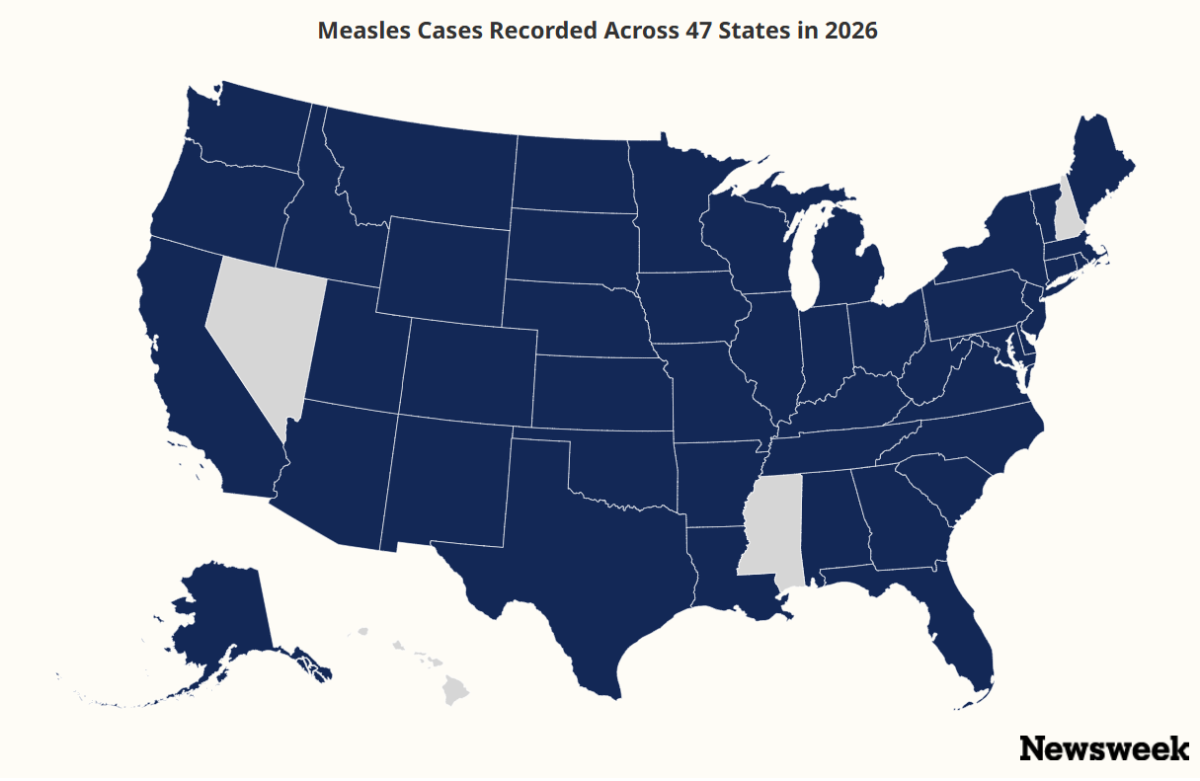
As of August 13, there were 2,566 confirmed measles cases across the U.S. in 47 states and jurisdictions.
Wisconsin’s measles cases are increasing while vaccination rates for the MMR vaccine have dropped from about 85% in 2019 to under 80% in 2025 among 2-year-olds.
The MMR vaccine protects against measles, mumps, and rubella; measles is highly contagious and needs about 95% vaccination coverage to stop outbreaks.
The Trump administration introduced new vaccine recommendations called the “Gold Standard Childhood Vaccine Recommendations,” which change how and when children get their vaccines.
Most measles cases this year (93%) were in people who were unvaccinated or had unknown vaccination status.
Wisconsin counties with vaccination rates below 70% are seeing more measles outbreaks.
Declines in vaccination rates started before the COVID-19 pandemic and worsened after due to fewer routine doctor visits.
The CDC reports 94% of this year's measles cases are from 38 different outbreaks, mostly affecting U.S. residents.
Read the Original
Want the full story? Tap a source to open the original
article.
At Bishop Kelley High School in Tulsa, Oklahoma, incoming freshmen must give their mothers, fathers, or guardians a goodbye kiss on their first day. This 26-year-old tradition, started by seniors in 2001, is a public way to thank parents and mark a special moment between parent and child.
Key Facts
The tradition involves seniors blocking freshmen from leaving until they give a goodbye kiss to a parent or guardian.
It started in 2001 as a kinder alternative to earlier, prank-based welcomes.
The kiss is usually on the cheek and happens publicly in the school parking lot.
The tradition honors the idea of respecting and thanking parents.
Mothers especially appreciate this moment, as it can be very emotional for them.
The event is seen as a rite of passage for freshmen starting high school.
Seniors enthusiastically participate by surrounding cars and holding doors closed.
Parents say the moment the student drives away signals an important transition in their relationship.
Read the Original
Want the full story? Tap a source to open the original
article.
The U.S. Justice Department called the missile threat to President Trump’s plane an “assassination attempt” in a court filing. This happened last month when the President secretly changed planes after the threat.
Key Facts
The threat involved an Iranian missile near Air Force One.
President Trump changed planes secretly to avoid danger.
The Justice Department used the term “assassination attempt” to describe this event.
The U.S. Solicitor General, John Sauer, mentioned this in a court appeal.
The appeal asks the Supreme Court to reverse a decision by a lower court.
The lower court had blocked some government action related to the incident.
The filing was made on a Friday.
The case involves national security and presidential safety.
Read the Original
Want the full story? Tap a source to open the original
article.
A CBS News report covers an embarrassing tradition that freshmen students face as an initiation at a high school in Oklahoma. The story explores the details of this unusual and uncomfortable ritual for new students.
Key Facts
The article focuses on a high school in Oklahoma.
Freshmen students go through a special initiation ritual at this school.
The ritual is described as embarrassing or humiliating.
CBS News correspondent Steve Hartman investigated this tradition.
The report was available on CBS News platforms including their app and website.
The ritual is part of the school’s way of welcoming or marking new students.
The article did not give details about the exact nature of the ritual.
The coverage aims to highlight this unique school tradition.
Read the Original
Want the full story? Tap a source to open the original
article.
The TV show "Face the Nation with Margaret Brennan" will feature guests from different political backgrounds, including Democratic and Republican leaders. The program will also discuss new CBS News poll results and include a panel of political reporters.
Key Facts
The show airs on Sunday, August 16, 2026, on CBS News at 10:30 a.m. Eastern Time.
It will feature Kentucky Governor Andy Beshear (Democrat).
Nebraska Representative Don Bacon (Republican) will appear as a guest.
Pennsylvania state Representative Christopher Rabb (Democrat) will also be featured.
Anthony Salvanto, Executive Director of Elections and Surveys at CBS News, will present new poll results.
A panel discussion will include reporters Toluse Olorunnipa (The Atlantic), Sabrina Rodriguez (The Wall Street Journal), and Paul Kane (NOTUS).
The show will be available for streaming on Paramount+ and CBSNews.com at 12:30 p.m. Eastern Time.
Read the Original
Want the full story? Tap a source to open the original
article.
Lindsay Clancy is on trial for the deaths of her three young children. Her defense says she had postpartum psychosis, a serious mental illness after childbirth. Last week, doctors and mental health experts gave important testimony, and Clancy became emotional during the trial.
Key Facts
Lindsay Clancy is accused of killing her three young children.
Her defense claims she was suffering from postpartum psychosis.
Postpartum psychosis is a severe mental illness that can happen after giving birth.
Mental health professionals testified about her condition.
Autopsy doctors also gave evidence about the children’s deaths.
Clancy showed emotional responses during the trial.
The trial has received coverage from CBS News.
Read the Original
Want the full story? Tap a source to open the original
article.
The BBC is trying to get documents and testimony from President Donald Trump's family to defend itself against his $10 billion defamation lawsuit. The lawsuit concerns a BBC Panorama episode that showed an edited version of a speech President Trump gave before the January 6, 2021 Capitol riots.
Key Facts
President Trump filed a $10 billion defamation lawsuit against the BBC over a Panorama episode.
The episode edited parts of Trump's January 6, 2021 speech, which the BBC later apologized for.
The BBC wants subpoenas for Trump’s children Donald Trump Jr., Ivanka Trump, and son-in-law Jared Kushner for documents and testimony.
The BBC says Trump’s family members have direct knowledge relevant to the case, including speech drafts and edits.
Attempts to serve subpoenas by hand failed; the BBC wants to serve them by email or mail.
Trump’s legal team denies the documentary was available on US platforms as originally claimed.
Trump dropped the BBC’s commercial arm from the lawsuit, but the main case continues.
A trial date is scheduled for February 2027 if the case goes forward.
Read the Original
Want the full story? Tap a source to open the original
article.
The article shares personal stories about the grief people feel when their pets die. It explains how the loss of a pet can cause deep sadness and guilt, and how many people struggle with this experience alone. Support services exist to help those coping with pet bereavement, and public awareness about pet loss is growing.
Key Facts
BBC Radio 1 presenter Greg James lost his dog Barney, and the author also recently lost her dog Lara.
Lara was euthanized after becoming very ill, which was a very painful decision for the author.
Many people feel guilt and question their decisions when their pets die, especially regarding euthanasia.
Grieving a pet can sometimes feel lonely as society may not fully understand the impact of pet loss.
Blue Cross, an animal charity, offers free and confidential pet loss support services.
Dr. Caroline Ficker, a vet, says guilt is a normal part of grieving because people are responsible for their pet’s care.
Some people feel the loss of a pet can be even harder than losing a human loved one.
Social media helps people connect and share their pet loss grief, reducing feelings of isolation.
Getting time off work after the loss of a pet is difficult for some, as shown by a story about someone losing a job after missing work due to grief.
Read the Original
Want the full story? Tap a source to open the original
article.
President Donald Trump is responding to worries from military families about the mental health of service members on the USS Lincoln. He says the conditions on the ship are not as bad as some people believe, amid ongoing tensions with Iran.
Key Facts
Military families raised concerns about poor conditions on the USS Lincoln.
These concerns focus on the mental health of the crew aboard the ship.
The USS Lincoln is involved during a time of conflict with Iran.
President Trump spoke publicly to downplay these concerns.
Charlie D'Agata reported on the situation for CBS News.
Read the Original
Want the full story? Tap a source to open the original
article.
After wildfires near Spokane, Washington destroyed hundreds of homes and caused over 65,000 people to leave their homes, the local community gathered to thank firefighters for their efforts. These fires led to significant damage and evacuation as people began recovery efforts.
Key Facts
Wildfires occurred near Spokane, Washington.
Hundreds of homes were destroyed by the fires.
More than 65,000 people had to evacuate their homes.
The community organized an event to show gratitude to firefighters.
Firefighters were recognized for their bravery during the wildfires.
The event helped bring the community together during recovery.
The fires caused widespread disruption and damage in the area.
Read the Original
Want the full story? Tap a source to open the original
article.
JD Vance, a Republican, said the party should pay attention to economic worries that are increasing support for socialism in the United States. He shared this view during an interview on Fox News.
Key Facts
JD Vance spoke about economic problems in the U.S. during a Fox News interview.
He said these economic issues are helping socialism grow in the country.
Vance believes Republicans cannot ignore these economic concerns.
The discussion was covered by CBS News and included input from political reporters.
The topic focuses on the connection between the economy and political shifts in the U.S.
Read the Original
Want the full story? Tap a source to open the original
article.
Five people were killed in separate locations in rural Northern Michigan on Friday. The suspect, identified as Chad Hickman, was found dead after a police search.
Key Facts
The shootings occurred in Lake Township and Caldwell Township, Missaukee County, Michigan.
Police were called around 11:40 a.m. to a home where three people were found dead and one critically injured.
The suspect, Chad Hickman, fled before police arrived and was later found dead in a wooded area with another victim.
A fifth victim was found dead at a different home linked to the case.
Authorities have not yet released the victims’ names, ages, or cause of death.
Police are treating this as a multi-homicide investigation and are still looking into the motive.
Michigan State Police said the investigation is ongoing and updates will be provided.
Read the Original
Want the full story? Tap a source to open the original
article.
Luigi Mangione admitted in federal court that he stalked and shot Brian Thompson, the CEO of UnitedHealthcare. Mangione pleaded guilty to the charges related to the killing.
Key Facts
Luigi Mangione confessed in a federal courtroom.
He pleaded guilty to stalking and killing Brian Thompson.
Brian Thompson was the CEO of UnitedHealthcare.
Mangione described tracking and shooting Thompson.
The case was covered by CBS News with legal commentary.
Read the Original
Want the full story? Tap a source to open the original
article.
The U.S. Army paused all Apache helicopter training missions after a deadly crash in Texas killed two soldiers. An investigation is underway to find out what caused the crash, and the pause will continue until the Army understands the reason behind the accident.
Key Facts
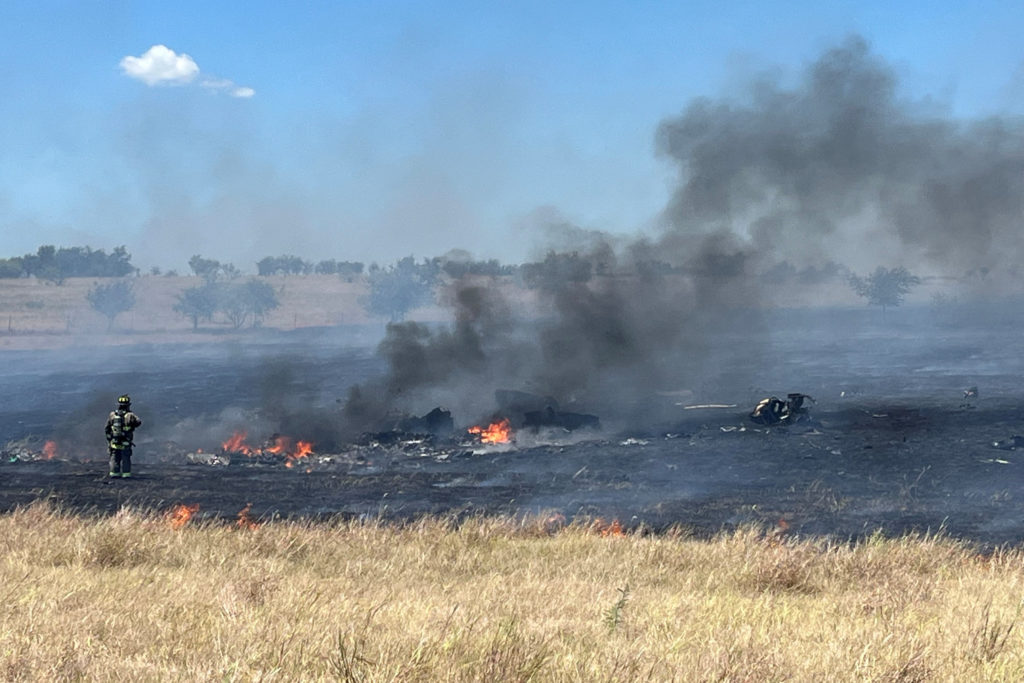
Two soldiers died in the Apache helicopter crash near Salado, Texas.
The helicopter had only these two soldiers on board when it crashed in a grassy field.
The Army has started an investigation led by a safety team from Fort Rucker, Alabama.
All Apache helicopter training flights are halted until the cause of the crash is known.
This pause does not affect combat missions in areas like around the Strait of Hormuz.
The two soldiers were part of the 1st Cavalry Division based at Fort Hood, Texas.
The Army has done similar training pauses after previous deadly helicopter crashes.
Fort Hood is a large Army base used for training and deploying troops.
Read the Original
Want the full story? Tap a source to open the original
article.
A mass shooting in rural Missaukee County, Michigan, left six people dead, including the suspected shooter, Chad Hickman. Another person was seriously injured and taken to the hospital, and the police are investigating the case.
Key Facts
The shooting happened in Missaukee County, a rural area in northern Michigan.
Six people died, including the suspected gunman, Chad Hickman, who was 39 years old.
One person was seriously injured and hospitalized.
Hickman initially fled the scene, leading to a police search.
Police found Hickman and another person dead in a wooded area after tracking his vehicle.
Investigators are still trying to understand the reasons behind the shooting.
Hickman was in the middle of a divorce.
He had previous legal issues, including child-related charges from 2010 and jail time in 2024.
Read the Original
Want the full story? Tap a source to open the original
article.
The FBI reported that violent crime in the United States dropped in 2025, with the murder rate reaching its lowest level in 20 years. President Donald Trump highlighted these new crime statistics.
Key Facts
Violent crime in the U.S. decreased in 2025 according to FBI data.
The murder rate in 2025 was the lowest it has been in 20 years.
President Donald Trump publicly shared and supported these FBI crime numbers.
The FBI is the federal agency responsible for tracking crime statistics in the U.S.
The report was covered by CBS News and presented by reporter Anna Schecter.
The data reflects nationwide trends, but no specific regional details were mentioned.
This information was released and discussed in early 2026, summarizing the previous year’s crime figures.
Read the Original
Want the full story? Tap a source to open the original
article.
The U.S. Army has stopped all training flights of Apache helicopters for a short time after a crash killed two soldiers. The grounding is a safety measure while the Army investigates the accident.
Key Facts
The U.S. Army paused all Apache helicopter training flights temporarily.
The pause happened after a crash involving an Apache helicopter.
Two soldiers died in the crash.
The Army is conducting an investigation into the cause of the crash.
The stop applies only to training flights, not all Apache helicopter operations.
The move aims to ensure safety during the investigation.
Read the Original
Want the full story? Tap a source to open the original
article.
Five people were killed and the suspect died in a shooting incident in Missaukee County, Michigan. Police found victims at two homes and in a wooded area while searching for the suspect, Chad Hickman, who was also found dead.
Key Facts
The incident happened in Missaukee County, about 169 miles northwest of Detroit.
Police responded to reports of a shooting at a home and found three dead and one injured person.
The injured person was taken to the hospital.
The suspect, 39-year-old Chad Hickman, fled before police arrived.
Police found a fourth dead person at another home during the search for Hickman.
Hickman’s vehicle and his body, along with another deceased person, were found in a wooded area.
Police have not yet explained how each person died.
Officials asked people to avoid the area and have not released names before family notification.
Read the Original
Want the full story? Tap a source to open the original
article.
Senator Richard Blumenthal spoke about problems on the USS Lincoln, a Navy ship. He was one of the first lawmakers to express concern about the ship’s condition and discussed recent updates on the situation.
Key Facts
Senator Richard Blumenthal represents Connecticut.
He raised early concerns about the USS Lincoln’s conditions.
The USS Lincoln is a ship in the U.S. Navy.
The acting Navy secretary made a statement about the ship’s conditions.
Blumenthal shared his views on a CBS News program called "The Takeout."
The discussion focused on recent developments regarding the USS Lincoln.
Read the Original
Want the full story? Tap a source to open the original
article.