The UK government is increasing defence spending, which is expected to create hundreds of jobs in companies that supply the military, like Leonardo Helicopters. While these companies are waiting for final government contracts, they are already hiring new apprentices and engineers to prepare for the anticipated increase in work.
Key Facts
Leonardo has hired 450 apprentices and graduates in the past year for its helicopter factory in Yeovil, Somerset.
Government spending on defence is expected to create or secure over 3,000 jobs at Leonardo Helicopters in Yeovil.
The company is waiting for approval on a £1 billion contract to provide the RAF with more than 20 new helicopters.
The Royal International Air Tattoo in Gloucestershire is the largest military airshow worldwide.
Over 40,000 people work in defence sector companies in the South West of the UK, many relying on Ministry of Defence contracts.
The company representatives believe more work will come from increased government defence spending, although it takes time to see results.
Defence budgets are rising not only in the UK but also across Europe.
Congress has decided to cut $9 billion from public media funding and foreign aid. Former President Trump has threatened to sue the Wall Street Journal over an article about Epstein links and has been diagnosed with a common circulatory condition.
Key Facts
Congress reduced the funding for public media and foreign aid by $9 billion.
Former President Trump plans to sue the Wall Street Journal over an article about his ties to Jeffrey Epstein.
Trump was diagnosed with a common circulatory condition.
The news was discussed in a morning edition program on July 18, 2025.
The report was given by Steve Inskeep and Michel Martin on NPR.
U.S. politicians are interested in bringing manufacturing jobs back to the country, a process called "reshoring." The idea is that this could help boost economic growth, especially in central parts of the U.S.
Key Facts
Reshoring means moving manufacturing jobs back to the U.S. from other countries.
Politicians believe reshoring could revitalize economically struggling areas in the U.S.
The idea is to strengthen the U.S. economy by creating more local jobs.
NPR's Planet Money team explored the economic theories supporting this idea.
Central regions, often referred to as the "heartland," are a focus for potential job growth.
The discussion includes looking at the benefits and challenges of resuming manufacturing domestically.
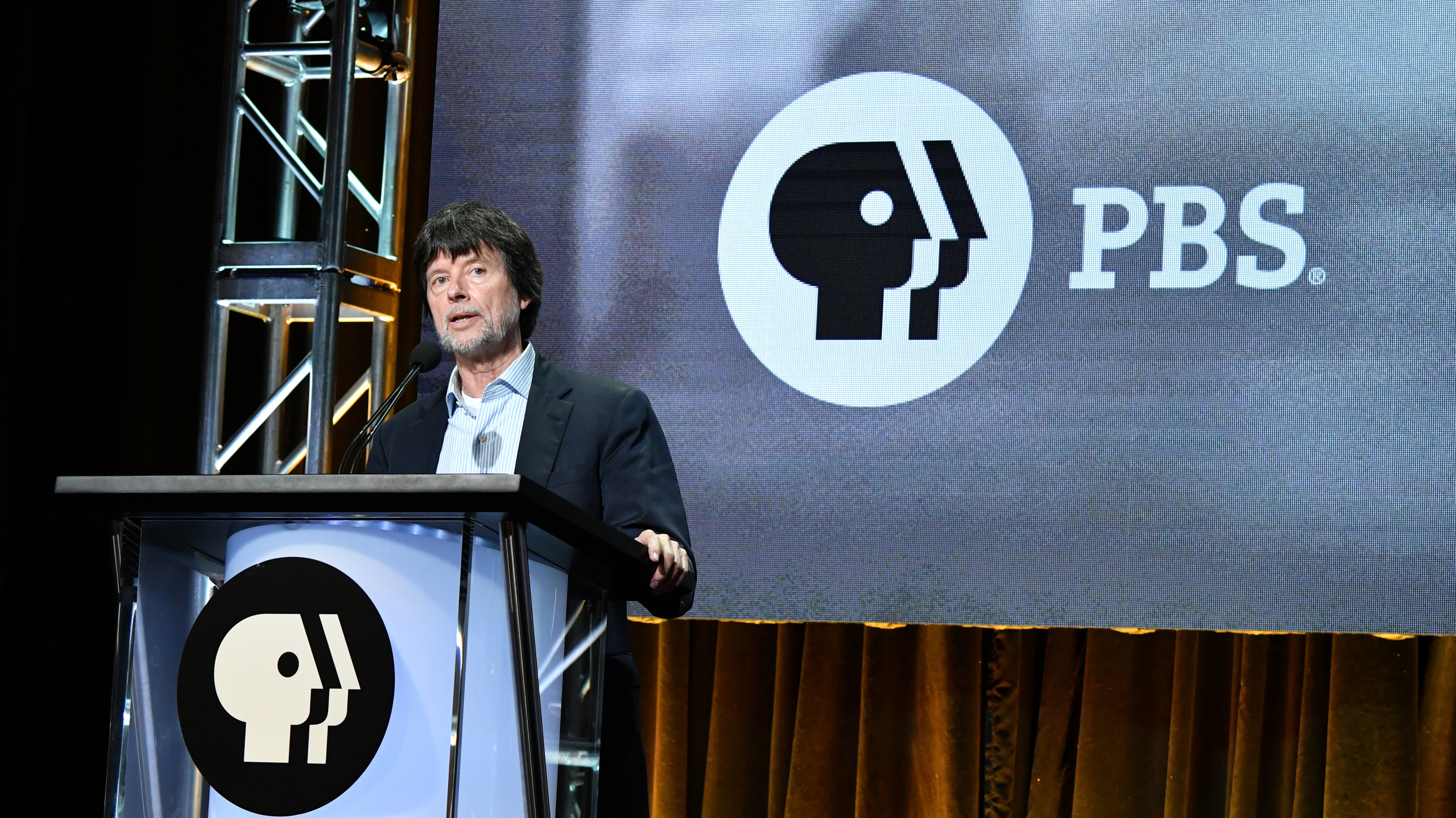
Filmmaker Ken Burns spoke about how cutting government money for public media might affect his films and children's shows. He discussed this with NPR's Michel Martin.
Key Facts
Ken Burns is a filmmaker known for creating documentaries.
He spoke with NPR's Michel Martin about public media funding.
Public media includes services like TV and radio that are available to everyone.
Burns relies on federal funding to help create his documentaries.
Cuts to this funding could impact children's programming on public media.
The potential loss of funding concerns those who produce and watch public media content.
Filmmaker Ken Burns expressed concern over cuts to federal funding for public broadcasting, warning it could severely impact new filmmakers and rural communities. The House approved a plan to cut $1.1 billion for the Corporation for Public Broadcasting, affecting NPR, PBS, and member stations, with the bill awaiting the President's signature.
Key Facts
Ken Burns warned that eliminating federal funding for public media could be harmful to filmmakers and rural areas.
The Corporation for Public Broadcasting (CPB) has played a crucial role in funding Burns' films.
The House passed a plan to cut $9 billion in funds, including $1.1 billion for the CPB.
The decision to cut funding followed a close vote, mainly divided along party lines.
Burns emphasized the unique American nature of public broadcasting, comparing it to the Declaration of Independence for communications.
Public broadcasting serves as a key news and educational resource, especially in rural areas.
Burns argued that public media remains crucial despite the rise of the internet, for its focus on factual and high-quality content.
Many police officers in Sussex are taking second jobs because they find it hard to live on their salaries. Recent data showed that 126 officers had second jobs in May 2025. This situation is part of a larger trend across the UK, where more than 4,000 officers had second jobs last year.
Key Facts
Sussex police officers are experiencing financial difficulties and taking second jobs.
The Sussex Police Federation reported that Sussex is one of the most expensive counties outside London.
In May 2025, 126 Sussex officers were working second jobs.
Surrey and Sussex Police acknowledge the financial difficulties faced by their officers.
In 2024, over 4,000 officers in the UK had permission for secondary employment, double the number from 2019.
The Police Federation of England and Wales is concerned about how police pay has decreased.
The Police Federation is urging the government to address police pay issues.
In Arizona's 7th Congressional District, 25-year-old Deja Foxx, a progressive activist, lost the Democratic primary to Adelita Grijalva, daughter of the late congressman Raúl M. Grijalva. Foxx aimed to bring generational change but faced challenges similar to other young candidates trying to stand out in elections.
Key Facts
Deja Foxx sought to represent Arizona's 7th Congressional District but lost the Democratic primary.
Adelita Grijalva, 54, won the nomination and is expected to win in the upcoming general election.
Foxx is a 25-year-old content creator and was a first-time candidate.
Younger candidates, including Foxx, are seeking office to bring new leadership to politics.
At least 10 candidates under 40 are planning to run for Congress in the next elections.
Some younger candidates, like Zohran Mamdani in New York, have successfully won office using a similar approach.
Young candidates often face challenges such as gaining institutional support and differentiating themselves on policy.
In a recent decision, Congress has voted to stop federal funding for public media, which amounts to $1.1 billion. This change is mainly supported by Republicans who argue that public media shows bias and misuse taxpayer money. The decision could affect many local stations, especially smaller ones that rely heavily on this funding.
Key Facts
Congress voted to stop $1.1 billion in federal funding for public media.
The move is mainly supported by Republicans who claim PBS and NPR are biased.
President Trump opposed funding public media, calling it a misuse of taxpayer money.
The Public Broadcasting Act of 1967 initially aimed to support public media with bipartisan backing.
Some small and rural stations depend on federal funding for up to 15% of their budgets.
NPR gets less than 2% of its funding from the federal government, while PBS relies more heavily.
Without funding, some stations may struggle to survive or be forced to shut down.
A new law, signed by President Trump, brings significant changes to U.S. education. It includes a new school voucher program and changes to federal education grants and aid programs, affecting students, schools, and colleges. The Education Department, led by Secretary Linda McMahon, has cut staff and paused grant funding while the law's new requirements are being implemented.
Key Facts
President Trump signed a new education law called the "One Big Beautiful Bill" on July 4.
The U.S. Department of Education has cut roughly half of its staff.
The Department is withholding nearly $7 billion in grant funding for various school programs while reviewing it.
The new law introduces a federal school voucher program for private and religious schools.
To qualify for the voucher, a household income can be up to 300% of the area's median income.
The Joint Committee on Taxation estimates the voucher program could cost the government $26 billion in lost tax revenue over ten years.
The voucher program requires states to opt-in, meaning not all states will participate.
Changes in the law also affect Medicaid in schools, student loans, Pell Grants, and school meal programs.
Health insurance premiums for plans bought through Healthcare.gov or state marketplaces are expected to increase by 75% next year. This rise is mainly because the extra financial help people received during the COVID-19 pandemic, which made these plans cheaper, is ending.
Key Facts
Health insurance premiums for Affordable Care Act plans will rise by 75% on average next year.
The extra help, called enhanced premium tax credits, started during the pandemic and is ending.
About 24 million people are currently enrolled in these plans, a record high.
The higher premiums could lead to 4.2 million more people becoming uninsured, as predicted by the Congressional Budget Office.
Less healthy people may remain in the insurance pool, leading to higher costs for insurance companies.
Congress would need to approve an extension of the subsidies, which is unlikely due to political disagreements.
The subsidies helped decrease the number of uninsured people to the lowest level ever recorded.
US President Donald Trump instructed the justice department to produce more documents related to Jeffrey Epstein, a convicted sex offender. Attorney General Pam Bondi indicated readiness to seek court approval to release grand jury transcripts, following pressure from Trump's supporters.
Key Facts
President Trump asked the justice department for more documents on Jeffrey Epstein.
Attorney General Pam Bondi said they could ask a court to release these documents.
A grand jury is a group that decides if there's enough evidence for criminal charges.
It is unclear if the documents are from Epstein's earlier cases or more recent ones.
Some documents from a 2006 case in Florida have already been released.
Trump had promised to release more information about Epstein during his campaign.
Bondi previously claimed there was no "client list" linked to Epstein.
Epstein died in a New York prison in 2019 while awaiting trial for sex trafficking charges.
CBS announced that "The Late Show with Stephen Colbert" will end in May 2026 due to financial reasons. The decision is not related to the show's performance and marks the first time since 1993 that CBS will not have a late-night comedy talk show. Host Stephen Colbert shared the news with his audience and thanked CBS and viewers for their support.
Key Facts
CBS stated "The Late Show with Stephen Colbert" will end in May 2026.
The ending is purely a financial decision, not due to show performance.
CBS will not have a late-night comedy talk show for the first time since 1993.
Stephen Colbert announced the news during a live show taping.
Colbert has been a prominent critic of Donald Trump on the show.
Colbert took over "The Late Show" from David Letterman in 2015.
There is no direct link between this decision and a recent lawsuit settlement involving CBS and Trump.
CBS's parent company, Paramount, is in talks for a potential merger with Skydance Media.
Immigration raids in Southern California have intensified, leading to protests and a heightened military presence. The raids have caused significant disruptions, with many undocumented immigrants going into hiding and community events being canceled.
Key Facts
Immigration raids in Southern California have increased since early June.
A worker named Jaime Alanis died after falling while trying to hide during a raid.
Federal agents used teargas on protestors outside two cannabis farms.
President Trump deployed the National Guard and Marines to support the raids.
The raids have led to protests from neighbors and activists.
Southern California has about 1.4 million undocumented immigrants.
The raids have impacted local businesses and community activities.
During the raids, 361 migrants were detained, with four having serious criminal records.
The administration claims to have rescued 14 children from possible exploitation.
Some immigrants fear being detained solely based on their ethnicity.
The family of Sayfollah Musallet, a US citizen beaten to death by Israeli settlers in the West Bank, wants the United States to investigate his death. There is concern over a pattern of no legal action in previous cases involving US citizens killed by Israeli forces or settlers.
Key Facts
Sayfollah Musallet was a US citizen from Florida who died after an attack by Israeli settlers.
His family is requesting a US-led investigation into his death.
Musallet is the ninth US citizen killed by Israeli settlers or soldiers since 2022.
None of these cases have resulted in criminal charges or US sanctions.
US Ambassador Mike Huckabee called for accountability in Musallet’s case.
Critics argue that close US-Israel ties contribute to the lack of legal actions.
The US provides significant financial aid to Israel, including military assistance.
Other similar incidents, like the deaths of Omar Assad and journalist Shireen Abu Akleh, have also faced calls for US-led investigations.
CBS announced that it will end "The Late Show with Stephen Colbert" in May next year. The decision was described as financial, not due to the show's performance, and comes amid Paramount Global's business activities and legal matters.
Key Facts
CBS will end "The Late Show with Stephen Colbert" in May 2025.
Stephen Colbert shared this news with his live audience during a taping.
Colbert began hosting the show in 2015, succeeding David Letterman.
The decision follows a settlement where Paramount Global paid $16 million in a lawsuit related to Donald Trump.
Paramount Global is seeking approval for a merger with Skydance Media worth $8.4 billion.
CBS stated the cancellation was a financial decision, unrelated to the show's content or performance.
Public figures, including Rep. Adam Schiff and Sen. Elizabeth Warren, expressed doubts about the motives behind the show's cancellation.
The U.S. House of Representatives passed three cryptocurrency-related bills. One bill, the GENIUS Act, focuses on regulations for stablecoins and will go directly to the President. The other two bills involve creating clear rules for digital assets and opposing a central bank digital currency, and they will head to the Senate for consideration.
Key Facts
The House passed the GENIUS Act to regulate stablecoins, a type of cryptocurrency linked to stable assets like the U.S. dollar.
The GENIUS Act received bipartisan support and passed by a vote of 308-122.
Another bill aims to create a new market structure for cryptocurrency, defining which digital assets are commodities or securities.
This second bill passed 294-134 in the House and will go to the Senate for further discussion.
The third bill, which passed narrowly by 219-210, seeks to prevent the creation of a central bank digital currency in the U.S.
These measures are part of a broader initiative by the Trump administration to make the U.S. a leader in the cryptocurrency space.
Concerns about the potential misuse of cryptocurrencies for corruption and foreign influence were raised due to the Trump family’s involvement in the industry.
The GENIUS Act includes a provision banning Congress members from profiting off stablecoins, but this does not apply to the President or his family.
The US has passed its first major national law for cryptocurrency, focusing on stablecoins, a type of digital currency linked to stable assets like the US dollar. This new law aims to provide clear rules for the growing crypto industry and is expected to be signed into law soon by President Trump.
Key Facts
The US passed a major law to regulate cryptocurrencies, specifically stablecoins.
Stablecoins are digital currencies backed by assets such as the US dollar to maintain their value.
President Trump is expected to sign the law; the House passed it after the Senate's approval.
This legislation is one of three crypto-related bills advancing in Washington.
The law requires stablecoins to be backed one-for-one by US dollars or similar low-risk assets.
Supporters say the law will help the US keep up with modern payment systems.
Critics warn it may introduce risks and increase tech companies' roles in finance without enough regulation.
The other two bills related to crypto regulation are progressing through Congress but face uncertainty.
Shoppers using 'buy now, pay later' services in the UK will face stricter rules from next July. These rules will include checks to ensure people can afford to repay, preventing financial troubles. This change aims to protect consumers by reducing debt risks.
Key Facts
Stricter affordability checks for 'buy now, pay later' will start in July next year.
Shoppers may be refused this type of credit if they cannot afford it.
Current 'buy now, pay later' services are not regulated by the FCA.
11 million people in the UK used these services in the past year.
A survey found that 30% of adults between 25-34 used these services in the last year.
The Financial Conduct Authority (FCA) will regulate the sector and plans to introduce rules for better consumer protection.
New rules include faster refunds, clear rights on cancellations and charges, and considerations on credit ratings.
Over ten years, regulations could save consumers £1.8 billion and reduce providers' profits by £1.4 billion.
President Donald Trump has been diagnosed with chronic venous insufficiency after experiencing leg swelling and bruises on his hands. The White House confirmed that Trump's vein condition is common, especially for people over 70, and emphasized there are no signs of more serious health issues.
Key Facts
Trump was diagnosed with chronic venous insufficiency, a condition affecting blood flow due to damaged veins.
The condition is common in people over 70 years old.
Trump's tests showed no signs of more serious problems like deep vein thrombosis or heart disease.
Bruises on Trump's hand were attributed to frequent handshaking and aspirin use.
Trump undergoes regular health check-ups, and his recent tests were normal.
It is common for US presidents to share health information, though not legally required.
During the 2015 campaign, Trump's doctor stated he was the "healthiest" president-elect, a statement later explained to be dictated by Trump.
The U.S. Justice Department has recommended a one-day prison sentence for Brett Hankison, a former police officer convicted of using excessive force in a raid that led to Breonna Taylor's death. Hankison was found guilty of violating Taylor's civil rights during the incident, and the proposed sentence includes time already served and three years of supervised release.
Key Facts
The Justice Department proposed a one-day prison sentence for Brett Hankison.
Hankison was convicted of violating Breonna Taylor's civil rights by using excessive force.
Breonna Taylor was killed during a police raid at her home.
The raid involved a "no-knock" warrant carried out by officers in plain clothes.
Hankison fired 10 times during the raid but did not hit anyone; his bullets entered a neighboring apartment.
The Justice Department suggested the light sentence because Hankison did not directly cause Taylor's death.
A judge will decide whether to accept the Justice Department's sentencing recommendation.