The United States is delaying the delivery of weapons to Ukraine, which had been allocated by both the Biden administration and the previous Congress. This is happening while Russia is advancing territorially in Ukraine and has been conducting continuous drone and missile attacks.
Key Facts
The United States is postponing sending weapons to Ukraine.
These weapons were already approved by the Biden administration and the previous Congress.
Russia has recently gained territory in Ukraine.
Russia has been carrying out constant drone and missile strikes against Ukraine.
The information was reported by Nick Schifrin from The News Hour.
Republicans are working on a bill to provide significant funding for President Trump's deportation efforts. Meanwhile, President Trump visited a new detention center in Florida, designed to hold many people who are awaiting deportation.
Key Facts
Republicans are trying to pass a major bill for deportation funding.
The bill aims to allocate billions of dollars to aid President Trump's deportation plans.
President Trump visited a new detention center in Florida.
The center has been nicknamed “Alligator Alcatraz” by local officials.
The detention facility is located at an airport in the Florida Everglades.
The facility can house up to 5,000 people awaiting deportation.
Laura Barrón-López is the White House Correspondent reporting this news.
President Donald Trump visited a new detention center called "Alligator Alcatraz" in the Florida Everglades. The facility is designed to hold about 1,000 migrants and is part of a plan to tighten immigration controls. The center's construction has raised environmental concerns among local residents and lawmakers.
Key Facts
"Alligator Alcatraz" is located in the Florida Everglades and will hold around 1,000 migrants.
The center is built on an old airfield and aims to prevent escapes with the help of the surrounding wetlands and wildlife.
President Trump views the center as a key step in his strategy to control illegal immigration.
The facility will cost approximately $450 million per year to maintain.
Some lawmakers, the local mayor, and residents oppose the construction due to potential environmental harm.
Concerns focus on damage to wetlands and endangered species, impacting the large-scale restoration of the Everglades.
The site is located near Miami and is seen as a challenging place to escape from, similar to Alcatraz prison.
Environmental experts warn that the center did not undergo a strict environmental review process.
A recent poll shows that Americans have different opinions about President Trump's strict immigration policies. The poll was released by PBS News, NPR, and Marist.
Key Facts
The poll was conducted by PBS News in partnership with NPR and Marist.
It focused on President Trump's immigration policies.
The results showed mixed feelings among Americans about these policies.
The poll findings were discussed by Amna Nawaz and Domenico Montanaro.
President Donald Trump opened a new immigration detention center in Florida, called "Alligator Alcatraz", alongside Florida Governor Ron DeSantis and Homeland Security Secretary Kristi Noem. The facility, located in the Everglades, is intended to support mass deportation efforts by providing more space for detainees.
Key Facts
"Alligator Alcatraz" is a new immigration detention facility in southern Florida.
President Trump, Governor Ron DeSantis, and Secretary Kristi Noem attended the opening.
The facility is in the Everglades, on the former Dade-Collier Airport site.
It aims to provide more space for detainees to support mass deportations.
The location is isolated, surrounded by wetlands and wildlife like alligators.
The site was set up quickly, with temporary structures on the old airport pavement.
The proximity to an airstrip is meant to help speed up deportations.
In the past ten years, over 20 states have created laws or rules that limit how history is taught in schools. President Trump has also issued orders to change how U.S. history is shown in schools and museums.
Key Facts
Over 20 states have passed laws affecting history education in the last decade.
These laws restrict the way history is taught in schools.
President Trump issued executive orders to influence how U.S. history is presented.
These changes impact not only schools but also some famous museums.
The report is part of the Art in Action series and CANVAS coverage.
New laws starting in July affect various states in the U.S. Tennessee has laws on immigration that could lead to charges against local officials and another law that targets housing immigrants without documentation. Other states, like Wyoming and Florida, have laws impacting gun-free zones and water fluoridation, respectively, while several states continue to pass laws affecting transgender rights.
Key Facts
Tennessee can charge local officials with a felony if they support certain "sanctuary policies" on immigration.
A new law in Tennessee makes it illegal to house undocumented immigrants, with lawsuits challenging this by religious groups and landlords.
Wyoming's new law stops local authorities from banning guns in schools and public buildings.
Florida banned local governments from adding fluoride to water, citing health concerns, while experts argue fluoride benefits dental health.
Georgia law now bans transgender athletes from participating in school and university sports.
Iowa removed gender identity from its civil rights protections and legally defined male and female.
Kansas has prohibited gender-affirming healthcare practices for minors.
Some U.S. national climate assessment reports are not available on federal websites right now. These reports, which help local and state governments plan for climate changes, were supposed to be moved to NASA's site, but links are missing. Past reports are still in NOAA’s library, but new reports aren't easy to find online.
Key Facts
U.S. climate assessment reports have vanished from federal websites.
The reports help state and local governments plan for climate changes.
The White House said NASA would now host these reports, but details were not provided.
Searches for the reports on NASA’s site have not been successful.
NOAA, which coordinated the reports, has not responded to queries about their availability.
Past assessment reports are still stored in NOAA’s library.
The most recent report, from 2023, included a detailed interactive atlas.
The assessments are required by law every four years under the 1990 Global Change Research Act.
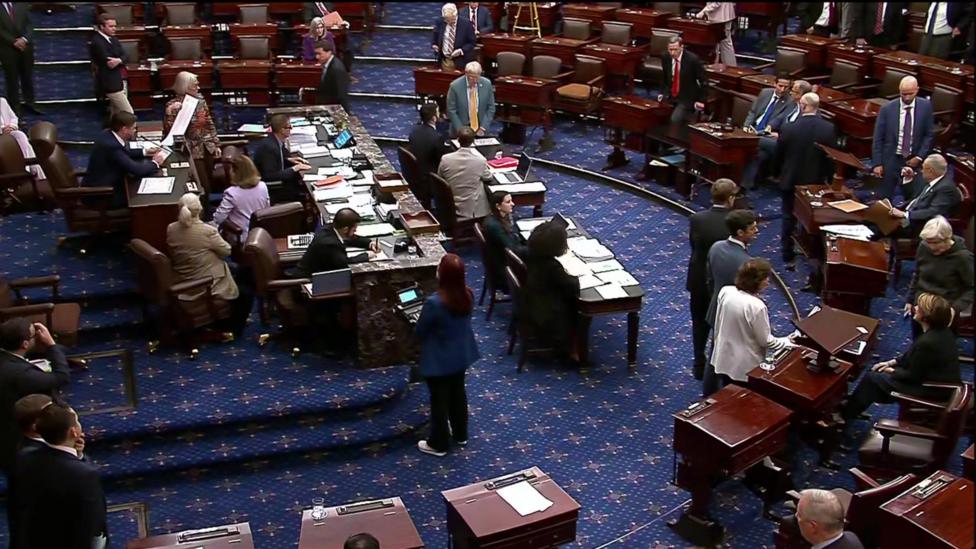
The U.S. Senate approved President Donald Trump's major tax and spending cut bill by a 51-50 vote. Vice President JD Vance cast the deciding vote during a long session where senators considered many amendments.
Key Facts
The Senate approved President Trump's bill with a close 51-50 vote.
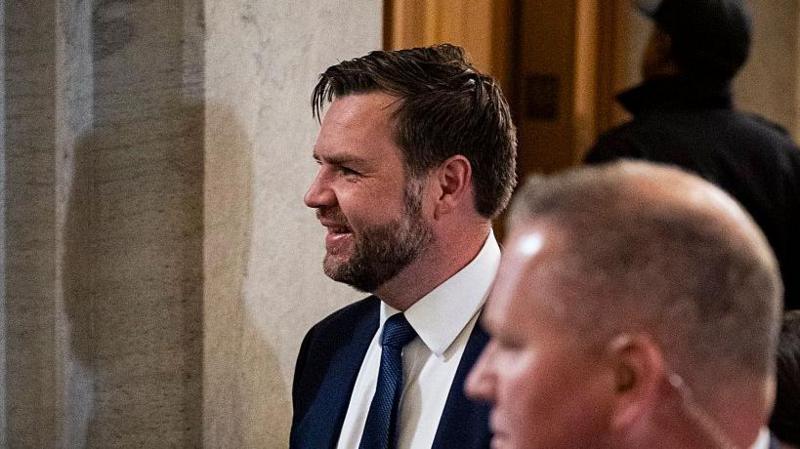
Vice President JD Vance broke the tie to pass the bill.
This session involved the longest "vote-a-rama" in history, lasting 27 hours.
Senators went through 49 votes and many potential changes to the bill.
Three Republican senators voted against the bill: Susan Collins, Thom Tillis, and Rand Paul.
Concerns about Medicaid cuts and the deficit were reasons for opposition.
Senator Lisa Murkowski played a key role in the vote's outcome.
The bill used a special process called "budget reconciliation," which involves a step called the "Byrd bath" to ensure parts of the bill have a budgetary effect.
A large tax and spending bill central to President Trump's plans was passed by the Senate after extensive negotiation and voting. The bill now returns to the House of Representatives, where Speaker Mike Johnson must address Senate modifications and align them with the House members' priorities.
Key Facts
The Senate passed President Trump's major tax and spending bill after prolonged discussions.
There were 49 consecutive votes in the Senate before passing the bill.
The bill supports key parts of Trump's domestic policy agenda.
The bill must now go back to the House of Representatives for further action.
House Speaker Mike Johnson will manage differences between the Senate's version and House priorities.
Mike Johnson represents the Republican party and serves as the Speaker of the House.
The discussion included input from Michael Ricci, who has experience in Republican politics.
President Donald Trump visited a new immigration detention center in South Florida called "Alligator Alcatraz" because it is located in a secluded area of the Everglades. Florida Governor Ron DeSantis mentioned that the center was built in just eight days, and the first people are expected to arrive soon.
Key Facts
President Trump toured an immigration detention center in South Florida.
The center is nicknamed "Alligator Alcatraz" due to its isolated location in the Everglades.
Florida Governor Ron DeSantis accompanied President Trump on the tour.
Homeland Security Secretary Kristi Noem was also present during the visit.
The center was constructed in eight days, according to Governor DeSantis.
They expect to receive the first occupants by the coming Wednesday.
Republicans are working to pass a tax and spending cut bill through Congress, with a final House vote possibly happening soon. The bill includes tax cuts, funding for national defense, and measures for immigration enforcement, with plans to offset costs by reducing spending on Medicaid and other programs. The Senate has already passed the bill, and the House will vote on the amended version.
Key Facts
Republicans are close to passing a tax and spending cut bill in Congress.
The bill is 887 pages long and includes tax breaks and spending cuts.
President Trump has urged Republicans to pass the bill by July 4th.
The legislation includes $4.5 trillion in tax cuts, making current tax rates permanent.
It adds new tax breaks, such as no taxes on tips and overtime pay.
The bill provides $350 billion for Trump's border and national security plans.
$46 billion is allocated for the U.S.-Mexico border wall and $45 billion for migrant detention.
To pay for the bill, Republicans propose cutting Medicaid and food assistance programs.
The U.S. government, during the Trump administration, has used charges of antisemitism to justify cutting university funding, banning travelers, and deporting student activists. Some Jewish community members believe these moves are not effectively addressing safety concerns or reducing antisemitism.
Key Facts
The Trump administration cited antisemitism as a reason for its actions against universities.
Actions included cutting funds, banning certain travelers, and deporting some student activists.
These measures are part of broader federal pressure on higher education.
Some people in the Jewish community argue these steps do not effectively ensure safety or combat antisemitism.
The topic is connected to wider conservative critiques of higher education.
A federal judge ruled that recent large layoffs at the U.S. Department of Health and Human Services (HHS) were likely against the law. The judge stopped the Trump administration from continuing these layoffs and restructuring, following a lawsuit by attorneys general from 19 states and the District of Columbia.
Key Facts
A federal judge stopped the Trump administration from proceeding with mass layoffs at HHS.
The judge's decision was based on a lawsuit by attorneys general from 19 states and Washington, D.C.
The layoffs had affected more than 10,000 employees and involved consolidating 28 agencies into 15.
The judge called the layoffs "arbitrary and capricious" and against legal standards.
The lawsuit argued that the restructuring harmed essential health programs and shifted costs to states.
The affected HHS parts include the CDC, the Center for Tobacco Products, the Office of Head Start, and others.
Health Secretary Robert F. Kennedy Jr. had said 20% of the layoffs might be reversed due to mistakes.
HHS must report the status of the situation by July 11, according to the judge's order.
Senate Republicans passed a major tax and spending bill, which involved Vice-President JD Vance breaking a tie vote. The bill, part of Trump's plans, now returns to the House of Representatives, where its future is uncertain due to various concerns, including its potential to increase the national deficit.
Key Facts
Republicans in the Senate passed a tax and spending bill after 24 hours of debate.
Vice-President JD Vance cast the deciding vote in a 50-50 tie in the Senate.
The bill must now be approved by the House of Representatives.
Trump's goal was for the bill to be ready by July 4, but opposition may cause delays.
The bill proposes to make permanent tax cuts and reduce spending on programs like food subsidies and healthcare.
Some Republicans and Democrats oppose the bill due to concerns about increased national debt and cuts to social programs.
The Senate version of the bill might add $650 billion to the yearly national deficit.
Opposition includes fiscal conservatives, Democrats, and figures like Elon Musk, who disagree with parts of the bill.
The future of a tax and spending bill supported by former President Trump depends on the decision of the House of Representatives. NPR's Juana Summers discusses the bill's chances with Michael Ricci, a former congressional advisor and current professor.
Key Facts
The bill involves both tax changes and government spending.
The decision about the bill will be made by the House of Representatives.
Juana Summers from NPR is discussing the bill's prospects.
Michael Ricci, who is a professor and a former advisor to congressional Republicans, provided insights.
A father jumped into the ocean to rescue his daughter after she fell overboard from a Disney Cruise Line ship. Both were safely rescued by crew members near the Bahamas as the ship headed to Florida.
Key Facts
A girl fell from a Disney cruise ship while her father took a picture.
Her father jumped into the ocean to save her.
The rescue happened on the last day of the cruise.
They were traveling from the Bahamas to Fort Lauderdale, Florida.
Crew members rescued both the father and daughter after they were in the water for 10 minutes.
The U.S. Senate voted 99-1 to remove a proposal that aimed to prevent states from regulating artificial intelligence (AI) for ten years from a larger bill related to tax breaks and spending cuts. The proposal faced opposition from both Republicans and Democrats, who argued it restricted states' ability to regulate AI effectively. The vote took place after an overnight session, and the amendment to strike the provision was introduced by Senators Marsha Blackburn and Maria Cantwell.
Key Facts
The proposal tried to stop states from regulating AI for ten years.
The proposal was connected to federal funding, offering subsidies only to states that did not regulate AI.
The Senate voted 99-1 to remove this proposal from the bill.
The provision faced criticism from both Republican and Democratic governors and state officials.
A last-minute effort to save the measure was abandoned after amendments proposed by Sen. Marsha Blackburn and Sen. Maria Cantwell.
Prominent tech leaders initially supported the idea, fearing complex compliance with varied state laws.
Opponents argued that the proposal benefited the AI industry by reducing accountability.
Arkansas Gov. Sarah Huckabee Sanders led a group of GOP governors in opposing the measure.
A group of parents urged lawmakers to strike the proposal, citing safety concerns related to harmful AI products.
Senate Republicans are facing challenges in passing a major tax and spending bill linked to President Trump's agenda. Four Republican senators currently do not support the bill, making it difficult to secure enough votes. If the Senate approves the bill, it must return to the House of Representatives, where it will face another vote.
Key Facts
Senate Republicans are trying to pass a large tax and spending bill.
Four Republican senators opposed the current version of the bill.
Vice-President JD Vance is expected to cast tie-breaking votes if needed.
The bill aims to extend tax cuts from Trump's first term.
Republicans want to cut spending on programs like healthcare and food aid to balance the budget.
The House of Representatives passed their version of the bill by a narrow margin.
If approved by the Senate, the bill will need another vote in the House.
President Trump initially wanted the bill by July 4th but acknowledged it might not happen by then.
Zohran Mamdani won New York City's Democratic mayoral primary, defeating former Governor Andrew Cuomo by 12 percentage points. Mamdani will face incumbent Mayor Eric Adams, independent candidate Jim Walden, and Republican Curtis Sliwa in the general election. Cuomo may run as an independent in the general election.
Key Facts
Zohran Mamdani won the Democratic primary for New York City mayor.
Mamdani defeated Andrew Cuomo by 12 percentage points in the primary.
Mamdani will compete against current Mayor Eric Adams and others in the general election.
Cuomo is considering running in the general election as an independent.
Ranked choice voting was used, allowing voters to rank candidates by preference.
Mamdani is 33 years old and a democratic socialist, previously a member of the state Assembly.
If elected, Mamdani would be New York City's first Muslim and first Indian American mayor.
Mamdani's campaign focused on reducing the cost of living and included populist ideas.