Muslim New Yorkers have been attending Eid holiday prayers in Washington Square Park for years. Recently, some right-wing figures have used these gatherings to spread unfounded fears linked to Muslim American mayoral candidate Zohran Mamdani. This has led to an increase in Islamophobic comments following Mamdani's victory in the Democratic primaries, with several public figures making derogatory remarks.
Key Facts
Muslim New Yorkers gather in Washington Square Park for Eid prayers annually.
Footage of these gatherings has been used by right-wing influencers to spread fear.
Zohran Mamdani, a Muslim American, recently won the Democratic primaries for New York City mayor.
Islamophobic rhetoric has increased after Mamdani's primary victory.
Some public figures have falsely linked Mamdani to extremist ideologies.
Politicians, including those connected to former President Trump, have made derogatory statements.
Calls for condemnation of bigotry are being made by some politicians and activists.
Some Democrats have publicly denounced the anti-Muslim remarks.
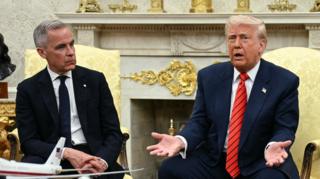
The White House stated that Canadian Prime Minister Mark Carney decided not to impose a digital services tax on large U.S. tech companies after discussions with President Donald Trump. This decision followed Trump's threat to raise tariffs and halt trade negotiations. Canada's finance minister announced the tax's cancellation, which aimed to tax major tech firms' revenues in Canada.
Key Facts
Canada planned a tax on big U.S. tech companies like Amazon, Meta, Google, and Apple.
The tax proposed a 3% charge on Canadian revenue over $20 million.
President Trump threatened to stop trade talks and raise tariffs in response to the tax.
Canada decided to cancel the tax to resume trade negotiations with the U.S.
Canadian Finance Minister François-Philippe Champagne confirmed the tax's removal.
The tax, introduced in 2020, aimed to tax tech companies not fully taxed on their Canadian earnings.
The estimated cost to tech firms was over C$2 billion in the first year.
The tax cancellation caused political criticism within Canada, particularly by opposition leader Pierre Poilievre, who urged a different approach to U.S. negotiations.
Mexican authorities found 20 bodies on a highway in Sinaloa, an area affected by violent drug cartel fights. The bodies were found in different places, and a note was left, likely from one of the cartels involved. Violence in the region is tied to disputes over drug trafficking routes related to the Sinaloa Cartel.
Key Facts
20 bodies were found, some decapitated, on a highway in Sinaloa, Mexico.
Bodies were discovered on a roadside, inside a vehicle, and in a bag.
A note was left with the bodies, possibly from a drug cartel, but its contents are unknown.
The Sinaloa region is experiencing violence due to rival cartels fighting for drug trafficking routes.
Joaquin "El Chapo" Guzman and Ismael "El Mayo" Zambada’s factions are involved in these conflicts.
Violence increased after Ismael Zambada's arrest and trial in the U.S.
Over 1,200 people have died in Sinaloa due to this violence.
Drug-related crimes in Mexico have resulted in about 480,000 deaths since 2006.
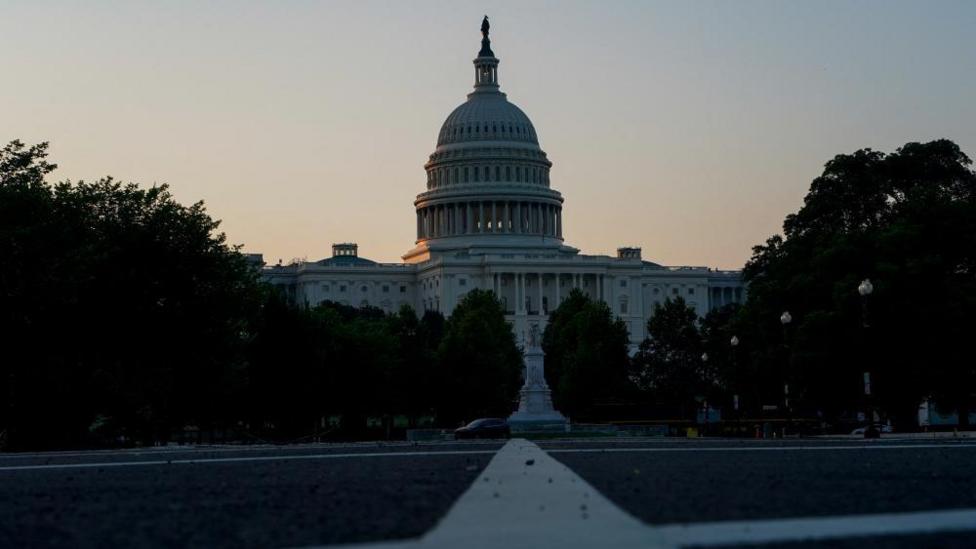
A significant bill, which includes large tax cuts and changes to immigration, energy, and Medicaid, is currently with the U.S. Senate. The outcome depends on whether enough Republican senators will support it.
Key Facts
The bill proposes trillions in tax cuts.
It plans to make big changes to the U.S. immigration system.
It will affect the country’s energy policies.
Medicaid, a health program for low-income and disabled people, is part of the changes.
The Senate currently has control over the bill's future.
It's uncertain if enough Republican senators will vote in favor of the bill.
Idaho authorities are looking into why someone ambushed and killed two firefighters. The Trump administration claims Harvard discriminated against Jewish and Israeli students. The Supreme Court is set to review rules about how much money political parties can spend on federal elections.
Key Facts
Idaho investigators are searching for a reason behind the ambush shooting that killed two firefighters.
The Trump administration accuses Harvard of violating civil rights by not protecting Jewish and Israeli students.
The Supreme Court will examine existing rules on political party spending in federal elections.
An "ambush shooting" means an attack where victims are caught by surprise.
The Supreme Court is the highest court in the United States.
Civil rights laws are intended to protect individuals from discrimination based on characteristics like race or religion.
Native Americans and Alaskan Natives have faced higher rates of violent crimes such as murder and rape for many years. Many of these crimes are not solved, partly because there aren't enough law enforcement resources.
Key Facts
Native Americans and Alaskan Natives experience higher rates of violent crimes compared to other groups.
These crimes include murder, rape, and other forms of violence.
Generational trauma and systemic abuse are seen as contributing factors.
A lack of law enforcement resources in these communities affects crime-solving rates.
The report about these issues is from New Mexico.
This information is part of a series called "Race Matters."
Recent updates to President Trump's tax and spending bill are expected to reduce health care spending by about $1.1 trillion over the next ten years, leading to millions losing their health insurance.
Key Facts
The Congressional Budget Office (CBO) provided the estimates for the changes.
The bill plans to cut about $1.1 trillion from health care over ten years.
Approximately 11.8 million people might lose health insurance by 2034.
Most of the health insurance cuts would affect Medicaid.
Medicaid is a government program that helps people with low income access health care.
Laura Barrón-López discussed these findings with Larry Levitt, an expert from KFF (a health policy organization).
NPR’s Tamara Keith and Amy Walter, from the Cook Political Report, joined Amna Nawa to talk about recent political events. They discussed lawmakers voting on a significant bill proposed by former President Trump, some Republican members disagreeing with him, and the Democratic strategy for upcoming elections.
Key Facts
Tamara Keith and Amy Walter are journalists who cover political news.
They discussed a major bill linked to former President Trump called "One Big Beautiful Bill."
Some members of the Republican Party are opposing Trump on this issue.
The discussion included future election strategies for the Democratic Party.
Amna Nawa hosted the conversation with these two political analysts.
Authorities in Idaho are investigating a man who allegedly started a fire and then shot three firefighters. Two firefighters died from the attack, and the suspect is also dead. The reason for the suspect's actions is unknown.
Key Facts
A man allegedly started a fire in Idaho and then shot at firefighters who responded.
Three firefighters were shot in the incident.
Two of the firefighters died from their injuries.
The suspect involved in the shooting is dead.
The reason behind the suspect's actions is not known at this time.
Republicans are suggesting adding work requirements to Medicaid as a way to save money in a new budget bill. Some studies show that while this approach reduces costs, it can also remove eligible people due to complicated paperwork.
Key Facts
Medicaid is a government program that helps cover healthcare costs for people with low income.
Republicans propose work requirements in Medicaid to reduce spending.
These requirements mean people need to work a certain number of hours or prove they are looking for work to receive Medicaid benefits.
Studies indicate that these requirements can cut costs.
However, paperwork involved in proving work status can cause eligible people to lose their benefits.
The proposal is part of a larger budget bill aimed at saving taxpayer money.
The Senate Republicans' budget bill suggests cutting hundreds of billions from Medicaid, potentially causing nearly 12 million people to lose health insurance. Senator Thom Tillis from North Carolina expressed concern that the cuts would break former President Trump's promise to protect Medicaid.
Key Facts
The budget bill is being debated by Senate Republicans.
The bill proposes significant cuts to Medicaid funding.
The Congressional Budget Office estimates that nearly 12 million people could lose health insurance if the bill passes.
Former President Trump promised not to cut Medicaid.
Senator Thom Tillis believes the cuts go against Trump's Medicaid promise.
Medicaid provides health coverage, mainly aiding low-income individuals.
Critics, including Democrats, argue that these cuts could have severe impacts on people relying on Medicaid.
President Donald Trump will meet with Israeli Prime Minister Benjamin Netanyahu at the White House next Monday. They plan to discuss a ceasefire and hostage agreement to end the conflict in Gaza.
Key Facts
President Trump will host Prime Minister Netanyahu at the White House next Monday.
The focus of the meeting will be on finding solutions for a ceasefire in Gaza.
An anonymous U.S. official shared news of the visit, as it has not been officially announced.
The visit follows discussions earlier in the week between Israeli Minister Ron Dermer and U.S. officials.
President Trump has been working on ending the fighting between Israel and Hamas.
The President expressed optimism about achieving a ceasefire soon, though he provided no detailed plan.
The White House is in constant contact with Israeli leaders to prioritize ending the conflict in Gaza.
No formal date has been set for another visit by Netanyahu to Washington.
The U.S. Supreme Court ended its term, but it will continue working on emergency cases over the summer. The court made significant decisions, including restricting lower court powers and handling many emergency appeals, mainly favoring the Trump administration.
Key Facts
The Supreme Court concluded its term last Friday but will still handle emergency cases during the summer.
The court limited the powers of lower courts to challenge executive actions.
It gave itself the power to block executive orders from the president.
The number of formal opinions issued this term was the lowest since the 1930s, with only 56 opinions released.
Many of the court's decisions favored the Trump administration's requests for increased presidential power.
The "shadow docket," used for urgent appeals, saw increased use for decisions lacking full briefing or signed explanations.
The court has allowed Trump's initiatives to proceed while leaving legal questions unresolved.
Migrants in Necocli, Colombia, are turning back from their journey to the U.S. due to stricter immigration rules. They are seeking new places to settle after realizing crossing the U.S. border is challenging.
Key Facts
Necocli is a town in Colombia located on the Caribbean coast.
A boat carrying migrants from Venezuela arrived at Necocli.
The migrants are returning because they couldn't cross the U.S. border.
Luis Angel Yagua Parra, a 21-year-old from Venezuela, is among the migrants.
Yagua Parra has traveled through this area before.
Migrants used to travel north from South America to reach the U.S.
There is now a trend of migrants turning back due to tougher U.S. immigration measures.
The U.S. Department of Justice (DOJ) announced charges against a person from Pakistan in a $650 million health care fraud case. This case is one of many in a large effort by the DOJ to stop health care fraud schemes nationwide. The total potential losses from these schemes could be $14.6 billion.
Key Facts
A Pakistani national, Farrukh Ali, is charged with health care fraud aimed at an Arizona Medicaid program for Native Americans.
Ali allegedly worked with at least 41 clinics to falsely bill for substance abuse treatments.
Patients, often from homeless populations or Native American reservations, did not receive real treatment.
This case is part of nearly 200 cases in the DOJ's national health care fraud crackdown.
The DOJ's effort this year involves $14.6 billion in potential losses, making it the largest takedown in history.
The DOJ estimates health care fraud in the U.S. costs about $300 billion each year.
Ali is accused of conspiracy, wire fraud, and money laundering.
Ali's company, ProMD Solutions LLC, was based in Arizona and Pakistan, offering medical billing services.
The Senate is considering ending federal tax credits for electric vehicles (EVs) earlier than planned, with a proposed end date of September 30. The current Senate draft suggests the credits would stop sooner than the House version, but changes to the bill are still possible as it continues through the legislative process.
Key Facts
The Senate's version of a tax and spending bill could end electric vehicle tax credits by September 30.
The House version of the bill proposed ending these credits by late 2025 or 2026.
The bill is not final; the Senate is voting on amendments, and the House and Senate versions will need to be reconciled.
Some groups, like the American Energy Alliance, support ending the credits quickly, while others, like auto dealers, want a more gradual phase-out.
Current credits include a used vehicle credit up to $4,000, aimed at helping lower- and middle-income buyers.
There is concern that ending the credits suddenly could disrupt the car market and confuse consumers.
Part of the debate involves the "lease loophole," which allows tax credits without income and price restrictions, drawing criticism.
The White House has accused Harvard University of violating civil rights laws regarding the treatment of Jewish students. A letter from the Trump administration claimed that the university did not adequately address threats and discrimination against Jewish students on campus, which could lead to the loss of federal funding.
Key Facts
The Trump administration sent Harvard a letter claiming the university violated civil rights laws concerning Jewish students.
Jewish students at Harvard reported discrimination and physical threats.
Incidents included Jewish students being spat on and antisemitic images being circulated.
The administration warned that Harvard could lose all federal funding if it does not make immediate changes.
This letter is part of ongoing tensions between Harvard and the Trump administration regarding the handling of antisemitism.
In May, the administration ordered a review of Harvard's federal grants, worth an estimated $100 million.
The administration had previously frozen $2.65 billion in federal grants and threatened Harvard's ability to enroll international students.
Columbia University received a similar letter from the administration about protecting Jewish students.
U.S. Representative Don Bacon from Nebraska announced he will not run for reelection next year. He cited the desire to spend more time with his family and the difficulty of navigating between political parties in a district with both Republican and Democratic voters. Bacon plans to complete his current term and has been known for his centrist approach in politics.
Key Facts
Don Bacon is a Republican U.S. Representative from Nebraska.
He announced he will not seek reelection in 2024.
Bacon has served nearly a decade in office.
He represents Nebraska’s 2nd district, which includes Omaha.
This district is known for being politically divided.
Bacon has focused on a bipartisan approach during his time in office.
He believes his district requires winning over swing voters, who can vote either way.
Bacon plans to finish his current term before stepping down.
More than 400 jobs are at risk after the UK-based Lindsey Oil Refinery went into administration, sparking government calls for an investigation. The Prax Group, which bought the refinery in 2021, faced financial losses and couldn't fully answer financial inquiries, leading to concerns over its management and future operations.
The U.S. Senate started voting on a large spending plan called the "big beautiful bill." The plan involves significant tax cuts and welfare program changes, with debates around its potential impact on national debt and healthcare services. The Senate made some changes to the bill, meaning the House of Representatives will vote on it again after the Senate decides.
Key Facts
The U.S. Senate began voting on a large spending bill nicknamed the "big beautiful bill."
The bill includes tax cuts President Trump supports, like deductions for Social Security benefits and removing taxes on overtime.
The Senate vote to start debating the bill was close, with two Republicans and all Democrats opposing it.
Senator Thom Tillis and Senator Rand Paul, both Republicans, voted against it, citing concerns about broken promises and debt increases.
The bill would add $3.3 trillion to the national debt, according to the Congressional Budget Office.
The bill passed in the House of Representatives by a single vote before heading to the Senate.
Republicans can only lose three votes in the Senate to pass the bill without needing a tie-breaking vote from the Vice President.
The House will need to vote again on the Senate's version of the bill before it can become law.