The Trump administration's vaccine experts are discussing whether to stop using a preservative called thimerosal in some vaccines. Thimerosal has been used safely in vaccines for decades, with studies showing no harm from it. However, some people are worried about its mercury content, even though the type of mercury in thimerosal is different from harmful seafood mercury.
Key Facts
Thimerosal is a preservative used in some vaccines and medical products since the 1930s.
This preservative prevents bacterial contamination in multi-dose vaccine vials.
Thimerosal contains a mercury type called ethylmercury, which the body can remove, unlike the harmful mercury found in some seafood.
Most vaccines for children have been made without thimerosal since 2001.
About 96% of flu vaccines given in the U.S. last flu season did not have thimerosal.
U.S. Health Secretary Robert F. Kennedy Jr., who questions vaccine safety, is raising the issue again.
A CDC analysis continues to show no link between thimerosal and health problems like autism.
Former US President Donald Trump asked for the corruption trial against Israeli Prime Minister Benjamin Netanyahu to be stopped or for Netanyahu to be pardoned. Netanyahu is on trial for bribery, fraud, and breach of trust, charges he denies. Yair Lapid, the main opposition leader in Israel, criticized Trump's comments, which come amid Israel's conflicts with Iran and Hamas.
Key Facts
Donald Trump called for an end to the corruption trial of Israeli Prime Minister Benjamin Netanyahu.
Netanyahu is facing charges of bribery, fraud, and breach of trust and has been on trial since 2020.
Trump praised Netanyahu on social media, calling him a "hero" and "warrior" for Israel.
Trump also claimed the US helped Israel in its conflict with Iran and would now "save" Netanyahu.
The main opposition leader in Israel, Yair Lapid, said Trump should not interfere in Israel's legal matters.
Netanyahu has shown support for Trump's actions against Iran.
Yair Lapid suggested Trump might have a political motive for intervening, related to a potential deal on Gaza.
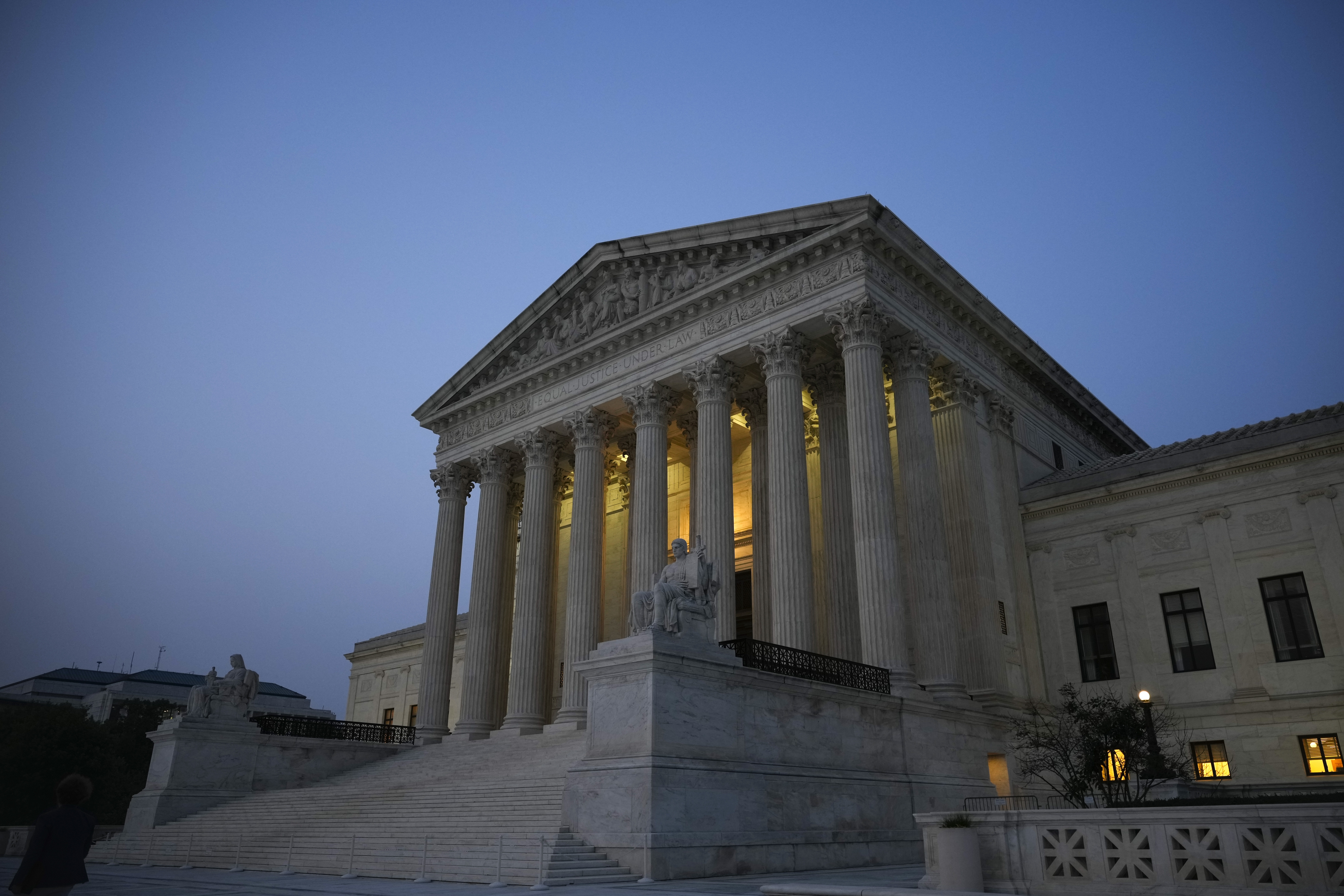
The U.S. Supreme Court ruled in favor of Ruben Gutierrez, a Texas death row inmate, allowing him to seek DNA testing that might prove he shouldn't be executed. Gutierrez was convicted of killing an 85-year-old woman during a robbery, but he claims DNA evidence will show he was not involved.
Key Facts
The Supreme Court decided 6-3 in favor of Ruben Gutierrez.
Gutierrez wants DNA testing to show he is not guilty of a murder he was sentenced to death for.
The murder victim was an 85-year-old woman named Escolastica Harrison.
Prosecutors claim the murder took place during a robbery aimed at stealing over $600,000.
Gutierrez's lawyers say no physical evidence links him to the crime.
Two other people were also charged in connection with the murder.
Gutierrez had previous execution dates postponed, including one due to a request for a spiritual adviser.
The Supreme Court had previously stayed his execution shortly before it was to occur.
The Senate parliamentarian ruled that a proposed change to Medicaid tax rules in a Republican tax and spending bill does not meet the requirements for passing the bill through a fast-track process. This decision affects the Republicans' plan to offset tax cuts and complicates the bill's progress.
Key Facts
A Senate official, known as the parliamentarian, reviews whether bill parts follow certain rules.
The parliamentarian decided that a change to Medicaid provider taxes proposed by Republicans does not meet these rules.
This change was meant to help balance the costs of tax cuts in the bill.
Republicans introduced a $15 billion rural health fund after this setback.
Democrats see the ruling as a victory, as it removes significant healthcare cuts from the bill.
The decision impacts over $250 billion in proposed healthcare cuts.
Despite the ruling, Republicans intend to continue working on the bill to find a suitable solution.
The U.S. Supreme Court decided that South Carolina can stop Planned Parenthood from receiving Medicaid funding for non-abortion health services. This ruling means that the state can exclude Planned Parenthood from its Medicaid program, despite previous lower court decisions that supported the organization’s inclusion.
Key Facts
The Supreme Court ruled 6-3 to allow South Carolina to block Medicaid funds to Planned Parenthood for non-abortion services.
Medicaid is a federal program that helps with medical costs for people with limited income.
Federal law restricts Medicaid funding for abortions, except in cases of rape, incest, or to save the mother’s life.
The federal Medicaid law usually allows patients to choose their medical providers.
South Carolina argued it could exclude providers if state law supports it.
Planned Parenthood South Atlantic previously provided various health services like cancer screenings in South Carolina.
Lower courts had favored Planned Parenthood, saying patients could choose their health providers.
The Supreme Court's ruling reversed these lower court decisions.
The Supreme Court decided that states can stop giving Medicaid funds to Planned Parenthood, with a 6-3 vote. This decision is part of a larger movement to reduce funding for the organization, which provides various health services beyond abortion.
Key Facts
The Supreme Court ruled 6-3 allowing states to cut Medicaid money to Planned Parenthood.
The ruling mainly affects South Carolina but might impact Medicaid patients more broadly.
Planned Parenthood offers services like birth control and cancer screenings, not just abortions.
South Carolina Governor Henry McMaster supports cutting off state funding to Planned Parenthood.
A budget plan in Congress, supported by President Trump, also aims to cut off Medicaid funds to the organization.
A previous legal challenge sought to keep Medicaid funds flowing to Planned Parenthood for patient choice in healthcare providers.
South Carolina’s annual Medicaid funds to Planned Parenthood amount to $90,000, a small part of the state's total Medicaid spending.
Public health groups argue that restricting Medicaid funding access could lower healthcare availability, especially in rural areas.
The U.S. conducted airstrikes on Iran's nuclear sites, led by President Trump, which officials call a complex operation. Defense Secretary Pete Hegseth described the attack as successful, but a leaked report suggested that the damage might be less extensive than claimed. Officials continue to support the president's statement that Iran's nuclear capabilities were heavily damaged.
Key Facts
The U.S. launched airstrikes on Iran's nuclear facilities as part of a military operation.
Defense Secretary Pete Hegseth called the attack a "historically successful" mission.
A leaked report suggested the damage might only delay Iran's nuclear program by a few months.
President Trump claimed that Iran's nuclear program was "totally obliterated."
CIA Director John Ratcliffe stated that Iran's nuclear program was severely harmed and rebuilding would take years.
Director of National Intelligence Tulsi Gabbard stated that Iran's nuclear facilities would need complete reconstruction if they rebuild.
General Dan Caine explained that B-2 Stealth Bombers used bunker-busting bombs for the strikes.
The operation was named "Operation Midnight Hammer."
The U.S. Health Secretary's new vaccine advisory panel is meeting in Atlanta to discuss and potentially vote on matters related to flu vaccines and a vaccine ingredient called thimerosal. The panel was recently restructured and now includes vaccine skeptics, raising concerns about the impact on vaccine availability and public trust.
Key Facts
The Advisory Committee on Immunization Practices (ACIP) helps decide vaccine guidelines for the CDC.
Recent changes to the panel include replacing former experts with a smaller group that includes vaccine skeptics.
The panel is discussing flu vaccines and thimerosal, a mercury-containing preservative used to prevent contamination in multi-dose vials.
Thimerosal has been falsely linked to autism, but studies have not supported this link.
Since 2001, vaccines for young children in the U.S. typically contain no thimerosal or only trace amounts.
Concerns exist that changes by the new panel could make vaccines more expensive and harder to access.
The discussions could affect insurance coverage and the availability of vaccines for many people.
Families in Bradford are encouraged to enroll their children in a summer program that provides free meals and activities. The program targets children who receive free school meals or have special educational needs and is supported by the local council and government funding.
Key Facts
Over 100 organizations will host summer activities and clubs in Bradford.
The program, called the 'holiday hunger' program, offers free meals and activities.
It targets children on free school meals or with special educational needs.
Bradford Council partners with nearly 100 local groups for this initiative.
The Yorkshire Academy of Creative Arts and Dance is one of the program providers.
The program began as a pilot in 2018 and expanded in 2021.
Footballer Marcus Rashford's campaign helped expand the program.
The initiative aims to keep children active, teach new skills, and provide healthy meals.
Senate Republicans are trying to pass a bill with some of Trump's key policies before July 4, but they face disagreements about funding. At a NATO summit, leaders agreed to increase defense spending, and President Trump discussed actions against Iran's nuclear sites. In a separate case, Kilmar Abrego Garcia, who was mistakenly deported, is set to be released from jail pending his trial, but there are concerns about potential deportation before his court date.
Key Facts
Senate Republicans aim to pass Trump's policy bill by July 4, which includes tax cuts and increased border and defense spending.
There are disagreements among senators on how to fund the policy bill, particularly concerning Medicaid and clean energy tax credits.
NATO leaders agreed to boost their defense budgets to 5% of GDP at a summit in The Hague, Netherlands.
President Trump described NATO positively, contrary to his past criticisms, and called the defense spending increase a victory.
Discussions at the NATO summit also included U.S. strikes on Iran's nuclear sites.
Kilmar Abrego Garcia, who was mistakenly deported to a Salvadoran prison, will be released pending his trial on human smuggling charges.
The government initially claimed it couldn't return Abrego Garcia to the U.S. but later did.
There are concerns that U.S. immigration officials might deport Abrego Garcia before his trial, prompting the judge to involve the DOJ and Homeland Security.
Republicans are proposing changes to Medicaid in their "One Big Beautiful Bill" to address government spending concerns while trying to avoid negative political reactions. They want to add work requirements for some adults receiving Medicaid, which means these individuals must work to continue getting benefits.
Key Facts
Republicans want to reduce government spending by changing Medicaid, a program that provides health insurance to over 75 million Americans.
Medicaid supports low-income families, seniors, and disabled people, and is popular among many voters.
The proposed bill includes work requirements for able-bodied adults to qualify for Medicaid, needing proof of work every six months.
Some believe work requirements help people find jobs and reduce misuse of government funds.
Critics argue that most people using Medicaid already work or cannot work due to valid reasons like disability or age.
Introducing work requirements may lead to cost savings because complicated paperwork can result in eligible people losing benefits.
This paperwork challenge is sometimes called the "paperwork trap" or "administrative burden," making it hard for those eligible to keep getting benefits.
"Hidden Once, Hidden Twice" is a photo and film project that tells the stories of older lesbian couples in the U.S. The project highlights their experiences and contributions over time, showcasing their visibility despite historical societal challenges.
Key Facts
"Hidden Once, Hidden Twice" focuses on the lives of older lesbian partnerships across the U.S.
The project started in 2022 to address the lack of visibility for aging lesbian women.
It explores the impact of not having older queer role models during younger years.
The project includes women from diverse backgrounds and regions, including rural and conservative areas.
Participants have been involved in various professions, from politics to the arts.
The documentary examines their fights for rights before and after the legalization of same-sex marriage.
It reflects on the personal and social changes following the AIDS crisis.
Photographer Morgan Lieberman views the project as a tribute to the women's bravery and authenticity.
The Trump administration plans to eliminate the Federal Emergency Management Agency (FEMA) and shift responsibility for disaster response to states. A council has been appointed to suggest how to restructure or end FEMA, with recommendations due by mid-November 2025.
Key Facts
President Trump wants to eliminate FEMA, suggesting states should manage disaster response and preparation.
A group called the FEMA Review Council, including government and emergency experts, will propose changes to FEMA.
The council’s recommendations are expected by November 2025, with possible changes occurring between the 2025 and 2026 hurricane seasons.
FEMA helps states prepare for disasters, provides emergency support, and funds disaster repairs.
The cost of weather-related disasters has risen sharply in the U.S., partly due to climate change.
Congress supervises FEMA but only it can completely eliminate the agency.
A related bill in Congress aims to reform FEMA by simplifying aid applications and boosting state preparations.
The Trump administration criticizes FEMA for past failures, despite previous efforts to improve its effectiveness.
The Obergefell v. Hodges Supreme Court decision on June 26, 2015, made same-sex marriage legal across the United States. The ruling required all states to license and recognize marriages between same-sex couples, bringing uniformity to marriage laws nationwide. This decision significantly increased the number of married same-sex couples in the U.S.
Key Facts
The Obergefell v. Hodges ruling was issued on June 26, 2015.
This Supreme Court decision legalized same-sex marriage in all 50 states.
Before the ruling, 37 states and Washington, D.C. allowed gay marriage; the rest had bans.
The decision was based on the 14th Amendment, which requires equal protection under the law.
Justice Anthony Kennedy wrote the majority opinion for the 5-4 ruling.
The ruling addressed a patchy legal landscape where only some states recognized same-sex marriages.
As a result, same-sex marriages quickly took place across the country.
In the decade following the ruling, the number of married same-sex couples in the U.S. more than doubled.
The Department for Work and Pensions has provided over £9.3 million to help Surrey households with living costs through a fund managed by Surrey County Council. This funding, available until March 2026, will be used to support families with essentials like food and fuel, despite being 12% less than previous rounds.
Key Facts
The funding amount is £9,324,930.29.
This is the seventh round of the Household Support Fund.
The fund is set to be used by March 31, 2026.
Nearly half, £4.1 million, will be spent on food vouchers during school holidays.
£1.7 million is allocated for food banks and similar services.
£750,000 is designated for the Surrey Crisis Fund for emergencies.
The council will also introduce a new scheme to distribute additional funds.
Funding has been reduced by 12% compared to earlier allocations to improve spending efficiency.
Nursing homes in the U.S. are facing challenges due to proposed Medicaid cuts and stricter immigration measures under the Trump administration. The industry relies heavily on immigrant workers, and a reduction in this workforce could worsen existing staffing shortages and care quality issues.
Key Facts
Nursing homes depend on immigrant workers, making up 28% of the direct care workforce.
The Trump administration lifted protections against immigration raids at health care facilities, affecting worker availability.
Proposed federal Medicaid cuts could reduce funding for nursing homes, which rely on Medicaid to pay for care for 60% of residents.
Nursing homes are already struggling with staff shortages after COVID-19, where over 200,000 long-term care residents and staff died.
Quality of care issues in nursing homes have increased, with more facilities cited for endangering residents.
Congress may oppose a rule that requires minimum staffing levels in nursing homes, further affecting care standards.
The Class of 2025 faces challenges due to changes in the U.S. government's hiring policies under the Trump administration. These changes have affected federal internships and funding for international development, altering career plans for students like Liam Powell, a global health major.
Key Facts
Liam Powell, a student at Duke Kunshan University, received news that his State Department internship was canceled.
The cancellation followed a hiring freeze across the U.S. federal workforce, ordered by President Trump.
The hiring freeze was part of efforts to cut perceived government waste and inefficiency.
The changes have created uncertainty for college students entering the job market.
Powell previously interned with the U.S. Agency for International Development (USAID), which saw funding cuts.
Thousands of USAID employees were laid off due to these funding reductions.
Powell and his peers had to reconsider their career paths in light of these changes.
Powell faced difficulties accessing data for his thesis due to changes in agency documentation.
Kari Lake, a special adviser for President Trump, appeared before Congress to defend her actions related to the Voice of America (VOA) and other U.S.-funded media networks. Lake claimed that foreign influences, particularly from China and Russia, affect VOA's news content, while critics argue against her claims and express concerns about her leadership.
Key Facts
Kari Lake is President Trump's special adviser for the U.S. Agency for Global Media.
She testified before the House Committee on Foreign Affairs about the operations of Voice of America (VOA).
Lake claimed that foreign influences, such as the Chinese Communist Party, impact VOA's news coverage.
Critics, including Michael Abramowitz, dismissed her claims as unfounded and stated that VOA critically reports on Chinese government activities.
Lake's efforts included putting most VOA employees on leave and attempting to terminate a majority of permanent staff.
She tried to stop Congress-approved funding to other U.S.-backed networks like Radio Free Europe and Radio Free Asia but had to comply after court rulings.
Foreign journalists working for VOA face security risks, with some currently detained by authoritarian regimes.
There is a debate over whether to hire more American journalists instead of relying on foreign workers for U.S.-funded media.
President Trump has returned from a NATO meeting in the Netherlands. There is news about a man named Kilmar Abrego Garcia, who was wrongly sent to El Salvador. Senate Republicans are hurrying to approve a major policy bill from President Trump.
Key Facts
President Trump attended a NATO summit in the Netherlands.
Kilmar Abrego Garcia was wrongly deported to El Salvador.
The case of Kilmar Abrego Garcia is currently in the news.
Senate Republicans are working quickly to pass a key policy bill from President Trump.
The meeting and policy discussions are part of ongoing political developments.
A little-known assemblyman is now expected to be the Democratic nominee for mayor of New York City. NPR's A Martinez spoke with Bob Hardt from NY1 news to discuss how this happened.
Key Facts
An assemblyman, who was not well known, is now likely to become the Democratic nominee for mayor in New York City.
The assemblyman's rise in the political race was unexpected.
NPR's A Martinez interviewed Bob Hardt, a political director at NY1 news, for insights.
The discussion explores the steps and events leading to the assemblyman's prominent position.
The radio segment aired on NPR, a national media organization.