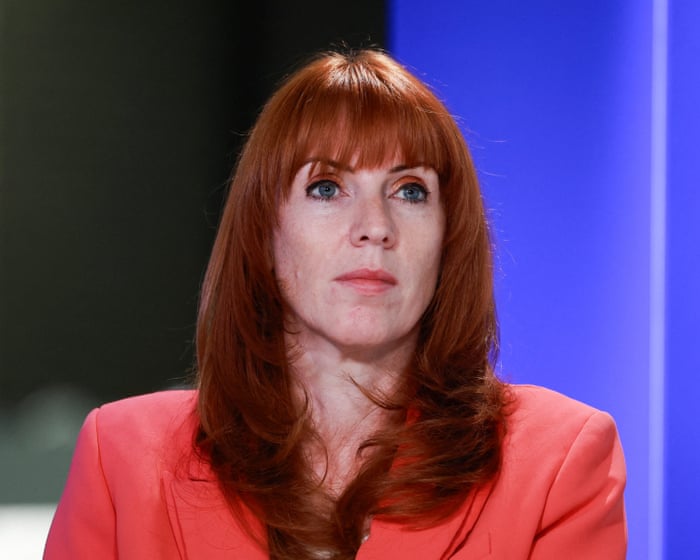
Labour leader Andy Burnham plans to introduce big changes to the social care system, a service many people rely on as they get older. The proposal may need tax increases or cutting some pension rises to pay for it, and he has almost three years before the next election to explain these changes and win public support.
Key Facts
Andy Burnham aims to create a new social care system that previous leaders could not deliver.
The service could cost up to £18 billion a year.
Possible funding methods include raising taxes or adjusting the state pension’s annual increase rule called the "triple lock."
Burnham wants to prepare the public gradually to accept paying more for social care.
Past attempts to reform social care, including by Theresa May and Gordon Brown, were unsuccessful.
An aging population is increasing the need for social care and highlighting current system problems.
There is concern about the political risks of asking people to pay more during times of economic hardship.
Older voters are a key political group, making pension cuts a sensitive issue for any government.
Read the Original
Want the full story? Tap a source to open the original
article.
Pope Leo said concerns about artificial intelligence (AI) becoming dangerous are real and should be taken seriously. He criticized some technology leaders who oppose government rules and called for global dialogue to prevent AI from harming humanity.
Key Facts
Pope Leo stated that worries about AI risks are not "fake news."
He dedicated his first official letter (encyclical) to AI and its impact on humans.
President Donald Trump called concerns about AI going rogue a "hoax."
The pope criticized tech CEOs, like Nvidia’s Jensen Huang, who oppose limits on AI.
Nvidia’s CEO agreed with President Trump that AI safety concerns are exaggerated.
The Vatican has increased its efforts to promote international AI rules, especially related to nuclear technology and culture.
Pope Leo and Anthropic’s cofounder launched an initiative to address AI’s human costs.
The pope emphasized the need for ongoing study, cooperation, and regulation to prevent AI from causing harm.
Read the Original
Want the full story? Tap a source to open the original
article.
U.S. Secretary of State Marco Rubio met with Saudi Arabia’s Foreign Minister Prince Faisal bin Farhan to discuss security issues in the Middle East, including the conflict in Yemen and safety in the Strait of Hormuz. They also talked about coordination on regional crises involving Iran, Gaza, and Sudan, while Rubio separately met Lebanon’s Prime Minister to discuss implementing a ceasefire agreement with Israel.
Key Facts
Marco Rubio and Prince Faisal bin Farhan met in Washington, DC, to discuss regional security matters.
Their talks focused on the conflict in Yemen, security in the Strait of Hormuz, and overall regional stability.
The Yemeni conflict escalated with Iran-backed Houthis attacking Saudi targets.
Saudi Arabia requested U.S. military help against the Houthis, but the U.S. declined strikes, providing intelligence support instead.
Rubio also met Lebanese Prime Minister Nawaf Salam, who wants the U.S. to help enforce a ceasefire agreement between Lebanon and Israel.
The ceasefire deal includes phased Israeli withdrawal and disarming Hezbollah, but progress has stalled.
Salam called for clear timelines and verification to ensure the ceasefire is fully implemented.
Relief, reconstruction, and support for displaced people in Lebanon were also discussed as part of the peace effort.
Read the Original
Want the full story? Tap a source to open the original
article.
Sir Ranulph Fiennes, a famous British explorer, has not been seen or contacted by his family and friends for months. Concerns have risen about his well-being after reports said he might be in care homes under false names, but police confirm he is in a proper care setting without immediate risk.
Key Facts
Sir Ranulph Fiennes is 82 years old and a well-known British explorer who visited both poles by surface travel.
He has not appeared in public for nearly two years following a Parkinson's disease diagnosis.
Family members say they have not been allowed to visit or contact him for a long time.
It is alleged that he has been placed in several care homes using fake names after a family disagreement involving his second wife.
Cheshire Police said they know about the situation and believe he is being properly cared for with no urgent safety concerns.
His stepson, Alex Millington-Cotes, wants legal authority over Sir Ranulph's care removed from his mother and given to people who truly care about him.
Alex started a fundraising campaign to cover legal costs to find and protect Sir Ranulph.
Sir Ranulph’s late first wife’s sister said she managed to see him only once by entering a care home where she was told he lived; he expressed love and longing for his friends and family.
Read the Original
Want the full story? Tap a source to open the original
article.
Greens senator Sarah Hanson-Young has announced she will seek the leadership of the Australian Greens party after Larissa Waters resigned due to health reasons. The leadership decision will be made at a party meeting in Sydney, with several other candidates also considering running.
Key Facts
Larissa Waters resigned as leader of the Australian Greens because of worsening kidney disease.
Sarah Hanson-Young is the longest-serving Greens federal MP and plans to run for party leader.
Other possible leadership candidates include deputy leader Mehreen Faruqi, David Shoebridge, and Nick McKim.
The Greens party will hold a meeting in Sydney to choose their new leader and discuss party strategy.
The party wants a stronger approach against Labor, the Liberal party, and One Nation.
Waters praised the party’s progress in environmental laws and said she will return to the Senate after medical leave.
Some current and former Greens MPs lost their seats in the 2025 election, and One Nation has become the third major political force.
Prime Minister Anthony Albanese expressed support and wished Waters well during her health treatment.
Read the Original
Want the full story? Tap a source to open the original
article.
Law enforcement has identified a possible new ransom note in the case of Nancy Guthrie, who disappeared nearly eight months ago in Tucson, Arizona. The Pima County Sheriff's Department and FBI are investigating the note and monitoring social media to check if the information is reliable.
Key Facts
Nancy Guthrie, aged 84 and mother of Today show host Savannah Guthrie, went missing on January 31.
She was last seen at her home in Tucson, Arizona.
The Pima County Sheriff's Department and FBI formed a task force to investigate her disappearance.
A new potential ransom note related to the case was recently reported to law enforcement.
Authorities are examining social media posts about the note to verify its authenticity.
The investigation is ongoing as of the latest update.
Newsweek has contacted the sheriff's department for further comment.
The case remains open and active with updates expected.
Read the Original
Want the full story? Tap a source to open the original
article.
Argentina's President Javier Milei has warned that Argentina will start legal action against the UK if it does not stop oil drilling near the Falkland Islands within two weeks. The oil drilling is a joint project by British and Israeli companies, and the UK says it has legal permission to operate there.
Key Facts
Argentina and the UK disagree over who owns the Falkland Islands, called Las Malvinas in Argentina.
President Milei wants the Sea Lion oilfield project stopped within two weeks or he will pursue international legal arbitration.
The Sea Lion oilfield has about 1.7 billion barrels of oil and is located about 130 miles from the Falkland Islands.
The project is run by British company Rockhopper Exploration and Israeli company Navitas Petroleum.
The UK gave licenses to these companies to explore and drill for oil in the area.
Argentina plans to take the case to the International Tribunal for the Law of the Sea, a UN-related court in Hamburg.
In 2013, almost all Falkland Islands residents voted to remain under British rule.
The UK says Argentina cannot take the islands by force; Argentina lost a war over the islands in 1982.
Read the Original
Want the full story? Tap a source to open the original
article.
Argentina's President Javier Milei threatened to sue the United Kingdom over an oil project near the Falkland Islands, a territory both countries claim. Argentina argues the project violates international rules, while the UK supports the companies involved, saying they have legal permission.
Key Facts
Argentina and the UK dispute ownership of the Falkland Islands, which Britain controls.
A war in 1982 over the islands caused hundreds of deaths on both sides.
The oil project, named Sea Lion, is being developed by Israel's Navitas and Britain's Rockhopper.
Argentina claims the project illegally exploits resources and plans to take legal action, including international arbitration.
Argentina refers to a UN resolution that calls for no unilateral actions on the islands until the dispute is settled.
The UK says it has the right to develop resources around the Falklands.
The Falklands are reopening a shipping route to Chile, unrelated to the oil project.
Argentina’s claim has gained some attention after President Donald Trump indicated the US might reconsider its neutral position.
Read the Original
Want the full story? Tap a source to open the original
article.
Three lost songs recorded in 1998 by Australian rock singer Chrissy Amphlett were found in a garage in 2023 and will be released this Friday. Amphlett, known for her work with the band Divinyls, recorded these songs with Tim Finn, former lead singer of New Zealand’s band Split Enz.
Key Facts
Chrissy Amphlett was the lead singer of the Australian rock band Divinyls.
She is known for the 1990 hit "I Touch Myself" and earlier songs like "Pleasure and Pain" and "Boys in Town."
In 1998, Amphlett recorded three songs with Tim Finn in Sydney.
These recordings were thought lost until Finn found the tape in his garage in 2023.
The songs will be released as an EP called Some Times on Friday.
At the time of recording, Amphlett was seeking new musical directions after ending her relationship with Divinyls guitarist Mark McEntee.
Drummer Charley Drayton, who later married Amphlett, played on the recordings.
The recordings were stored on a two-inch tape and remained in good condition after being lost for many years.
Read the Original
Want the full story? Tap a source to open the original
article.
Angela Rayner, the UK communities secretary, said far-right marches led by “Danny Tommo” are not normal protests but acts of intimidation and should be banned. She criticized the masked marchers for blocking roads and spreading hate, and expressed concern about attacks on rescue volunteers saving migrants crossing the Channel.
Key Facts
Angela Rayner calls far-right marches “intimidation” and says they should not be allowed.
The marches are led by Daniel Thomas, known as “Danny Tommo,” who was recently arrested for damaging an inflatable boat while a rescue worker was on board.
Marchers have blocked roads and transport hubs, causing disruption.
Thomas has united various nationalist groups under the name Patriot Platform.
The groups have held protests in English coastal towns and blocked traffic at the port of Dover.
Rayner criticized the use of masks and shouting hateful messages during these marches.
She expressed concern about online hate aimed at RNLI volunteers who rescue migrants at sea.
Rayner emphasized the importance of treating vulnerable migrants with humanity, especially after recent deaths in the Channel.
Read the Original
Want the full story? Tap a source to open the original
article.
The Ethiopian army and allied forces say they have taken control of the town of Alamata, which is an important southern gateway to the Tigray region. Fighting between the Ethiopian military and the Tigray People’s Liberation Front (TPLF) restarted in September.
Key Facts
The Ethiopian army and allied militias claim to have captured Alamata town.
Alamata is a key southern entrance to the Tigray region.
Fighting resumed in September between Ethiopian forces and the TPLF.
The TPLF is a political and military group in the Tigray region.
Control of Alamata is important for access to and control of the Tigray region.
Read the Original
Want the full story? Tap a source to open the original
article.
Russian forces launched missile and drone strikes on Kyiv and other Ukrainian cities, killing multiple people and damaging buildings. The attacks included a deadly strike on Ukraine’s National Academy of Sciences and targeted civilian and infrastructure sites.
Key Facts
A drone struck the National Academy of Sciences in Kyiv, killing at least two people.
Explosions were reported across Kyiv, with some buildings catching fire after missile debris fell there.
Russian forces used faster, jet-powered drones in recent attacks, making interception harder.
Ukrainian President Zelenskyy said 90 out of 120 drones used in one day were jet-propelled.
Russian strikes also hit a medical facility, pharmaceutical company, petrol stations, and digital infrastructure.
In other cities, drone attacks killed several people and wounded many more.
Ukrainian emergency crews and officials work to respond amid ongoing attacks.
Ukraine is testing new drone interceptors to improve defense against the faster Russian drones.
Read the Original
Want the full story? Tap a source to open the original
article.
The BBC police drama "Blue Lights" shows the challenges police officers face in Northern Ireland, especially in communities with strong religious and political differences. The series highlights the tensions between police and local communities, reflecting real issues such as low Catholic recruitment in the Police Service of Northern Ireland (PSNI).
Key Facts
"Blue Lights" is a BBC drama about police officers working in Belfast’s fictional Blackthorn Station.
The show focuses on the difficult relationships between the police and communities in Northern Ireland.
The storyline includes Constable Annie Conlon, a Catholic police officer receiving death threats, reflecting real community tensions.
The Police Service of Northern Ireland (PSNI) had the lowest number of Catholic applicants in over ten years earlier in 2024.
When the PSNI was founded in 2001, only 8% of officers were Catholic; this rose to 32% by 2024.
PSNI Chief Constable Jon Boutcher said the force is committed to improving diversity but faces challenges from community distrust and paramilitary influence.
A new recruitment campaign targeting students is planned to attract more diverse applicants.
The series won Best Drama Series at the 2025 BAFTA Awards.
Read the Original
Want the full story? Tap a source to open the original
article.
US Secretary of State Marco Rubio said a foreign actor was involved in the suspected bomb plot at RAF Fairford in the UK. Five British men were arrested but later released on bail while the investigation continues, with questions about a possible link to Iran.
Key Facts
Five British men in their early 20s were arrested near RAF Fairford on suspicion of explosives and terrorism.
RAF Fairford is a UK base used by US bombers that fly missions targeting Iran.
The men were released on police bail with strict conditions, and police continue to investigate.
No explosive materials were found in the initial police search of the suspects' vans.
Marco Rubio stated a foreign actor was clearly involved but did not provide evidence.
President Donald Trump said he would not have released the suspects and hinted at knowledge of their activities.
Iran’s Revolutionary Guards previously called RAF Fairford a legitimate target, but Iran denies involvement in the incident.
UK counter-terrorism leaders said they are examining all possibilities, including involvement by proxies or foreign state actors.
Read the Original
Want the full story? Tap a source to open the original
article.
An 87-year-old disabled woman named Maricarmen Abascal, who was evicted from her home in Madrid, will be able to move back after reaching a new rent agreement. Her eviction sparked large protests across Spain, leading the government to promise housing relief measures.
Key Facts
Maricarmen Abascal was evicted from her apartment where she had lived for over 70 years.
She was removed on a stretcher and hospitalized after the eviction on 23 September.
The rent was increased from €500 to €2,650 by the investment firm that owns the property.
Abascal’s monthly pension is €1,350, making the rent unaffordable.
Three previous eviction attempts were stopped by courts.
Nationwide protests in Madrid demanded better tenant protections and affordable housing.
Prime Minister Pedro Sanchez’s government plans to introduce housing relief laws.
The agreement to let Abascal return with a rent she can pay is linked to social pressure from protests.
Read the Original
Want the full story? Tap a source to open the original
article.
A report found that almost half of electronic tags used to track offenders in England and Wales are fitted late, which could put victims at risk. Delays of up to five months occur, leading to repeated rule-breaking by offenders before monitoring begins.
Key Facts
Only 55% of GPS and radio frequency tags and 60% of alcohol monitoring tags are fitted on time.
Some offenders wait up to five months to get their electronic tags.
Delays increase the chance that offenders break the law again before being monitored.
Electronic monitoring helps track offenders’ curfews and conditions ordered by courts or prisons.
The government is expanding the tagging program with £100 million in funding.
About 27,847 people had tagging orders in England and Wales as of June 2026.
Data from tags is often underused, with serious violations investigated in less than half of cases.
New laws will release more prisoners early, most of whom will require electronic tags.
Read the Original
Want the full story? Tap a source to open the original
article.
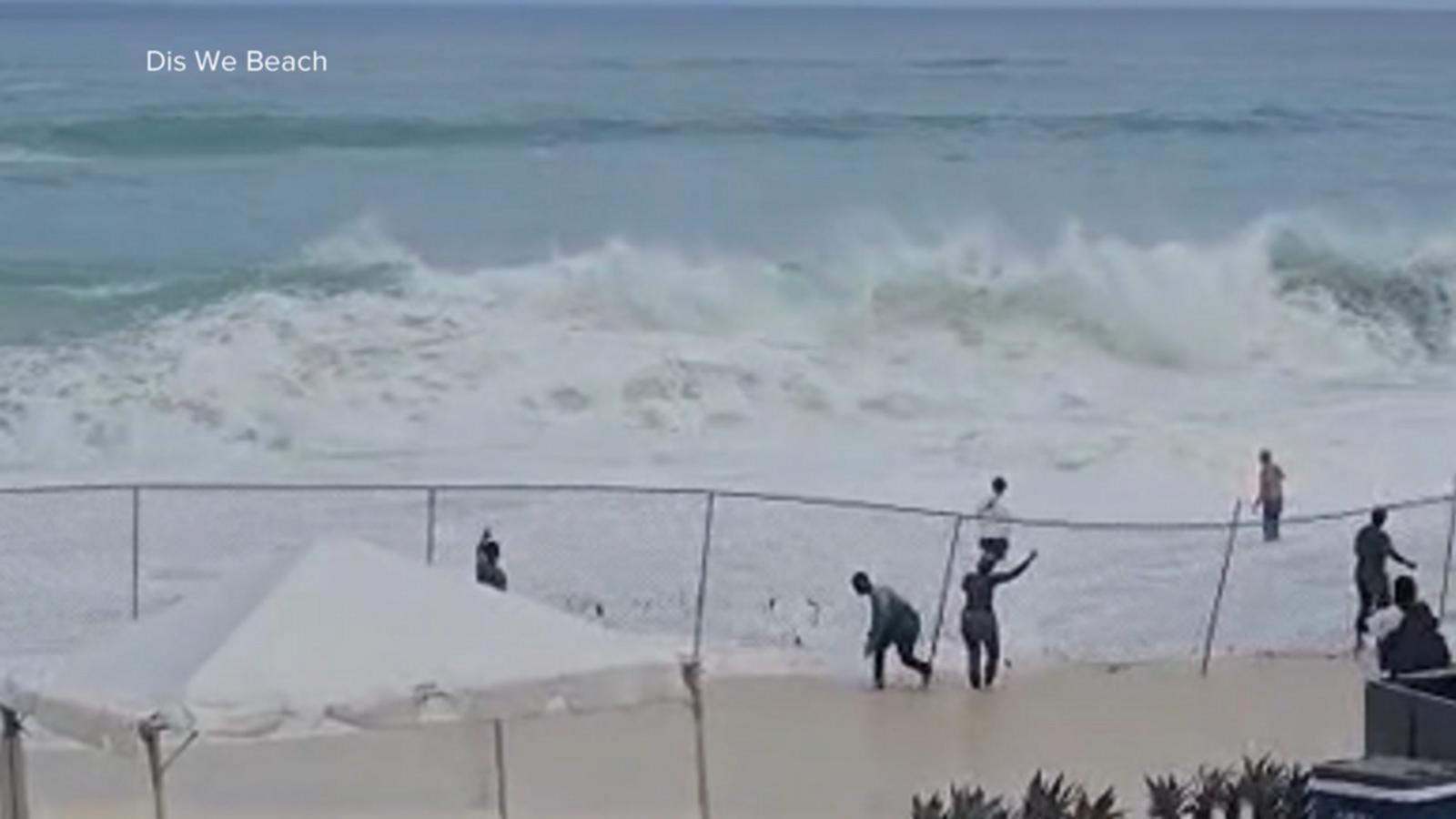
A video shows a woman being rescued from rough ocean waves in the Bahamas. Two lifeguards and several people in the area jumped into the water to help save her.
Key Facts
The incident took place in the Bahamas, an island country known for its beaches.
A woman was caught in dangerous, rough surf conditions.
Two lifeguards were involved in the rescue effort.
Members of the public also helped by jumping into the water.
The video captures the dramatic and frightening rescue.
Rough surf means strong, difficult waves in the ocean.
The article does not provide further details about the woman’s condition after the rescue.
Read the Original
Want the full story? Tap a source to open the original
article.
A new law in Maharashtra, India, limits religious conversions by banning changes caused by force, fraud, or pressure. Some churches in Mumbai now ask attendees to sign forms confirming they came voluntarily to pray to avoid legal problems.
Key Facts
Maharashtra introduced a law against religious conversions by force, fraud, coercion, or inducement.
The law requires people who want to convert voluntarily to inform authorities beforehand.
Breaking the law can result in up to seven years in prison, or ten years for repeat offenses.
Some churches in Mumbai ask worshippers to sign declarations saying they came to pray by their own choice.
The law is intended to protect vulnerable people from being forced or tricked into changing religion.
Critics say the law interferes with private religious decisions and could cause fear among minority groups, especially Christians.
There have been reports of disruptions to prayer meetings and questions from strangers about people’s reasons for attending church.
Mumbai is a diverse city where many religions coexist and people practice different faiths close to each other.
Read the Original
Want the full story? Tap a source to open the original
article.
A Russian drone attacked a cultural landmark in Kyiv, Ukraine, called the National Academy of Sciences, killing at least seven people and injuring many others. Russia also targeted apartment buildings, offices, and data centers in the city.
Key Facts
The attack happened in Kyiv, the capital of Ukraine.
The National Academy of Sciences, a cultural site, was hit by a Russian drone.
At least seven people died in the attack.
Dozens of people were wounded.
Other targets included apartment buildings, offices, and data centers.
CBS News reporters covered the event and had to take shelter during the attack.
The report included insights from a national security expert on the ongoing war.
Read the Original
Want the full story? Tap a source to open the original
article.
Pope Leo XIV’s plane was accompanied by fighter jets as he arrived in Metz, the last city on his four-day visit to France. His visit aims to rebuild trust in the Catholic Church after a 2021 report showed many cases of child abuse in the French Church.
Key Facts
Pope Leo XIV visited France for four days.
His last stop was the city of Metz.
Fighter jets escorted his plane on arrival in Metz.
The trip focuses on restoring trust in the Catholic Church.
A 2021 report revealed many years of child sexual abuse in the French Catholic Church.
The Pope’s visit is partly a response to this abuse report.
Read the Original
Want the full story? Tap a source to open the original
article.