Neutral summaries of your favorite news sources — just the facts.
Your favorite news sources, one neutral feed — we distill their reporting into fact-first
summaries and always link to the original story. How it works
World News
Comprehensive coverage of international news and global events
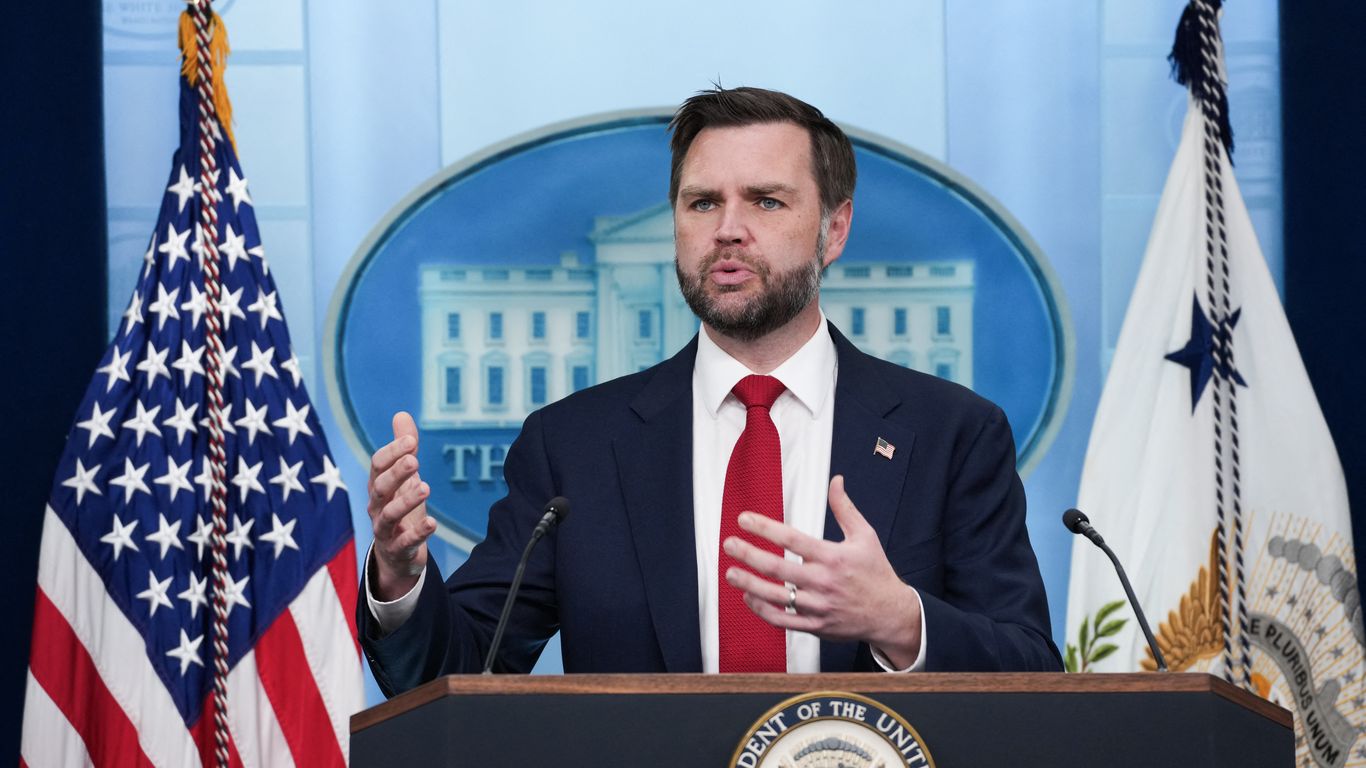
Vice President Vance warned Israeli leaders not to criticize President Trump over the new Iran deal, saying Trump is Israel’s only strong ally. Vance also suggested that negative actions against the deal could reduce U.S. military support for Israel.
Key Facts
Vice President Vance spoke out against Israeli cabinet members attacking the Iran deal.
He said President Trump is the only world leader currently supportive of Israel.
Vance reminded Israel that two-thirds of its defensive weapons come from the U.S. and are paid for by American taxes.
Some Israeli ministers have criticized President Trump and the Iran deal publicly.
Prime Minister Netanyahu privately expressed frustration but urged calm and respect for U.S.-Israel relations.
The Iran deal calls for a ceasefire including Israel and Hezbollah fighting in Lebanon, with Israel expected to withdraw under a final agreement.
Vance said Israel should not act aggressively in Lebanon and should support the peace process.
President Trump asked Middle East countries to let the Iran deal work and called for a full ceasefire.
Read the Original
Want the full story? Tap a source to open the original
article.
Pakistan’s Prime Minister Shehbaz Sharif signed an agreement between the United States and Iran to help end the conflict between them. The agreement was also signed by US President Donald Trump and Iran’s President Masoud Pezeshkian.
Key Facts
Pakistan’s Prime Minister Shehbaz Sharif signed a US-Iran memorandum of understanding (MoU).
The MoU aims to end the war between the United States and Iran.
US President Donald Trump signed the agreement.
Iran’s President Masoud Pezeshkian also signed the agreement.
The signing took place on Wednesday.
The MoU represents a cooperative effort involving Pakistan, the US, and Iran.
Read the Original
Want the full story? Tap a source to open the original
article.
President Donald Trump signed a deal with Iran to end their conflict after years of war. The agreement includes lifting sanctions and unfreezing Iranian assets, but leaves some issues unresolved and carries risks of future violence.
Key Facts
President Trump wanted Iran to completely give up its missile program and nuclear ambitions.
The war caused many deaths and damaged Iran’s infrastructure and economy.
The new deal ends the US blockade on Iran and allows Iran to export oil before all disputes are settled.
The agreement was signed in Versailles and aims to finalize a resolution within 60 days, with a possible extension.
Despite the deal, Trump warned he might use military force again if he thinks it’s needed.
Israeli Prime Minister Netanyahu opposes the deal and may try to undermine it.
The deal includes ending hostilities in Lebanon but does not require Israel to withdraw from there.
Analysts say Iran’s leadership may grow more hardline and more interested in nuclear weapons due to the conflict’s impact.
Read the Original
Want the full story? Tap a source to open the original
article.
President Donald Trump quickly signed a 60-day interim agreement with Iran to reduce tensions in the Middle East. This deal, brokered by Pakistan and Qatar, aims to stop fighting in Lebanon and reopen the Strait of Hormuz, an important route for global oil shipments.
Key Facts
President Trump signed the interim agreement shortly after the G7 summit in France.
The deal is a temporary 60-day memorandum of understanding between the U.S. and Iran.
Pakistan and Qatar helped broker the agreement.
The agreement includes a temporary ceasefire in Lebanon.
The Strait of Hormuz, a key oil shipping route, is set to reopen, leading to a drop in oil prices.
There are concerns about how Israel or Hezbollah might react if they oppose the deal’s terms.
The agreement differs from the 2015 U.N. nuclear deal, which President Trump has criticized.
The deal offers a chance to reduce tensions but also raises questions about future stability in the region.
Read the Original
Want the full story? Tap a source to open the original
article.
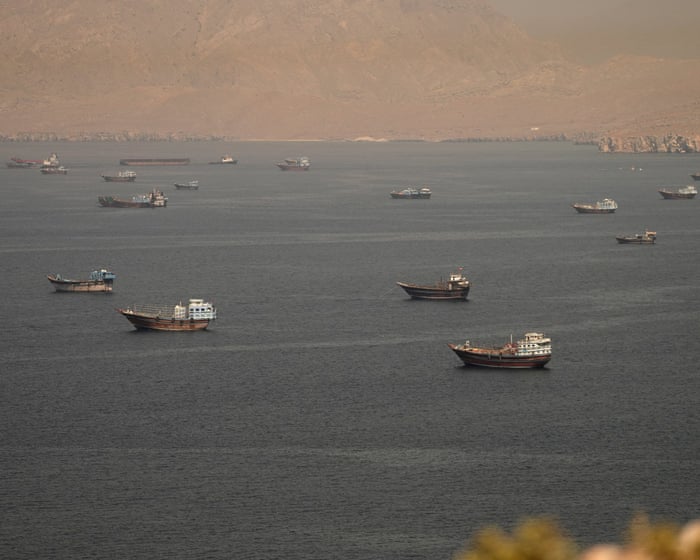
The United States and Iran have signed a Memorandum of Understanding (MOU) to reopen the Strait of Hormuz for commercial shipping. Under the deal, the US will lift its blockade of Iranian ports, and Iran will allow free passage through the Strait for 60 days, though sea mines in the area may still pose risks.
Key Facts
The US and Iran signed a Memorandum of Understanding focused on the Strait of Hormuz.
The US agreed to lift its blockade of Iranian ports immediately.
Iran will reopen the Strait of Hormuz and waive tolls for commercial ships for 60 days.
The Strait of Hormuz is a vital waterway for global maritime trade and energy shipments.
There are concerns about the presence of sea mines in the Strait, which could threaten safe navigation.
The deal aims to improve the flow of trade and energy in the Gulf region.
Experts from the Royal United Services Institute are analyzing the agreement’s impact on energy security.
The MOU represents a significant step toward reducing tensions between the US and Iran.
Read the Original
Want the full story? Tap a source to open the original
article.
Semyon Skrepetsky, a Russian artist known for his bold and provocative paintings criticizing Russian leaders, was shot and killed in the Polish town of Biała Podlaska in June 2026. He had fled Russia to escape political persecution and continued to protest against authoritarianism until his death.
Key Facts
Semyon Skrepetsky was a 44-year-old Russian artist and dissident who created satirical art targeting Russian President Vladimir Putin and Chechen leader Ramzan Kadyrov.
He was shot and killed on June 15, 2026, while walking his dog in Biała Podlaska, Poland, near the Belarus border.
Skrepetsky fled Russia in 2021 due to fears of political persecution and settled in Poland with his wife and five children.
He was known for using bright colors and mixing humor with sharp political criticism in his art style called “skreprealism.”
His last public act was a protest in Berlin holding a painting showing Stalin holding Putin and disposing of a Russian flag in a trashcan.
The murder shocked the local and Belarusian exile communities, who fear increased repression and insecurity in the region.
The political tension in the area grew after Belarus’s contested 2020 election sparked protests and police violence, causing many to seek asylum in Poland and Lithuania.
The exile community in Poland faces ongoing difficulties and fears, including suspicion of sabotage by Russian agents.
Read the Original
Want the full story? Tap a source to open the original
article.
Israel’s Foreign Minister Gideon Saar announced that he is cutting off contact with the European Union’s foreign policy chief, Kaja Kallas. This decision came after reports that Kallas compared Israel’s treatment of Palestinians to South Africa’s apartheid system, a claim Kallas has not denied, though she emphasized the importance of diplomatic dialogue.
Key Facts
Gideon Saar, Israel’s Foreign Minister, said he is suspending contact with Kaja Kallas, the EU’s foreign policy chief.
Kallas was reported to have compared Israel’s policies in Gaza and the West Bank to apartheid in South Africa.
Saar accused Kallas of bias against Israel and called her comments a “blood libel.”
Kallas stressed that the EU wants to continue dialogue and supports a two-state solution between Israelis and Palestinians.
Saar maintained ties would stay cut until Kallas retracts or denies the apartheid claim.
The United Nations said in January that Israel’s actions in the West Bank violate international law against racial segregation and apartheid.
The International Court of Justice also called Israel’s occupation unlawful and expressed concerns about racial segregation in the occupied territories.
The tension happens amid ongoing conflict and strikes in Gaza and the West Bank involving Palestinians and Israeli authorities.
Read the Original
Want the full story? Tap a source to open the original
article.
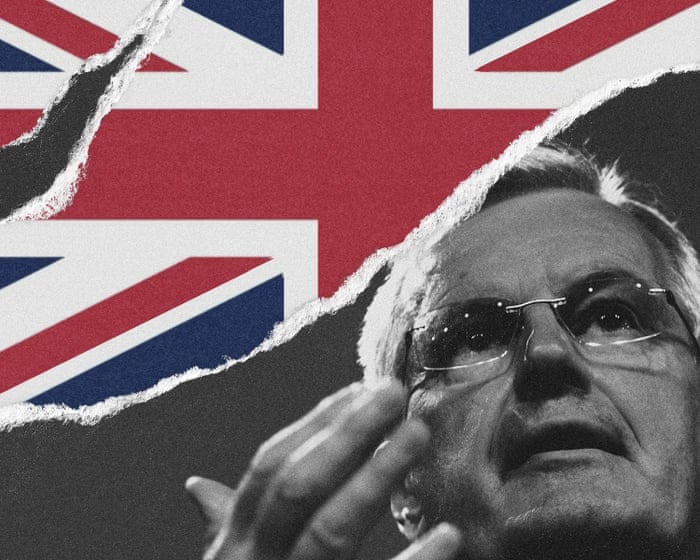
Michel Barnier, the EU’s chief Brexit negotiator, shared insights about Boris Johnson’s motivations for supporting Brexit, calling him pragmatic and cynical in seeking power. Barnier discussed his experience during the Brexit talks, the challenges faced by the UK, and the EU’s mistakes, especially on immigration and bureaucracy.
Key Facts
Michel Barnier spent time with Boris Johnson’s father and learned that Boris Johnson was initially more pro-European.
Barnier described Johnson’s approach as pragmatic and cynical, aimed at gaining power.
Barnier led Brexit negotiations for the EU over four years, meeting many UK negotiators and political figures.
He rejected the idea of a second UK referendum and criticized Nigel Farage’s role in EU opposition.
Barnier said blaming Brussels for all UK problems is false, but Brexit has made these problems harder.
He acknowledged the EU made mistakes, like having too much bureaucracy and poor border control.
Barnier praised recent EU immigration policies that speed up deportations, comparing them to policies under President Donald Trump.
He expressed surprise that the UK left the EU instead of working within it to fix problems.
Read the Original
Want the full story? Tap a source to open the original
article.
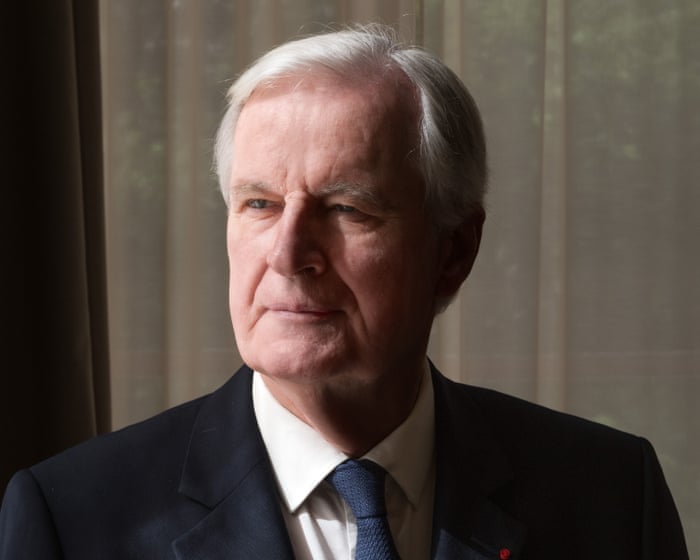
Michel Barnier, the EU’s former chief Brexit negotiator, said the UK could keep some special agreements if it rejoined the European Union, such as keeping the pound and staying out of the passport-free Schengen area. He also said that although the UK left the EU, it might still negotiate to keep or regain these opt-outs, and that rejoining the EU would be open to negotiation.
Key Facts
Michel Barnier said the UK could keep the pound and stay outside the Schengen passport-free travel area if it rejoined the EU.
There are existing EU member states with opt-outs from the euro currency and Schengen area, such as Denmark and Ireland.
New EU members are normally required to join the euro and Schengen once they meet certain conditions, but the UK might negotiate exceptions.
Barnier declined to comment on whether the UK could keep its previous budget rebate negotiated by Margaret Thatcher.
Barnier believes Brexit has made UK problems like economic growth and immigration more difficult, though not the sole cause.
UK-EU "reset" talks to improve relations are planned for July 22 after several delays.
Some EU diplomats have warned that progress in UK-EU talks is slowing.
Barnier will attend a conference in London marking 10 years since the Brexit vote.
Read the Original
Want the full story? Tap a source to open the original
article.
Iran and the United States have reached a memorandum of understanding (MOU) that could reduce conflict between them and their allies. The deal offers Iran some concessions but does not yet ensure lasting peace, and Iran still faces serious political and economic challenges at home.
Key Facts
Iran and the U.S. signed an MOU aimed at easing tensions from a war launched by the U.S. and Israel in February.
Iran has survived the conflict with some losses but gained agreements on frozen assets and regional issues like the Strait of Hormuz.
The MOU was signed by Iranian President Masoud Pezeshkian and U.S. President Donald Trump.
The deal will be made official in a ceremony in Switzerland.
Iran faces ongoing protests and unrest due to economic problems and political discontent.
Leadership changes in Iran include the late Supreme Leader replaced by his son and more hard-line figures rising in power.
The new Iranian government includes reformists who hope to improve ties with the West, but some hard-liners may resist compromises.
Previous nuclear deals like the 2015 agreement collapsed after President Trump withdrew the U.S., complicating future talks.
Read the Original
Want the full story? Tap a source to open the original
article.
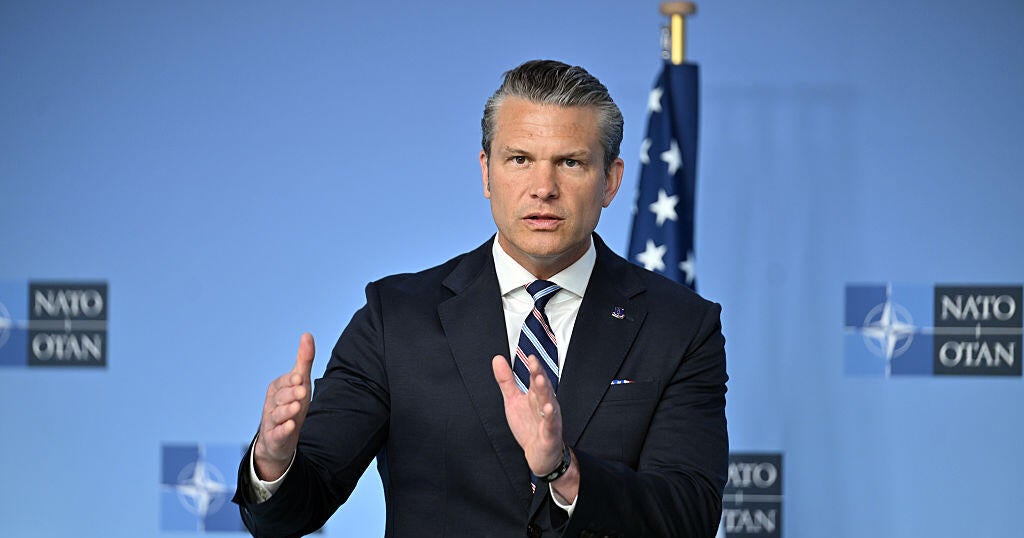
The Pentagon announced a six-month review of U.S. forces and bases in Europe following criticism from Defense Secretary Pete Hegseth of NATO allies for not supporting U.S. military efforts against Iran. The review aims to assess U.S. troop presence and cooperation with European countries ahead of the upcoming NATO summit.
Key Facts
The Pentagon will conduct a review lasting up to six months of U.S. troops and bases in Europe.
Defense Secretary Pete Hegseth accused some NATO allies of denying access to U.S. bases and criticized them for not supporting military actions against Iran.
The review is linked to the "NATO 3.0" initiative, encouraging European countries to take more responsibility for their own defense.
Recently, the U.S. withdrew 5,000 troops from Germany and reduced combat teams in Europe, causing concern among members of Congress.
About 80,000 U.S. troops currently serve in Europe, with Congress requiring Pentagon oversight before reducing forces below 76,000.
NATO has set goals for member countries to spend 5% of their GDP on defense by 2035; most currently meet or approach the 2% target.
President Trump supports NATO allies increasing defense spending and expects to attend the NATO summit in Turkey next month.
U.S. lawmakers want careful review and consultation before any major changes to troop levels in Europe.
Read the Original
Want the full story? Tap a source to open the original
article.
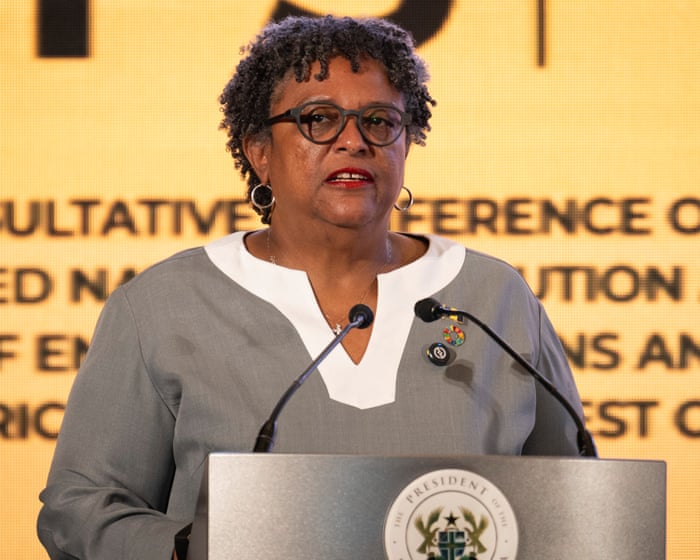
Barbados’s Prime Minister Mia Mottley announced a new plan by Caribbean leaders to seek reparations for the harms caused by centuries of slavery. The plan calls for monetary compensation, apologies, and education from former colonial powers, highlighting the impact of slavery on women and Indigenous peoples.
Key Facts
The manifesto updates the Caribbean Community’s (Caricom) 10-point plan for slavery reparations.
It adds a focus on gender-based violence and the effects on enslaved women, who made up about 30% of enslaved Africans transported across the Atlantic.
The document links climate justice with slavery reparations and calls for support for Indigenous peoples affected by genocide.
Caricom demands monetary compensation and formal apologies from Britain and other European countries.
The plan does not specify a compensation amount but sets a vision for the pursuit of reparatory justice.
The manifesto was presented at a conference in Ghana following a UN resolution calling the trafficking of enslaved Africans the gravest crime against humanity.
Some countries, including the UK, the US, and Israel, did not support the UN resolution fully.
Caricom’s document frames reparations as a global human rights issue and includes new scientific and historical evidence.
Read the Original
Want the full story? Tap a source to open the original
article.
The FBI warns soccer fans about fake websites pretending to be FIFA during this summer's World Cup. These fake sites are used to sell fake tickets and steal people’s personal information.
Key Facts
The FBI issued a warning about fake FIFA websites.
These websites trick fans by pretending to be official FIFA sites.
Cybercriminals use these sites to sell counterfeit (fake) World Cup tickets.
They also try to steal personal data from visitors.
This warning was given as a public service announcement.
The threat actors use "spoofing attacks," meaning they mimic real websites.
The warning comes ahead of the soccer World Cup happening this summer.
Read the Original
Want the full story? Tap a source to open the original
article.
The U.S. military stopped its naval blockade near the Strait of Hormuz after the United States, Iran, and other parties signed an agreement to end their conflict in the Middle East. The blockade had stopped ships from entering or leaving Iranian ports.
Key Facts
The U.S. had a naval blockade near the Strait of Hormuz, a key waterway for shipping.
The blockade prevented ships from moving in and out of Iranian ports.
The U.S., Iran, and some intermediaries signed a memorandum of understanding (MOU) to end the conflict.
After the MOU was signed, the U.S. Central Command announced the end of the blockade.
The Strait of Hormuz is important for global oil shipping.
The agreement aims to reduce tensions between the U.S. and Iran.
U.S. military actions in the region often impact international shipping and security.
Read the Original
Want the full story? Tap a source to open the original
article.
Iran plans to start charging fees for ships passing through the Strait of Hormuz in two months. This follows a new agreement between the US and Iran, but many regional countries like Saudi Arabia and the UAE oppose the idea. The article also mentions ongoing security concerns involving Israel, Lebanon, and Iran.
Key Facts
Iran announced it will introduce maritime fees for ships passing through the Strait of Hormuz after a 60-day negotiation period.
Iran claims control over the strait and opposes a European naval escort plan for ships.
Israel’s Prime Minister Netanyahu declared Israel would maintain a security zone in southern Lebanon and oppose Iran’s nuclear ambitions.
Israeli and Hezbollah forces have exchanged attacks recently near the Israel-Lebanon border.
A formal ceremony to mark the US-Iran memorandum of understanding was canceled; talks will continue at a resort in Switzerland.
The memorandum includes lifting sanctions on Iranian oil and ensuring commercial traffic through the strait.
US Vice President JD Vance said sanctions are being lifted and some US troops will reduce in number.
Saudi Arabia and the UAE oppose Iran’s plan to manage and charge fees for the strait, favoring the previous free navigation system.
Read the Original
Want the full story? Tap a source to open the original
article.
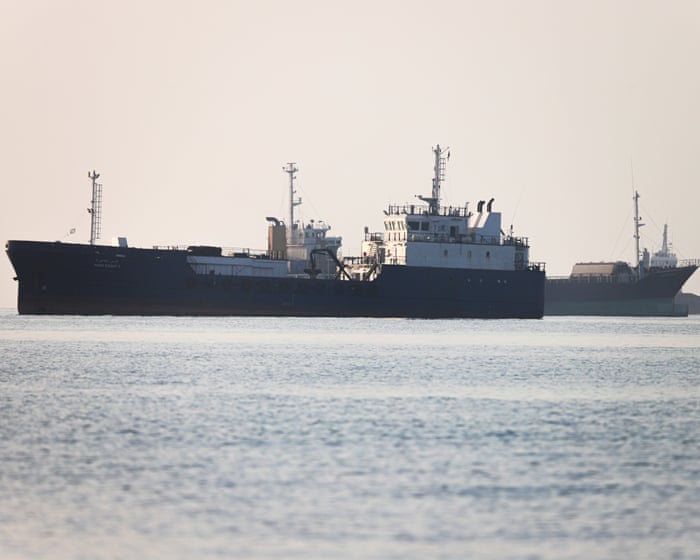
Families in India held funeral ceremonies for two Indian sailors who died in a US attack on their oil tanker in the Gulf of Oman. The US said the tanker was breaking a blockade on Iranian ports when the strike happened.
Key Facts
Two Indian sailors died in a US strike on the oil tanker named MT Settebello.
Three crew members in total were killed in the strike.
The incident took place in the Gulf of Oman.
The US stated the tanker was violating its blockade on ports in Iran.
Families of the sailors held last rites (funeral ceremonies) in India.
The MT Settebello was the name of the tanker involved in the incident.
Read the Original
Want the full story? Tap a source to open the original
article.
Zimbabwe’s lower house of parliament has approved a bill to extend the president’s term and postpone elections until 2030. This change would allow President Emmerson Mnangagwa to stay in power longer and shift the election process from a popular vote to selection by parliament.
Key Facts
The National Assembly voted 216 to pass the bill, surpassing the two-thirds majority needed.
The bill extends presidential terms from five to seven years.
Elections originally due in 2028 would be delayed to 2030 under the bill.
The election method would change from direct popular vote to selection by lawmakers.
Zimbabwe’s Senate must also approve the bill, and it is expected to pass there.
Mnangagwa’s party, ZANU-PF, controls the Senate through traditional leaders and allies.
Mnangagwa came to power after a 2017 military coup removed long-time leader Robert Mugabe.
Similar moves to extend presidential terms are happening in several African countries with aging leaders.
Read the Original
Want the full story? Tap a source to open the original
article.
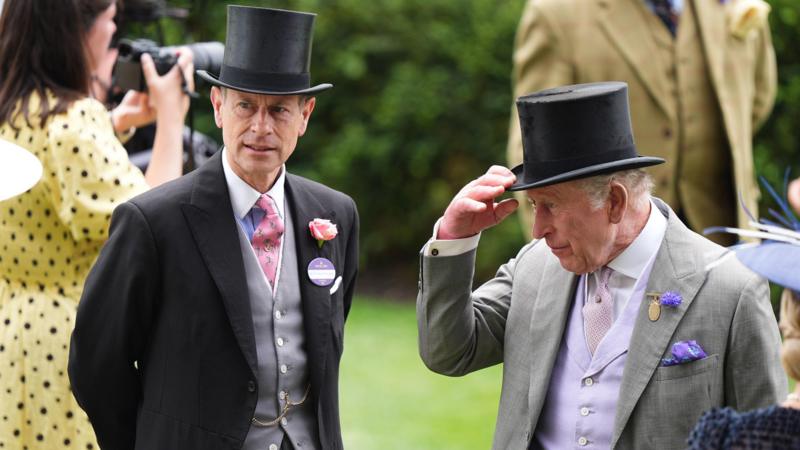
The King and Queen attended Ladies Day at Royal Ascot, a major five-day horse racing event in Berkshire, England. Thousands of people wore fancy hats and enjoyed the races, with many notable guests present.
Key Facts
Ladies Day is held every Thursday during the Royal Ascot event.
The King and Queen attended Ladies Day for the second time this week.
Royal Ascot takes place at Ascot Racecourse in Berkshire.
Around 290,000 people are expected to visit the event this week.
Several members of the Royal family, including the Duchess of Edinburgh and the Princess Royal, attended.
Actor Stanley Tucci also attended and rode in a carriage at the event.
Many visitors wore floral and bird-themed hats as part of the tradition.
BBC Radio Berkshire provides coverage of the event throughout the week.
Read the Original
Want the full story? Tap a source to open the original
article.
Some cancer patients are choosing to use ivermectin, a drug normally for treating parasites, instead of chemotherapy. Doctors are worried because ivermectin is not proven to treat cancer and skipping chemotherapy can be harmful.
Key Facts
Ivermectin is usually used to treat parasite infections, often in animals.
Some cancer patients are using it instead of standard chemotherapy treatments.
Chemotherapy is the common and scientifically supported treatment for many cancers.
Doctors are concerned about the safety and effectiveness of using ivermectin for cancer.
Using unproven treatments can delay proper cancer care and affect patient outcomes.
Ivermectin’s role in medicine does not include cancer treatment based on current evidence.
The trend of patients choosing ivermectin comes after its recent attention during the COVID-19 pandemic.
Medical experts urge patients to follow evidence-based cancer treatments prescribed by oncologists.
Read the Original
Want the full story? Tap a source to open the original
article.
People living in southern Lebanon doubt that fighting will stop even after the US and Iran signed an agreement to end the war. Israeli officials are discussing with the US about keeping Israeli forces in southern Lebanon.
Key Facts
The US and Iran signed a memorandum of understanding (MoU) aiming to end the war.
Residents in southern Lebanon are skeptical the agreement will bring lasting peace.
Israeli officials are in talks with the US about continuing Israel’s military presence in southern Lebanon.
The article focuses on concerns about peace and security in southern Lebanon.
The situation involves three main parties: the US, Iran, and Israel.
The MoU is intended to reduce hostilities, but local doubts remain.
Read the Original
Want the full story? Tap a source to open the original
article.