Russian drones attacked a home in northern Ukraine, killing a 29-year-old woman and her 9-year-old son and injuring others. The United Nations reported that July was the deadliest month for Ukrainian civilians since the start of Russia’s invasion in 2022, with a significant rise in deaths and injuries.
Key Facts
Russian jet-powered drones struck a home in Sumy region, northern Ukraine, killing a woman and her 9-year-old son.
Four other people were wounded in the attack, including family members who suffered severe burns.
The U.N. said July saw 437 civilian deaths and 2,610 injuries in Ukraine, the highest monthly toll since March 2022.
Since February 2022, the war has killed at least 16,874 civilians, including 820 children, and wounded over 51,000 people.
Russian Foreign Minister Sergey Lavrov announced plans to increase air attacks, targeting Ukraine’s military supply lines.
Ukrainian President Zelenskyy said Russian glide bombs have destroyed residential buildings and injured civilians in the eastern Donetsk region.
Russia attacked 12 regions of Ukraine in one night, wounding dozens more people.
Ukrainian forces struck a major Russian port north of Moscow, causing a fire.
Read the Original
Want the full story? Tap a source to open the original
article.
Nigel Farage, leader of the Reform UK party, won re-election to the British parliament. However, he faces challenges, including an investigation into his finances that may affect his political career.
Key Facts
Nigel Farage leads the Reform UK party, described as far-right.
Farage recently won a by-election to return to parliament.
There is an inquiry or investigation into his financial affairs.
The investigation could impact Farage’s future in politics.
Reform UK became more prominent after Farage’s political activities.
The article was explained by Al Jazeera’s Jonah Hull.
The situation highlights ongoing political and legal challenges for Farage.
Read the Original
Want the full story? Tap a source to open the original
article.
France’s top court has stopped a new law that would have banned children under 15 from using social media, saying the law limited free speech too much. The government will now work on a new version of the law to address the court’s concerns and aims to have it ready by early 2027.
Key Facts
The French Constitutional Council ruled the social media ban for under-15s was not balanced with freedom of expression rights.
The original law was planned to start in September, banning under-15s from opening new social media accounts and requiring age checks on all accounts.
The court said the law did not provide enough legal protections for privacy, especially concerning age verification.
President Macron asked the Prime Minister to prepare a new draft law that meets the court’s requirements.
The government intends to pass a revised law by early 2027.
Australia passed a similar social media ban for under-16s last year, though many young people still use social media there.
Several European countries are working on rules to limit social media use for children, including the UK planning a ban for under-16s starting in 2027.
The European Commission has proposed delays on social media access for children across the EU as part of new legislation.
Read the Original
Want the full story? Tap a source to open the original
article.
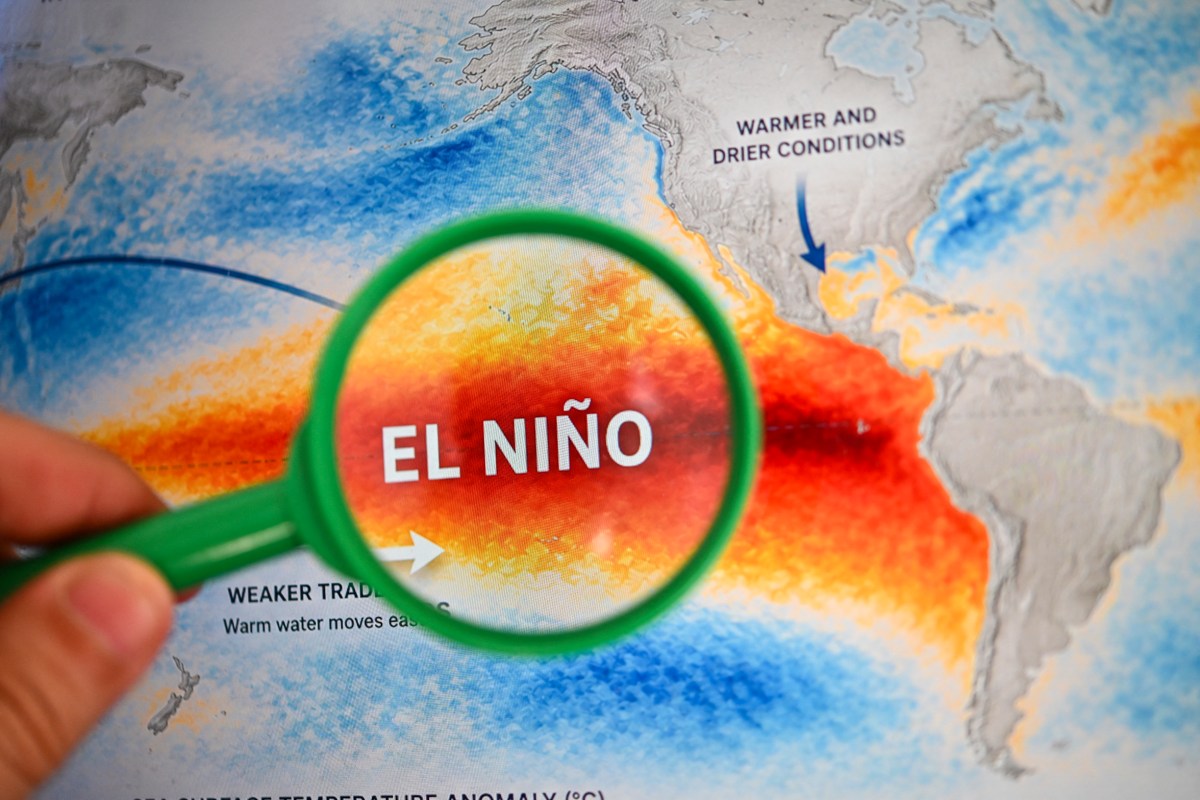
Federal forecasters say there is a very high chance that the El Niño weather pattern will become very strong in late 2026 and early 2027. This event could be the strongest on record, affecting weather patterns worldwide, including wetter conditions in the southern U.S. and warmer, drier areas in the north.
Key Facts
The National Oceanic and Atmospheric Administration (NOAA) says there is over a 90% chance El Niño will be very strong in fall and winter 2026–27.
There is a 69% chance it could be the strongest El Niño since records began in 1950.
El Niño is a climate pattern where the Pacific Ocean’s surface water becomes warmer than usual, influencing global weather.
Past strong El Niños in 1982–83, 1997–98, and 2015–16 caused heavy rain, flooding, droughts, and changes in hurricane activity.
The 2015–16 El Niño caused droughts in places like the Caribbean and Ethiopia, as well as record global surface temperatures.
Weather impacts can vary; for example, 2015–16 brought dryer conditions to California but wetter weather in the Pacific Northwest.
Scientists expect wetter weather in much of the southern United States during the cool months and fewer named Atlantic storms in 2026–27.
El Niño’s strongest effects usually happen from October through March, especially increasing rain from Texas to Florida.
Read the Original
Want the full story? Tap a source to open the original
article.
Peru’s navy has increased efforts to stop illegal gold mining in the Amazon rainforest, especially in the protected Tambopata National Reserve. Illegal mining uses harmful chemicals like mercury and damages forests, rivers, and local Indigenous communities that rely on the environment.
Key Facts
Peruvian navy soldiers carried out raids by helicopter in Madre de Dios, an Amazon region rich in wildlife.
Illegal gold mining creates large, muddy holes and uses pumps and tubes to extract gold from sediment.
Miners often flee when authorities arrive, leaving behind camps with food and supplies.
Mercury used in mining pollutes water, fish, and harms nearby Indigenous communities.
Mining activity has reached protected areas and even close to military monitoring stations.
The Tambopata National Reserve, a protected Amazon area, is already seeing hundreds of illegal mining dredges.
Indigenous groups report criminal groups linked to illegal mining operating near their communities.
The government’s campaign aims to stop mining advance to preserve the rainforest and ecosystem.
Read the Original
Want the full story? Tap a source to open the original
article.
Colombia suffered a powerful 7.4 magnitude earthquake that killed at least 285 people and affected over 100,000 others. The government is working with private companies to rebuild homes, schools, and hospitals damaged in the disaster.
Key Facts
The earthquake struck Colombia on Monday, 2026, with a magnitude of 7.4.
At least 285 people died, nearly 4,000 were injured, and hundreds remain missing.
More than 100,000 people lost their homes or were affected by damage.
Thousands of houses, schools, medical facilities, and community centers were damaged or destroyed.
Some of the hardest-hit cities include Cali, Pereira, Manizales, and Quibdo.
President Abelardo de la Espriella announced plans to work with private companies to rebuild the country.
The government is providing subsidies to homeless families while aid continues in some areas.
Many people are currently relying on volunteers and neighbors because government help has not reached all regions.
Read the Original
Want the full story? Tap a source to open the original
article.
A private plasma clinic chain in Canada called Grifols has stopped collecting plasma after two donors died and Health Canada began investigating safety problems. The government found multiple issues with the clinics, including poor staff training and failure to follow rules.
Key Facts
Grifols runs 17 private plasma donation clinics across Canada and is the only private plasma clinic chain in the country.
Two donors died after donating plasma in Manitoba, in October 2025 and January 2026.
Health Canada found that Grifols clinics had safety issues like poor staff training, incomplete records, and not following procedures.
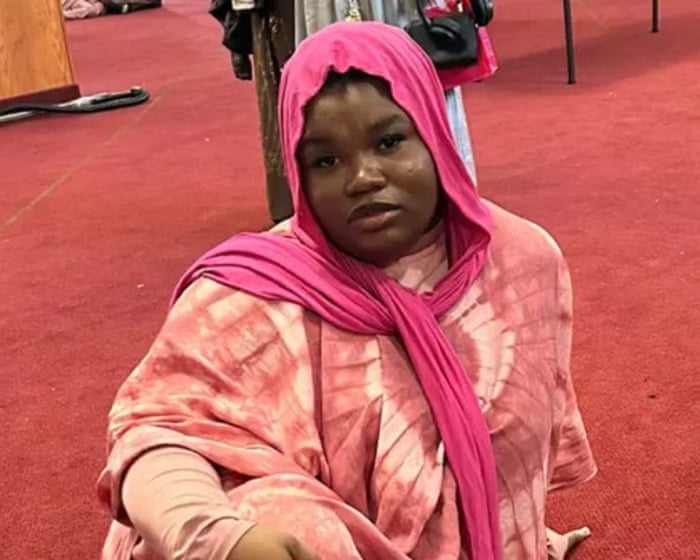
One donor, Rodiyat Alabede, 22, died of cardiac arrest shortly after donating plasma in Winnipeg.
Health Canada said there was no proven link between the donations and the deaths, but advocates dispute this and want more investigation.
The plasma donation process involves separating plasma from blood with a machine and takes about 90 minutes.
In Manitoba, paying donors for plasma is allowed, unlike in some other provinces.
Grifols paused donations voluntarily to cooperate with Health Canada and Canadian Blood Services during the review.
Read the Original
Want the full story? Tap a source to open the original
article.
France’s top constitutional court rejected a law that would have banned children under 15 from using social media. The court said the law violated young people’s freedom of expression and raised privacy concerns about age verification systems.
Key Facts
The law would have stopped children under 15 from using platforms like TikTok, Snapchat, and Instagram.
The law aimed to protect children from issues like anxiety, depression, sleep problems, and online bullying.
France’s Constitutional Council said the law was not suitable or necessary for protecting freedom of expression.
The court also worried about privacy risks from requiring all users to prove their age.
The law was set to start on September 1 but was blocked by this ruling.
President Emmanuel Macron asked the Prime Minister to create a new law that follows the court’s guidance and European rules.
Macron wants to keep working on protecting children online before his presidency ends next year.
The court did not decide on banning mobile phones in high schools, which is a separate rule also starting September 1.
Read the Original
Want the full story? Tap a source to open the original
article.
Israeli settlers have surrounded Palestinian homes in the West Bank village of Qusra, trying to force families to leave so they can take over the land. This has led to conflicts, damage to property, and ongoing fears among Palestinians. The situation reflects wider tensions as Israel's government legalizes more settlements in the West Bank, despite international laws and past peace agreements.
Key Facts
Israeli settlers have been surrounding Palestinian homes in Qusra for about a week to seize land.
Palestinian families, like Amin Rahal’s, stay home to guard their property from settler attacks.
Settlers have damaged property, taken land, and restricted Palestinians’ access to their own farms and trees.
The UN reports about six settler-related violent or criminal incidents daily in the West Bank in 2026.
Some former Israeli settlements evacuated in 2005 are being reoccupied under Israel’s current right-wing government.
In December 2026, Israel legalized 17 new settlements in the northern West Bank, aiming to connect them.
International law says all settlements on occupied land are illegal, but Israel controls 60% of the West Bank (Area C) where it allows settlement building.
Around 500,000 settlers and 3 million Palestinians live in the West Bank, which Israel has occupied since 1967.
Read the Original
Want the full story? Tap a source to open the original
article.
The United States and Iran are both claiming control over the Strait of Hormuz, an important waterway for global oil transport. Experts say neither side has clear dominance, leading to a stalemate between the two countries.
Key Facts
The Strait of Hormuz is a narrow passage used to ship much of the world’s oil.
Both the U.S. and Iran are sending mixed signals about who controls the strait.
Mona Yacoubian, an expert on Middle East issues, commented on the situation.
The situation is described as a "deadlock," meaning neither side is clearly in charge.
Control of the strait is important for global energy security.
Tensions in the area affect international relations and trade.
CBS News is reporting on the ongoing dispute between these two countries.
The U.S. and Iran have a history of conflict and competition in this region.
Read the Original
Want the full story? Tap a source to open the original
article.
In 1936, a severe heat wave caused about 5,000 deaths in the United States. During this time, a female police officer in Covington, Kentucky, tried to enforce rules against women and girls wearing what she considered revealing summer clothes in public.
Key Facts
The heat wave of 1936 caused roughly 5,000 deaths in the U.S.
In Covington, Kentucky, police patrolled to watch for girls and women wearing shorts and halter tops.
Police matron Elizabeth Cohran, a rare female officer at the time, asked for these patrols.
Cohran wanted to cite girls over ten years old for indecent exposure if seen wearing skimpy clothes outdoors.
Some local officials disagreed, saying shorts and halters were common and not indecent.
Cohran's actions reflected the social norms and concerns about modesty and safety in 1936.
Women in her role handled sensitive cases like runaways, abuse victims, and pregnancies.
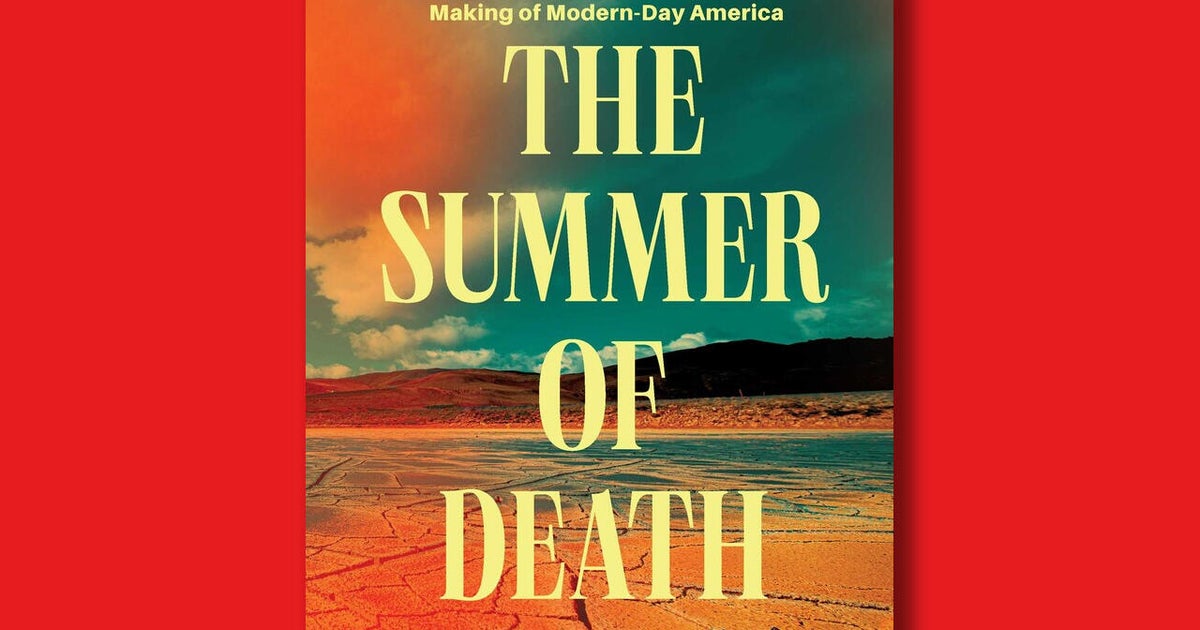
The story is from Geoff Williams’s book "The Summer of Death," published in 2026.
Read the Original
Want the full story? Tap a source to open the original
article.
Pearl Jam’s singer Eddie Vedder is working to support children who have Epidermolysis Bullosa, a rare disease that makes their skin very fragile and painful. Doctors and researchers are trying to better understand and find treatments for this condition.
Key Facts
Eddie Vedder is the lead singer of the band Pearl Jam.
He is focusing on helping children with Epidermolysis Bullosa.
This disease causes very fragile skin that can tear or blister easily, often called “butterfly skin.”
Children with this condition experience severe pain and require special care.
Researchers and doctors are studying this rare childhood disease.
Efforts are ongoing to improve treatments and quality of life for affected children.
Dr. Céline Gounder, an expert, provides information about these rare diseases and current research.
Read the Original
Want the full story? Tap a source to open the original
article.
The Philippines has started public hearings through a new Drug War Truth Commission to investigate killings linked to the anti-drug campaign launched by former President Rodrigo Duterte. Families of victims share their stories, while the commission gathers evidence but does not have power to prosecute.
Key Facts
Luzviminda Siapo’s teenage son Raymart was killed in 2017 during Duterte’s war on drugs.
Raymart was found dead with a gun and drugs planted near his body; witnesses said masked men forced him to sit and then shot him.
The Drug War Truth Commission began in May to investigate extra-judicial killings linked to the campaign.
The government reports about 6,000 deaths, but rights groups estimate between 20,000 and 30,000.
Duterte was arrested and sent to the International Criminal Court in 2025, facing trial for crimes against humanity related to the drug war.
The commission holds public, livestreamed hearings with victims’ families and witnesses giving testimony.
The commission cannot prosecute but shares information with Philippine courts and the International Criminal Court.
One known case where police were held accountable involved the 2017 killing of 17-year-old Kian delos Santos.
Read the Original
Want the full story? Tap a source to open the original
article.
Polish officials stopped a plan by Russia to kill a man who has citizenship in both the United States and Ukraine. Polish Prime Minister Donald Tusk announced that the assassination attempt was prevented.
Key Facts
The target was a dual citizen of the U.S. and Ukraine.
The plot was allegedly carried out by Russia.
Polish authorities discovered and stopped the plan.
The Polish Prime Minister, Donald Tusk, shared this information publicly.
The incident took place in Poland.
U.S. and Ukrainian officials have been informed.
The motive and further details about the plot are under investigation.
Read the Original
Want the full story? Tap a source to open the original
article.
Nigel Farage was re-elected as Member of Parliament (MP) for Clacton after resigning in July, which caused a by-election (a special election to fill a vacancy). The investigation into a large £5 million gift he received has been reopened, and questions remain about his absence from the election night events.
Key Facts
Nigel Farage won back his MP seat for Clacton in the recent by-election.
He had resigned from this seat in July, leading to the by-election.
A parliamentary investigation has restarted into a £5 million gift Farage received.
Farage did not attend the vote counting or give a scheduled speech on Friday morning.
The by-election results and their implications for Farage were discussed live at the Edinburgh Fringe festival.
The news was covered in a BBC political podcast called Newscast.
Newscast provides daily political news analysis and is available on smart speakers and online.
The program was presented by Adam Fleming and produced by a BBC team.
Read the Original
Want the full story? Tap a source to open the original
article.
Scottish police have warned that a new datacentre planned in Larbert, Scotland, may face strong public opposition and will need strict security to prevent disruptions. Many local people and groups are concerned about the environmental impact and health risks, especially due to the backup diesel generators planned for the site.
Key Facts
Police expect “a great deal of public opposition” to the Larbert datacentre and want the developer to work with them on security.
Larbert is about 30 miles west of Edinburgh.
Nearly 7,000 people have formally objected to the project.
Local protests have drawn over 100 people, with more planned soon, including in Edinburgh.
Scotland has at least 23 large “hyperscale” datacentre plans that could use more energy than Scotland’s peak demand.
The Scottish National Party passed a motion to freeze all new datacentres, which could affect the UK’s AI plans.
The planned datacentre will use 200 diesel generators as backup power, raising concerns about pollution and noise near hospitals and care homes.
Local residents worry about health impacts, especially those with vulnerable family members.
Read the Original
Want the full story? Tap a source to open the original
article.
In August 2026, Europe experienced large wildfires due to a new wave of extreme heat. This unusual heat is linked to human-caused climate change and affected countries not prepared for such warm weather.
Key Facts
Europe faced multiple wildfires on August 14, 2026.
A wave of record-breaking heat contributed to the fires.
The extreme temperatures are related to climate change caused by humans.
Many European countries usually have cold climates and were not ready for the heat.
These countries have limited air conditioning to cope with high temperatures.
The wildfires affected large areas across the continent.
Firefighters worked to control the fires amid the heatwave.
Read the Original
Want the full story? Tap a source to open the original
article.
Glastonbury festival organiser Emily Eavis confirmed that Madonna will not be a headliner at the 2027 festival. The festival has already chosen three headliners, but their names have not been announced yet.
Key Facts
Emily Eavis, Glastonbury organiser, denied rumors that Madonna will headline the 2027 festival.
The festival has three headliners booked for 2027 but has not revealed their names.
Madonna has never performed at Glastonbury before.
Madonna hinted at a major UK performance in 2024, sparking rumors about Glastonbury.
Madonna might perform at a different event in London’s Hyde Park, but this is not confirmed.
Eavis expressed hope that Arts Minister Andy Burnham will support music education and smaller music venues.
The UK government says it is aware of financial challenges in the culture sector and aims to provide support.
Glastonbury took a break in 2024 and will return in June 2027, with tickets selling in November 2026.
Read the Original
Want the full story? Tap a source to open the original
article.
A record number of UK students earned top A-level grades this year, but many have been unable to secure places in their preferred university courses. Universities, facing limited spaces and strict intake limits, have asked some students to defer their studies or accept alternative courses due to higher competition and course closures.
Key Facts
Nearly one-third of A-level results in England, Wales, and Northern Ireland were top grades (A and A*).
Universities rejected more students who narrowly missed higher grades, increasing competition for places.
Cardiff University asked some students in certain programs to defer until 2027 due to too many qualifying applicants.
Geography courses at Exeter’s Cornwall campus were closed, forcing students to change courses or move to a different campus.
73% of students received firm university offers this year, lower than 76% in recent years.
A record 23,000 students have deferred their university places this year.
The share of students placed in their first-choice courses dropped to 79%, down from 82% last year.
Selective universities increased applications by almost 10% but only raised offers by 5%, tightening admissions.
Read the Original
Want the full story? Tap a source to open the original
article.
France’s highest court blocked a law that banned children under 15 from using social media, saying it violated free speech rights. The government plans to create a new proposal that meets constitutional and European legal standards to protect children online.
Key Facts
France’s Constitutional Council rejected a law banning social media use for children under 15.
The court said the ban unfairly limited freedom of expression and communication.
The law also banned mobile phone use in high schools.
This was the first such comprehensive ban passed in the European Union.
Both chambers of the French Parliament approved the original law.
The law was introduced during President Emmanuel Macron’s term, set to end next year.
President Macron is committed to revising the law to protect children while respecting legal rights.
Prime Minister Sébastien Lecornu has been asked to quickly prepare a new legal proposal.
Read the Original
Want the full story? Tap a source to open the original
article.