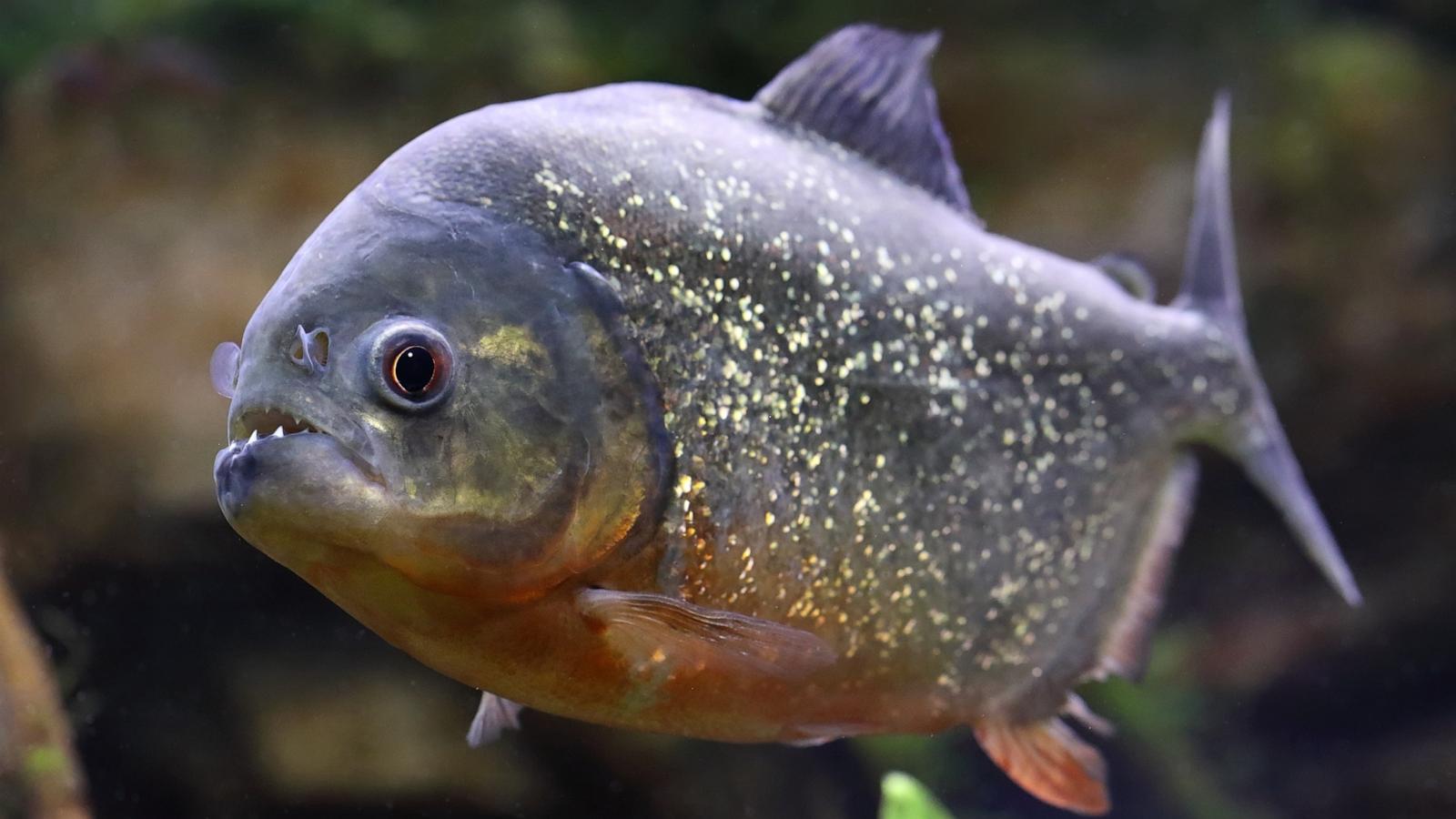
An 8-year-old boy in Pennsylvania caught a piranha while fishing in a local lake. Officials confirmed the fish was a piranha and said it likely came from someone releasing an exotic pet into the water, which is illegal and harmful to the environment.
Key Facts
The boy, Seamus Coffey, caught the fish during a fishing trip near Philadelphia.
The fish was identified by the Pennsylvania Fish and Boat Commission as a piranha, a tropical fish from South America.
Piranhas cannot survive long in Pennsylvania's cold lake environment.
The presence of the fish points to the problem of people releasing exotic pets into local waters.
Releasing exotic animals into the wild is illegal in Pennsylvania and can lead to fines or prosecution.
The boy’s father disposed of the piranha humanely.
Officials warn that releasing pets harms both the animals and the local ecosystem.
People are encouraged to report any sightings of piranhas in local waters.
Read the Original
Want the full story? Tap a source to open the original
article.
Israeli settlers have blocked Palestinian homes in the West Bank village of Qusra for several days, preventing food and medicine from reaching the residents. The Israeli military removed the settlers' tent but left the area while settlers remained nearby, keeping the blockade in place.
Key Facts
Settlers started blocking Palestinian homes in Qusra on Sunday by setting up a tent and stopping supplies.
Palestinians inside the homes have no access to food or medicine and rely on solar panels for electricity.
The Israeli military declared the area a closed military zone and removed the settlers' tent on Wednesday morning.
After the tent was removed, the military left, but settlers stayed at the site with chairs and blankets.
Violence by Israeli settlers against Palestinians in the West Bank has been increasing recently.
The West Bank has been occupied by Israel since 1967, with over 500,000 Israeli settlers living there among about three million Palestinians.
Settlements in the West Bank are considered illegal under international law.
Since October 2023’s Gaza war start, over 1,000 Palestinians and nearly 50 Israelis have died in related violence.
Read the Original
Want the full story? Tap a source to open the original
article.
Israeli settlers have blockaded Palestinian homes in the village of Qusra in the West Bank, blocking food and medicine supplies. The Israeli military removed a tent used by the settlers but then left, allowing settlers to remain near the homes. Tensions between settlers and Palestinians in this area have increased recently.
Key Facts
The blockade by Israeli settlers started on Sunday near Palestinian homes in Qusra, south of Nablus.
Palestinians inside the homes have not received food or medicine and rely on solar panels for electricity.
The Israeli military declared the area a closed military zone and removed the settlers’ tent on Wednesday.
After the military left, settlers stayed at the site with chairs and blankets, continuing the siege.
The army said it would discipline security personnel seen supporting the settlers earlier.
More than 500,000 Israeli settlers live in the West Bank, an area occupied by Israel since 1967.
International law considers West Bank settlements illegal.
Since October 2023, at least 1,097 Palestinians and 48 Israelis have died in related violence.
Read the Original
Want the full story? Tap a source to open the original
article.
Lebanon’s parliament approved a general amnesty law that will reduce prison sentences and free some prisoners. This law comes one day after the country formally ended the death penalty. It aims to ease overcrowding in prisons and apply to many inmates, including those held without trial for a long time.
Key Facts
Lebanon’s parliament passed a general amnesty law by a show-of-hands vote.
The law reduces sentences, including changing death and life sentences to 17 prison years (about 12 years and nine months actual time).
It allows the release of inmates held over 12 prison years without charges.
Lebanon abolished the death penalty one day before passing this law.
The law aims to reduce severe prison overcrowding, estimated at 300 percent.
The amnesty law responds to demands from different political groups and regions, including prisoners linked to the Syrian civil war and drug-related offenses.
Some families of slain Lebanese soldiers oppose the law, fearing it could be too lenient on criminals.
The last similar amnesty law in Lebanon was passed after the civil war ended in 1991.
Read the Original
Want the full story? Tap a source to open the original
article.
The UK government plans to start an early release program in October 2024 to reduce overcrowding in prisons in England and Wales. This plan allows some prisoners to be freed after serving one-third of their sentence, but it has caused public upset because some violent offenders, including the killers of a police officer, could benefit. The Prime Minister has paused and revised parts of the plan, excluding some serious offenders like rapists and child groomers, but not manslaughter convicts.
Key Facts
The early release scheme is based on the Sentencing Act 2026 and starts in October 2024.
It allows prisoners with fixed sentences to be released after serving one-third of their time to ease overcrowded prisons.
The plan was paused after public protests, especially about two men convicted of manslaughter of Police Constable Andrew Harper possibly benefiting.
PM Andy Burnham excluded rapists and serious child sex offenders from the scheme, reducing eligible prisoners from about 6,000 to 5,000.
Manslaughter offenders, including PC Harper’s killers, remain eligible for early release under current rules.
Adding manslaughter as an exclusion is legally complex and not currently planned by the government.
The British prison system is highly crowded and facing a crisis, with some of the highest imprisonment rates in Western Europe.
PM Burnham said early releases are necessary to prevent the prison system from collapsing, despite concerns.
Read the Original
Want the full story? Tap a source to open the original
article.
Iran is engaged in a conflict involving the US and Israel, but no direct talks with the US are happening. While Iran presents itself as strongly anti-imperialist, its main goal is to keep its government safe, and it can change its stance if that helps it survive.
Key Facts
There is a war involving the US, Israel, and Iran that has lasted more than five months.
Iranian Foreign Minister Abbas Araghchi said there are no direct negotiations with the United States.
Some believe Iran won't make a deal because of anti-American beliefs, but Iran’s main focus is on survival, not ideology alone.
Iran’s constitution prioritizes preserving the government above religious laws.
Iran opposes external control over itself but often influences other countries to protect its own interests.
The idea of anti-imperialism in Iran is selective and serves its national survival.
Article 112 of the Iranian constitution supports decisions that help preserve the regime.
Iran’s official hostility towards the US and Israel can be adjusted if it benefits the regime’s survival.
Read the Original
Want the full story? Tap a source to open the original
article.
Hungary’s government will build structures in the Danube River to raise water levels and keep its only nuclear power plant running. The Paks nuclear plant relies on the river water to cool its reactors but is now operating far below capacity due to very low river levels caused by drought and heat waves.
Key Facts
The Paks nuclear power plant supplies about one-third of Hungary’s electricity.
Low water levels in the Danube River have forced the plant to reduce output to around 10% of its capacity (2,000 megawatts).
Hungary plans to build a "bed sill," a low barrier in the riverbed, to slow water flow and increase upstream water levels by up to 1 meter (3 feet).
Two barges may be sunk near the plant to raise water levels an additional 20 centimeters (8 inches).
These interventions aim to prevent the plant from shutting down completely due to insufficient cooling water.
The costs for the river work are estimated at 6 billion forints ($19 million), much less than the 50 billion forints ($158 million) monthly loss caused by reduced plant operation.
Similar measures were recently taken in Romania to support their Cernavoda nuclear plant.
Authorities describe the low water level problem as a long-term issue, not a one-time event.
Read the Original
Want the full story? Tap a source to open the original
article.
Over 200 gold-colored statuettes of composer Wolfgang Amadeus Mozart were stolen from a public art display in Salzburg, Austria. The figures, created by artist Ottmar Hörl for Mozart’s 270th birthday, showed the composer with his dog and were made from plastic material.
Key Facts
The statuettes were about 50 centimeters (less than 20 inches) tall and showed Mozart with his dog.
The installation originally had 320 pieces, but 210 went missing within two weeks.
Artist Ottmar Hörl believes the theft was organized, not random visitors taking the statues.
The figures were made of polymer, a type of plastic, and were intended to be sold for about 100 euros each after the exhibition.
The statues were displayed in Mozart’s former home and surrounding gardens in Salzburg.
Organizers had some backup figures but not enough to replace the stolen ones.
The manufacturer of the statues was on holiday, delaying any quick replacement.
Hörl has experienced similar thefts of his public art before and sees it as a risk of displaying work openly.
Read the Original
Want the full story? Tap a source to open the original
article.
The UK government is considering a ban on disposable barbecues due to their role in causing serious wildfires across the country. These barbecues remain hot after use, making them a fire risk, especially in protected natural areas with wildlife. Some local leaders and campaigners want stricter rules to prevent more fires.
Key Facts
Disposable barbecues have caused multiple serious fires in the UK in recent years.
In July 2026, a large fire at Cannock Chase destroyed heathland that is home to protected wildlife.
Fires from disposable barbecues harm wildlife habitats and can take many years to recover.
These barbecues stay hot for hours and are hard to dispose of safely.
Burying used barbecues doesn’t stop the fire risk, as the charcoal can burn underground.
Several fires linked to disposable barbecues have occurred in England and Scotland since 2025.
The National Farmers’ Union and some MPs support banning disposable barbecues in public places.
The government says it has no current plans for a full ban but has put safety rules in place and allows councils to ban them in risky areas.
Read the Original
Want the full story? Tap a source to open the original
article.
Europe is facing a new kind of crisis involving public attention and trust, highlighted by a recent border incident between Spain and Morocco. Meanwhile, the Venice film festival is featuring long political documentaries, while some media projects aim to create shorter films to better engage audiences.
Key Facts
Over 70,000 people crossed from Morocco into the Spanish enclave of Ceuta, causing political tensions between Italy and Spain.
Italy and Spain reintroduced border checks in response to the Ceuta crisis.
Social media platforms like Instagram, Facebook, and TikTok reward very short videos, making it hard for politicians to keep up.
The Venice film festival will show very long political documentaries, some lasting over three to seven hours.
Films at Venice focus on topics like the Soviet Union, Elon Musk, and Russian journalists in exile.
The Guardian and Franco-German culture channel Arte are inviting filmmakers to submit short documentaries (maximum 20 minutes) about democracy in Europe.
The winning short film will be shown at the DOK Leipzig film festival and receive support from Guardian Documentaries and Arte.
The deadline for documentary submissions is 14 September.
Read the Original
Want the full story? Tap a source to open the original
article.
In 2026, a total solar eclipse will be visible only in Europe, with the full eclipse path crossing the continent. Some parts of the United States will see a small partial eclipse, but the complete event can be experienced mainly in Europe, attracting many American tourists.
Key Facts
A total solar eclipse will occur in 2026.
The full eclipse path, called the path of totality, will pass through Europe.
Only a small part of the United States will see a partial eclipse.
Many American tourists are planning to travel to Europe to see the total eclipse.
The event is generating interest and travel opportunities in Europe.
CBS News meteorologist Rob Marciano reported from Mallorca, Spain, about the eclipse.
This will be the only total solar eclipse visible in 2026.
Read the Original
Want the full story? Tap a source to open the original
article.
Three Pakistani crew members died in an attack on a commercial ship by the Houthi militant group. Officials say this attack increases concerns about a possible wider regional conflict involving the U.S., Israel, and Iran.
Key Facts
The attack took place on a commercial vessel on Tuesday.
Three Pakistani nationals were killed in the incident.
The Houthi militant group carried out the attack.
Pakistani Ministry of Foreign Affairs confirmed the casualties.
The event raises fears of a larger regional war.
The conflict involves tensions between the U.S., Israel, and Iran.
The Houthis are an armed group based in Yemen.
Read the Original
Want the full story? Tap a source to open the original
article.
Becky G shared in an interview that she felt pressure as a child to support her family financially. She also talked about carrying feelings of resentment related to these responsibilities.
Key Facts
Becky G spoke about her experience on the CBS Mornings show.
She was expected to be the main person earning money for her family when she was young.
This situation caused her to feel pressure and emotional challenges.
The interview was conducted by CBS Mornings co-host Gayle King.
Becky G described feelings of resentment linked to her early responsibility.
Read the Original
Want the full story? Tap a source to open the original
article.
In the UK, a severe drought has dried up most soil, making it hard for badgers to find food underground. As a result, badgers are digging up the wet grass on golf courses, which are allowed to water their lawns during the drought, causing damage and concern among golf course managers.
Key Facts
European badgers live 5 to 8 years in the wild and have lived in the UK for hundreds of thousands of years.
The UK had its driest July since records began in 1836, causing dry, hard soil and wildfires.
Most wild plants and insects badgers eat live underground, which is hard to reach in dry soil.
Golf courses are exempt from drought hosepipe bans, so they keep their grass green and wet.
Badgers dig up golf course turf to find food like worms and chafer grubs.
Golf courses across various UK regions, including Suffolk and Worcestershire, report damage from badgers.
The damage has upset golf course managers, who want changes to watering rules.
Changing the law could remove golf courses’ water exemption, but that may harm the badgers’ food supply.
Read the Original
Want the full story? Tap a source to open the original
article.
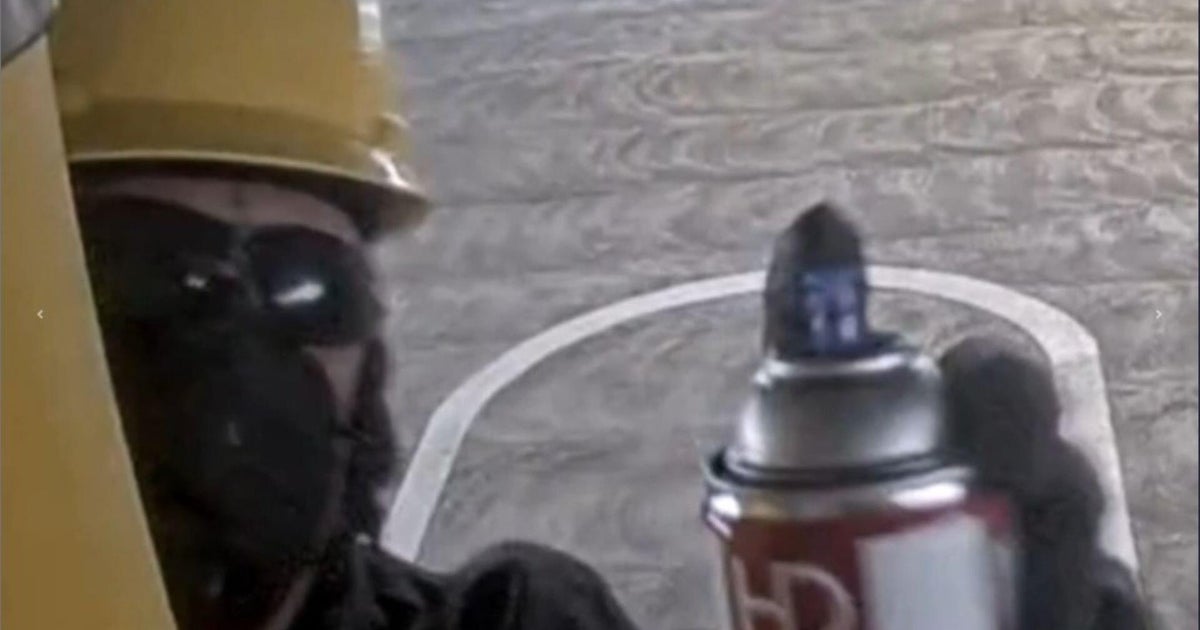
The TV show "48 Hours" will air a report titled "Murder in the Parking Garage" on Saturday, August 15. The story involves a masked killer who sprays paint on security cameras to avoid being caught.
Key Facts
The program is called "48 Hours."
The report is about a murder that happened in a parking garage.
The killer wore a mask during the crime.
The killer sprayed paint on security cameras to block the view.
Natalie Morales is the correspondent reporting the story.
The show airs on CBS and streams on Paramount+.
The air date is Saturday, August 15, at 10/9c (time zone).
Read the Original
Want the full story? Tap a source to open the original
article.
Israeli settlers in the West Bank village of Jalud have been painting hateful and threatening graffiti on Palestinian homes and public buildings. These acts often happen alongside violent attacks, causing fear and tension in the community.
Key Facts
Jalud is a Palestinian village in the occupied West Bank with about 1,000 residents.
Israeli settlers spray racist and threatening messages on buildings, such as “Revenge” and “Burn in hell.”
Settlers often target schools to scare children and encourage Palestinians to leave the area.
The Hilltop Youth, a young settler group, is linked to many of these attacks and uses slogans calling for Palestinian expulsion.
There have been five major violent settler assaults in Jalud since January, with the latest on August 4.
Settlers sometimes write the names of Israeli soldiers killed in Gaza on the walls as a form of retaliation.
Experts say these actions reflect an ideology aiming to remove Palestinians and create a “zero-Arab state” from the Jordan River to the Mediterranean Sea.
The Price Tag movement is a far-right settler group that feels Palestinians must be forced out as punishment for their presence.
Read the Original
Want the full story? Tap a source to open the original
article.
The article discusses why some people find it hard to relax while on vacation. It explains the science and history behind how people relax and why some find resting easier than others.
Key Facts
Some people struggle to relax during their vacations.
Science helps explain how relaxation works in the brain and body.
History shows changes in how people have viewed and experienced rest.
Differences in personality and habits affect how easily someone can relax.
The article shares insights from CBS News contributor Arthur C. Brooks.
Read the Original
Want the full story? Tap a source to open the original
article.
A UK special election is taking place in Clacton on August 13, where Nigel Farage, leader of the Reform UK party, is running again after resigning amid a financial investigation. His opponent is a comedic character named Count Binface, who uses humor and satire to comment on British politics by running for office as an "alien" candidate.
Key Facts
Nigel Farage resigned from Parliament recently due to scrutiny over financial support linked to a convicted U.S. financier.
Farage immediately ran again for his old seat in a special election on August 13 in Clacton, England.
Farage claims the investigation is a political attack by the establishment.
Count Binface is a character played by Jon Harvey, a comedian with an Oxford education.
Binface dresses as an alien and uses satire to criticize politics, having run in multiple UK elections.
An IPSOS poll showed 33% of UK adults preferred Binface over Farage, who had 20%.
Major UK political parties are boycotting this special election, calling it a stunt.
Binface’s platform mixes humor with some real political commentary.
Read the Original
Want the full story? Tap a source to open the original
article.
Lebanon’s parliament passed a general amnesty law aimed at reducing prison overcrowding and correcting past judicial actions. The law cuts some sentences and frees certain prisoners, but excludes crimes like rape, drug trafficking, and terrorism funding. It has sparked controversy due to its impact on different religious and political groups in the country.
Key Facts
Lebanon’s parliament approved a general amnesty law following a vote to abolish the death penalty.
The new law replaces death sentences with long prison terms and reduces life sentences.
Certain serious crimes like rape, trafficking, corruption, and terror funding are excluded from the amnesty.
The law frees some militants, drug dealers, and prisoners immediately but excludes repeat drug offenders and those who collaborated with Israel.
Sunni groups mostly support releasing Islamist militants, while Shiite and Christian groups want different categories of prisoners freed.
Sunni cleric Ahmad al-Assir, sentenced to death for his role in deadly clashes, might be released in one to two years.
The law reflects ongoing sectarian tensions in Lebanon among Islamic and Christian communities.
Foreign prisoners released under the law may be handled by Lebanon’s intelligence agency, but their deportation status is unclear.
Read the Original
Want the full story? Tap a source to open the original
article.
A rare total solar eclipse will soon be visible in parts of northern Spain, where the Moon will completely block the Sun and briefly turn day into night. Millions of people across Europe, Canada, the northern United States, and northwest Africa will see a partial eclipse. Scientists also use such eclipses to learn more about the Sun and space.
Key Facts
The total solar eclipse will be visible in northern Spain.
This is mainland Europe’s first total eclipse since 2006.
The Moon will completely cover the Sun in the total eclipse, causing darkness during the day.
Millions more people in Europe, Canada, the northern U.S., and northwest Africa will see a partial eclipse.
Total solar eclipses allow scientists to study the Sun and the universe.
The event is happening on August 12, 2026.
The news report includes footage from Segovia, Spain.
Read the Original
Want the full story? Tap a source to open the original
article.