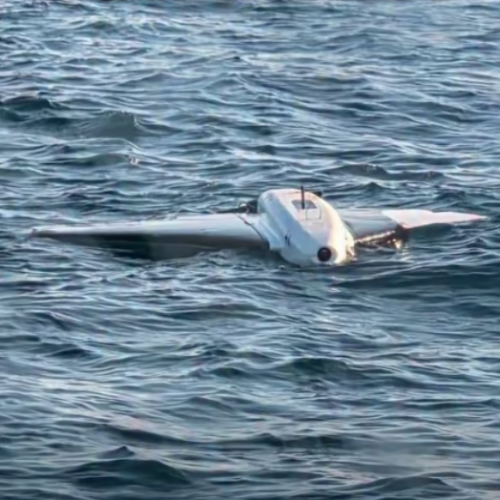
Romanian army divers destroyed two Russian-made drones found floating near Romania’s biggest offshore gas project in the Black Sea. The drones were spotted close to the Neptun Deep energy site, which is important for European gas supply and under development to start production in 2027.
Key Facts
Two Russian-designed Gerbera drones were found drifting near Romania’s Neptun Deep gas project in the Black Sea.
Romanian divers used explosives to blow up the drones to prevent any potential threat.
Romania's Defense Minister said Ukraine confirmed the drones did not belong to them.
The Neptun Deep project aims to double Romania’s gas output and supply other EU countries like Germany and Moldova.
Russian drone incursions into Romanian airspace have happened multiple times during the ongoing war in Ukraine.
Some previous Russian drone strikes in Romania caused injuries, damage, and evacuations.
The Black Sea region is a contested area with both Ukraine and Russia using drones and missiles in their conflict.
This incident follows a recent suspected Russian drone attack on a Ukrainian cargo plane in Germany.
Read the Original
Want the full story? Tap a source to open the original
article.
The National Oceanic and Atmospheric Administration (NOAA) has decided to stop supporting the upcoming Arctic Report Card, a report about climate and environmental changes in the Arctic. The lead editor for the 2026 report said that government help with the report will no longer be provided.
Key Facts
NOAA had helped create previous Arctic Report Cards.
NOAA announced that it will no longer provide support for the 2026 report.
Rick Thoman is the lead editor for the 2026 Arctic Report Card.
Participants working on the report were told about the change on a Monday.
The Arctic Report Card tracks climate and environmental conditions in the Arctic region.
This decision means the report will proceed without NOAA’s direct involvement.
NOAA is a government agency focused on weather, oceans, and climate.
Read the Original
Want the full story? Tap a source to open the original
article.
Nigerian people who returned home after facing attacks during xenophobic protests in South Africa are trying to recover from their difficult experiences. The protests caused problems between Nigeria and South Africa, affecting their relationship.
Key Facts
Nigerians were attacked in South Africa during xenophobic protests.
Many Nigerians fled South Africa and returned to Nigeria.
Returnees are working to adjust and overcome trauma from these events.
The xenophobic violence hurt diplomatic ties between Nigeria and South Africa.
The protests lasted for several months.
The situation has drawn attention across Africa and beyond.
The report also mentions other African news about safety at the Chad-Libya border and Liberia's drug crackdown.
Read the Original
Want the full story? Tap a source to open the original
article.
Houthi rebels in Yemen fired missiles that killed six people on a ship in the Bab el-Mandeb strait, an important shipping route. Meanwhile, U.S. forces disabled a ship they said was trying to break the U.S. blockade on Iranian ports in the Gulf of Oman, as tensions rise in the Middle East.
Key Facts
Six people died after Houthi rebels attacked a vessel in the Bab el-Mandeb strait near Yemen.
The dead included four crew members and two fighters allied with Yemen's government.
Houthis fired three ballistic missiles, marking the first known deaths from their attacks on shipping in this conflict.
The Bab el-Mandeb strait is a key route for Saudi oil shipments, especially since Iran has shut down the Strait of Hormuz.
Houthis have increased attacks on government forces in Yemen and on Saudi oil facilities and shipping.
President Donald Trump’s administration maintains a blockade on Iranian ports to pressure Iran economically.
U.S. forces disabled a Panamanian-flagged ship that tried to evade the U.S. blockade by attacking its engine room with missiles.
The U.S. Navy has multiple warships, including aircraft carriers, stationed in the Arabian Sea to enforce the blockade.
Read the Original
Want the full story? Tap a source to open the original
article.
Three Nepali mountaineers died in an avalanche on Broad Peak in Pakistan. Their bodies were brought back to Kathmandu, Nepal, where their families gathered to mourn them.
Key Facts
Three Nepali climbers named Kili Pemba Sherpa, Gyalu Sherpa, and Nima Sherpa died in an avalanche.
The avalanche happened on Broad Peak, a mountain in Pakistan.
The climbers’ bodies were recovered and flown to Kathmandu’s Tribhuvan International Airport.
Family members and relatives gathered in Kathmandu to mourn the loss.
Broad Peak is a high mountain popular among mountaineers from around the world.
Read the Original
Want the full story? Tap a source to open the original
article.
A ferry overloaded with passengers capsized on Lake Kariba in Zimbabwe, causing at least 15 deaths and leaving 27 people missing. Rescue teams saved 77 people, but the exact number of passengers, especially children without tickets, is unknown.
Key Facts
The ferry was carrying at least 114 adult passengers and 5 crew members based on ticket sales.
The ferry’s maximum capacity is 90 people, meaning it was overloaded.
It is unclear how many children without tickets were on board.
At least 15 people died, and 27 are still missing after the accident.
77 people were rescued and taken to an island nearby.
The ferry travels between rural communities and the town of Kariba on Lake Kariba.
Lake Kariba is a large man-made lake between Zimbabwe and Zambia, created in the 1950s and 1960s by damming the Zambezi River.
Rescue efforts involved speedboats and a helicopter searching for survivors or victims.
Read the Original
Want the full story? Tap a source to open the original
article.
Pakistan’s interior minister Mohsin Naqvi met with Iran’s Foreign Minister Abbas Araghchi in Tehran. They discussed efforts to help end a conflict involving the US, Israel, and Iran and to reopen the Strait of Hormuz, a key shipping route.
Key Facts
Mohsin Naqvi is Pakistan’s interior minister.
Abbas Araghchi is Iran’s Foreign Minister.
The meeting took place in Tehran, Iran’s capital.
Talks focused on mediation to end a war involving the US, Israel, and Iran.
They discussed reopening the Strait of Hormuz, an important waterway for global trade.
The Strait of Hormuz is a critical route for shipping oil and goods.
Pakistan is acting as a mediator in these talks.
Read the Original
Want the full story? Tap a source to open the original
article.
Severe storms caused power outages for more than 500,000 people in Chicago and northwest Indiana. Strong winds and dangerous weather led to tornado sirens sounding, flight delays at major airports, and power cuts in Ohio’s capital area.
Key Facts
Over 500,000 people lost power in the Chicago area and northwest Indiana.
Thunderstorms and strong wind gusts hit the region on Tuesday.
Tornado warning sirens sounded as the weather worsened.
Flights were temporarily stopped at Chicago’s two main airports.
Airport officials warned travelers about delays caused by the backlog.
Power outages also affected the Ohio state capital region.
The severe weather affected multiple states in the Midwest.
Read the Original
Want the full story? Tap a source to open the original
article.
Thousands of women in Gaza have become widows due to the ongoing war, forcing them to care for their families alone amid difficult living conditions. The number of widows has increased to over 50,000, and many need financial help, healthcare, legal support, and psychological care.
Key Facts
Mona al-Masri is a widow in Gaza who lost her husband in an Israeli strike in September 2024.
She lives in a tent with her four children and struggles daily to meet their basic needs like water and food.
The Gaza Ministry of Social Development reports over 50,000 widows in the area, including more than 28,000 who became widows due to the war.
Many widows face added challenges such as destruction of homes, displacement, and lack of safety.
Widows need not only money but also mental health support, healthcare, legal help, education, and job training.
The number of widows is expected to rise as not all have been registered yet.
Psychologists say widowhood during the war causes deep emotional and social trauma for both women and their children.
Officials stress that supporting widows requires urgent, ongoing humanitarian and national efforts.
Read the Original
Want the full story? Tap a source to open the original
article.
Fishermen on Yemen’s Red Sea coast face dangerous conditions due to ongoing conflict that has turned the sea into a battlefield. Fishing is risky because armed groups control the area and attacks at sea have caused deaths, lost boats, and restrictions on fishing zones. Despite these dangers, fishermen continue going out to sea because their families depend on the income from fishing.
Key Facts
Yemen’s Red Sea coast is a key area for the country’s fishing industry and a major source of export income before the war.
The war in Yemen began in 2015, and the fishing industry has suffered, with exports dropping by about 70%.
The Houthi rebels control much of the coast north of the port city of Hodeidah, while pro-government forces operate south of it.
The Red Sea is strategically important because it includes the Bab al-Mandeb Strait, a major shipping route.
Houthis have attacked ships in the Red Sea, especially since October 2023, triggering responses from the U.S., U.K., Israel, and Saudi Arabia.
Fishermen face limits on where they can fish due to military restrictions by both sides in the conflict.
Some fishermen have died or gone missing after attacks in the area, but families depend on fishing income.
Artificial reefs built by fishermen to support marine life are inaccessible due to ongoing security concerns linked to the fighting.
Read the Original
Want the full story? Tap a source to open the original
article.
Israeli forces demolished the home of Farouk Ramadan, a Palestinian man who was killed in July during a confrontation with settlers in the West Bank village of Tal. Video footage shows the demolition carried out by Israeli troops.
Key Facts
Farouk Ramadan was a Palestinian man killed in July.
He died while confronting settlers in the village of Tal, located in the West Bank.
The West Bank is a territory occupied by Israel.
Israeli forces demolished his home after his death.
Video footage captured the demolition process.
The demolition took place as a response by Israeli authorities following the incident.
Read the Original
Want the full story? Tap a source to open the original
article.
A Syrian court sentenced former President Bashar al-Assad to death even though he was not present at the trial. He was found guilty of murder, torture, and crimes against humanity related to actions before and after Syria’s civil war.
Key Facts
The court involved is the Fourth Criminal Court in Damascus.
The trial was held in absentia, meaning Assad was not physically there.
Charges include murder, torture, and crimes against humanity.
The sentencing covers events both before and after the civil war in Syria.
This is the first sentence against Bashar al-Assad since he was removed from power.
Assad was previously the President of Syria.
The article refers to him as ousted or former president, indicating he is no longer in control.
Read the Original
Want the full story? Tap a source to open the original
article.
Russian forces attacked several cities in Ukraine using missiles, drones, and glide bombs, killing at least 10 civilians. Ukrainian President Volodymyr Zelenskyy said that Russia has started using ballistic missiles provided by North Korea during its invasion.
Key Facts
Russia launched missile, drone, and glide bomb attacks in Ukraine on Tuesday.
At least 10 civilians died in these attacks.
President Zelenskyy said Russia received new military support from North Korea.
The attacks included ballistic missiles supplied by North Korea.
Seven workers at a steel plant in Zaporizhzhia were killed and 21 injured.
Three others, including a 15-year-old boy, died in the Dnipropetrovsk region from drones and artillery.
The invasion has lasted more than four years.
The attacks targeted southeastern and central parts of Ukraine.
Read the Original
Want the full story? Tap a source to open the original
article.
The Ebola outbreak in the Democratic Republic of Congo (DR Congo) is getting worse, with more than 2,000 people having died. Over 4,300 cases of Ebola infection have been confirmed in the country.
Key Facts
The Ebola outbreak is happening in DR Congo.
More than 2,000 people have died from Ebola so far.
Over 4,300 people have been confirmed to have Ebola.
The outbreak is spreading quickly.
Ebola is a deadly disease caused by a virus.
Health officials are working to control the outbreak.
The situation remains serious and requires ongoing attention.
Read the Original
Want the full story? Tap a source to open the original
article.
Rescuers are looking for people trapped under collapsed buildings after a strong earthquake hit western Colombia. This earthquake is reported to be the strongest in Colombia this century.
Key Facts
The earthquake struck western Colombia.
Many buildings collapsed because of the quake.
Rescuers are actively searching for survivors beneath the rubble.
This earthquake is considered the strongest in Colombia in over 20 years.
The rescue efforts are ongoing as officials work to find people who may still be alive.
Read the Original
Want the full story? Tap a source to open the original
article.
The US military said it used missiles from a helicopter to disable the steering system of a cargo ship trying to break the US blockade of Iranian ports. The ship, called M/V Vela Nova and flagged in Panama, was stopped in the Gulf of Oman after ignoring warnings from US forces.
Key Facts
The US helicopter fired two Hellfire missiles at the engine room of M/V Vela Nova.
The M/V Vela Nova tried to sail to an Iranian port but was stopped.
The US blockade of Iranian ports started in April after attempts to end the US-Iran conflict failed.
The US says the ship’s crew ignored multiple warnings before the attack.
US Central Command says the blockade is still fully active.
Since April, 55 commercial ships have been redirected, 3 ships disabled, and 2 boarded by US forces.
Iran has not made any official statement about this incident.
The Gulf of Oman is the location where the interception took place.
Read the Original
Want the full story? Tap a source to open the original
article.
The US military fired missiles at a cargo ship in the Gulf of Oman that tried to break the US blockade of Iranian ports. This happened during a period of low conflict between the US, Israel, and Iran, following a failed ceasefire deal from June.
Key Facts
The US Navy helicopter fired two Hellfire missiles at the Panama-flagged ship Vela Nova.
The ship was disabled in its engine room and steering after ignoring US warnings.
The US has disabled 55 commercial vessels and boarded 2 as part of its Iran blockade.
The naval blockade was reimposed after fighting resumed and control of the Strait of Hormuz was reasserted by Iran.
A June memorandum of understanding aimed to ease tensions and sanctions but progress has stalled.
President Donald Trump recently demanded reparations from Iran for damage over the past 50 years.
Iran wants reconstruction funding included in any deal and has discussed a $300 billion fund.
Iran is negotiating directly with Oman about new shipping routes in the Strait of Hormuz, which remains closed until the US changes its policy, according to Iranian officials.
The Yemen-based Houthis have attacked ships in a key nearby shipping route, adding complexity to the conflict.
Read the Original
Want the full story? Tap a source to open the original
article.
A partial solar eclipse will be visible in parts of northern U.S. and Canada on Wednesday, but total eclipse viewing is limited to regions in Europe including Greenland, Iceland, Spain, and Portugal. North America experienced total solar eclipses in 2017 and 2024, with the next coast-to-coast total eclipse expected in 2045.
Key Facts
The partial solar eclipse will be visible in northern parts of the U.S. and Canada if the skies are clear.
Totality, when the sun is completely covered by the moon, will be seen near the North Pole and across parts of Greenland, Iceland, Spain, and Portugal.
This is Europe’s first total solar eclipse since 1999, and Spain will have another total eclipse in August.
North America had total solar eclipses in 2017 (Oregon to South Carolina) and 2024 (from Mexico to Newfoundland).
The next coast-to-coast total solar eclipse in the U.S. is predicted for 2045.
Some U.S. and Canadian cities with expected partial eclipse coverage include Anchorage (28%), St. Johns (53%), Montreal (18%), and New York City (9%).
Peak times and the amount of sun coverage vary by city, for example, Anchorage’s eclipse peaks at 8:21 a.m. with 28% coverage, while St. Johns peaks at 3:35 p.m. with 53% coverage.
The eclipse will cause only a few minutes of darkness in parts of Europe, less than the longer eclipses recently seen in North America.
Read the Original
Want the full story? Tap a source to open the original
article.
Defense Secretary Pete Hegseth will visit Panama to meet with Panama’s President José Raúl Mulino and senior Colombian officials. The trip aims to strengthen defense cooperation between the United States and Panama, focusing on efforts like fighting drug cartels.
Key Facts
Pete Hegseth is the U.S. Defense Secretary.
He will travel to Panama on Wednesday.
He plans to meet Panama’s President José Raúl Mulino.
He will also meet with senior officials from Colombia.
The visit is part of deepening defense cooperation between the U.S. and Panama.
Hegseth visited Panama last year as well.
He will deliver a speech at an event called the Americas Counter Cartel.
The focus is on fighting drug cartels in the region.
Read the Original
Want the full story? Tap a source to open the original
article.
The U.S. military stopped a Panama-flagged cargo ship that tried to pass through the Gulf of Oman. The ship was breaking a U.S. naval blockade in the Strait of Hormuz, a key shipping route in the Middle East.
Key Facts
The U.S. Central Command oversees military operations in the Middle East.
The blocked ship was flagged under Panama and was carrying cargo.
The ship tried to bypass the U.S. blockade in the Strait of Hormuz.
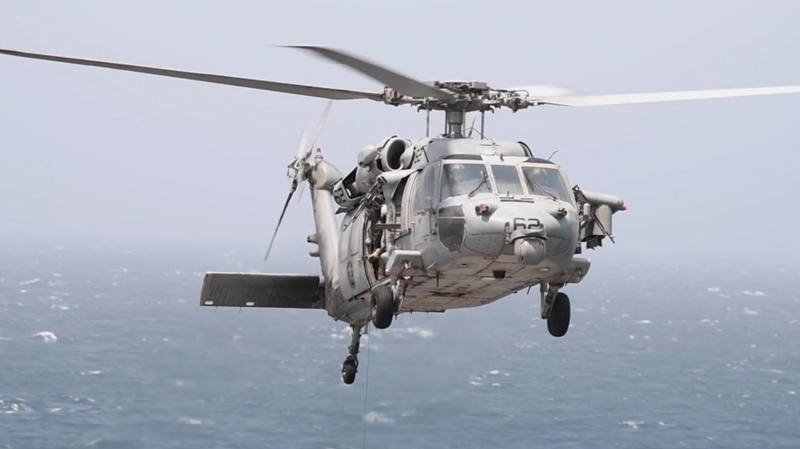
U.S. Navy used an MH-60 helicopter in the operation.
The helicopter fired two Hellfire missiles to disable the tanker.
The Strait of Hormuz is a strategic waterway where a lot of oil shipments pass through.
The U.S. is enforcing a naval blockade in this area.
Read the Original
Want the full story? Tap a source to open the original
article.