The Actual News

Neutral summaries of your favorite news sources — just the facts.

World News

Comprehensive coverage of international news and global events

Police officer under criminal investigation over alleged use of AI

Police officer under criminal investigation over alleged use of AI

Summary

A police officer in Derbyshire, UK, is under criminal investigation for allegedly using artificial intelligence (AI) to create false evidence in several cases. The officer has been removed from frontline duties while police and prosecutors investigate the matter.

Key Facts

  • The officer is suspected of using AI to make fake evidence and interfere with justice.
  • Derbyshire police started a criminal investigation and are working with the Crown Prosecution Service.
  • The investigation is new, and no arrests have been made yet.
  • The officer’s exact crime and role have not been revealed.
  • The Crown Prosecution Service is involved and communicating with defense teams in related cases.
  • The UK National Police Chiefs’ Council recently told police forces to stop using AI for court statements due to reliability concerns.
  • The Metropolitan Police previously used AI software from the US company Palantir to find misconduct among officers, leading to several arrests.
  • That earlier use of AI in the police revealed issues like work violations and serious crimes such as sexual assault.
Read the Original

Want the full story? Tap a source to open the original article.

Ukraine's EU accession bid gains traction as Hungary lifts veto

Ukraine's EU accession bid gains traction as Hungary lifts veto

Summary

The European Union will restart membership talks with Ukraine after Hungary's new government ended a veto by its former leader. EU leaders agreed to begin the initial phase of Ukraine and Moldova's membership process as a sign of support amid the ongoing conflict with Russia.

Key Facts

  • Hungary had blocked Ukraine's EU membership talks under former Prime Minister Viktor Orban.
  • Hungary’s new Prime Minister, Peter Magyar, lifted the veto and agreed on minority rights issues with Ukraine.
  • EU leaders Antonio Costa and Ursula von der Leyen announced the start of the first negotiation phase.
  • Talks will focus first on basic rules like the rule of law.
  • Hungary does not support speeding up Ukraine’s EU membership and may hold a referendum in the future.
  • Ukraine officially began the EU accession process in June 2024.
  • The accession process involves detailed negotiations on many topics and usually takes years.
  • The EU’s support is part of a broader effort to back Ukraine during Russia’s invasion.
Read the Original

Want the full story? Tap a source to open the original article.

Clashes break out at DRC rally against presidential term-limit change

Clashes break out at DRC rally against presidential term-limit change

Summary

Violent clashes happened in the Democratic Republic of Congo at a rally against a proposed law to let President Felix Tshisekedi stay in power beyond the current two-term limit. Opposition groups and pro-government supporters fought near the parliament in Kinshasa, leading police to use tear gas to break up the protest.

Key Facts

  • Rival political groups clashed during a protest against changing presidential term limits.
  • The protest was organized by the opposition coalition called C64.
  • Police fired tear gas to stop the fighting between protesters and pro-government activists.
  • Opposition leaders Martin Fayulu and Prince Epenge were injured during the clashes.
  • President Tshisekedi’s current term ends in 2028, and he has said he might lead a third term if the people support it.
  • The DRC constitution currently does not allow changes to presidential term limits.
  • A new bill could permit changes if there is a "major dysfunction" in government institutions.
  • The country is also facing other challenges, including an Ebola outbreak and conflict with the M23 rebel group backed by Rwanda.
Read the Original

Want the full story? Tap a source to open the original article.
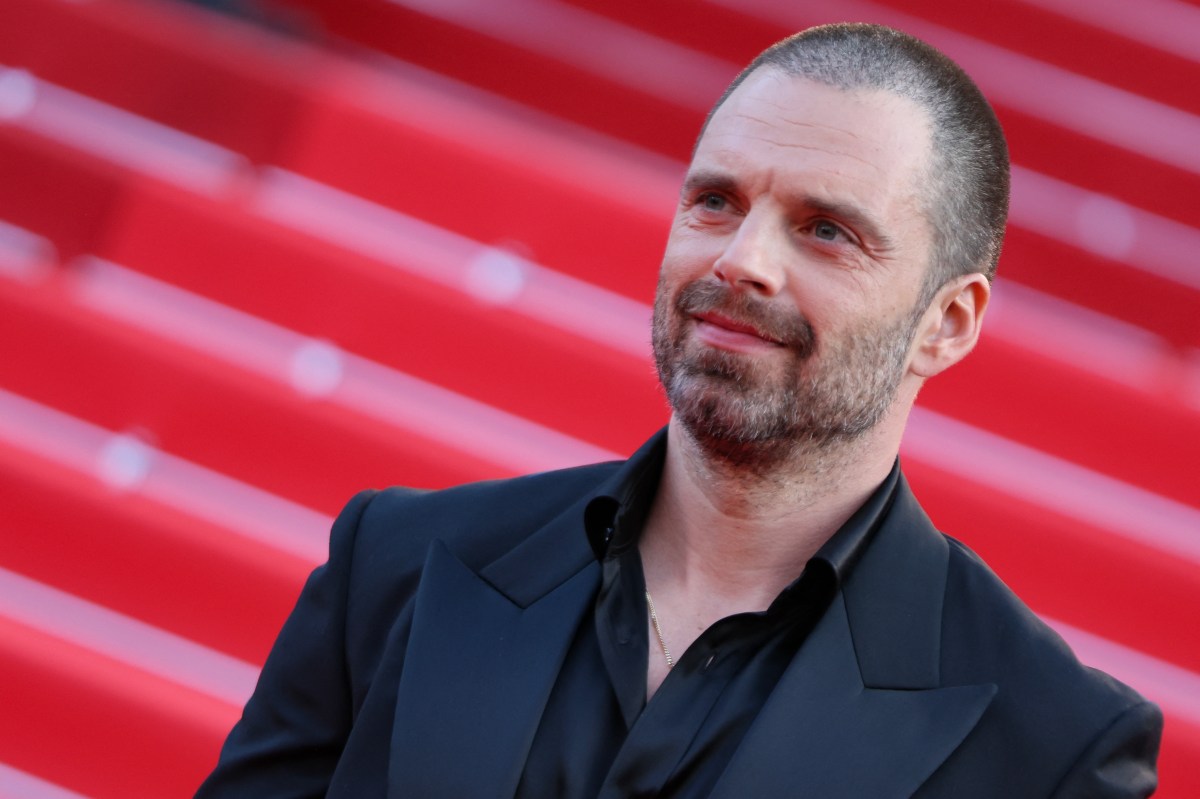
'The Batman: Part II' Rumors Suggest Sebastian Stan Isn't Harvey Dent

'The Batman: Part II' Rumors Suggest Sebastian Stan Isn't Harvey Dent

Summary

The upcoming movie "The Batman: Part II" is stirring rumors about its cast, especially about actor Sebastian Stan’s role. While it was first thought Stan would play Harvey Dent (Two-Face), new reports say he might play the villain Victor Zsasz instead, with actor Brian Tyree Henry possibly taking on the Dent role.

Key Facts

  • "The Batman: Part II" will be released in October 2027.
  • Actor Colin Farrell will return as the Penguin but with fewer scenes than in the first film.
  • Sebastian Stan was rumored to play Harvey Dent/Two-Face but may instead play Victor Zsasz.
  • Brian Tyree Henry might play Harvey Dent/Two-Face in the sequel.
  • Victor Zsasz is a villain known as a serial killer who marks his body after each kill.
  • The previous Batman film starred Robert Pattinson as Batman and featured the Riddler and Penguin villains.
  • Farrell described the new movie's script as dark and sometimes terrifying.
  • These casting details are not confirmed and remain speculative.
Read the Original

Want the full story? Tap a source to open the original article.

Putin admits Ukraine attacks hitting Russian economy, society

Putin admits Ukraine attacks hitting Russian economy, society

Summary

President Vladimir Putin said that recent Ukrainian attacks are damaging Russia’s economy and society, but he believes Russia will recover quickly. He also promised to increase Russian military strikes on Ukrainian infrastructure to stop attacks on Russian civilians.

Key Facts

  • Ukrainian attacks have targeted Russian oil refineries, depots, and pipelines, affecting key parts of Russia’s oil and gas exports.
  • Putin said the attacks aim to create confusion in Russian society but will not divide it or cause lasting economic harm.
  • Russia’s advances in eastern Ukraine have slowed while Ukraine’s attacks deep inside Russia have grown.
  • Putin vowed to escalate Russian attacks on Ukraine’s infrastructure in retaliation for attacks on Russian civilian areas.
  • Ukraine’s strikes have also hit fuel supplies in Russian-occupied Crimea, causing a severe fuel shortage on the peninsula.
  • The Institute for the Study of War said Ukraine’s attacks reduce Russia’s ability to produce and transport fuel.
  • Kremlin spokesman Dmitry Peskov acknowledged the fuel shortages in Crimea and said the government is addressing them.
  • Putin rejected the idea of direct peace talks with Ukrainian President Volodymyr Zelenskyy.
Read the Original

Want the full story? Tap a source to open the original article.

UK court jails Palestinian Action activists on ‘terrorism’ charges

UK court jails Palestinian Action activists on ‘terrorism’ charges

Summary

A UK court sentenced four activists from the Palestinian Action group to prison for an attack on an Israeli weapons company in Bristol. The court called the August 2024 raid a terrorist act, and the activists received sentences between about five and eight years.

Key Facts

  • Four Palestinian Action activists were jailed for five to eight years after damaging an Israeli arms company.
  • The raid occurred in August 2024 at Elbit Systems’ site in Bristol, UK.
  • Judge Jeremy Johnson described the raid as a terrorist act meant to influence the government and intimidate the company.
  • One activist was found guilty of hitting a police officer with a sledgehammer, causing a serious injury.
  • Palestine Action was officially banned as a terrorist group in the UK in July 2023.
  • The group says they aimed to stop drones and weapons they believe are used in Gaza conflicts.
  • Around 500 protesters supported the activists outside the court, resulting in 72 arrests.
  • The UK government is appealing a ruling that lifted the ban on Palestine Action, and about 3,000 people have been arrested at related protests since the ban.
Read the Original

Want the full story? Tap a source to open the original article.

From us

Pay what you want

We're reader-funded instead of ad-funded. You decide what no-spin news is worth.

Can Pakistan push the US-Iran deal over the finish line?

Can Pakistan push the US-Iran deal over the finish line?

Summary

Pakistan says the United States and Iran have agreed on the main points of a final peace deal, with only some steps left to complete. Iranian Foreign Minister Abbas Araghchi said a memorandum of understanding (MoU) is very close, and Pakistan highlights its quiet role in helping the talks.

Key Facts

  • Pakistan claims the US and Iran have agreed on the final text of a peace deal.
  • Only the next procedural steps remain before the deal is complete.
  • Iranian Foreign Minister Abbas Araghchi stated the MoU has never been closer.
  • Pakistan says it played a behind-the-scenes role in supporting the negotiations.
  • The talks involve the US and Iran working toward a peace agreement.
  • No detailed timeline for the completion of the deal has been announced.
Read the Original

Want the full story? Tap a source to open the original article.

Combating foreign digital interference: ‘France is among the top three in Europe’

Combating foreign digital interference: ‘France is among the top three in Europe’

Summary

French Prime Minister Sébastien Lecornu met with political leaders to address concerns about foreign digital interference ahead of France’s 2027 presidential election. French authorities warn that new artificial intelligence tools could make it easier for outsiders to spread false information and disrupt voting. France’s specialized unit, VIGINUM, helps detect and fight these digital threats.

Key Facts

  • France is preparing for potential foreign interference in the 2027 presidential election.
  • Artificial intelligence advances make it easier to create and spread false content online.
  • Prime Minister Lecornu called a meeting on June 11 to discuss election security with political representatives.
  • Since 2017’s ‘Macron Leaks’ cyberattack, France has increased efforts to fight disinformation.
  • VIGINUM is a government unit that tracks and counters foreign digital interference.
  • Experts say France is among the top three European countries in combating such digital threats.
  • AI allows the creation of convincing fake videos, audio, and text in multiple languages.
  • Recent local elections showed signs of attempts to destabilize the voting process.
Read the Original

Want the full story? Tap a source to open the original article.

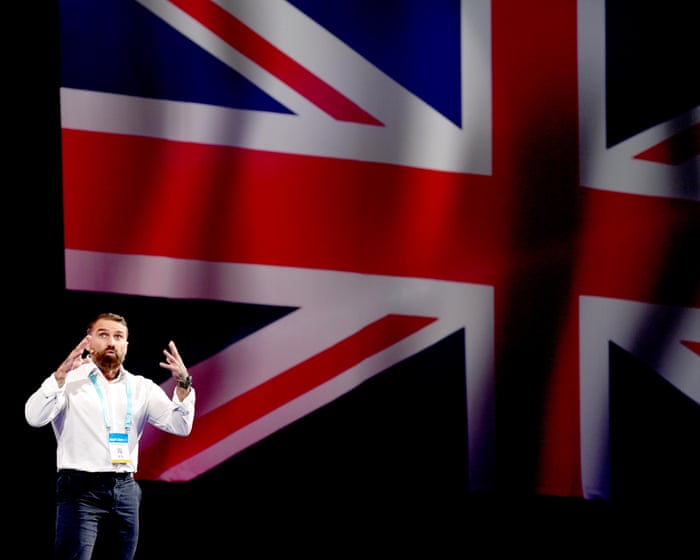
Ant Middleton backs Reform UK’s Robert Kenyon in Makerfield byelection

Ant Middleton backs Reform UK’s Robert Kenyon in Makerfield byelection

Summary

Reform UK’s candidate Robert Kenyon in the Makerfield byelection has been criticised for accepting support from Ant Middleton, a former soldier and TV presenter known for extreme views and a criminal record. Reform UK had previously distanced itself from Middleton due to his far-right comments and actions. The byelection also features competition from the hard-right party Restore Britain.

Key Facts

  • Robert Kenyon, Reform UK’s candidate in Makerfield, welcomed an endorsement from Ant Middleton.
  • Ant Middleton has made anti-Muslim statements and controversial remarks about immigrants and leadership.
  • Reform UK had distanced itself from Middleton after he adopted far-right positions and appeared with far-right activist Tommy Robinson.
  • Middleton has a criminal record for assaulting police officers and was banned from being a company director for failing to pay over £1 million in taxes.
  • Labour’s Anna Turley criticised Reform UK for backing Middleton and highlighted his past legal and tax issues.
  • Restore Britain, a hard-right party formed by former Reform MP Rupert Lowe, is contesting the same byelection.
  • A leaked poll shows Labour leading with 35%, Reform UK at 24%, and Restore Britain at 13% in Makerfield.
  • Middleton’s views align more closely with Restore Britain, and he has promoted their policies on social media.
Read the Original

Want the full story? Tap a source to open the original article.
How the Gulf will manage collective security after the Iran war ends

How the Gulf will manage collective security after the Iran war ends

Summary

Gulf countries are planning new ways to keep their region safe after a possible end to the war with Iran. President Donald Trump canceled planned strikes on Iran and said a peace deal is close, but Iran is still reviewing the proposal carefully.

Key Facts

  • The US and Iran are moving toward a long-term ceasefire agreement.
  • President Donald Trump said a deal with Iran is near and will be signed soon.
  • Iran’s government is cautious and still reviewing the peace proposal.
  • The US has military bases in at least eight Gulf countries, hosting 40,000 to 50,000 troops before the war started.
  • Gulf states have been targeted by Iranian attacks during the conflict, causing deaths.
  • The current US-led security partnership in the region is being questioned as it did not prevent attacks on Gulf states.
  • The war has harmed Gulf economies, especially with the closure of the Strait of Hormuz, a key shipping route.
  • Some Gulf countries, like Saudi Arabia and Oman, have managed to reroute oil exports to lessen the impact.
Read the Original

Want the full story? Tap a source to open the original article.

Former Tory MP and military officer on Keir Starmer's 'rope-a-dope' week

Former Tory MP and military officer on Keir Starmer's 'rope-a-dope' week

Summary

UK Prime Minister Keir Starmer faces political challenges after his defence secretary and defence minister resigned, criticizing the government for not spending enough on the military to protect Britain from threats like Russia. Starmer has defended his defence spending decisions as necessary but is under pressure from within his party and a potential leadership contest.

Key Facts

  • Keir Starmer is the Prime Minister of the UK.
  • His defence secretary and defence minister quit, citing concerns about low military spending.
  • They said the UK’s defence plans are not strong enough for current threats.
  • Defence Minister Al Cairns said Britain is buying outdated military equipment.
  • John Healey, a Labour party member, criticized the Treasury for not providing enough funds.
  • Starmer called his defence spending decisions "hard edged" and necessary.
  • The resignations come amid other political issues, including welfare reform disputes and a leadership challenge.
  • James Sunderland, a former Conservative MP and military officer, commented on the situation.
Read the Original

Want the full story? Tap a source to open the original article.

Belfast riots trigger renewed scrutiny over loyalist paramilitary influence

Belfast riots trigger renewed scrutiny over loyalist paramilitary influence

Summary

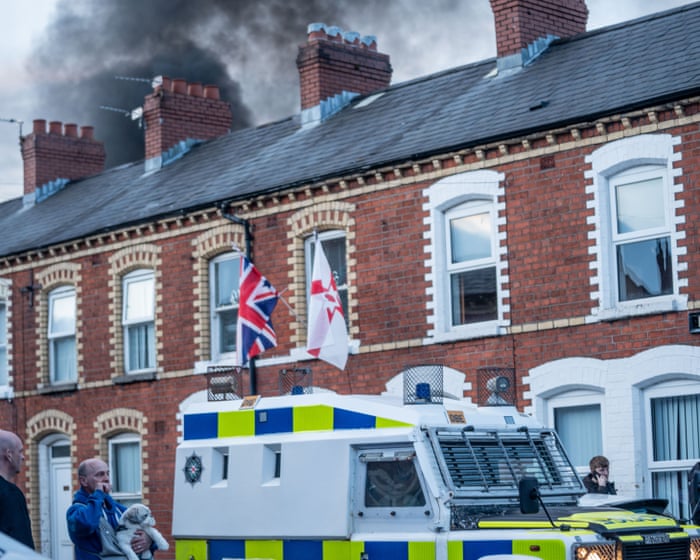
Violence recently broke out in Northern Ireland, sparked by a knife attack in a nationalist area but occurring mainly in loyalist neighborhoods. The unrest highlights the ongoing presence and influence of loyalist paramilitary groups, which have not fully disbanded despite peace efforts.

Key Facts

  • The knife attack that triggered the violence happened in a nationalist area but the riots mostly occurred in loyalist communities.
  • Loyalist paramilitary groups like the Ulster Volunteer Force (UVF) and Ulster Defence Association (UDA) still exist in Northern Ireland, with estimates of about 12,500 members in 2020, many inactive.
  • These groups have split into sub-groups, some involved in criminal activities like drug dealing and extortion.
  • Police found no proof that paramilitaries planned the recent violence, but some leaders chose to stay neutral rather than stop the riots.
  • Loyalist groups are under pressure to disband but have stopped intervening in community conflicts.
  • Some local officials suggest engaging with paramilitaries to control violence, but experts warn this could mean accepting their history of violence and control over communities.
  • The unrest began after a refugee from Sudan was charged with attempted murder following a knife attack on Stephen Ogilvie.
  • After several days, the disturbances have decreased but tensions remain.
Read the Original

Want the full story? Tap a source to open the original article.
From us

The news is free. Support if you want.

No ads. Pay what this is worth to you — most people choose $3.99/month.

Pope tells traffickers of migrants in the Canary Islands: Stop, repent or face God's wrath

Pope tells traffickers of migrants in the Canary Islands: Stop, repent or face God's wrath

Summary

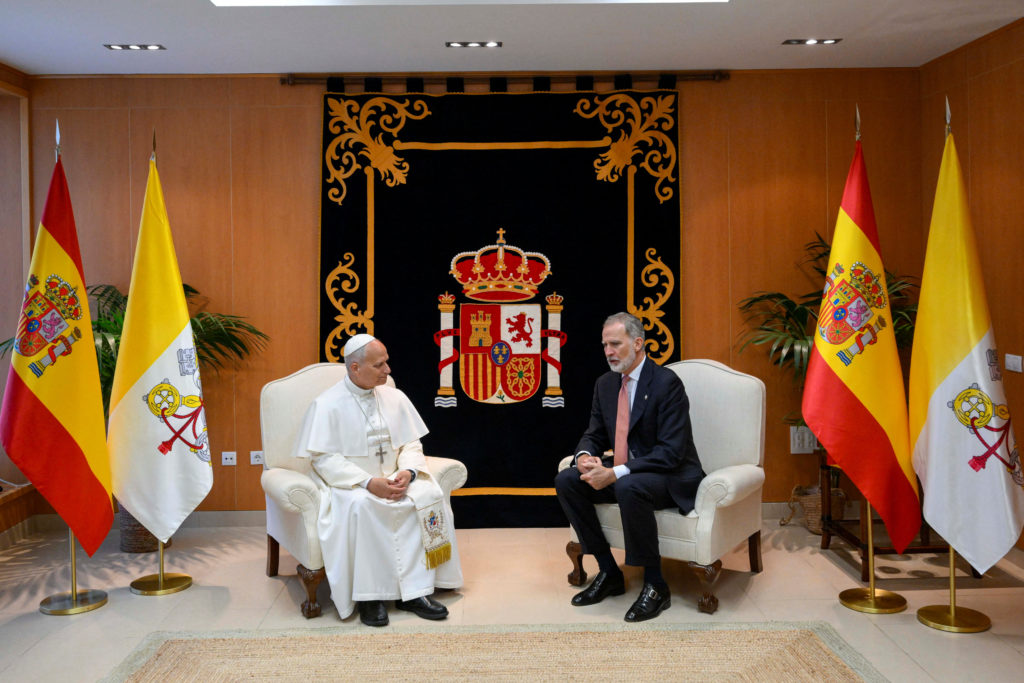
Pope Leo XIV warned people smugglers exploiting migrants crossing the Atlantic to Europe from West Africa. He called on traffickers to stop and repent, and urged communities to welcome and support migrants arriving in the Canary Islands.

Key Facts

  • Pope Leo XIV spoke against migrant traffickers during his trip to the Canary Islands, a major migration route from Africa to Europe.
  • He emphasized the dignity and rights of migrants, urging their integration into society.
  • The pope asked traffickers to stop their activities and warned they would face God's punishment.
  • The Canary Islands receive migrants who cross the Atlantic, often facing dangerous journeys at sea.
  • Migrant arrivals peaked at nearly 47,000 in 2024 but fell to about 3,000 in early 2026.
  • Some migrants come from Senegal, displaced by overfishing affecting their fishing jobs.
  • The Atlantic migration route is considered highly dangerous, with some boats found drifting with deceased migrants aboard.
  • Pope Leo’s visit highlights the Church’s call to “welcome the stranger” and bring attention to migrant hardships.
Read the Original

Want the full story? Tap a source to open the original article.
Kosovo's 'Groundhog Day' politics

Kosovo's 'Groundhog Day' politics

Summary

Kosovo held its third election in 16 months, but no government has formed yet. The prime minister's party won the most votes but lacks enough support to govern alone, and the country currently has no president.

Key Facts

  • Kosovo has held three elections in less than 16 months without forming a government.
  • The most recent election gave the prime minister Albin Kurti’s party 43% of the vote.
  • Although this is a clear win, the party cannot govern without forming a coalition.
  • Kosovo currently does not have a sitting president.
  • Former President Vjosa Osmani served from 2021 to April 2026.
  • Vjosa Osmani did not get a second term, reportedly due to disagreements with Prime Minister Kurti.
  • The ongoing political deadlock is a setback for the European Union and NATO’s efforts in the region.
Read the Original

Want the full story? Tap a source to open the original article.

Sublime's Jakob Nowell Says 'Until the Sun Explodes' Marks His Last Album With the Band

Sublime's Jakob Nowell Says 'Until the Sun Explodes' Marks His Last Album With the Band

Summary

Sublime released a new album called "Until the Sun Explodes" on June 12, their first in 30 years and the first to feature Jakob Nowell, son of the band's late lead singer. Jakob said this will likely be his last album with Sublime, but he might change his mind later or leave the possibility to his own children.

Key Facts

  • "Until the Sun Explodes" is Sublime's first album in 30 years.
  • Jakob Nowell, son of the late frontman Bradley Nowell, is featured on this album.
  • Jakob says this will probably be his last album with Sublime unless his children want to continue.
  • He wants to set new goals after this album and explore other projects.
  • Jakob has his own music project called Jakobs Castle and runs a record label.
  • He plans to keep touring with Sublime’s original members, Eric Wilson and Bud Gaugh.
  • Jakob mentions he could reconsider making another Sublime album in the future.
  • He feels proud of achieving what he thought was impossible with this album.
Read the Original

Want the full story? Tap a source to open the original article.

Venezuela hits out at Trinidad and Tobago in oil spill spat

Venezuela hits out at Trinidad and Tobago in oil spill spat

Summary

Venezuela says an oil spill from nearby Trinidad and Tobago has reached its coast, harming marine life and fishing. Trinidad and Tobago are investigating the spill and have asked Venezuela for more details.

Key Facts

  • Venezuela claims an oil spill from Trinidad and Tobago has hit its shores.
  • The Venezuelan government says the spill is damaging marine ecosystems and fishing communities.
  • Venezuela wants Trinidad and Tobago to take full responsibility and act quickly to stop more damage.
  • Trinidad and Tobago’s Energy Minister said security forces are searching for signs of the spill using drones and boats.
  • Trinidad and Tobago’s foreign ministry has contacted Venezuela’s embassy to get more information.
  • Venezuela showed satellite images that confirm the spill but did not say which areas are affected.
  • The two countries have had tense relations recently due to political disagreements and migration policies.
  • A similar spill happened in February 2024 when a tanker sank near Trinidad and Tobago, affecting Venezuela’s waters.
Read the Original

Want the full story? Tap a source to open the original article.

US-Iran peace deal remains elusive as Trump and Tehran trade conflicting claims

US-Iran peace deal remains elusive as Trump and Tehran trade conflicting claims

Summary

The possibility of a peace deal between the US and Iran is unclear due to mixed messages from both sides. While some officials say a deal is close, President Trump criticised Iran and no final agreement has been confirmed.

Key Facts

  • US and Iranian officials have given conflicting statements about the progress of peace talks.
  • President Trump called Iranians “dishonorable” in social media posts after earlier suggesting a deal might be signed soon.
  • Iranian news agencies denied any final deal was reached and shared a draft version.
  • Pakistan’s Prime Minister claimed a peace deal text has been agreed, but gave no details.
  • A senior US official said there is an 80-85% chance a deal will be signed soon but noted internal disagreements.
  • Iran wants to keep control over the Strait of Hormuz, a key oil shipping route; the US wants it reopened for free shipping.
  • Both sides discuss lifting economic sanctions if Iran complies with the deal.
  • Recent escalations in conflict between Iran, Israel, and the US have complicated talks.
Read the Original

Want the full story? Tap a source to open the original article.
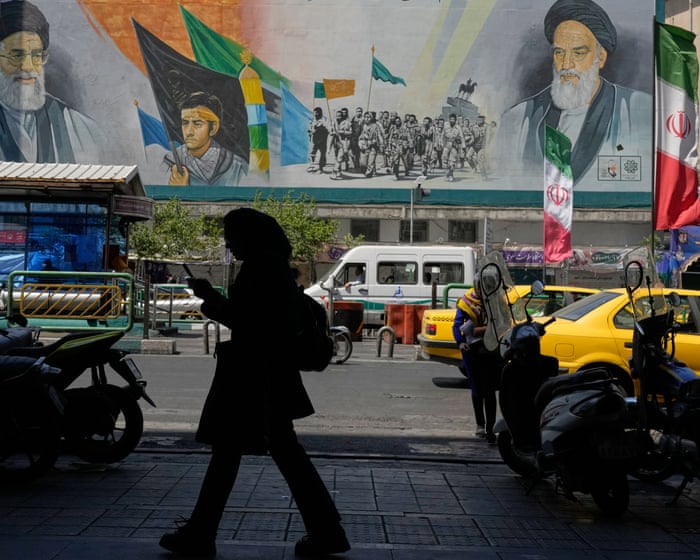
India’s West Bengal pushes out Muslim Bangladeshis

India’s West Bengal pushes out Muslim Bangladeshis

Summary

Thousands of Muslim Bangladeshis have been detained or sent out of West Bengal since the new BJP government took office. Critics worry this action might increase religious conflicts and challenge legal rights.

Key Facts

  • West Bengal has a new government led by the BJP party.
  • Under this government, many Muslim Bangladeshis have been detained or deported.
  • The action targets people from Bangladesh living in West Bengal.
  • Critics are concerned about rising religious tensions.
  • There are worries that legal protections for due process may not be fully followed.
  • The situation has attracted international attention and debate.
  • The West Bengal campaign is part of the government's efforts on immigration and security.
Read the Original

Want the full story? Tap a source to open the original article.

From us

Pay what it's worth to you

We dropped the ads. Support independent, no-spin news at the suggested $3.99/month.

Iran, Ukraine, Belfast & Albania’s ‘Flamingo Revolution’

Iran, Ukraine, Belfast & Albania’s ‘Flamingo Revolution’

Summary

This week saw rising tensions and conflicts in several countries. President Donald Trump announced a near agreement on a ceasefire extension with Iran, but after Iran shot down a U.S. helicopter, both sides exchanged military strikes before a ceasefire was tentatively agreed upon. Meanwhile, protests erupted in Albania against a luxury resort project linked to President Trump’s family, unrest broke out in Belfast after a stabbing incident, and the largest-ever World Cup began in Mexico.

Key Facts

  • President Donald Trump said a ceasefire extension with Iran was close but Iran shot down a U.S. Apache helicopter in response to U.S. patrols near the Strait of Hormuz.
  • After the helicopter incident, U.S. strikes hit targets in Iran, and Iran responded with attacks on U.S. bases in Bahrain, Kuwait, and Jordan.
  • President Trump threatened to attack Iran’s Kharg Island but later called off the strike, claiming Iran agreed to ceasefire terms, though Iran has not confirmed this.
  • In Albania, protests called the "Flamingo Revolution" are growing against a luxury resort project led by Jared Kushner and Ivanka Trump, accusing the government of lack of transparency.
  • The Albanian Prime Minister blamed hostile online bots for inflaming protests, while the European Commission reminded Albania to avoid actions that could affect its EU membership hopes.
  • Belfast experienced riots after a stabbing by a Sudanese migrant, which escalated into anti-immigration violence and debate over immigration policies and racism.
  • The World Cup opened in Mexico’s Azteca Stadium, with Mexico winning the first match 2-0 against South Africa, amid controversies over ticket prices and U.S. visa bans.
Read the Original

Want the full story? Tap a source to open the original article.

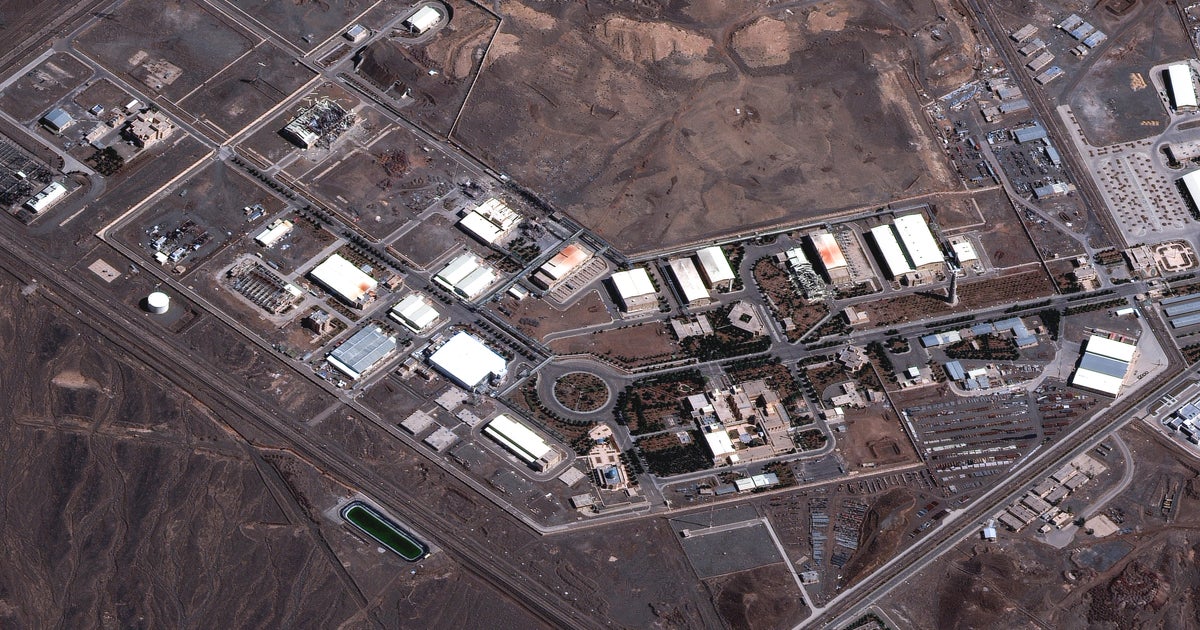
U.S. military making plans to secure Iran's nuclear materials, sources say

U.S. military making plans to secure Iran's nuclear materials, sources say

Summary

U.S. military leaders are planning ways to help secure Iran’s nuclear materials if a new deal is finalized. These plans involve possible deployment of U.S. troops and experts to work with government agencies to locate and remove Iran’s enriched uranium safely.

Key Facts

  • The U.S. is preparing for the chance of helping secure Iran’s nuclear materials amid ongoing talks.
  • Plans involve the Pentagon supporting the Department of Energy in handling highly enriched uranium.
  • U.S. troops may be sent to nearby countries in the Middle East to support quick response actions.
  • Specialized teams from the Department of Energy and military units with expertise in nuclear threats could work inside Iran.
  • The Nuclear Emergency Support Team (NEST) and special forces are part of the discussed plan.
  • These discussions are preliminary and part of normal military planning, not a set decision to act.
  • A senior official said any uranium would be destroyed in Iran and then removed as part of the agreement.
  • Technical talks on how to manage the uranium will take about 60 days after an agreement is signed.
Read the Original

Want the full story? Tap a source to open the original article.
Save articles & personalize your feed — Create a free account