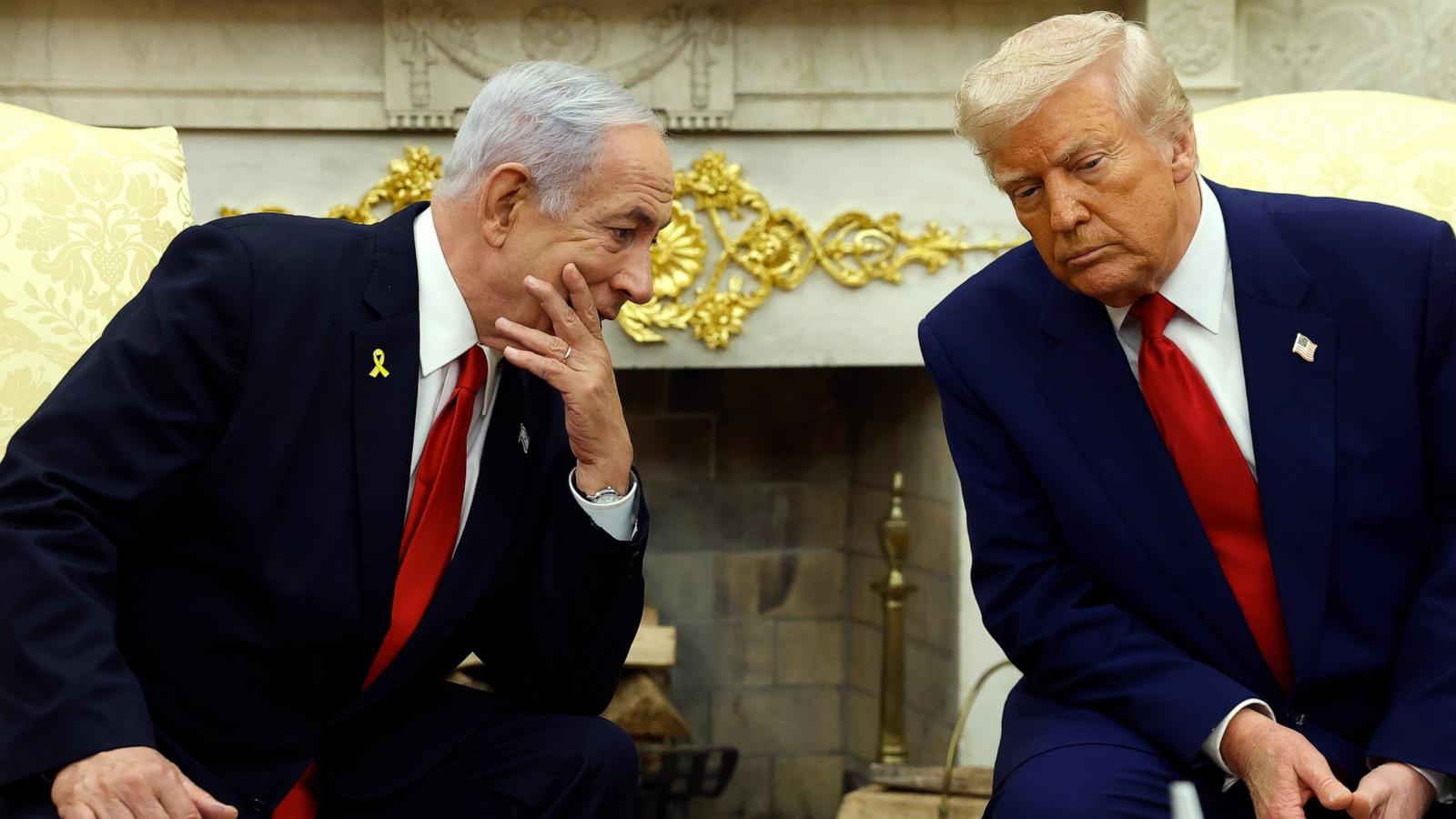
Israeli Prime Minister Benjamin Netanyahu has rejected President Donald Trump’s 15-point plan for Gaza, which called for a phased process where Hamas would disarm and Israel would withdraw troops. Netanyahu said Israel will only pull back after Hamas fully disarms and emphasized the need for real, not fake, disarmament.
Key Facts
President Trump proposed a 15-point peace plan for Gaza involving Hamas disarming and Israel withdrawing troops in stages.
The plan was developed by the US-led Board of Peace, chaired by Trump, and supported by the United Nations.
Hamas’s compliance depends on Israel stopping its military actions in Gaza.
Israel has killed over 73,300 Palestinians in Gaza since October 2023, with ongoing strikes continuing after a ceasefire agreement in October 2025.
Netanyahu insisted Israeli forces will not withdraw until Hamas is genuinely and completely disarmed.
Netanyahu is facing pressure from his right-wing supporters and upcoming elections in October 2026.
The Israeli government is negotiating with Washington to address concerns about the peace plan.
The peace process remains controversial, especially within Netanyahu’s government and among Palestinian groups.
Read the Original
Want the full story? Tap a source to open the original
article.
Saudi Arabia, Turkey, and Pakistan signed a defense agreement in Mecca, aiming to change how Gulf countries handle their security. Instead of relying only on the United States, they want to create a regional partnership that shares security responsibilities and reduces dependence on US protection.
Key Facts
The Mecca pact was signed by Saudi Arabia, Turkey, and Pakistan to build a joint defense agreement.
The pact signals a shift away from relying solely on the United States for regional security.
Gulf states want more options and stronger local security networks to prepare for possible reduced US involvement.
The agreement aims to create a balance of power that prevents domination by Iran or Israel.
It focuses on deterrence, making attacks on members more costly.
Saudi Arabia brings financial resources and political influence to the pact.
Turkey offers advanced military technology like drones and missiles.
Pakistan contributes a large, experienced military and strategic skills.
Read the Original
Want the full story? Tap a source to open the original
article.
Syria and Russia have agreed on the future use of two important military bases on the Mediterranean coast. Syria will take control of the Hmeimem air base and part of the Tartus naval port, turning the military sites into joint training centers and ending their role as Russian military outposts.
Key Facts
Syria and Russia made a deal about two strategic Mediterranean bases.
The bases involved are the Hmeimem air base and Tartus naval port.
Syria will manage the Hmeimem air base and the commercial part of Tartus port.
Military facilities at these sites will become joint training centers shared by Syria and Russia.
This agreement ends the bases’ use as main Russian military outposts in Syria.
Russia was a key ally of ousted President Bashar Assad and used the bases during the Syrian conflict.
Since Assad’s overthrow, Russian troops have gradually left Syria.
Syria’s new leaders have strengthened ties with Russia and other countries, including the U.S. and France.
Read the Original
Want the full story? Tap a source to open the original
article.
Syria and Russia have agreed on new arrangements for Russia’s two military bases in Syria. The Hmeimim airbase and Tartus naval base will become joint training and support centers, with the change to be completed within three months.
Key Facts
Syria and Russia reached a deal on the future of Russia’s two military bases in Syria.
The bases involved are the Hmeimim airbase and Tartus naval base.
These bases were used to support President Bashar al-Assad during the Syrian war.
Under the new deal, the bases will become "joint training and capacity-building centres."
The goal is to preserve shared interests between Syria and Russia.
This agreement came after about a year and a half of talks.
The transition must be completed within three months.
These are the only official Russian military bases outside the former Soviet Union.
Read the Original
Want the full story? Tap a source to open the original
article.
Tim Curry is a well-known actor who has worked in movies and shows for 50 years, including "The Rocky Horror Picture Show," "Clue," and "It." He recently talked about his life in a memoir, his recovery from a stroke in 2012, and his approach to fame.
Key Facts
Tim Curry has had a 50-year career in film and television.
He starred in popular works like "The Rocky Horror Picture Show," "Clue," and "It."
Curry released a memoir called "Vagabond," which is not a typical Hollywood story.
He suffered a stroke in 2012 and had to relearn how to speak.
Curry discussed these experiences in a talk with Turner Classic Movies host Ben Mankiewicz.
The interview originally aired on October 19, 2025.
Curry said he did not try to become famous on purpose.
Read the Original
Want the full story? Tap a source to open the original
article.
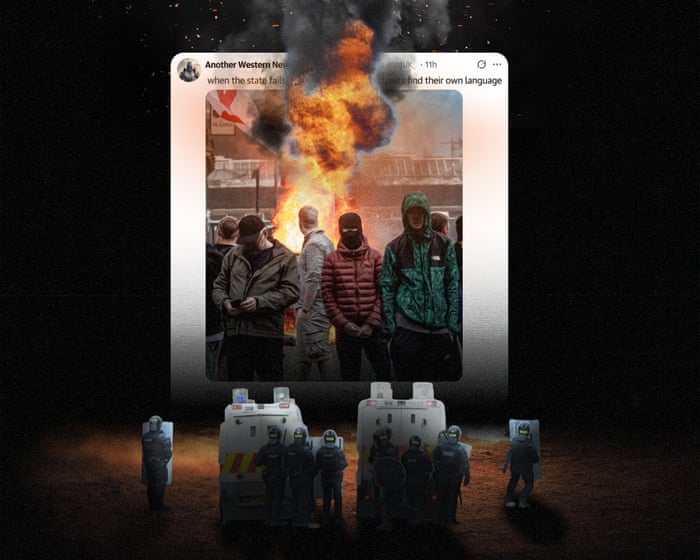
An analysis shows that more than half of the social media accounts posting about riots in Belfast and Southampton were based outside the UK. Many of the most-read posts came from the US, including from right-wing commentators, highlighting attempts by foreign actors to influence UK public opinion during times of unrest.
Key Facts
Over 8,600 accounts posted about the Belfast and Southampton unrest on Elon Musk’s social media platform X (formerly Twitter).
Only 45.3% of these accounts were located in the UK; 16.8% were from the US, 4.5% from Ireland, and about 25% from other European countries.
Seven of the 12 most popular tweets about the events came from US accounts, including posts by Elon Musk and American right-wing figures.
Nearly one-third of 43,000 tweets examined contained racist or anti-immigration comments.
About 10% of tweets about Belfast called for violence or vigilante actions.
Analysts say hostile foreign actors use X to spread divisive content and incite tension in UK communities.
Elon Musk’s posts about UK race and immigration issues were far more frequent than his posts about his aerospace company SpaceX leading up to its IPO in June 2024.
Police faced violence during protests in Southampton after the murder of Henry Nowak, which was falsely linked to racism by police.
Read the Original
Want the full story? Tap a source to open the original
article.
A golden retriever named Barley lost energy after starting new medicine. When a duckling named Louie came to visit a family in New York, the dog and duck quickly became friends, which helped Barley feel better.
Key Facts
Barley is a golden retriever who became less lively due to medication.
Louie is a duckling brought to the Cannarelli family’s home in New York.
Barley and Louie formed an instant bond despite being different animals.
The friendship helped Barley regain her happiness and energy.
The story was reported by Steve Hartman for CBS News.
Read the Original
Want the full story? Tap a source to open the original
article.
GLP-1 drugs like Ozempic help many people lose weight, but some worry about losing muscle too. Experts say losing some muscle during weight loss is normal and happens with any method, and most weight lost is still fat. They recommend focusing on eating enough protein and doing resistance exercises to protect muscle.
Key Facts
About 11% of U.S. adults take GLP-1 drugs for weight loss as of 2026, up from much less in 2024.
Terms like "Ozempic butt" describe body shape changes from fat loss, not necessarily muscle loss.
Studies show roughly 25% to 40% of weight lost with GLP-1 drugs might be lean tissue, but lean tissue is not the same as muscle.
Losing some muscle during weight loss is common, whether from diet, surgery, or medication.
Most patients lose mostly fat, and their fat-to-muscle ratio often improves.
Older adults, postmenopausal women, and people with low muscle starting weight need closer monitoring to avoid muscle loss.
Eating enough protein and doing resistance (strength) training helps protect muscle during weight loss.
Experts caution that alarming headlines about muscle loss may discourage people from using helpful treatments.
Read the Original
Want the full story? Tap a source to open the original
article.
Israeli Prime Minister Benjamin Netanyahu has refused President Donald Trump’s proposal to disarm Hamas and form a Palestinian government in Gaza. Netanyahu stated that Israel will not accept the plan and that the Israeli Defense Forces will not withdraw.
Key Facts
Netanyahu rejected a 15-point plan proposed by President Trump.
The plan involves disarming Hamas, the Palestinian group controlling Gaza.
The plan also calls for establishing a Palestinian government in Gaza.
Netanyahu emphasized that Israel does not agree to the plan’s terms.
The Israeli Defense Forces (IDF) will not pull back from Gaza under this plan.
This rejection marks a rare public disagreement between Netanyahu and President Trump.
The issue relates to ongoing conflict and political control in the Gaza Strip.
Read the Original
Want the full story? Tap a source to open the original
article.
A 27-year-old woman and a five-month-old baby died after a boat capsized near the Statue of Liberty in New York Harbor on Saturday night. Twelve other people were rescued, and the cause of the accident is under investigation by police and the U.S. Coast Guard.
Key Facts
The boat flipped over around 10:25 p.m. near the Statue of Liberty.
A 27-year-old woman and a five-month-old baby were found in the water and later died at the hospital.
Twelve people were rescued from the boat; two had serious injuries and others had minor injuries.
The boat was a 22-foot bowrider, a type of motorboat used for leisure.
NYPD’s Harbor Unit, Scuba Team, Aviation Unit, and the U.S. Coast Guard responded to the accident.
Investigators plan to interview the boat’s captain to find out what caused the vessel to capsize.
New York law requires boat operators to complete safety courses and carry approved life jackets and safety gear.
It is not yet known if any safety rules were broken in this incident.
Read the Original
Want the full story? Tap a source to open the original
article.
Israel has approved a project called “Green Rafah” in southern Gaza to build infrastructure and temporary housing in an area controlled by Israel. Experts say this plan aims to divide Gaza into smaller parts under Israeli control, limiting Palestinian freedom and delaying broader rebuild efforts. Israeli Prime Minister Netanyahu rejects U.S. proposals to withdraw Israeli forces before disarming Hamas completely.
Key Facts
Israel approved the “Green Rafah” project to build water, sewage, and electric systems in eastern Rafah, southern Gaza.
The project is supported by Prime Minister Benjamin Netanyahu and Defence Minister Israel Katz.
The area is near the Israeli-set “Yellow Line,” a buffer zone that restricts Palestinians to smaller spaces.
Palestinians working on the project face strict security checks by the Israeli Shin Bet intelligence agency.
Israel has banned mobile homes (caravans) from entering the area until at least November.
Netanyahu rejected a U.S.-led 15-point plan that calls for phased Israeli withdrawal and Hamas disarmament.
Experts say the project aims to fragment Gaza and keep Palestinians under tight Israeli control.
Humanitarian reconstruction, like temporary housing, remains delayed despite a ceasefire agreement signed in Egypt 10 months ago.
Read the Original
Want the full story? Tap a source to open the original
article.
Israeli Prime Minister Benjamin Netanyahu said Israel will not accept a 15-point peace plan from President Donald Trump’s Board of Peace until Hamas is completely disarmed. Netanyahu emphasized that the Israel Defense Forces (IDF) will not leave Gaza until they are sure Hamas no longer poses a threat.
Key Facts
Netanyahu rejected the 15-point peace plan proposed by President Donald Trump’s Board of Peace.
The plan includes Hamas disarming and the Israeli military withdrawing from Gaza as part of a ceasefire agreement.
Netanyahu said the Israeli military will only withdraw after Hamas is "truly disarmed."
The Israel Defense Forces continue operations to protect Israeli forces and citizens.
The peace plan was part of a U.S.-brokered ceasefire signed the previous year.
The situation involves ongoing tensions between Israel and Hamas in Gaza.
President Donald Trump has been actively involved in trying to mediate peace efforts.
The conflict and peace negotiations remain a developing story.
Read the Original
Want the full story? Tap a source to open the original
article.
This article explains why many empires have tried to control Iran and how Iran has resisted and outlasted them. It features insights from Dr. Mehran Kamrava, a political historian, who discusses how powerful countries' rivalries shaped modern Iran.
Key Facts
Iran has been a target for many empires throughout history.
Empires such as Russia and Britain fought wars with Iran and influenced its resources like oil and tobacco.
The CIA helped orchestrate a coup in Iran in the 20th century.
Iran’s history includes invasions, wars, and revolutions.
Iran has learned from its past experiences to maintain its independence.
Dr. Mehran Kamrava from Georgetown University Qatar studies Iran’s political history.
The article is part of a podcast episode produced by Al Jazeera.
The discussion focuses on how great-power rivalries have shaped Iran today.
Read the Original
Want the full story? Tap a source to open the original
article.
Masrour Barzani, the prime minister of the Kurdistan Regional Government in northern Iraq, said his government wants to avoid conflicts in the Middle East and aims for peace. He mentioned that despite being targeted many times during the US war on Iran, the region seeks stability and peaceful solutions.
Key Facts
Masrour Barzani is the prime minister of the Kurdistan Regional Government (KRG) in northern Iraq.
He said the KRG tries to stay out of Middle Eastern conflicts.
The KRG was targeted about 1,000 times during the US war on Iran.
Barzani emphasized the importance of peace and stability in Iraqi Kurdistan.
The region faces rising tensions in the Middle East.
Barzani spoke about these issues during an interview with Al Jazeera.
The KRG prefers to resolve conflicts through peaceful means.
Read the Original
Want the full story? Tap a source to open the original
article.
The phrase "dog days of summer" refers to the hottest and most uncomfortable part of the summer season. This term comes from ancient times when people noticed the hottest days coincided with the rising of the star Sirius, also called the "Dog Star."
Key Facts
"Dog days of summer" refers to the hottest period of the summer season.
The name comes from the star Sirius, nicknamed the "Dog Star."
Ancient people observed that Sirius rose in the sky during the hottest days of the year.
Sirius is part of the constellation Canis Major, which means "Greater Dog" in Latin.
The term has been used for centuries and is linked to weather and star movements.
Today, "dog days" usually means very hot, humid weather.
Read the Original
Want the full story? Tap a source to open the original
article.
The Venus flytrap, a meat-eating plant native to the Carolinas, is losing its home because its natural areas are getting smaller. Experts like botanist Julie Moore and Damon Waitt from the North Carolina Botanical Garden are working to protect and save this special plant.
Key Facts
The Venus flytrap is a carnivorous plant that lives naturally in the Carolinas.
Its population is shrinking due to habitat loss.
Botanist Julie Moore has dedicated much of her life to helping protect these plants.
Damon Waitt is the director of the North Carolina Botanical Garden.
Charles Darwin once called the Venus flytrap "the most interesting plant in the world."
The plant has unusual features that attract scientific interest.
Efforts to save the Venus flytrap include education and habitat conservation.
The story was originally broadcast on CBS News on April 26, 2026.
Read the Original
Want the full story? Tap a source to open the original
article.
Food prices in Iran have more than doubled in the past year, making it hard for many families to afford basic groceries. Inflation for major food groups rose sharply in June and July, causing people across Tehran to reduce their purchases, including essential items like meat and rice.
Key Facts
Food inflation in Iran increased by 128% from June 21 to July 20 compared to last year.
Eight out of ten main food groups saw prices rise by over 100%.
Many Iranians say their salaries no longer cover monthly food costs despite raises.
Red and white meat prices went up by about 145%.
Shoppers are cutting back on preferred foods like quality rice and oils to save money.
Grocery shops face daily price changes and some customers now ask to buy on credit.
Market activity has drastically declined, with shop owners calling it a “clinical death.”
Iran has been under economic pressure from war conditions and a naval blockade but has not collapsed economically.
Read the Original
Want the full story? Tap a source to open the original
article.
Daniel Kinahan, who is accused of leading a major drug smuggling and money laundering crime group, was extradited from Dubai to Ireland. He will face charges in Dublin and is being held in a high-security prison.
Key Facts
Daniel Kinahan is alleged to lead an Irish organized crime gang involved in drugs and money laundering.
His criminal activities reportedly stretched to Britain, Spain, and the United States.
A court in Dubai allowed his extradition to Ireland.
Kinahan arrived in Ireland on a military plane and will face charges in the Special Criminal Court in Dublin.
He will be held in Portlaoise Prison, which has high security measures.
There is a large security operation involving armed police and military to ensure his safe transfer.
The prison service now uses a bomb-proof van for transporting dangerous prisoners.
Read the Original
Want the full story? Tap a source to open the original
article.
Russia and Ukraine carried out attacks overnight that resulted in deaths and injuries on both sides. Ukrainian drone strikes killed five people in Russia’s Belgorod region, while Russian missile attacks killed two people in Kharkiv, Ukraine.
Key Facts
Ukrainian drones attacked the Belgorod region in Russia, killing five people and injuring about 24 others.
Russian missiles hit a high-rise apartment building in Kharkiv, Ukraine, killing two people.
Several more people were injured in Odesa, a port city on the Black Sea in Ukraine, due to Russian missile strikes.
The attacks occurred during the night and caused civilian casualties in both countries.
This exchange of attacks is part of the ongoing conflict between Russia and Ukraine.
Belgorod is located near the border between Russia and Ukraine.
Kharkiv and Odesa are cities within Ukraine that have been targeted in recent strikes.
Read the Original
Want the full story? Tap a source to open the original
article.
Israeli Prime Minister Benjamin Netanyahu refused a US-backed 15-point plan for Gaza and said Israel will not leave Gaza until Hamas is fully disarmed. Meanwhile, Iran's Revolutionary Guards stated that the Strait of Hormuz will remain closed until the US meets Iran's demands.
Key Facts
Israeli Prime Minister Netanyahu rejected the US plan for Gaza promoted by President Trump.
Israel’s military will stay in Gaza until Hamas is "genuinely" disarmed.
The US plan involves a 15-point proposal regarding Gaza's future.
Iran’s Revolutionary Guards said the Strait of Hormuz will not reopen until the US agrees to Iran’s conditions.
The Strait of Hormuz is a crucial waterway for global oil shipments.
Talks involving Iran, Oman, and the US have been ongoing about the Strait of Hormuz.
The situation reflects ongoing tensions between the US, Israel, Iran, and Palestinian groups.
The article also references other Middle East developments, including regional defense pacts and conflict-related humanitarian issues.
Read the Original
Want the full story? Tap a source to open the original
article.