Actor Danny Dyer, his daughter Dani, and singer Becky Hill took part in a protest in Kent demanding that water companies be returned to public ownership. The protest focused on concerns about water pollution, sewage spills, and the quality of seawater.
Key Facts
The protest happened in Leysdown, Kent, led by Surfers Against Sewage with 315,000 people signing a petition.
Protesters want water companies to be owned by the public, not private businesses.
Danny Dyer said the water quality was very bad and dangerous.
Becky Hill supported the protest to protect families and improve water cleanliness.
Water UK and Southern Water said they are working to reduce sewage spills and improve wastewater treatment.
Water UK plans to invest £104 billion over five years to reduce pollution and upgrade facilities.
Southern Water has a £1.5 billion plan over 10 years to improve rivers and seas.
The latest official water quality report rates Leysdown as "good" with no recent pollution incidents.
Read the Original
Want the full story? Tap a source to open the original
article.
Italy’s Prime Minister Giorgia Meloni announced plans to ban burqas and niqabs in schools and limit the number of foreign students in classrooms. The changes also include requiring parents of foreign students who struggle in school to take Italian language lessons. These proposals will need parliamentary approval to become law.
Key Facts
Italy plans to ban full-face veils like burqas and niqabs in schools.
Burqas cover the whole face, while niqabs leave the eyes visible.
Current law allows face coverings for religious reasons if identity checks are possible.
Meloni wants to limit how many foreign students can be in one class, but a 30% cap already exists.
Parents of foreign students who have serious trouble in school must take Italian lessons.
These proposals will need approval from Italy’s parliament within 60 days to become law.
Meloni’s government is Italy’s longest-lasting since World War II.
The National Future party, which is more right-wing, is gaining popularity and also supports a burqa ban.
Read the Original
Want the full story? Tap a source to open the original
article.
Denmark and the United States agreed on a deal to improve security in Greenland, ending a long dispute. Denmark, Greenland, and the US plan to sign the agreement soon, focusing on protecting the Arctic region and respecting Greenland’s self-rule.
Key Facts
The deal aims to strengthen security in Greenland and the Arctic region.
President Donald Trump said the US will have permanent control over Greenland’s security and can block military or sensitive investments by other countries without US approval.
The agreement follows months of President Trump wanting to buy or take control of Greenland for security reasons.
Denmark’s Prime Minister Mette Frederiksen and Greenland’s Prime Minister Jens-Frederik Nielsen support the deal and will seek approval from their parliaments.
The UK’s Prime Minister Andy Burnham praised the deal ahead of his expected meeting with President Trump at the UN General Assembly.
NATO said the deal would help stabilize the Arctic region.
Some critics say the deal is very similar to existing agreements from the 1950s.
The deal highlights shared security interests between the US, Denmark, Greenland, and their NATO allies.
Read the Original
Want the full story? Tap a source to open the original
article.
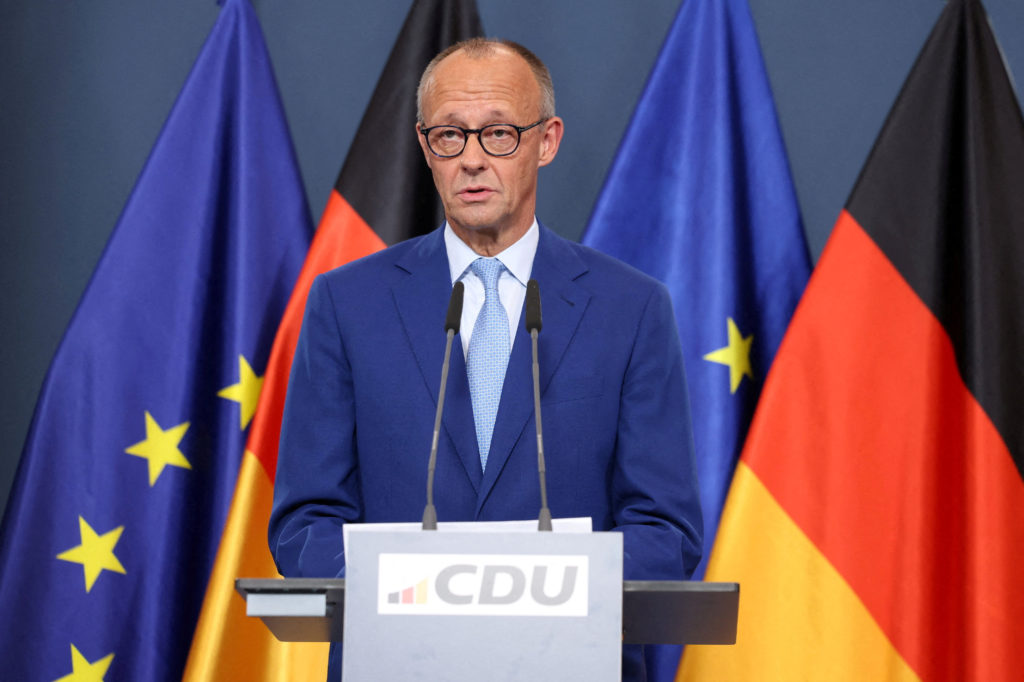
German Chancellor Friedrich Merz faced losses in two regional elections, with his party, the CDU, trailing behind in key areas. Despite calling the results a "disaster," Merz said he would continue working on his plans for change.
Key Facts
Elections were held in Berlin and Mecklenburg-Western Pomerania in Germany.
In Berlin, the left-wing party Die Linke led ahead of Merz’s CDU party, according to exit polls.
In Mecklenburg-Western Pomerania, the far-right party AfD is expected to finish first, followed closely by the Social Democrats.
These results represent setbacks for Chancellor Merz after 16 months in office.
Merz described his party’s election results as a disaster.
Despite the poor results, Merz promised to keep pushing his reform agenda.
The elections indicate challenges for Merz’s government and political strategy.
Read the Original
Want the full story? Tap a source to open the original
article.
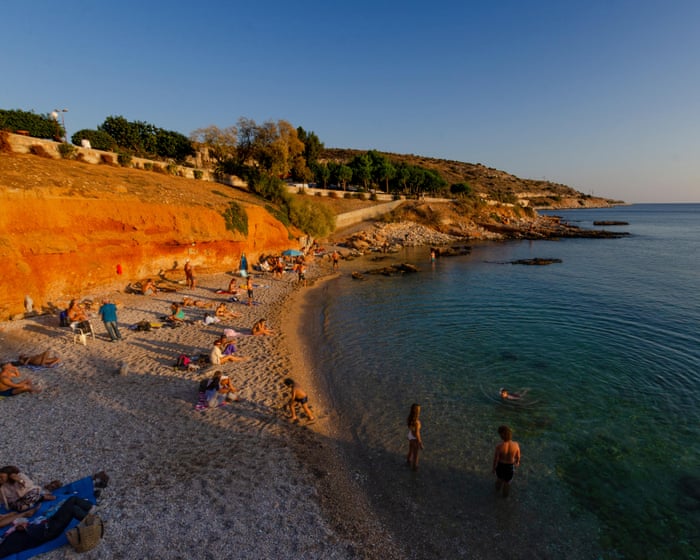
Greek police are investigating the death of an 82-year-old man who suffered a heart attack during a fight over a sunlounger at a beach near Athens. The brawl involved several people, and authorities have arrested a 76-year-old man and others connected to the incident.
Key Facts
The incident happened at the Vouliagmeni beach on the Athenian Riviera.
The 82-year-old man arrived early to secure a sunbed but got into an argument with a 76-year-old man.
The argument escalated into a physical fight with more people joining in.
The older man suffered a cardiac arrest and was taken to the hospital but died about an hour later.
Police arrested the 76-year-old man, a 21-year-old woman, and questioned the beach resort manager.
A post-mortem examination was ordered to determine the cause of death.
The fight is unusual in Greece, where disputes usually involve shouting, not physical fighting.
Rising cost of living and tension over costly sunloungers have increased social conflicts in Greece.
Read the Original
Want the full story? Tap a source to open the original
article.
Kelsey Parker, widow of singer Tom Parker, has welcomed a new baby named River after losing a stillborn baby last year. She shared the news on Instagram, where many celebrities sent congratulations.
Key Facts
Kelsey Parker is the widow of Tom Parker, who died in 2022 from brain cancer.
She had two children with Tom Parker before his death.
Last year, Kelsey and her partner Will Lindsay lost a stillborn baby named Phoenix.
In a recent Instagram post, she announced the birth of her new baby, River.
Celebrities like Rochelle Humes and Susanna Reid congratulated her online.
Kelsey wrote a poem about her loss called "Born Sleeping, Forever Loved."
She published a book in 2023 about her first year after Tom Parker’s death.
Kelsey’s Instagram bio says she focuses on turning hard moments into hope.
Read the Original
Want the full story? Tap a source to open the original
article.
Exit polls from two regional elections in Germany, Berlin and Mecklenburg-Western Pomerania, show large losses for the Christian Democratic Union (CDU) party led by Chancellor Friedrich Merz. The far-right AfD party is expected to gain more support in these votes.
Key Facts
Two German states, Berlin and Mecklenburg-Western Pomerania, held state elections.
Exit polls indicate the CDU party led by Chancellor Friedrich Merz did poorly.
The far-right AfD party is expected to improve its results.
Regional elections in Germany can affect national politics.
The CDU is a major center-right political party in Germany.
Friedrich Merz is the current Chancellor of Germany.
The outcome may put pressure on Merz’s leadership.
The elections highlight growing support for the far-right in parts of Germany.
Read the Original
Want the full story? Tap a source to open the original
article.
German Chancellor Friedrich Merz said he will stay in office despite his party’s poor results in two state elections. He promised to continue with planned economic reforms even though his party faced historic losses and the far-right Alternative for Germany (AfD) made big gains.
Key Facts
Chancellor Merz’s Christian Democratic Union (CDU) got only 5% of the vote in Mecklenburg-Western Pomerania, its lowest ever in a German state.
The far-right party, Alternative for Germany (AfD), increased its support in these elections.
CDU came in second in Berlin with about 20%, behind the Left party at 24.5%.
Merz called the CDU’s losses a “disaster” but said he will not stop government reforms.
He says Germany’s economic problems make reforms more urgent.
Merz has faced calls within his party to step down, but no top leaders have openly demanded it.
The CDU’s earlier defeat in Saxony-Anhalt strengthened AfD, which may form the first far-right regional government since World War II.
Merz canceled a planned trip to the U.N. General Assembly to focus on the political situation at home.
Read the Original
Want the full story? Tap a source to open the original
article.
German Chancellor Friedrich Merz said he will keep his job despite his party, the Christian Democratic Union (CDU), doing poorly in two local elections. The far-right party Alternative for Germany (AfD) won the most votes in Mecklenburg-Vorpommern, and the CDU came behind in Berlin.
Key Facts
The CDU barely made it into parliament in Mecklenburg-Vorpommern, while AfD led with about 38% of the votes.
In Berlin, the CDU got around 20% of the vote, falling behind the left-wing party Die Linke.
Merz called the election results "a disaster" but said he will stay as chancellor.
There is growing pressure and speculation that Merz might be replaced before his term ends.
Eight German state leaders have publicly supported Merz in recent days.
AfD’s rise is significant but it is unlikely to form a government because other parties refuse to cooperate with it.
These local elections come after AfD’s previous win in Saxony-Anhalt, where the CDU’s vote share dropped by half.
Official election results were expected hours after the polls closed.
Read the Original
Want the full story? Tap a source to open the original
article.
European intelligence leaders warn that Russia might take aggressive military action against NATO countries soon, possibly within months. Some officials believe this could include drone or missile attacks or limited invasions, while others caution that the threat might be part of Russia’s efforts to create fear without immediate plans to attack.
Key Facts
Poland’s prime minister, Donald Tusk, said Russia might attack NATO territory soon using drones or missiles.
France’s president Emmanuel Macron agrees the threat is serious and met with leaders to discuss it.
Kyiv carried out a major drone and missile attack on Russia as part of the ongoing war in Ukraine.
Czech security chief Michal Koudelka mentioned possible small invasions or false flag operations by Russia within months.
Baltic officials are less certain about an imminent attack, noting Russia’s limited resources and the risk of spreading fear.
Latvia’s security director Normunds Mežviets said there is no clear sign of an immediate invasion but acknowledged preparations for stronger actions.
Baltic leaders warn that raising alarm without solid proof could harm their countries socially and economically.
Estonian official Jonatan Vseviov urged calm and continued support for Ukraine, calling recent social media panic unnecessary.
Read the Original
Want the full story? Tap a source to open the original
article.
A large wildfire is burning near the tourist town of Villa de Leyva in central Colombia, threatening the area and its forests. Authorities are using planes, helicopters, and firefighters to fight the fire, which has been worsened by a dry season due to a strong El Nino weather event combined with climate change.
Key Facts
The wildfire is in the Boyaca region near Villa de Leyva, a popular tourist town known for its colonial buildings.
The fire has burned 40 hectares (about 99 acres) of native forest so far.
Smoke from the fire can be seen from the town’s main square.
Colombian President Abelardo de la Espriella promised to send state resources to fight the fire.
Efforts to control the fire include two planes, a military helicopter, and firefighters from Bogota and surrounding areas.
The dry season in the Andes, worsened by a strong El Nino weather pattern, has increased the risk of wildfires this year.
El Nino causes extreme weather by changing rain and temperature patterns, leading to droughts in northern South America.
Climate change is making the effects of El Nino more severe, increasing heat, drought, and fire risks.
Read the Original
Want the full story? Tap a source to open the original
article.
A massive flood caused by a glacial collapse in Nepal’s mountains destroyed the riverside town of Betrawati, killing at least 1,386 people and leaving over 5,000 missing. The flood wiped out homes and land, forcing survivors to climb hills to see the destruction and search for belongings amid debris.
Key Facts
The flood was triggered by a glacier collapse near the Nepal-China border.
At least 1,386 people died in Nepal from the flood.
More than 5,130 people are still missing.
The town of Betrawati was completely buried under mud and debris.
Survivors now must climb hills and cross ridges to reach the area.
Personal items like shoes and school backpacks show the panic when people fled.
Many survivors say the land itself vanished under the flood debris.
This disaster brings back painful memories of Nepal’s 2015 earthquake, which also caused many deaths and destruction.
Read the Original
Want the full story? Tap a source to open the original
article.
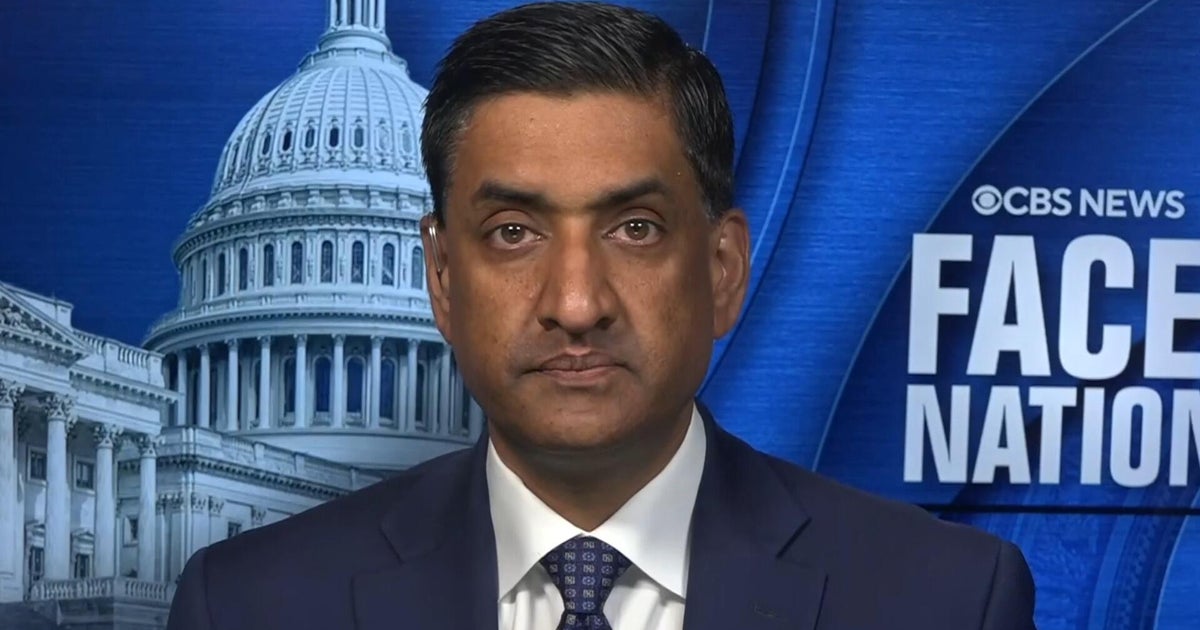
Rep. Ro Khanna said that President Donald Trump should make an international agreement on artificial intelligence (AI) with China's leader, Xi Jinping. The agreement should include worldwide monitoring and tools to check how AI systems are used.
Key Facts
Rep. Ro Khanna is a Democrat from California.
He spoke on the CBS program "Face the Nation with Margaret Brennan."
Khanna said the agreement should cover AI data centers.
The goal is to check if AI models are used for interference or training.
The agreement must have tools that are enforceable and verifiable.
President Trump is meeting Chinese President Xi Jinping this week.
The agreement would be international, involving monitoring between countries.
Read the Original
Want the full story? Tap a source to open the original
article.
The far-right Alternative for Germany (AfD) party won the largest share of votes in state elections in Mecklenburg-Western Pomerania and gained ground in Berlin. Chancellor Friedrich Merz’s conservative party performed poorly, raising concerns about his political future.
Key Facts
AfD won 37% of the vote in Mecklenburg-Western Pomerania, ahead of the Social Democrats’ 35.5%.
Chancellor Merz’s Christian Democratic Union (CDU) barely passed the voting threshold in Mecklenburg-Western Pomerania with 5.5%.
In Berlin, the left-wing Linke party led with 24.5%, CDU came second with 20%, and AfD increased to 16%.
AfD is an anti-migration, Russia-friendly far-right party making strong electoral gains in eastern German states.
Other main parties have said they will not work with AfD, making it unlikely the party will govern despite its gains.
Merz became chancellor 16 months ago promising economic improvement but has become unpopular amid weak growth.
Recent AfD victories have weakened Merz’s national standing, with some party members calling for his replacement.
Merz canceled a planned UN trip and has said he wants to stay and finish his term as chancellor.
Read the Original
Want the full story? Tap a source to open the original
article.
The Spanish film La Bola Negra won the people’s choice award at the Toronto Film Festival. The movie follows the lives of gay men across three time periods and will be released later this year on Netflix.
Key Facts
La Bola Negra is a Spanish queer drama set in 1932, 1937, and 2017.
The film won the people’s choice award at the Toronto Film Festival.
It premiered earlier this year at the Cannes Film Festival.
Netflix bought the rights after a bidding war and will release it later in the year.
This is the first foreign language film to win this Toronto award since 2011.
Past winners of this award have often gone on to win Oscars.
Directors Javier Calvo and Javier Ambrossi expressed gratitude for the award.
Other notable films at the festival included runners-up I Play Rocky and Being Heumann.
Read the Original
Want the full story? Tap a source to open the original
article.
Earl Spencer, Princess Diana’s brother, made public claims about King Charles III’s reaction after Diana’s death, suggesting he was “giddy” and dismissive. Buckingham Palace responded strongly, saying grief can affect memory and questioning Spencer’s judgment, but did not fully deny the claims.
Key Facts
Earl Spencer shared his memories of King Charles’s behavior after Princess Diana died in 1997.
Spencer said Charles sounded “giddy” and told him the world would “forget her soon enough.”
Buckingham Palace issued a rare, strong statement expressing unhappiness and questioning Spencer’s memory due to grief.
The Palace did not directly deny the claims but challenged how Spencer presented the past.
The interview was conducted by BBC political editor Laura Kuenssberg at Althorp, Spencer’s family home.
The discussion comes ahead of the 30th anniversary of Diana’s death.
Friends and supporters of both Spencer and King Charles have publicly backed their different versions of events.
The Spencers and the British royal family, the Windsors, have a long history of disagreements.
Read the Original
Want the full story? Tap a source to open the original
article.
Rachel Oxendine, a 29-year-old woman, passed away in her sleep on July 27, 2026. After her funeral, her family found a handwritten note inside her Bible with personal requests and comforting messages for them to remember her by.
Key Facts
Rachel Oxendine died unexpectedly in her sleep at age 29.
Her family does not yet know the cause of death.
Rachel’s mother found a note inside Rachel’s Bible after the funeral.
The note included instructions for the funeral and words to encourage the family.
Rachel asked not to be buried and wanted the song "Leave Out All the Rest" by Linkin Park played at her funeral.
Though the song was not played at the funeral, her sister Bethany has since played it in remembrance.
Bethany shared the note on TikTok, gaining over 1.8 million views, helping her and others process grief.
Bethany speaks about the deep loss of losing a sister and the importance of honoring Rachel’s memory.
Read the Original
Want the full story? Tap a source to open the original
article.
Huawei is on trial in a US court, accused of stealing technology, lying to banks, breaking sanctions on Iran, and hiding its true activities. The company denies the charges and says the case is about normal business competition, not criminal activity.
Key Facts
The trial started on September 9 in Brooklyn, New York, and may last around three months.
US prosecutors accuse Huawei of racketeering, money laundering, fraud, sanctions violations, and stealing trade secrets from five US tech companies.
Alleged actions happened between 1999 and 2020 and include stealing internet-router code from Cisco and robotic arm technology from T-Mobile.
Huawei allegedly helped Iran monitor protesters and moved US dollars through banks despite sanctions.
Huawei denies wrongdoing and claims the case is an attempt to hurt its business, arguing the prosecution misrepresents normal business activities.
The case began under President Trump’s first term, when Huawei was blacklisted and blocked from 5G networks over security concerns.
China opposes the US prosecution, saying it unfairly targets Chinese companies ahead of President Xi Jinping’s visit to Washington.
Huawei is one of the world’s largest makers of telecommunications equipment.
Read the Original
Want the full story? Tap a source to open the original
article.
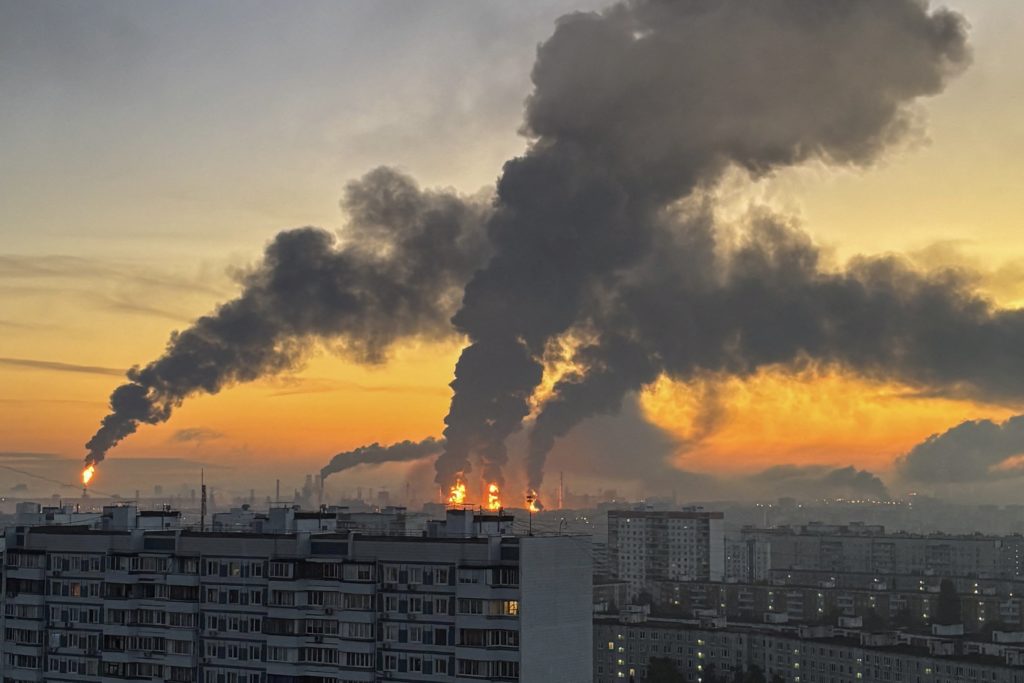
Ukrainian forces launched over 1,000 drones at Russia, including hundreds targeting Moscow, causing damage and casualties. The attack coincided with the last day of Russia’s parliamentary elections and aimed to disrupt the vote and weaken Russia’s war resources.
Key Facts
Ukraine fired more than 1,000 drones at Russia overnight, including a large attack on Moscow.
Moscow’s mayor called it the largest-ever drone attack on the capital.
The attack damaged the Moscow Oil Refinery and a residential building.
Two people were killed and 20 were wounded in the Moscow region.
Ukrainian President Zelenskyy said Kyiv used various missiles and drones, including its own Flamingo and Pelican models.
Russia claims its forces shot down 1,110 Ukrainian drones across Russia, Crimea, and the Black Sea area.
The attack happened during Russia’s wartime parliamentary election, which lacks genuine opposition.
Ukraine aims to pressure Russia economically and push for peace talks, while fighting continues along the front lines in eastern and southern Ukraine.
Read the Original
Want the full story? Tap a source to open the original
article.
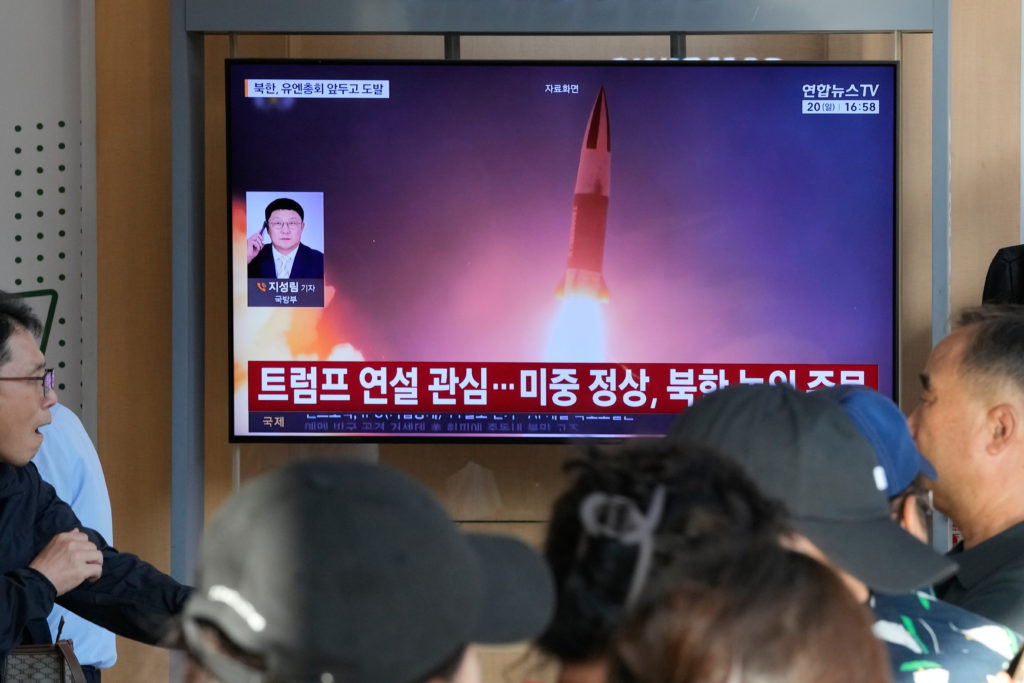
North Korea launched two short-range ballistic missiles into the sea, increasing tensions with the U.S. and South Korea. This followed North Korea’s threats to strengthen its nuclear weapons in response to joint U.S.-South Korean military exercises.
Key Facts
North Korea fired two short-range ballistic missiles from Wonsan, reaching distances of about 450 km and 600 km into the sea.
South Korea condemned the missile launches as violations of U.N. Security Council rules.
North Korea has recently carried out multiple missile tests despite a reduction in U.S.-South Korea military drills ordered by President Trump.
Kim Yo Jong, North Korea’s senior official and sister of leader Kim Jong Un, criticized U.S. military exercises as aggressive and provocative.
North Korea’s recent military drills combined missiles, artillery, and drones, aiming to improve its ability to bypass South Korean and U.S. defenses.
President Trump's earlier effort to reduce military exercises aimed to encourage diplomacy with North Korea.
North Korea demands the U.S. stop what it calls hostile policies and recognize its status as a nuclear state before resuming talks.
South Korea maintains military readiness and urges North Korea to stop missile tests to avoid escalating conflict.
Read the Original
Want the full story? Tap a source to open the original
article.