
The Actual News

Neutral summaries of your favorite news sources — just the facts.

World News

Comprehensive coverage of international news and global events

Ex-CIA official accused of stealing $40m in gold bars reportedly created fake spy program

Ex-CIA official accused of stealing $40m in gold bars reportedly created fake spy program

Summary

A former CIA agent, David Rush, is accused of stealing over $40 million in gold bars and other valuables from the agency. He also allegedly created a fake spy program to take millions of dollars through a false government contract.

Key Facts

  • David Rush worked at the CIA for 17 years before his arrest in May.
  • He is charged with stealing 303 gold bars, luxury watches, and more than $2 million in foreign currency.
  • Rush reportedly made up a secret “special access program” to move money fraudulently.
  • This fake program was said to be related to plans for government operations during disasters or nuclear war.
  • Rush is accused of lying about his education and military background to get his job and security clearance.
  • He claimed military leave pay after being honorably discharged, costing about $77,000.
  • The CIA is investigating the situation and has put some employees on leave during the inquiry.
  • Details about the real spy program Rush was involved in are mostly secret due to national security concerns.
Read the Original

Want the full story? Tap a source to open the original article.
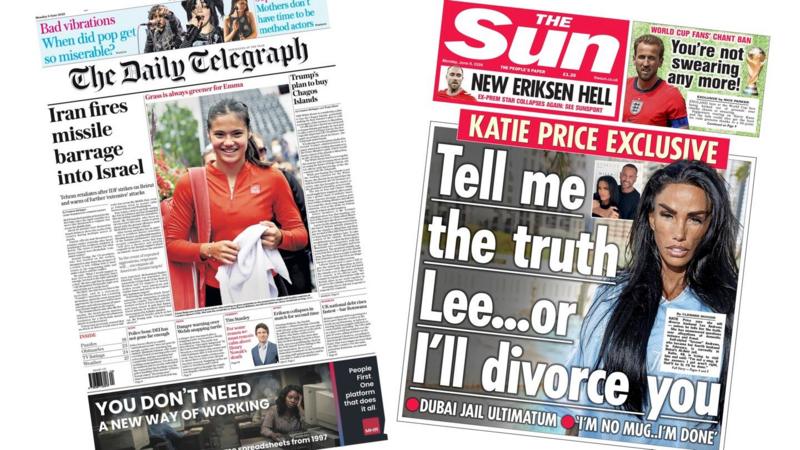
The Papers:  'Iran fires missile barrage' and 'New Eriksen hell'

The Papers: 'Iran fires missile barrage' and 'New Eriksen hell'

Summary

Iran launched missile attacks on Israel, marking the first strikes since a ceasefire in April. Israel said it intercepted all missiles and promised to respond. Other news included a Russian drone strike on a Ukrainian nuclear facility without causing harm, and tensions in UK politics around leadership contests and social media rules.

Key Facts

  • Iran fired missiles at Israel after threats linked to Israeli attacks near Beirut, Lebanon.
  • This missile barrage broke a fragile ceasefire that had been in place since April.
  • Israel’s military said it intercepted all Iranian missiles and plans to retaliate.
  • Ukraine’s nuclear fuel storage was hit by a Russian drone, but no casualties or radiation increases occurred.
  • OpenAI plans a major update to ChatGPT, making it a "superapp" with more features.
  • In the UK, Greater Manchester Mayor Andy Burnham may challenge Labour leader Sir Keir Starmer for party leadership.
  • Sir Keir Starmer is considering banning social media for children under 16 on high-risk platforms.
  • Danish footballer Christian Eriksen collapsed during a game but is now conscious and in stable condition.
Read the Original

Want the full story? Tap a source to open the original article.

Nuclear powers increasing deployment of warheads, SIPRI warns

Nuclear powers increasing deployment of warheads, SIPRI warns

Summary

Nuclear-armed countries are moving more warheads from storage to active delivery systems, increasing the risk of conflict despite a small overall drop in the total number of nuclear weapons. The Stockholm International Peace Research Institute (SIPRI) warns that this shift, along with slowed dismantling and rising geopolitical tensions, could reverse decades of reductions in nuclear arsenals.

Key Facts

  • The world has about 12,187 nuclear warheads, with around 9,745 ready for use.
  • The total number of nuclear weapons has slightly decreased compared to last year.
  • More nuclear warheads are being taken out of storage and put on missiles and other delivery systems.
  • The United States and Russia hold about 83% of the world's nuclear warheads, each having more than 5,000.
  • Both the U.S. and Russia are modernizing their nuclear forces but face funding, testing, and economic challenges.
  • China is increasing its nuclear arsenal rapidly and could match the U.S. and Russia in the number of long-range missiles by 2030.
  • SIPRI notes a breakdown in arms control agreements and intensified rivalry among nuclear powers.
  • The trend of dismantling old weapons is slowing while deployment of new weapons is speeding up.
Read the Original

Want the full story? Tap a source to open the original article.
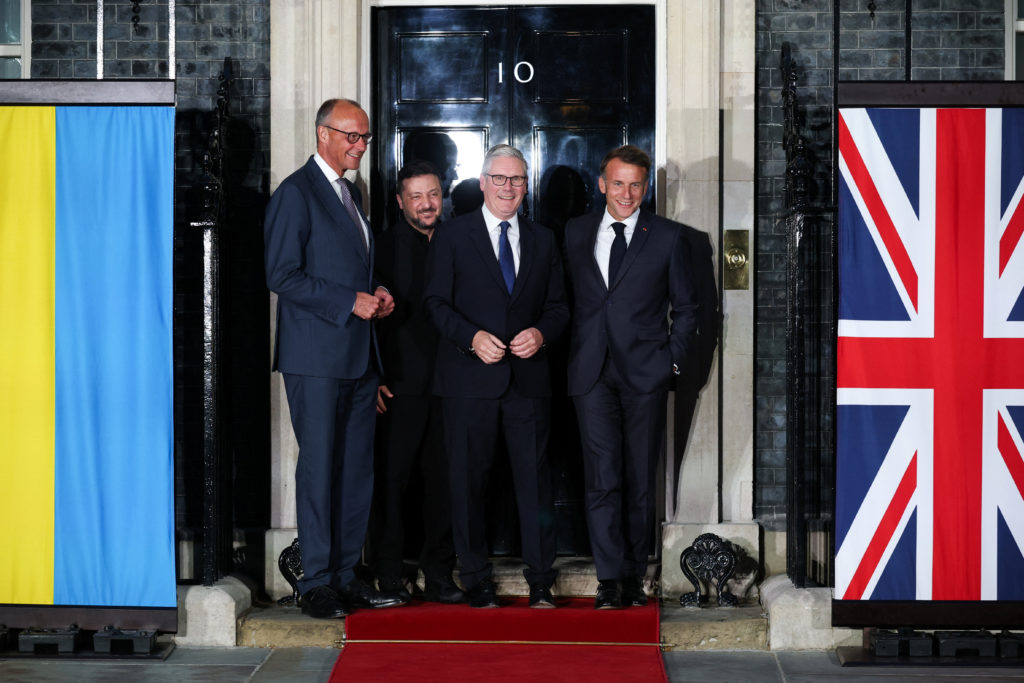
European leaders stress 'urgent need' to bolster Ukraine's defenses against Russian ballistic missiles

European leaders stress 'urgent need' to bolster Ukraine's defenses against Russian ballistic missiles

Summary

Leaders from the U.K., Ukraine, France, and Germany met in London to discuss the need to increase production of weapons to defend Ukraine against Russia's hypersonic Oreshnik missiles. They condemned Russia’s missile and drone attacks on Ukraine and NATO territory and called for an immediate ceasefire as a basis for peace talks.

Key Facts

  • British Prime Minister Keir Starmer hosted leaders from Ukraine, France, and Germany on Sunday.
  • They focused on countering Russia’s hypersonic Oreshnik ballistic missile attacks on Ukrainian cities.
  • The leaders condemned Russia’s increased missile and drone strikes, including attacks on NATO countries like Romania.
  • They stressed the urgent need to build more air defense systems and develop anti-ballistic missile technology.
  • Ukraine faces a shortage of air defense weapons partly due to depleted U.S. stocks during the Iran war.
  • Recent Russian attacks hit a bus stop in southeastern Ukraine and a nuclear fuel storage site near Chernobyl, causing a fire that was quickly put out.
  • The International Atomic Energy Agency called the attack near Chernobyl "deeply concerning" and plans to inspect the site.
  • Ukraine launched a large drone strike on Russia’s Saint Petersburg, showing increased capability to strike deep inside Russia.
Read the Original

Want the full story? Tap a source to open the original article.

North Korea’s Kim Jong Un inspects munitions at weapons factory

North Korea’s Kim Jong Un inspects munitions at weapons factory

Summary

North Korea’s leader, Kim Jong Un, visited a weapons factory and looked at large munitions. This happened just before Chinese President Xi Jinping is expected to visit. North Korea plans to double its missile production in the next five years.

Key Facts

  • Kim Jong Un inspected munitions at a North Korean weapons factory.
  • Photos of this inspection were released by North Korea.
  • The visit occurred ahead of Chinese President Xi Jinping’s planned visit.
  • North Korea has ordered to double its missile production capacity within five years.
  • This shows North Korea is focusing on expanding its weapons capabilities.
Read the Original

Want the full story? Tap a source to open the original article.
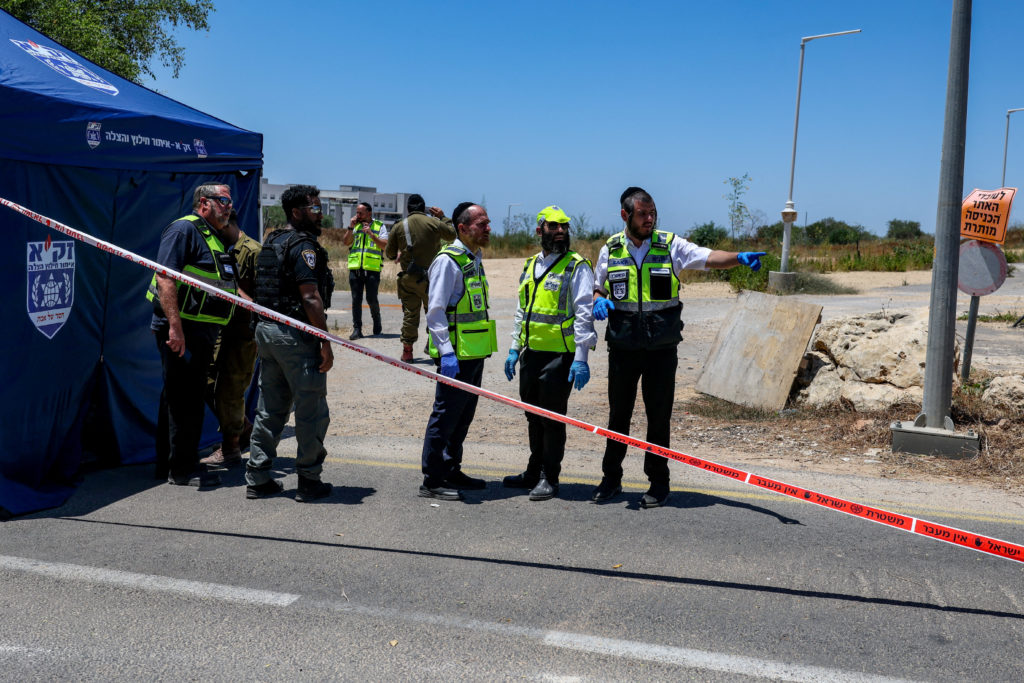
Palestinian man with Israeli citizenship opens fire in central Israel, killing 1 and wounding 5

Palestinian man with Israeli citizenship opens fire in central Israel, killing 1 and wounding 5

Summary

A Palestinian man with Israeli citizenship carried out a shooting attack on Sunday in central Israel, killing one Israeli reservist and wounding five others. The attacker was killed by police, and his suspected accomplice was arrested after trying to attack officers.

Key Facts

  • The shooter was a Palestinian man in his 20s from the Arab town of Taybeh with Israeli citizenship.
  • The attack started at a gas station near Kokhav Yair and involved multiple shootings in nearby towns and near an Israeli settlement in the West Bank.
  • One Israeli reservist, aged 55, was killed; five others were wounded, two seriously.
  • Police killed the shooter; a suspected accomplice was arrested after trying to stab police with a broken glass bottle.
  • Residents were told to stay home and schools kept children in lockdown for several hours due to fears of more attacks.
  • The attack occurred during heightened tensions following recent violence in the West Bank, including an Israeli settler attack and the killing of a Palestinian baby.
  • Israeli leaders praised security forces; a hard-line Israeli minister posted a video near the dead gunman and supports a new death penalty law for Palestinian attackers.
  • Violence in the West Bank has increased since the war in Gaza started on October 7, 2023, leading to many deaths on both sides.
Read the Original

Want the full story? Tap a source to open the original article.

From us

The news is free. Support if you want.

No ads. Pay what this is worth to you — most people choose $3.99/month.

Friendship or leverage: Why is Xi Jinping going to North Korea?

Friendship or leverage: Why is Xi Jinping going to North Korea?

Summary

Chinese leader Xi Jinping is visiting North Korea to strengthen ties and increase China's influence over the country. This visit comes as North Korea grows closer to Russia, which worries China since it wants to keep North Korea stable and under its influence without getting involved in conflicts caused by North Korea's nuclear activities.

Key Facts

  • China and North Korea call their relationship “forged in blood” from the Korean War but have seen trust decline recently.
  • China wants peace and control on its border and more influence in North Korea.
  • North Korea has been growing closer to Russia, signing a defense pact and sending soldiers to fight for Russia in Ukraine.
  • China is concerned Russia might become the main partner for North Korea, which would reduce China’s influence.
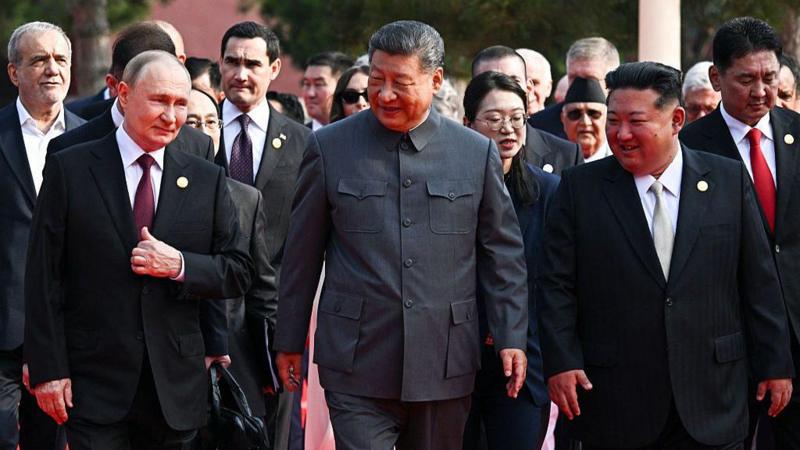
  • Xi invited North Korean leader Kim Jong Un to a military parade in Beijing, their first meeting in six years.
  • China does not support North Korea’s nuclear weapons because it might increase US military involvement in the region.
  • China seeks to act as a middleman between North Korea and the United States.
  • The visit aims more at gaining leverage and managing regional power balance than just friendship.
Read the Original

Want the full story? Tap a source to open the original article.
'We don't look at the sky anymore': The Air India crash victims who were not on the plane

'We don't look at the sky anymore': The Air India crash victims who were not on the plane

Summary

An Air India plane crashed into a medical college hostel in Ahmedabad last year, killing 260 people, including 19 who were on the ground. Among those killed on the ground were Prahlod Thakur’s wife and granddaughter, and the damaged hostel still remains a painful reminder for the local community.

Key Facts

  • The crash occurred at BJ Medical College in Ahmedabad in June of last year.
  • A total of 260 people died: 241 on the plane and 19 on the ground.
  • Prahlod Thakur lost his wife, Sarlaben, and his two-year-old granddaughter, Aadhya, in the crash.
  • The hostel building hit by the plane remains damaged and has not yet been demolished or rebuilt.
  • Rescue efforts lasted nearly a week as survivors were found and families searched for missing loved ones.
  • The crash site is still part of daily life, with airplanes flying overhead reminding locals of the tragedy.
  • Officials have approved plans to demolish the damaged hostel and construct a new one.
  • The family ran a food service for hospital staff near the crash site for 15 years before the accident.
Read the Original

Want the full story? Tap a source to open the original article.

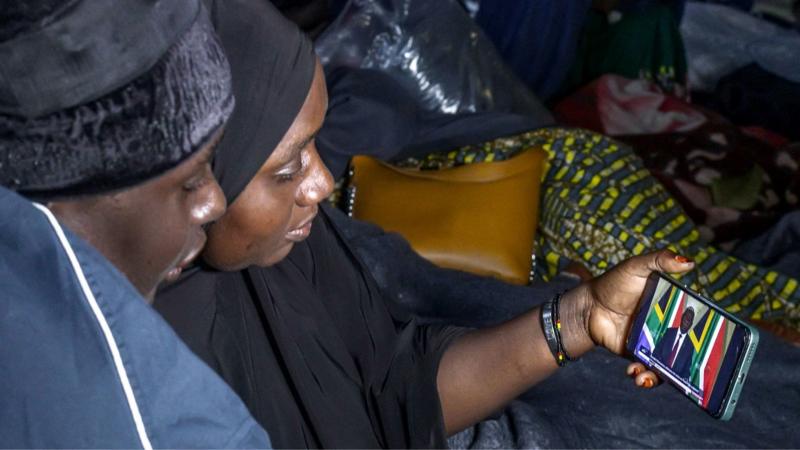
South Africa's president unveils crackdown on illegal migration

South Africa's president unveils crackdown on illegal migration

Summary

South Africa’s President Cyril Ramaphosa announced new measures to fight illegal migration amid rising tensions and protests against foreigners. His plan includes punishing employers who hire undocumented workers, speeding up deportations, and creating a biometric database of all residents, while warning against violence and vigilantism.

Key Facts

  • President Ramaphosa introduced a five-point plan to address illegal migration.
  • Measures include jailing employers hiring undocumented workers and setting up special courts for faster deportations.
  • A biometric register of all people in South Africa will be created to prevent identity theft.
  • Anti-migrant groups have set a deadline of June 30 for undocumented migrants to leave the country.
  • Violence and intimidation have caused some African migrants to flee or return home.
  • The president warned that only government officials can enforce immigration laws, forbidding citizens from taking the law into their own hands.
  • Over 450,000 people were stopped from entering South Africa illegally in the past year.
  • South Africa hosts over three million foreigners, about 5% of its population, though many lack official papers.
Read the Original

Want the full story? Tap a source to open the original article.

Bolton warns Trump actions in Iran could spark nuclear arms race

Bolton warns Trump actions in Iran could spark nuclear arms race

Summary

John Bolton, former U.S. national security adviser, warned that President Donald Trump's actions related to Iran could trigger more countries in the Middle East to develop nuclear weapons. Bolton believes Trump’s inconsistent decisions during the conflict increase the risk of nuclear weapons spreading in the region.

Key Facts

  • John Bolton is a former national security adviser to the U.S. government.
  • He made his warning about Iran and nuclear weapons in a recent opinion article.
  • Bolton says President Trump’s actions in the conflict with Iran are inconsistent or contradictory.
  • These actions, according to Bolton, might encourage more countries in the Middle East to seek nuclear arms.
  • A nuclear arms race means multiple countries competing to build powerful nuclear weapons.
  • The concern is that this competition could increase instability and danger in the region.
  • Bolton refers to any deal President Trump makes with Iran as part of this dynamic.
Read the Original

Want the full story? Tap a source to open the original article.

Iran’s attack on Israel aims to restore deterrence but avoid return to war

Iran’s attack on Israel aims to restore deterrence but avoid return to war

Summary

Iran has launched missile strikes on Israel to try to prevent further attacks against itself without starting a full war. Experts say Iran wants to show strength but avoid a large-scale conflict.

Key Facts

  • Iran fired missiles at Israel recently.
  • The goal was to restore deterrence, meaning to discourage Israel from attacking Iran or its partners.
  • Iran does not want the strikes to lead to a full war with Israel.
  • The missile attacks are a response to ongoing tensions in the region.
  • Experts, like Ross Harrison from the Middle East Institute, analyze these actions as efforts to balance showing power and avoiding war.
Read the Original

Want the full story? Tap a source to open the original article.

Italian rescuers recover 10 bodies after migrant boat capsizes off Malta

Italian rescuers recover 10 bodies after migrant boat capsizes off Malta

Summary

Italian rescuers found 10 bodies after a migrant boat capsized near Malta. About 48 people were saved from around 60 who left Libya, and search efforts are ongoing with help from Maltese authorities.

Key Facts

  • A migrant boat carrying about 60 people capsized 45 nautical miles southeast of Malta.
  • Italian rescuers recovered 10 bodies so far and rescued about 48 survivors.
  • A local fishing boat helped save some people in the water.
  • Malta requested help for search and rescue after the accident.
  • At least 827 people have died this year trying to cross the central Mediterranean by sea.
  • More than 1,330 deaths happened on this route last year, according to the UN’s International Organization for Migration (IOM).
  • The EU has given Libya €700 million since 2015 to manage migration and border control.
  • Italy works with Libya to stop migrants leaving by sea, including training and equipping the Libyan coastguard.
Read the Original

Want the full story? Tap a source to open the original article.

From us

Support no-spin news

The site stays free. If The Actual News is worth something to you, chip in.

Iran fires on Israel, jeopardizing ceasefire

Iran fires on Israel, jeopardizing ceasefire

Summary

Iran fired ballistic missiles at northern Israel, challenging a ceasefire between the U.S. and Iran. President Donald Trump has been informed about this event by U.S. officials.

Key Facts

  • Iran launched ballistic missiles targeting northern Israel.
  • The Israeli Defense Forces (IDF) confirmed the missile attack on their social media platform X.
  • The incident tested the ceasefire agreement between the U.S. and Iran.
  • A U.S. official told NewsNation that President Trump has been briefed on the missile attack.
  • The missile fire has increased tensions between Iran and Israel and could affect regional stability.
  • The event occurred on a Sunday, indicating a recent development.
  • The ceasefire was in place prior to this missile launch.
  • The news source is The Hill’s broadcast partner, NewsNation.
Read the Original

Want the full story? Tap a source to open the original article.

Israel says Iran launched missiles in first bombardment since fragile ceasefire

Israel says Iran launched missiles in first bombardment since fragile ceasefire

Summary

Iran fired missiles at Israel in the first attack since a ceasefire began in early April, following an Israeli strike on Lebanon’s southern suburbs. The missile launches increased tensions and complicated efforts by countries like the U.S., Pakistan, and Egypt to negotiate a wider peace deal in the Middle East.

Key Facts

  • Iran launched missiles at Israel, which were intercepted by Israel’s military.
  • The missile attack followed an Israeli airstrike on a residential building in Beirut that killed two and wounded 20.
  • Hezbollah fired rockets at northern Israel earlier the same day.
  • Iran warned it would respond more broadly if attacks continue, threatening U.S. and Israeli targets in the region.
  • The ceasefire deal was fragile, with Hezbollah rejecting it and Iran demanding that the peace deal include ending the conflict in Lebanon.
  • U.S. President Trump expressed a desire for Iran to stop missile attacks and return to talks but said Israel’s strike was not coordinated with the U.S.
  • International mediators from Pakistan and Egypt are working to revive negotiations between Iran and the U.S.
  • The conflict affects the Strait of Hormuz, a key waterway for oil shipments, heightening global economic concerns.
Read the Original

Want the full story? Tap a source to open the original article.

Iran launches missiles at Israel in first bombardment since fragile ceasefire

Iran launches missiles at Israel in first bombardment since fragile ceasefire

Summary

Iran launched missiles at Israel for the first time since a ceasefire began in April, following Israeli strikes in Lebanon’s capital, Beirut. Both sides exchanged attacks, making peace talks more difficult amid ongoing efforts to end the war in the Middle East.

Key Facts

  • Iran fired missiles at Israel in retaliation for Israeli airstrikes in southern Beirut.
  • Israel intercepted all the Iranian missiles but said its defenses are not perfect.
  • Israeli strikes in Beirut killed two people and wounded 20.
  • Hezbollah, an Iranian-backed group, fired rockets at northern Israel earlier the same day.
  • Lebanon and Israel had agreed on a ceasefire days earlier, but Hezbollah rejected it.
  • Iran warned that attacks on Beirut could cause a full-scale Middle East war.
  • Peace talks continue with mediation from countries like Pakistan, Egypt, and Qatar.
  • President Donald Trump did not comment on the missile attack but expressed interest in targeted actions against Hezbollah in a recent interview.
Read the Original

Want the full story? Tap a source to open the original article.
Videos show missiles launched from Iran into Israel

Videos show missiles launched from Iran into Israel

Summary

Iranian media released videos showing missiles launched from Iran toward Israel. The missiles hit northern Israel, and Iran says these attacks are a response to Israel striking Beirut, which Iran claims broke a US-negotiated ceasefire in Lebanon.

Key Facts

  • Iran released videos of missiles being fired at Israel.
  • Missiles impacted northern Israel.
  • Iran states the missile attacks are retaliation.
  • Iran says Israel attacked Beirut first.
  • The attacks relate to a ceasefire agreement in Lebanon.
  • The ceasefire was arranged with help from the United States.
  • The situation involves conflict between Iran, Israel, and Lebanon.
Read the Original

Want the full story? Tap a source to open the original article.

Celebrations seen in Tehran as missiles fly overhead towards Israel

Celebrations seen in Tehran as missiles fly overhead towards Israel

Summary

Iranian state television showed people celebrating in Tehran while missiles were launched toward Israel. Iran said the missile attacks were in response to Israeli strikes in Beirut and other violations of ceasefire agreements involving the US and Israel.

Key Facts

  • Missiles were launched from Iran toward Israel.
  • Iranian state TV showed celebrations in Tehran during the missile launch.
  • Iran stated the attack was retaliation for Israel’s previous strike in Beirut.
  • Iran also cited other ceasefire violations by the US and Israel as reasons for the missile launch.
  • The missile activity reflects ongoing tension between Iran and Israel in the region.
Read the Original

Want the full story? Tap a source to open the original article.

Iran fires missiles at Israel after Beirut attack ‘crossed all red lines’

Iran fires missiles at Israel after Beirut attack ‘crossed all red lines’

Summary

Iran fired multiple missiles toward Israel after warning Israel to stop attacks in southern Lebanon. Israel reported intercepting all the missiles and did not immediately retaliate, while President Donald Trump urged Israeli leaders not to respond to avoid further conflict.

Key Facts

  • Iran launched several missile strikes at Israel starting around 10 p.m. local time on Sunday.
  • The missiles targeted the Ramat David airbase, among other locations.
  • Israel’s military said it intercepted all Iranian missiles so far.
  • The Iranian Revolutionary Guard said the strikes were in response to Israeli attacks in southern Lebanon, especially around Beirut’s southern suburbs.
  • Iran warned that future attacks would target “all American-Zionist targets” in the region.
  • President Trump said he was calling Israeli Prime Minister Netanyahu to advise against retaliating against Iran.
  • Earlier ceasefire talks between Israel and Lebanon had not stopped ongoing clashes.
  • Israeli officials had planned a strong response but were urged by the U.S. to avoid escalation.
Read the Original

Want the full story? Tap a source to open the original article.

From us

Pay what it's worth to you

We dropped the ads. Support independent, no-spin news at the suggested $3.99/month.

Vulnerable women lured by illegal sperm donor services on social media

Vulnerable women lured by illegal sperm donor services on social media

Summary

Women in the UK who want to have children but cannot access fertility treatment are turning to social media to buy sperm directly from men. These illegal sperm donations are unregulated, can be unsafe, and put women at risk of exploitation and harassment.

Key Facts

  • Some women use social media and websites like "Tinder for sperm" to find sperm donors illegally.
  • A BBC investigation ordered sperm online for £100; it was delivered in a box with frozen tomato passata as ice.
  • A licensed clinic found the sperm sample had all dead cells, making it useless for fertilization.
  • Donors rarely check women’s health and sometimes offer sex or try to get intimate photos in exchange.
  • The UK fertility regulator says unregulated sperm donation is a criminal offense and warns of risks from predatory donors.
  • One man named publicly by a court claimed to have fathered about 180 children through unregulated donation.
  • Some women who use these services are not eligible for NHS fertility treatment and find private care too expensive.
  • Donor groups on Facebook can have up to 40,000 members, showing how widespread this underground market is.
Read the Original

Want the full story? Tap a source to open the original article.

Symptoms That Look Worrying but Mean You’re Healthy, According to a Doctor

Symptoms That Look Worrying but Mean You’re Healthy, According to a Doctor

Summary

Some body sensations that feel strange or worrying can actually be signs of good health. Dr. Patrick Heath explains that many unusual symptoms happen because the body is working normally, not because there is a problem.

Key Facts

  • A sudden jerk just before sleep, called a hypnic jerk, happens because the brain thinks the body is falling and triggers a reflex.
  • Feeling sleepy after eating pasta is normal and shows the body's insulin is working properly.
  • Eyes watering when yawning happens because the muscles press tear ducts, blocking tear drainage temporarily.
  • Dark or smelly urine in the morning is caused by overnight dehydration and shows the body’s water-saving system is working.
  • Cracking joints produces harmless gas bubbles popping and does not cause arthritis.
  • Urine that smells odd after eating asparagus is due to sulfur compounds from asparagusic acid, indicating normal metabolism.
  • Skin breakouts after starting retinol or exfoliating products show that the skin is renewing cells as expected.
Read the Original

Want the full story? Tap a source to open the original article.

Save articles & personalize your feed — Create a free account