Pakistani police arrested Aleema Khan, sister of jailed former Prime Minister Imran Khan, in Lahore ahead of a planned protest march by his party. She is being held for 30 days under a law that allows preventive detention for public safety reasons.
Key Facts
Aleema Khan was arrested at her home in Lahore, Punjab province, on Sunday.
The arrest happened one week before a PTI protest march scheduled for September 27 to demand Imran Khan’s release.
Aleema Khan was detained under the Maintenance of Public Order (MPO) law for 30 days.
Her lawyer said she had bail in all her cases, but it is unclear why or where she is being held.
The PTI party called the arrest illegal and demanded her immediate release.
Imran Khan has been in jail since August 2023 on multiple convictions his party says are politically motivated.
Concerns exist about Imran Khan’s health, especially his right eye, which needs specialist treatment.
The Supreme Court ordered Khan’s transfer to a private hospital for treatment, but officials returned him to jail after a brief check-up.
Read the Original
Want the full story? Tap a source to open the original
article.
Many Palestinian children in Gaza have started a new school year after nearly three years. Temporary classrooms were created because most schools were destroyed during repeated Israeli attacks.
Key Facts
Tens of thousands of Palestinian children returned to school in Gaza.
New school year began after long disruptions from conflict.
Israeli attacks over almost three years destroyed many schools in Gaza.
Temporary learning spaces have been set up to replace damaged schools.
The conflict caused major damage to education infrastructure in Gaza.
Children are now able to attend classes despite difficult conditions.
Al Jazeera’s Hani Mahmoud reported on the return to school.
Read the Original
Want the full story? Tap a source to open the original
article.
A 56-year-old man has been arrested again on suspicion of involvement in the murder of Joanne Sheen, a mother who went missing in 2019. Her human remains were found in London after a fire damaged the area where they were discovered.
Key Facts
Joanne Sheen, age 44 when last seen, disappeared in December 2019 traveling from Fareham to Southampton.
Her family reported her missing in February 2020.
Human bones were found in shrubland at Padstow Walk, Feltham, London, in August 2024 after a fire damaged the area.
A man from Southampton was first arrested in 2020 and later released on bail; he was rearrested after the remains were identified.
Another 56-year-old man from Southampton was also arrested on suspicion of conspiracy to commit murder.
More than 4,000 inquiries and 300 statements were made during the initial investigation.
Joanne Sheen had no fixed address, car, or bank account at the time of her disappearance.
The investigation was handed over to Hampshire Police after the remains were identified.
Read the Original
Want the full story? Tap a source to open the original
article.
The Royal National Lifeboat Institution (RNLI) warned its supporters that their personal information might have been stolen in a cyber-attack on a company it works with. The charity has also faced protests and abuse from far-right activists upset about its help to asylum seekers arriving by small boats.
Key Facts
RNLI supporters were alerted that their names, contact details, and interaction records might have been hacked.
The data breach happened through Beacon CRM, a company used by RNLI for managing supporter information.
About 1,500 charities were affected in the same cyber-attack in late July.
So far, there is no proof that the stolen data has been shared or misused.
The RNLI has faced protests and abuse from far-right groups because it rescues asylum seekers arriving by small boats.
A Portsmouth lifeboat station was temporarily closed after far-right activists tried to block asylum seeker landings nearby.
The RNLI reported an increase in donations despite calls by protesters to stop supporting the charity.
Only about 1.2% of RNLI’s rescue work last year involved small boats in the English Channel.
Read the Original
Want the full story? Tap a source to open the original
article.
The Houthis, a group supported by Iran, have launched missile attacks on Riyadh, Saudi Arabia, marking the first time since the Yemen conflict restarted. The United States has warned that fighting between Saudi Arabia and the Houthis could quickly get worse, but Riyadh currently lacks support from its American ally.
Key Facts
The Houthis are an armed group backed by Iran, involved in fighting in Yemen.
Recently, the Houthis launched a missile attack on Riyadh, Saudi Arabia’s capital, for the first time.
Their recent offensive captured large parts of Yemen and caused hundreds of deaths.
The US warned that the conflict between Saudi Arabia and the Houthis may escalate rapidly.
Saudi Arabia currently does not have support from the United States against these attacks.
This situation highlights the risk of wider conflict in the Middle East involving Saudi Arabia and Iran-backed forces.
The fighting is part of the ongoing Yemen conflict that has displaced many civilians.
Read the Original
Want the full story? Tap a source to open the original
article.
The documentary "NAZA," about the war in Gaza, has caused controversy in Israel. While praised internationally, the filmmakers have faced threats at home, and Israel’s Prime Minister Netanyahu plans to propose a law to take away citizenship from those who criticize Israeli soldiers.
Key Facts
"NAZA" is a documentary about the war in Gaza.
The film features anonymous military sources who talk about civilian deaths in Gaza.
The filmmakers received a standing ovation at the Venice film festival.
In Israel, the filmmakers have received violent threats and faced risks to their citizenship.
Prime Minister Benjamin Netanyahu wants to create a law to revoke citizenship from people who "defame" Israeli Defense Forces (IDF) soldiers.
This controversy comes just before important elections in Israel.
The film and reactions highlight tensions around how the Gaza war is discussed in Israel.
The situation reflects deep divisions in Israeli society about the military and the conflict.
Read the Original
Want the full story? Tap a source to open the original
article.
The US warned about the rising conflict in Yemen after Houthi rebels launched a missile attack on Saudi Arabia’s capital, Riyadh. Although the US is a close ally of Saudi Arabia, it has so far avoided direct military involvement against the Houthis, who are backed by Iran and have taken control of large areas in Yemen.
Key Facts
Houthi rebels in Yemen attacked Riyadh, the capital of Saudi Arabia, with missiles.
The Houthis have gained control over large parts of Yemen, fighting Saudi-supported government forces.
The Houthis receive support from Iran.
The US is an important ally of Saudi Arabia but has not joined the fighting against the Houthis.
US officials have reportedly held talks with the Iran-backed Houthis in Oman.
The conflict has caused many Yemenis to be displaced from their homes.
The situation is causing concern about a bigger war in the Middle East.
Other regional tensions involve groups like Hezbollah and ongoing disputes related to Israel.
Read the Original
Want the full story? Tap a source to open the original
article.
Israeli forces killed a Palestinian man near Jenin in the West Bank after he allegedly tried to carry out a vehicle attack near an illegal Israeli settlement. In another incident, an Israeli settler was shot and died near a settlement in the West Bank, and the attacker was later detained.
Key Facts
The Palestinian man was shot near the Ganim settlement, east of Jenin.
Israeli forces said there were no injuries among their soldiers.
The Palestine Red Crescent Society said medical teams were stopped from reaching the Palestinian victim.
An Israeli settler, 30 years old, was fatally shot near the Halamish settlement in the central West Bank.
The attacker in the settler shooting fled on foot but was hurt and arrested at a hospital.
Israeli Prime Minister Benjamin Netanyahu ordered more military and security reinforcements in the area.
Netanyahu also ordered the demolition of the home belonging to the suspected attacker.
Following the incidents, Israeli forces closed all entry and exit points to the cities of Ramallah and al-Bireh.
Read the Original
Want the full story? Tap a source to open the original
article.
An English village called Piddington voted to leave the UK and asked to join the United States because the British government plans to house 1,250 male asylum seekers nearby. The village council claims to have contacted President Trump and the US embassy to support their goal of becoming the 51st US state.
Key Facts
Piddington is a small English village with about 350 people.
The British government plans to house 1,250 male asylum seekers at a military site near Piddington.
In response, the village council voted in a symbolic referendum to leave the UK and seek US statehood.
The referendum had a high turnout, with nearly 92% voting for independence.
The village council sent a letter and information to President Trump and the US embassy.
Some council members said they received support emails from Americans welcoming Piddington’s idea.
The plan to house migrants used a fast-track approval process called Urgent Crown Development.
Local villagers are mainly concerned about safety related to the asylum seeker housing plan.
Read the Original
Want the full story? Tap a source to open the original
article.
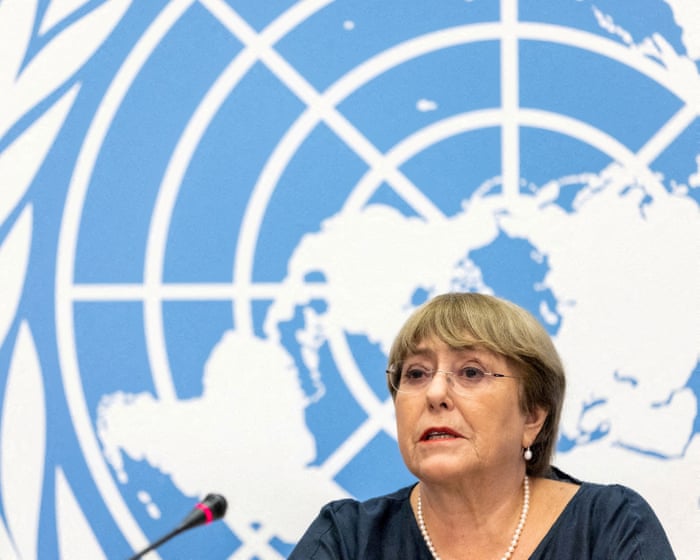
Michelle Bachelet, the former president of Chile, has stopped trying to become the next UN secretary general. She made the decision after losing support among the UN Security Council members, leaving seven candidates still in the race.
Key Facts
Michelle Bachelet withdrew her bid for UN secretary general.
She is a two-time president of Chile and former UN human rights chief.
Bachelet announced her decision in a video posted on Instagram.
Her campaign focused on supporting international cooperation and law.
Bachelet’s support dropped sharply after a recent informal UN poll.
Seven candidates remain competing to replace António Guterres.
Costa Rican diplomat Rebeca Grynspan is currently the leading candidate.
The UN Security Council will recommend one candidate to the General Assembly for approval.
Read the Original
Want the full story? Tap a source to open the original
article.
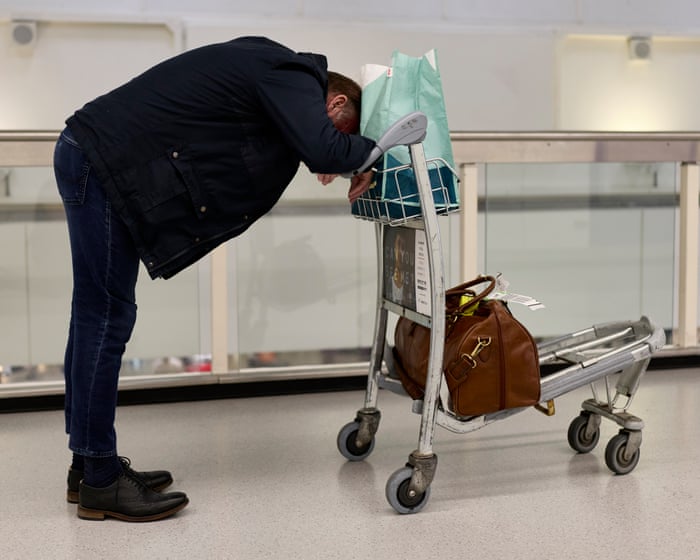
A 65-year-old British man named Charles was deported from Sweden after losing a long legal battle to stay there following Brexit. Charles had lived in Sweden for nearly nine years, was married to a Swedish woman, and had no home or family in the UK.
Key Facts
Charles was taken from his home in Sweden and sent to London after a rejected residency application.
He had lived in Sweden for almost nine years and only visited the UK once briefly in 2022.
Sweden has deported 458 British citizens since Brexit due to failed residency claims.
Charles had no children, no property, and no strong ties in the UK.
Despite cooperating with Swedish authorities for years, he was detained and locked up for two weeks before deportation.
The British consulate gave him information on getting help as a suddenly homeless person in the UK.
Opposition parties in Sweden have promised new laws to allow Britons a second chance to apply for residency.
Charles wants to return to live quietly with his wife and friends in Sweden but was forced to leave.
Read the Original
Want the full story? Tap a source to open the original
article.
Pro-Palestine protesters gathered outside Ed Sheeran’s concert in Philadelphia. The demonstrations occurred during a time when Ed Sheeran faced criticism related to Macklemore being removed from his U.S. tour.
Key Facts
Pro-Palestine protesters held a rally outside Ed Sheeran’s solo concert in Philadelphia.
The protests were focused on showing support for Palestine.
Ed Sheeran was facing backlash over the removal of Macklemore from his tour in the United States.
The protest happened while Ed Sheeran was performing in Philadelphia.
The article does not detail the reasons for Macklemore’s removal.
The focus was on the timing of the protest coinciding with Ed Sheeran’s concert.
Read the Original
Want the full story? Tap a source to open the original
article.
Israeli settlers entered the Al-Aqsa Mosque area in East Jerusalem and performed Jewish prayers during Yom Kippur, a major Jewish holy day. Israeli leaders, including Prime Minister Netanyahu, visited religious sites and tunnels beneath East Jerusalem, actions that have raised tensions with Palestinians and groups like Hamas.
Key Facts
Around 570 Israeli settlers entered the Al-Aqsa Mosque courtyards on Yom Kippur morning.
They performed Jewish rituals in the mosque compound, which is a sensitive site in East Jerusalem.
Israeli Prime Minister Benjamin Netanyahu visited tunnels under the Old City and prayed at the Western Wall.
Netanyahu's visit occurred under heavy security protection and was shared on his official social media.
Hamas strongly condemned these visits and incursions as provocations against Palestinians and Muslims.
The tunnels under East Jerusalem have been excavated by Israel for years to find evidence linked to ancient Jewish history, but these claims are disputed by experts.
The Israeli actions come ahead of national elections and during a period of heightened tensions in the area.
East Jerusalem is a contested area claimed by both Israelis and Palestinians.
Read the Original
Want the full story? Tap a source to open the original
article.
North Korea launched two short-range ballistic missiles into the sea off its eastern coast, according to South Korea’s military. These missile tests followed North Korea’s recent statement confirming its nuclear weapons status and rejecting a United Nations resolution demanding it stop its nuclear activities.
Key Facts
North Korea fired two short-range ballistic missiles from the Wonsan area into the East Sea (also called the Sea of Japan) on Sunday.
The first missile flew about 450 kilometers, and the second flew more than 600 kilometers.
South Korea, the United States, and Japan are monitoring and analyzing the missile launches.
Japan officially protested the launches, calling them a threat to peace and security in the region.
South Korea’s National Security Office held an emergency meeting to assess the security risks after the launches.
North Korea said its nuclear weapons program is permanent and guaranteed by its constitution.
The missile tests happened soon after North Korea’s joint military drills and a statement rejecting a UN resolution on its nuclear program.
North Korea used the event to accuse other countries of trying to end its nuclear weapons status.
Read the Original
Want the full story? Tap a source to open the original
article.
After nearly three years of war and displacement, children in Gaza have started going back to school in tents set up as temporary classrooms. Many schools were damaged or destroyed in the conflict, and education has faced many challenges due to ongoing violence and lack of resources.
Key Facts
Around 541,000 students in Gaza returned to school starting September 19, after a ceasefire in October 2025.
Nearly 98% of school buildings in Gaza were damaged since October 2023, with over 93% needing major repairs or full rebuilding.
About 700,000 children aged 4 to 17 missed almost three years of regular school.
Many schools in Gaza are now held in tents due to the destruction of buildings.
Education was often interrupted by war, with children sometimes doing household tasks instead of studying.
Some children attended virtual schools taught by teachers from the West Bank.
Violence continues to affect learning, as some students were killed by Israeli bombing even after the ceasefire.
Parents and teachers are working hard to restart education despite limited supplies and insecure conditions.
Read the Original
Want the full story? Tap a source to open the original
article.
Iran’s security chief Mohsen Rezaei outlined Iran's conditions to end its conflict with the United States. These include stopping attacks, lifting the naval blockade, releasing frozen funds, and ending US interference in Iran. Despite talks via Qatari mediators, both sides remain far from peace.
Key Facts
Iran’s conflict with the US began after joint US-Israeli strikes in late February.
Iran says it delivered its conditions to the US through Qatar.
Iran demands an end to the war on all fronts, including Lebanon, and the release of billions in frozen funds.
Iran wants the naval blockade on its ports lifted and US interference to stop.
Iran insists the Strait of Hormuz will remain closed until its conditions are met.
Attacks around the Strait of Hormuz and Red Sea have increased, pushing oil prices above $100 per barrel.
The June 17 memorandum between Iran and the US expired recently, after which attacks have risen.
The current demands are similar to those in the June agreement but do not mention war reparations.
Read the Original
Want the full story? Tap a source to open the original
article.
The article reflects on the 60th anniversary of Star Trek and compares its hopeful future vision to the current reality of space militarization. It reports that the U.S. Air Force has confirmed deploying weapons in space for the first time, amid concerns that other countries, like Russia, are developing space-based weapons.
Key Facts
Star Trek, celebrating 60 years, depicted a future of peace, teamwork, and ethical exploration in space.
The U.S. Air Force announced it has placed weapons in space for defense against hostile actions.
Officials have not revealed what the deployed space weapons look like or their exact capabilities.
A 2024 Biden administration report warned Russia is developing nuclear weapon capabilities in space to attack satellites.
Satellites in orbit are vital for global infrastructure, including communication and navigation.
In the 1980s, President Reagan proposed the Strategic Defense Initiative to place missile defenses in space, but it faced skepticism.
The U.S. Space Force, created under President Trump, is involved in space military operations and recently introduced new uniforms.
The article contrasts the hopeful science fiction vision of Star Trek with the current trend of turning space into a new battlefield.
Read the Original
Want the full story? Tap a source to open the original
article.
A mining company called Viridis Mining and Minerals wants to supply rare earth materials to the European Union (EU) by 2028. China currently controls most of the world's supply of these important materials, and there are ongoing talks between President Donald Trump and China’s President Xi Jinping to ease China's export restrictions on rare earths.
Key Facts
Rare earth materials are used in many products like cars, wind turbines, and military jets.
China controls about 80-90% of the world's rare earth supply and has export controls that affect global markets.
China implemented export restrictions on rare earths in April 2025, impacting industries in the EU, UK, US, and Japan.
President Donald Trump and President Xi Jinping will meet to discuss these issues and possibly make a deal to ease export controls.
Viridis Mining, with assets in Brazil, Australia, and Canada, is working to provide an alternative rare earth supply to the EU by 2028.
The EU wants to reduce its dependence on China and is seeking new sources of critical raw materials.
China’s lower exchange rate makes its rare earth products cheaper, challenging EU companies to compete without Chinese imports.
EU officials, including trade commissioner Maroš Šefčovič, are involved in talks with China and efforts to diversify supply chains away from China.
Read the Original
Want the full story? Tap a source to open the original
article.
Volunteers across the UK are planting flowers and shrubs at train stations to make them more beautiful and welcoming for people and wildlife. The Royal Horticultural Society created a new award to honor these efforts, with the Cardross Community Organic Garden in Scotland winning this year.
Key Facts
Since 1964, UK towns have planted flowers for the Britain in Bloom competition run by the Royal Horticultural Society (RHS).
The RHS launched a new award to recognize volunteers who green train stations across the UK.
Five stations were shortlisted for their beauty, support for wildlife, and ability to handle climate changes.
Cardross Community Organic Garden in Scotland won, praised for involving many community groups.
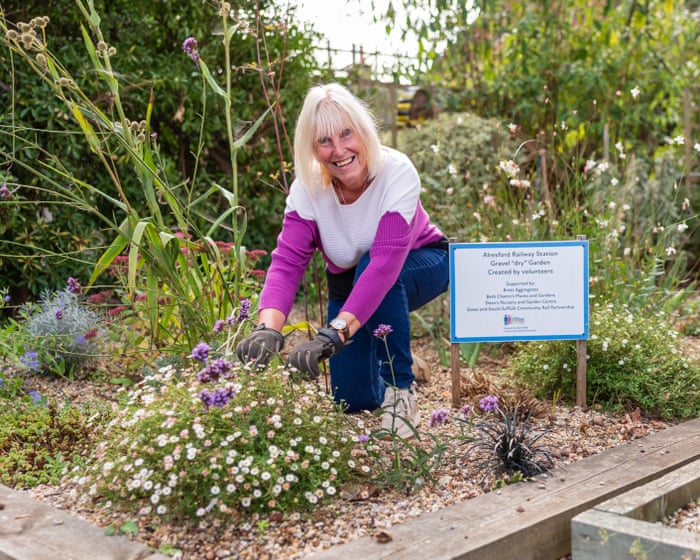
Alresford station in Essex created a “dry garden” with drought-resistant plants due to hot, dry summers.
Volunteers at Cardross station grow fruit trees and vegetables, focusing on hardy plants suited to local weather.
Other stations like Maghull and Wylde Green have added woodland areas and pollinator-friendly plants.
These gardening projects have improved stations, making villages more attractive and supporting wildlife like bees and butterflies.
Read the Original
Want the full story? Tap a source to open the original
article.