Michelle Bachelet, former president of Chile, has stopped trying to become the next United Nations Secretary-General. She withdrew after receiving very low support in a poll among Security Council members.
Key Facts
Michelle Bachelet is 74 years old and announced her withdrawal through a video on Instagram.
She aimed to be the first woman to lead the UN in its 80-year history.
In the latest informal Security Council poll, Bachelet got only one vote to encourage her appointment and 11 votes against.
Costa Rica’s Rebeca Grynspan leads the race with nine encouraging votes in the same poll.
To be recommended, a candidate needs at least nine of 15 Security Council votes, with no veto from the five permanent members (China, France, Russia, UK, US).
Bachelet was nominated by Chile and supported by Brazil and Mexico.
The current UN Secretary-General, Antonio Guterres, ends his term on December 31.
The UN faces serious financial problems with over $1.5 billion in unpaid dues by 2025 and conflicts among major powers are causing deadlock on key international issues.
Read the Original
Want the full story? Tap a source to open the original
article.
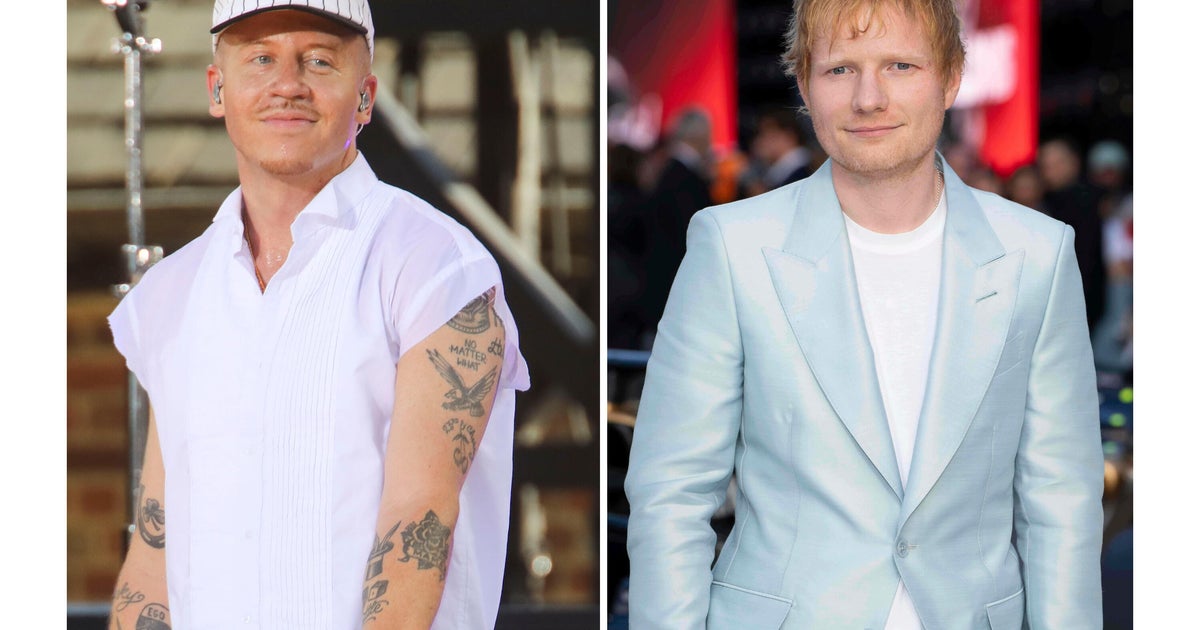
Ed Sheeran spoke about the crisis in Gaza during his concert in Philadelphia, calling the situation catastrophic and unjustifiable. His opening act, Macklemore, was removed from the tour after pro-Palestinian comments, leading other supporting acts to withdraw in protest.
Key Facts
Ed Sheeran called the Gaza situation catastrophic and unjustifiable during his Philadelphia concert.
Sheeran wants his music to focus on unity and humanity, not politics.
Macklemore was dropped from Sheeran’s U.S. tour after saying "Free Palestine" at a previous show.
Other supporting acts, including Lukas Graham, Aaron Rowe, and Finneas, withdrew from Sheeran’s tour in solidarity with Macklemore.
New England Patriots owner Robert Kraft influenced the removal of Macklemore and stated the rapper would not be welcome at Gillette Stadium.
Macklemore is donating $1 million to Palestinian relief and urged Kraft to match the donation.
Sheeran expressed concern about venues controlling what performers can say.
Police monitored the Philadelphia concert for protests following the controversy.
Read the Original
Want the full story? Tap a source to open the original
article.
Germans voted in two regional elections that could challenge Chancellor Friedrich Merz’s leadership. The far-right party AfD and far-left party Die Linke may gain ground, while Merz’s center-right CDU faces potential significant losses.
Key Facts
Germany held state elections in Berlin and Mecklenburg-Western Pomerania on September 20, 2026.
Chancellor Friedrich Merz led the center-right CDU party and has been in office for 16 months.
The far-right Alternative for Germany (AfD), aligned with pro-Trump and Moscow-friendly views, performed well in recent regional votes.
Polls predicted the AfD and the center-left SPD to compete closely in Mecklenburg-Western Pomerania, with the CDU polling low around 6 percent.
In Berlin, CDU is running a close race against the far-left party Die Linke, popular among young voters and advocating for strong government action on housing.
CDU risks falling below the 5% threshold in Mecklenburg-Western Pomerania, which would mean no seats in the state parliament, a historic setback.
Merz’s approval ratings have dropped to historically low levels, near 10-13 percent nationally.
Merz had to cancel a UN trip and call a crisis meeting with his party due to the election results and their impact.
Read the Original
Want the full story? Tap a source to open the original
article.
Three women died in separate violent incidents on the same day in New South Wales, Australia. A 47-year-old man was charged with murdering a 90-year-old woman in Bondi Beach, and police are investigating two other deaths involving women in their 70s and 20s.
Key Facts
A 90-year-old woman was stabbed and died at her home in Bondi Beach.
A 47-year-old man has been charged with her murder and will appear in court.
A woman in her 70s was found dead after a domestic violence incident in Mole River.
A man was arrested after allegedly trying to steal a vehicle and assaulting a 74-year-old woman in the region.
Another woman in her 70s was found dead in a nearby property damaged by fire.
In Wagga Wagga, a 23-year-old woman was found stabbed and died at the scene.
Two men were arrested in connection with the Wagga Wagga stabbing; one was later released.
Police believe all three women knew each other, and investigations continue with homicide experts involved.
Read the Original
Want the full story? Tap a source to open the original
article.
Ed Sheeran spoke to fans at his Philadelphia concert about the controversy after American rapper Macklemore was dropped from his tour over pro-Palestinian comments. Sheeran said he does not want to be a political singer but felt he had to address the humanitarian crisis in Israel and Palestine during the show.
Key Facts
Ed Sheeran apologized to fans for mistakes in handling the situation about Macklemore being removed from his tour.
Macklemore was dropped after making pro-Palestinian statements, which caused controversy.
Sheeran said the decision to drop Macklemore was made by his promoters, not by him.
The controversy led to some musicians leaving the tour and lower ticket sales.
Sheeran described the events in Israel and Gaza as horrific and heartbreaking, calling it a humanitarian issue.
He wants to help victims and learn more about the situation.
Tickets for some shows dropped in price, with some as low as $32.
A small group of protesters showed up near the Philadelphia concert, but the event went on without major problems.
Read the Original
Want the full story? Tap a source to open the original
article.
The Democratic Republic of the Congo (DRC) has started giving an Ebola vaccine to health workers in the Ituri province to help protect them from the virus. The vaccine, originally made for a different Ebola type, is being tested for effectiveness against the current strain, while the outbreak continues to cause many deaths and infections.
Key Facts
The vaccine rollout began in Bunia, Ituri province, which is the center of the fastest-growing Ebola outbreak ever recorded.
The vaccine used is called Ervebo, developed for the Zaire strain of Ebola, not the current Bundibugyo strain.
About 50,000 health and frontline workers will receive the vaccine, and 20,000 of them will be monitored for up to one year.
There is no approved vaccine or sure treatment yet for this current Ebola outbreak caused by the Bundibugyo virus.
The World Health Organization (WHO) and Doctors Without Borders (MSF) are supporting the vaccination effort.
Since May, over 3,600 people have died and more than 7,500 have been infected in this outbreak.
WHO allowed the use of 70,000 doses of Ervebo under a special program for serious diseases.
Early signs show the vaccine might help, but it is not yet confirmed, and the outbreak is still not fully controlled.
Read the Original
Want the full story? Tap a source to open the original
article.
The news covers claims made by Earl Spencer about King Charles III’s reaction after Princess Diana’s death, ahead of Earl Spencer’s new book. It also reports on a suspect in the Madeleine McCann case planning to write a book, and other varied headlines from UK newspapers.
Key Facts
Earl Spencer says King Charles III “gassed” him after Diana’s death; the palace says grief can affect memory.
Some friends of the King called Earl Spencer a hypocrite and accused him of using Diana’s privacy for gain.
Earl Spencer denies writing his book for money and believes Diana would support it.
Christian Brueckner, a suspect in Madeleine McCann’s disappearance, wants to publish a tell-all book.
Conservative leader Kemi Badenoch criticized the UK Prime Minister’s response to the threat from Russia.
Andrew Mountbatten-Windsor faces attention over a police inquiry linked to his relationship with Jeffrey Epstein.
Wayne Rooney is reportedly close to joining the TV show “I’m a Celebrity Get Me Out of Here.”
There are reports of a large number of illegal knives entering the UK in the first half of the year.
Read the Original
Want the full story? Tap a source to open the original
article.
Turkey’s Foreign Minister Hakan Fidan said Turkey may support Saudi Arabia’s military needs due to attacks from Yemen’s Houthi rebels. Turkey, Saudi Arabia, and Pakistan have formed a defense pact that says an attack on one is an attack on all, but details on how it will work are still unclear.
Key Facts
Turkey is considering how to support Saudi Arabia against Houthi rebel attacks from Yemen.
Saudi Arabia does not want to enter a direct conflict in the US-Iran war.
The Mecca Joint Defence Agreement was signed by Saudi Arabia, Turkey, and Pakistan on August 7.
The pact means an attack on one member will be treated as an attack on all three.
Pakistan has pledged to defend Saudi Arabia but has not deployed troops yet.
The pact plans to set up a secretariat in Riyadh led initially by a Pakistani official.
The alliance respects each country's borders and sovereignty, and aims to avoid interference in internal affairs.
Analysts say the pact lacks a clear military command and details on how the defense clause would be triggered.
Read the Original
Want the full story? Tap a source to open the original
article.
Sharon Horgan’s new HBO Max comedy show Youth focuses on women in their 50s who balance work, parenting, and caring for aging parents, a group called the sandwich generation. The show explores themes like dating after divorce, menopause, and aging with humor and honesty.
Key Facts
Youth stars Sharon Horgan as Alex, a woman juggling a demanding job, teenage son, and elderly parents.
The show highlights challenges faced by the sandwich generation, people caring for both children and elderly parents.
Alex is dating again following her divorce, reflecting some real-life aspects of Horgan’s experience.
The series addresses menopause and aging, including common concerns like changes in the body.
Horgan aimed to create a comedy that authentically represents midlife women’s experiences.
Youth follows Horgan’s earlier successful shows like Catastrophe and Bad Sisters.
The show tries to reflect real-life feelings, mistakes, and insecurities, especially for women.
It challenges societal expectations about how women should age and look.
Read the Original
Want the full story? Tap a source to open the original
article.
Recent wars in Ukraine, Gaza, Sudan, Iran, and other regions have caused heavy damage to many important cultural heritage sites, such as historic buildings and ancient monuments. Despite treaties meant to protect these sites, legal action to hold those responsible has been limited, partly due to political challenges.
Key Facts
In August, Ukraine faced intense attacks, damaging 148 cultural sites, including six protected by UNESCO in Odesa.
Activists have filed complaints with the International Criminal Court about cultural destruction in Ukraine, but no charges have been made.
Advanced technology like satellite images helps document damage, but legal and political obstacles prevent accountability.
The Great Omari Mosque in Gaza was mostly destroyed by an Israeli strike targeting Hamas in 2023.
The conflict in Gaza has caused widespread destruction, affecting about 200,000 buildings.
Iran reported damage to over 100 heritage sites during an aerial war involving the US and Israel, including UNESCO landmarks.
Fighting in Sudan threatens the ancient Meroe Pyramids, halting preservation work and exposing them to natural erosion.
The 1954 Hague Convention is an international treaty aiming to protect cultural heritage during war by requiring states to safeguard monuments, art, and books.
Read the Original
Want the full story? Tap a source to open the original
article.
Ramabai Ranveer, a 47-year-old widow from Maharashtra, India, won a 3km barefoot race to earn prize money to buy books for her daughters’ education. Her story gained attention on social media, highlighting challenges many Indian families face in accessing education and government jobs due to high costs and tough competition.
Key Facts
Ramabai ran barefoot in a 3km community race to win prize money for her daughters’ school supplies.
She has been the main earner for her family since her husband died in 2012.
Ramabai’s elder daughter is training for a police job, and her younger daughter is preparing for civil service exams.
Education and government jobs are seen as important but require costly coaching and study materials.
There have been problems in India’s education system, like exam leaks, causing distrust.
Many young Indians feel frustrated about education costs, job opportunities, and future security.
Ramabai left school at age 13 but wants her daughters to have better chances.
Videos of Ramabai’s barefoot win went viral and sparked discussion about India’s education crisis.
Read the Original
Want the full story? Tap a source to open the original
article.
Petros Solomon and Aster Yohannes were key figures in Eritrea’s war for independence and later government ministers. They were arrested 25 years ago after calling for political reforms, and their families have not heard from them since.
Key Facts
Petros Solomon was a senior leader in Eritrea’s fight for independence and later served as defense, foreign, and fisheries minister.
In 2001, he and 14 other officials (the G-15) signed a letter asking President Isaias Afewerki to enforce the constitution and hold elections.
The government arrested Petros Solomon and others in September 2001 without trial.
Solomon’s wife, Aster Yohannes, was detained after returning from the US in 2003, despite promises of safety.
Their children became effectively orphans and have lost contact with both parents.
The arrests came after the government reacted harshly to calls for reform.
The G-15 members fought for Eritrea’s independence from Ethiopia in 1993.
Families have not received any official information about the detainees’ status or whereabouts.
Read the Original
Want the full story? Tap a source to open the original
article.
Students at an Islamic boarding school in Lombok, Indonesia, have come forward with accusations that their head teacher, Ahmad Imanuddin Sumar, sexually assaulted them. Former pupils worked together to collect evidence and speak out despite pressure to stay silent.
Key Facts
Ahmad Imanuddin Sumar was the head teacher at Abu Barokat Islamic boarding school in Lombok.
Several former students say he sexually assaulted them while they were at school.
Sumar called one former student to ask him to keep quiet about the abuse claims.
Sexual abuse in Islamic boarding schools is seen as a serious problem in Indonesia, but many cases are not reported due to pressure on victims.
The former students gathered testimonies from others via WhatsApp to support their claims.
One student described an assault incident that was interrupted by the abuser’s child.
The story was investigated and reported by BBC Eye Investigations.
Read the Original
Want the full story? Tap a source to open the original
article.
Scotland is facing a growing problem with new powerful synthetic drugs called nitazenes that are more dangerous than traditional drugs like heroin. These drugs are made in hidden labs and mixed with other substances, causing more deaths and making it harder for authorities to control the crisis.
Key Facts
Scotland has a high number of drug-related deaths, leading Europe in this grim measure.
New synthetic opioids like nitazenes are much stronger than heroin and are made in illegal labs.
Police have found and shut down several suspected nitazene labs in Scotland, arresting multiple people.
In 2024, nitazenes were involved in 76 drug-related deaths in Scotland, over three times more than the previous year.
Synthetic drugs are changing quickly, making it hard for scientists and lawmakers to keep up.
The European Union Drugs Agency says new drugs appear about every week to avoid legal bans.
Crime groups mix these new synthetics with existing drugs to increase their profits.
Health and law enforcement responsibilities are split between the Scottish and UK governments, complicating responses.
Read the Original
Want the full story? Tap a source to open the original
article.
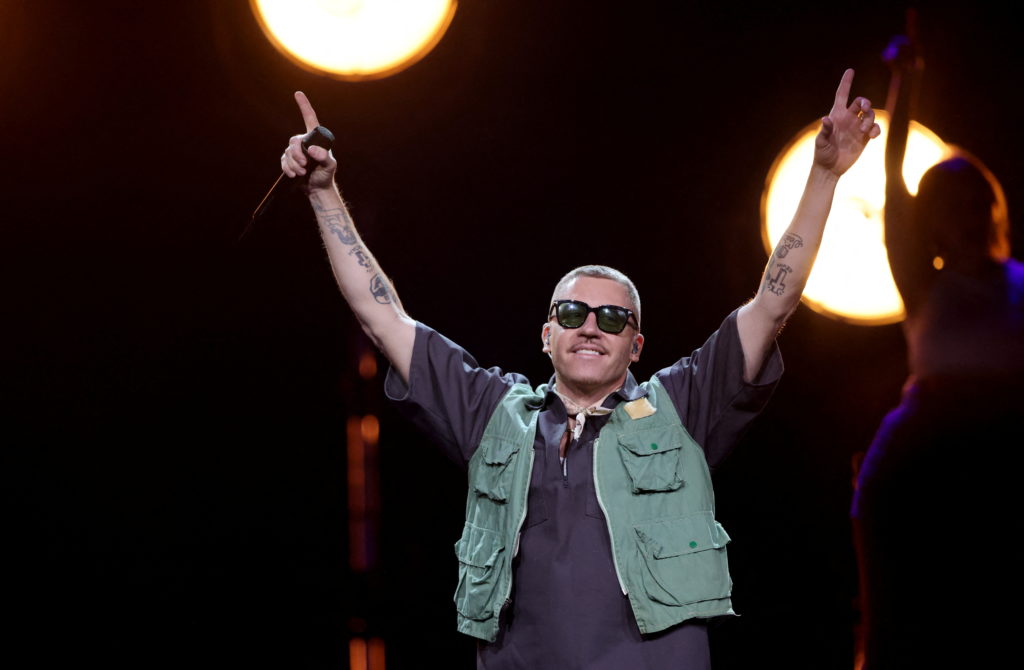
Rapper Macklemore pledged to donate $1 million, the earnings from Ed Sheeran's Loop Tour, to Palestinian aid groups after he was removed from the tour for his pro-Palestinian remarks. The donations will help organizations provide medical aid and relief to Palestinians living in difficult conditions, especially in Gaza.
Key Facts
Macklemore was dropped from Ed Sheeran's tour after making pro-Palestinian comments on stage.
He pledged to donate all his earnings from the tour to six Palestinian relief groups, including Medical Aid for Palestinians and UNRWA.
Aid groups say Palestinians face ongoing hardships like limited healthcare, water shortages, hunger, and trauma.
Over 1,000 Palestinians have died since a ceasefire took effect in October, and fighting and dangers continue.
The donations come with no restrictions, allowing aid groups to use the money where it is most needed.
The Palestinian Children’s Relief Fund uses funds to medically evacuate children who can’t get care in Gaza.
Macklemore has previously donated proceeds from songs supporting Palestinians, raising over $509,000.
The $1 million pledge inspired others, including YouTube star Ms. Rachel, to also donate to Palestinian aid.
Read the Original
Want the full story? Tap a source to open the original
article.
A Saudi-led coalition said it intercepted a missile fired by Yemen’s Houthi group toward Riyadh, the Saudi capital. The Houthis also targeted other cities, but Saudi air defenses stopped the attacks. Fighting between Houthi forces and the Saudi-backed Yemeni government continues with recent clashes causing casualties.
Key Facts
The Houthis fired a ballistic missile at Riyadh before it was intercepted and destroyed.
Other targets included Bisha, Taif, Farasan, and Yanbu in Saudi Arabia.
Saudi Arabia issued emergency alerts about a hostile aerial threat overnight.
There were no reported casualties or damage from the missile attack in Riyadh.
The Houthis used cruise missiles, ballistic missiles, and drones in the attacks.
Fighting in Yemen has intensified since July, with clashes in several provinces.
The Saudi-backed Yemeni government forces said they killed 12 Houthi fighters in recent battles.
The conflict remains difficult because much fighting occurs in mountainous areas that are hard to control.
Read the Original
Want the full story? Tap a source to open the original
article.
Jewish heirs of Holocaust victims have filed two lawsuits in California to reclaim paintings stolen by Nazis during World War II that are currently displayed in museums in Los Angeles and Auschwitz. The lawsuits follow new laws aimed at helping recover art taken by the Nazis from Jewish families.
Key Facts
Two lawsuits were filed in Los Angeles on the same day by Jewish heirs and their representatives.
One lawsuit targets the Norton Simon Museum in Pasadena for the return of the paintings "Adam and Eve" by Lucas Cranach the Elder from 1530.
The other lawsuit demands watercolors painted by Dinah Gottliebova Babbitt, a Holocaust survivor forced to paint for Nazi doctor Josef Mengele, returned from a museum in Auschwitz.
Both museums say they legally own the artworks and plan to keep them on display.
The lawsuits are the first under new California and U.S. laws that support claims to Nazi-looted art.
From 1933 to 1945, Nazis stole more than 600,000 artworks from Jewish owners across Europe.
The Jewish Federation of Greater Los Angeles is involved in one lawsuit and plans to use money from recovered art to help Holocaust survivors living in the area.
California Assembly Bill 2867, signed in 2024, strengthens the rights of Holocaust victims and their heirs to recover stolen art in state courts.
Read the Original
Want the full story? Tap a source to open the original
article.
A debate has emerged around music, politics, and Palestine involving musicians Ed Sheeran and Macklemore. Macklemore openly supports Palestinians, which has caused some of Ed Sheeran’s opening acts to leave his US tour in protest, raising questions about whether artists should speak out on political issues or have the right to remain silent.
Key Facts
Macklemore expressed clear support for Palestinians.
Some opening acts dropped out of Ed Sheeran’s US tour in response to Macklemore’s stance.
The controversy highlights tensions between political expression and artistic freedom.
The discussion centers on whether musicians must take political stands or can avoid them.
The issue brings attention to freedom of expression in the context of public performances.
Ed Sheeran’s tour faced difficulties related to this political and cultural disagreement.
The debate involves broader questions about politics in art and public life.
Read the Original
Want the full story? Tap a source to open the original
article.
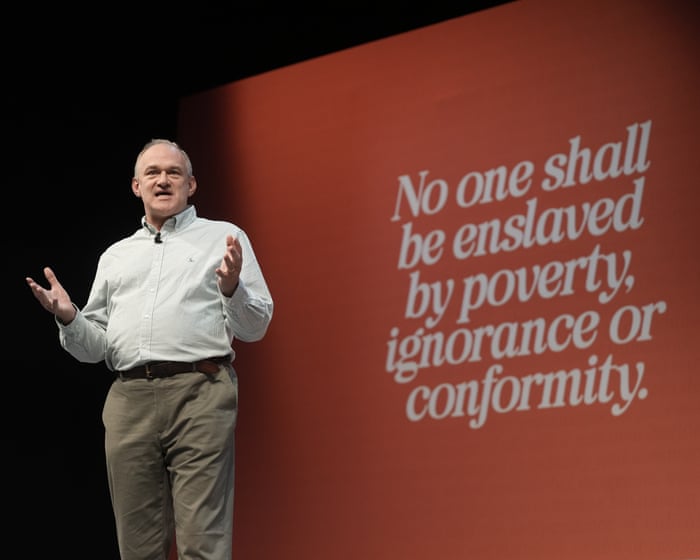
Liberal Democrat leader Sir Ed Davey criticized the far-right Reform UK party and Elon Musk at the party’s conference, accusing them of spreading hatred and lies. He urged party members to keep fighting against what he called “nasty populism” and announced plans for better maternity care and more work experience opportunities for young people.
Key Facts
Ed Davey spoke against Reform UK and Elon Musk, claiming they support hateful far-right politics with large funding.
Davey compared his current fight to his early activism against apartheid in South Africa.
He mentioned the need to defend the Royal National Lifeboat Institution after it faced online abuse during anti-migrant protests.
Reform UK hopes people will give up, but Davey said the Liberal Democrats will keep fighting.
Helen Morgan, Lib Dem health spokesperson, proposed a £600 million plan to improve maternity care with better midwife support.
The maternity care plan aims to reduce NHS costs by lowering compensation payments for medical mistakes.
Munira Wilson, Lib Dem education spokesperson, announced a plan to guarantee 100 hours of work experience for young students to address youth unemployment.
The conference showed the Liberal Democrats focusing on social justice and opposing far-right political groups.
Read the Original
Want the full story? Tap a source to open the original
article.
The 24th series of Strictly Come Dancing has started with new hosts Emma Willis, Josh Widdicombe, and Johannes Radebe leading the show. A group of new celebrity contestants and professional dancers began the competition, and the celebrity-pro dance pairings were revealed through a unique dance routine.
Key Facts
Strictly Come Dancing returned with a new presenting team: Emma Willis, Josh Widdicombe, and Johannes Radebe.
The previous hosts, Tess Daly and Claudia Winkleman, left the show last year.
New celebrities include actress Melanie Walters and former England footballer Shaun Wright-Phillips.
The celebrity-pro pairings were revealed during the launch show using a musical chairs style dance routine.
Dani Dyer, who withdrew last year due to injury, returned to compete again.
Bethany Antonia and Nancy Xu are the third same-sex dance couple to compete on the show.
Five new professional dancers from different countries joined the cast this series.
The reigning champion, Karen Carney, performed a dance but will give up her trophy to the new winner in 13 weeks.
Read the Original
Want the full story? Tap a source to open the original
article.