Cameroon’s President Paul Biya has been away in Switzerland since early June, which has caused people to talk about the government not doing enough. Biya often travels to Geneva, and there are ongoing rumors about his health.
Key Facts
President Paul Biya has been absent from Cameroon since early June 2026.
He is currently in Switzerland, reportedly for health reasons.
Biya has frequently traveled to Geneva over the years.
His long absence has raised concerns about government inaction in Cameroon.
Many people in Cameroon want changes in their government.
There are ongoing rumors and speculation about Biya’s health.
The absence has triggered public debate and discussion within the country.
Read the Original
Want the full story? Tap a source to open the original
article.
Iran's military said it attacked two oil tankers escorted by the US Navy in the Strait of Hormuz, a key shipping route. President Donald Trump met with his cabinet to discuss the ongoing conflict with Iran and rising energy prices ahead of the US midterm elections.
Key Facts
Iran’s Islamic Revolutionary Guard Corps (IRGC) struck two oil tankers passing through the Strait of Hormuz under US aerial escort.
Four other tankers quickly changed course after the attacks.
The Strait of Hormuz has been nearly closed to traffic for two weeks due to US-Iran clashes.
Oil prices have risen over $90 a barrel following US strikes on Iran after Iranian attacks on US bases in Jordan.
Kuwait shot down Iranian drones targeting key military facilities without casualties.
Israel conducted a large explosion near Lebanon’s Beaufort Castle targeting Hezbollah tunnels, which Lebanon called a ceasefire violation.
President Trump held a cabinet meeting at Camp David to plan the next steps in the conflict, which has lasted five months.
US Senate narrowly voted against a resolution to end the war, while energy companies report record profits amid rising fuel prices.
Read the Original
Want the full story? Tap a source to open the original
article.
Thousands of migrants from Morocco have entered the small Spanish territory of Ceuta in North Africa, leading to at least 18 deaths. Spain sent its military to control the border as many migrants, including families, moved through the area near the Morocco border.
Key Facts
Ceuta is a small Spanish territory located in North Africa, next to Morocco.
Thousands of migrants have arrived there from Morocco recently.
At least 18 migrants died while trying to enter Ceuta.
Most migrants appeared to be young men, but some families with women and children were also present.
Videos show large groups of migrants near the border and on local roads in Ceuta.
Spain deployed its military to manage and restore order at the border crossing with Morocco.
Read the Original
Want the full story? Tap a source to open the original
article.
Ahmet Davutoglu, a former Prime Minister of Turkiye and critic of President Erdogan, has announced he is leaving politics and closing his Future Party. He cited corruption and weakening democratic rules as reasons for stepping back.
Key Facts
Davutoglu led Turkiye's Future Party, which he is now dissolving as he quits politics.
He criticized the political environment in Turkiye as corrupt and lacking accountability.
He said the 2018 shift to a presidential system removed important checks on power.
Born in 1959, Davutoglu was an academic before entering politics, teaching political science and international relations.
He joined the ruling AKP party after 2002 and served as foreign minister (2009–2014) and then prime minister.
Davutoglu helped create Turkiye's foreign policy focused on improving relations with neighbors.
He supported backing Syrian rebels after 2011 but was criticized for pursuing regional influence.
His relationship with President Erdogan worsened over disagreements on EU talks and governance.
Read the Original
Want the full story? Tap a source to open the original
article.
Spain has sent back more than 25,000 migrants who crossed into the Spanish city of Ceuta from Morocco. The sudden increase in crossings has caused tensions, with Spanish officials deploying military forces and planning new laws to manage the situation.
Key Facts
Over 25,000 migrants who arrived in Ceuta have been returned to Morocco.
More than 150 migrants are being removed from Ceuta every minute.
Ceuta is a Spanish city located on the northern coast of Morocco, separated by fences and seawalls.
Around 60,000 migrants entered Ceuta in recent days, and at least 34 people died trying to cross.
The Spanish Supreme Court made a ruling that makes it harder to turn away migrants arriving by sea from Morocco.
Spain deployed soldiers, boats, and equipment to Ceuta and plans to install buoys as a physical barrier.
Spanish Prime Minister Pedro Sánchez called the influx an attack and said the government is working with Morocco to manage the situation.
Many migrants attempting to enter Ceuta are young Moroccans, including families and children.
Read the Original
Want the full story? Tap a source to open the original
article.
Spain has sent its military and police to Ceuta, a Spanish city in North Africa, after around 60,000 migrants entered the enclave in a few days. At least 34 people died trying to cross from Morocco by land and sea, and the situation has caused tensions in Europe, with some countries tightening border controls.
Key Facts
At least 34 migrants died trying to reach Ceuta from Morocco by land and sea.
About 60,000 people entered Ceuta in a few days, more than half its population.
Spain deployed military and police forces to strengthen security in Ceuta.
Moroccan authorities used security forces and water cannons to stop crowds near the border.
Some migrants attempted to swim around barriers to enter Ceuta.
Ceuta is a Spanish city in North Africa and one of two land borders between the EU and Africa.
The entry point is heavily guarded with fences, cameras, and Spanish police units.
A recent Spanish court ruling affected how migrants arriving by sea are processed, possibly influencing the surge.
Read the Original
Want the full story? Tap a source to open the original
article.
A new study found that children who ate less sugar during the first 1,000 days after conception had a much lower chance of getting Alzheimer's disease later in life. The research used data from people born during a time of sugar rationing in the UK and showed these early sugar restrictions also lowered risks of dementia, anxiety, and depression.
Key Facts
The study looked at over 60,000 people from the UK Biobank born between 1951 and 1956.
Sugar rationing in the UK during and after World War II meant children under 2 years old had limited sugar intake.
People exposed to sugar restriction from pregnancy to about age 2 had a 46% lower risk of Alzheimer's disease.
They also had a 27% lower risk of dementia from any cause, 20% lower risk of anxiety, and 11% lower risk of depression later in life.
No link was found between early sugar restriction and Parkinson’s disease risk.
Brain scans showed these people had brains that looked younger by about 0.39 years and larger areas related to memory and thinking.
Researchers say early nutrition can affect brain development and long-term health through effects on metabolism and inflammation.
The study used a natural experiment created by historical events, avoiding ethical issues of deliberately limiting sugar intake in babies.
Read the Original
Want the full story? Tap a source to open the original
article.
Hamas announced that it has reached an agreement to disarm as part of a peace deal for Gaza. A senior Hamas official said the group agreed to the plan and that the next steps depend on others involved in the negotiations.
Key Facts
Hamas confirmed on Friday that it agreed to disarm.
The agreement is part of a broader peace plan aimed at Gaza.
Senior Hamas official Bassem Naim announced the agreement on social media platform X.
Naim said Hamas accepted the "roadmap" related to disarmament.
The future progress now depends on other negotiators or parties.
The deal addresses one of the main hurdles to peace in the region.
No detailed terms of the agreement were shared in the announcement.
The news signals a possible step toward easing conflict in Gaza.
Read the Original
Want the full story? Tap a source to open the original
article.
A British couple, Pete and Fran Gillam, died in a wildfire in Bédar, Spain, after evacuation orders were delayed. Their daughter, Danielle Kirton, is seeking answers from Spanish authorities about why official evacuation alerts were not properly issued earlier, which she believes contributed to the tragic deaths.
Key Facts
Severe wildfires have affected Spain and France since early July, killing people and forcing over 300,000 residents to leave their homes.
Pete and Fran Gillam died in mid-July while trying to flee their village during the fire.
The fire alert was issued at 4:30 pm but evacuation orders were delayed by over three hours.
Spanish emergency alert system, which sends loud evacuation warnings to mobile phones, was not used in this case.
A single police officer drove around the village informing people to evacuate too late.
Many victims died trapped in their cars while escaping the fire.
Spanish politicians claimed victims ignored instructions, but Kirton says her parents followed official advice and spoke Spanish well.
The British consulate’s response to the family has been criticized as inadequate.
UK politician Ed Miliband is urged to push Spanish authorities for a full investigation into the delayed evacuation.
Read the Original
Want the full story? Tap a source to open the original
article.
A bus traveling from Sétif to Algiers in Algeria skidded off the road and fell into a deep ravine near El Karma. At least 25 people died and 44 were injured in the accident. Rescue teams are helping the injured, and the Algerian president has declared three days of national mourning.
Key Facts
The accident happened near El Karma, about 50 kilometers from Algiers.
The bus was carrying passengers from Sétif to the capital city, Algiers.
At least 25 people were killed in the crash.
44 people were injured and taken to nearby hospitals.
Rescue teams and ambulances responded quickly to the scene.
Algerian President Abdelmadjid Tebboune declared three days of national mourning.
The information comes from the Algerian Civil Protection's provisional report.
Read the Original
Want the full story? Tap a source to open the original
article.
About 60,000 migrants crossed from Morocco into the Spanish territory of Ceuta in a few days, creating a crisis for Spain and the European Union. Spain deployed troops and police to manage the situation, while some EU countries called for stricter border controls and debated suspending Spain from the Schengen zone, which allows free movement within many European countries.
Key Facts
Around 60,000 migrants entered Ceuta, a Spanish territory in North Africa, from Morocco in a short time.
Thirty-four people died trying to cross by swimming around a border barrier.
Spain sent troops, police, divers, drones, and boats to secure Ceuta.
Spanish Prime Minister Pedro Sanchez and his interior minister visited Ceuta during the crisis.
EU Commission President Ursula von der Leyen said migrants must follow EU rules to enter.
Italy, Finland, and Denmark supported suspending Spain from the Schengen free movement zone.
Germany urged Morocco to take back migrants who entered illegally.
France and Britain offered support to Spain but France also increased border checks with Spain.
Read the Original
Want the full story? Tap a source to open the original
article.
A video that was shared online claiming to show a drone attack on a US-owned gas ship in Egypt is actually footage of a Ukrainian drone hitting a Russian ship in the Black Sea. The real attack in Egypt happened on July 29 at the Damietta port, causing fires on two vessels, but no casualties were reported.
Key Facts
On July 29, an unidentified drone hit the Energos Winter, a US-owned gas storage ship, at Egypt’s Damietta port.
The fire spread to the GasLog Salem, a Greek-owned liquefied natural gas tanker.
Damietta is a key port for Egypt’s liquefied natural gas exports to Europe.
The fires were put out, and no one was hurt.
A widely shared video falsely claimed to show this drone attack but actually shows a Ukrainian drone attacking a Russian ship named New Victory on July 24 in the Black Sea.
Egyptian officials confirmed the drone attack on the July 29 vessels but no group has claimed responsibility.
The incident is linked to broader regional conflicts involving Iran, Yemen’s Houthis, the US, and Israel.
Iran denies involvement and accuses Israel of trying to create false reports.
Read the Original
Want the full story? Tap a source to open the original
article.
A newlywed woman lost her wedding and engagement rings during a honeymoon trip to Mexico. After searching and posting online without success, a woman in Kentucky found the rings and returned them by mail, reuniting the bride with her jewelry.
Key Facts
Kaylie and Braxton Hansen got married on June 26 and went on honeymoon in Cancun, Mexico.
Kaylie stored her rings in her sunglasses pouch during a boat trip to Isla Mujeres.
She discovered the engagement ring was missing at the boat pick-up spot.
The couple and others searched for about 30 minutes but could not find the ring.
Kaylie posted about the loss on Facebook and Reddit groups for Cancun and Isla Mujeres.
A woman from Kentucky contacted Kaylie on Reddit saying she found the rings.
The woman mailed the rings back, and Kaylie received them three days later.
Kaylie shared the story on TikTok, where it went viral with over 1.6 million views.
Read the Original
Want the full story? Tap a source to open the original
article.
Russia claims it is advancing in parts of eastern Ukraine, including the key city of Kostiantynivka in Donetsk, which Ukraine fears it may lose soon. Ukraine has changed its defence and military leadership amid ongoing heavy fighting and reports of Russian forces increasing their offensive efforts.
Key Facts
Russia reports advances in Sumy, Kharkiv, and Donetsk regions of Ukraine.
Ukraine replaced its defence minister and commander-in-chief within one week.
Kostiantynivka, an important city in Donetsk, is at risk of being surrounded and lost by Ukraine.
Russian forces are using heavy aerial bombs (KABs) to attack Ukrainian positions heavily.
Ukrainian forces claim to still control most of Kostiantynivka but face intense Russian pressure.
Russia’s control in Kostiantynivka has increased from about 37% to most of the city recently.
Russian territory gains have slowed, but in July, Russia lost more territory than it gained.
Russian frontline troop numbers and casualties have increased in recent months, according to Ukrainian intelligence.
Read the Original
Want the full story? Tap a source to open the original
article.
Large wildfires are still burning in different parts of Europe. The dry and hot ground conditions are making it hard to control the fires, especially in France.
Key Facts
Wildfires are ongoing across Europe.
The ground is dry and hot, which helps fires start and spread.
France is one of the countries currently affected by these wildfires.
Firefighters and emergency teams are working to control the fires.
Such conditions increase risks for people and the environment.
Weather patterns contribute to the persistence of wildfires.
Officials are monitoring the situation closely to protect communities.
Read the Original
Want the full story? Tap a source to open the original
article.
FIFA President Gianni Infantino proposed selling minority stakes in the FIFA World Cup and other football events to private investors, aiming to raise private funding. This proposal has led to strong opposition from major football organizations like UEFA and CONCACAF, with UEFA even threatening to boycott future World Cups if the plan goes ahead.
Key Facts
FIFA has organized the World Cup every four years since 1930, except during World War Two.
The World Cup expanded from 13 teams in 1930 to 48 teams in 2026, with a possible expansion to 64 in 2030.
Infantino’s proposal involves selling minority shares in the World Cup and other FIFA events to private investors through a fund likely led by Joshua Kushner.
Joshua Kushner is the brother of Jared Kushner, who is President Donald Trump’s son-in-law.
UEFA, representing 55 European nations, voted unanimously to boycott FIFA events if the investment plan proceeds.
UEFA said the World Cup is a sporting legacy and should not be treated as an investment product or sold to private investors.
CONCACAF, representing North, Central America and the Caribbean, rejected the proposal but did not commit to boycotts; it criticized the lack of transparency and short decision deadlines.
The Asian Football Confederation also opposes FIFA’s private investment plans.
Read the Original
Want the full story? Tap a source to open the original
article.
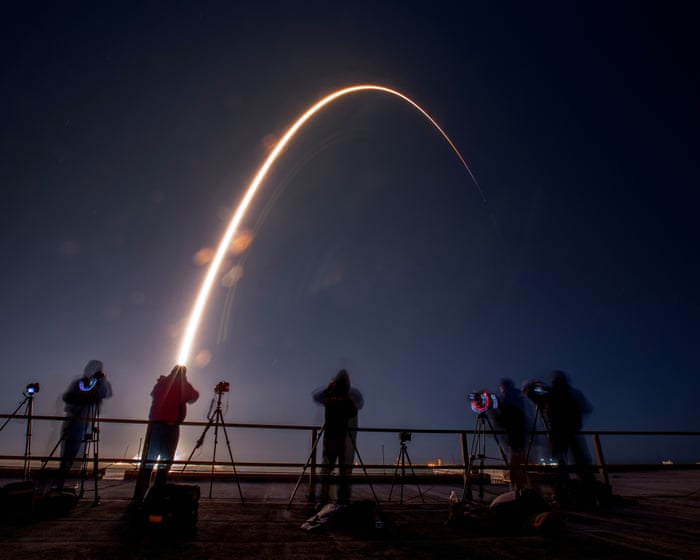
A SpaceX rocket stage that launched lunar landers over a year ago is now drifting toward the moon and will crash into it on Wednesday. The impact will create a small crater, sending dust into space that scientists and telescope watchers plan to observe.
Key Facts
The rocket’s upper stage will hit the moon near Einstein Crater at about 5,400 mph (8,700 km/h).
The crash will release energy equal to about three tons of TNT explosives.
This will be the second known accidental rocket crash on the moon; a Chinese rocket segment hit the far side of the moon in 2022.
The impact flash will be very brief and dim, likely not visible from Earth.
Dust and debris from the crash could be seen from telescopes for tens of minutes after impact.
The crater formed will be about 90 feet (27 meters) wide and 16 feet (5 meters) deep.
NASA’s Lunar Reconnaissance Orbiter and South Korea’s Danuri orbiter will take images of the site before and after the crash.
Experts say the crash could have been avoided if the rocket upper stage had been pushed into an orbit around the sun.
Read the Original
Want the full story? Tap a source to open the original
article.
The U.S. has started testing Ukrainian combat drones to learn how Ukraine quickly builds and replaces weapons during war. Ukraine has created cheaper, effective military technology, especially drones, to fight against Russia, and the U.S. wants to use this knowledge to improve its own defense systems while managing costs.
Key Facts
The U.S. and Ukraine signed an agreement to explore exporting and jointly producing Ukrainian military drones in the U.S.
Ukraine has developed affordable, effective drones and other unmanned systems to counter Russian attacks.
The U.S. is running low on expensive missile defenses like Patriot and THAAD interceptors after extensive use against Iranian threats.
A single Patriot missile costs about $4 million and takes two years to produce, making it costly to use against cheap drones.
Ukraine’s approach uses layers of cheaper drones and interceptors, quickly upgraded in response to enemy countermeasures.
Ukraine spent about $84 billion on defense during the war, less than one-tenth of what the U.S. spent in 2023.
The U.S. has a program called Drone Dominance, aiming to buy many low-cost attack drones by 2027.
Ukrainian drone tech benefits from constant feedback between engineers and frontline soldiers, helping rapid improvements.
Read the Original
Want the full story? Tap a source to open the original
article.
Palestinians in Gaza have shown little hope that the new ceasefire agreement will stop the fighting. They say past promises to end violence have not brought them any real peace or help.
Key Facts
Palestinians in Gaza reacted to the latest ceasefire deal with skepticism.
Many people there feel the deal will not end the ongoing violence.
Previous ceasefire agreements did not bring lasting peace or relief.
The phrase "Enough is enough" reflects frustration among Palestinians.
The situation in Gaza remains tense and uncertain despite new agreements.
Read the Original
Want the full story? Tap a source to open the original
article.
Gaza is facing a severe shortage of CT scan machines after much of its health infrastructure was damaged or destroyed in the ongoing conflict. This shortage causes long waits for important medical imaging, delaying diagnosis and treatment for many patients.
Key Facts
Before the war started in October 2023, Gaza had 18 CT scan machines and 7 MRI machines.
Now, only 3 CT scan machines work, and all MRI machines are out of service.
94% of Gaza's hospitals have been damaged or destroyed, leaving only 19 of 36 hospitals partially functional as of May 2025.
The shortage of machines forces doctors to prioritize only life-threatening cases for CT scans.
Other imaging tools like X-rays and ultrasound are used but often do not provide enough information for diagnosis.
Patients with conditions like cancer or kidney stones face dangerous delays in diagnosis and treatment.
Gaza’s health crisis is worsened by an ongoing siege and heavy damage due to conflict.
Read the Original
Want the full story? Tap a source to open the original
article.