France and Spain are seeing some relief from large wildfires that have caused mass evacuations, but fires continue in other parts of Europe including the UK, Greece, Portugal, and Turkey. The wildfires have been severe this year, with damage to homes, large areas of forest, and loss of life, while climate change is increasing the risk and intensity of these fires.
Key Facts
A major wildfire in southwestern France is no longer spreading, giving hope that the situation is improving.
Over 220,000 people were evacuated in France near Bordeaux, with more than 200 homes destroyed and two firefighters killed.
Spain lifted a state of emergency near Madrid after most of the 60,000 evacuated residents were allowed to return.
Spain’s Avila region is experiencing its largest wildfire on record, burning 50,000 hectares.
New fires in Spain’s Fermoselle area have forced another evacuation of over 600 people.
Greece has seen three firefighters die while fighting wildfires, with mass evacuations on the island of Crete.
Firefighters continue to battle wildfires in the UK, Portugal, and Turkey.
Experts say climate change is making wildfires in Europe more frequent and intense by drying out vegetation.
Read the Original
Want the full story? Tap a source to open the original
article.
The rate at which Ukraine intercepts Russian missiles has fallen from about 90% in March to around 70-75% now. This change comes as Russia uses more advanced ballistic missiles in its attacks, which have caused civilian deaths, including children.
Key Facts
Ukraine's air force intercepted 55 Russian missiles and 265 drones during a recent attack.
At least 10 civilians were killed in the missile and drone barrage, including children.
The average interception rate of Russian missiles dropped from around 90% in March to 70-75%, sometimes even lower.
Russia has been deploying more advanced ballistic missiles that are harder for Ukraine to intercept.
Patrick Bury, a warfare and counter-terrorism expert, provided these details to France 24.
The missile attacks are part of ongoing military conflict between Russia and Ukraine.
Read the Original
Want the full story? Tap a source to open the original
article.
Saudi Arabia and 13 other countries have formed a military alliance to protect ships passing through the Bab al-Mandeb Strait, the Red Sea, and the Gulf of Aden. The alliance aims to keep these important waterways safe for trade and energy shipments amid rising regional tensions.
Key Facts
The Multinational Maritime Defense Alliance includes Saudi Arabia and 13 other countries.
The group wants to protect freedom of navigation and secure vital trade routes linking the Indian Ocean to the Mediterranean.
The alliance was formed due to threats from Iran-backed Houthi fighters who have attacked shipping in the area.
43 out of 51 invited countries participated in the founding meeting, including a European Union delegation.
Member countries will share intelligence and conduct joint naval exercises, but exact military contributions are not detailed.
The alliance is described as defensive and not aimed at any specific country.
Some nearby countries with similar interests, like the UAE and Oman, have not joined the coalition.
Bab al-Mandeb Strait is a narrow and strategic chokepoint where about 10-12% of global maritime trade passes, including large volumes of oil.
Read the Original
Want the full story? Tap a source to open the original
article.
Liberian authorities destroyed 4.2 tons of cocaine worth about $336 million, following the country’s largest drug seizure ever. Senior police officers have been charged for allegedly helping traffickers, as part of an investigation into a large drug smuggling network.
Key Facts
Liberian law enforcement burned 4.2 metric tons of cocaine valued at approximately $336 million.
This seizure is the biggest drug bust in Liberia’s history.
Senior police officials, including the police chief of highway patrol and the head of major crimes, have been charged.
A deputy police commander at Liberia’s main airport is also a suspect.
The cocaine was recovered during a raid at a property near the capital, Monrovia.
Two foreign nationals, a Serbian and a Colombian-Spanish, were arrested and are under investigation.
West Africa is a key route for cocaine trafficking from South America to Europe.
Local cocaine use is increasing in the region, including crack cocaine.
Read the Original
Want the full story? Tap a source to open the original
article.
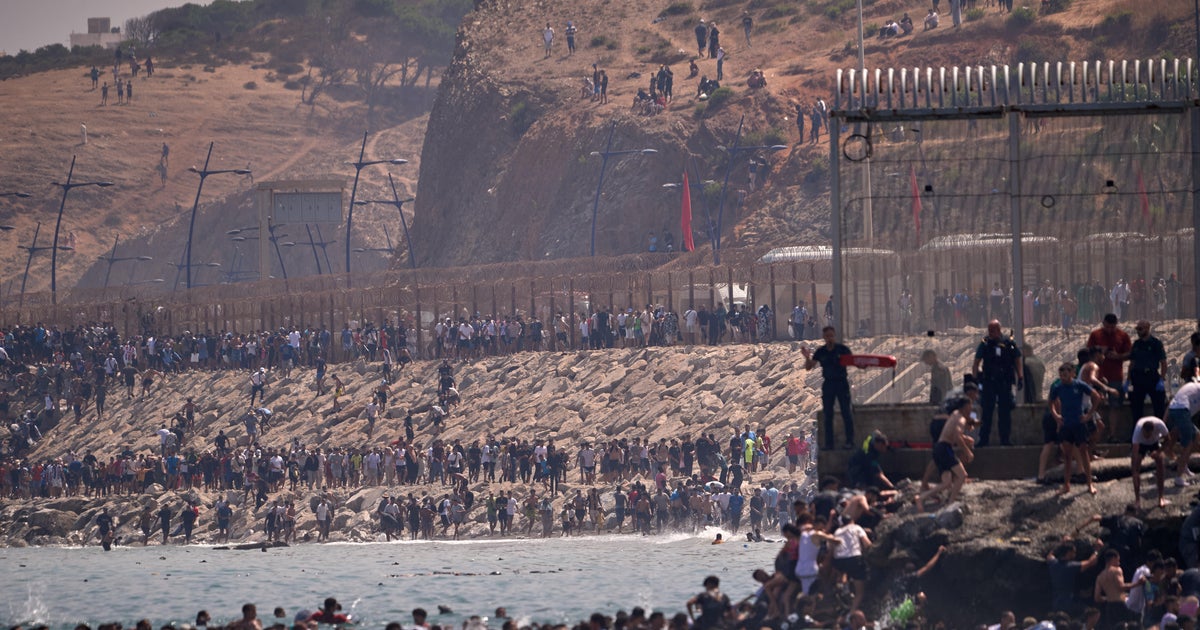
Spain is sending its military to help police control the border area of Ceuta after thousands of migrants crossed from Morocco. The situation has overwhelmed local authorities, and Spain’s Prime Minister Pedro Sánchez will visit Ceuta to address the crisis.
Key Facts
Thousands of migrants crossed into Ceuta, a small Spanish territory in North Africa, causing chaos at the border.
Spain’s government announced deployment of the Armed Forces to support border police (Civil Guard).
At least three migrants died trying to reach Ceuta by sea during the recent surge.
Moroccan and Spanish authorities agreed to cooperate on returning people who entered Ceuta illegally.
Ceuta authorities linked the migrant surge partly to a Spanish Supreme Court decision protecting sea arrivals from immediate pushback.
Migrants crossed mainly by swimming from Moroccan towns Fnideq and Belyounech.
The current influx resembles a similar large crossing event in May 2021, when over 8,000 migrants entered Ceuta in two days.
Morocco’s government has not publicly commented on the recent crossings.
Read the Original
Want the full story? Tap a source to open the original
article.
The Archbishop of Canterbury, Dame Sarah Mullally, has confirmed her support for a £100 million fund linked to the Church of England’s involvement in the transatlantic slave trade. During a visit to Cape Coast Castle in Ghana, a historic site where enslaved Africans were held, she reflected on the Church’s role and stressed the need to help communities affected by the legacy of slavery.
Key Facts
The Church of England set up a £100 million fund to address its role in the transatlantic slave trade.
Archbishop Dame Sarah Mullally made her first pastoral visit to Africa since becoming head of the Church.
Cape Coast Castle in Ghana was a key site where enslaved Africans were held before being sent to the Americas.
The Church of England previously apologized for its historic links to slavery, including involvement in slave plantations and ownership.
The £100 million fund aims to support investment, research, and engagement in communities harmed by slavery.
Some people disagree with the fund, questioning the Church’s level of involvement and raising other concerns.
Ghana’s government supports the reparations campaign and praised the Archbishop’s visit.
The Church continues to face pressure from both supporters and critics about the reparations initiative.
Read the Original
Want the full story? Tap a source to open the original
article.
Spain will send its military to Ceuta, a Spanish city in North Africa, to keep order after thousands of migrants crossed from Morocco, mostly by swimming. The incident caused nine deaths and has raised concerns in Europe, with Italy thinking about suspending its agreement with Spain on open borders within the EU.
Key Facts
Thousands of migrants entered Ceuta, a Spanish territory in North Africa, coming from Morocco.
Many migrants crossed the border by swimming.
Nine people died during this border crossing event.
Spain decided to deploy its military to restore order and security in Ceuta.
The situation has caused tension within the European Union.
Italy is considering suspending the Schengen agreement, which allows free travel between some European countries, because of the crisis in Ceuta.
The migrant influx highlights challenges at the borders between Europe and Africa.
Ceuta is one of two Spanish enclaves located on the northern coast of Africa.
Read the Original
Want the full story? Tap a source to open the original
article.
George and Amal Clooney evacuated their home in Brignoles, France, due to wildfires in the region. They sent a note to the town’s mayor expressing concern for the community and their commitment to help rebuild. The wildfire burned about 130 hectares and injured four firefighters while efforts to fully extinguish it continued.
Key Facts
George and Amal Clooney live in Brignoles, a town in southeastern France with about 18,000 people.
They evacuated their home because of wildfires in the area.
The Clooneys sent a note to Didier Bremond, the mayor, expressing hope that residents were safe and promising support.
The wildfire started on Wednesday, burned roughly 130 hectares (321 acres), and was contained but not fully out by early Thursday.
Four firefighters were injured while fighting the fire.
Wildfires are affecting large parts of southern Europe, including France, Spain, Greece, and reaching the U.K.
The Clooneys bought their home in France in 2021.
George Clooney has spoken positively about living on a farm in France for his family.
Read the Original
Want the full story? Tap a source to open the original
article.
Hundreds of migrants entered the Spanish enclave of Ceuta, located in North Africa, by swimming and using inflatable devices to cross from Morocco. Local leaders said the number of arrivals has overwhelmed resources and called on the Spanish government for help.
Key Facts
Between 2,000 and 3,000 migrants arrived in Ceuta on one day, according to Spanish media estimates.
Migrants crossed by swimming around the border fence or running through a gate in the fence.
Ceuta is a Spanish territory on the northern coast of Morocco.
The arrival of migrants has put pressure on local services and resources.
Juan Jesús Vivas, the leader of Ceuta, has requested assistance from the Spanish government.
The Guardia Civil, Spain’s national police, has not officially confirmed the estimated number of arrivals.
Ceuta is a common entry point for migrants trying to reach Europe from North Africa.
Read the Original
Want the full story? Tap a source to open the original
article.
Iran threatened to retaliate against the United States after the U.S. carried out strikes in response to missile attacks on American forces in the Middle East. Iran’s Revolutionary Guard also warned Gulf countries that are assisting the U.S. in the conflict.
Key Facts
The U.S. launched strikes against targets in Iran overnight as retaliation for missile attacks on American forces.
Iran's Revolutionary Guard announced it would respond by punishing the United States.
Iran extended its threat to Gulf countries that support the U.S. military actions.
The conflict involves missile attacks against U.S. forces in the Middle East.
The situation reflects rising tensions between Iran and the U.S. and its allies in the region.
The Iranian statement calls the U.S. the “aggressor” in this conflict.
The strikes and threats increase concerns about wider regional instability.
Read the Original
Want the full story? Tap a source to open the original
article.
The war involving the U.S. and Israel against Iran has lasted six months and affected the Middle East region. President Donald Trump has met with Saudi and Israeli leaders to discuss ways to manage the conflict, including military actions and diplomatic options.
Key Facts
The war started in February and has spread across the Middle East.
Saudi Arabia and the U.S. jointly conducted strikes against Iranian-backed groups in Iraq and Yemen.
Saudi Arabia wants to avoid expanding the war and is cautious about Israel’s push for more action.
Israeli Prime Minister Benjamin Netanyahu presented President Trump with three strategies: removing Iran’s nuclear material, increasing economic pressure, or military strikes on supply routes.
Israel believes regime change in Iran is the only solution but U.S. intelligence doubts new strikes will remove the Iranian leadership.
President Trump prefers negotiating with the Iranian regime.
The United Arab Emirates also carried out airstrikes against Iran but kept them secret.
Gulf countries hosting U.S. troops have faced frequent drone and missile attacks.
Read the Original
Want the full story? Tap a source to open the original
article.
The White House and President Donald Trump’s Board of Peace are close to reaching an agreement with Hamas to disarm and demilitarize the Gaza Strip. This deal would allow a new Palestinian government to take control and begin rebuilding Gaza, though Hamas has not yet signed the agreement and some officials remain doubtful it will follow through.
Key Facts
Hamas may soon agree to disarm and demilitarize Gaza under a 15-point plan negotiated by the U.S., Egypt, Qatar, and Turkey.
The disarmament is necessary for the new Palestinian technocratic government, called NCAG, to start governing Gaza.
Gaza suffered heavy destruction from a two-year war, leaving most of its 2 million residents living in temporary shelters.
Since the ceasefire on October 10, 2025, nearly 1,200 Palestinians have died, including militants and civilians.
The U.S. Board of Peace and regional mediators have pressured Hamas by cutting off its funding and worsening its financial situation.
Egypt’s intelligence chief is playing a key role in negotiations, while Iran is encouraging Hamas to delay the agreement.
The plan includes handing over all Hamas weapons, sharing tunnel and weapons facility locations, and establishing a Palestinian police force vetted by Israeli security services.
An international force would supervise the weapons storage, and anti-Hamas militias armed by Israel would also be disarmed.
Read the Original
Want the full story? Tap a source to open the original
article.
The biggest outbreak of cyclospora, a parasite that causes diarrhea, seems to be slowing down. However, new cases of the parasite continue to appear during the summer, and experts warn it may spread more.
Key Facts
Cyclospora is a parasite that can cause diarrhea in people.
The largest recent outbreak of cyclospora is decreasing.
New outbreaks with unknown sources are still happening.
Experts expect the parasite may spread further during summer.
Cyclospora often spreads through contaminated food or water.
People should be aware of hygiene and food safety to reduce risk.
Read the Original
Want the full story? Tap a source to open the original
article.
The Ebola outbreak in the Democratic Republic of the Congo has caused over 1,500 deaths with more than 3,400 cases reported. The virus is spreading quickly, especially in the eastern region affected by conflict, and efforts to control it face many challenges.
Key Facts
The DRC has reported 3,442 Ebola cases and 1,521 deaths as of the latest update.
The death toll increased by 50% in one week.
The outbreak is mainly in the Ituri province, which has nearly 90% of cases, but other provinces including Kisangani have reported cases.
Lack of a vaccine for the Bundibugyo Ebola variant and ongoing conflicts hinder response efforts.
Delays in tracing contacts and mistrust from local communities slow down virus control.
About 63% of recent deaths happened outside treatment centers due to unsafe handling of infected bodies.
Health workers have protested over unpaid wages and unsafe conditions, stopping some outbreak work.
The World Health Organization says the risk of Ebola spreading globally is low because it does not spread through the air.
Read the Original
Want the full story? Tap a source to open the original
article.
Argentina’s President Javier Milei signed a new law that allows the government to stop foreigners from entering or force them to leave if they spread hate or violence against Argentina or disrespect its national symbols. This decision follows negative reactions after Argentina lost in the World Cup final.
Key Facts
The new measure lets Argentina refuse entry, deport, or cancel visas for foreigners who promote hatred against Argentines.
It applies to hateful words, actions, or disrespect towards Argentina’s symbols.
The decree came after criticism and hostility toward Argentina increased following the World Cup final loss.
Argentina has historically been welcoming to immigrants with constitutional support for immigration and access to rights.
The law marks a big change in Argentina’s open approach to foreigners.
The backlash began after controversial refereeing decisions in the World Cup and worsened after a fight involving Argentina’s team and Spain.
FIFA is investigating the Argentine Football Association for the fight and reports of racist abuse by fans.
Online petitions called for Argentina to be kicked out of the World Cup, showing strong negative sentiments against the country.
Read the Original
Want the full story? Tap a source to open the original
article.
The United Nations criticized Uganda for cracking down on people who disagree with the government. This comes after Uganda’s opposition leader Kizza Besigye fell ill in court while facing charges, and the country's government has been accused of limiting freedoms since recent elections.
Key Facts
The UN Human Rights Commissioner Volker Turk condemned Uganda’s increasing pressure on critics and opposition groups.
Opposition leader Kizza Besigye, aged 70, collapsed and was hospitalized during a court hearing; he has been detained since November 2024.
President Yoweri K Museveni was declared winner of the January 2026 election for his seventh term.
Since the election, more than 50 opposition members, five journalists, and five human rights workers faced arrests, disappearances, and torture.
Ten civil society groups have been shut down forcibly, and some media outlets have been temporarily closed by the government.
The UN said Uganda’s government is creating fear, causing people to avoid speaking out and reducing public discussions.
The UN urged Uganda to stop military interference in government matters and focus on protecting human rights.
Read the Original
Want the full story? Tap a source to open the original
article.
Eastern New York experienced a historic storm that dumped more than two months’ worth of rain in just 36 hours, causing severe flooding in areas near Albany. This rare event is linked to climate change, as a warmer atmosphere holds more moisture, increasing the chance of intense rainfall.
Key Facts
The storm brought up to 11.79 inches of rain in some towns near Albany like Schodack.
Albany received about 7 inches of rain, making it the city’s fourth-wettest July on record.
On July 29, Albany had 5.45 inches of rain, nearly one inch more than the usual monthly total for July.
Meteorologists say this event is a “1-in-1,000-year” rain, meaning it has less than a 0.1% chance to happen in any year.
A warmer atmosphere can hold about 7% more water for every 1 degree Celsius rise in temperature.
Flood warnings remain in effect south of Albany as rivers and streams continue to flood roads and low areas.
Heavy rain events like this are becoming more frequent due to global temperature increases.
Some roads are still closed due to flooding, and low water crossings may be unsafe to pass.
Read the Original
Want the full story? Tap a source to open the original
article.
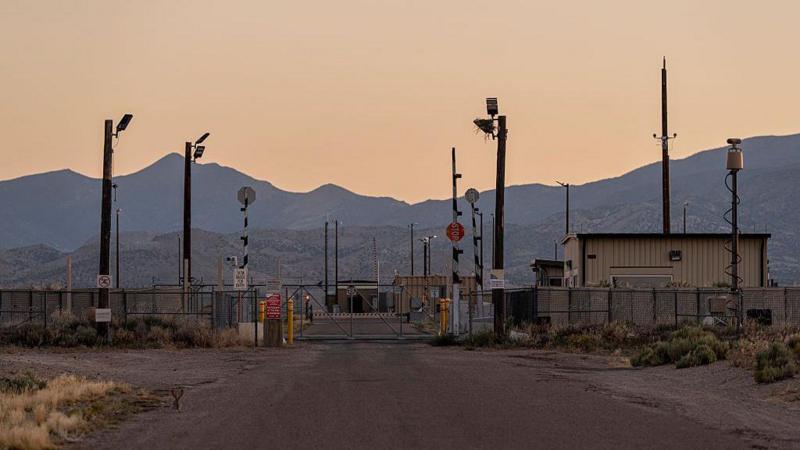
A wildfire called the Quail Springs Fire is burning near Area 51 in Nevada and is only 7% contained. The fire started from lightning, covers over 13,500 acres, and is spreading in a military area that is closed to the public.
Key Facts
The wildfire is located in the Nevada Test and Training Range, near the secretive Area 51 facility.
The fire began nearly a week ago due to lightning strikes.
So far, the fire is only 7% contained and has burned more than 13,500 acres (about 54.6 square kilometers).
Rough land, high heat, and dry winds are causing the fire to spread quickly.
An extreme heat warning is in effect until at least Sunday, with no rain expected soon.
No homes or public spaces are threatened by the fire, but the nearby small town of Rachel has a smoke warning.
Area 51 is a highly secure military site known for secrecy and conspiracy theories about aliens, but these claims are denied by the US government.
Other parts of the western US and Canada are also experiencing large wildfires, burning millions of acres of land.
Read the Original
Want the full story? Tap a source to open the original
article.
U.S. Treasury Secretary Scott Bessent and Trade Representative Jamieson Greer spoke by video call with China’s Vice Premier He Lifeng to prepare for President Xi Jinping’s visit to the U.S. The meeting focused on future trade deals, including commitments on rare earth minerals and U.S. agricultural products, amid ongoing tensions over technology and national security.
Key Facts
The video call lasted more than an hour and was described as friendly.
The call aimed to prepare for President Xi’s upcoming visit and possible trade agreements with President Trump.
Bessent stressed that China should meet its trade commitments on rare earth minerals and U.S. farm goods.
They discussed using Trade and Investment Boards to improve U.S.-China economic relations.
The U.S. has tried to limit China’s access to advanced microchips due to competition in artificial intelligence.
China has threatened to restrict minerals needed for advanced computer and weapons technology.
The Trump administration recently announced bans on certain Chinese robots and power inverters for security reasons.
The ongoing Iran war complicates U.S.-China relations, as China plans to sell missiles to Iran, a U.S. concern.
Read the Original
Want the full story? Tap a source to open the original
article.
The article discusses concerns that the current National Counterterrorism Strategy focuses too much on imagined terror threats. This approach could make the country less prepared for real dangers.
Key Facts
The National Counterterrorism Strategy is a plan meant to protect the nation from terrorist attacks.
The article argues that the strategy emphasizes threats that may not be real.
Focusing on false threats could take attention away from actual terrorist risks.
This could reduce the effectiveness of counterterrorism efforts.
Proper focus is needed to keep the country safe from genuine threats.
Read the Original
Want the full story? Tap a source to open the original
article.