Iran has attacked Kuwait’s desalination and power plants for four days in a row, causing fires and raising concerns about Kuwait’s water and electricity supply. Kuwait depends heavily on these plants to provide drinking water and power, especially in summer, and finds it hard to strike back against Iran.
Key Facts
Iran struck Kuwait’s desalination and power plants for four consecutive days by July 23, 2026.
Kuwait gets 90% of its drinking water from desalination plants that turn seawater into fresh water.
These plants also produce electricity and water together, so one strike affects both supplies.
Kuwait has asked people to use less electricity, especially air conditioning, to manage shortages.
Kuwait hosts about 13,000 U.S. troops, which Iran cites as a reason for the attacks.
Kuwait is close to Iran, making it an easy target for strikes without advanced weapons.
Iran claims the U.S. also attacked Iranian desalination plants, but the U.S. denies this.
Experts say this situation is a new type of conflict where water supply is used as a weapon.
Read the Original
Want the full story? Tap a source to open the original
article.
A landslide in Pengshui County, Chongqing, China, has killed 11 people, with 50 others still missing. Rescue teams are continuing to search through the rubble but have not found any new survivors recently.
Key Facts
The landslide happened in Pengshui County, located in southwestern Chongqing, China.
11 people have died from the landslide.
50 people are still missing after the disaster.
The landslide buried more than 10 residential buildings.
10 people were injured in the incident.
Rescue teams have used heavy machines, drones, and explosives to clear large rocks.
The search is difficult because of the large amount of debris and huge boulders.
Pengshui County borders the Chinese provinces of Hubei and Guizhou.
Read the Original
Want the full story? Tap a source to open the original
article.
The article expresses concern about a specific cover of The New York Times related to the 9/11 event. It suggests that the cover reflects negative feelings toward America from a political group called the DSA (Democratic Socialists of America).
Key Facts
The article discusses a recent New York Times cover about 9/11.
Hasan Piker is mentioned as someone who shared or commented on this cover.
The cover is seen by the article’s author as evidence of dislike toward America.
The Democratic Socialists of America (DSA) are linked to this perceived negative view.
The article asks if anyone will speak up against this cover.
The tone indicates disagreement with the opinions shown on the cover.
Read the Original
Want the full story? Tap a source to open the original
article.
China stated that its progress in artificial intelligence (AI) is based on its own strength and independence. This response followed claims from a senior U.S. official that a Chinese startup misused an American AI model and accessed restricted computer chips from Nvidia.
Key Facts
China says its AI development is driven by self-reliance and national strength.
A top White House official accused a Chinese startup of misusing the AI model called Anthropic.
The startup is also accused of accessing Nvidia computer chips that have export restrictions.
China opposes using trade and technology issues for political purposes.
The Chinese Foreign Ministry spokesperson is Lin Jian.
These comments were made during a news briefing on Wednesday.
The U.S. concerns involve technology theft and illegal use of advanced AI tools.
Read the Original
Want the full story? Tap a source to open the original
article.
Valentín Lavín Romero, a mayor in Morelos, Mexico, was shot and killed at his town hall after surviving a previous assassination attempt earlier this year. He is the 14th mayor to be killed since Claudia Sheinbaum became president in October 2024, amid ongoing violence linked to organized crime in the country.
Key Facts
Valentín Lavín Romero belonged to the Green party, allied with the ruling Morena party.
He was attacked once before in January 2026 at a petrol station but survived.
The second attack occurred at the town hall in Temoac, where he was killed by gunmen who fled on a motorbike.
Authorities have not yet found a motive or suspects but promised a thorough investigation.
Nearly 100 mayors have been killed in Mexico since 2006 due to drug-related violence and organized crime.
Local governments in Mexico are vulnerable and often targeted by criminal groups seeking control.
Lavín Romero was accused locally of ties to crime groups; his mother-in-law was arrested for alleged kidnapping and criminal activity.
Mexico’s federal government is working to break corruption between officials and criminals in an operation called Swarm, arresting 85 officials so far.
Read the Original
Want the full story? Tap a source to open the original
article.
President Donald Trump said the new nuclear deal with Saudi Arabia depends on Saudi Arabia agreeing to normalize relations with Israel through the Abraham Accords. This statement came a day after the US-Saudi civilian nuclear agreement was signed, creating uncertainty about the deal's future.
Key Facts
President Trump announced on July 23, 2026, that the Saudi nuclear deal is "totally subject to" Saudi Arabia joining the Abraham Accords, which means recognizing Israel.
Saudi Arabia has resisted normalizing ties with Israel, especially after the Gaza conflict, emphasizing the need for a Palestinian state.
The civilian nuclear deal was signed on July 22, 2026, and intended to allow Saudi Arabia to develop a civilian nuclear program.
The deal could generate billions of dollars for American companies involved in nuclear technology.
The White House stated that the Saudis were aware the deal depended on recognizing Israel, though this was not mentioned at the announcement.
Israel’s Prime Minister Benjamin Netanyahu called Saudi recognition a "historic leap" for Middle East peace.
Experts doubt that Saudi Arabia will quickly change its long-standing position on Israel to secure the deal.
Critics are concerned the nuclear deal might trigger a nuclear arms race in an already unstable region.
Read the Original
Want the full story? Tap a source to open the original
article.
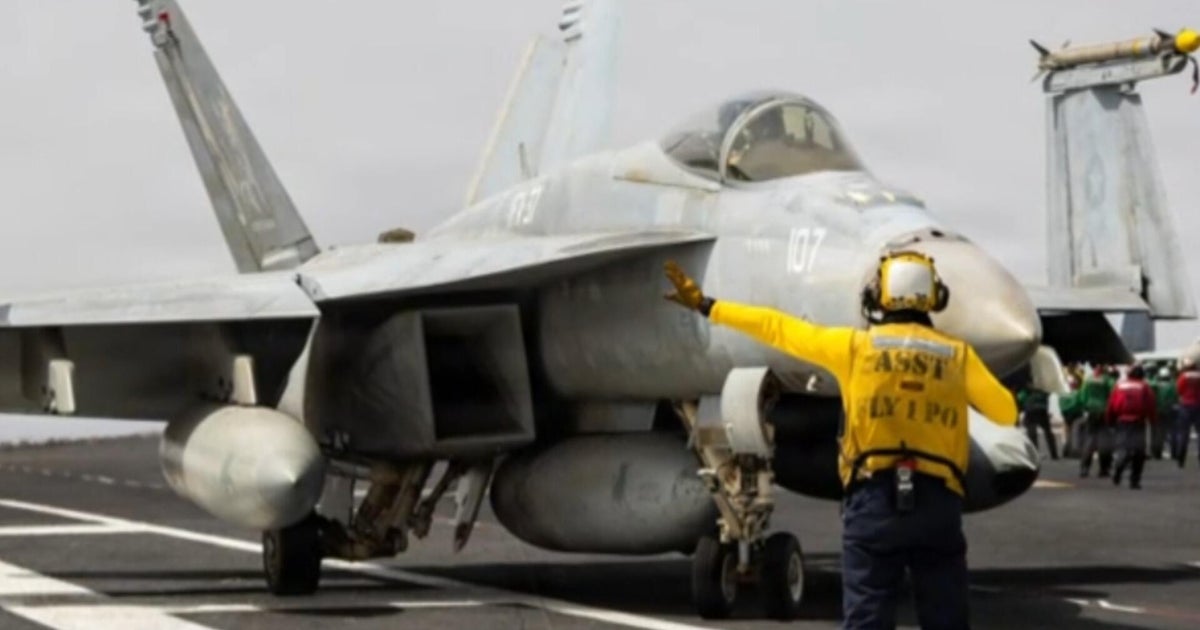
The United States is sending B-1 bombers, refueling planes, and medical teams to the Middle East. This move aims to increase U.S. military presence in the region.
Key Facts
The U.S. is deploying B-1 bombers to the Middle East.
Refueling aircraft are also being sent to support operations.
Medical personnel are being moved to the area alongside the planes.
The action involves increasing military resources deeper inside the Middle East.
The deployment is intended to strengthen U.S. readiness in the region.
National security experts are monitoring the situation closely.
B-1 bombers are long-range bombers that can carry large amounts of weapons.
Refueling jets help other planes stay in the air longer by refilling their fuel.
Read the Original
Want the full story? Tap a source to open the original
article.
A 17-year-old student in Guinea died after being arrested and jailed for cheating during a national exam. The teenager, who had sickle cell disease, fell ill in prison and later died in hospital, prompting calls for an investigation into his treatment.
Key Facts
Mamadou Djouma Bah was arrested for using his phone during Guinea’s national school-leaving exam.
He had sickle cell disease, a condition causing abnormal red blood cells that can lead to pain and serious health problems.
He was sentenced to six months in prison, with one month to serve immediately.
While in prison, his health worsened, and he was transferred to a hospital.
His father said the boy told him “Dad, I’m dying” before he died at home soon after hospital discharge.
Officials say he died under medical care, but his family claims he did not get adequate treatment in detention.
Education Minister Alpha Bacar Barry expressed sadness and condolences.
Students have protested, demanding the release of other detained students accused of cheating.
Read the Original
Want the full story? Tap a source to open the original
article.
A patient in New York initially treated for Lyme disease was found to have the Bourbon virus, a rare illness spread by tick bites with no cure or vaccine. This case highlights the difficulty in diagnosing similar tick-borne diseases and the spread of ticks into new areas due to climate changes.
Key Facts
The patient was first diagnosed with Lyme disease but did not improve after antibiotics.
Tests later confirmed infection with the Bourbon virus, found for the first time in New York State.
Bourbon virus symptoms are similar to Lyme disease, which can cause misdiagnosis.
The Bourbon virus has no vaccine or cure and is carried by the lone star tick.
The virus was first discovered in 2014 in Bourbon County, Kansas.
A study of 107 tick bite patients in Suffolk County, NY, found some with Bourbon and Heartland virus antibodies.
Changing climate allows ticks to live in areas that were previously too cold.
Protection against ticks includes wearing light-colored, long clothing, using repellents, and checking the body carefully after outdoor activities.
Read the Original
Want the full story? Tap a source to open the original
article.
England has started a new plan to reduce drowning deaths, after a recent rise in water-related accidents. The plan includes teaching every child to swim safely, studying how climate change affects water dangers, and running public awareness campaigns.
Key Facts
Two women recently died at a beach in Essex, adding to a rise in drowning deaths in England.
The new national strategy aims to end drowning deaths, targeting public health risks.
Every child in England may get swimming lessons and water safety education.
The plan will also look at how climate change might increase water dangers.
Other UK countries—Wales, Scotland, and Northern Ireland—are launching similar strategies.
Between 2019 and 2023, there were 2,306 water-related deaths in England; 42% were accidents.
Most victims (80%) were men aged 20 to 29, with many drownings happening during summer.
Social media platform TikTok donated money to support water safety advertising campaigns.
Read the Original
Want the full story? Tap a source to open the original
article.
Ukraine’s defense minister, Mykhailo Fedorov, was recently removed from his position after six months. He refused President Zelenskyy’s offer to join the government in a different role, saying only the defense minister job has the power to lead the fight against Russia.
Key Facts
Mykhailo Fedorov was Ukraine’s defense minister for six months before being dismissed last week.
President Zelenskyy offered Fedorov the deputy prime minister position for military innovation.
Fedorov declined and said he would only accept the defense minister role.
Fedorov is known for modernizing Ukraine’s army and using technology to improve its fight against Russia.
He also worked to stop corruption in military buying processes.
His removal caused protests in Ukraine and was welcomed by Moscow officials.
Fedorov had conflicts with Oleksandr Syrskyi, the Soviet-trained commander-in-chief seen as part of the old military leadership.
Fedorov said his goal was to finish reforms, strengthen air defenses, and use long-range strikes to pressure Russia.
Read the Original
Want the full story? Tap a source to open the original
article.
An Ebola outbreak in Congo has killed over 1,000 people in just over two months, spreading faster than the worst Ebola epidemic on record from 2014-2016. This outbreak is caused by a rare virus variant called Bundibugyo, which currently has no approved vaccines or treatments.
Key Facts
The current Ebola outbreak started on May 15, 2026, and has 2,536 confirmed cases with 1,033 deaths so far.
It took the 2014-2016 outbreak eight months to reach 1,000 deaths, while this outbreak reached that number in just over two months.
The 2014-2016 epidemic involved over 28,000 cases and 11,000 deaths in multiple West African countries.
This year’s outbreak is caused by the Bundibugyo virus, a rare Ebola variant with no approved vaccine or treatment.
The 2014-2016 outbreak was caused by the more common Ebola virus variant.
The current outbreak is mostly limited to five eastern provinces of Congo and some cases in Uganda.
The fatality rate this year is about 40%, lower than the 66% fatality rate during the 2014-2016 outbreak.
Officials warn the outbreak could worsen because the first case is not confirmed, and many new cases are outside monitored contacts.
Read the Original
Want the full story? Tap a source to open the original
article.
Two Ghanaian nationals have asked the International Criminal Court (ICC) to investigate repeated attacks on migrants in South Africa. They claim these attacks, which have happened over many years, might be crimes against humanity and say South African authorities have not done enough to stop them.
Key Facts
The petition was sent to the ICC prosecutor on July 15, 2026.
It was submitted by Palgrave Boakye-Danquah, a former Ghanaian government spokesperson, and security analyst Emmanuel Kotin.
The petition alleges widespread attacks on African migrants in South Africa from 2015 to 2026, including killings, assaults, looting, and forced displacement.
The petition claims South African officials failed to prevent or punish these attacks properly.
The petition is a private initiative and not supported by the Ghanaian government.
The ICC has confirmed it received the petition but noted receiving such reports does not always lead to an investigation.
South Africa has seen repeated anti-migrant violence for nearly 20 years, leading countries like Ghana, Nigeria, and Malawi to bring their citizens home.
Protesters in South Africa blame foreign nationals for problems like unemployment and crime.
Read the Original
Want the full story? Tap a source to open the original
article.
The Yemeni rebel group Houthis have declared a naval blockade on Saudi Arabia and attacked Saudi tankers in the Red Sea. This escalates the conflict in Yemen and increases tensions involving Saudi Arabia, Iran, and the United States, especially around the important Bab al-Mandeb Strait used for global shipping.
Key Facts
The Houthis, a Yemeni rebel group supported by Iran, announced a maritime siege on all shipping to Saudi Arabia.
They attacked several Saudi oil tankers in the Red Sea.
The Bab al-Mandeb Strait is a key waterway connecting the Red Sea to the Indian Ocean and is crucial for energy supplies to Europe and imports to Saudi Arabia.
Houthis threaten to close the Bab al-Mandeb Strait amid the ongoing conflict involving the U.S. and Iran.
Yemen’s internationally recognized government claimed an air strike on Sanaa airport to stop an Iranian plane, while Houthis blamed Saudi Arabia.
In response, the Houthis fired missiles into Saudi Arabia and declared the naval blockade.
Saudi Arabia faces a new threat from sea, complicating its security and oil export routes.
The Yemeni government's military forces include the National Army and regional brigades, with about 400,000 troops mainly in areas outside Houthi control.
Read the Original
Want the full story? Tap a source to open the original
article.
Tropical Storm Bertha hit Louisiana and is moving west toward Texas, where it is expected to arrive by Thursday evening. The storm brings strong winds, heavy rain, and rising water levels, which may cause flooding and dangerous surf conditions along the Gulf Coast.
Key Facts
Bertha made landfall in Louisiana and is moving toward the Texas coast.
Maximum sustained winds are near 45 mph, with stronger gusts.
Tropical storm warnings are active from Morgan City, Louisiana, to Sargent, Texas.
Coastal flooding of 2 to 3 feet is expected in parts of Louisiana, affecting homes and businesses.
Rainfall of 2 to 4 inches, with isolated heavier amounts up to 6 inches, is forecast along the Texas Gulf Coast.
The storm may cause flash flooding, especially in cities and urban areas.
Dangerous surf and rip currents are expected along the northern and northwestern Gulf Coast.
Bertha is expected to weaken and dissipate after moving inland over Texas by Friday.
Read the Original
Want the full story? Tap a source to open the original
article.
The United States and Iran signed a memorandum of understanding (MoU) on June 17 to extend a ceasefire and restart negotiations, temporarily improving conditions in the Strait of Hormuz. However, the agreement quickly fell apart because it lacked clear rules for how to carry out its terms and those who helped negotiate it could not enforce it.
Key Facts
The MoU aimed to extend a ceasefire and reopen talks between the U.S. and Iran.
The Strait of Hormuz is a key shipping route that handles about 20% of the world’s oil trade.
After the agreement, oil shipping and Iranian exports increased for a short time.
Military actions resumed, and many commercial ships stopped passing through the Strait again within weeks.
The deal focused on political agreement but did not set clear procedures for enforcement and daily operations.
Important details, like which nuclear activities were allowed and how sanctions relief would work, were left vague.
The MoU called for Iran to ensure safe commercial shipping and work with Oman on administration but did not create clear rules or frameworks.
Disagreements quickly appeared over how frozen Iranian assets ($12 billion) would be managed and accessed.
Read the Original
Want the full story? Tap a source to open the original
article.
Scientists at McGill University studied lungs from people who never smoked, currently smoke, and quit smoking. They found that while some lung damage from smoking improves after quitting, other changes last for years and might explain why former smokers still face health risks.
Key Facts
Researchers analyzed over 100,000 lung cells from 21 people: never smokers, ex-smokers, and current smokers.
Some lung cells recover after quitting smoking, but others show lasting changes in genes related to lung structure and immune function.
Former smokers have unique molecular lung patterns that differ from both active smokers and never smokers.
These lasting changes may explain why ex-smokers still have a higher risk of lung diseases like cancer and COPD.
Understanding which lung damage is permanent can help develop better treatments for smoking-related illnesses.
The research was published in the journal Translational Research.
Next steps include finding why some lung cells do not fully heal after quitting smoking.
Read the Original
Want the full story? Tap a source to open the original
article.
A former governor in Kenya, Okoth Obado, was found guilty of killing a pregnant university student, Sharon Otieno, with whom he had an affair. He and two others were convicted for planning and carrying out the murder, which sparked protests about violence against women in Kenya.
Key Facts
Sharon Otieno, a 26-year-old pregnant student, was found dead in 2018 in western Kenya.
Okoth Obado was governor of Migori county at the time of the murder.
The court ruled that Obado planned the killing, provided the motive and money.
Two other people helped with the murder and tried to hide the crime.
Sharon had contacted a journalist about her affair with the governor before she was kidnapped.
The journalist escaped, but Sharon was found stabbed and possibly raped two days later.
Police tracked the vehicle used in the crime and found its GPS was turned off and on to hide its movements.
The court used 42 witnesses and evidence to convict Obado and his co-accused.
Read the Original
Want the full story? Tap a source to open the original
article.
The threat of a blockade at the Bab al-Mandab strait by Yemen’s Houthi militias has caused global oil prices to rise above $100 a barrel. This narrow sea route is important for Saudi oil exports, especially since the Strait of Hormuz remains largely closed due to conflict between the US and Iran.
Key Facts
The price of Brent crude oil rose more than 13% in a few days, exceeding $100 per barrel.
Houthis, who control parts of Yemen near Bab al-Mandab, warned shipping companies not to use Saudi ports or face attacks.
Bab al-Mandab is a key route carrying about 4.1 million barrels of oil daily, about 5% of the world’s total oil trade.
Saudi Arabia rerouted around 75% of its oil exports through the Red Sea and Bab al-Mandab after the Strait of Hormuz was blocked.
The breakdown of the US-Iran ceasefire and Houthi attacks have reduced shipping traffic through Hormuz and Bab al-Mandab.
The conflict led many shipping companies to avoid Bab al-Mandab, disrupting global oil supply routes.
A Houthi official threatened that controlling Bab al-Mandab could push oil prices to $200 a barrel.
Saudi Arabia views the Houthi threats as retaliation after a ceasefire breach and continues to respond.
Read the Original
Want the full story? Tap a source to open the original
article.
The article explains a new leadership approach called "mission command" used at Singapore's National University Hospital. This method gives health care workers more authority to make decisions quickly and encourages leadership at every level to improve patient care and reduce staff burnout.
Key Facts
Traditional hospital management often relies on strict, top-down control, which can slow decision-making.
Mission command is a military leadership style that focuses on clear goals but trusts people to decide how to achieve them.
At National University Hospital, nurses, pharmacists, and support staff are empowered to lead in critical moments.
Leaders provide training and support rather than micromanage, allowing frontline workers to act confidently.
The hospital continuously removes outdated rules and processes to reduce barriers for staff.
This leadership style aims to reduce burnout by giving health care workers control over their work conditions.
Research shows health care workers quit mainly because they feel powerless, not just because their jobs are hard.
Mission command transforms patient care by promoting responsibility and autonomy across the organization.
Read the Original
Want the full story? Tap a source to open the original
article.