Neutral summaries of your favorite news sources — just the facts.
Your favorite news sources, one neutral feed — we distill their reporting into fact-first
summaries and always link to the original story. How it works
World News
Comprehensive coverage of international news and global events
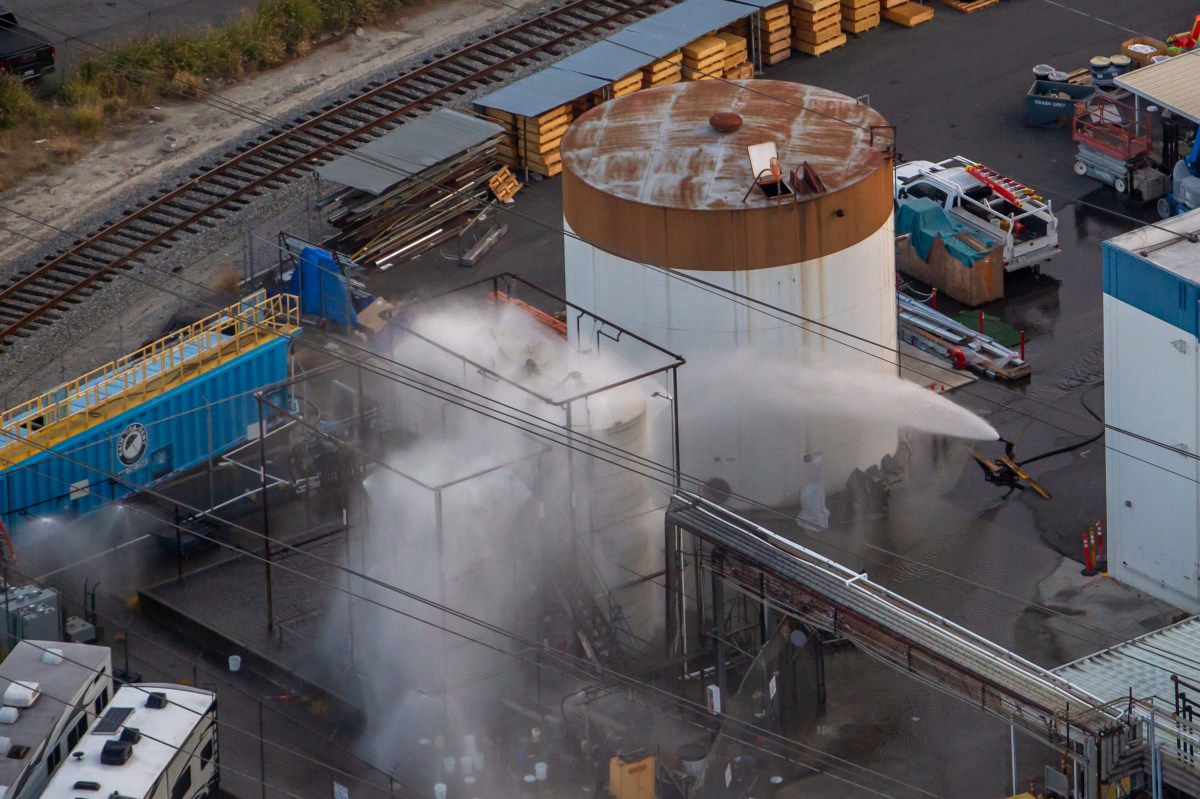
A large chemical tank in Garden Grove, California, containing methyl methacrylate, has reached 100 degrees Fahrenheit, raising concerns about a possible explosion. Fire crews found a crack in the tank that may help release pressure safely, and mild weather conditions are helping reduce the risk of a disaster.
Key Facts
The chemical tank holds thousands of gallons of methyl methacrylate, used in plastics and aerospace manufacturing.
Its temperature reached at least 100 degrees, the highest the thermometer could measure.
Over 40,000 people were evacuated from Garden Grove and nearby areas due to safety concerns.
A crack discovered in the tank may be acting as a pressure relief, possibly preventing a severe explosion.
There is only one crack, and no active chemical leaks have been detected.
Weather conditions are mild, with temperatures in the low 70s during the day and light winds, which help slow heating and limit chemical spread.
Fire officials are continuing cooling efforts and monitoring the tank closely.
Wind gusts in the area could still carry chemicals into populated zones if a small leak occurs.
Read the Original
Want the full story? Tap a source to open the original
article.
Parts of India, including Delhi, are experiencing very high temperatures reaching up to 45 degrees Celsius. Authorities have advised people to stay indoors due to the heat, but some must work outside and are suffering from dehydration and exhaustion.
Key Facts
Temperatures in parts of India have soared up to 45°C (113°F).
People in Delhi are advised to stay indoors to avoid heat-related health problems.
Some people cannot stay indoors because they have to work outside.
Cases of dehydration and exhaustion have been reported due to the heat.
The BBC reporter described it as very difficult to be outside in the extreme heat.
Read the Original
Want the full story? Tap a source to open the original
article.
The UK experienced its hottest May day ever, with temperatures reaching 34.8°C in London. Many parts of south-east England also saw temperatures in the 30s Celsius, surpassing highs in some typically hotter cities like Lagos and Cairo.
Key Facts
The highest May temperature recorded in the UK was 34.8°C at Kew Gardens, London.
This record-breaking heat occurred on a Monday.
Many areas in south-east England had temperatures above 30°C.
Some UK temperatures were higher than those in cities like Lagos, Cairo, and Ho Chi Minh City.
The heatwave led to people enjoying outdoor activities, such as visiting beaches, parks, and nature sites.
Tips for handling heat exhaustion and heatstroke were shared along with advice for keeping cool.
Warm weather impacted various parts of the UK, including Wales, Cornwall, and North Yorkshire.
Read the Original
Want the full story? Tap a source to open the original
article.
The hip-hop jazz group Sax Machine from Brittany has released a new song called "Untrapped." The band combines funk, soul, and hip-hop with lively brass music and features rapper MC Days from Chicago. They plan to release a full album this fall and will tour Colombia in September.
Key Facts
Sax Machine is a music group formed in Brittany in the late 2000s.
Their style mixes funk, soul, hip-hop, and jazz with brass instruments.
MC Days, a rapper from Chicago, is a member of the group.
Their new single is titled "Untrapped," which celebrates intellectual freedom.
A new album will come out in autumn 2026.
The band will have an extensive tour in Colombia in September 2026.
The group appeared on arts24 to discuss their new song.
Read the Original
Want the full story? Tap a source to open the original
article.
Ugandan health officials reported two new Ebola cases, raising the total to seven. These cases are connected to an outbreak in neighboring Congo that began before it was officially announced on May 15.
Key Facts
Uganda has confirmed seven cases of Ebola.
Two new cases were reported on Monday.
All infections are linked to an Ebola outbreak in Congo.
The Congo outbreak started days or weeks before May 15.
Congo officially declared the outbreak on May 15.
Ebola is a serious virus that can cause severe illness and spread quickly.
Uganda and Congo share a border, which increases the risk of virus transmission.
Read the Original
Want the full story? Tap a source to open the original
article.
In Australia, some independent MPs known as the "teal" MPs are thinking about forming a new centrist political party. This idea aims to fill the gap left by the Liberal Party moving more to the right and to compete against the One Nation party. However, some teal MPs want to stay independent and have said they will not join a new party.
Key Facts
Teal MPs entered Australian federal parliament in 2022 and are known for their independence.
Discussions have started about creating a new centrist party to replace a disappearing middle ground in politics.
The idea is supported by MPs Zali Steggall, Allegra Spender, and Sophie Scamps.
New political donation laws limit how much independents can spend, but a party running candidates nationally could raise more money.
Forming a party would also allow these MPs to run for upper house seats, increasing their influence.
Some teal MPs, like Kate Chaney, Monique Ryan, and Nicolette Boele, reject joining a party and prefer to stay independent.
The rise of One Nation and the Liberal Party's shift right create challenges for moderate politicians.
Former Liberal Party members have shown interest in a new centrist group but did not find agreement with independents.
Read the Original
Want the full story? Tap a source to open the original
article.
Janice Carte, known as "Tiny Spoon Chef," shares two burger recipes to help improve your Memorial Day barbecue. The recipes provide new ways to make tasty burgers for the holiday.
Key Facts
The article features burger recipes for Memorial Day.
Janice Carte is called "Tiny Spoon Chef."
She offers two different burger recipes.
The focus is on making better-tasting burgers.
The recipes aim to enhance your holiday grilling.
The content is available via CBS News and its app.
Read the Original
Want the full story? Tap a source to open the original
article.
The article discusses why the terms "asymmetric" and "hybrid" war are not the best way to describe certain conflicts. It suggests that these words do not accurately explain the nature of modern warfare.
Key Facts
The article addresses the use of the words "asymmetric" and "hybrid" to describe war.
It argues that these terms are not suitable for understanding the real nature of conflicts.
The discussion is connected to Memorial Day, a day that honors military service.
The article encourages rethinking how war is described and studied.
It focuses on improving the way we analyze and talk about modern battles.
Read the Original
Want the full story? Tap a source to open the original
article.
U.S. Secretary of State Marco Rubio visited India as both countries work to improve their trade relationship. They are trying to agree on a long-term trade deal despite ongoing issues like tariffs and India's trade surplus.
Key Facts
Marco Rubio, U.S. Secretary of State, is visiting India.
The visit aims to ease trade tensions between the U.S. and India.
President Donald Trump's tariffs have strained relations between the two countries.
Both sides are working toward a long-term trade agreement.
Concerns remain about tariffs, India’s trade surplus, and delayed economic promises.
India and the U.S. are involved in talks to strengthen economic cooperation.
The visit reflects efforts to repair damaged trade relations.
Read the Original
Want the full story? Tap a source to open the original
article.
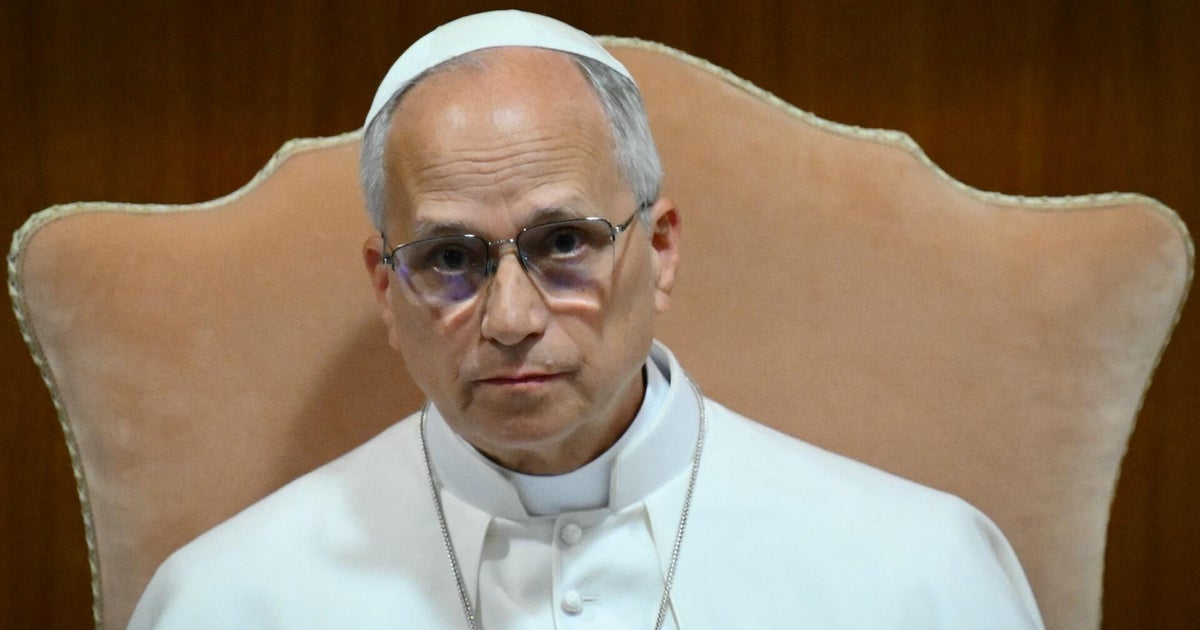
On May 25, 2026, Pope Leo XIV released his first encyclical, a formal letter to Catholic bishops, focusing on the topic of artificial intelligence (AI). He presented this document together with an AI researcher, Chris Olah from Anthropic, aiming to start a conversation between AI experts and the public.
Key Facts
Pope Leo XIV issued his first encyclical on artificial intelligence on May 25, 2026.
The encyclical is a significant letter addressed to the leaders of the Roman Catholic Church.
The document discusses the relationship between AI and humanity.
Chris Olah, an AI researcher from the company Anthropic, was involved in presenting the letter.
The effort is meant to encourage dialogue between AI researchers and society at large.
The event was reported by France 24 from Rome.
Read the Original
Want the full story? Tap a source to open the original
article.
Authorities in the Democratic Republic of Congo (DR Congo) are facing challenges controlling a fast-moving Ebola outbreak caused by the rare Bundibugyo strain. Uganda has reported new Ebola cases linked to this outbreak, and over 900 suspected cases have been found in eastern DR Congo amid limited resources and ongoing violence.
Key Facts
Over 900 suspected Ebola cases have been identified in eastern DR Congo.
The Ebola strain involved is called Bundibugyo, which is rare and has no approved vaccine or treatment.
Uganda has confirmed seven Ebola cases, including two healthcare workers in Kampala.
The new cases in Uganda are linked to the outbreak in DR Congo.
Limited resources and ongoing violence in DR Congo are making it hard to control the outbreak.
The World Health Organization has raised the health risk level in DR Congo to "very high."
Neighboring countries in Central Africa are at risk of the virus spreading further.
Read the Original
Want the full story? Tap a source to open the original
article.
Police in Chile have arrested three people suspected of breaking into the homes of famous athletes in the United States and Argentina. The suspects are expected to be sent to the US or Argentina for trial, and their crimes involved stealing valuable items like watches, jewelry, and sports memorabilia.
Key Facts
Three suspects were arrested by Chilean police for burglaries targeting high-profile athletes.
The break-ins happened during 2024 and 2025 in the US and Argentina.
Victims included Travis Kelce, a football player engaged to Taylor Swift, and other athletes like Linval Joseph and Bobby Portis.
Thieves stole expensive watches, jewelry, sports jerseys, and cash (including $20,000 from Kelce’s home).
The suspects watched social media and team schedules to know when the athletes were away.
Police linked these arrests to earlier arrests during a two-year crime spree.
The suspects had no significant criminal record in Chile and are expected to face justice abroad.
The US National Football League warned players to be careful after these burglaries.
Read the Original
Want the full story? Tap a source to open the original
article.
Pope Leo XIV issued his first formal letter, called an encyclical, warning about the risks of artificial intelligence (AI). He expressed concerns about the potential negative impacts of AI on society.
Key Facts
Pope Leo XIV released his first encyclical addressing AI.
The letter warns about potential dangers linked to artificial intelligence.
The Pope highlights concerns for how AI might affect people and society.
The announcement was covered by CBS News.
The term "encyclical" means a formal papal letter addressing important issues.
Read the Original
Want the full story? Tap a source to open the original
article.
President Donald Trump stated that several countries, such as Saudi Arabia, Qatar, Egypt, Turkey, and Pakistan, should join the Abraham Accords by establishing normal relations with Israel. He suggested that this would be part of a larger agreement to help end the conflict with Iran.
Key Facts
President Trump mentioned Saudi Arabia, Qatar, Egypt, Turkey, and Pakistan as countries that could join the Abraham Accords.
The Abraham Accords are agreements aimed at normalizing relations between Israel and other countries.
Trump linked expanding these accords to resolving issues with Iran.
He described this expansion as part of a broader plan to end the war involving Iran.
The announcement was reported and explained by journalist Kimberly Halkett from Al Jazeera.
Read the Original
Want the full story? Tap a source to open the original
article.
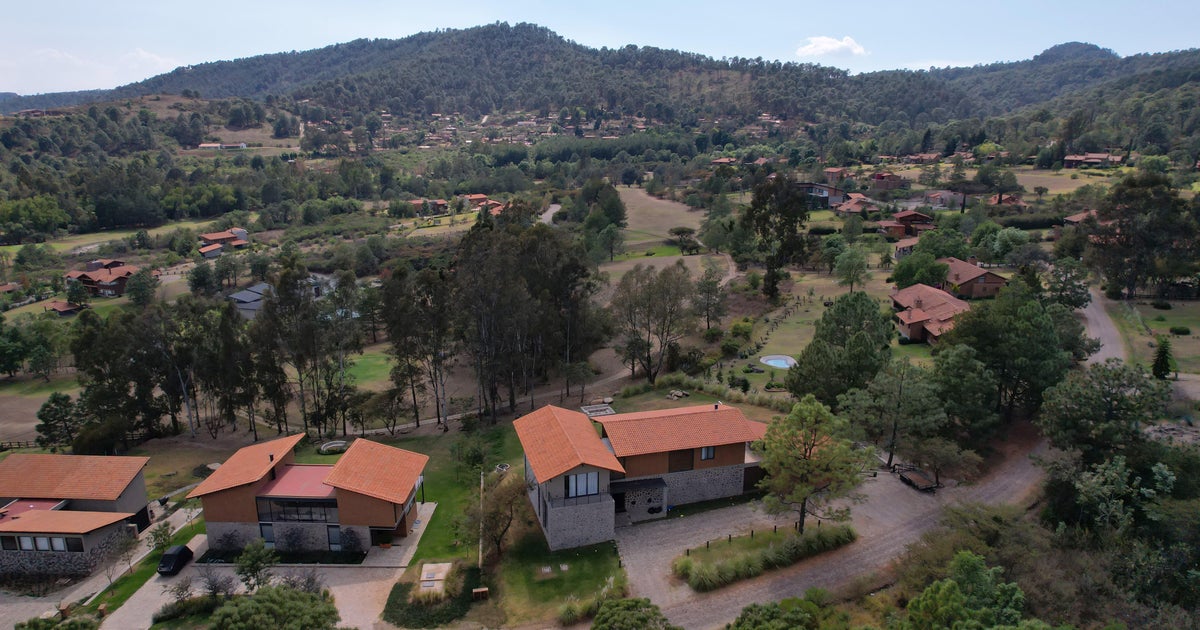
The Mexican government is auctioning a piece of land in the country club where drug cartel leader Nemesio Oseguera, called "El Mencho," was killed during a military operation in February. The land sale is part of a broader effort to auction 211 seized properties, although the government has not confirmed who previously owned the plot.
Key Facts
Nemesio Oseguera, leader of the Jalisco New Generation Cartel (CJNG), was killed on February 22 in Jalisco, Mexico.
The land up for auction is located in the same area where El Mencho died but is not directly linked to him.
The starting price for the land is about $750,000.
This auction is part of 211 properties the Mexican government will sell on the same day.
The Mexican army operation that killed El Mencho used U.S. intelligence assistance.
Following El Mencho’s death, his cartel caused widespread violence, killing dozens including 25 National Guard members.
In 2025, the Trump administration designated CJNG as a Foreign Terrorist Organization.
Recently, another top CJNG leader, Audias Flores Silva ("El Jardinero"), was captured; the U.S. offered $5 million for his arrest and has filed additional charges against him for drug trafficking and money laundering.
Read the Original
Want the full story? Tap a source to open the original
article.
Officials in Southern California say the danger of a big explosion at a damaged chemical tank is now gone. A night inspection showed that a crack in the tank helped lower pressure and cooled the chemical inside.
Key Facts
The chemical tank in Southern California was damaged and had a risk of exploding.
A crack in the tank helped reduce pressure, which lowered the risk.
Crews checked the tank’s temperature at night to stay safe.
Night checks were done because daytime heat made conditions more dangerous.
Officials confirmed the tank’s temperature was going down.
The inspection was done by the Orange County Fire Authority.
Division chief Craig Covey gave an update Monday morning.
Read the Original
Want the full story? Tap a source to open the original
article.
The World Health Organization (WHO) reported that a fast-spreading Ebola outbreak in eastern Democratic Republic of Congo (DRC) and Uganda has caused at least 220 suspected deaths. The outbreak is spreading quickly and is difficult to control because health workers face attacks and there is mistrust among the local population.
Key Facts
The Ebola outbreak started on May 15, 2026, mainly in the Ituri province of DRC.
At least 220 suspected deaths and over 900 suspected cases have been reported so far.
The virus strain involved is the rare Bundibugyo Ebola virus.
WHO has declared the outbreak a public health emergency of international concern.
Health facilities in the region have been attacked, causing patients to flee and making treatment harder.
Some community members oppose health measures because they cannot bury loved ones traditionally and distrust the outbreak’s existence.
Uganda has confirmed 7 cases, with two new ones reported recently.
WHO officials plan to visit the affected areas to help manage the crisis.
Read the Original
Want the full story? Tap a source to open the original
article.
Australian activists who tried to deliver aid to Gaza were detained by Israeli forces and have now returned home, reporting abuse and injuries while in custody. Organizers say many detainees faced beatings and sexual assault, and several countries condemned the treatment of the activists.
Key Facts
Eleven Australian activists were among 430 volunteers on 50 boats stopped by Israeli forces in international waters last week.
Activists report abuse in detention, including beatings, sexual assault, and injuries requiring hospital care.
Australian activist Juliet Lamont said she was dragged, sexually assaulted, and beaten during detention.
Another activist, Sam Woripa Watson, suffered a fractured rib and saw others Tasered and shot with rubber bullets.
Flotilla organizers say at least 15 detainees reported sexual assault or rape during detention.
Malaysian officials plan to take legal action against Israel over alleged mistreatment of Malaysian activists.
Far-right Israeli National Security Minister Itamar Ben-Gvir posted a video of blindfolded detainees, causing international outrage.
Countries including Qatar, Saudi Arabia, Jordan, and others condemned Ben-Gvir’s actions as violating international law.
Read the Original
Want the full story? Tap a source to open the original
article.
The World Health Organization (WHO) reports 220 suspected deaths in the current Ebola outbreak, mainly in the Democratic Republic of the Congo (DRC) and Uganda. The outbreak is growing faster than responders can handle, with new cases reported and violence disrupting treatment efforts.
Key Facts
The Ebola outbreak has caused 220 suspected deaths so far.
More than 900 suspected Ebola cases have been identified in the DRC.
The outbreak has spread from northeastern DRC to neighboring provinces and Uganda.
Uganda has confirmed seven Ebola cases, including two health workers in Kampala.
The Ebola strain involved is called Bundibugyo, a rare type with no vaccine or treatment currently available.
WHO declared the outbreak a public health emergency of international concern.
Violence, including attacks on hospitals and treatment centers, is hampering efforts to control the outbreak.
Authorities in the DRC have banned funeral gatherings of more than 50 people to reduce virus spread.
Read the Original
Want the full story? Tap a source to open the original
article.
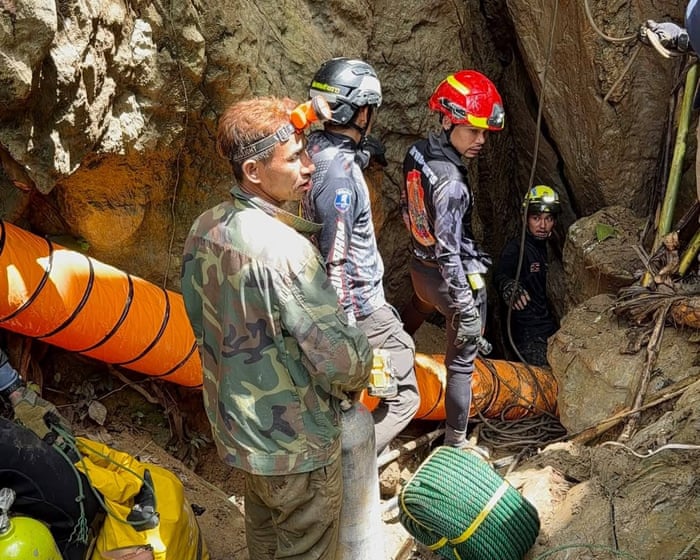
Seven people have been trapped for five days in a flooded cave in central Laos after heavy rains caused landslides blocking the entrance. Thai rescuers with experience from a famous 2018 cave rescue have joined efforts to find and free the group, but the narrow, water-filled tunnels and rising water levels make the rescue difficult.
Key Facts
Seven people entered a flooded cave in Xaysomboun province, Laos, and have been trapped for five days.
The group went inside the cave to look for wildlife and search for gold.
Heavy rain caused landslides that blocked the cave entrance and raised water levels inside.
Thai rescuers who helped with the 2018 Tham Luang cave rescue in Thailand are involved.
Rescuers face very narrow, muddy, and water-filled tunnels that are hard to move through.
No signs of life have been received yet, but rescuers believe the trapped people are still alive due to air pockets and reports from a survivor.
Rising water and sediment inside the cave have slowed rescue efforts.
Mining for gold and other minerals has increased in Laos, but the government recently banned new permits for gold mining because of environmental concerns.
Read the Original
Want the full story? Tap a source to open the original
article.