Mary Honeyball, a former Labour Member of the European Parliament, gave a careful but hopeful view of Andy Burnham becoming the new UK Prime Minister. She believes his leadership could help restore public trust, improve the balance between central and local government, and create a more positive story for the UK after Brexit.
Key Facts
Andy Burnham has recently become the Prime Minister of the United Kingdom.
Mary Honeyball served as a Labour MEP for London from 2000 to 2019.
Honeyball describes Burnham as a forward-looking leader ready to bring optimism to the UK.
She sees potential for Burnham to rebuild public confidence in government.
Burnham might work to improve relations between the central government and local authorities.
The UK has experienced political and economic challenges related to Brexit.
Honeyball suggests Burnham's time as PM could mark a hopeful change rather than just political reset.
Related coverage discusses Burnham’s first speech and his approach to leading the UK.
Read the Original
Want the full story? Tap a source to open the original
article.
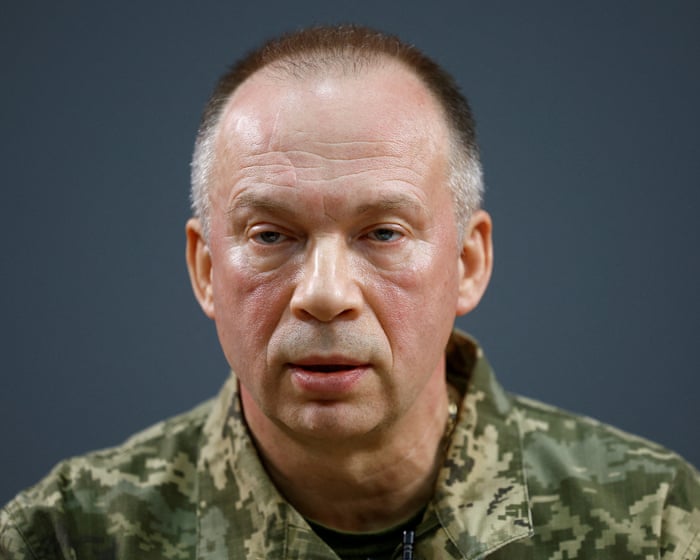
Ukraine’s army chief Oleksandr Syrskyi is expected to be removed from his job after protests demanding his ousting. The protests started after President Zelenskyy fired defence minister Mykhailo Federov, who had conflicts with Syrskyi. Zelenskyy is meeting top military leaders to decide new appointments.
Key Facts
Thousands protested in Kyiv demanding army chief Syrskyi be removed.
The protests began after President Zelenskyy fired defence minister Mykhailo Federov.
Federov and Syrskyi reportedly had a poor working relationship.
Ukraine’s general staff said Syrskyi and his deputy are still doing their jobs officially.
Zelenskyy’s chief of staff said the government is addressing the situation carefully.
Zelenskyy met several top military leaders to find Syrskyi’s replacement.
Protesters want Federov reinstated and set a Friday deadline for this.
Zelenskyy praised recent Ukrainian strikes inside Russia and said the war must end by increasing pressure on Russia.
Read the Original
Want the full story? Tap a source to open the original
article.
Mexican drug leader Ismael “El Mayo” Zambada was sentenced to life in prison in a U.S. federal court for his role in leading the Sinaloa Cartel and trafficking large amounts of cocaine over many years. He pleaded guilty in 2025 to serious charges, including running a criminal enterprise, and will not be eligible for parole.
Key Facts
Zambada admitted to shipping millions of kilograms of cocaine as head of the Sinaloa Cartel.
He was sentenced by US District Judge Brian Cogan in Brooklyn, New York.
Zambada pleaded guilty to racketeering conspiracy and continuing criminal enterprise charges.
The US Justice Department did not seek the death penalty in exchange for his guilty plea.
He was arrested in July 2024 with Joaquin Guzman Lopez, son of the famous cartel leader “El Chapo.”
Zambada will serve life without parole because of his major role in the cartel's crimes.
His lawyer asked for placement in a prison with medical care, but prosecutors expressed concerns about his continued influence on cartel activities from prison.
Joaquin Guzman Lopez is also serving a life sentence in a maximum-security prison in Colorado.
Read the Original
Want the full story? Tap a source to open the original
article.
Retired Lieutenant General David Harris says the U.S. should use strategic communication alongside military plans. This will help turn battlefield wins into bigger, long-term benefits, based on lessons from ongoing conflicts.
Key Facts
David Harris is a retired U.S. Lieutenant General.
He emphasizes combining communication strategies with military operations.
The goal is to make sure tactical victories create strategic advantages.
Harris draws his ideas from studying current conflicts in the world.
Strategic communication means managing information to influence opinions and decisions.
The approach aims to improve overall success beyond just winning battles.
Read the Original
Want the full story? Tap a source to open the original
article.
A Texas couple experienced a frightening situation while visiting the Blue Grotto, a famous sea cave on the island of Capri, Italy. Their vacation, which started as a dream trip, turned into a nightmare due to unexpected events inside the cave.
Key Facts
The couple is from Texas and were tourists in Capri, Italy.
They were visiting the Blue Grotto, a popular sea cave known for its bright blue water.
Something happened inside the cave that caused fear or danger for the tourists.
The article shares their story about this negative experience.
The Blue Grotto is a well-known tourist site on the island of Capri.
The date of the report is July 20, 2026.
No details about the exact nature of the event causing the trouble were provided in the summary.
The article is part of a collection of news stories with various topics, but focuses on an international tourist incident.
Read the Original
Want the full story? Tap a source to open the original
article.
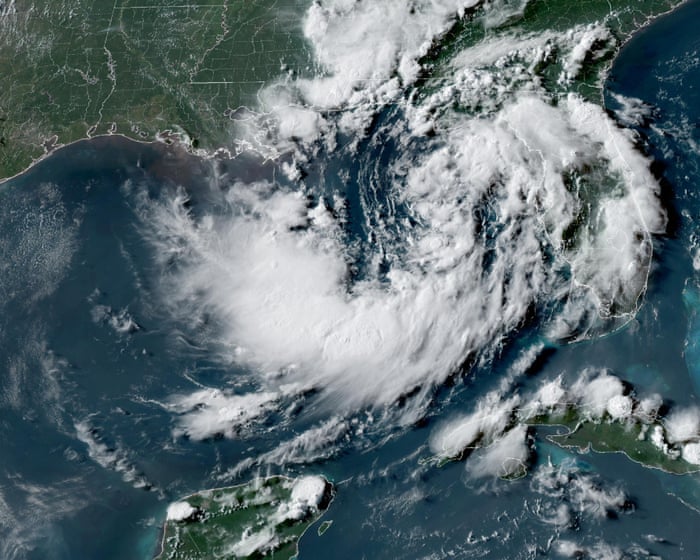
A tropical depression is forming near the US Gulf Coast and may become a tropical storm soon, leading to weather warnings for parts of the Gulf region. At the same time, Tropical Storm Fausto is getting stronger off Mexico’s Pacific coast and may become a hurricane.
Key Facts
The tropical depression is about 120 miles south of Panama City, Florida, with winds of 35 mph.
It could bring life-threatening flooding along the northern Gulf Coast from Alabama to Louisiana.
Expected storm surge could raise water levels by 2 to 4 feet near the Mississippi River mouth to the Alabama-Florida border.
Rainfall of 2-4 inches is predicted, with some places getting up to 8 inches, causing possible flash floods and isolated tornadoes in Florida.
Tropical Storm Fausto is moving west-northwest off Mexico with 65 mph winds and could become a hurricane soon.
Fausto’s ocean waves are expected to reach Baja California, creating dangerous surf and rip currents.
No coastal warnings for Fausto are in place yet.
The tropical depression and Fausto are both being monitored closely by the US National Hurricane Center.
Read the Original
Want the full story? Tap a source to open the original
article.
The U.S. Supreme Court will hear a case about whether Alaska can take a pilot’s $95,000 airplane after authorities found beer on board a flight to a dry village where alcohol is banned. The pilot argues that seizing the plane is an excessive punishment under the Constitution’s Eighth Amendment, which prohibits excessive fines.
Key Facts
Alaska wants to permanently take pilot Kenneth Jouppi’s 1969 Cessna plane valued at about $95,000.
The plane was seized because a passenger had beer on board when flying to Beaver, a village in Alaska where alcohol is banned.
Jouppi was convicted of alcohol importation offenses even though he says he didn’t know about the beer.
The case involves the Eighth Amendment, which protects people from excessive fines or punishments.
Alaska argues forfeiture is needed to prevent illegal alcohol transport into dry communities.
The case could affect how courts decide if fines or property seizures are too harsh.
This dispute has been ongoing since 2012 and now reaches the Supreme Court.
The decision may influence laws on forfeiture and property rights beyond Alaska.
Read the Original
Want the full story? Tap a source to open the original
article.
An Israeli air strike in Gaza City injured at least 14 people, according to health officials there. Israel’s military said the attack targeted a member of Hamas, a Palestinian political and military group.
Key Facts
At least 14 people were injured in the air strike in Gaza City.
The strike destroyed a vehicle, as seen in video footage.
Gaza health officials reported the number of injured.
Israel’s military said the attack aimed at a Hamas member.
Hamas is a group involved in Palestine’s politics and armed conflict.
The incident is part of ongoing tensions between Israel and Gaza.
Read the Original
Want the full story? Tap a source to open the original
article.
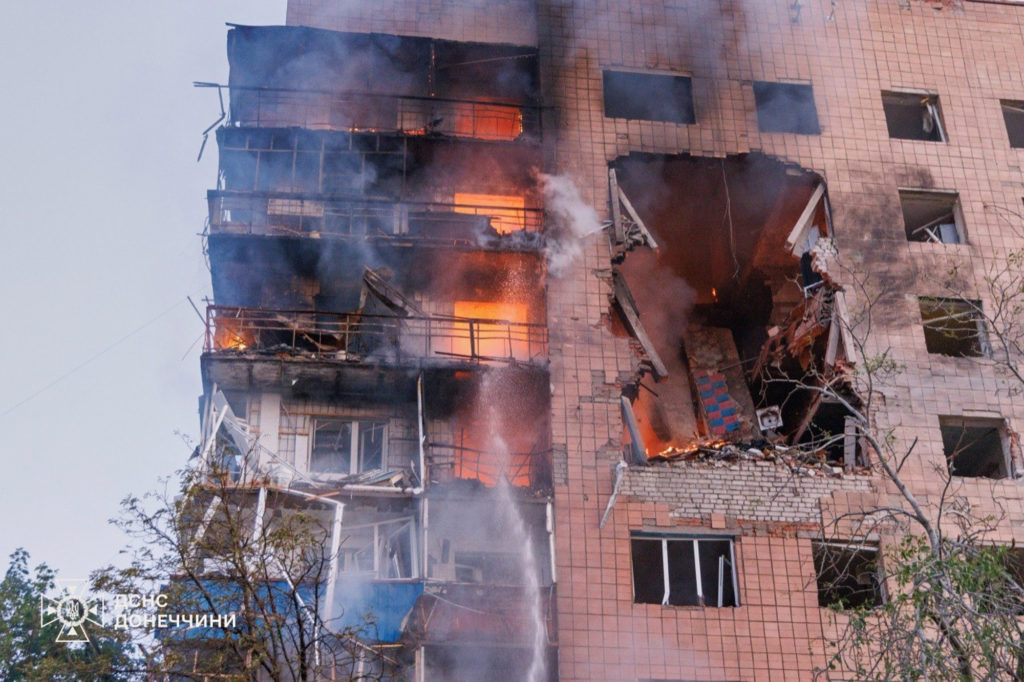
Ukraine launched more than 400 drones toward Moscow in a recent attack, causing damage to buildings and injuring people. At the same time, Russia fired ballistic missiles at Ukrainian cities, resulting in casualties, while Ukrainian President Zelenskyy worked to resolve political disagreements within his government.
Key Facts
Over 400 Ukrainian drones were sent toward Moscow, with many being intercepted before reaching the city.
The drone attack caused fires and damage to industrial areas and possibly an oil depot near Moscow.
Ten people were injured by the drones in the Moscow region.
A drone strike on a bus in Russia's Belgorod region killed five people and injured 23 others.
Ukraine targeted Russian oil facilities and ships to disrupt fuel supplies and transport.
Russia increasingly uses ballistic missiles, which travel very fast and are harder to stop.
Russian missile attacks killed at least six people and wounded dozens in Ukrainian cities.
Ukrainian President Zelenskyy is holding talks to address political splits over how to continue the war.
Read the Original
Want the full story? Tap a source to open the original
article.
A 42-year-old Moroccan-born man named Abderrahim Fakir died after being restrained by police in Bologna, Italy. Video footage showing Fakir pinned face down by officers has led to public outrage and a formal investigation into the circumstances of his death.
Key Facts
Fakir was detained after reports of erratic behavior and damage to parked cars.
Police used pepper spray when Fakir resisted arrest.
Videos show Fakir handcuffed and held face down by two officers and a third man.
Fakir called for help and pleaded before becoming unresponsive.
An autopsy has been ordered to determine the cause of death.
The investigation will examine whether the restraint or other factors caused Fakir’s death.
The two officers involved remain on duty during the investigation.
The case has sparked debates about police tactics and use of force in Italy.
Read the Original
Want the full story? Tap a source to open the original
article.
Ismael "El Mayo" Zambada, leader of Mexico's Sinaloa drug cartel, was sentenced to life in a US prison after pleading guilty to drug smuggling and conspiracy charges. He was captured in 2024 during a sting operation that brought him to the US, and his sentencing marks a key moment in the fight against drug trafficking between Mexico and the United States.
Key Facts
Ismael "El Mayo" Zambada is 76 years old and co-founded the powerful Sinaloa Cartel.
Zambada was arrested in Texas in 2024 after being tricked into traveling from Mexico.
He pleaded guilty to drug smuggling and conspiracy to avoid the death penalty.
A US judge sentenced him to life in prison in a Brooklyn federal court.
Joaquin "El Chapo" Guzmán Lopez, El Chapo’s son, was also arrested and pleaded guilty but is not yet sentenced.
The Sinaloa Cartel has experienced violent internal conflicts since Zambada’s arrest.
There is debate over whether Zambada will serve his sentence in a prison hospital due to health issues or in a higher-security prison.
President Donald Trump announced stronger US actions against Mexican drug cartels, including labeling them as terrorist groups.
Read the Original
Want the full story? Tap a source to open the original
article.
A Philippine sailor was injured after a China coast guard member hit him with a wooden baton during a clash in the South China Sea, an area claimed by both countries. Both China and the Philippines disagree about what happened, and the incident will be discussed in important talks in Manila this week.
Key Facts
A Philippine sailor was hurt during a confrontation with China’s coast guard.
The injury came when a Chinese coast guard officer hit the sailor with a wooden baton.
The clash took place in disputed waters of the South China Sea.
China and the Philippines have different views about the incident.
The incident will be a topic in official talks held in Manila.
The South China Sea is a region with ongoing territorial disagreements.
Read the Original
Want the full story? Tap a source to open the original
article.
The article explains Iran’s "mosaic defense," a strategy designed to protect the country by using many smaller, connected parts instead of relying on one single system. This approach makes it harder for enemies to defeat Iran with just one attack or ongoing attacks.
Key Facts
Iran uses a defense system called "mosaic defense."
The system relies on many smaller units working together.
No single point controls the entire defense network.
This setup prevents a single attack from breaking the system.
Continuous attacks are less effective because of the dispersed design.
The goal is to create a strong, flexible defense.
The theory behind this is to avoid total failure from one strike.
The approach differs from traditional large, centralized defense systems.
Read the Original
Want the full story? Tap a source to open the original
article.
A rare bird from Asia was spotted in the UK, which birdwatchers described as an extraordinary event. This unusual sighting attracted attention because the bird is not normally found in the area.
Key Facts
A rare Asian bird was seen in the UK.
Birdwatchers called this sighting extraordinary.
The bird is not native to the UK.
The sighting took place recently.
This event attracted interest among nature and wildlife observers.
Locations mentioned include Eastleach and Gloucestershire in the UK.
The birdwatching community is actively following such rare appearances.
Read the Original
Want the full story? Tap a source to open the original
article.
Heavy monsoon rains have caused floods and landslides in northern and northeastern India, killing at least 25 people and injuring many others. Authorities are carrying out rescue operations and have temporarily suspended important religious pilgrimages due to safety concerns.
Key Facts
At least 25 people died due to floods and landslides in northern and northeastern India.
In Kashmir’s Poonch, Rajouri, and Doda districts, at least 15 people died and some remain missing.
Nagaland state experienced multiple landslides that killed nine people and injured at least 15.
A flash flood in Rajouri, Jammu, damaged homes and property, with 11 people rescued by army and emergency teams.
Assam reported one death and over 57,000 people affected by flooding in seven districts.
India’s weather office warns of more heavy rain in Jammu and Kashmir over the coming week.
Authorities suspended the annual Amarnath and Vaishno Devi pilgrimages for safety until routes are declared safe.
Floods during the monsoon season are common in India, occurring despite droughts in some areas.
Read the Original
Want the full story? Tap a source to open the original
article.
Andy Burnham became Britain’s new prime minister without a leadership election, replacing Keir Starmer as Labour Party leader. Some British Jews are worried about Burnham’s approach to antisemitism and his efforts to regain support from voters concerned about Israel, after a history of antisemitism issues within the Labour Party.
Key Facts
Andy Burnham became Britain’s seventh prime minister in ten years, appointed without a leadership election.
Labour holds 403 out of 650 seats in the House of Commons but did not select a new leader from among its MPs.
The Labour Party has had a long struggle with antisemitism, including unlawful harassment found by the British Equality and Human Rights Commission.
Former Labour leader Jeremy Corbyn was criticized for allowing anti-Zionist and antisemitic attitudes in the party.
Under Keir Starmer, Labour tried to combat antisemitism, but attacks on British Jews have continued, including a deadly synagogue terror attack.
Burnham has stated opposition to antisemitism but has apologized for Labour’s initial support of Israel’s actions in Gaza, which some British Jews found concerning.
Burnham seeks to regain votes from areas with large Muslim populations and progressives focused on Palestine.
Burnham granted an interview to Gary Lineker, who faced controversy over sharing antisemitic content, raising further concerns in the Jewish community.
Read the Original
Want the full story? Tap a source to open the original
article.
Ismael "El Mayo" Zambada, a leader of Mexico's Sinaloa drug cartel, will be sentenced in New York for drug trafficking. He pleaded guilty to running a large criminal operation that smuggled millions of kilograms of drugs into the U.S. and caused widespread violence and corruption.
Key Facts
El Mayo co-founded the Sinaloa cartel with Joaquín "El Chapo" Guzmán.
He is charged with running a criminal enterprise involving at least 1.5 million kilograms of cocaine.
The cartel shipped other drugs like fentanyl, heroin, and methamphetamine.
His group used armed enforcers to carry out violence including murder and torture.
He paid millions in bribes at different levels of the Mexican government.
Federal prosecutors want El Mayo to serve life in prison and forfeit $15 billion.
El Mayo accepted responsibility, apologized for the harm caused, and avoided a trial by pleading guilty.
Even in prison, cartel members remain loyal to him, including his son who leads a faction of the cartel.
Read the Original
Want the full story? Tap a source to open the original
article.
Two French diplomats were held and questioned by Iranian security services for several hours and one was physically harmed. France's Foreign Minister Jean-Noël Barrot called the incident a serious violation of diplomatic rules and warned Iran that there would be consequences.
Key Facts
The incident happened in Iran on Sunday, July 19, 2026.
Two French embassy officials were detained and interrogated by Iranian security.
One diplomat suffered physical abuse during the detention.
Both diplomats work on programs supporting Iranian civil society, including artists and scientists.
The diplomats were released and are safe, expected to return to France soon.
France’s Foreign Minister Jean-Noël Barrot condemned the action as a breach of diplomatic immunity.
Barrot warned Iran’s deputy foreign minister that the event is serious and unacceptable.
France has said it will not lift European sanctions on Iran until Iran stops its nuclear program and destabilizing activities in the region.
Read the Original
Want the full story? Tap a source to open the original
article.
The Lebanese army plans to take control of security in three villages in southern Lebanon as part of a US-led agreement with Israel and Lebanon. This agreement aims for Israel to gradually withdraw from these areas while the Lebanese military manages security and disarms the Hezbollah group. However, Israeli forces have not yet fully left, and questions remain about the timing of the withdrawal.
Key Facts
The three “pilot zone” villages are Froun, Srifa, and Zawtar al-Gharbiya in southern Lebanon.
The US State Department announced the plan as part of a framework agreement reached on June 26 after negotiations involving Lebanon, Israel, and the US.
Under the agreement, Israel will slowly retreat from southern Lebanon, and the Lebanese military will take over security and disarm Hezbollah.
Hezbollah, supported by Iran, opposes the agreement and demands Israel leave Lebanon fully and unconditionally.
Israeli forces remain in parts of southern Lebanon, claiming the need for a “security zone” as long as Hezbollah is armed.
Lebanese officials say there have been no changes yet on the ground, and the Lebanese army has not fully deployed in the pilot zones.
Since fighting intensified in March, over 4,300 Lebanese have died, more than a million have been displaced, and at least 36 Israeli personnel and civilians have also been killed.
The agreement does not set a clear timeline for Israel’s complete withdrawal from Lebanese territory.
Read the Original
Want the full story? Tap a source to open the original
article.
Iran says it has received proposals through mediators to stop recent fighting with the United States but gave no details. The two countries have exchanged attacks, including missile strikes and targeting of infrastructure, while diplomatic efforts continue alongside military actions.
Key Facts
Iran has been approached through mediators with proposals to end renewed fighting with the US.
Iranian Foreign Ministry spokesman Esmaeil Baghaei did not reveal details or confirm reports of a 10-day truce offer.
Fighting has included attacks on infrastructure and military sites in Iran and in Gulf countries like Kuwait, Bahrain, and Jordan.
US Secretary of State Marco Rubio said the US is open to diplomacy but sees Iran’s missile and drone strikes as a problem.
Iran claims the US military is using neighboring countries’ territories to attack Iran.
Iran’s Parliament Speaker Mohammad Bagher Ghalibaf accused the US of continuing to send military equipment to the region despite talks.
The US has conducted multiple air strikes inside Iran, including on a civilian nuclear plant under construction.
Both Iran’s army and the Islamic Revolutionary Guard Corps have launched missile attacks targeting US forces.
A US naval blockade continues on Iran’s southern ports, affecting global energy shipments through the Strait of Hormuz.
Read the Original
Want the full story? Tap a source to open the original
article.