Fact-first summaries of the news — stay informed, stay grounded.
Your favorite news sources, one calm feed — fact-first summaries that always link to the
original story. No outrage bait, and we tell you when you're caught up. How it works
World News
Comprehensive coverage of international news and global events
Cuba is preparing to defend itself against a possible military attack by the United States, following increased tensions and an indictment against former Cuban President Raul Castro by US prosecutors. The Cuban government released a guide explaining how families should protect themselves and is relying on its national defense strategy that involves training all citizens to resist invasion.
Key Facts
US prosecutors indicted former Cuban President Raul Castro for the 1996 downing of aircraft that killed four American men.
The indictment accuses Castro of conspiracy to kill US nationals, murder, and aircraft destruction.
President Donald Trump has increased hostile rhetoric against Cuba and called it a "significant threat" to US national security.
Cuba’s Civil Defence published a guide called The Family Guide for Protection Against Military Aggression to prepare citizens for a potential US attack.
Cuba’s defense plan includes training all civilians as part of a military system called the War of All People.
Despite facing blackouts, fuel shortages, and loss of Venezuelan support, Cuba claims it is ready to resist a US invasion.
Cuban President Miguel Diaz-Canel warned that a US attack would cause severe casualties and said Cuba does not pose a threat.
Analysts note that Cuba’s experience fighting in Venezuela involved strong resistance by Cuban troops.
Read the Original
Want the full story? Tap a source to open the original
article.
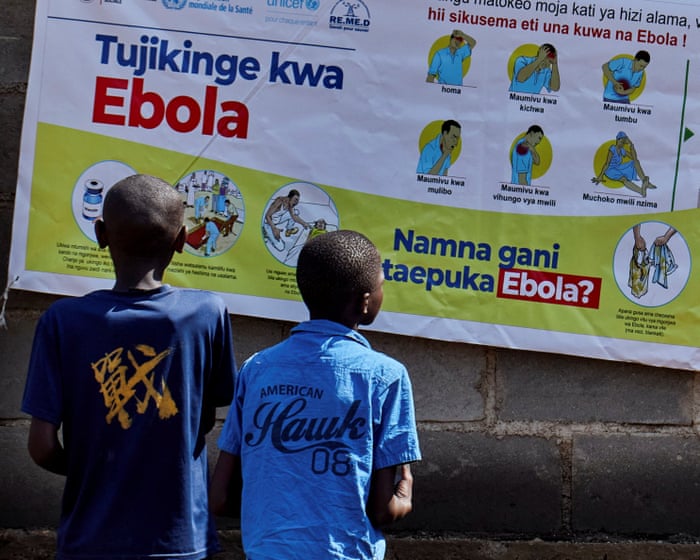
A new outbreak of the Bundibugyo variant of Ebola is spreading in central Africa, mainly in the Democratic Republic of the Congo, Uganda, and possibly South Sudan. Experts say the US has significantly reduced its support for global health efforts, which is affecting efforts to control the virus and conduct important research.
Key Facts
The Bundibugyo variant of Ebola has no cure or vaccine and has caused two previous outbreaks.
Since April, there have been about 482 suspected cases and 116 deaths reported in the DRC, with additional cases in Uganda and possible spread to South Sudan.
The World Health Organization declared the outbreak a public health emergency of international concern immediately.
US foreign aid to the DRC dropped sharply from $1.4 billion in 2024 to $431 million in 2025, with further reductions in 2026.
The US also cut funding to Uganda and announced it would leave the WHO, stopping a $130 million funding contribution and causing job losses.
Key US health agencies, including USAID and the CDC, reduced staff, canceled research, and suspended Ebola response teams in the past year.
A specialized Ebola research lab in Maryland was shut down last year, limiting the US capacity to respond and research the outbreak.
Experts warn that cutting prevention funding will lead to more frequent and severe outbreaks.
Read the Original
Want the full story? Tap a source to open the original
article.
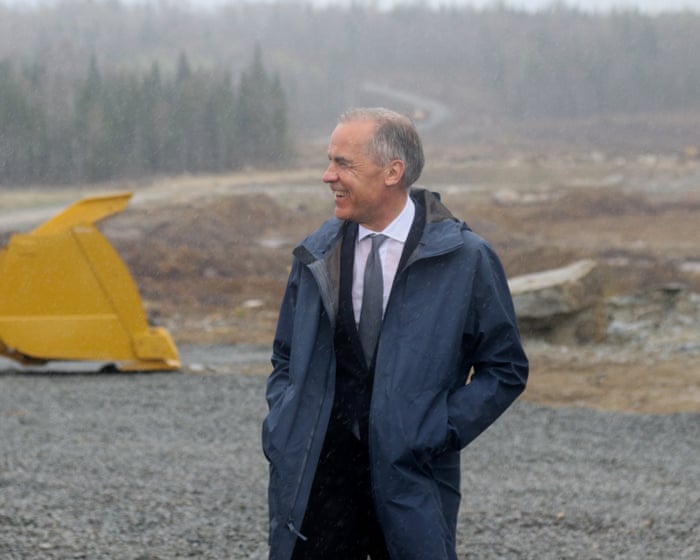
Canadian Prime Minister Mark Carney has shifted away from strong climate action despite his past work on climate finance and warnings about climate risks. His government has delayed or weakened multiple climate policies and is supporting new fossil fuel projects and subsidies.
Key Facts
Mark Carney, once known for his climate warnings as Bank of England governor and UN envoy, is now Canada’s prime minister.
Carney’s government eliminated Canada’s consumer carbon price, a tool to reduce emissions by charging households for pollution.
New climate rules have been weakened or delayed, including methane limits and clean electricity targets moved from 2035 to 2050.
Plans to cap oil and gas emissions and enforce zero-emission vehicle mandates have been scrapped or weakened.
Carney supports building new fossil fuel infrastructure, including pipelines and LNG (liquefied natural gas) facilities.
Environmental laws are being relaxed for projects labeled as “nation-building.”
Tax credits and subsidies have increased for carbon capture technology and oil extraction projects that use captured carbon to get more oil.
A new sovereign wealth fund will likely invest public money to help pay for fossil fuel projects, contrasting with Norway’s fund which focuses on sustainability.
Read the Original
Want the full story? Tap a source to open the original
article.
Raúl Castro, former Cuban President, has been charged along with five others. These charges come during rising tensions between Cuba and the United States, leading to speculation about possible U.S. military action against Cuba.
Key Facts
Raúl Castro and five other individuals have been charged.
Tensions between the U.S. and Cuba have increased recently.
A U.S. official anonymously warned about Cuba’s use of drones.
The charges against Castro are seen by some as a reason for the U.S. to consider military measures.
These events happen shortly after a U.S. official spoke to the news outlet Axios.
The Cuban government is described as a communist regime.
The situation is contributing to debates on U.S. foreign policy toward Cuba.
Read the Original
Want the full story? Tap a source to open the original
article.
Iran is considering the United States’ most recent reply to a suggested plan for a ceasefire, which was proposed with help from Pakistan. Experts from the US and Qatar talked about what steps both countries might take to stop the fighting.
Key Facts
Iran is reviewing Washington’s latest response to a ceasefire proposal.
The ceasefire framework was mediated by Pakistan.
A former US State Department official joined a discussion on the topic.
A Qatari academic also participated in the panel discussion.
The conversation focused on options the US and Iran have to end the war.
The article explores potential paths for peace between the US and Iran.
Read the Original
Want the full story? Tap a source to open the original
article.
A kite carrying handwritten messages from Palestinian children in Gaza was brought to the summit of Mount Everest by a team of climbers. The expedition aimed to raise awareness and funds for medical help for children affected by the conflict in Gaza.
Key Facts
A kite with messages from Palestinian children in Gaza reached the top of Mount Everest.
The summit was reached at 10:48 am local time (05:03 GMT) on Thursday.
Italian filmmaker Leonardo Avezzano and Nepali Sherpas carried the kite to the summit.
Jordanian Palestinian mountaineer Mostafa Salameh led the expedition but did not summit due to frostbite and a blood clot.
The expedition aimed to raise $10 million for medical aid for children in Gaza.
Everest is a dangerous mountain with low oxygen near the peak, making the climb risky.
Salameh has climbed Everest four times and is one of 20 people to complete the Explorer’s Slam, visiting poles and major peaks on all continents.
The team planned to carefully return to base camp, as reaching the summit was only halfway through the mission.
Read the Original
Want the full story? Tap a source to open the original
article.
France is marking the 25th anniversary of the Taubira law, which was the first law to recognize slavery as a crime against humanity. French lawmakers are now working to remove old laws called the “black code” that stayed active even after slavery ended in the 19th century.
Key Facts
The Taubira law was passed 25 years ago in France.
This law officially named slavery as a crime against humanity.
The anniversary is being observed on May 21, 2026.
French members of parliament want to repeal the “black code” laws.
The “black code” laws were established during slavery and continued after abolition.
Removing these laws aims to strengthen the legal stance against slavery’s legacy.
The effort reflects ongoing attention to human rights and history in France.
Read the Original
Want the full story? Tap a source to open the original
article.
Heavy rain caused severe flooding in southern China, washing away cars and destroying a bridge. At least 25 people have died, and many residents have been evacuated from affected areas.
Key Facts
Southern China experienced heavy flooding due to torrential rain.
The floodwaters swept away vehicles and damaged infrastructure, including a bridge.
At least 25 deaths have been reported as a result of the flooding.
Authorities ordered evacuations in multiple regions to protect residents.
Streets in affected areas were submerged under floodwater.
Read the Original
Want the full story? Tap a source to open the original
article.
The World Health Organization (WHO) says the Ebola outbreak in the Democratic Republic of the Congo is very risky for the country and nearby region, but the risk to the rest of the world is low. So far, 51 cases have been reported in the northern provinces, with more expected. Families in affected villages are mourning lost loved ones.
Key Facts
The Ebola outbreak is happening in the Democratic Republic of the Congo (DR Congo).
51 confirmed Ebola cases are reported so far.
The outbreak is mainly in the northern provinces of Ituri and North Kivu.
The World Health Organization says the outbreak is a high risk locally and regionally.
The global risk from this outbreak is considered low by WHO.
Officials expect the number of Ebola cases to rise.
People in the hardest-hit villages are dealing with death and loss from the outbreak.
Read the Original
Want the full story? Tap a source to open the original
article.
The World Health Organization (WHO) has declared a public health emergency due to a new outbreak of the Bundibugyo strain of Ebola in the Democratic Republic of the Congo (DRC) and Uganda. This strain is different from previous Ebola viruses and currently has no approved vaccine or specific treatment, with over 130 deaths reported among more than 500 suspected cases.
Key Facts
The Ebola outbreak is mainly in northeastern DRC’s Ituri province, near Uganda and South Sudan.
The virus has spread within DRC and crossed into neighboring Uganda, with at least one death there.
There are about 513 suspected Ebola cases and 131 deaths linked to this Bundibugyo strain.
More than 120 people are quarantined in Uganda to control the spread.
Bundibugyo Ebola has caused past outbreaks with death rates of 30-50 percent.
No licensed vaccine or treatment currently exists for this strain of Ebola.
The WHO declared the outbreak a “public health emergency of international concern.”
Conflicts and displacement in the region make managing the outbreak more difficult.
Read the Original
Want the full story? Tap a source to open the original
article.
Net migration to the UK dropped by nearly half in the last year, falling from 331,000 in 2024 to 171,000 in 2025. This decline is mainly due to fewer people from outside the European Union moving to the UK for work, according to official government statistics.
Key Facts
Net migration to the UK was 171,000 in 2025, down 48% from 331,000 in 2024.
This is the lowest net migration level since 2021.
The peak net migration was 944,000 in 2023 before the sharp decline.
The drop was mainly because 47% fewer people from outside the EU came to the UK to work.
About 813,000 people moved to the UK, while 642,000 left the country in 2025.
Emigration (people leaving the UK) decreased slightly during this time.
Many people mistakenly think net migration is increasing, but it has actually fallen to its lowest level in years.
The government had promised to reduce migration, and these figures support that goal.
Read the Original
Want the full story? Tap a source to open the original
article.
Bolivian President Rodrigo Paz announced changes to his government team to include more people after weeks of protests. The protests started three weeks ago because people wanted higher wages, steady fuel supplies, and help with a big economic crisis.
Key Facts
President Rodrigo Paz of Bolivia plans to reshuffle his cabinet.
The goal is to make the government more inclusive.
Protests in Bolivia began three weeks ago.
Protesters want salary increases.
They also want stable fuel supplies.
Bolivia is experiencing its worst economic crisis in 40 years.
Roadblocks have been used as part of the demonstrations.
The cabinet changes are an effort to end the crisis.
Read the Original
Want the full story? Tap a source to open the original
article.
French police have arrested 16 people connected to child abuse allegations at several nurseries and primary schools in Paris. Local authorities acknowledge serious problems in protecting children, and an investigation covers abuse claims in about one-sixth of the city’s schools.
Key Facts
Police detained 16 suspects linked to abuse in after-school care programs in Paris’s 7th district.
Charges include rape, sexual assault, and violence against minors.
Authorities are investigating abuse allegations at 84 nursery schools and about 20 primary schools across all Paris districts.
The accused include non-teaching staff responsible for supervising children outside class hours.
After-school supervisors are city employees with low pay and minimal training, unlike teachers hired by the education ministry.
Paris’s new mayor, Emmanuel Grégoire, has made addressing the scandal a top priority, suspending dozens of staff and promising better hiring and training.
A cross-party inquiry and a parents’ assembly have been set up to improve child protection and the after-school system.
Parents have reported their complaints were previously ignored by officials and the police, leading to public outrage.
Read the Original
Want the full story? Tap a source to open the original
article.
Venezuela has the largest oil reserves in the world, but its oil facilities are old and in bad shape. Despite President Trump saying the U.S. is receiving oil shipments from Venezuela after removing Nicolás Maduro from power, the country still needs major investments to fix its oil infrastructure and help its communities.
Key Facts
Venezuela holds the biggest crude oil reserves globally.
The country’s oil infrastructure is deteriorated and needs significant repairs.
President Donald Trump announced that oil shipments from Venezuela to the U.S. have begun.
Venezuela experienced a political change earlier in 2026 with the removal of Nicolás Maduro.
The poor state of infrastructure has worsened conditions for local communities despite the oil wealth.
Investment is necessary to improve Venezuela’s oil production capabilities.
The situation affects both Venezuela’s economy and its ability to export oil.
The article links Venezuela’s challenges to broader geopolitical and economic issues in the region.
Read the Original
Want the full story? Tap a source to open the original
article.
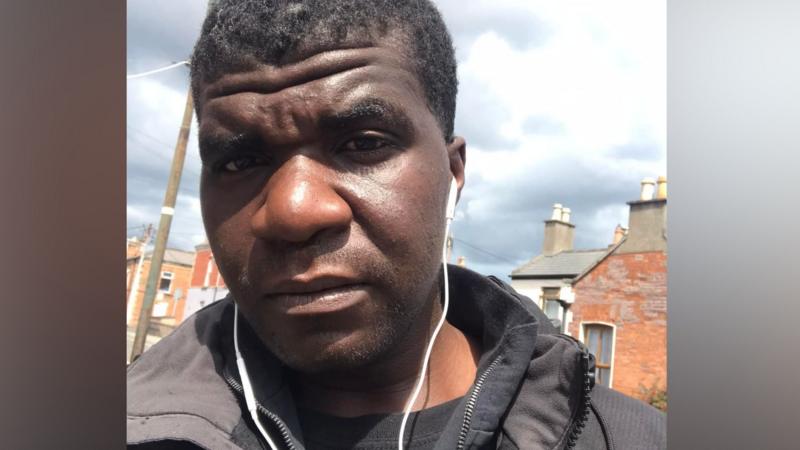
Yves Sakila, a 35-year-old man from the Democratic Republic of Congo, died after being detained by security guards during an alleged shoplifting incident in Dublin, Ireland. The incident is under police investigation, and protesters are gathering to demand a full, transparent inquiry.
Key Facts
Yves Sakila was detained by security guards on Henry Street, Dublin, after an alleged shoplifting event.
A man in his 80s was injured when Sakila tried to flee and is recovering in hospital.
Sakila became unresponsive at the scene and later died in Mater Hospital.
A disturbing video showing security guards restraining Sakila face down has circulated on social media.
The Irish police and the independent police ombudsman, Fiosrú, are investigating the case.
Irish political leaders, including Taoiseach Micheál Martin, have called for a full investigation.
The Irish Network Against Racism says the case might involve excessive force.
Protests and vigils have taken place, including one planned outside Ireland's parliament.
Read the Original
Want the full story? Tap a source to open the original
article.
The United States has charged former Cuban President Raúl Castro with murder related to a 1996 incident. In that event, Cuban fighter jets shot down planes flown by Cuban exiles. The move marks a significant step in U.S. efforts to pressure Cuba's government.
Key Facts
The U.S. announced murder charges against Raúl Castro on May 20, 2026.
The charges relate to a 1996 incident where Cuban jets downed aircraft operated by anti-Castro Cuban exiles.
The victims were members of a group opposing Cuba's communist government.
The charges come about 30 years after the incident occurred.
This action increases tensions between the U.S. and Cuba.
The U.S. government sees the charges as part of its broader pressure campaign against Cuba.
Raúl Castro was Cuba’s president when the 1996 shooting happened.
Read the Original
Want the full story? Tap a source to open the original
article.
Iran is considering the latest peace offer from the United States about ending conflict. President Donald Trump said he will wait a few more days for Iran's response but warned of more attacks if Iran does not agree to a deal.
Key Facts
Iran is reviewing the newest proposal from the U.S. on ending the war.
President Trump said he is willing to wait several days for Tehran’s answer.
Trump warned that if Iran rejects the deal, the U.S. may carry out new attacks.
The news was reported on May 21, 2026.
The situation involves ongoing tensions between the U.S. and Iran.
President Trump has taken a firm stance on Iran’s response regarding the conflict.
Read the Original
Want the full story? Tap a source to open the original
article.
President Donald Trump said he plans to have a phone call with Taiwan's President Lai Ching-te. This would be the first direct conversation between a U.S. president and a Taiwanese leader since 1979, when the U.S. recognized China instead of Taiwan. The call could upset relations between the United States and China.
Key Facts
President Trump announced he will speak with Taiwan's President Lai Ching-te.
U.S. and Taiwan presidents have not talked directly since 1979.
In 1979, the U.S. switched official recognition from Taiwan to China.
This planned call is unusual and could anger China.
France 24 reported on the situation from Taiwan.
The article mentions the possible topics of the leaders’ discussion are being considered.
The call may affect the complex relationship among the U.S., Taiwan, and China.
Read the Original
Want the full story? Tap a source to open the original
article.
Iran is reviewing a recent US response to its proposal to end the nearly three-month war involving the US and Israel. Pakistan is increasing its mediation efforts, with visits from its military and interior ministers to Iran, as talks continue with US President Donald Trump warning that the situation is close to either a deal or renewed attacks.
Key Facts
Iran is reviewing the latest US views related to ending the ongoing conflict.
Pakistan’s military chief and interior minister are traveling to Iran to discuss the peace talks.
US President Donald Trump said the talks are on the “borderline” between an agreement and new military strikes.
Iran submitted a 14-point proposal demanding control over the Strait of Hormuz, reparations, lifting sanctions, frozen assets, and US troop withdrawal.
The ceasefire has been in effect for six weeks, but efforts are ongoing to make the peace permanent.
Iran’s Foreign Minister said Iran is ready to negotiate or fight if necessary.
Iran’s Revolutionary Guard warned that renewed attacks could lead to a wider regional war.
The US wants to refocus negotiations on Iran’s nuclear program, moving away from Iran’s previous demands.
Read the Original
Want the full story? Tap a source to open the original
article.
China and Pakistan have maintained a 75-year diplomatic relationship, marked by cooperation and shared strategic interests. In 1963, Pakistan transferred a large area of disputed territory to China, reinforcing their partnership, which is celebrated today with official events and discussions of ongoing cooperation.
Key Facts
In 1963, Pakistan gave China control over the Shaksgam Valley, a 5,180 square kilometer area Pakistan did not fully control and which India claims as part of Kashmir.
The land transfer followed China’s victory in a border war with India in 1962.
Pakistan and China consider their relationship as very strong, often calling it “iron brothers” and an “all-weather friendship.”
Pakistani officials recently marked the 75th anniversary of diplomatic ties with China and passed a resolution reaffirming this friendship.
Pakistan’s Prime Minister Shehbaz Sharif is scheduled for a state visit to Beijing in late May 2024.
The China-Pakistan Economic Corridor, a major infrastructure project linking the two countries, relies on the Karakoram Highway completed in the late 1970s.
Their alliance is influenced by shared strategic interests rather than close cultural or ideological similarities.
The relationship includes sensitive issues like an unofficial nuclear agreement and cooperation on diplomatic matters, such as the 1971 conflict.
Read the Original
Want the full story? Tap a source to open the original
article.