Bollywood actor Kalki Koechlin and theatre director Sheena Khalid have created a play called Belly of the Beast, based on Kalki’s 2021 book about motherhood. The play shares stories of five women experiencing different stages of motherhood, including challenges like postpartum depression, miscarriages, and balancing work with childcare.
Key Facts
Belly of the Beast is adapted from Kalki Koechlin’s book The Elephant in the Womb.
The play portrays five women at various stages of motherhood, from pregnancy to raising young children.
It discusses difficult topics such as abortions, miscarriages, and postpartum depression.
Motherhood is often seen positively in India, but this play highlights the less talked about struggles.
Kalki Koechlin wrote the original book during the Covid lockdown while experiencing postpartum depression.
The play aims to show the emotional and physical difficulties mothers face, which society often overlooks.
At its premiere in Delhi, the play was well received for its balance of serious themes and moments of humor.
The play also reflects the experience of many Indian women who carry the main responsibility for childcare.
Read the Original
Want the full story? Tap a source to open the original
article.
Rahm Emanuel spoke in Tel Aviv about changing how the U.S. and Israel work together. He criticized Prime Minister Netanyahu’s government and suggested the U.S. should rethink its military aid to Israel and support efforts to create a Palestinian state.
Key Facts
Rahm Emanuel gave a speech in Tel Aviv about U.S.-Israel relations.
He criticized the current Israeli government led by Prime Minister Netanyahu.
Emanuel called for a new approach to how the U.S. provides military aid to Israel.
He emphasized the importance of restarting efforts to establish a Palestinian state.
The speech happened during a time when Americans and the Democratic Party are split on supporting Israel.
Emanuel discussed these issues in an interview with Geoff Bennett.
Read the Original
Want the full story? Tap a source to open the original
article.
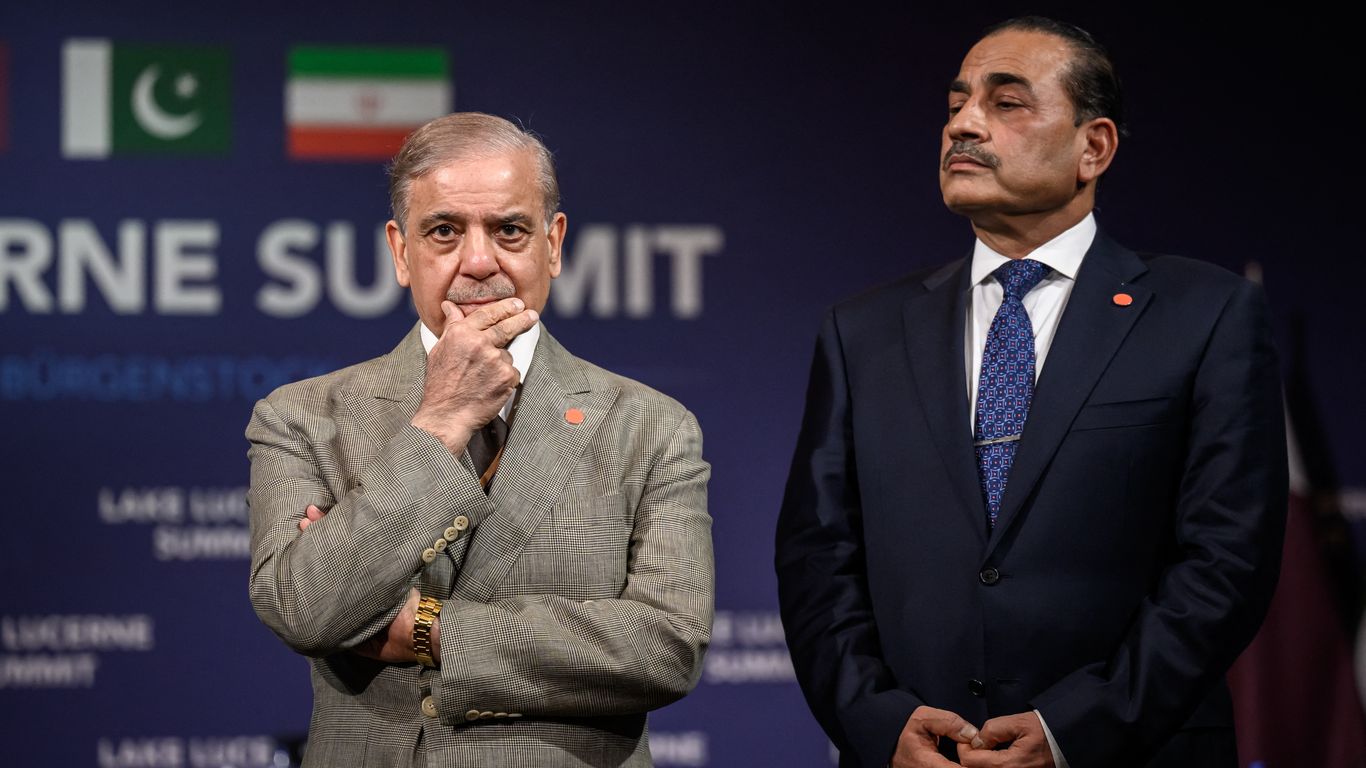
Countries like Qatar and Pakistan are working to reduce tensions between the U.S. and Iran and to restart talks on a nuclear agreement. Despite recent U.S. airstrikes, President Trump aims to avoid full-scale war and supports continued technical negotiations.
Key Facts
Qatar, Pakistan, Turkey, Egypt, and Saudi Arabia are acting as mediators between the U.S. and Iran.
President Trump announced the end of the U.S.-Iran memorandum of understanding (MOU) and ordered airstrikes in response to Iranian attacks.
Mediators believe some Iranian groups opposed to the MOU carried out recent attacks to disrupt the deal.
Several phone calls between officials from both sides took place to calm tensions and promote diplomacy.
Iran’s Foreign Minister said the U.S. attacks violated the MOU.
Negotiators hope to agree on reducing tensions and schedule another round of talks between technical teams.
After days of conflict, Thursday saw a decrease in military actions, with no new U.S. strikes reported.
President Trump’s administration remains committed to finding a resolution through ongoing talks.
Read the Original
Want the full story? Tap a source to open the original
article.
Several Americans remain imprisoned in Iran as tensions rise between the two countries. U.S. officials say they are working on resolving these cases through diplomacy, but families of the prisoners are worried their loved ones are being overlooked during the broader conflict.
Key Facts
There are still Americans in prison in Iran.
The situation between the U.S. and Iran is tense and getting worse.
U.S. officials say they are trying to solve these imprisonments through diplomatic talks.
Families of the imprisoned Americans are concerned they are not being prioritized.
The issue of prisoners is tied to the larger conflict between the two nations.
Read the Original
Want the full story? Tap a source to open the original
article.
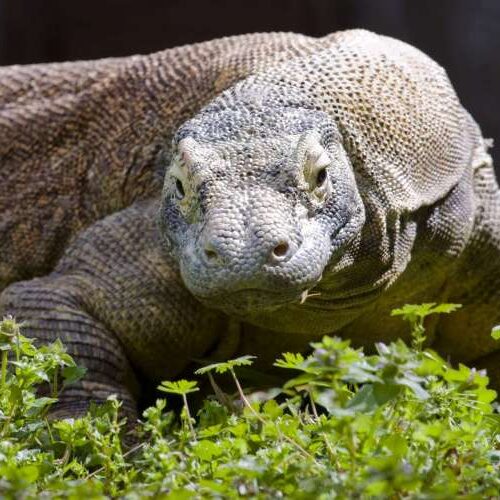
Scientists studied bones from pygmy elephants and found tooth marks from Komodo dragons alongside cut marks from stone tools. This suggests that small human relatives called Homo floresiensis scavenged elephant remains after Komodo dragons hunted them, rather than hunting the elephants themselves.
Key Facts
Homo floresiensis, nicknamed "Hobbits," lived on the Indonesian island of Flores about 60,000 years ago.
Pygmy elephants called Stegodon lived on Flores at the same time.
Elephant bones at the Liang Bua cave have marks from both Komodo dragon teeth and stone tools.
Researchers fed a goat to a Komodo dragon to compare bite marks with the fossil bones.
Komodo dragons left distinctive shallow, wide tooth marks, often on the meatiest parts of the body.
Stone tool marks appeared on less meaty parts, implying humans scavenged leftovers.
No evidence of fire use was found in the Homo floresiensis layers, so they likely ate raw meat from scavenged carcasses.
These findings challenge the idea that Homo floresiensis were skilled big-game hunters and raise new questions about early human migration and behavior.
Read the Original
Want the full story? Tap a source to open the original
article.
The article discusses how satire, which uses humor to criticize leaders and systems, can show how strong a democracy is. In a podcast, Judy Woodruff talks with experts about why being able to joke about those in power is important for free expression.
Key Facts
Satire uses humor to challenge authority and reveal hypocrisy.
It helps test the limits of free speech in a society.
Judy Woodruff hosts a podcast called “In Pursuit of Happiness.”
In this episode, she speaks with Joshua Johnson from The Onion Network.
She also talks with scholar Sophia McClennen about satire’s role.
The conversation focuses on how satire reflects the health of democracy.
Laughing at leaders shows that people can express themselves openly.
Read the Original
Want the full story? Tap a source to open the original
article.
Hermanos Gutiérrez create music that mixes Latin, surf rock, folk, and Western film styles. They are now focusing on their family heritage from Ecuador and Peru for their new album.
Key Facts
Hermanos Gutiérrez are two brothers who make instrumental music.
Their style combines Latin music, surf rock, folk, and sounds from Western movies.
They are inspired by their family's traditions from Ecuador and Peru.
The brothers recently performed a piece called "Los Ojos del Cóndor."
They discussed their music and inspiration in an interview with Geoff Bennett.
This interview was part of the arts and culture series called CANVAS.
Read the Original
Want the full story? Tap a source to open the original
article.
South Korea has launched a new government app that lets stalking victims track their stalkers’ locations in real time. Officials hope this app will provide better protection, but some experts question if it will truly increase safety.
Key Facts
The app allows victims to see where their stalkers are in real time on their phones.
It was created and released by the South Korean government.
The goal is to give stronger protection to people who experience stalking.
Some experts doubt the app’s effectiveness in actually preventing harm.
The app’s use involves personal safety and privacy concerns.
Victims’ identities can be protected while using the app.
South Korea is trying new technology to address stalking issues.
The app is part of a broader effort to improve victim support services.
Read the Original
Want the full story? Tap a source to open the original
article.
American-made drone technology is helping Ukraine target strikes deeper inside Russia. This support continues even though the U.S. has reduced some other military aid to Ukraine.
Key Facts
Ukraine is using drones made in the United States to guide its military strikes.
These drones help Ukraine hit targets farther inside Russian territory.
The U.S. has recently scaled back certain military support for Ukraine.
Despite this reduction, the American drone technology remains in use by Ukraine.
The information comes from a CBS News report by international correspondent Aiden Stretch.
Read the Original
Want the full story? Tap a source to open the original
article.
Michigan is experiencing a large outbreak of a tiny parasite called Cyclospora cayetanensis, which causes diarrhea and is found on contaminated food or water. Over 1,200 cases have been reported in Michigan, with hundreds more in nearby Ohio, and health officials are still trying to find the exact source.
Key Facts
Michigan has reported 1,251 cases of cyclosporiasis as of July 9, with 44 people hospitalized.
The outbreak started in late June and grew rapidly, with a record 239 cases in one day on July 8.
Nearby Ohio has also seen more than 500 cases, especially in Lucas County.
Cyclospora is a microscopic parasite that spreads through contaminated food or water, often produce.
Symptoms include watery diarrhea, nausea, fatigue, cramps, and bloating, with diarrhea lasting a month or more if untreated.
The illness is treated with an antibiotic combination called trimethoprim-sulfamethoxazole (Bactrim).
People are advised to thoroughly wash or cook produce like lettuce, green onions, cilantro, basil, snow peas, and raspberries to reduce risk.
The parasite becomes infectious about one to two weeks after being shed in feces and is not spread directly between people.
Read the Original
Want the full story? Tap a source to open the original
article.
Scientists predict a very strong El Niño event this winter, which usually brings more rain to California. While this could increase water in reservoirs, many of California's largest reservoirs are already full, so managers might release some water to prevent flooding.
Key Facts
El Niño is a climate pattern where ocean waters in the tropical Pacific become warmer than usual.
NOAA says there is a 75 to 81 percent chance of a very strong El Niño between November and January.
Strong El Niño events tend to bring more rainfall to California during its wet season.
California’s biggest reservoirs, like Lake Shasta and Lake Oroville, are currently at or above their usual water levels.
Because reservoirs are nearly full, water managers may release water early to create space for upcoming storms.
Releasing water early can reduce the ability to store rainwater from future storms.
Not all rain benefits California’s water supply equally, partly because the state depends on snow in the Sierra Nevada mountains.
The relationship between El Niño and California’s rainfall is clearer with very strong El Niño events than with weaker ones.
Read the Original
Want the full story? Tap a source to open the original
article.
Taylor Coulter, an 18-year-old from Scotland, was injected with a date rape drug called GHB using a needle while at a nightclub in Magaluf, Spain. She received hospital treatment and is now recovering but suffering side effects that affect her ability to exercise and train for football.
Key Facts
The incident happened on June 21 at Bananas nightclub in Magaluf.
Taylor felt a sharp pain in her arm before the drug took effect within 20 seconds.
The drug was gamma-hydroxybutyrate (GHB), known to cause extreme sleepiness and memory loss.
Blood tests also found an anti-depressant drug in her system.
Taylor’s friends helped her immediately and called her parents and medical professionals.
She is on anti-viral medication to protect against infections from the needle, which causes fatigue and limits her physical activity.
Taylor is a football player who was due to start a scholarship in the United States soon.
This was her first holiday abroad without her parents, traveling with friends after finishing secondary school.
Read the Original
Want the full story? Tap a source to open the original
article.
Syrian authorities have arrested a group they say was responsible for bombings in Damascus two days ago. These bombs exploded near the Four Seasons hotel during French President Emmanuel Macron’s visit to the city.
Key Facts
Two bombs exploded in Damascus on Tuesday, injuring 36 people.
The bombs were placed in a parked car and a rubbish bin near the Four Seasons hotel.
The explosives detonated as experts tried to defuse them.
Syrian Interior Minister Anas Khattab said the suspects were caught after raids in four areas of Damascus and its outskirts.
The government will reveal more details about the group after investigations finish.
The bombings happened during Macron’s visit, the first by a European Union head of state since Bashar al-Assad was ousted in December 2024.
Another bomb attack last week killed nine people in a crowded café in central Damascus.
No group has taken responsibility, but officials say some actors want to destabilize Syria.
Read the Original
Want the full story? Tap a source to open the original
article.
The recent fighting between the United States and Iran centers on control of the Strait of Hormuz, a key waterway for global oil transport. Iran views control of the strait as a strategic advantage and insists on coordinating ship passage, while the U.S. demands the strait remain open without restrictions, leading to ongoing clashes.
Key Facts
Iran shut down the Strait of Hormuz during conflict with the U.S. and Israel to gain strategic control.
The Strait of Hormuz is a vital route for international oil shipments.
A memorandum of understanding (MoU) between the U.S. and Iran aimed to keep the strait open and safe for commercial ships.
Iran wants to coordinate and control ship passage, while the U.S. opposes Iran’s exclusive control.
Recent attacks on commercial ships near the strait led to U.S. military strikes against Iranian targets.
President Donald Trump declared the MoU ended amid renewed fighting.
The MoU’s language about managing the strait is unclear and causes different interpretations by both sides.
The U.S. military claims it has helped ensure safe passage for hundreds of commercial ships in the strait since May.
Read the Original
Want the full story? Tap a source to open the original
article.
Twin earthquakes in Venezuela last month caused many deaths and destroyed hundreds of buildings, especially in La Guaira. People displaced by the quakes face health problems like diarrhea and chronic illnesses due to crowded shelters and poor water and sanitation. The United Nations is seeking $300 million to help 1.3 million people in urgent need.
Key Facts
Powerful earthquakes hit Venezuela on June 24, causing major damage in La Guaira state.
Around 190 buildings collapsed and 856 others were damaged in the quakes.
Many people live in crowded shelters, increasing the risk of diseases.
Doctors report rises in skin problems, diarrhea, and chronic illness cases like diabetes and high blood pressure.
The United Nations requested about $300 million to help 1.3 million vulnerable Venezuelans.
Mobile kitchens, clinics, and field hospitals are set up to support affected communities.
Venezuelan nongovernmental organizations are providing relief after government restrictions eased.
UN humanitarian chief Tom Fletcher noted people now need treatments beyond immediate injuries, including ongoing health care.
Read the Original
Want the full story? Tap a source to open the original
article.
Syrian officials said they arrested several people linked to recent bombings in Damascus, including attacks during French President Emmanuel Macron’s visit. The explosions killed one person, wounded dozens, and happened as Syria’s government faces pressure to rebuild after a long civil war.
Key Facts
Syrian security forces arrested suspects behind recent bombings in Damascus.
The arrests followed raids in the capital and nearby areas to dismantle the bombing cell.
Bombs exploded in a garbage bin and a parked car during President Macron’s visit to Syria.
Macron was unharmed and continued his meeting with Syrian President Ahmad al-Sharaa.
The bombings killed 1 person and injured 36 others, according to Syria’s Health Ministry.
Another bombing last week in a cafe near Damascus’s judicial complex killed at least 10 people.
No group has claimed responsibility for these attacks.
Syria is working on rebuilding after nearly 14 years of civil war that caused massive death and destruction.
Read the Original
Want the full story? Tap a source to open the original
article.
Wally Funk, an aviation pioneer and the oldest woman to travel into space at age 82, has died at 87 in Grapevine, Texas. She was part of an early group of female pilots who trained like NASA astronauts in the 1960s but were not allowed to go to space until her flight on Jeff Bezos' Blue Origin rocket in 2021.
Key Facts
Wally Funk died at age 87 in an assisted living facility in Grapevine, Texas.
She was the oldest woman to go into space, flying on Blue Origin’s rocket in 2021 at age 82.
Funk was part of the Mercury 13 program, a group of women who underwent astronaut tests in the 1960s but did not become astronauts then.
Jeff Bezos invited her as an honored guest on his 2021 spaceflight.
Funk was the first female Federal Aviation Administration inspector and the first female air safety investigator for the National Transportation Safety Board.
She had fallen several times and had a leg infection before she died.
NASA Administrator Jared Isaacman praised her passion and perseverance after her death.
Wally Funk was known for being optimistic despite facing many rejections in her career.
Read the Original
Want the full story? Tap a source to open the original
article.
Wally Funk, a pioneering female pilot who became the oldest woman to travel into space, has died at age 87. She flew on Amazon founder Jeff Bezos' Blue Origin rocket in 2021 after decades of trying to become an astronaut.
Key Facts
Wally Funk died at age 87 in Grapevine, Texas.
She was cared for by Grapevine City Councilwoman Duff O'Dell at the time of her death.
Funk was one of 13 women tested alongside NASA's male astronauts in the 1960s but did not go to space then.
In 2021, at age 82, she flew to space on Blue Origin’s rocket, making her the oldest woman in space at that time.
Her record was later surpassed by actor William Shatner and astronaut candidate Ed Dwight, both aged 90.
Jeff Bezos invited Funk as an honored guest on the Blue Origin flight from West Texas.
NASA Administrator Jared Isaacman praised her passion for flight and inspiration to Americans.
Read the Original
Want the full story? Tap a source to open the original
article.
Explosions were reported in several locations in Iran, including near a nuclear plant, but the US military denied involvement. Tensions between Iran and the US, as well as Israel, continue to rise with ongoing military exchanges and threats.
Key Facts
Explosions occurred near Iran’s Bushehr nuclear plant, Choghadak, and Konarak.
Iran’s deputy governor said the Bushehr blast was caused by air defense systems and a military headquarters was hit by a projectile.
The US Central Command confirmed it carried out no strikes in Iran recently.
Iran and the US have exchanged attacks since Tuesday, including Iranian strikes on Gulf military sites in Qatar, Bahrain, and Kuwait.
Israeli leaders said the conflict with Iran is ongoing and declared readiness for further military action.
Tensions also involve attacks on commercial ships in the Strait of Hormuz, a key shipping route.
The US removed a waiver on Iranian oil exports, increasing economic pressure on Iran.
Both sides have not formally ended a ceasefire deal but the situation remains unstable with risks of wider conflict.
Read the Original
Want the full story? Tap a source to open the original
article.