Pastor Jin Mingri, leader of a large underground Christian church in China, was released after months in detention and arrived in Los Angeles on July 4, 2026. His release followed a wider crackdown on underground churches in China and diplomatic discussions between President Donald Trump and Chinese President Xi Jinping.
Key Facts
Pastor Jin Mingri, also called Ezra Jin, founded Zion Church in Beijing in 2007.
Zion Church is one of the biggest underground (unregistered) Christian churches in China.
Chinese authorities closed the church’s physical building in 2018, but it kept meeting online.
Jin was detained in October 2025 during a crackdown on underground church leaders.
Eighteen church leaders, including Jin, were accused of illegally using information networks.
President Donald Trump raised Jin’s case with Chinese President Xi Jinping in May 2026.
Jin’s family thanked both President Trump’s administration and President Xi for the release.
Human Rights Watch said at least eight other Zion Church members are still detained in China.
Read the Original
Want the full story? Tap a source to open the original
article.
A photographer traveled to Venezuela to document the aftermath of two earthquakes. He took a photo showing a damaged building with one lit room amid darkness, highlighting both destruction and hope for survivors.
Key Facts
The photographer, Matias Delacroix, is based in Panama and covers humanitarian crises.
He arrived in Venezuela after multiple flights and reached the disaster area after dark.
The earthquake caused widespread destruction and darkness in the area.
Rescue teams used sound-based searches to find survivors.
The photograph shows a single illuminated room in a heavily damaged apartment building.
This image contrasts light with darkness to symbolize possible survival amid loss.
Delacroix intended to create a quiet and thoughtful image rather than just show damage.
Read the Original
Want the full story? Tap a source to open the original
article.
Iran is holding multiple funeral ceremonies for Ayatollah Ali Khamenei and several family members after their deaths in an attack. Mojtaba Khamenei, son who succeeded Ali Khamenei as supreme leader, has not appeared publicly, reportedly due to injuries from the attack. Large crowds have gathered in Tehran and other Shia religious sites for processions and prayers.
Key Facts
Ali Khamenei and four family members died in an attack in late February.
Mojtaba Khamenei, the new supreme leader and son of Ali Khamenei, was injured and has not appeared publicly.
Funeral prayers and public mourning are taking place at Tehran’s Imam Khomeini Mosalla religious complex.
The coffins have been displayed indoors and outdoors for public viewing.
Iranian officials, including the president and parliament speaker, have attended the ceremonies.
Millions of people are expected to join upcoming funeral processions in Tehran, Qom, Mashhad, and Shia holy cities in Iraq (Najaf and Karbala).
The funerals are described as a display of devotion to Iran’s theocratic state and revolutionary ideals.
The recent war involving Iran, the US, and Israel has paused under a ceasefire, with peace talks temporarily on hold due to funeral events.
Read the Original
Want the full story? Tap a source to open the original
article.
A Delta Air Lines plane was hit by a firework while landing at Chicago Midway International Airport on July 4. The plane landed safely with no reported injuries and was taken for an inspection after reaching the gate.
Key Facts
The incident happened on July 4 during the plane’s landing at Chicago Midway Airport.
The plane involved was Delta Flight 1076 coming from Atlanta.
Pilots reported hearing a bang when the firework hit the aircraft.
The plane landed safely without an emergency landing.
Passengers and crew were reported to be unharmed.
Delta removed the plane from service temporarily for inspection.
Authorities like the FAA were contacted for more information.
The story is still developing with updates expected.
Read the Original
Want the full story? Tap a source to open the original
article.
One person was killed and two were injured in a Ukrainian attack on Crimea, a peninsula controlled by Russia since 2014. Around the same time, Russian President Vladimir Putin and Ukrainian President Volodymyr Zelenskyy each spoke separately with U.S. President Donald Trump about efforts to end the ongoing war.
Key Facts
Crimea is controlled by Russia after being taken in 2014, but Ukraine continues to target it with attacks.
A recent Ukrainian strike killed one person and injured two others in northern Crimea.
Ukraine has increased attacks on important infrastructure in Crimea to isolate the region.
Putin and Zelenskyy both had phone calls with President Trump about ending the conflict in Ukraine.
These calls came as the war between Russia and Ukraine entered its fifth year.
Trump expressed willingness to help stop the fighting and support peace talks.
Putin said Russia wants a diplomatic solution but criticized Kyiv and European countries for wanting to continue the war.
Trump’s representatives Jared Kushner and Steve Witkoff are involved in mediation efforts and may visit Moscow.
Read the Original
Want the full story? Tap a source to open the original
article.
Iran’s ambassador to China said Iran will charge fees for ships passing through the Strait of Hormuz but will give special treatment to China and other friendly countries. Iran and Oman are working together to create new rules for the strait, while talks continue with the United States about a permanent agreement.
Key Facts
Iran plans to charge service fees for ships passing through the Strait of Hormuz.
China and other friendly countries will receive special considerations on these fees.
Iran’s ambassador said the fees are to cover security, supervision, and environmental protection of the strait.
Iran and Oman have formed a joint committee to manage the strait.
The US and Iran signed a temporary deal for free passage through the strait for 60 days.
The US says Iran cannot charge tolls in any final agreement.
The strait is a key route for about one-fifth of the world’s oil and natural gas shipments.
Recent conflicts and blockades involving the US, Iran, and Israel have affected the security and control of the strait.
Read the Original
Want the full story? Tap a source to open the original
article.
President Donald Trump offered to help Russian President Vladimir Putin find a way to end the war in Ukraine, according to a Kremlin official. Both Trump and Ukrainian President Volodymyr Zelenskyy discussed the conflict and agreed to continue talks at the upcoming NATO summit in Ankara.
Key Facts
President Trump spoke with President Putin for about 90 minutes to discuss the Ukraine war.
Kremlin aide Yury Ushakov said Trump expressed readiness to work towards a quick end to the fighting.
Ukrainian President Zelenskyy also spoke with Trump and discussed the 745-mile front line of the war.
Both leaders agreed to continue discussions at the NATO summit set for July 7-8 in Ankara.
Russia claims to have captured key city Kostiantynivka, but Ukraine denies losing control of it.
Fighting has slowed recently, partly because drones make it hard for heavy vehicles to move.
Ushakov accused Ukraine and its European allies of wanting to extend the conflict and attacking civilians.
US diplomats Steve Witkoff and Jared Kushner are still trying to help negotiate a settlement and may visit Moscow again.
Read the Original
Want the full story? Tap a source to open the original
article.
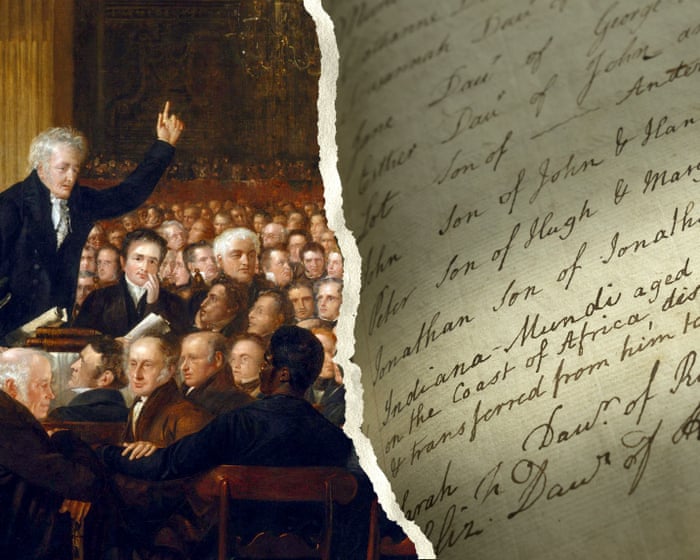
A baptism record from 1798 found at Manchester Cathedral shows a 14-year-old enslaved African girl named Indiana Mundi was baptized in the city. This record sheds light on the life of Black people in Georgian-era England and is part of efforts to recognize their history with a new memorial at the cathedral.
Key Facts
Indiana Mundi was a 14-year-old enslaved girl from Congo baptized at Manchester Cathedral on 26 December 1798.
She was owned by Archibald Paton, a Liverpool doctor who lived in Manchester.
Black servants like Indiana were seen as a status symbol in wealthy British households at the time.
Baptism was politically important because it was believed it could grant enslaved people legal rights and freedom.
Enslaved Africans were brought to British colonies such as St Kitts, known for sugar plantations.
The record was rediscovered by a cathedral researcher while reviewing 18th-century documents.
The cathedral plans to create a memorial for Indiana and others enslaved in Manchester, funded by the Heritage Lottery.
The story connects to wider history, including the 1771 legal case Somerset v Stewart, which challenged slavery practices in Britain.
Read the Original
Want the full story? Tap a source to open the original
article.
An American scholar named Min Zin was arrested by Chinese authorities in June on suspicion of spying. Sources say he was detained because he exposed China's growing influence and involvement in Myanmar, a country experiencing conflict and political unrest.
Key Facts
Min Zin is an American citizen and Executive Director of the Institute for Strategy and Policy-Myanmar, based in Thailand.
He was invited to a China state-sponsored conference in Kunming, a city important for China's activities in Southeast Asia.
He disappeared on June 3, 2024, after traveling to China, raising concerns about the safety of foreign scholars there.
Min Zin’s arrest happened shortly before Myanmar’s leader Min Aung Hlaing visited China for the first time since his 2021 coup.
Myanmar is strategically important to China, which is the main external power influencing the country.
China and India both have strategic interests in Myanmar; Myanmar seeks some political and military support from India but remains closely tied to China.
Min Zin had written about China’s economic and strategic actions in Myanmar, including illegal rare earth mining activities.
Experts believe Min Zin's arrest may be intended to stop his work and to see if the U.S. will respond, but the U.S. has taken little action so far.
Read the Original
Want the full story? Tap a source to open the original
article.
President Donald Trump spoke with Russian President Vladimir Putin and Ukrainian President Volodymyr Zelensky to discuss the ongoing conflict in Ukraine before the NATO summit in Turkey. The negotiations are currently stalled, with Russia demanding Ukraine withdraw troops from the Donetsk region, a demand Ukraine rejects.
Key Facts
President Trump had phone talks with both Putin and Zelensky on July 4, 2026.
Trump offered to help find a solution to the war in Ukraine.
Russia wants Ukraine to remove its forces from the entire Donetsk region.
Ukraine rejects Russia’s demand and denies losing control of the city Kostyantynivka.
Zelensky described his call with Trump as "very good" and emphasized the need for American support to end the war.
Recent attacks caused deaths in Russia’s border regions and disrupted local infrastructure.
Both leaders agreed to continue discussions at the NATO summit in Turkey.
The conflict has lasted more than four years.
Read the Original
Want the full story? Tap a source to open the original
article.
Every summer, people gather at Mount Olympus in northern Greece to take part in the Prometheia Festival, which revives ancient Greek religious rituals. The event celebrates Greece's old cultural and spiritual traditions by honoring gods like Zeus and Prometheus through ceremonies and performances.
Key Facts
The Prometheia Festival lasts four days and happens annually at the start of summer.
It is held near Mount Olympus, known in mythology as the home of the Greek gods.
Participants reenact ancient rituals such as torchlight processions and hymns to gods like Zeus.
The festival is organized by the association "Prometheus, the Fire Bringer."
Many participants adopt ancient Greek-inspired names and celebrate polytheism (belief in many gods).
The event aims to reconnect people with Greece’s cultural and historical heritage.
Ceremonies include paying respect to nature spirits like Nymphs and Nereids.
The festival ends with ancient-inspired theatrical shows, dances, and celebrations in nearby forests.
Read the Original
Want the full story? Tap a source to open the original
article.
A public relations firm analyzed how artificial intelligence (AI) tools talk about British royals and found King Charles III and his family receive more positive and neutral coverage than Prince Harry and Meghan Markle. The royal family benefits from trustworthy official sources that AI often relies on, while Harry and Meghan take a cautious approach to AI as the technology evolves.
Key Facts
A New York PR firm named 5W tested AI platform Claude with 18 questions about the British royals.
King Charles III and the palace family scored 70 out of 100, while Harry and Meghan scored 51.
King Charles was mentioned most often by AI, followed by Prince William, then Prince Harry.
The palace royals had more neutral and some positive mentions; Harry and Meghan had more negative but also some positive mentions.
The palace benefits from official websites and trusted archives that AI trusts for information.
Harry and Meghan are cautious about AI use, concerned about privacy and constantly changing technology.
The analysis shows AI's growing role in shaping public views beyond traditional media.
The Palace's online presence includes official .uk government sites, royal diaries, and BBC archives, helping its AI reputation.
Read the Original
Want the full story? Tap a source to open the original
article.
Paris’ appeals court will decide Marine Le Pen’s fate in her embezzlement case, which could affect her ability to run for president in 2027. Le Pen was convicted in 2025 for misusing European funds but denies wrongdoing and is appealing the conviction and a ban on holding office.
Key Facts
Marine Le Pen was convicted in March 2025 for illegally using European Parliament funds to pay party staff.
She was sentenced to suspended prison time and a five-year ban on holding elected office.
Le Pen denies intentional wrongdoing and says she thought the funding was allowed.
The appeals court ruling could clear her, reduce her ban, or uphold a heavy sentence.
If banned, Le Pen’s ally Jordan Bardella could become the party’s presidential candidate.
A ban of two years or less would end before the April 2027 presidential election’s first round.
Le Pen said judicial restrictions could prevent her from campaigning even if allowed to run.
Prosecutors want a four-year prison sentence, including some time suspended.
Read the Original
Want the full story? Tap a source to open the original
article.
Jin Mingri, leader of an underground Chinese church, was released from prison and traveled to the United States less than two months after his detention. His release followed pressure from President Donald Trump during talks with Chinese President Xi Jinping, amid a wider government crackdown on unregistered religious groups in China.
Key Facts
Jin Mingri founded the Zion Church, one of China’s largest unregistered churches, with about 10,000 members in 40 cities.
The church was banned by the Chinese government in 2018 for refusing to install surveillance cameras.
Jin was detained during coordinated raids on religious groups in October 2025.
President Donald Trump raised Jin’s imprisonment during talks with Chinese President Xi Jinping in May 2025.
Jin’s family credited the release to the direct intervention of President Xi and support from the U.S. government.
China’s government promotes atheism and only allows state-approved religious groups.
Many other underground church leaders remain imprisoned after the crackdown.
The Inter-Parliamentary Alliance on China and rights group ChinaAid welcomed Jin’s release.
Read the Original
Want the full story? Tap a source to open the original
article.
Six round objects that may be debris from a rocket were found on beaches near Townsville, Queensland. Australian authorities are checking if these objects, called "space balls," contain toxic rocket fuel and are working to find out where they came from.
Key Facts
Six spherical objects were found on north Queensland beaches in the Forrest Beach area.
The objects are suspected to be space debris known as "space balls," leftovers from rocket launches.
These objects may contain a dangerous chemical fuel called hydrazine.
Five objects have been secured safely; one was still being made safe by authorities.
The Australian Space Agency and local police are investigating the origin and safety of the objects.
There is no current danger to the local community, but more debris may appear soon.
Space balls are pressurized fuel vessels made from strong titanium alloy and can remain hazardous.
Australia receives some space debris due to its large land area and increasing space launches globally.
Read the Original
Want the full story? Tap a source to open the original
article.
Iran is undergoing major changes after the death of its former supreme leader, Ayatollah Ali Khamenei, following a recent war with the US and Israel. A fragile ceasefire holds, but the Middle East remains unstable, with ongoing tensions and shifting alliances.
Key Facts
President Trump signed a ceasefire agreement with Iran at the Palace of Versailles.
The ceasefire is fragile, with some clashes near the Strait of Hormuz.
Ayatollah Ali Khamenei, Iran’s former supreme leader, died over four months ago in US-Israeli airstrikes.
Iran faces profound internal changes and new leadership after Khamenei’s death.
Iran’s economy is damaged by years of sanctions and recent conflict.
Iran’s nuclear program is weakened but still partially intact, with uranium believed buried near Isfahan.
Iranian allies in Syria, Lebanon (Hezbollah), Gaza (Hamas), and Yemen (Houthis) have suffered significant losses.
Experts say the war could reorder power dynamics in the Middle East.
Read the Original
Want the full story? Tap a source to open the original
article.
A new medical trial began in early July in eastern Congo to test two experimental treatments for the Bundibugyo strain of the Ebola virus. The outbreak has infected over 1,400 people and caused 438 deaths, and the trial aims to see if these treatments help patients survive.
Key Facts
The Ebola outbreak is centered in eastern Congo’s Ituri province, particularly in Bunia.
The virus strain causing this outbreak is called Bundibugyo, which is less common than other Ebola strains.
There are currently no approved treatments or vaccines specific to the Bundibugyo strain.
The World Health Organization (WHO) supports a trial testing remdesivir, an experimental antibody called MBP134, or a combination of both.
The first participant was enrolled in the trial, which will monitor survival for 28 days after treatment starts.
The trial is a partnership involving Congo’s national research institute, Oxford University, the Institute of Tropical Medicine in Antwerp, and other health organizations.
The study will first treat confirmed Ebola patients in hospitals, later expanding to healthcare workers and people at high risk.
Researchers expect the trial to last between three and six months, depending on how the outbreak develops.
Read the Original
Want the full story? Tap a source to open the original
article.
NATO Secretary General Mark Rutte has spent nearly two years trying to keep the United States committed to NATO, often using praise to convince President Trump not to leave the alliance. Despite allied countries increasing defense spending, concerns remain about turning money into strong military forces, and Trump expressed dissatisfaction over some allies not joining his Iran war.
Key Facts
Mark Rutte is the NATO Secretary General and has focused on keeping the U.S. involved in NATO.
President Trump has repeatedly threatened to leave NATO or reduce U.S. involvement.
NATO allies agreed to increase defense spending to match the U.S. share in their economy.
The main challenge is improving military capabilities, especially in Europe, due to concerns about Russia.
Rutte made a special presentation called “The Trump Trillion” to show $1.2 trillion spent by NATO allies since 2017.
Trump said he values loyalty more than money from allies and criticized some for not joining his Iran war.
Trump considered skipping the NATO summit in Turkey but might attend because Turkish President Erdogan is hosting.
Rutte and Erdogan are seen as leaders Trump respects, making their roles important in keeping NATO cooperation.
Read the Original
Want the full story? Tap a source to open the original
article.
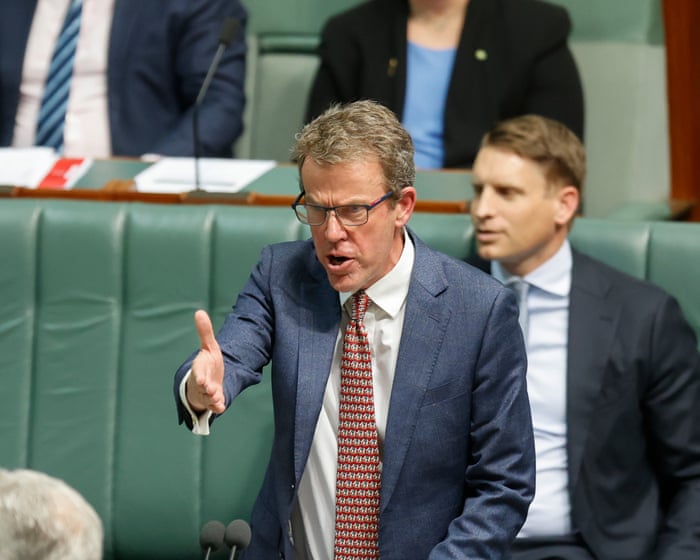
Liberal frontbencher Dan Tehan said the Liberal and National parties are not discussing forming a coalition with One Nation, despite some internal debate and polls showing One Nation's growing support. There are different views within the Coalition about how to handle One Nation’s rise, but officially they want to remain a coalition only between the Liberal and National parties.
Key Facts
Dan Tehan, a senior Liberal Party member, said no coalition talks are happening with One Nation.
Some Coalition members support cooperation with One Nation, while others strongly oppose it.
One Nation’s poll numbers are close to the ruling Labor Party and ahead of the Coalition.
The division over One Nation's role reflects challenges for the Coalition to return to government.
Tony Abbott, Liberal party president, supports preference deals with One Nation, but Tehan emphasized party decisions are made by the Coalition partyroom.
Polls show Labor at 30%, One Nation at 26%, and the Coalition at 23%.
Tehan said migration policy will be decided within the Coalition partyroom, not by Abbott’s outside comments.
The debate shows tension inside the conservative parties about how to handle changing political support.
Read the Original
Want the full story? Tap a source to open the original
article.
The article discusses how certain world leaders, including President Donald Trump, Vladimir Putin, and Benjamin Netanyahu, act in ways many consider immoral, such as promoting violence and ignoring basic ethical principles. It highlights concerns about declining respect for moral standards in politics worldwide and points to Pope Leo as a voice calling for moral leadership.
Key Facts
President Donald Trump, Vladimir Putin, and Benjamin Netanyahu are criticized for immoral behavior and promoting violence.
These leaders are said to reject or fail to understand basic moral standards.
Putin’s Russia has attacked civilians in Ukraine, widely seen as immoral.
The United Nations has accused Israel under Netanyahu of targeting children in Gaza, calling it genocide.
Vice-President JD Vance suggested that actions like those in the Watergate scandal would be less scandalous today, signaling a shift in moral norms.
The article claims Trump’s legacy includes making immoral conduct in public office seem normal, both in the US and abroad.
International law often gets ignored or violated by these leaders.
Pope Leo has called out the current state of global leadership and condemned war and suffering, urging a return to moral values.
Read the Original
Want the full story? Tap a source to open the original
article.