Tidying expert Dilly Carter shares common cluttering mistakes and tips to organize homes better. She emphasizes keeping kitchen counters clear, folding clothes so they are visible, and using multiple small toy boxes instead of one large box for children’s toys.
Key Facts
Dilly Carter is a tidying expert who started organizing homes while working as a personal assistant.
She hosts a BBC podcast where she talks to celebrities about their favorite home items and gives decluttering advice.
Kitchen counters often get cluttered with many appliances; only keep items used regularly on display.
It’s better to buy kitchen gadgets that serve multiple purposes, like blenders over single-use juicers.
Clothes like shirts and blouses should be hung, while T-shirts can be folded and stored in a way that makes them easy to see.
Using one large toy box for children’s toys can make finding specific toys harder and create more mess.
Smaller, categorized toy boxes help children find toys more easily and keep the space tidier.
Read the Original
Want the full story? Tap a source to open the original
article.
A man named Marios spends up to 14 hours a day on his phone and is receiving therapy to reduce his phone addiction, which he compares to being like a drug. Experts and treatment centers in the UK report a rise in people seeking help for excessive phone use, although phone addiction is not officially recognized as a medical condition.
Key Facts
Marios, a personal trainer, can spend more than 14 hours daily on his phone, especially on Instagram.
He is undergoing a 12-session private therapy course to control his phone use, which he links to feelings of loneliness.
A survey by Deloitte found that 70% of 1,000 adults felt they spent too much time on their phones.
UK Addiction Treatment Centres (UKAT) report that one in three clients treated for drug addiction also show secondary phone dependency, up from one in ten in 2019.
Some clients refuse to give up their phones even when entering rehab for other addictions.
Steps Together rehab centers in the UK are now treating more people for phone addiction alongside other addictions like drugs, alcohol, and gambling.
The brain’s reward system releases dopamine when we get messages or social media likes, which can lead to compulsive phone use.
People from any background can develop phone addiction, and it can cause people to lose hours or days absorbed in their devices.
Read the Original
Want the full story? Tap a source to open the original
article.
In Venezuela, people are upset because the military is stopping them from entering areas hit hard by recent earthquakes. Many citizens want to help rescue survivors but have been blocked from doing so by the military.
Key Facts
Venezuela experienced two earthquakes on Wednesday.
Large areas were severely damaged by the earthquakes.
Many citizens traveled to the affected areas to help with rescues.
People do not trust the government to act quickly in saving survivors.
The military has stopped citizens from entering the disaster zones.
The restrictions have caused anger among the population.
Read the Original
Want the full story? Tap a source to open the original
article.
A man is working to help Americans remember and protect the history of the Underground Railroad as the United States approaches its 250th anniversary. The Underground Railroad was a network that helped enslaved people escape to freedom.
Key Facts
The U.S. is preparing to mark 250 years since the start of the Underground Railroad.
The Underground Railroad was a secret system used to help enslaved people escape slavery.
One individual is retracing the Underground Railroad route.
The goal is to preserve and honor this important part of American history.
CBS News covered the story to raise awareness about this effort.
The story was shared by journalist Jericka Duncan.
The Underground Railroad involved many people who risked their lives for freedom.
Read the Original
Want the full story? Tap a source to open the original
article.
The leader of Hezbollah refused a ceasefire deal arranged by the United States and Israel. The deal would require Hezbollah to give up its weapons, which is considered difficult to achieve.
Key Facts
Hezbollah is a political and military group based in Lebanon.
The ceasefire deal was negotiated by the U.S. and Israel.
Hezbollah's leader rejected the ceasefire agreement.
The deal includes a requirement for Hezbollah to disarm (give up weapons).
Disarming Hezbollah is seen as challenging due to its strong military presence.
The conflict involves tensions between Hezbollah and Israel.
The refusal means fighting could continue in the region.
Read the Original
Want the full story? Tap a source to open the original
article.
Historians have studied thousands of news reports called akhbarat from Mughal India, written in Persian during the late 1600s. These reports, used as an information network, recorded military, political, and court events, providing detailed insights into the empire under Emperor Aurangzeb.
Key Facts
Akhbarat were daily news reports created by scribes and officials in Mughal India starting in the late 16th century.
They covered topics like military campaigns, court appointments, finances, and gossip.
The reports were written in Persian and circulated widely between imperial and provincial courts.
These documents helped unify the large Mughal empire, which ruled much of the Indian subcontinent and nearly a quarter of the world’s population.
Historian Munis D Faruqui studied over 6,500 pages of these reports over 20 years, focusing on the reign of Emperor Aurangzeb (1658-1707).
The akhbarat collections exist in India and Britain, with major caches in Kolkata’s National Library, London, Bikaner, and Sitamau.
Aurangzeb’s reports provide a near-continuous daily record covering about a third of his 49-year reign.
The documents reveal everyday details of administration and politics as well as a broad view of how the Mughal empire was governed.
Read the Original
Want the full story? Tap a source to open the original
article.
Four people have died in Kentucky due to flash floods caused by heavy rainstorms. The governor declared a state of emergency and urged residents to stay alert and avoid driving as flooding and rain continue.
Key Facts
Four people died: three in Madison County and one in Jackson County, Kentucky.
Flash floods occurred after up to 7 inches (18 cm) of rain fell in some parts of Kentucky.
The National Weather Service issued flash flood warnings for parts of Kentucky and Indiana.
Some areas in southwestern Indiana received 4 to 10 inches of rain by late Saturday.
Kentucky Governor Andy Beshear declared a state of emergency due to the flooding.
Emergency teams performed multiple water rescues from vehicles and homes.
In Bullitt County near Louisville, residents were asked to evacuate temporarily after a landslide near a dam embankment.
Authorities said the dam remained stable with no signs of failure.
Read the Original
Want the full story? Tap a source to open the original
article.
Millie Bobby Brown and Louis Partridge star in the new film Enola Holmes 3, playing siblings whose relationship grows as they face a new mystery. The movie is darker and more mature than previous ones, with Brown also helping produce the film.
Key Facts
Millie Bobby Brown plays Enola Holmes; Louis Partridge plays Tewkesbury in Enola Holmes 3.
Their off-screen friendship helps their on-screen chemistry and makes their performances more natural.
The third film is set in Malta and involves Sherlock Holmes disappearing, leading to a dangerous new case.
The director Philip Barantini wanted the film to have a tone suitable for families while being more mature.
Brown has been a producer on the series and helped develop the story direction.
Himesh Patel plays Dr. Watson, getting a bigger role in this film after a small part before.
Brown is confident in speaking up about creative decisions without interfering with other actors’ performances.
The film shows Enola and Tewkesbury’s relationship developing, including their engagement.
Read the Original
Want the full story? Tap a source to open the original
article.
North Korean leader Kim Jong Un never talks about his mother, Ko Yong Hui, because her background does not fit the official story of the family's sacred bloodline. She was born in Japan to Korean immigrants and belonged to a socially lower group in North Korea, which conflicts with the regime’s image of pure heritage.
Key Facts
Kim Jong Un has not publicly mentioned his mother by name in 15 years of ruling North Korea.
The regime bases its legitimacy on the “Mount Paektu” bloodline, tied to Korea’s mythical founder and North Korea’s first leader.
Kim’s mother, Ko Yong Hui, was born in Osaka, Japan, around 1952, into a family of “Zainichi Koreans” (ethnic Koreans living in Japan).
Ko’s family moved to North Korea as part of a migration program promising a good life, but they were viewed as socially lower (“jjaepo”) and faced discrimination.
North Korea’s songbun system ranks people by social status; Ko’s group was considered part of the “wavering class,” meaning they were not fully trusted.
Ko Yong Hui worked in an elite arts troupe and caught the attention of Kim Jong Il, who had other wives and mistresses.
Kim Jong Il and Ko Yong Hui had three children, including Kim Jong Un.
The regime hides Ko’s identity to maintain the myth of a pure and sacred family bloodline from Mount Paektu.
Read the Original
Want the full story? Tap a source to open the original
article.
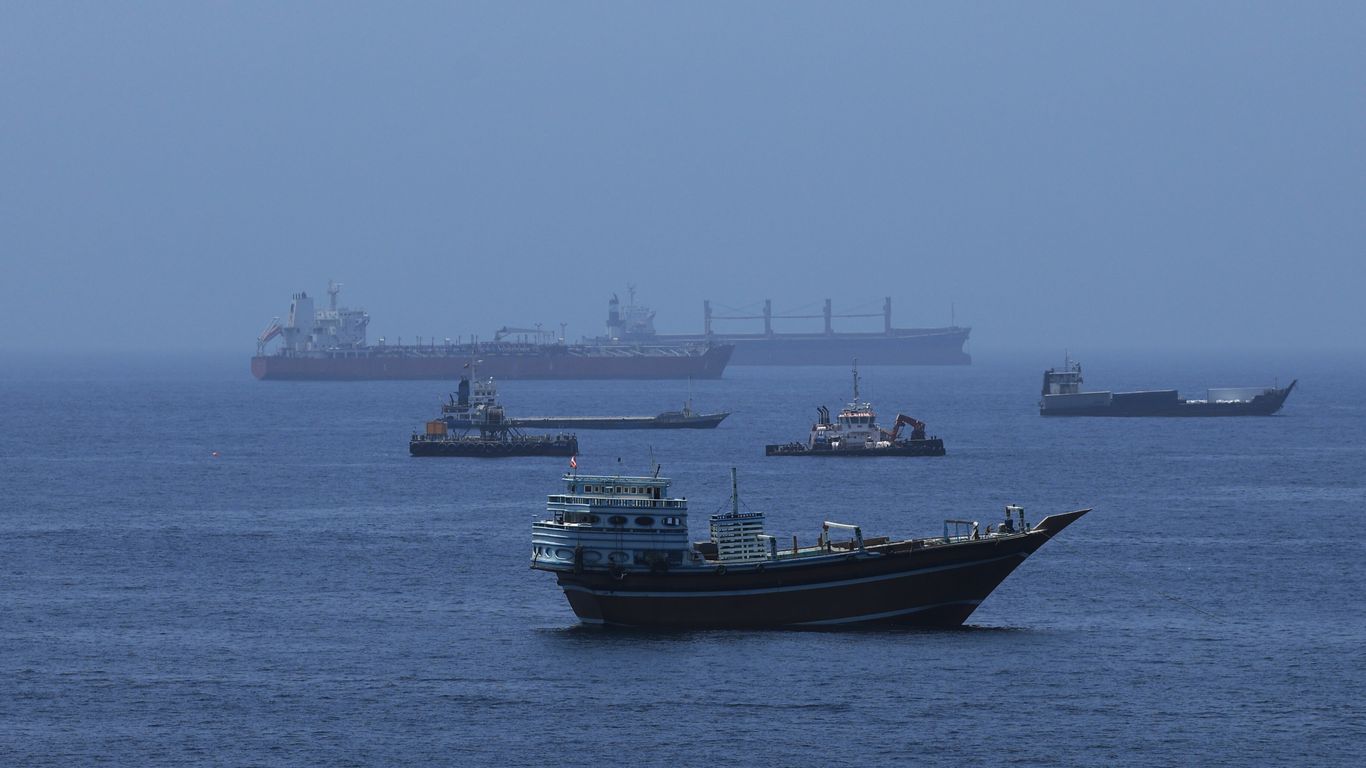
The US military carried out strikes on several sites in Iran after a drone attacked a Panama-flagged tanker in the Strait of Hormuz. These actions follow an earlier US retaliation against Iran for a drone attack on a Singapore-flagged cargo ship. Both sides claim the other broke a recently agreed ceasefire related to safe passage for commercial shipping.
Key Facts
The US targeted military equipment, communication systems, air defenses, and drone storage in Iran.
The drone attack hit the Panama-flagged tanker MT Kiku in the Strait of Hormuz.
The US says Iran ignored a ceasefire agreement and continued aggression against commercial ships.
Iran claims the cargo ship was attacked for following an unauthorized route and accuses the US of violating the ceasefire with its strikes.
A ceasefire agreement was signed on June 17, aiming to ensure safe, toll-free passage for ships in the Strait for 60 days.
The Strait of Hormuz is a vital route for global oil and gas shipments and was previously closed by Iran, affecting global markets.
President Donald Trump stated Iran assured the US it would not charge fees for ship transit through the strait.
Iranian and Omani officials recently discussed managing navigation in the strait, agreeing on toll-free safe passage.
Read the Original
Want the full story? Tap a source to open the original
article.
Fatboy Slim, whose real name is Norman Cook, talked about his struggle with alcoholism and how quitting drinking was very hard for him. After going to rehab in 2009, he has been sober for nearly 15 years and shared how nervous he felt performing sober for the first time.
Key Facts
Norman Cook is known as the DJ Fatboy Slim.
He called his alcoholism like a parasite that tries to survive by keeping him drinking.
His wife, Zoe Ball, gave him an ultimatum to stop drinking or she would leave.
He went to rehab in 2009 and has stayed sober since then.
Quitting alcohol was the hardest thing he has ever done.
Playing live shows sober made him very anxious at first.
A positive experience with a lively crowd in Japan helped him regain confidence.
Fatboy Slim became famous in the 1990s with hits like "Praise You" and "The Rockafeller Skank."
He has been nominated six times for Grammy awards and won one in 2002 for a music video featuring actor Christopher Walken.
Read the Original
Want the full story? Tap a source to open the original
article.
The New South Wales (NSW) government in Australia will use shark-spotting drones all year to watch its beaches and help keep people safe. Premier Chris Minns said this is a big increase in using drones with artificial intelligence to spot sharks and warn swimmers before any attacks.
Key Facts
NSW will use shark-spotting drones 365 days a year on about 70 beaches.
Drone coverage will expand in Sydney from 26 to 38 beaches.
The government is investing an extra $34 million to support this drone program.
Artificial intelligence will help drones identify sharks more effectively.
Two SharkSmart listening stations will monitor tagged sharks in Sydney Harbour.
Premier Minns opposes killing great white sharks because they are protected and travel long distances.
The program aims to reduce the risk of shark attacks, not completely prevent them.
The expansion responds to fewer people visiting beaches after recent shark attacks.
Read the Original
Want the full story? Tap a source to open the original
article.
Australia will increase the maximum fine for social media platforms that break its law banning children under 16 from using certain sites from $49.5 million to $99 million. The government also gave the independent eSafety Commissioner more power to check if these platforms are following the rules, after investigations showed many kids still use banned platforms.
Key Facts
Australia banned children under 16 from using 10 key social media platforms starting December 2025.
The maximum penalty for platforms breaking this rule will double to AUD 99 million.
The eSafety Commissioner can now require social media companies to show evidence of how they comply.
Investigations are open into Facebook, Instagram, Snapchat, TikTok, and YouTube for not fully complying.
Reports show 7 out of 10 children under 16 who had accounts before the ban still have some access.
Australian officials say many social media companies are not doing enough to keep children off their platforms.
The UK plans a similar ban for under-16s, expected to start by spring 2027.
The UK is also considering an overnight curfew and limits on infinite scrolling to protect young users.
Read the Original
Want the full story? Tap a source to open the original
article.
The U.S. military carried out more attacks on Iranian targets after an Iranian-related attack on a tanker near the Strait of Hormuz. The strikes were meant to respond to what the U.S. called ongoing hostile actions by Iran against commercial ships.
Key Facts
U.S. Central Command (CENTCOM) announced additional attacks on Iranian sites.
The strikes were a reaction to an attack on a Panama-flagged tanker.
The tanker incident occurred near the Strait of Hormuz, a busy shipping route.
CENTCOM described the Iranian actions as continued aggression toward commercial shipping.
The statement was posted on a social media platform by CENTCOM.
The U.S. military aims to protect freedom of navigation in the region.
Read the Original
Want the full story? Tap a source to open the original
article.
The US military struck several targets in Iran in response to attacks on commercial ships near the Strait of Hormuz. These strikes followed Iran’s use of a drone that hit an oil tanker, showing ongoing tension over shipping security in the region.
Key Facts
The US Central Command confirmed strikes on Iranian military sites on Saturday.
Targets included Iran’s surveillance equipment, communication systems, air defenses, drone storage, and minelaying capabilities.
The strikes responded to Iran’s earlier drone attack on the cargo ship M/V Ever Lovely.
After a ceasefire agreement, Iran launched another drone attack on the tanker M/T Kiku near the Strait of Hormuz.
The M/T Kiku was carrying over two million barrels of crude oil and was flying a Panama flag.
The US stated it will continue to enforce the ceasefire despite disagreements on Iran’s nuclear program and missile activities.
The Strait of Hormuz remains a critical route for commercial shipping, including oil transport.
US forces say they remain alert and ready to respond to further threats.
Read the Original
Want the full story? Tap a source to open the original
article.
The United States launched military strikes against Iran for a second day, responding to attacks on commercial ships in the Middle East. U.S. forces targeted Iranian military sites, following a recent drone attack on an oil tanker in the Strait of Hormuz.
Key Facts
The U.S. launched strikes on Iran for two consecutive days.
The military said the strikes responded to Iranian aggression against commercial shipping.
Targets included Iranian surveillance systems, communication sites, air defenses, drone storage, and mine-laying abilities.
Explosions were reported near the village of Tahrui, close to the port of Sirik in southern Iran.
The Panama-flagged oil tanker Kiku was hit by a drone while passing through the Strait of Hormuz.
No crew members were injured, and the tanker did not leak oil.
The tanker was carrying over 2 million barrels of crude oil.
The ship had left the Al Shaheen oil field and was headed to Fujairah in the United Arab Emirates.
Read the Original
Want the full story? Tap a source to open the original
article.
The U.S. military carried out strikes on Iranian military targets near the Strait of Hormuz after Iran attacked a commercial oil tanker. These actions come after rising tensions and previous attacks on commercial vessels in the area.
Key Facts
The U.S. targeted Iranian military sites including surveillance, communication, air defense, drone storage, and mine-laying facilities.
Iran's Revolutionary Guards used a drone to attack the M/T Kiku tanker carrying over two million barrels of crude oil in the Strait of Hormuz.
This strike is the second U.S. response within 24 hours to attacks on commercial ships.
Iran attacked locations in Bahrain after the first U.S. strikes earlier in the week.
The U.S. claims it gave Iran a chance to respect a ceasefire agreement, but Iran did not comply.
The Strait of Hormuz is a key international waterway for oil transport and is a site of ongoing conflict between the U.S. and Iran.
The situation threatens the fragile U.S.-Iran understanding aimed at reducing hostilities in the region.
Read the Original
Want the full story? Tap a source to open the original
article.
Israel launched air strikes in southern Lebanon, killing one person and wounding others, after a new peace deal was signed between the two countries. Hezbollah, a powerful Lebanese militant group, rejected the deal and said it harms Lebanon’s control over its land, while Israel said its forces would stay longer in certain areas for security.
Key Facts
Israeli air strikes in southern Lebanon killed one person and wounded at least two others.
The strikes targeted a person described by Israel as a threat to its forces.
Lebanon and Israel signed a peace deal brokered by the U.S. that aims to improve long-term peace.
The deal includes Israel withdrawing from part of southern Lebanon, with the Lebanese army taking control there.
Israel will keep forces in an expanded security zone inside southern Lebanon.
Hezbollah did not take part in the talks and condemned the agreement as a loss of Lebanon’s sovereignty.
Hezbollah said it will continue armed resistance despite the deal.
The conflict began in March after Hezbollah fired missiles into Israel, leading to Israeli air strikes and invasion.
Since the conflict started, thousands of people have been killed or injured, and over one million people displaced.
Previous ceasefires have failed to stop hostilities.
Read the Original
Want the full story? Tap a source to open the original
article.
Two strong earthquakes in Venezuela caused many injuries and deaths. Hospitals, including one in Caracas, are treating victims who have physical injuries and panic attacks, while rescue teams continue searching for survivors.
Key Facts
Two deadly earthquakes struck Venezuela on Wednesday.
The official death toll has reached 1,430 people.
More than 3,200 people are reported injured.
Rescue efforts are ongoing but chances to find survivors are decreasing.
Hospitals are treating physical injuries like fractures and mental health effects such as panic attacks.
Families and friends are gathering at hospitals hoping to find missing loved ones.
The situation is happening across the country, with significant impact in Caracas.
Read the Original
Want the full story? Tap a source to open the original
article.