The U.S. military is helping Venezuela after two strong earthquakes hit the country and caused many deaths. U.S. forces are moving quickly to provide airlift, logistics, and lifesaving aid to people affected by the disaster.
Key Facts
Two powerful earthquakes struck Venezuela overnight.
More than 160 people died because of the earthquakes.
The U.S. military is working with the U.S. State Department to provide aid.
The U.S. Southern Command is leading the military response.
Defense Secretary Pete Hegseth ordered the quick deployment of aid.
The aid includes airlift and logistical support to reach those in need.
The goal is to deliver lifesaving help as fast as possible.
This response shows cooperation between the U.S. and Venezuelan aid efforts.
Read the Original
Want the full story? Tap a source to open the original
article.
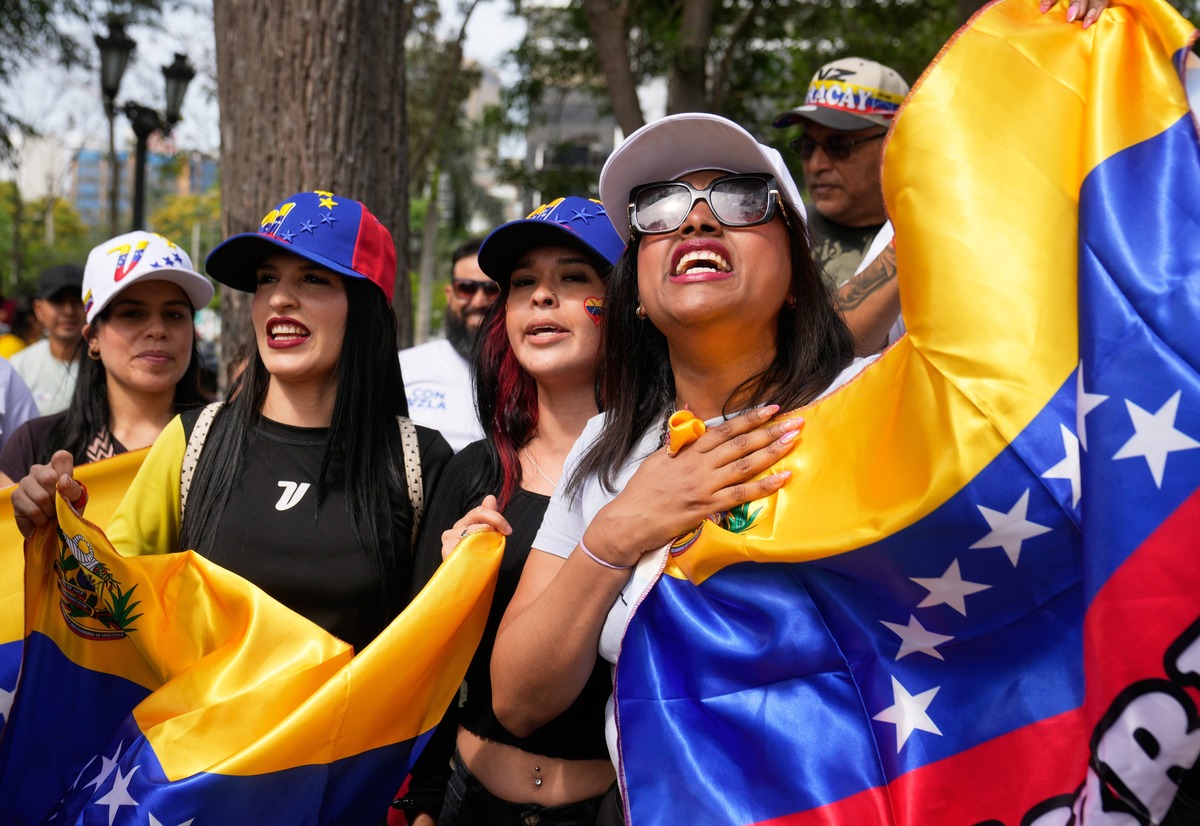
President Donald Trump said the U.S. took control of Venezuela six months ago by sending special forces to capture leader Nicolás Maduro. After two large earthquakes hit northern Venezuela, the U.S. is sending search and rescue teams, medical supplies, and aerial images to help assess the damage, while promising to support the Venezuelan people during the crisis.
Key Facts
President Trump claimed U.S. special forces entered Venezuela to capture Nicolás Maduro six months ago.
Two massive earthquakes struck northern Venezuela, causing at least 164 deaths and over 1,000 injuries.
Buildings collapsed in Caracas, and the main international airport in La Guaira was shut down due to damage.
The U.S. is sending search and rescue teams, medical supplies, and aerial images to Venezuela.
U.S. Secretary of State Marco Rubio expressed solidarity with Venezuela’s people and is coordinating aid efforts.
The U.S. Agency for International Development (USAID), which handled much humanitarian aid, was closed nearly a year ago.
The closure of USAID may slow the U.S. response to natural disasters and reduce humanitarian support in places like Venezuela.
Venezuela faces ongoing challenges such as heavy national debt, lack of democratic elections, corruption, and damaged infrastructure.
Read the Original
Want the full story? Tap a source to open the original
article.
A sociologist from New York University says that during heatwaves, strong community connections are just as important as technology to save lives. He studied Chicago’s 1995 heatwave and found that neighborhoods with good social support had fewer deaths than others with the same poverty level. He warns that as climate change speeds up, cities need to build both social and physical ways to protect vulnerable people.
Key Facts
Professor Eric Klinenberg from NYU studied the 1995 Chicago heatwave.
He found that death rates depend on social connections, not just weather or technology.
Social infrastructure means places and activities that help neighbors check on and help each other.
Neighborhoods with similar poverty suffered different death rates based on social support.
France is currently experiencing a heatwave and has improved since a deadly one in 2003.
Klinenberg warns climate change is happening faster than cities can adapt.
Social isolation and inequality make heatwaves more dangerous for some people.
Building community ties is as important as using cooling technology to protect people.
Read the Original
Want the full story? Tap a source to open the original
article.
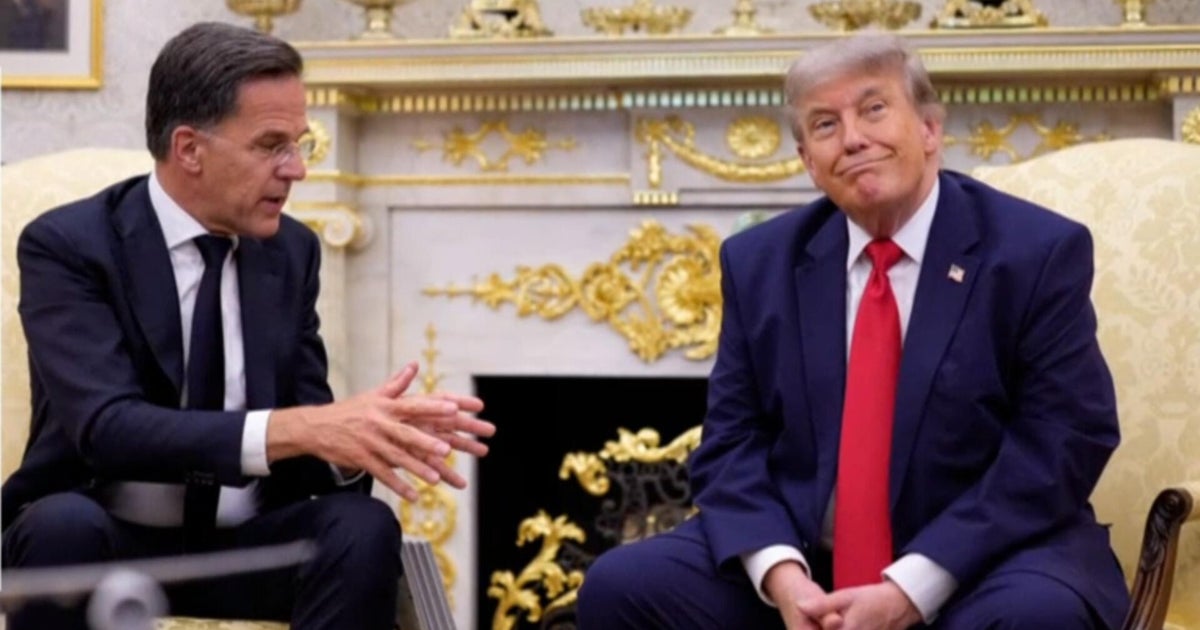
President Donald Trump criticized European NATO allies during a meeting with NATO Secretary General Mark Rutte. He expressed frustration over their lack of support for a U.S.-Israeli conflict involving Iran.
Key Facts
President Trump met with NATO Secretary General Mark Rutte.
The discussion focused on the situation with Iran.
President Trump expressed anger toward European allies.
He felt European NATO members were not supporting the U.S. and Israel in the conflict.
The report was covered by CBS News correspondent Aaron Navarro.
Read the Original
Want the full story? Tap a source to open the original
article.
A Ukrainian attack on Crimea and parts of Russia killed at least five people, according to Russian officials. Both Ukraine and Russia have been targeting each other's fuel and transport facilities amid ongoing conflict, while diplomatic tensions between Russia and Romania continue to rise.
Key Facts
At least five people died in Ukrainian strikes on Crimea and Russian border regions.
Two people, including a child, died in Crimea following overnight attacks.
Drone strikes killed two people in Bryansk and one in Belgorod regions of Russia.
Russia claims to have shot down 269 Ukrainian drones over Russia and Crimea in one night.
A drone strike caused a fire at an oil depot in Krasnodar Krai, Russia.
Crimean authorities plan to impose temporary power cuts due to damage to energy infrastructure.
Russia attacked rail locomotives and petrol stations in Ukraine, killing one train driver.
Russia expelled Romania’s consul general after Romania closed Russia’s consular office following a drone incident near the Ukrainian border.
Read the Original
Want the full story? Tap a source to open the original
article.
Gulf countries have welcomed a new agreement between the United States and Iran aimed at ending a regional conflict. These Gulf states support the deal mainly to stop the war and promote dialogue with Iran, despite ongoing mistrust and past attacks on Gulf cities by Iran.
Key Facts
The Gulf Cooperation Council (GCC) includes Saudi Arabia, UAE, Qatar, Kuwait, Bahrain, and Oman.
The GCC was formed in 1981 partly due to concerns about Iran's growing influence.
Recent Israeli and US attacks on Iran, followed by Iranian attacks on the Gulf, pushed Gulf states to reassess their relationships.
The Gulf states support a US-Iran memorandum of understanding (MoU) signed recently to reduce conflict.
Gulf countries remain wary of Iran but prefer diplomacy to military action.
Iran’s use of drones and proxy groups to attack Gulf states is seen as a bigger threat than Iran’s nuclear program by GCC members.
US officials, including Secretary of State Marco Rubio, are visiting Gulf nations to reassure them about the Iran deal.
Gulf states want a broader agreement with Iran that addresses both nuclear and security concerns.
Read the Original
Want the full story? Tap a source to open the original
article.
Abelardo de la Espriella, endorsed by President Donald Trump, will become Colombia’s president in August. His election follows a trend where several Latin American countries have chosen conservative leaders who focus on tough crime policies and economic changes.
Key Facts
Abelardo de la Espriella, called "The Tiger," will be Colombia's next president and was supported by President Trump.
De la Espriella wants to stop peace talks with rebel groups and build large prisons like those in El Salvador.
Argentina elected Javier Milei, nicknamed "The Lion," who is cutting government spending to fight high inflation.
Ecuador’s leader Daniel Noboa was reelected and has increased the military’s role in fighting drug gangs.
Noboa’s government faced criticism for human rights issues during its anti-drug campaigns.
Honduras elected Nasry Asfura from the conservative National Party, supported by President Trump.
Chile elected José Antonio Kast, a conservative who plans to tighten border controls and limit illegal immigration.
These recent elections show a shift in Latin America toward conservative governments focusing on security and economic reform.
Read the Original
Want the full story? Tap a source to open the original
article.
British actor Aneurin Barnard stopped a robber who tried to steal a handbag from an elderly woman in Annecy, France, before the premiere of his new film. He caught and held the thief until the police arrived and then returned the bag to the woman.
Key Facts
Aneurin Barnard is a British actor known for roles in Dunkirk and Peaky Blinders.
The incident happened in the city center of Annecy during an animation film festival.
Barnard chased, tackled, and held the bag snatcher until police arrived.
The robbery victim was an older woman who was left traumatized.
The film Barnard was promoting is called Rogue Trooper, based on a UK sci-fi comic.
The film is an animated science fiction story about a super soldier seeking a traitor.
Director Duncan Jones shared the story on social media and praised Barnard’s actions.
The film features other actors like Sean Bean, Asa Butterfield, and Diane Morgan.
Read the Original
Want the full story? Tap a source to open the original
article.
There are rumors that singer Taylor Swift and football star Travis Kelce might get married at Madison Square Garden in New York City over the July 4th weekend. City officials confirmed a street closure permit near the arena, and other signs suggest a wedding event there, though neither Swift nor Kelce’s names are on the permit.
Key Facts
A street closure permit was filed for roads near Madison Square Garden from July 2 to July 4.
The permit application did not include the names Taylor Swift or Travis Kelce.
Several Kansas City Chiefs players have booked hotel rooms near the arena during the holiday weekend.
Amtrak police at nearby Penn Station were told to expect a wedding event related to Taylor Swift.
Reports indicate two celebrations: a smaller one with around 100 guests on July 2, and a larger event on July 3.
Madison Square Garden is an indoor arena with no natural light or scenic views, unlike the outdoor locations some expected for the wedding.
Fans have mixed opinions, with some saying the venue fits the couple’s music and sports careers, and others finding the choice unusual.
The arena offers strong security features, including private entrances and restricted access to prevent paparazzi interference.
Read the Original
Want the full story? Tap a source to open the original
article.
President Donald Trump said on Wednesday that it might never be clear who caused the missile strike on a girls' school in Iran, which killed over 100 people. He mentioned that missiles were flying in many directions, making it hard to determine responsibility.
Key Facts
The missile strike hit a girls' school in Iran.
More than 100 people died in the strike.
President Trump said it may never be known who was at fault.
He explained that many missiles were flying around at the time.
The event took place amid ongoing military tensions in the region.
Read the Original
Want the full story? Tap a source to open the original
article.
Cambodia has taken strong steps to fight online scams by passing a new law and increasing police actions. The government has also deported nearly 19,000 foreign suspects connected to scam activities and is collaborating with other countries to stop these scams.
Key Facts
Cambodia introduced a new law to combat online scams.
Law enforcement efforts against online scams have increased in the country.
Nearly 19,000 foreign nationals were deported for involvement in scam operations.
The government is working with international partners to break up scam networks.
These actions aim to reduce online fraud and protect people from scams.
Read the Original
Want the full story? Tap a source to open the original
article.
France is experiencing a severe heatwave that is making life difficult in its overcrowded prisons. Many prisoners are packed into small cells without good ventilation or cooling, causing extremely uncomfortable and unsafe conditions. Prison guards are also struggling with the heat inside these poorly maintained buildings.
Key Facts
France is facing a historic heatwave with temperatures exceeding 40°C (104°F).
Prisons in France are overcrowded, holding 140% of their capacity on average.
Some remand centres have overcrowding rates above 172%, housing people awaiting trial or with short sentences.
There are nearly 89,000 detainees in French prisons as of May 2026, with only 750 new places created in the past year.
Many prisoners share cells built for only one person and some sleep on mattresses on the floor.
Prison buildings are old, poorly maintained, and not insulated against heat or cold.
Prison staff also suffer from heat inside the facilities, making their work very difficult.
The heatwave exposes long-standing problems in France’s prison system related to overcrowding and infrastructure.
Read the Original
Want the full story? Tap a source to open the original
article.
The UK has recorded its hottest June day ever, with temperatures reaching 36.4°C in Somerset. A red weather warning for extreme heat has been extended, and multiple NHS trusts have declared critical incidents due to the heatwave.
Key Facts
The temperature of 36.4°C in Somerset is the highest ever recorded in the UK during June.
This new record broke the previous one set just a day earlier.
A red weather warning, which signals extreme heat, has been extended in parts of the UK until Friday.
At least six NHS trusts in England have declared critical incidents, meaning the heat is putting heavy pressure on healthcare services.
Climate experts, including BBC’s Climate Editor and a university scientist, have discussed why the heatwave is so severe.
The episode also features a discussion about business leaders' feelings on the upcoming government.
The report was part of the BBC’s Newscast podcast, hosted by Adam Fleming.
Listeners can access this content on smart speakers and online platforms like BBC Sounds.
Read the Original
Want the full story? Tap a source to open the original
article.
Strong earthquakes hit northern Venezuela, causing severe damage and collapsing many buildings. Rescue teams from Venezuela and other countries are working quickly to find survivors, while thousands of people are feared dead.
Key Facts
Two earthquakes, measuring 7.2 and 7.5 in magnitude, struck northern Venezuela less than 40 seconds apart.
The Simón Bolívar international airport and surrounding coastal cities suffered heavy damage.
Over 100 buildings collapsed in the La Guaira region alone, including apartment blocks and hotels.
Thousands of people are feared dead or missing, including children and elderly residents.
Rescue teams, including support from the US Department of Defense and French specialists, are helping with search and rescue efforts.
The earthquakes were felt as far away as Manaus, Brazil, over 1,000 miles from Caracas.
Venezuela declared a state of emergency and designated the area a disaster zone.
World leaders, including President Trump, offered condolences and prepared aid for Venezuela.
Read the Original
Want the full story? Tap a source to open the original
article.
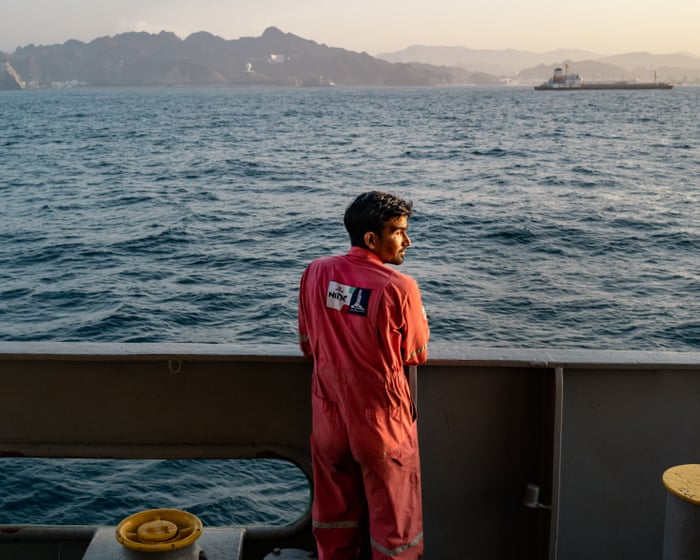
Iran has rejected a UN-supported plan to help evacuate ships stuck in the Strait of Hormuz, a key waterway for global trade. The rejection comes amid tensions over control and safety in the strait, as Iran and other Gulf countries have different plans for managing ship traffic.
Key Facts
Iran refused a UN plan supported by Oman to create new ship evacuation routes in the Strait of Hormuz.
The plan included setting up a management system for the strait, possibly charging voluntary fees like in the Malacca and Singapore straits.
The Iranian Revolutionary Guards called the new routes unsafe and insisted ships must coordinate with them to pass through.
A previously used shipping route is blocked by mines, making it dangerous for ships.
Iran and the US recently signed a deal aimed at ensuring free navigation without fees in the strait for at least 60 days.
Saudi Arabia’s efforts to hold talks between Gulf states and Iran for a peace pact were harmed by Iran’s rejection.
Iran is using control over the strait as a bargaining chip in ongoing talks about US sanctions, asset relief, and its nuclear program.
Separately, Israel and Lebanon continue disagreements over Israeli troop withdrawals from southern Lebanon, complicating regional peace efforts.
Read the Original
Want the full story? Tap a source to open the original
article.
Two strong earthquakes hit Venezuela, causing severe damage and displacing many people. The government does not seem to have a clear plan to handle the crisis, and communication systems are badly damaged.
Key Facts
Venezuela experienced two powerful earthquakes.
The earthquakes caused serious damage to buildings and infrastructure.
Many residents lost their homes and are staying in hotels.
Communication systems were heavily damaged, making coordination difficult.
Authorities appear to lack a clear response plan.
The situation is slowing down recovery efforts.
The report comes from Caracas, the capital of Venezuela.
Read the Original
Want the full story? Tap a source to open the original
article.
US Secretary of State Marco Rubio said that all Gulf countries disagree with the idea of charging fees for passage through the Strait of Hormuz. He made this statement while visiting the region after talks between the US and Iran.
Key Facts
Marco Rubio is the US Secretary of State.
He toured Gulf countries recently.
Rubio said all Gulf countries do not support tolls in the Strait of Hormuz.
The Strait of Hormuz is a key waterway for global shipping.
Rubio mentioned that no country in the world supports paying to pass through the strait.
The statement came after talks between the US and Iran.
The issue involves regional security and trade routes.
Gulf countries are collectively opposed to toll charges in this important shipping passage.
Read the Original
Want the full story? Tap a source to open the original
article.
The 10th arrondissement is a lively neighborhood in central Paris on the Right Bank. It is known for its two major train stations, Gare de Nord and Gare de l’Est, which bring many people into the city, as well as the popular Canal Saint Martin. This area has become a diverse mix of restaurants, bars, theaters, and local spots that show everyday Parisian life.
Key Facts
The 10th arrondissement is located in the heart of Paris on the Right Bank of the Seine River.
It has two of Paris’s biggest train stations: Gare de Nord and Gare de l’Est.
Many people enter Paris through these stations, making the area a busy gateway.
Canal Saint Martin runs through the neighborhood and is a well-loved spot for locals and visitors.
The area is multicultural, with a variety of restaurants and bars from different cultures.
It also has theaters and other hidden places that reflect real Parisian culture.
The 10th arrondissement is considered one of the most vibrant parts of Paris.
Read the Original
Want the full story? Tap a source to open the original
article.
The U.S. Treasury Department is urged to support a new large allocation of Special Drawing Rights (SDRs) to help address global hunger and malnutrition. This action would also help create jobs in the United States and other countries.
Key Facts
Special Drawing Rights (SDRs) are international reserve assets created by the International Monetary Fund (IMF).
Hundreds of millions of people worldwide face hunger and risk of malnutrition.
A new major SDR allocation would provide countries with extra funds to address economic and social challenges.
Supporting SDR allocation can help save lives globally.
The move is expected to also help create jobs in the U.S. and other countries.
The U.S. Treasury Department’s support is necessary for the SDR allocation to happen.
This effort is seen as a way to assist both global health and economic recovery.
Read the Original
Want the full story? Tap a source to open the original
article.
Israeli forces killed at least two Palestinians in separate shootings in the occupied West Bank and Gaza Strip. The violence came amid continuing Israeli military raids and settler attacks, despite a ceasefire agreement in Gaza.
Key Facts
Mustafa Taha Mustafa al-Khatib, 32, was shot dead by Israeli forces during a home raid in Salfit, West Bank.
Al-Khatib had returned from Jordan two years ago and had no known ties to armed groups.
Israeli troops delayed ambulance access to al-Khatib for nearly two hours and left his body inside the house.
Another Palestinian, Mohammad Nazem Zayed, was killed by Israeli undercover agents in Yabad, West Bank.
In Gaza, one Palestinian was killed and two injured in Israeli military actions despite a ceasefire since October 10, 2025.
The Palestinian Health Ministry says over 1,000 Palestinians have been killed and more than 3,300 injured in Gaza since the war began in October 2023.
Violence in the West Bank has increased, with 72 Palestinians killed in 2025, including children, women, and elderly people.
Israeli settlers attacked Palestinian homes with stones after removal of an outpost near Hebron.
Read the Original
Want the full story? Tap a source to open the original
article.