The Archbishop of Canterbury and the Anglican Archbishop of Jerusalem have called for an end to the Israeli occupation of Palestine. They urge global Anglicans to push for a peaceful two-state solution with Jerusalem as a shared capital, highlighting hardships faced by Palestinians and the health crisis in Gaza.
Key Facts
The Archbishop of Canterbury, Sarah Mullally, visited Palestinian areas including the West Bank, Gaza, and East Jerusalem.
She met Palestinians attacked by settlers and those held without trial by Israeli authorities.
Mullally and Archbishop Hosam Naoum wrote a joint letter urging politicians to work toward ending the occupation and promote peace between Israelis and Palestinians.
They stressed the importance of a two-state solution where both peoples can live with dignity and security.
The letter expressed concern about the future of the indigenous Christian Palestinian community in the Holy Land.
Gaza’s health system was described as being in catastrophic condition.
Mullally visited families affected by settler attacks, planted an olive tree symbolizing Palestinian roots, and spoke about Jesus living under foreign occupation.
The Church of England plans to debate investment policies related to the region, focusing on justice and human dignity.
Read the Original
Want the full story? Tap a source to open the original
article.
More migrants are trying to cross the English Channel from northern France to the UK in small boats because the weather and sea conditions are better. The UK has agreed to give France 767 million euros over three years to strengthen border policing, but many migrants who reach northern France are still determined to continue to the UK.
Key Facts
Sunny weather and calm seas have led to a sharp rise in migrants crossing the Channel in small boats.
The crossing attempts happen mainly from northern France, near areas like Gravelines and Calais.
Many migrants have already passed through several countries before arriving in France.
The UK agreed to fund France with 767 million euros over three years to help secure its coastline.
Migrants believe the UK offers a better life and are determined to make the crossing despite risks.
French and UK authorities are working to reduce the number of crossings through increased policing.
The situation has attracted media attention with reporters meeting migrants on the beaches.
Read the Original
Want the full story? Tap a source to open the original
article.
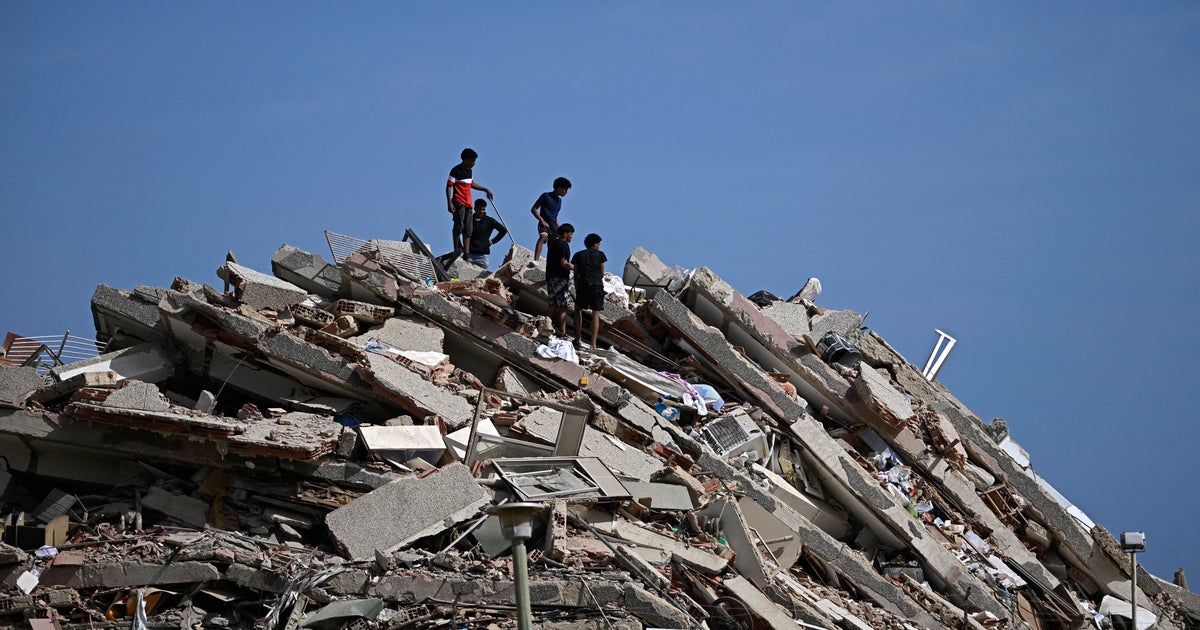
Two powerful earthquakes hit Venezuela near Caracas, causing widespread destruction and killing at least 164 people. Many buildings collapsed, thousands were injured, and emergency aid is being sent to help survivors.
Key Facts
Two earthquakes struck west of Caracas, with magnitudes of 7.2 and 7.5.
These were the strongest quakes in Venezuela in over 100 years.
The shaking was felt in nearby Colombia and Brazil and triggered tsunami alerts.
La Guaira state on the northern coast was hit the hardest.
At least 164 people died and over 900 were injured; numbers may rise.
Venezuela’s Acting President Delcy Rodríguez declared a state of emergency.
The US and El Salvador are sending search teams and humanitarian aid.
Many residents are trapped, with buildings collapsed or badly damaged, and some areas lack electricity and water.
Read the Original
Want the full story? Tap a source to open the original
article.
Polish Deputy Prime Minister Radek Sikorski said Russia might carry out a "false flag operation." This means Russia could fake an attack on its own land to create an excuse to attack a NATO country.
Key Facts
Radek Sikorski is the Deputy Prime Minister of Poland.
He warned that Russia might stage a "false flag operation."
A "false flag operation" means faking an attack to blame someone else.
Russia could use this to justify attacking a U.S. ally.
NATO is a group of countries including the U.S. and European nations, allied for defense.
Sikorski shared this information during an interview with CBS News.
The warning suggests growing tensions between Russia and NATO countries.
Read the Original
Want the full story? Tap a source to open the original
article.
French President Emmanuel Macron is meeting Italian Prime Minister Giorgia Meloni to strengthen their political relationship. Even though they have had disagreements before, shared interests and Meloni’s issues with U.S. President Donald Trump are bringing them closer.
Key Facts
The summit between Macron and Meloni is a rare meeting aimed at improving ties between France and Italy.
Macron is the President of France; Meloni is the Prime Minister of Italy.
Their past relationship included political differences.
Meloni recently had conflicts with U.S. President Donald Trump.
Shared political interests are helping Macron and Meloni work together more.
The meeting takes place on June 25, 2026.
This summit is part of ongoing European political discussions.
Read the Original
Want the full story? Tap a source to open the original
article.
President Donald Trump criticized some European NATO allies for not fully supporting the US military campaign against Iran. NATO Secretary General Mark Rutte said most European countries did help by allowing the use of their military bases and continuing support near the Strait of Hormuz, but a few like Spain and France refused.
Key Facts
President Trump expressed disappointment with Italy, the UK, Germany, France, and Spain for their limited support in the US war against Iran.
Trump’s top diplomat, Marco Rubio, said Europe’s refusal to allow use of bases hurt the alliance with the US.
NATO Chief Mark Rutte said many European countries provided bases and logistical help for the US military during the six-week conflict.
About 4,000 to 5,000 US planes took off from European bases during the operation called Epic Fury.
Italy and Romania allowed significant US military use of their bases; Romania reduced commercial flights to store tankers.
The UK allowed the use of its Diego Garcia base only for defensive purposes, while Spain and France prohibited military use of their bases.
European nations largely supported the US campaign politically but avoided direct military involvement, saying the war was not Europe’s.
European countries were concerned about the legal justification for the war and avoided actions that might violate international laws.
Read the Original
Want the full story? Tap a source to open the original
article.
France is experiencing very high temperatures due to a heatwave. The French government has raised its health alert to the highest level because the heat is putting a lot of pressure on hospitals and healthcare services.
Key Facts
A heatwave is causing extremely hot weather across France and Europe.
France's health alert warning system is now at its highest level.
The healthcare system is struggling to handle the increased number of heat-related illnesses.
Prime Minister Sébastien Lecornu announced the health alert increase on June 25, 2026.
Some groups, such as homeless migrants in Paris, are particularly affected by the extreme heat.
Tourist sites in Paris have had to close early because of the heat.
Read the Original
Want the full story? Tap a source to open the original
article.
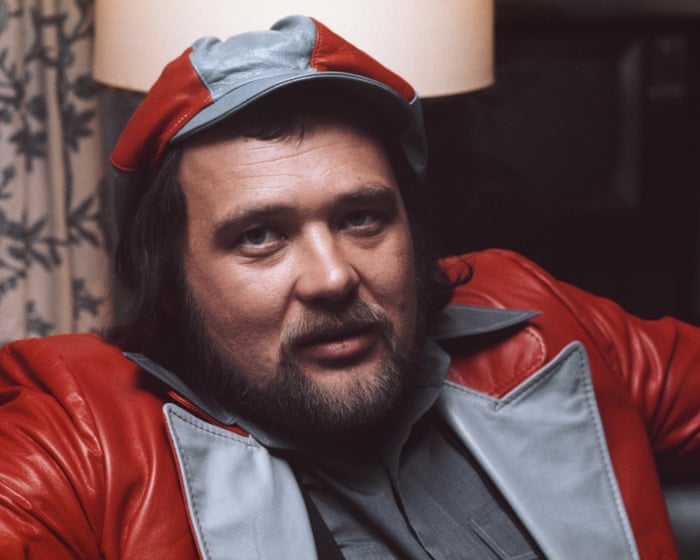
David Clayton-Thomas, the Canadian singer and lead vocalist of the band Blood, Sweat & Tears, has died at age 84. He was known for writing the hit song "Spinning Wheel" and leading the band to international success in the 1960s and 70s.
Key Facts
David Clayton-Thomas died peacefully in a Toronto hospital; no cause of death was given.
He wrote "Spinning Wheel," a song that reached number two in the US and won a Grammy award.
Born in England, his family moved to Toronto after World War II.
He faced hardships in his youth, including homelessness and legal troubles.
Clayton-Thomas joined Blood, Sweat & Tears after moving to New York; their first album with him sold 10 million copies and won five Grammys.
The band’s music combined rock, jazz, and R&B styles.
They toured Eastern Bloc countries during the Cold War, a trip connected to Clayton-Thomas receiving a US green card.
After leaving the band in 1972, he released solo albums, formed a band in Toronto, helped troubled youth, and wrote a memoir.
A memorial concert for him is planned soon.
Read the Original
Want the full story? Tap a source to open the original
article.
Vinii, leader of the House of Revlon, explains that voguing is a dance form focused on personal freedom and self-expression. Voguing started in Harlem in the 1960s and 1980s and has become popular in France, especially within the LGBTQ+ community.
Key Facts
Voguing is a dance style mixing fashion, posing, and self-expression.
It began in Harlem’s ballroom scene during the 1960s and 1980s.
The dance is closely linked to the LGBTQ+ community, especially in France.
Vinii is known as the Father of the international House of Revlon, a voguing group.
Voguing is described as a way to experience liberation and freedom.
Paris has become a major center for voguing culture today.
The interview with Vinii was featured on France 24’s show Perspective.
The dance scene offers a community and refuge for LGBTQ+ people in France.
Read the Original
Want the full story? Tap a source to open the original
article.
Poland and Ukraine opened the annual Ukraine Recovery Conference in Gdansk with a friendly tone despite recent disagreements over historical issues. Ukraine’s Prime Minister Yulia Svyrydenko attended instead of President Zelensky, and leaders called for strong Western support to help rebuild Ukraine after the war with Russia.
Key Facts
The conference focuses on rebuilding Ukraine’s economy after damage from the Russian invasion.
President Zelensky did not attend due to a dispute with Poland over a military naming decision linked to historical conflicts.
Ukrainian Prime Minister Yulia Svyrydenko represented Kyiv and spoke in a conciliatory manner without addressing the historical tensions.
Polish Prime Minister Donald Tusk emphasized hope for Ukraine’s recovery and called for Western investment.
Poland has taken in over one million Ukrainian refugees since the war began in 2022 and supports Ukraine joining the European Union.
Anti-Ukrainian sentiment has grown in Poland, with nearly 60% of Poles opposing Ukraine’s EU membership according to a recent poll.
Security was very tight in Gdansk due to concerns about possible provocations connected to the ongoing conflict.
Ukraine estimates that it needs over $500 billion for reconstruction and is seeking international support and investment.
Read the Original
Want the full story? Tap a source to open the original
article.
Iran’s Islamic Revolutionary Guard Corps (IRGC) has told commercial ships to use only Iran-approved routes when passing through the Strait of Hormuz. This warning came after Oman announced a new shipping route through the strait, coordinated with the International Maritime Organization, causing tensions during ongoing peace talks between the US and Iran.
Key Facts
The IRGC insists that ships use only routes through the Strait of Hormuz approved by Iran.
Oman announced a new shipping transit route through the strait, coordinated with the International Maritime Organization (IMO).
The dispute covers control and safety of shipping routes in the Strait of Hormuz, a key waterway for global oil and gas transport.
The US and Iran recently signed a memorandum of understanding that paused hostilities and started negotiations regarding the strait.
The strait sees about 20 million barrels of oil and petroleum products shipped daily, which is about one-fifth of the world’s supply.
The strait is bordered by Iran to the north, and Oman and the UAE to the south, and is a narrow but vital route for energy exports.
Iran objects to Oman’s new route, saying it was announced without Iranian approval and threatens safety.
Iran previously issued a map directing ships to pass closer to its coast than before, asserting greater control over the shipping lanes.
Read the Original
Want the full story? Tap a source to open the original
article.
Iran’s parliament speaker and chief negotiator, Mohammad Bagher Ghalibaf, denied President Donald Trump’s claim that Iran’s unfrozen funds would be used only to buy American farm products. Iranian officials said the agreement with the US does not require them to purchase American goods and described the deal as a diplomatic win for Iran.
Key Facts
Mohammad Bagher Ghalibaf leads Iran’s negotiation team with the US and is also Iran’s parliament speaker.
President Trump said $500 million from Iran’s unfrozen funds would be used to buy American corn and wheat.
Ghalibaf rejected this, saying Iran will not limit purchases to US agricultural products.
US officials claim the deal aims to help American farmers and feed the Iranian people.
Iranian media call the agreement a victory for Iran, not a concession.
Iran’s central bank governor stated that the released funds are not restricted to buying only essential goods.
The deal was brokered by Pakistan and signed electronically by President Trump and Iranian President Masoud Pezeshkian on June 18.
Negotiations continue over the details of how the agreement will be implemented.
Read the Original
Want the full story? Tap a source to open the original
article.
A 16-year-old boy was found not guilty of murdering nine-year-old Aria Thorpe, who died after being stabbed at her home in North Somerset. The boy said he did not mean to kill her but was trying to scare her, and the court agreed it was an accident.
Key Facts
Aria Thorpe, aged 9, was stabbed in the chest with a kitchen knife at her home on 15 December.
The boy was charged with murder and manslaughter but denied both.
He admitted picking up the knife and waving it to scare Aria but said the stabbing was accidental.
After the stabbing, the boy went to a nearby train station and told others he had killed Aria accidentally.
Police were called and arrested the boy shortly after.
Aria was found by a family friend who called emergency services.
The knife used was 22cm long and pierced 8cm into Aria’s chest.
The judge described the case as tragic and noted that the boy did not intend serious injury or death.
Read the Original
Want the full story? Tap a source to open the original
article.
A strong tornado hit the small city of Xenia, Ohio, over 50 years ago and caused serious damage. Since then, the city’s people have worked hard to rebuild their community. Xenia now stands as an example of strength and recovery.
Key Facts
The tornado struck Xenia, Ohio, more than 50 years ago.
It was a powerful and destructive tornado.
The city faced heavy damage and challenges after the storm.
Residents of Xenia came together to rebuild their homes and community.
Xenia is now known as a symbol of resilience, meaning it shows strong recovery after hardship.
The story was featured by CBS News reporter Mark Strassmann.
Videos and reports about Xenia’s recovery are available on the CBS News app.
Read the Original
Want the full story? Tap a source to open the original
article.
The UK experienced its hottest June day ever recorded, reaching 36.1°C, with warnings of temperatures possibly hitting 40°C soon. Many schools closed early, public transport faced disruptions, and services increased emergency support due to the extreme heat. People struggled to find cooling devices, especially for vulnerable individuals, revealing a gap in preparation for such extreme weather.
Key Facts
The temperature in Gosport, Hampshire reached 36.1°C, the highest ever for June in the UK.
The Met Office issued a red extreme heat warning for large parts of southern England.
Over 1,000 schools in southern England shut early or closed to protect pupils and staff.
Transport authorities warned of delays due to heat affecting rail and Tube systems.
London Ambulance Service deployed over 400 extra ambulance crews in response to heat-related demands.
Some public events and university celebrations were postponed because of the heat.
There is a shortage of portable air conditioning units and industrial fans, affecting families caring for vulnerable people.
Older buildings in London often lack cooling systems, making heat adaptation difficult.
Read the Original
Want the full story? Tap a source to open the original
article.
A severe heat wave is affecting much of Europe, breaking temperature records in several countries and causing hundreds of deaths. This heat wave is expected to continue through the weekend and has led to emergency warnings and health risks across many European nations.
Key Facts
Europe is experiencing one of the strongest early-summer heat waves on record, impacting countries like the UK, France, Spain, Italy, Germany, and others.
A "heat dome," a high-pressure area trapping heat, is causing temperatures to rise and stay high.
The UK recorded its hottest June day ever at 36.1°C (96°F) on June 24 in Gosport, Hampshire.
France experienced its hottest day since 1947, and Spain had its highest average June temperature since 1950.
The World Health Organization calls this heat wave a health emergency, with about 200,000 heat-related deaths in Europe over the past four years.
Recent deaths linked to the heat wave include at least 212 in Spain, 58 in France, and 15 in the UK (mostly water-related).
Heat warnings remain active in many countries, including red alerts in parts of the UK, Spain, and Italy.
Climate change is increasing the frequency and intensity of heat domes, making extreme heat waves more common.
Read the Original
Want the full story? Tap a source to open the original
article.
Paris is experiencing its highest temperatures ever recorded since 1947, causing difficulties for homeless migrants living there. The city has provided water faucets to help them stay cool, but groups working with migrants say more lasting help is needed.
Key Facts
Paris is going through its worst heatwave in history.
Homeless migrants in Paris are finding it hard to cope with the extreme heat.
The city installed water faucets in public areas for people to cool down.
Associations supporting migrants ask for long-term solutions beyond immediate relief.
France recorded its hottest day since temperature measurements started in 1947.
Experts expect future years to be even hotter due to climate change.
The heatwave affects many, including outdoor workers and crops.
Paris and France have been adapting city infrastructure to manage hotter weather.
Read the Original
Want the full story? Tap a source to open the original
article.
The head of the Africa CDC, Dr. Jean Kaseya, said the Ebola outbreak in the Democratic Republic of Congo (DR Congo) is serious but not out of control. He warned that without stopping the virus at its source, no one is safe, and noted that vaccine development has been slow because the outbreak is mainly in Africa.
Key Facts
The Ebola outbreak in DR Congo has killed at least 290 people.
Dr. Jean Kaseya calls the situation serious but says it is being actively managed.
It is unclear if the outbreak has reached its highest point; some areas with displaced people are hard to access.
A French doctor returned home infected with Ebola after working in DR Congo.
Dr. Kaseya said if Ebola had spread in Western countries, vaccines and treatments would have been developed faster.
Many Western countries are reducing aid to Africa despite the ongoing outbreak.
The Africa CDC chief warned the virus poses a global risk if not contained.
A vaccine for this outbreak is expected within months, possibly by the end of the year.
Read the Original
Want the full story? Tap a source to open the original
article.
A new “deconfliction cell” has been set up to help prevent violence between Israel and Hezbollah in Lebanon from getting worse. The cell allows the conflicting sides to communicate and try to keep a ceasefire, with the United States supporting the effort amid ongoing tensions and recent attacks.
Key Facts
The deconfliction cell aims to strengthen the ceasefire between Israel and Hezbollah in Lebanon.
It provides a way for Israel and Hezbollah to talk to each other and avoid bigger conflicts.
The United States supports this mechanism to help keep peace in the region.
Iran opposes Israeli attacks on Lebanon and supports Hezbollah, refusing to allow attacks without a response.
Israel rejects any limits on its ability to strike in Lebanon or withdraw from parts of the area it occupies.
The US wants Hezbollah to disarm, as does the Lebanese government, but this remains a difficult issue.
Since October 2023, Israel has killed over 4,000 people in Lebanon during attacks following Hezbollah rocket fire.
Lebanon and Israel are holding direct talks in Washington, but Hezbollah does not participate and opposes these talks.
Read the Original
Want the full story? Tap a source to open the original
article.
President Donald Trump met with NATO Secretary General Mark Rutte and criticized European allies for not supporting the United States in its conflict with Iran. During the meeting, President Trump demanded loyalty from these allies.
Key Facts
President Donald Trump held a meeting with Mark Rutte, the NATO Secretary General.
President Trump criticized European countries for their lack of support in the U.S. war with Iran.
He asked NATO allies to show loyalty to the United States.
The discussion focused on international military cooperation.
The meeting was covered by CBS News correspondent Aaron Navarro.
Read the Original
Want the full story? Tap a source to open the original
article.