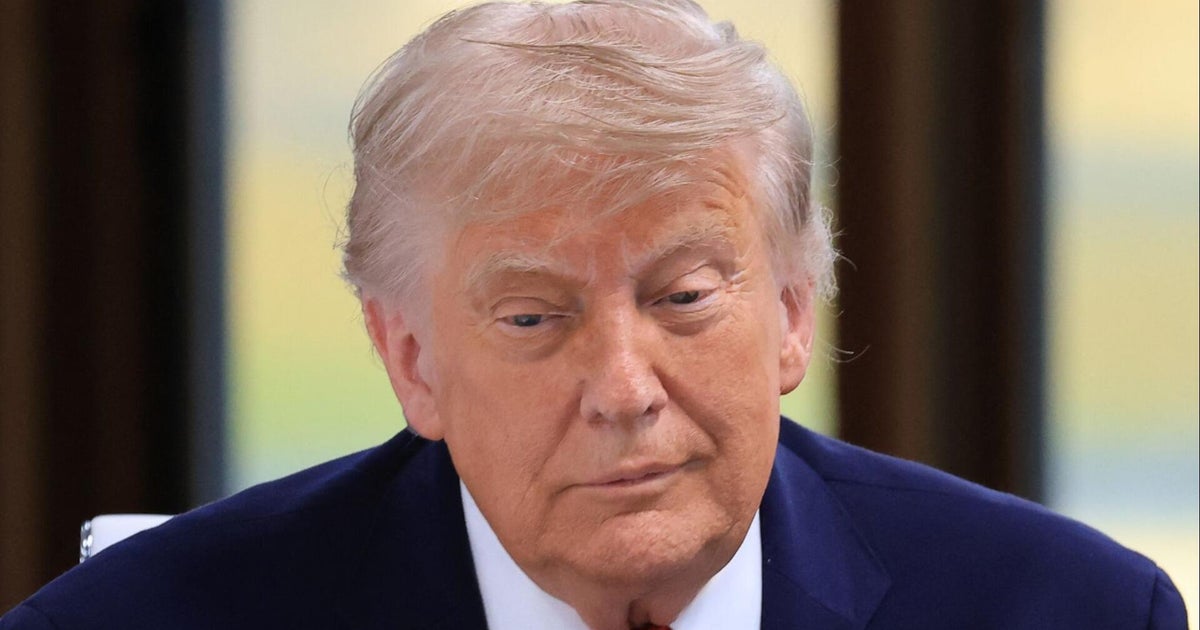
President Donald Trump signed a memorandum of understanding with Iran, starting a 60-day negotiation period between the two countries. President Trump said the deadline for these talks is flexible as long as Iran behaves appropriately.
Key Facts
President Trump signed an agreement with Iran on Wednesday.
This agreement starts a 60-day period for negotiations.
The deadline for these talks can be extended if Iran behaves well.
CBS News and BBC reporters provided updates on the deal.
A professor from Florida International University offered expert analysis.
The talks focus on improving relations and resolving issues between the U.S. and Iran.
Read the Original
Want the full story? Tap a source to open the original
article.
The United States and Iran have made an initial agreement aimed at ending the war and reopening the Strait of Hormuz. Israel strongly opposes the deal, saying it harms its security, and Israeli leaders have expressed deep concern while the Prime Minister has not yet commented.
Key Facts
The US and Iran signed a first deal to help stop the war.
The deal reopens the Strait of Hormuz, a key waterway for oil shipments.
It starts a 60-day period to continue talks on Iran’s nuclear program.
Israeli political groups widely see the deal as harmful to Israel’s safety.
Israel’s Prime Minister has not made any official statement about the deal.
The agreement has caused shock and strong reactions in Israel.
The deal is part of a broader and ongoing negotiation process.
Read the Original
Want the full story? Tap a source to open the original
article.
Gulf states are changing their defense strategies after a war involving Iran and a surprise attack by the US and Israel on Iran. As talks between the US and Iran resume and the Strait of Hormuz reopens, these countries are looking for new ways to protect themselves.
Key Facts
The US and Israel launched an unexpected attack on Iran.
This conflict caused Gulf states, once seen as safe, to feel uncertain about their security.
Gulf countries are now seeking to diversify their defense approaches.
The Strait of Hormuz, a key waterway, has reopened after being affected by the conflict.
US-Iran talks have begun again following the war.
The situation has led to reactions from different Middle Eastern countries.
There is ongoing discussion about a $300 billion fund to help rebuild Iran.
The US and Israel’s relationship has been affected by the war and subsequent deal-making.
Read the Original
Want the full story? Tap a source to open the original
article.
Leaders in Israel are upset about a new agreement between the United States and Iran. They see the deal as a major setback and feel the strong relationship between Israeli Prime Minister Benjamin Netanyahu and President Donald Trump has weakened.
Key Facts
The US and Iran reached a new agreement in June 2026.
Israeli leaders feel shocked and unhappy about the deal.
They view the agreement as a form of surrender or giving in.
The relationship between Netanyahu and President Trump is now strained.
Israel was kept out of the negotiation process.
There are mixed reactions in nearby countries like Lebanon.
Some Gulf states are changing their defense strategies because of regional tensions.
The deal includes plans for a large fund, about $300 billion, for Iran’s reconstruction.
Read the Original
Want the full story? Tap a source to open the original
article.
Colombians will vote again on June 21 in a run-off election to choose their next president. The two candidates, left-wing Senator Ivan Cepeda and far-right Abelardo de la Espriella, have very different plans for the country’s future after the first round did not give either a majority.
Key Facts
The presidential run-off vote in Colombia is scheduled for June 21.
Abelardo de la Espriella, a far-right candidate, got 43.7% in the first round held May 31.
Ivan Cepeda, a left-wing senator, received 40.9% in the first round.
Neither candidate reached the 50% needed to win outright, triggering the run-off.
President Gustavo Petro supports Cepeda’s left-wing policies focused on fighting poverty and negotiating peace with armed groups.
De la Espriella wants to take a tougher, military-based approach to crime and security instead.
Petro initially questioned the election results favoring de la Espriella but later accepted no fraud occurred after election observers found no evidence of wrongdoing.
The first round vote showed regional differences: Cepeda won in coastal and urban areas, while de la Espriella did better in central regions affected by conflict.
Read the Original
Want the full story? Tap a source to open the original
article.
Leaders at the 2026 G7 summit focused on maintaining the alliance between Europe and North America despite many disagreements on issues like trade, climate, NATO, Ukraine, and Russia. The summit showed that keeping the group united was a key achievement amid these tensions.
Key Facts
The 2026 G7 summit brought together leaders from the USA, France, and other major economies.
There were many disagreements on topics such as trade policies, climate change actions, NATO’s role, and the conflict involving Ukraine and Russia.
The transatlantic alliance refers to the political relationship between Europe and North America.
Manuel Muñiz, an expert in international relations, said it is rare to see so many disagreements among allies at one time.
Despite conflicts, the leaders managed to keep the alliance together during the summit.
The summit also included discussions related to global governance, meaning how countries work together to solve world problems.
President Donald Trump attended the summit and took part in discussions alongside other leaders such as French President Emmanuel Macron.
Other global news topics mentioned include Ukraine’s attacks on Moscow and US-Iran diplomatic efforts.
Read the Original
Want the full story? Tap a source to open the original
article.
The United States and Iran signed a memorandum of understanding (MOU) in Paris aiming to end their conflict. The deal includes Iran agreeing not to develop nuclear weapons in exchange for sanctions relief, reconstruction funds, and reopening shipping routes, but detailed negotiations will continue over 60 days.
Key Facts
The MOU was electronically signed near Paris after weeks of announcements from President Donald Trump.
It has 14 points outlining Iran’s promise not to get or develop nuclear weapons.
In return, Iran will receive relief from sanctions, $300 billion for rebuilding, and maritime traffic will restart in the Strait of Hormuz.
President Trump said this deal is better than the 2015 nuclear agreement made under former President Barack Obama, called the JCPOA.
The JCPOA included detailed nuclear limits and international inspectors, while the new MOU is a simpler bilateral deal without detailed enforcement rules.
Experts say the MOU mainly extends the ceasefire and leaves detailed nuclear discussions for future negotiations.
Iran has previously said it does not want nuclear bombs, a commitment included in both the JCPOA and the new MOU.
The MOU does not address Iran’s conventional weapons or missile programs, similar to the JCPOA.
Read the Original
Want the full story? Tap a source to open the original
article.
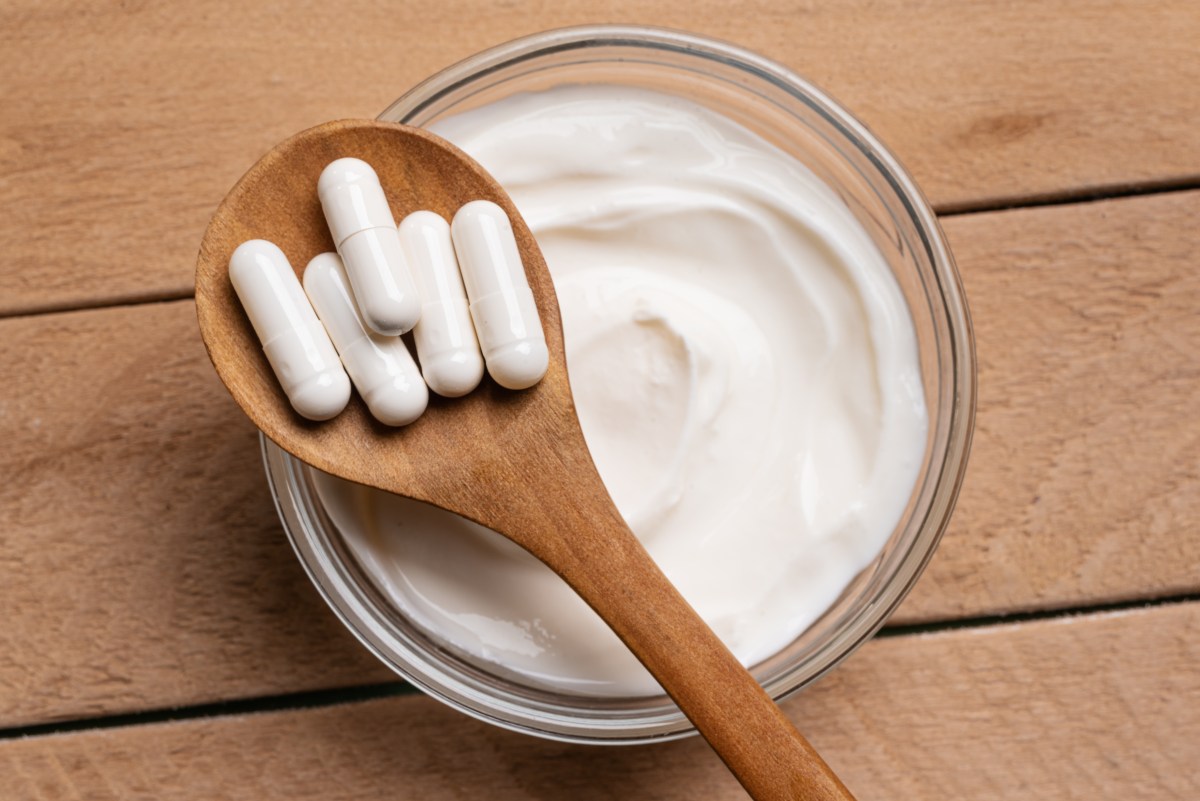
A study found that taking a daily probiotic supplement alongside antidepressants helped older adults with moderate depression experience slightly better improvements in depression and anxiety symptoms. The probiotic did not replace standard treatments but may provide extra support for mental health.
Key Facts
The study involved 58 adults aged 60 and older in India with moderate depression.
Participants continued their usual antidepressant medication during the trial.
They were divided into two groups: one took probiotics daily, the other took a placebo.
The study lasted 12 weeks with an additional 12 weeks of follow-up.
Both groups improved, but the probiotic group showed somewhat greater reductions in depression and anxiety symptoms.
Researchers measured changes by symptom rating scales and biological markers, including brain proteins and gut bacteria.
Probiotics did not clearly improve overall quality of life compared to placebo.
Experts emphasize probiotics should be used as an addition to, not a replacement for, standard mental health treatments.
Read the Original
Want the full story? Tap a source to open the original
article.
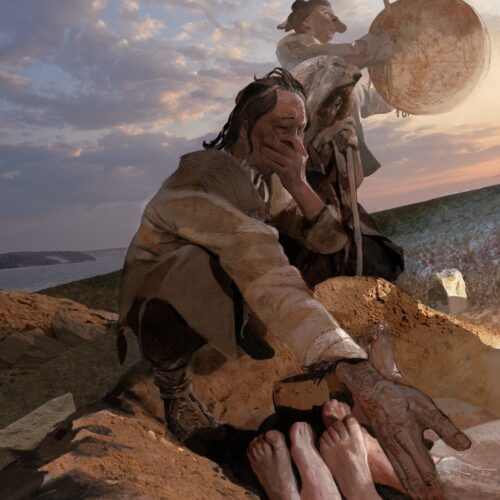
A plague outbreak caused by bacteria called Yersinia pestis killed hunter-gatherers in southeastern Siberia about 5,500 years ago. Scientists found DNA from the plague bacteria in the teeth of these ancient people, making this the oldest known case of the plague.
Key Facts
The outbreak happened near Russia’s Lake Baikal among hunter-gatherer groups.
Researchers found Yersinia pestis DNA in the teeth of people buried in four ancient cemeteries.
This is the earliest known plague outbreak in history.
The oldest strain of the plague bacteria was sequenced from these samples.
It challenges previous beliefs that plague became deadly only after humans started farming and living in towns.
Hunter-gatherers were thought less likely to spread disease because they lived in small, moving groups.
The discovery shows infectious disease could devastate ancient mobile communities too.
Archaeologists found many children’s remains that died around the same time, suggesting a sudden tragedy.
Read the Original
Want the full story? Tap a source to open the original
article.
This article explores three famous landmarks in Paris that are being changed by new technology, art, and culture. It highlights a virtual reality experience under the Eiffel Tower, the 20th anniversary of the Quai Branly Museum, and an art installation by French artist JR on the Pont Neuf bridge.
Key Facts
The Eiffel Tower features a new virtual reality experience that tells the story of its history.
The Quai Branly Museum is celebrating 20 years of showcasing art and artifacts from around the world.
French artist JR created an immersive, cave-themed art installation on Paris's oldest bridge, the Pont Neuf.
These projects show how Paris combines history with modern technology and art.
The article is part of a culture-focused series from France 24.
The Pont Neuf installation experienced delays due to damage but has now opened.
The article offers a fresh view of how Paris continues to update its famous landmarks.
Read the Original
Want the full story? Tap a source to open the original
article.
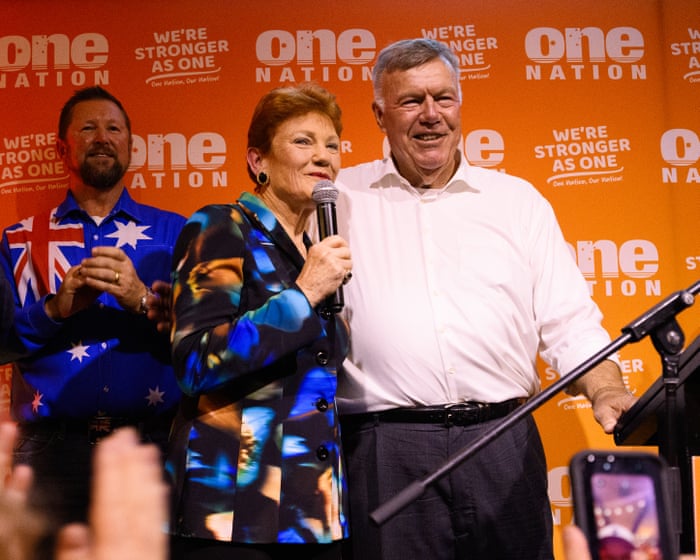
Pauline Hanson, leader of the One Nation party in Australia, said she spoke with newly elected MP David Farley because his views on immigration and flying Indigenous flags differ from party policies. Farley supports a higher immigration intake than One Nation’s limit and plans to fly Aboriginal and Torres Strait Islander flags alongside the Australian flag, which Hanson said goes against party rules.
Key Facts
David Farley won the Farrer seat in a May byelection, the first time One Nation won a federal lower house seat outright.
Farley stated that Australia’s immigration intake of 306,000 people is probably not too high.
One Nation’s official policy is to limit immigration to 130,000 people per year.
Farley planned to fly three flags in his office: Australian, Aboriginal, and Torres Strait Islander flags.
One Nation’s policy allows flying only the Australian flag, according to Pauline Hanson.
Hanson said she had a conversation with Farley to address these differences.
Farley later confirmed his office would fly the Australian flag and that no other flag would be above or replace it.
Hanson emphasized that party unity is important to avoid internal conflicts and defections.
Read the Original
Want the full story? Tap a source to open the original
article.
Photographer Martin Parr returned to the English village of Lacock in Wiltshire to take new photos 40 years after his first visit. His final project, completed just before he died, shows village life including events like a flower show, a scarecrow festival, and a VE Day party, highlighting both changes and traditions. The photos are now on display at Lacock Abbey.
Key Facts
Martin Parr, a well-known photographer, had last documented Lacock village 40 years ago.
He completed his final photography project in Lacock just months before his death last December.
The project involved the local community, with Parr visiting clubs, homes, and events.
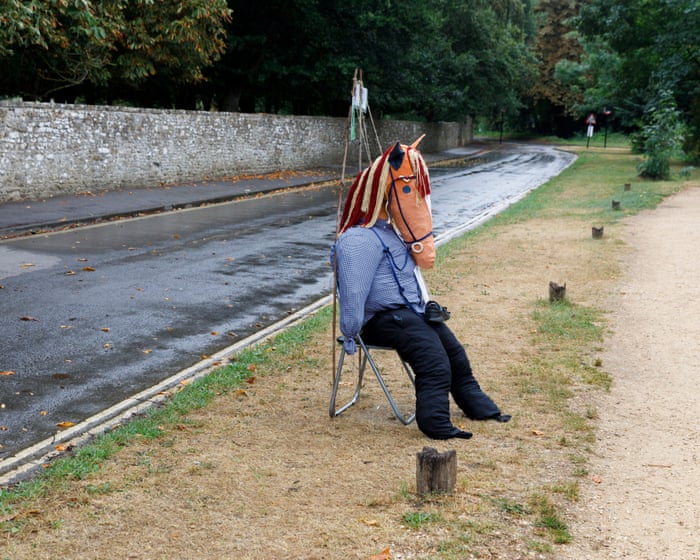
Photos capture village events such as a flower show, a scarecrow festival, a Women’s Institute meeting, and a VE Day party.
Parr’s images show both changes (like more technology and casual dress) and lasting traditions in Lacock.
The exhibition is held at Lacock Abbey, linking to the village’s history as the birthplace of early photography.
Parr was praised for making ordinary scenes look special and for making subjects feel comfortable.
The project was seen as a community effort involving the National Trust and local residents.
Read the Original
Want the full story? Tap a source to open the original
article.
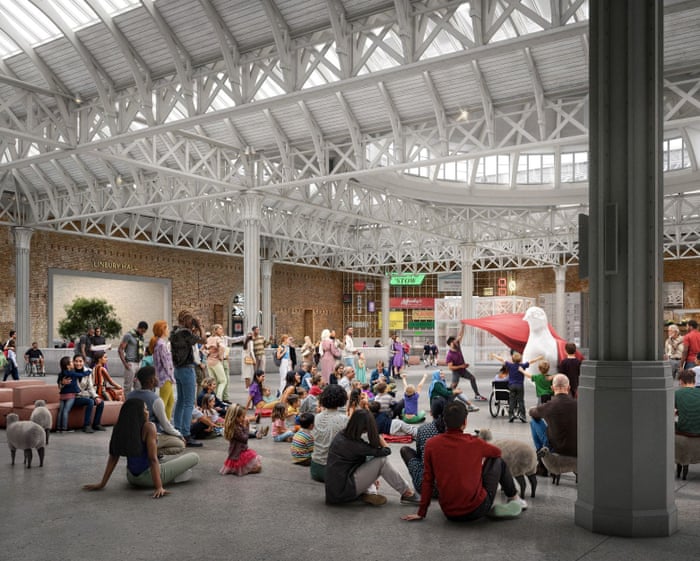
The London Museum will reopen on November 28 in a new building converted from historic market halls. Its director says the museum aims to be a lively social space where visitors can enjoy events like tea, dinners, and club nights while exploring its large collection of artifacts.
Key Facts
The museum closed in 2022 and moved from the Barbican to Smithfield market halls.
It will open as a “democratic” space welcoming all Londoners, not just museum visitors.
Events will include afternoon teas, monthly dinners, DJ sets, and cultural programs.
The collection has 7 million artifacts, including 17th-century jewels, a vest worn by Charles I, and a Whitechapel fatberg piece.
New acquisitions include a Banksy-decorated police box and 14,000 Roman artifacts from Bloomberg’s headquarters site.
The project cost £437 million and was funded by the City of London, the Mayor, and other donors like the National Lottery Heritage Fund.
The museum’s design connects two market halls by a glazed London street, creating an open social area.
The director said markets are naturally social places and this influenced the museum’s new approach to be more welcoming and open.
Read the Original
Want the full story? Tap a source to open the original
article.
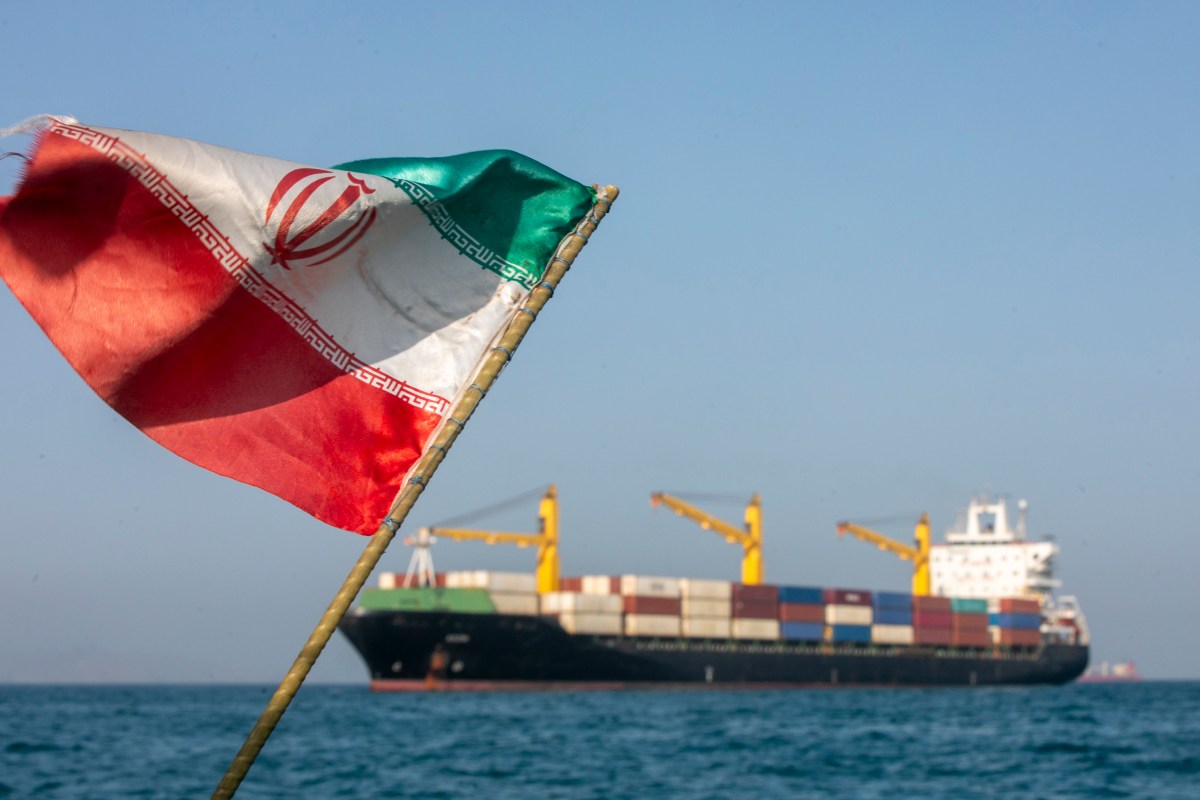
The United States and Iran recently signed a memorandum aiming to reopen the Strait of Hormuz for commercial shipping without tolls for 60 days. However, Iran wants to charge fees for services after that period, which could cause disagreements and delay a permanent agreement.
Key Facts
The Strait of Hormuz is crucial, carrying about one-quarter of the world’s sea oil shipments.
Shipping there has slowed due to conflict and naval blockades since February 28.
On June 5, President Donald Trump signed a 14-point agreement with Iran to negotiate peace and reopen the strait.
The agreement states Iran will allow toll-free commercial passage for 60 days, including clearing mines and obstacles.
Iran wants to charge fees after the initial 60 days for services like navigation help and insurance.
The U.S. insists the strait should remain permanently toll-free.
Disagreements over fees could delay a long-term deal and affect relations with Gulf countries.
The Gulf states have different options for shipping routes, which may impact how they respond.
Read the Original
Want the full story? Tap a source to open the original
article.
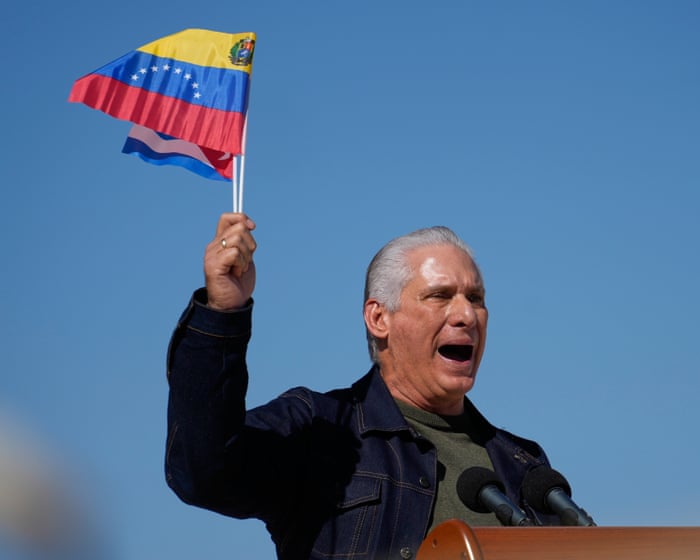
Cuba’s president, Miguel Díaz-Canel, said the country’s economy needs urgent changes because it is in a severe crisis made worse by a US oil blockade. He suggested looking at China and Vietnam as examples to open the economy and create wealth while sharing it fairly.
Key Facts
Cuba is facing a serious economic crisis with power cuts over 30 hours and shortages of food, fuel, water, and medicine.
The US oil blockade, started by President Donald Trump in January, has deepened Cuba’s economic problems.
President Díaz-Canel admitted that problems inside Cuba, like slow government work and rules that stop production, also cause difficulties.
Reforms are planned to boost the private sector and open the economy more to the world.
These reforms have the support of former president Raul Castro.
Díaz-Canel said changes are necessary even if not everyone agrees.
Cuba has hoped to blame the US embargo for its troubles but now acknowledges internal issues as well.
It is unclear if the US will accept these reforms or want more changes to Cuba’s economic system or leadership.
Read the Original
Want the full story? Tap a source to open the original
article.
The United States and Iran recently signed a deal to end hostilities involving Iran and Israel, but Israel, led by Prime Minister Benjamin Netanyahu, has opposed the agreement and continued military actions in Lebanon. President Donald Trump has publicly criticized Israel’s attacks on Lebanon and called for more restraint, highlighting tensions between the US and Israeli leaders despite their close alliance.
Key Facts
The US and Iran signed a deal aimed at ending the war involving Israel and Iran.
Israel, under Prime Minister Netanyahu, opposes the deal and continues to bomb areas in Lebanon.
President Trump expressed unhappiness with Israel’s military actions in Lebanon and urged Netanyahu to act more responsibly.
Israel controls about 20% of Lebanon’s territory and refuses to withdraw its forces.
Despite public disagreements, the US continues strong military support for Israel.
Reports suggest Trump called Netanyahu harsh names over the conflict escalation in Lebanon.
Historical US-Israeli clashes occurred, such as President Eisenhower’s pressure on Israel during the 1956 Suez Crisis.
Past US-Israeli disagreements have not stopped cooperation in security and military aid.
Read the Original
Want the full story? Tap a source to open the original
article.
Three large oil tankers from Saudi Arabia sailed through the Strait of Hormuz after a new agreement between the U.S. and Iran reopened the passage. The ships carried a total of 6 million barrels of oil and were managed by the Saudi shipping company Bahri.
Key Facts
Three supertankers flagged by Saudi Arabia passed through the Strait of Hormuz.
This transit happened after the U.S. and Iran signed a deal reopening the waterway.
The ships were managed by the Saudi Arabian shipping group called Bahri.
The tankers carried 6 million barrels of oil combined.
Between Tuesday and Wednesday, a total of 19 vessels passed through the strait.
Reuters was the news source reporting the tankers’ transit.
The Hill contacted Bahri for comment but a response was not included in the article.
Read the Original
Want the full story? Tap a source to open the original
article.
The European Parliament approved new rules to increase deportations of undocumented migrants, with a vote of 418 to 218. After the vote, right-wing members chanted “send them back,” which caused a strong reaction from other lawmakers who opposed the chant.
Key Facts
The vote approved changes to immigration laws aimed at making deportations easier across the EU.
The new rules could allow detention of migrants for up to two years and sending them to offshore centers.
These measures have been criticized by human rights groups and 16 UN experts for potentially breaking international law.
Right-wing Members of the European Parliament (MEPs) celebrated the vote with “send them back” chants.
Other MEPs responded with “shame on you” chants, showing deep divisions in the parliament.
The far-right’s actions were condemned as hateful by many politicians and human rights advocates.
Austria’s far-right Freedom party leader praised the chants as a sign of growing right-wing influence.
The vote reflects increased representation of nationalist and far-right politicians in the European Parliament after the 2024 elections.
Read the Original
Want the full story? Tap a source to open the original
article.
At Muckamore Abbey Hospital in Northern Ireland, many patients with severe learning disabilities were abused by some staff members. Police uncovered hundreds of crimes through CCTV footage, leading to a large criminal investigation and a public inquiry.
Key Facts
Muckamore Abbey Hospital was meant to be a safe home for people with severe learning disabilities and mental health needs.
In 2017, the hospital became the center of the UK's largest adult safeguarding investigation by police in Northern Ireland.
Police reported 124 hospital staff to prosecutors, with 58 directed to face legal action.
Hundreds of thousands of hours of CCTV footage over six months showed abuse and mistreatment of patients.
The footage was discovered after a parent questioned why he could not see recordings involving his son.
Abuse included patients being kicked, dragged, restrained, and left unattended while in distress.
Some staff took patients’ comfort items to provoke reactions, which then led to physical restraint.
The inquiry found a lack of leadership and oversight allowed abuse to continue unchecked for years.
Read the Original
Want the full story? Tap a source to open the original
article.
A UK Border Force officer and a Hong Kong trade official in London have been jailed for spying for China, marking the first criminal conviction of this kind in the UK. They were found guilty of surveilling Chinese dissidents in the UK and were sentenced under the National Security Act.
Key Facts
Peter Wai, a UK Border Force officer, was sentenced to 10 years in prison.
Bill Yuen, a Hong Kong Economic and Trade Office manager, was sentenced to 8 years.
Both were convicted of assisting a foreign intelligence service under the National Security Act.
Wai misused a government computer system to gather information on targets.
Their spying targeted Chinese dissidents, including activists and politicians in the UK.
The case involved a “shadow policing” operation against Hong Kong pro-democracy groups.
A third person arrested, Matthew Trickett, died by suicide after being released on bail.
The Chinese embassy called the case a misuse of law aimed at hurting Hong Kong’s stability.
Read the Original
Want the full story? Tap a source to open the original
article.