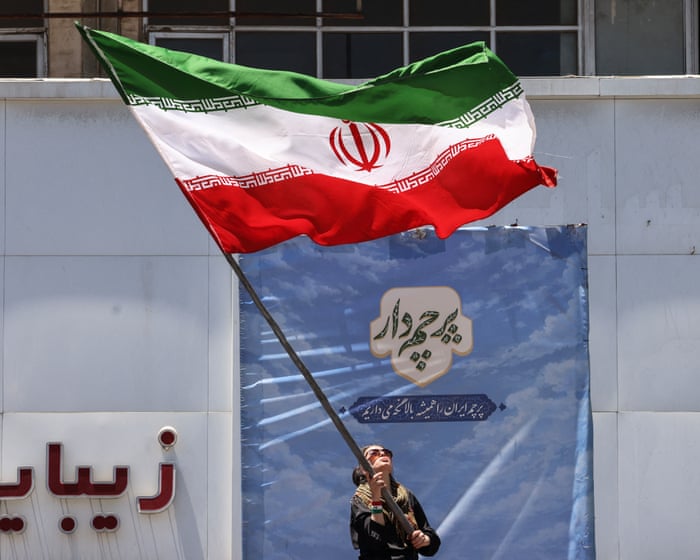
The United States and Iran have agreed on a memorandum to end nearly four months of conflict, which will reopen the Strait of Hormuz and lift a US naval blockade on Iran’s southern ports. Despite this agreement, many in Iran remain doubtful that the ceasefire means lasting peace due to unresolved issues like nuclear programs, sanctions, and frozen assets.
Key Facts
The US and Iran reached a memorandum of understanding to end hostilities after almost four months of conflict.
The deal will reopen the Strait of Hormuz, a critical waterway controlled by Iran since February 28.
The US will lift its naval blockade on Iran’s southern ports as part of the agreement.
Key issues such as Iran’s nuclear program, US sanctions, and frozen Iranian assets are still unresolved.
Many Iranians are skeptical that the agreement will bring long-term stability or be fully enforced.
Recent violence, including Israeli bombing in Beirut, and opposition by Iranian hardliners have complicated the peace process.
Iran delayed announcing the deal to avoid it coinciding with President Donald Trump’s birthday.
Public opinion in Iran is divided, with some opposing concessions to the US and fearing future conflict.
Read the Original
Want the full story? Tap a source to open the original
article.
Andy Lewis, an extreme athlete known for base jumping and slacklining, died in a base jumping accident in a Utah canyon. The accident also killed another man, and authorities confirmed Lewis's death at the scene.
Key Facts
Andy Lewis was an extreme athlete famous for base jumping, slacklining, and tricklining.
He gained wider attention for performing onstage with Madonna during the 2012 Super Bowl halftime show.
Base jumping is a risky sport where people jump from high fixed objects and use parachutes to land safely.
The accident happened Sunday at Mineral Bottom, a remote desert area near the Utah-Colorado border.
Another unidentified 50-year-old man also died in the base jumping accident.
Lewis owned a business called Base Jump Moab, offering tandem jumps for beginners.
He won four world championships in slacklining between 2008 and 2011.
Lewis set a Guinness World Record for slackline surfing above a waterfall and once walked a slackline suspended between two hot air balloons over 4,000 feet above ground.
Read the Original
Want the full story? Tap a source to open the original
article.
A proposed US-Iran deal aims to restart nuclear talks after recent conflicts, but several issues remain unresolved. The ceasefire has brought some relief, but significant political and security challenges continue in the region.
Key Facts
A US-Iran deal is expected to be signed soon to resume nuclear negotiations.
The deal faces uncertainties, including Iran’s possible fees for using the Strait of Hormuz and how frozen Iranian assets will be handled.
The Strait of Hormuz is crucial for global oil shipments, but shipping and insurance companies must confirm safety before oil flow resumes.
Recent conflicts have caused many deaths, including 120 Iranian children, and harmed civilians in Iran, Lebanon, and the region.
Iran’s military strength has increased while civilian freedoms remain limited.
The US’s reputation has been weakened by the conflict, and President Trump has not achieved his goals of regime change or nuclear disarmament.
Israel’s Prime Minister Netanyahu opposes the deal because it does not eliminate threats from Iran, Hezbollah, or Hamas.
Tensions between the US and Israel have grown, with President Trump calling Netanyahu a “difficult guy” and trying to limit Israel’s actions.
Read the Original
Want the full story? Tap a source to open the original
article.
President Donald Trump said on Monday that he might or might not attend the signing of a deal to end the war with Iran later this week. He made this comment while at the Group of Seven summit in France, sitting next to French President Emmanuel Macron.
Key Facts
President Trump spoke about the Iran deal signing on Monday.
He did not give a clear answer about attending the signing event.
The deal aims to end the war with Iran.
The comment was made at the Group of Seven (G7) summit.
The summit took place in Evian-les-Bains, France.
President Trump was seated next to French President Emmanuel Macron when he spoke to reporters.
Read the Original
Want the full story? Tap a source to open the original
article.
Police and mourners fought during a funeral for a person suspected of dying from Ebola in the Democratic Republic of the Congo. Police used tear gas to stop the crowd from taking the coffin while healthcare workers tried to remove the body.
Key Facts
The incident took place in the Democratic Republic of the Congo (DRC).
The deceased was suspected to have died from Ebola.
Mourners wanted to take the coffin, but police stopped them.
Police used tear gas to control the crowd.
Healthcare workers were trying to take the body away safely.
Clashes occurred during the funeral ceremony.
This situation reflects tensions around handling suspected Ebola deaths.
Read the Original
Want the full story? Tap a source to open the original
article.
Iraq qualified for the World Cup for the first time in over 40 years, exciting many fans in the country. However, many Iraqi fans cannot attend the tournament in person because the United States has strict visa rules that prevent them from traveling.
Key Facts
Iraq qualified for the World Cup after more than 40 years.
The team’s first match is against Norway.
Many Iraqi fans want to attend the World Cup in the U.S.
U.S. visa restrictions are stopping many Iraqi fans from getting entry visas.
As a result, many fans must watch the games from home.
The visa rules affect travel plans for Iraqi supporters.
The World Cup is taking place in the United States.
Read the Original
Want the full story? Tap a source to open the original
article.
Two helicopters crashed in Rio de Janeiro, Brazil, resulting in six deaths. The victims included Oliver Tree, a 32-year-old American singer known for his popular songs.
Key Facts
The crash happened in Rio de Janeiro, Brazil.
Two helicopters collided in the accident.
Six people died in the crash.
One of the dead was Oliver Tree, an American alt-pop musician.
Oliver Tree was 32 years old.
He was known for songs like “Life Goes On” and “Miss You.”
Read the Original
Want the full story? Tap a source to open the original
article.
The Democratic Republic of Congo (DRC) has reported a record number of new Ebola cases in one day, with 72 new cases confirmed on June 13, 2026. The outbreak has lasted one month, resulting in 782 cases and 181 deaths, mostly in three northeastern provinces. Neighboring Uganda has also reported cases linked to the DRC outbreak.
Key Facts
On June 13, 2026, the DRC reported 72 new Ebola cases, the highest daily increase since the outbreak began.
Total cases in the DRC have reached 782, with 181 deaths in the past month.
The outbreak mainly affects the northeastern provinces of Ituri, North Kivu, and South Kivu.
Two new health zones, Nia-Nia (Ituri) and Mabalako (North Kivu), reported cases for the first time.
Only 56.5% of people who had contact with Ebola patients are being tracked, below the 90%-95% target needed to control the spread.
There are challenges with community cooperation and shortages of medicines and supplies in the DRC.
Uganda has 19 confirmed cases and 2 deaths, mostly linked to transmission from the DRC.
The US government pledged $50 million to help develop vaccines and treatments against the Ebola strain causing the outbreak.
Read the Original
Want the full story? Tap a source to open the original
article.
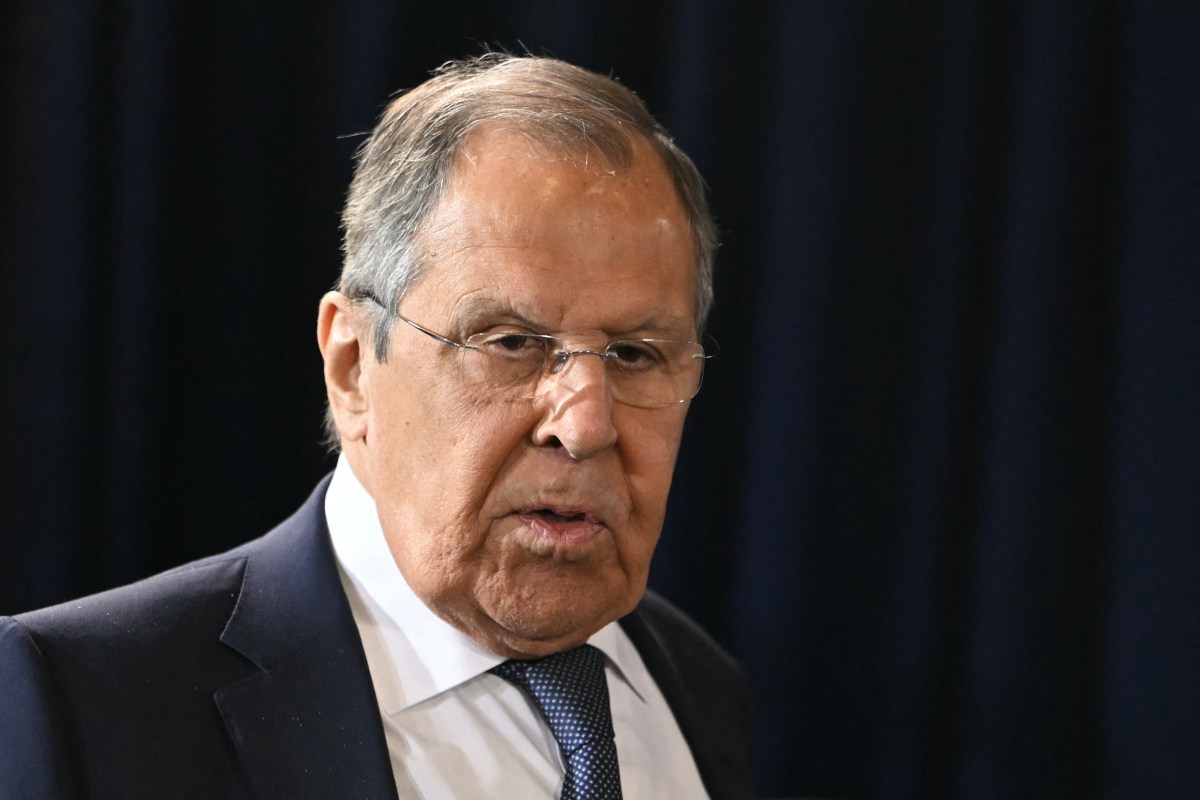
Russia responded cautiously to President Donald Trump’s announcement of a deal between the U.S. and Iran aimed at ending conflicts and reopening an important shipping route, the Strait of Hormuz. Russian Foreign Minister Sergey Lavrov expressed hope the deal will be signed soon but warned that lasting peace depends on ongoing political effort, noting uncertainties especially due to Israel’s opposition.
Key Facts
President Trump announced a deal with Iran to stop fighting and reopen the Strait of Hormuz.
Russia’s Foreign Minister Sergey Lavrov said Moscow hopes the deal will be formally signed this week.
Lavrov expressed caution, saying peace depends on continuing political will and that quick breakthroughs often don’t last.
President Trump and Russian President Vladimir Putin spoke about the deal in a recent phone call.
Israel opposes the deal and is not part of the agreement, creating challenges for peace.
Hezbollah, backed by Iran, continues conflict with Israel, risking further instability.
Israeli military actions against Hezbollah nearly disrupted the deal before it could be signed.
The deal still has unresolved details and faces uncertainty about how it will work in practice.
Read the Original
Want the full story? Tap a source to open the original
article.
The US and Iran have reached a fragile 60-day ceasefire agreement aimed at pausing hostilities and allowing talks on nuclear issues, sanctions, and frozen assets. Experts say this deal is temporary and unlikely to solve the region’s deep conflicts or prevent future violence.
Key Facts
The ceasefire will last 60 days during which Iran and the US will discuss Iran’s nuclear program, sanctions relief, and the release of frozen Iranian funds.
The deal requires the US to lift its naval blockade on Iran and Iran to allow free passage of ships through the Strait of Hormuz, a key route for global oil supplies.
The ceasefire includes Lebanon, where fighting has been frequent, but Israel is unhappy because the deal does not address Iran’s missile capabilities or support for militant groups.
Experts note past peace deals have been slow and difficult, citing the long negotiations before the 2015 nuclear deal that President Donald Trump later ended.
Analysts say ceasefires in the region, like in Gaza, often fail to address root causes or long-term peace, and violence may resume.
The Strait of Hormuz is strategically important and disruptions there affect the global economy.
The deal is seen as a temporary pause rather than a lasting peace solution due to the complex regional tensions.
Read the Original
Want the full story? Tap a source to open the original
article.
President Donald Trump said the details of the U.S.-Iran deal will be made public sometime after Friday. U.S. officials confirmed that both the United States and Iran have electronically signed the agreement.
Key Facts
President Trump announced the deal's text will be released after Friday.
Both the U.S. and Iran have signed the agreement electronically.
The deal concerns the relationship and negotiations between the U.S. and Iran.
The announcement was made on a Monday.
CBS News reporters provided coverage of the developments.
The specific terms of the agreement have not yet been shared publicly.
Read the Original
Want the full story? Tap a source to open the original
article.
A bus carrying more passengers than it should crashed in northern Ethiopia, killing at least 31 people and injuring many others. The bus went off a dangerous mountain road and fell about 100 meters into a ravine near the city of Addis Ababa.
Key Facts
The crash happened early Monday on a winding mountain road called Harego in northern Ethiopia.
The bus was traveling from Dessie to Addis Ababa.
At least 31 people died, and many more got hurt in the crash.
The road where the crash occurred is known to be very dangerous.
Delays in medical help made conditions worse for some injured passengers.
Poor road conditions and lack of ambulance services are common problems in Ethiopia.
Road traffic deaths in Ethiopia have more than doubled between 2007 and 2018.
A UN report said missing road signs and markings add to the danger on Ethiopian roads.
Read the Original
Want the full story? Tap a source to open the original
article.
Britain plans to ban people under 16 from using social media apps like Snapchat, TikTok, and YouTube to protect children from harmful content and too much screen time. Other countries such as Australia, Indonesia, Malaysia, Brazil, and Canada are also adopting rules to restrict young people’s access to social media or increase protections.
Key Facts
The UK will ban under-16s from using several social media apps.
Australia banned under-16s from having accounts on many platforms and can fine companies up to $35 million AUD for failures.
Indonesia prohibits under-16s from accounts on platforms that could expose them to addiction, scams, or harmful content.
Malaysia requires major platforms to verify users’ ages and block those under 16, with fines up to $2.5 million USD for non-compliance.
Brazil requires under-16s to link their accounts to a legal guardian and bans addictive features like autoplay and infinite scroll.
Canada is creating a Digital Safety Commission that could ban under-16s from social media unless companies remove harmful content effectively.
Other countries, including France, Spain, Denmark, Greece, Thailand, and South Korea, are considering similar social media restrictions for minors.
These rules aim to protect children from harmful content, addiction, cyberbullying, and privacy risks.
Read the Original
Want the full story? Tap a source to open the original
article.
President Donald Trump spoke separately with Ukraine's President Volodymyr Zelenskyy and Russia's President Vladimir Putin amid ongoing fighting between their countries. The conversations happened as the war between Russia and Ukraine continues.
Key Facts
President Trump had separate phone calls with President Zelenskyy of Ukraine and President Putin of Russia.
The talks occurred on a Sunday during active conflict between the two nations.
Russia and Ukraine are currently engaged in ongoing military strikes against each other.
Details of what was discussed during the calls were not provided.
The discussions happened while the war situation remained tense and unresolved.
Read the Original
Want the full story? Tap a source to open the original
article.
The US and Iran agreed to stop fighting for 60 days, which helps reduce conflict but is not a final solution. President Donald Trump views this as a win, but Iran sees it as a chance to gain benefits like sanctions relief, and the deal’s success depends on future actions and enforcement by all sides.
Key Facts
The US-Iran agreement pauses hostilities for 60 days.
This pause follows a conflict started by the US that harmed Iran and the region.
President Trump calls the deal a victory, while Iran sees it as leverage for compensation.
The deal’s conditions, such as unfreezing assets and lifting sanctions, depend on Iran’s compliance.
Israel and its allies are hesitant or resistant to the peace agreement.
The agreement attempts to address Iran’s nuclear program after the US left the 2015 deal.
Iran had earlier offered better nuclear terms before recent fighting started.
Both sides have different views on the deal’s meaning and future impact.
Read the Original
Want the full story? Tap a source to open the original
article.
Vice President JD Vance said that the United States and Iran have digitally signed a ceasefire agreement that will last 60 days and allow technical talks to try to end the ongoing conflict. He said the deal offers Iran a choice between ending its nuclear weapons program with proper checks or continuing sanctions and restrictions.
Key Facts
The U.S. and Iran agreed on a 60-day ceasefire and technical negotiations.
The agreement has been signed digitally but a formal signing ceremony is planned for Friday.
The full details of the deal have not been made public yet.
The deal aims to stop Iran from rebuilding its nuclear weapons program.
If Iran commits to ending nuclear weapons development with verification, some sanctions could be lifted.
Vice President Vance said the deal also requires Iran to stop funding terrorist groups, but he gave no details.
No money or financial incentives have been released to Iran so far.
The deal reportedly reopens the Strait of Hormuz, which helps reduce oil prices.
Read the Original
Want the full story? Tap a source to open the original
article.
Thousands of displaced Lebanese people are returning to southern Lebanon after an agreement between the US and Iran helped end the war. Many families traveled south with their belongings to go back home after almost four months of conflict.
Key Facts
The return happened on a Monday.
Thousands of displaced Lebanese are going back to southern Lebanon.
The return followed an agreement between the United States and Iran.
The agreement helped to end a war that lasted nearly four months.
Many families traveled in long lines of vehicles.
People are bringing their belongings with them as they return home.
Read the Original
Want the full story? Tap a source to open the original
article.
Abdullah Ibrahim, a famous South African jazz musician, died at the age of 91 in Germany after a short illness. He was known for mixing South African music with jazz and was an important figure during the fight against apartheid.
Key Facts
Abdullah Ibrahim was born in 1934 in Cape Town, South Africa.
He began playing piano and composing music at age seven.
His famous 1974 song "Mannenberg" became a symbol of resistance against apartheid, a system of racial segregation in South Africa.
He changed his name from Dollar Brand to Abdullah Ibrahim after converting to Islam in the late 1960s.
Ibrahim played with the Jazz Epistles, a group that included other notable South African musicians like Hugh Masekela.
Due to apartheid, Ibrahim moved to Switzerland and later the United States, where he developed his unique jazz style.
Despite living abroad, he often returned to South Africa to perform and record music.
His last public performance was at the Cape Town International Jazz Festival about three months before he died.
Read the Original
Want the full story? Tap a source to open the original
article.
A tentative deal has been made to end the war in Iran and reopen the Strait of Hormuz, a key passage for global oil shipments. However, it may take weeks or months before oil flow returns to normal, as ships need time to pass through, and producers must ramp up oil production.
Key Facts
The Strait of Hormuz carries about one-fifth of the world’s crude oil before the war.
Hundreds of oil tankers are currently trapped inside the Persian Gulf, waiting to exit through the narrow strait.
Oil producers in the Gulf reduced output during the war, and it will take time to increase production again.
Ship operators may delay passing through the strait until they feel it is safe and cleared of mines.
Shipping a tanker to major Asian customers like Japan and back can take 45 to 50 days.
Mine clearance in the strait could take about six months to ensure safe navigation.
About 500 commercial vessels remain stuck in the Persian Gulf.
Iran has demanded the right to collect fees from ships passing through the strait, but details of this are unclear.
Read the Original
Want the full story? Tap a source to open the original
article.
A small plane carrying 11 skydivers and a pilot crashed near Butler, Missouri, killing everyone on board. The crash happened around 11:20 a.m. local time as the plane spun out of control shortly after takeoff.
Key Facts
The plane involved was a Pacific Aerospace P750.
There were 11 passengers, all skydivers, and one pilot on board.
The crash site is near Butler, Missouri.
Witnesses said the plane was very low and hit the ground too quickly for anyone to safely jump with parachutes.
All people on board died in the crash.
The National Transportation Safety Board (NTSB) and the Federal Aviation Administration (FAA) are investigating the crash.
The plane was not in contact with air traffic control because of the airspace rules for that flight.
The local sheriff called it a "mass casualty" event.
Read the Original
Want the full story? Tap a source to open the original
article.