A historic monastery in Kyiv, called Kyiv-Pechersk Lavra, caught fire after a heavy air attack by Russia on Ukraine’s capital. The attack damaged the ancient site and caused the deaths of four people, with many others injured.
Key Facts
Kyiv-Pechersk Lavra is a centuries-old monastery and a UNESCO World Heritage site.
The monastery was damaged by Russian air strikes on Kyiv.
The attacks occurred overnight.
Four people died because of the attack.
Many others were injured during the air strikes.
The monastery is important to Eastern Orthodox Christianity.
The attack is part of ongoing conflict involving Russia and Ukraine.
Read the Original
Want the full story? Tap a source to open the original
article.
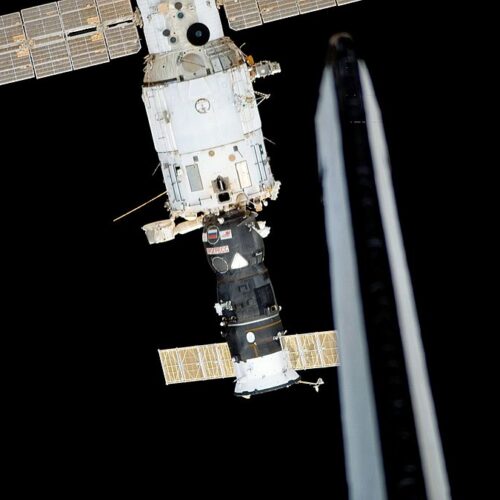
Russia has been working to fix long-term cracks in a part of the International Space Station (ISS) attached to the Russian Zvezda module. NASA briefly asked its astronauts to take shelter in a spacecraft due to concerns about these cracks, but Russia later adjusted its repair plans, and normal activities resumed on the ISS.
Key Facts
The cracks are in the PrK module, an older part of the Russian segment of the ISS.
The issue started in 2019 and involves corrosion that causes leaks when air pressure changes.
Russian cosmonauts have been using a sealant to try to stop the leaks.
The cracks worsened again in early 2024, leading to new Russian repair efforts.
NASA was worried that the Russian repair methods might cause bigger problems and temporarily put astronauts in the Crew Dragon spacecraft as a safety measure.
Russia delayed some repair work after further inspections and discussions with NASA.
The PrK module is important because it connects to cargo ships that deliver supplies to the ISS.
Both NASA and Russia have been monitoring and managing this problem quietly for years.
Read the Original
Want the full story? Tap a source to open the original
article.
Vickrum Digwa was convicted of killing Henry Nowak. The solicitor general has asked the Court of Appeal to review Digwa’s jail sentence because it may be too short under a special law called the Unduly Lenient Sentence scheme.
Key Facts
Vickrum Digwa was found guilty of murdering Henry Nowak.
The solicitor general referred Digwa’s sentence to the Court of Appeal.
The referral is made through the Unduly Lenient Sentence scheme, which reviews sentences that may be too low.
This news is recent and may be updated as more information comes in.
The case is being followed by BBC Hampshire & Isle of Wight.
Read the Original
Want the full story? Tap a source to open the original
article.
The Franco-German defence group KNDS revealed a new battle tank called CAPINT at the Eurosatory exhibition near Paris. This tank combines a German base and a French gun and is designed to temporarily replace France’s aging Leclerc tanks while the next-generation MGCS tank project faces delays.
Key Facts
KNDS is a defence company owned by France and Germany.
They showed the CAPINT tank at a defence trade fair near Paris on June 15, 2026.
CAPINT uses a chassis made in Germany and a gun made in France.
The tank is a temporary solution while the MGCS project, planned to replace older tanks in France and Germany, is delayed by about 10 years.
The MGCS project started in 2017, aiming to replace the Leopard 2 and Leclerc tanks around 2040-2045.
France decided to develop an intermediate tank because the MGCS is running late, and their Leclerc tanks will be retired by 2038.
Germany is also working on its own new tank called Leopard 2AX or Leopard 3, planned to replace Leopard 2 tanks.
KNDS plans to list its company on stock markets in Frankfurt and Paris later this year.
Read the Original
Want the full story? Tap a source to open the original
article.
The United States and Iran have reached a deal to stop their war, including ending military actions in Lebanon. However, Israel says its forces will stay in Lebanon for an unknown time, and fighting continues despite a ceasefire. Residents in Beirut are starting to return home after fleeing earlier violence.
Key Facts
The US and Iran agreed to end their war and military operations in Lebanon.
Israel states its military presence in Lebanon will remain indefinitely.
A US-brokered ceasefire between Israel and Hezbollah began but fighting still occurs.
Beirut residents who fled earlier violence are beginning to return home.
The conflict involves Iran-backed forces and Israel, affecting Lebanon and the wider Middle East.
The war has caused ongoing instability and concerns about long-term regional impact.
Other related events include drone attacks, internet bans in Iran, and international tensions at the Strait of Hormuz.
President Donald Trump suspended a navigation operation in the Strait of Hormuz amid the conflict.
Read the Original
Want the full story? Tap a source to open the original
article.
A 23-year-old man, Vickrum Digwa, was sentenced to life in prison with a minimum 21 years for stabbing and killing Henry Nowak, an 18-year-old student. The case is under review by a court of appeal after concerns about the sentence and the police response, including allegations of racial bias, have been raised.
Key Facts
Vickrum Digwa was convicted of murdering Henry Nowak in Southampton in December 2025.
Digwa was sentenced to life imprisonment with a minimum term of 21 years, minus time already served.
The sentence is being reviewed by the court of appeal following a referral from the solicitor general under the unduly lenient sentence scheme.
Nowak was wearing a small ceremonial Sikh blade (kirpan), which Digwa had with him, but Digwa used a larger knife to attack.
Police body-cam footage showed Nowak being handcuffed while he said he was stabbed and struggling to breathe.
The solicitor general and the attorney general's offices are involved in reviewing the case.
Violent protests by far-right groups followed the conviction.
The Independent Office for Police Conduct is investigating the police’s handling of the situation, with a report expected within three months.
British officials have raised concerns about how accusations of racism may have affected police decisions in this case.
Read the Original
Want the full story? Tap a source to open the original
article.
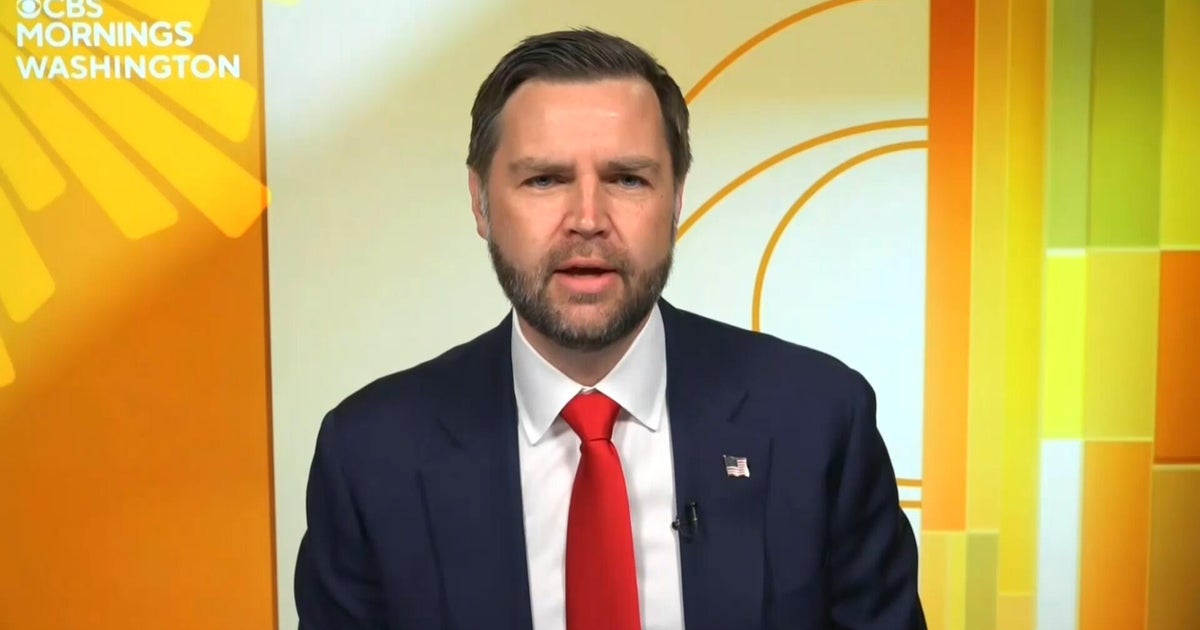
U.S. Vice President JD Vance said the United States will share the full text of its deal with Iran this week. He explained key parts of the agreement, including issues about the Strait of Hormuz, a fund to help rebuild, and Iran's nuclear weapons.
Key Facts
Vice President JD Vance announced the upcoming release of the full U.S.-Iran deal text.
The deal addresses the situation in the Strait of Hormuz, a strategic waterway.
The agreement may include a reconstruction fund to support rebuilding efforts.
The deal also covers Iran’s nuclear weapons program.
Details were shared during a CBS News interview.
Read the Original
Want the full story? Tap a source to open the original
article.
The UK Court of Appeal ruled that the government was right to classify the Palestine Action protest group as a terrorist organization. The court said the group supports unlawful violence and the ban on the group is legal and proportional.
Key Facts
Palestine Action is a UK protest group founded six years ago targeting companies linked to Israeli weapons manufacturing.
The UK government labeled Palestine Action a terrorist group in July 2024 after members sprayed military planes with red paint.
The Court of Appeal, with top judges, agreed the group promotes terrorism and the ban is lawful.
Police have arrested about 3,000 people for supporting Palestine Action since its proscription.
Four members were recently sentenced for criminal damage with a “terrorist connection.”
The group has caused millions of pounds in property damage in protests from 2021 to 2025.
The High Court initially ruled the ban unlawful, but the government appealed and won at the Court of Appeal.
Some public figures have criticized the ban, saying the group’s actions do not amount to terrorism.
Read the Original
Want the full story? Tap a source to open the original
article.
President Donald Trump and Pakistan’s prime minister say the United States and Iran have reached a deal to end the war. However, some details about the agreement are still unclear.
Key Facts
President Trump announced that a deal between the U.S. and Iran is now complete.
The deal aims to end the ongoing conflict involving Iran.
Pakistan’s prime minister also confirmed the agreement.
Specific terms and details of the deal have not been fully disclosed.
The report comes from CBS News correspondent Ed O’Keefe.
The news was shared through the CBS News app and website.
The situation involves international relations between the U.S., Iran, and Pakistan.
Read the Original
Want the full story? Tap a source to open the original
article.
Israeli forces shot and killed a three-year-old Palestinian boy named Rayan Abu al-Ajeen while he was with his father near their family farm in Gaza. The father was also injured and is receiving hospital treatment. The Israeli military has not commented on the shooting.
Key Facts
The boy, Rayan Abu al-Ajeen, was three years old and killed by a gunshot to the head.
The shooting occurred in the Wadi al-Salqa area of Deir el-Balah governorate in Gaza.
Rayan’s father, Bahaa, was shot in the leg and is in serious condition after bleeding for hours before hospital treatment.
The family was near their greenhouses in an area not directly controlled by the Israeli military, outside the so-called ‘Yellow Line’.
The boy’s grandfather reported hearing gunfire and later discovering the shooting victims.
Israeli forces have killed nearly 1,000 Palestinians in Gaza since the October ceasefire.
Since October 2023, Israel has killed more than 73,000 Palestinians during its military operations in Gaza.
The Israeli military has not yet responded or commented on this specific incident.
Read the Original
Want the full story? Tap a source to open the original
article.
The United States and Iran announced a deal to end the war, which has caused serious damage to the region's energy systems and blocked a key shipping route, the Strait of Hormuz. While the deal brings hope for future peace and energy flow, it may take months before oil supplies return to normal and gas prices drop for consumers.
Key Facts
The U.S. and Iran agreed to a truce after over three months of fighting damaging Iranian infrastructure and regional energy facilities.
The Strait of Hormuz, a vital route for about 20% of the world’s oil, remains blocked currently, but reopening is planned after the official signing of the deal on June 19 in Switzerland.
President Donald Trump said the Strait would be reopened without tolls and that oil flow would return to normal once the deal is signed.
Iran stated the U.S. naval blockade would end immediately after the agreement.
Some experts doubt the deal's durability due to unresolved issues, such as frozen Iranian assets and regional conflicts involving Israel and Lebanon.
Oil prices fell below $80 per barrel after the announcement, reflecting hopes of improved supply.
Analysts warn that gas prices may take weeks or months to decrease for everyday drivers due to damaged infrastructure and ongoing risks.
The deal is seen as a step forward but faces challenges related to trust and geopolitical tensions.
Read the Original
Want the full story? Tap a source to open the original
article.
President Donald Trump’s new Iran deal aims to reopen the Strait of Hormuz, end conflict, and create a 60-day period for nuclear talks after a ceasefire. The deal changes the situation for Russia’s President Vladimir Putin by reducing the crisis that had made Russia influential, but also giving Putin new strategies related to energy and negotiations.
Key Facts
The Iran deal is expected to be signed in Switzerland after Pakistani mediation.
It aims to reopen the Strait of Hormuz, a key passage for about one-fifth of the world’s oil and gas shipments.
The deal creates a 60-day window for nuclear negotiations following a ceasefire and the reopening of the strait.
Iran used control of the strait as leverage to force urgent diplomacy without outright defeating the U.S.
Putin sees lessons in this for Ukraine, hoping for a ceasefire that leaves Russia holding some territory and leads to long negotiations.
The crisis around Iran increased oil prices and gave an economic boost to Russia’s energy companies.
Key Russian figures such as Igor Sechin (Rosneft CEO) and Alexander Novak (deputy prime minister) benefited financially.
The deal may reduce Russia’s short-term advantage but could strengthen its long-term political leverage.
Read the Original
Want the full story? Tap a source to open the original
article.
The United Kingdom plans to ban children under 16 from using social media apps like TikTok and Instagram to protect them from addictive and harmful content. The law will make tech companies responsible for enforcing the ban, which aims to start in spring 2027, and also restrict access to some online gaming and AI “romantic companions” for under-18s.
Key Facts
The UK government announced a ban on social media use for children under 16, including platforms like Snapchat, TikTok, YouTube, Instagram, Facebook, and X.
Messaging apps such as WhatsApp will still be allowed for children under 16.
The ban will also block “harmful functions,” like livestreaming and chatting with strangers, and will extend to gaming websites.
Tech companies will be responsible for stopping children from accessing these platforms and could face large fines for failing to comply.
The law targets content designed to be addictive and aims to protect young users’ mental health.
Australia introduced a similar ban in December 2025 but saw many children bypass age restrictions.
The U.S. Embassy in London expressed concerns that age-verification might not work and emphasized parents’ role in protecting children.
Other countries including France, Denmark, and Malaysia are also considering laws to limit children’s social media use.
Read the Original
Want the full story? Tap a source to open the original
article.
The United Kingdom plans to ban children under 16 from using social media apps like TikTok and Instagram. The law will also block harmful features such as livestreaming and messaging strangers, and extend restrictions to gaming sites. The government aims to have the rules in place by spring 2027.
Key Facts
The U.K. will ban children under 16 from social media platforms including Snapchat, TikTok, YouTube, Instagram, Facebook, and X.
Messaging apps like WhatsApp will still be allowed for children under 16.
Children under 18 will be banned from using AI "romantic companions," though details are unclear.
The law will also block features such as livestreaming and chatting with strangers to protect children from addictive content.
Tech companies must enforce these rules or face large fines.
The government hopes to pass the legislation by December 2026 to enforce it by spring 2027.
Australia implemented a similar social media ban for under-16s in December 2025 but found many children bypassed the rules.
Other countries, like France, Denmark, Malaysia, and Ireland, are also considering or have plans to limit children’s access to social media.
Read the Original
Want the full story? Tap a source to open the original
article.
The UK government announced it will ban children under 16 from using social media platforms like Snapchat, TikTok, YouTube, Instagram, Facebook, and X. Messaging apps such as WhatsApp will not be included in the ban.
Key Facts
The ban applies to all children under 16 in the UK.
Social media platforms affected include Snapchat, TikTok, YouTube, Instagram, Facebook, and X.
Messaging platforms like WhatsApp are excluded from the ban.
The UK Prime Minister Keir Starmer said social media was making children unhappy.
This decision aims to protect young people’s wellbeing online.
The announcement was made on June 15, 2026.
The ban reflects growing concerns about the impact of social media on children’s mental health.
Read the Original
Want the full story? Tap a source to open the original
article.
Israel’s defence minister said Israeli forces will remain in the territory they control in southern Lebanon despite a new US-Iran agreement aiming to stop fighting in the Middle East. The deal includes a ceasefire in Lebanon, but Israeli leaders expressed concerns and said they would continue military actions if Iran attacks.
Key Facts
Israel seized a large area in southern Lebanon during a recent conflict with Hezbollah.
The US and Iran announced a preliminary agreement to end hostilities in the Middle East, including a ceasefire in Lebanon.
Israeli Defence Minister Israel Katz said Israel will stay indefinitely in the lands it controls in Lebanon, Syria, and Gaza.
Israeli Prime Minister Benjamin Netanyahu supports efforts for a diplomatic end but has not publicly commented on the deal.
Israeli military attacks and Hezbollah’s rocket attacks stopped just before midnight after the agreement.
Hezbollah has close ties to Iran but has not publicly responded to the new agreement.
Israeli officials fear the ceasefire benefits Hezbollah and Iranian-backed groups.
The US continues to provide military and diplomatic support to Israel amid tensions over the agreement.
Read the Original
Want the full story? Tap a source to open the original
article.
A 44-year-old man was arrested in London for pushing a woman into the path of a bus in a 2017 incident on Putney Bridge. The woman narrowly avoided injury when the bus driver swerved to miss her. The police had closed the case in 2018 but reopened it after a play about the incident encouraged people to come forward.
Key Facts
The incident happened on May 5, 2017, on Putney Bridge in south-west London.
A woman was pushed into the path of a moving bus by a man jogging on the bridge.
The bus driver avoided hitting the woman by quickly steering the bus away.
The man suspected of pushing her was arrested nine years later at his £1.4 million home.
The police had previously interviewed 50 men and arrested three suspects before closing the case.
The incident inspired a play called Once Upon a Bridge, which told the story from the viewpoints of the runner, victim, and bus driver.
The play’s debut in 2024 motivated the police to reopen the investigation.
People with information about the case are being urged to contact the police.
Read the Original
Want the full story? Tap a source to open the original
article.
Israeli Defense Minister Israel Katz and National Security Minister Itamar Ben-Gvir said Israel will not give up land it took in Lebanon. This statement came after the U.S. and Iran reached a deal to extend a ceasefire. Ben-Gvir also said that the agreement made by President Trump does not affect Israel’s decision.
Key Facts
Israel controls land that it seized from Lebanon.
The U.S. and Iran recently agreed to extend a ceasefire, or a pause in fighting.
Israeli Defense Minister Israel Katz confirmed Israel will keep the land it took.
National Security Minister Itamar Ben-Gvir publicly rejected the impact of the U.S.-Iran deal on Israel’s actions.
Ben-Gvir used the social platform X to share his statement.
The statement was translated from another language to English.
Israel’s leaders are not changing their position despite international agreements.
Read the Original
Want the full story? Tap a source to open the original
article.