A seven-month-old Palestinian baby named Sam Abu Haikal was fatally shot in the head by an Israeli soldier in Hebron, located in the occupied West Bank. The Israeli army has said it is investigating the shooting.
Key Facts
The incident occurred in Hebron, a city in the occupied West Bank.
A seven-month-old baby, Sam Abu Haikal, was shot in the head and died.
The shooting happened when an Israeli soldier fired at a Palestinian family’s car.
A video showing the moment of the shooting was recently released.
The Israeli army has started an investigation into the incident.
Hebron is an area with ongoing conflicts between Israelis and Palestinians.
Read the Original
Want the full story? Tap a source to open the original
article.
A video shows a Ukrainian-made cruise missile called the FP-5 Flamingo flying far inside Russia and hitting a military factory in Cheboksary. Ukrainian President Zelenskyy said this factory made parts for Russian drones and missiles.
Key Facts
The missile is named FP-5 Flamingo.
It was made in Ukraine.
The missile traveled about 900 kilometers inside Russian territory.
It struck a military plant located in Cheboksary, Russia.
President Zelenskyy stated the plant produced parts used in Russian drones and missiles.
The event was recorded on video and shared publicly.
This shows Ukraine's capacity to target important Russian military sites deep inside Russia.
Read the Original
Want the full story? Tap a source to open the original
article.
The father of Captain Sumeet Sabharwal, the senior pilot who died in the Air India Flight 171 crash last June, has promised to protect his son's reputation as investigators prepare to release updated findings. The crash, which killed at least 260 people, occurred shortly after takeoff, and while preliminary reports showed engine fuel switches moved to "cut-off," no fault has been officially assigned to the pilots.
Key Facts
Captain Sumeet Sabharwal was the senior pilot on Air India Flight 171 that crashed in June 2025.
The crash happened seconds after the plane took off from Ahmedabad, India, killing at least 260 people onboard.
Early investigation showed the fuel control switches for both engines were set to "cut-off" shortly after takeoff, stopping fuel flow to the engines.
Cockpit recordings captured a discussion about the fuel cut-off, but investigators have not confirmed which pilot spoke or whether the action was intentional.
Media reports suggested the senior pilot might be responsible, causing backlash from pilots’ groups and calls for fair investigation.
The Aircraft Accident Investigation Bureau criticized selective media reports as irresponsible and premature.
Captain Sabharwal’s father sought an independent investigation and the Supreme Court ruled there was no initial suggestion of the pilot’s fault.
Captain Sabharwal was an experienced pilot with over 30 years flying and 15,600 hours logged.
Read the Original
Want the full story? Tap a source to open the original
article.
The ongoing conflict in Iran has led to lower global oil use this year and increased coal use in parts of Asia. UN climate talks are using the crisis to promote clean energy goals for the future.
Key Facts
Global oil use is expected to drop by 1.1 million barrels per day this year before rising again next year.
High fuel prices and less fuel availability have lowered oil demand worldwide.
U.S. oil production is projected to grow from 13.7 million barrels per day this year to nearly 14.2 million barrels next year.
UN climate officials at talks in Germany are pushing for more clean energy as part of their response to the crisis.
Turkey, hosting the UN climate summit in November, aims for 35% of electricity to come from clean energy by 2035.
Coal use is rising sharply for electricity in the Asia-Pacific region due to problems with natural gas supplies and higher gas prices.
Despite coal’s short-term increase, analysts expect the conflict to also speed up the switch to renewable energy and energy storage worldwide.
Read the Original
Want the full story? Tap a source to open the original
article.
President Donald Trump said Iran will face consequences for stalled peace talks and recent military actions. The U.S. launched strikes after an American helicopter was shot down, and Iran responded with attacks of its own.
Key Facts
President Trump made the statement on Truth Social.
He said Iran's military is disorganized and ineffective.
The U.S. launched new strikes against Iran following the downing of a U.S. helicopter.
Iran retaliated with its own military actions after the U.S. strikes.
The comments relate to ongoing stalled negotiations between the U.S. and Iran.
The situation involves military conflict and diplomatic tensions between the two countries.
President Trump emphasized that Iran will "have to pay the price" for the stalled talks and attacks.
Read the Original
Want the full story? Tap a source to open the original
article.
A Pakistan army helicopter crashed near Muzaffarabad in Pakistan-administered Kashmir, killing everyone on board. The military said the helicopter had a technical fault during takeoff and that an investigation is underway.
Key Facts
The helicopter was an Mi-17 model used by the Pakistan army.
The crash happened near Muzaffarabad, the capital of Pakistan-administered Kashmir.
All personnel on board died; no survivors were reported.
Rescue and recovery teams reached the crash site immediately.
A board of inquiry will investigate the exact technical cause of the crash.
Recently, there has been increased security in Muzaffarabad due to planned protests.
At least 11 people died in clashes between police and protesters in nearby Rawalakot city.
Federal paramilitary forces have been deployed, and strict travel advice has been issued for the region.
Read the Original
Want the full story? Tap a source to open the original
article.
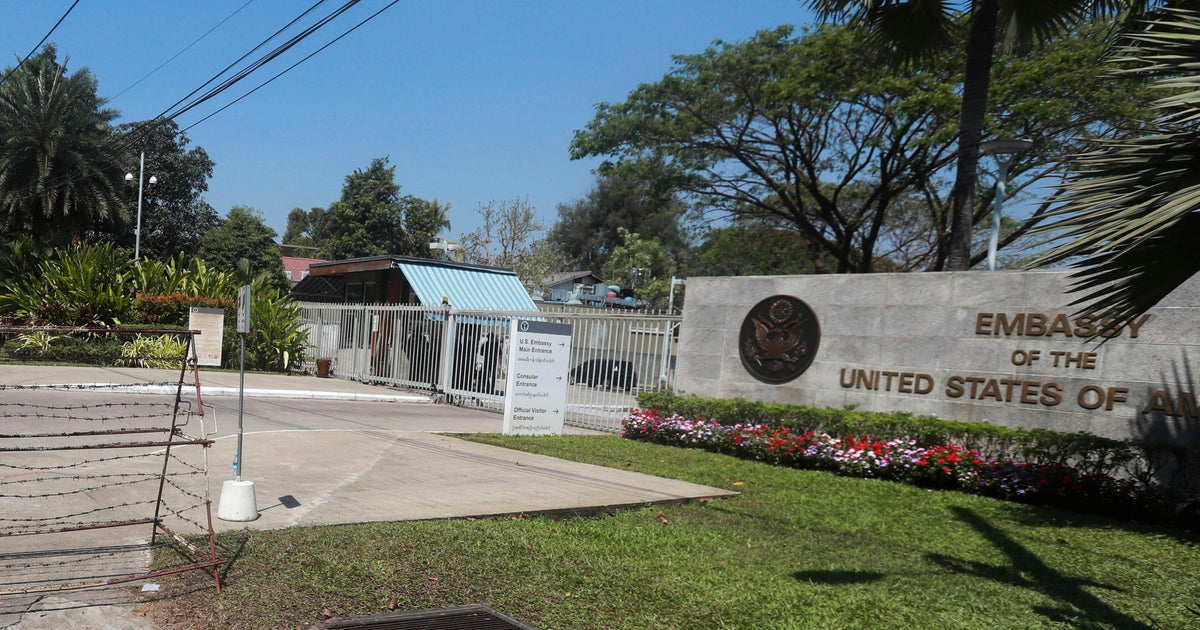
A US government worker stationed at the US embassy in Yangon, Myanmar, was found dead two weeks ago in a hotel popular with diplomats and business visitors. Police are investigating the death as a possible murder and have detained a Thai woman in connection with the case.
Key Facts
The deceased was a US government employee working at the US embassy in Yangon.
The body was found at the Sakura Residence + Hotel, which offers long-term rentals and is near the US embassy.
Police are treating the case as a possible homicide (murder).
A Thai woman has been detained by police in relation to the investigation.
US officials have confirmed the death but have not shared further details out of respect for the family’s privacy.
Myanmar is currently experiencing conflict between the military-led government and various ethnic and pro-democracy armed groups.
Local authorities and hotel management declined to comment on the case.
Thai and US diplomatic offices have not provided additional information or confirmed consular support for the suspect.
Read the Original
Want the full story? Tap a source to open the original
article.
An American diplomat was found dead in Yangon, Myanmar, and a Thai woman has been detained by police in connection with the case. The U.S. State Department confirmed the death but gave no further details, while local authorities are investigating the death as a possible homicide.
Key Facts
The diplomat was a U.S. government employee working at the American Embassy in Yangon.
The diplomat's body was found about two weeks ago at the Sakura Residence & Hotel in Yangon.
The Sakura Residence & Hotel is a place popular with diplomats, business visitors, and others staying long-term.
Police have detained a Thai woman related to the investigation and are treating the case as a possible murder.
Myanmar is experiencing ongoing conflict between the military government and ethnic and pro-democracy armed groups.
Local police and hotel management declined to comment on the case.
The Thai government also refused to confirm if they were assisting the detained woman.
The U.S. State Department stated they had no additional information to protect the privacy of the diplomat’s family.
Read the Original
Want the full story? Tap a source to open the original
article.
Peace talks in the Middle East are in doubt after the US and Iran exchanged military strikes overnight. Iran said it needs to rethink its role in the peace process, while President Trump warned Iran it would face consequences for its actions.
Key Facts
The US attacked Iranian targets early Wednesday after Iran shot down a US army helicopter near the Strait of Hormuz.
Iran responded with missile strikes on US bases in Kuwait, Bahrain, and Jordan.
These attacks mark the biggest escalation since a ceasefire was agreed upon in early April.
Iran’s foreign ministry said US strikes hurt the peace talks and accused Israel of breaking the ceasefire in Lebanon.
President Trump said Iran's military was defeated and promised Iran would pay a price for the attacks.
The US military called its strikes a "proportional response" targeting Iranian air defenses and radar sites.
Iran’s missile attacks on US bases were mostly intercepted, with no immediate US casualties or damage reported.
A US official said negotiations and military actions can happen at the same time, suggesting a deal with Iran is still possible.
Read the Original
Want the full story? Tap a source to open the original
article.
Khurram Parvez, a Kashmiri human rights activist jailed for nearly five years on charges of “terror funding,” has been granted bail in one case but remains in jail due to a second case. Both cases involve allegations related to terrorism, and his legal trial has not yet started.
Key Facts
Khurram Parvez was first arrested about five years ago by India’s National Investigation Agency (NIA).
He faces two separate cases accusing him of “terror funding” and recruiting rebels in Indian-administered Kashmir.
The Delhi High Court granted him bail in the November 2021 case, but he remains imprisoned due to the March 2023 case.
None of the trials for these cases have started so far.
Human rights groups have condemned his detention and long wait for trial, highlighting the use of these cases to punish activists.
The conviction rate under the counterterror law in Kashmir is less than 1 percent.
Kashmir is a disputed region controlled in parts by India, Pakistan, and China, and has seen multiple wars and continuing tensions.
India’s government under Prime Minister Narendra Modi has been criticized for cracking down on dissent in Kashmir.
Read the Original
Want the full story? Tap a source to open the original
article.
The BBC has cancelled the Doctor Who Christmas special planned for 2026 and will open the show to new producers as part of a process called "competitive tender." This change follows the departure of key creators and the lead actor, with the BBC aiming to focus on the show's future direction.
Key Facts
The BBC cancelled the Doctor Who Christmas special originally planned for 2026.
The show will be put out to "competitive tender," meaning different producers can bid to make it.
Showrunner Russell T Davies and producer Bad Wolf have left the series.
Ncuti Gatwa, who played the 15th Doctor, ended his role recently.
Doctor Who has had Christmas specials since 2005 featuring new actors debuting as the Doctor.
Disney+ ended its co-production deal with Doctor Who last year.
The BBC confirmed it remains committed to making new Doctor Who episodes.
A new Doctor Who animated series for younger children (on CBeebies) is still being produced.
Read the Original
Want the full story? Tap a source to open the original
article.
Somali referee Omar Artan was blocked from entering the United States to participate in the World Cup due to immigration restrictions, despite having a valid visa. He was sent back from Miami Airport to Istanbul and welcomed as a hero upon returning to Somalia, where officials have criticized the U.S. decision.
Key Facts
Omar Artan is Somalia’s top football referee and was set to officiate at the World Cup.
He traveled with a valid visa and was exempt from travel bans for major sporting event participants.
U.S. border officials denied Artan entry citing unspecified “vetting concerns.”
Artan was sent back to Istanbul after being turned away at Miami International Airport.
Somalia’s government tried to negotiate with U.S. authorities but was unsuccessful.
FIFA stated the issue was under U.S. immigration jurisdiction and not within their control.
Somali officials and supporters viewed Artan’s block as a setback and politically motivated.
A U.S. official hinted the denial was due to alleged links with people suspected of terrorism, though no detailed explanation was given.
Read the Original
Want the full story? Tap a source to open the original
article.
President Donald Trump and Iranian officials have exchanged threats after attacks on military sites. The US struck Iranian targets in response to an attack on a US helicopter, and Iran retaliated by hitting US bases in the region.
Key Facts
The US military targeted Iranian defense systems and radar sites near the Strait of Hormuz.
Iran's Islamic Revolutionary Guard Corps said it attacked 21 US targets in Bahrain and Jordan.
Kuwait intercepted an attack linked to the conflict.
President Trump said Iran was "completely defeated" and criticized their military strength.
Iran’s Foreign Minister warned that Iran would respond to every attack or threat.
Earlier, President Trump had said the US and Iran were close to a good deal.
Iran accused the US of harming diplomatic talks with mixed messages and breaking the ceasefire.
Both sides have warned that further actions or attacks may happen.
Read the Original
Want the full story? Tap a source to open the original
article.
Former Ukrainian foreign minister Dmytro Kuleba said in a recent interview that President Donald Trump’s attempt to end the war in Ukraine has not worked. Kuleba said there is no current chance for a diplomatic solution and stressed that Ukraine will not give up any occupied land to Russia.
Key Facts
Dmytro Kuleba, former Ukrainian foreign minister, said President Trump’s efforts for peace in the war have failed.
Kuleba believes Trump is not ready to change his approach to Russia in this conflict.
Kuleba does not see a diplomatic solution happening right now.
Ukraine’s strikes on Russian fuel refineries have caused a fuel crisis in Russia.
Kuleba said no Ukrainian leader will agree to give occupied territories back to Russia.
President Zelensky has refused Russian demands to withdraw from the Donetsk region.
Trust in Russia is described by Kuleba as zero.
Kuleba said the war will end only if Russia accepts Ukraine’s right to be an independent and European nation.
Read the Original
Want the full story? Tap a source to open the original
article.
A Scotland football fan, Michael Wright, was told just an hour before his flight to the World Cup in the US that his travel permission had been revoked. Despite originally having an approved US visa travel permit, his status changed to "travel not authorised" without explanation, preventing him from traveling.
Key Facts
Michael Wright planned to attend Scotland’s World Cup games in the US for his 30th birthday.
His US travel permit (ESTA) switched from approved to pending, then to not authorised just before his flight.
Michael lives in Australia but traveled to Scotland before flying to the US.
The US government continuously vets ESTA applications against law enforcement and security databases.
Similar visa issues affected other UK fans attending the World Cup, with some having to visit US consulates last minute.
Scotland’s First Minister contacted US officials to seek help for fans affected by visa problems.
Michael suffered financial losses of around £4,500 to £5,000 due to the visa revocation.
The UK Foreign Office said the US government controls ESTA and visa rules and encouraged applicants to follow embassy instructions.
Read the Original
Want the full story? Tap a source to open the original
article.
The Trump administration brokered a ceasefire between Israel and Lebanon, but it quickly fell apart, leading to fighting and missile attacks between Israel, Hezbollah, and Iran. Despite President Trump's attempts to control the situation and avoid escalation, local actions and deeper regional conflicts caused the breakdown.
Key Facts
On June 3, the U.S. State Department announced a ceasefire framework between Israel and Lebanon, arranged by the Trump administration.
Shortly after the ceasefire, Hezbollah fired rockets into northern Israel, prompting Israeli military strikes on Hezbollah targets in Beirut.
Iran responded with missile attacks on Israel, followed by Israeli airstrikes inside Tehran.
President Trump warned Israeli Prime Minister Netanyahu not to retaliate against Iran, but Netanyahu ignored this and struck Tehran.
The ceasefire failure shows challenges in U.S. strategy, which focused on short-term agreements over long-term solutions.
The article compares current events to past U.S. and Israeli experiences in Lebanon, highlighting repeated problems with ignoring Iran’s influence.
The Obama administration is mentioned as having overlooked Hezbollah’s growth to protect the Iran nuclear deal.
Iran uses regional conflicts as leverage in nuclear and diplomatic talks with the U.S.
Read the Original
Want the full story? Tap a source to open the original
article.
Philippine officials have found six new structures at Scarborough Shoal, a disputed area in the South China Sea. These structures, believed to be placed by China, could increase tensions between the Philippines and China, which both claim control over the area.
Key Facts
Six new foreign objects were found at Scarborough Shoal since May 30, including antennas, floating structures, and buoys.
Scarborough Shoal is claimed by both the Philippines and China and is a key hotspot in the South China Sea dispute.
China has controlled the area since a 2012 standoff but has not fully occupied it.
The Philippine military flew planes over the shoal to check for these structures and plan to send ships as well.
The Filipino government has taken diplomatic steps, calling the Chinese presence illegal.
China says it has full rights over the area and denies that the structures are a violation.
There was a recent collision between Chinese and Philippine coast guard ships near the shoal, increasing tensions.
China declared a large part of the shoal a national nature reserve, which the Philippines and the U.S. protested.
Read the Original
Want the full story? Tap a source to open the original
article.
Four protesters who damaged equipment at a UK Israeli arms factory were found guilty of criminal damage. A judge will decide if their actions also count as terrorism, which would mean they get a harsher penalty, even though the jury was not told about the terrorism claim during their trial.
Key Facts
Four Palestine Action protesters damaged drones and equipment at Elbit Systems UK near Bristol.
The protesters are Charlotte Head (29), Samuel Corner (23), Leona Kamio (30), and Fatema Rajwani (21).
They were found guilty of criminal damage but not terrorism by the jury.
A judge will decide if their acts are connected to terrorism, affecting their sentence severity.
Human rights lawyers argue that deciding terrorism without a jury violates legal principles.
If found terrorist acts, they would serve longer prison time and have to inform police about life changes.
More than 50 lawyers signed a letter warning this approach undermines justice and confuses protest with terrorism.
Judges say they decide based on evidence, law, and sentencing guidelines without bias.
Read the Original
Want the full story? Tap a source to open the original
article.
A fragile ceasefire between the United States, Israel, and Iran began on April 8 but has faced recent challenges. Israel continues to carry out strikes in southern Lebanon, a key issue for Iran, while President Donald Trump has called for a halt in fighting to maintain peace efforts.
Key Facts
A ceasefire started on April 8 between the US, Israel, and Iran but remains unstable.
Israel and Iran exchanged fire recently, stopping after President Trump asked both sides to stop shooting.
Israel continues military strikes in southern Lebanon despite the ceasefire.
Iran insists that any peace deal must include a halt to fighting between Israel and Hezbollah in Lebanon.
Lebanon and Hezbollah, supported by Iran, are central to ongoing tensions and conflict.
Israeli Prime Minister Benjamin Netanyahu faces political and diplomatic challenges amid the conflict.
Many Israelis want the war in Lebanon to continue regardless of US pressure.
Former Israeli leaders are criticizing Netanyahu over his handling of the wars and peace efforts.
Read the Original
Want the full story? Tap a source to open the original
article.