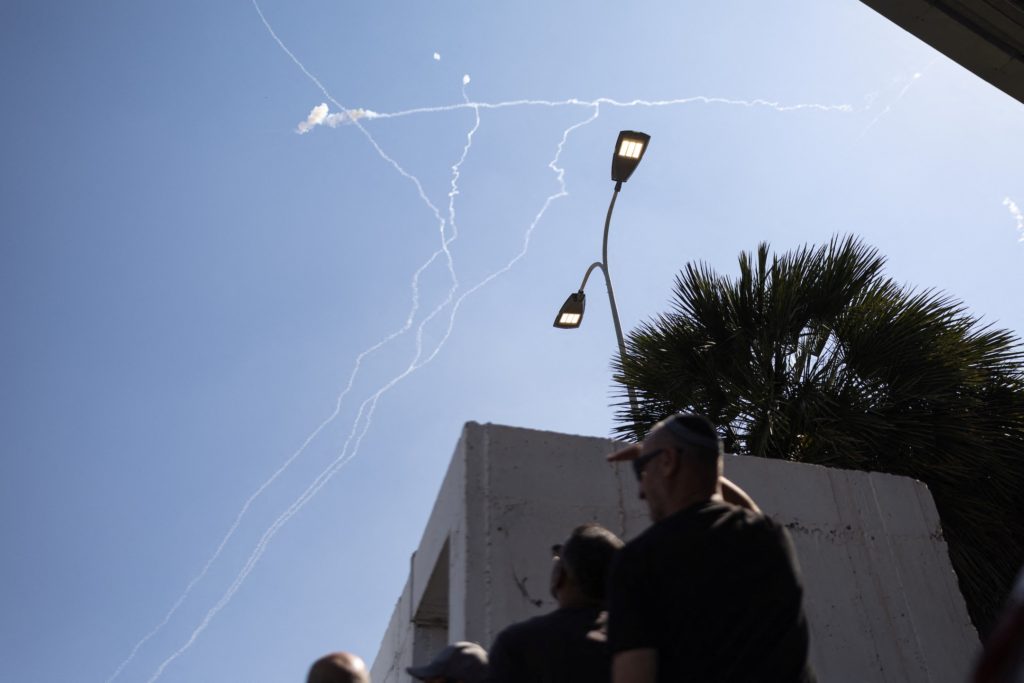
Israel and Iran exchanged long-range missile attacks two months after a ceasefire began. Both sides have agreed to stop fighting, but there are concerns that the conflict could restart. President Trump and regional leaders are working to keep the peace deal intact.
Key Facts
Israel and Iran launched missile strikes against each other after two months of ceasefire.
This is the first exchange of missile attacks since the ceasefire started.
Both countries agreed to halt their missile attacks afterward.
The missile exchange has caused worries about a possible return to full war.
President Trump and regional mediators are trying to save the peace agreement.
The ceasefire was intended to stop fighting between Israel and Iran.
The situation remains fragile and could change if peace talks fail.
Read the Original
Want the full story? Tap a source to open the original
article.
A 6.1 magnitude earthquake struck just offshore western Cuba, causing buildings in Havana and parts of Florida to shake. No injuries or major damage were reported, and officials took safety precautions by evacuating some buildings and suspending train services in Miami.
Key Facts
The earthquake had a magnitude of 6.1 and occurred 6 miles (10 km) deep in waters west of Havana, Cuba.
It was the largest recorded earthquake in the Gulf of Mexico since modern instruments began in the 1950s.
People in Havana and as far as Florida, including Miami and areas near Orlando, felt the shaking.
No tsunami was generated by this quake.
Officials evacuated some government buildings in Miami and temporarily stopped train services as a precaution.
The earthquake is very rare in this region, with only a few magnitude 5 or greater quakes known in the Gulf.
There may be aftershocks near western Cuba, but significant shaking in Florida is unlikely.
Past strong quakes have occurred in the Oriente fault zone near Cuba, including one in 2020 measuring 7.7.
Read the Original
Want the full story? Tap a source to open the original
article.
Israeli Prime Minister Benjamin Netanyahu has taken military action against Iran despite President Donald Trump’s calls for a ceasefire. This disagreement highlights increasing differences between the U.S. and Israel about how to handle the ongoing conflict in the Middle East.
Tensions between Iran and Israel have recently increased, raising concerns about their impact on peace efforts in the Middle East. Experts discuss how this escalation could influence the stability and security of the region.
Key Facts
Iran and Israel have escalated their conflict recently.
This increase in tension affects ongoing peace efforts in the Middle East.
Experts from defense and policy institutes analyze the situation.
The Foundation for Defense of Democracies and the Washington Institute for Near East Policy provide insight.
The conflict involves important regional security and political issues.
The discussion aims to understand future consequences of the escalation.
Read the Original
Want the full story? Tap a source to open the original
article.
Mamata Banerjee’s Trinamool Congress (TMC) lost power in West Bengal after 15 years following a win by Narendra Modi’s Bharatiya Janata Party (BJP). Since the election defeat, many TMC legislators and members of parliament have rebelled or left the party, causing a serious challenge to Banerjee’s leadership and the party’s unity.
Key Facts
Mamata Banerjee led the TMC to end 34 years of Communist rule in West Bengal in 2011.
The TMC governed West Bengal for 15 years before losing the recent election to the BJP.
The BJP won amid factors like anti-incumbency and religious polarization.
The TMC still won around 26 million votes and holds 80 state assembly seats and 28 parliamentary seats.
About three-quarters of TMC’s state legislators revolted against Banerjee shortly after the defeat.
Around 20 of the TMC’s 28 members of parliament want to leave the party’s group and join the BJP alliance.
TMC is facing arrests of its leaders on corruption charges and shrinking influence at local levels.
Experts say the TMC lacked a strong ideological base to stay united after losing power.
Read the Original
Want the full story? Tap a source to open the original
article.
Ukrainian President Volodymyr Zelensky met King Charles III at Windsor Castle and thanked the UK for its strong support. Zelensky also said he plans to invite the King to visit Ukraine officially later this year. Meanwhile, UK, French, and German leaders called for a ceasefire and a fair deal to end the war with Russia.
Key Facts
Zelensky met King Charles III at Windsor Castle to discuss support for Ukraine.
Zelensky thanked the UK for its "ironclad" backing of Ukraine during the conflict.
Zelensky plans to invite King Charles III to visit Ukraine for a state visit soon.
UK, France, and Germany issued a joint statement calling for a ceasefire and peace deal with Russia.
The UK Prime Minister, French President, and German Chancellor stated they support Ukraine firmly.
Some UK councils removed Ukrainian flags, causing Zelensky to express hope they will be returned.
Reform UK said domestic flags only should fly on UK public buildings but supports Ukraine’s fight.
The UK and France are working together to provide security guarantees for Ukraine in future peace talks.
Read the Original
Want the full story? Tap a source to open the original
article.
Israel and Iran exchanged fire for the first time since a U.S.-brokered ceasefire two months ago but then both sides stepped back from further military action. They warned they would retaliate if attacked again, while the U.S. and regional powers worked to stop the conflict from growing into a wider war.
Key Facts
Israel and Iran fired at each other in early June 2026, breaking a ceasefire agreed upon two months earlier.
Both countries said they are ready for retaliation if attacked further.
The U.S., under President Donald Trump, called for an immediate end to the fighting.
Iran halted offensive strikes but warned of stronger responses if attacked again.
Israeli Prime Minister Benjamin Netanyahu said the current fighting was over but promised to respond if Iran attacks again.
Israeli strikes in Lebanon killed 12 people and injured others, including Red Cross workers.
Restrictions on schools in Israel and Iran’s airspace limits on civilian flights were lifted.
The U.S. Navy disabled an oil tanker trying to break a blockade near Iran; all 24 crew members were safe.
Read the Original
Want the full story? Tap a source to open the original
article.
President Donald Trump told the BBC that Israeli Prime Minister Benjamin Netanyahu did not go against him when Israel launched missile strikes on Iran. Trump said the missiles were already on their way before his call with Netanyahu and that Netanyahu listens to his instructions.
Key Facts
President Trump spoke briefly with the BBC about his talks with Prime Minister Netanyahu.
Israel fired missiles at Iran, starting before Trump's call with Netanyahu.
Trump said, "if I tell him to do something, he does it," referring to Netanyahu's actions.
The phone call between Trump and the BBC lasted just under one minute.
Other news in the Middle East includes fighting between Israel and Hezbollah, Iranian drone attacks, and ceasefire efforts.
The BBC reported on the impact of the conflict on civilians and regional tensions.
The article includes updates on related events like the Strait of Hormuz blockades and regional ceasefires.
Read the Original
Want the full story? Tap a source to open the original
article.
The chief prosecutor of the International Criminal Court, Karim Khan, was suspended from his job because of sexual misconduct allegations involving a female assistant. He has denied the claims, and the court’s supervisory group will meet to decide if he will keep his position.
Key Facts
Karim Khan is the chief prosecutor of the International Criminal Court (ICC).
He is from Britain and works at the ICC in The Hague, Netherlands.
Khan faces sexual misconduct accusations related to a female aide.
He denies any wrongdoing in this case.
The ICC’s oversight body referred him for disciplinary actions.
He was suspended from his duties on a Monday in late 2025.
The Assembly of States Parties will hold a special session to decide if he stays in the job.
The case has been ongoing for more than two years.
Read the Original
Want the full story? Tap a source to open the original
article.
Best-selling author Dave Eggers has released a new novel about two friends who love art and follow it over many years. An arts correspondent reports on Eggers and his work from San Francisco.
Key Facts
Dave Eggers is a best-selling author.
His new novel focuses on two friends who are passionate about art.
The story spans several decades.
The article includes a report by senior arts correspondent Jeffrey Brown.
The report is part of an arts and culture series called CANVAS.
Jeffrey Brown reports from San Francisco.
Dave Eggers also supports the next generation of writers.
Read the Original
Want the full story? Tap a source to open the original
article.
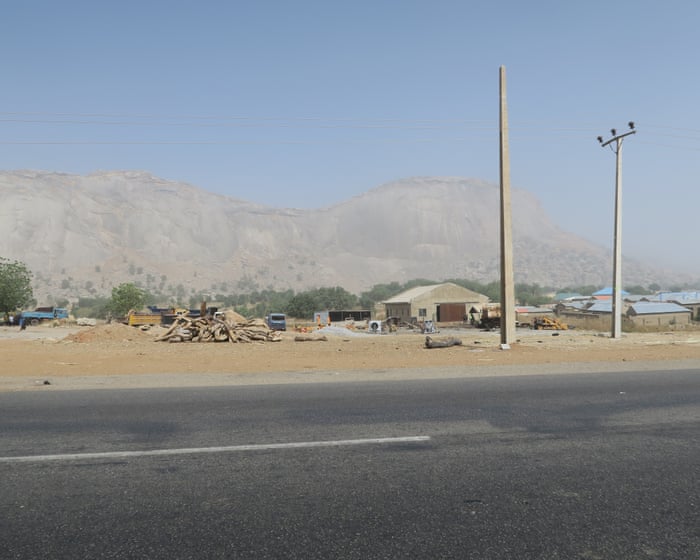
Armed bandits in north-west Nigeria kidnapped dozens of villagers who had been invited to a meeting to discuss peace talks. Authorities are trying to rescue the hostages while investigating the incident in a region troubled by ongoing violence.
Key Facts
On Sunday, 39 villagers were abducted near Magamin Diddi village in Zamfara state during a meeting about peace talks.
Some local sources say the number of abducted people could be as many as 50.
The victims were meeting relatives of a bandit leader hoping to bring peace and ease restrictions.
The bandit leader and his gang arrived at the meeting and forcefully took the villagers to an unknown place.
Local government officials do not support negotiating with bandits.
The bandits had recently blocked roads to the community market to protest killings of their members by security forces.
The bandits are demanding 125 million naira (about £69,000) as ransom for the hostages.
Security forces are searching for the kidnapped villagers and trying to ensure their safe release.
Read the Original
Want the full story? Tap a source to open the original
article.
Ukrainian President Volodymyr Zelensky said he had a positive talk with US envoys Steve Witkoff and Jared Kushner about working toward ending the war with Russia. European leaders are supporting a possible meeting between Zelensky and Russian President Vladimir Putin to discuss a ceasefire.
Key Facts
Zelensky spoke positively with US envoys Steve Witkoff and Jared Kushner about diplomacy on the Ukraine war.
Jared Kushner is President Donald Trump’s son-in-law and a US special envoy.
The talks aim to boost efforts to stop Russia’s war against Ukraine.
European leaders from Britain, France, and Germany back a proposal for a meeting between Zelensky and Putin to seek a ceasefire.
The US envoys’ negotiations on Ukraine have been stalled, partly because Washington is focused on Iran.
Zelensky discussed the possibility of talks at the upcoming G7 summit in Evian, France.
Zelensky thanked the US for recognizing Ukraine’s position positively.
The war between Ukraine and Russia has lasted for more than four years.
Read the Original
Want the full story? Tap a source to open the original
article.
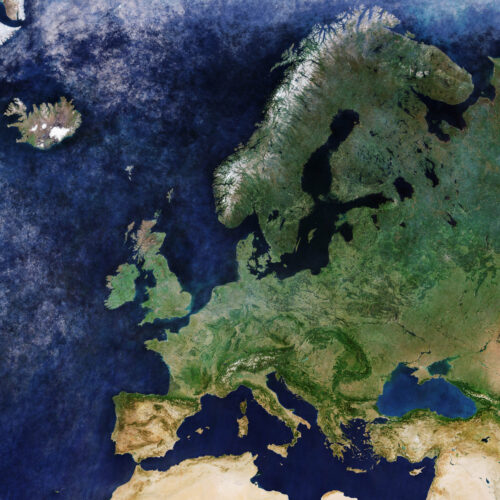
Researchers found that Russian satellites caused brief GPS signal disruptions across Europe and nearby regions. They used ground data and signal timing to identify one satellite, Kosmos 2546, as a source, but the reason for the interference remains unclear.
Key Facts
Short bursts of GPS interference happened across Europe and reached areas as far as Greenland and Canada.
The interference affected the main GPS signal frequency used worldwide.
It mostly occurred on weekdays during business hours in Europe.
The interference source had to be at least 1,200 kilometers above Earth.
Researchers matched the interference to the Russian satellite Kosmos 2546 in the EKS constellation.
These satellites orbit in paths called Molniya orbits, covering high northern latitudes for missile launch warnings.
The team analyzed data from January 2019 to April 2026 and found 75 days with interference.
The exact reason for the GPS jamming by the satellites is still unknown.
Read the Original
Want the full story? Tap a source to open the original
article.
President Donald Trump and Israeli Prime Minister Benjamin Netanyahu started a war together but now disagree on how to handle it. Trump wants to end the conflict quickly to lower gas prices and help his party in upcoming elections, while Netanyahu wants to continue fighting Iran and Hezbollah to show strength before Israel’s elections.
Key Facts
Israel launched strikes on Lebanon and Iran, which led to Iran firing missiles at Israel for the first time since April.
Trump publicly warned Israel not to attack Beirut but Israel did anyway, worsening the conflict.
Trump is negotiating with Iran and wants to reopen the Strait of Hormuz to reduce global gas prices.
Netanyahu wants to defeat Iran and its allies, even if it means a longer war.
Both leaders face elections in 2026, influencing their decisions on the war.
In the U.S., rising gas prices and the war’s unpopularity are causing criticism of Trump.
In Israel, Netanyahu faces pressure due to ongoing attacks and lack of clear victory since Hamas attacked Gaza in 2023.
Iran demands a full ceasefire in Lebanon as part of any peace deal.
Read the Original
Want the full story? Tap a source to open the original
article.
The United Nations human rights chief, Volker Turk, has criticized recent U.S. sanctions on Cuba, saying they harm ordinary Cuban people, especially children. He called for the sanctions to be lifted immediately because they worsen access to medicines, energy, and essential services, leading to higher death rates.
Key Facts
Volker Turk is the UN high commissioner for human rights.
He condemned U.S. sanctions imposed since early 2026 on Cuba’s fuel supplies and economy.
The sanctions restrict Cuba’s access to oil and financial systems, causing power outages and service shortages.
Infant death rates in Cuba have nearly doubled, and childhood cancer survival rates have dropped since the sanctions began.
President Donald Trump declared Cuba a national security threat and imposed penalties on Cuban government officials.
The sanctions aim to punish those responsible for human rights abuses in Cuba’s communist government.
Turk also urged Cuba to release all people held without proper legal cause.
The Cuban government reports large numbers of patients waiting for surgeries and treatments that depend on electricity.
Read the Original
Want the full story? Tap a source to open the original
article.
The European Commission invited Taliban officials to Brussels to discuss migrant deportations. Human rights groups oppose the invitation because they fear it supports a regime that restricts girls' education and limits women's public participation.
Key Facts
The European Commission invited Taliban leaders for talks about sending migrants back to Afghanistan.
Over 80 human rights organizations have criticized this decision.
These groups say the Taliban government has banned girls from attending school.
Women under Taliban rule face many public life restrictions.
Fawzia Koofi, a former Afghan official, said the invitation encourages those who use power to suppress others.
Critics worry this meeting may make the Taliban seem more acceptable internationally.
The event took place in Brussels, the EU's main city for political meetings.
The issue highlights ongoing global concerns about human rights under Taliban rule.
Read the Original
Want the full story? Tap a source to open the original
article.
Iran and Israel have stopped their first military attacks since a ceasefire began in early April. Both countries said on Monday that they have paused their operations following the recent exchange of attacks.
Key Facts
Iran and Israel exchanged attacks after a ceasefire started between the U.S. and Iran in early April.
On Monday, both Iran and Israel announced that they have suspended their military actions.
This suspension marks the first pause in attacks since the ceasefire took effect.
The ceasefire was agreed upon between the United States and Iran.
The situation remains tense but the halt could signal a step toward reduced conflict in the region.
Read the Original
Want the full story? Tap a source to open the original
article.
The European Union plans to add new sanctions against Russia to increase economic pressure due to its war in Ukraine. The EU aims to target 80 more individuals and companies linked to Russia’s military and propaganda efforts while also discussing funding to support countries supplying weapons to Ukraine.
Key Facts
The EU wants to expand sanctions that have already cost Russia about $1.2 to $1.5 trillion.
The new sanctions would target 80 more people and entities related to Russia’s military and human rights abuses.
EU foreign policy chief Kaja Kallas said the sanctions are weakening Russia’s war economy.
EU defense ministers discussed a 6.6 billion euro fund to reimburse countries for weapons sent to Ukraine and possibly buy new weapons together.
Hungary recently agreed to stop blocking this weapons reimbursement fund after a change in its prime minister.
The EU extended sanctions in March against around 2,600 individuals and groups.
The U.S. has eased some sanctions related to Russian oil amid energy market challenges linked to the US-Israel conflict with Iran.
Russian attacks on Ukraine continue, including a recent strike killing five people in the Zaporizhia region.
Read the Original
Want the full story? Tap a source to open the original
article.
Italian prosecutors have started an investigation into Israeli minister Itamar Ben-Gvir over how Italian activists were treated after being detained during an aid flotilla to Gaza. This follows a similar probe launched by France, with both countries looking into possible abuses during the interception.
Key Facts
Italian prosecutors in Rome are investigating Israeli minister Itamar Ben-Gvir regarding treatment of Italian nationals detained during a Gaza-bound aid flotilla.
The investigation was triggered by a video Ben-Gvir posted after the detention of activists last month.
France has also opened a probe into allegations of war crimes and torture related to the same incident.
Over 400 activists from more than 40 countries were detained by Israeli forces during the interception in international waters off Cyprus.
The Israeli Prison Service denies that any abuse of detainees occurred.
The European Union is considering sanctions against Ben-Gvir due to his role and statements concerning the incident and violence in the West Bank.
France has barred Ben-Gvir from entering the country and described his behavior as unacceptable.
Ben-Gvir stated he welcomes investigations and will continue to support Israeli fighters, mocking Italy’s response to the situation.
Read the Original
Want the full story? Tap a source to open the original
article.