The article showcases the winners of the 2025 Wildlife Photographer of the Year awards. Wim van den Heever won the top prize with a photo of a brown hyena in Namibia, while other category winners included photographers from around the world capturing various wildlife and environmental scenes.
Key Facts
Wim van den Heever won Wildlife Photographer of the Year 2025 for a picture of a brown hyena in Namibia.
He took the photo in an abandoned mining town using a camera trap.
The winning entries are displayed at the Natural History Museum in London starting on October 17.
Andrea Dominizi from Italy won in the Junior Grand Prize category with a photo showing habitat loss in the Lepini Mountains.
Shane Gross from Canada won the Animals in their Environment category with images of moray eels in Seychelles.
The photo entries highlight issues like biodiversity and habitat loss across different countries.
The exhibition includes various wildlife scenes captured by photographers of different age groups.
Read the Original
Want the full story? Tap a source to open the original
article.
South African President Cyril Ramaphosa stated that the Gaza ceasefire will not impact South Africa's genocide case against Israel at the International Court of Justice (ICJ). The case, filed in December 2023, accuses Israel of genocidal actions in Gaza, and South Africa is pressing forward regardless of the ceasefire agreements. Israel must respond to the case by January 2026, with oral hearings expected in 2027.
Key Facts
South Africa filed a genocide case against Israel at the ICJ in December 2023.
President Cyril Ramaphosa said the case will proceed despite a ceasefire in Gaza.
South Africa submitted a detailed 500-page document to the ICJ in October 2024.
Israel is required to respond to the case by January 12, 2026.
Oral hearings for the case are expected in 2027, with a final decision in late 2027 or early 2028.
The ICJ has asked Israel to allow humanitarian aid into Gaza and prevent genocidal actions.
Palestinian health authorities report over 67,000 deaths in Gaza since October 2023.
Rights groups accuse Israel of genocide, but Israel denies these allegations.
Read the Original
Want the full story? Tap a source to open the original
article.
President Donald Trump announced a Gaza ceasefire deal signed by about 20 world leaders aimed at bringing peace to the Middle East. The agreement, discussed at a summit in Egypt, includes steps for both Hamas and Israel to follow in order to maintain the ceasefire and end fighting in Gaza. However, the deal does not address broader questions concerning Israel's occupation and the future of a Palestinian state.
Key Facts
President Trump unveiled a ceasefire deal for Gaza aimed at achieving peace in the Middle East.
About 20 world leaders signed the agreement at a summit in Egypt.
The deal specifies steps for Hamas and Israel to follow to sustain the ceasefire.
The agreement's focus is on ending the current conflict in Gaza.
The deal does not tackle long-term issues like Israel's occupation of Palestinian territories.
The future establishment of a Palestinian state remains unaddressed in this deal.
The announcement raises questions about how the plan will resolve underlying issues.
Read the Original
Want the full story? Tap a source to open the original
article.
Syrian President Ahmed al-Sharaa is visiting Russia to meet with President Vladimir Putin. This is part of efforts to gain more international acceptance for Syria's new government after al-Sharaa's forces took over the country last year. They will talk about regional issues and Russian bases in Syria.
Key Facts
Syrian President Ahmed al-Sharaa will meet Russian President Vladimir Putin in Moscow.
This is al-Sharaa's first official visit to Russia.
Al-Sharaa's visit aims to strengthen Syria's international recognition.
The leaders will discuss regional and global topics and cooperation.
Talks will include discussions about Russia's military bases in Syria.
Al-Sharaa plans to ask Russia to hand over Bashar al-Assad, who is in Moscow.
Al-Sharaa's forces took control of Syria, replacing Assad's regime last year.
Russia has been supporting Syria's new government diplomatically.
Read the Original
Want the full story? Tap a source to open the original
article.
Reports of sexual harassment and assault on trains in the UK have risen significantly over the past decade. Victims describe feeling trapped and intimidated during incidents, which often go unreported. Authorities express concern and stress a zero-tolerance policy towards such offenses.
Key Facts
Reports of sexual offenses on UK trains increased by more than a third over the past ten years.
In 2022, there were 2,661 incidents reported across England, Scotland, and Wales.
Victims often feel trapped and unable to escape during these incidents.
British Transport Police state they take every report seriously and use plain clothes officers for monitoring.
Many sexual offenses may still go unreported due to fear or normalization of harassment.
Authorities from train companies emphasize a zero-tolerance stance on sexual harassment.
In the past decade, suspects were not identified in about half of the reported cases.
Harassment can include inappropriate behaviors like staring or persistent questioning.
Read the Original
Want the full story? Tap a source to open the original
article.
President Donald Trump has promised a $20 billion financial aid package to Argentina if its current president, Javier Milei, wins the upcoming midterm elections. Milei is a right-wing president whose party faces challenges in the elections scheduled for October 26. This aid is part of a currency swap deal but is conditional based on Milei's political success.
Key Facts
President Trump proposed a $20 billion currency swap to support Argentina.
The financial aid is conditional on President Milei winning the upcoming elections.
Milei, who became president in December 2023, has traveled to the U.S. multiple times.
Trump's support for Milei includes a public endorsement ahead of Argentina's midterm elections.
Milei's political party, La Libertad Avanza, is facing declining poll numbers and recent election setbacks.
Argentina's economic challenges include high inflation rates, despite some improvements by Milei.
Trump's aid proposal has raised discussions on U.S. support for Argentina depending on Milei's election performance.
The midterm elections will impact the control of Argentina's Congress, affecting Milei's ability to implement policies.
Read the Original
Want the full story? Tap a source to open the original
article.
An elite military group in Madagascar has taken control from President Andry Rajoelina. This followed protests over water and power shortages. The military plans to form a temporary government and hold elections within two years.
Key Facts
An elite military unit called CAPSAT has taken control in Madagascar.
The takeover followed protests led by young people unhappy with water and power shortages.
People in the capital city, Antananarivo, celebrated the military takeover.
CAPSAT leader Col. Michael Randrianirina announced plans for a temporary government and elections in two years.
President Andry Rajoelina's location is currently unknown.
Rajoelina claims he is in a safe place after an alleged attack by military members and politicians.
CAPSAT has denied involvement in any attack on Rajoelina.
Read the Original
Want the full story? Tap a source to open the original
article.
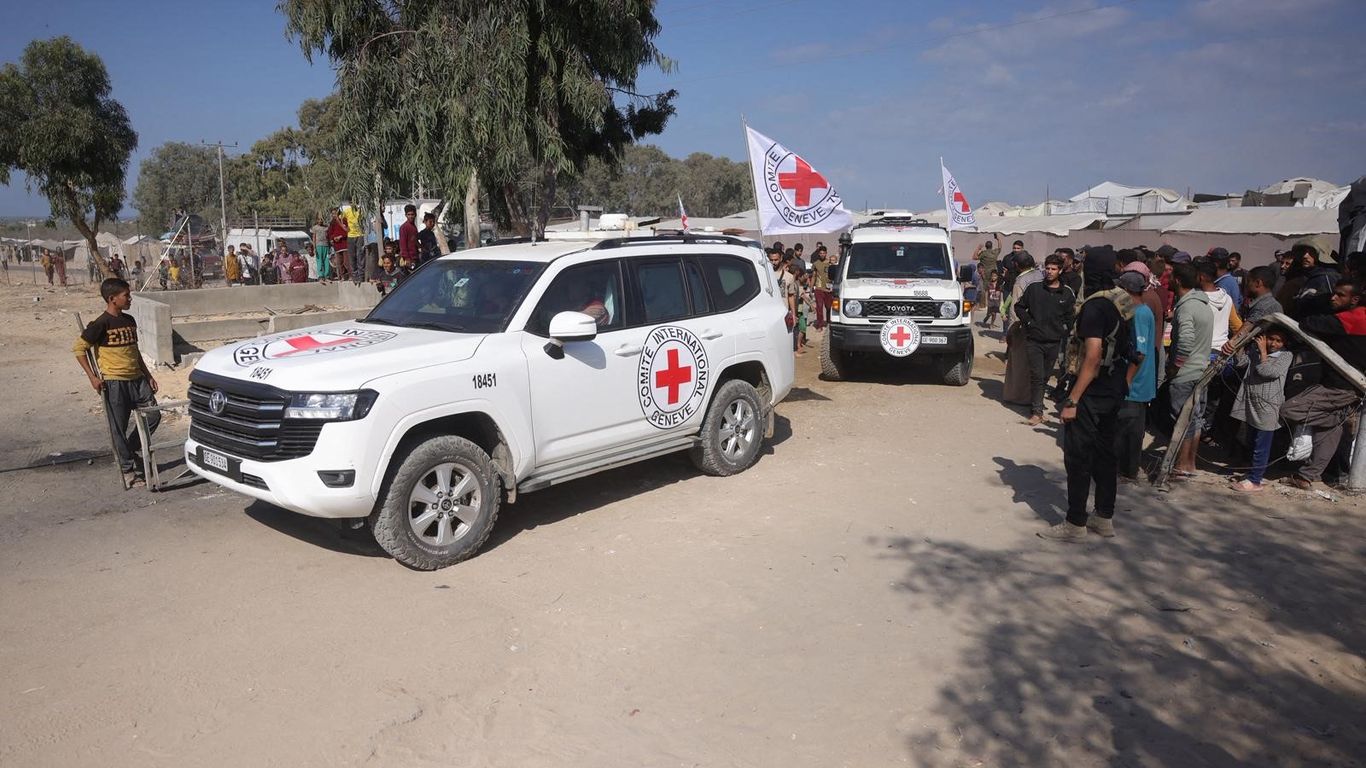
Israel has set new limits on aid allowed into the Gaza Strip and decided to keep the Rafah crossing to Egypt closed. This move comes amid tensions following a ceasefire between Israel and Hamas, which included the exchange of captives. The ceasefire was part of a plan by President Trump to stop the ongoing conflict in Gaza.
Key Facts
Israel imposed a new rule to allow only 300 aid trucks into Gaza daily, half of what was initially promised.
No fuel or gas will be sent into Gaza unless it's for specific humanitarian needs.
Israel decided to keep the Rafah border crossing, which connects Gaza to Egypt, closed.
Israeli forces killed at least nine Palestinians in recent incidents in Gaza.
The violence occurred days after a ceasefire between Israel and Hamas began.
The ceasefire allowed the exchange of prisoners: nearly 2,000 Palestinians and 20 Israelis.
President Donald Trump's ceasefire plan aims to end the conflict and includes steps to exchange captives.
Under the ceasefire, Hamas was supposed to return remains of Israeli captives but delayed the process, according to Israel.
Read the Original
Want the full story? Tap a source to open the original
article.
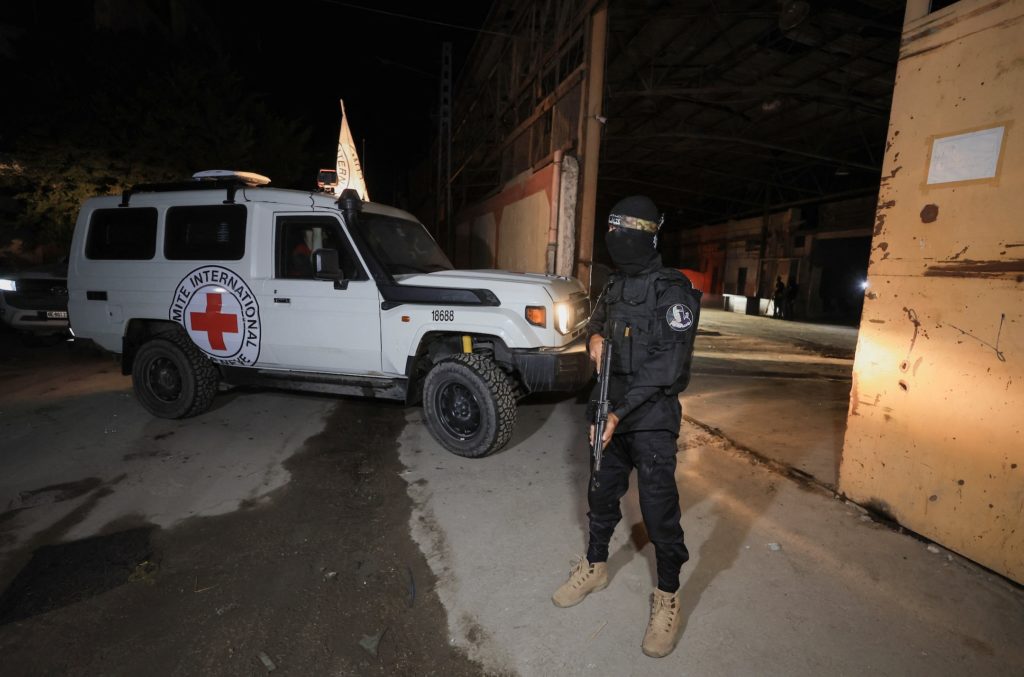
Hamas returned the bodies of four deceased hostages to Israel after being accused of not following a peace agreement. Israel had threatened to cut aid to Gaza if more bodies were not returned. President Trump and Israeli officials are involved in ensuring all hostages are returned and discussing the future governance of Gaza.
Key Facts
Hamas returned four hostages' bodies to Israel after a dispute over a peace deal.
A total of 28 deceased hostages, including two Americans, are involved.
Israel threatened to cut aid to Gaza if more bodies were not returned.
Prime Minister Netanyahu considered blocking aid and access at the Gaza-Egypt crossing.
President Trump stated on social media that the return of bodies is not complete and emphasized further actions.
Hamas is involved in negotiations to disarm and transfer heavy weapons to a Palestinian or Arab entity.
Hamas conducted executions of people it claimed were working with Israel, which led to protests from the Palestinian Authority.
Israel wants Hamas to return all bodies as part of the peace agreement.
Read the Original
Want the full story? Tap a source to open the original
article.
President Donald Trump announced a U.S. airstrike on a boat near Venezuela, killing six people. The strike targeted a vessel allegedly involved in drug trafficking, marking the fifth such attack in the Caribbean. Critics question the legal grounds for these military actions.
Key Facts
President Trump said the U.S. conducted an airstrike on a vessel off the Venezuelan coast.
The attack killed six people alleged to be involved in narcotrafficking.
This is the fifth U.S. airstrike in the Caribbean targeting suspected drug boats.
Critics argue these strikes may violate international law since they do not target armed combatants.
The U.S. Senate recently voted down a bill that would have limited future strikes on drug-trafficking vessels.
The Trump administration has been increasing military presence in the Caribbean, including in Puerto Rico.
The administration has labeled some drug-related groups as “foreign terrorist organizations.”
Read the Original
Want the full story? Tap a source to open the original
article.
In Gabes, Tunisia, many people have been admitted to the hospital due to breathing problems and other health issues. Residents believe pollution from a nearby chemical factory is the cause. This situation has led to protests demanding the closure of the factory, which has been promised by authorities since 2017.
Key Facts
In Gabes, Tunisia, over 120 people have been hospitalized with health issues such as breathing problems and leg numbness.
A chemical factory nearby is believed by residents to cause the pollution leading to these health problems.
The Tunisian Chemical Group's factory was supposed to be closed gradually since 2017 due to pollution concerns.
Recent protests have taken place in Gabes, with residents demanding the closure of the factory.
During protests, police used tear gas, and there were incidents of attempted arson and road blockages.
Local authorities and human rights organizations support the dismantling of polluting factories.
President Kais Saied's government is under pressure to address public health issues while maintaining phosphate production, which is important to Tunisia’s economy.
In 2017, a plan was announced to close the Gabes complex and build a new facility that meets international standards, but it hasn't been implemented yet.
Read the Original
Want the full story? Tap a source to open the original
article.
President Donald Trump announced that the US struck a vessel off the coast of Venezuela, killing six people. He claims the vessel was involved in drug trafficking. This is the fifth US operation of this kind since September.
Key Facts
The US hit a vessel off Venezuela's coast, resulting in six deaths.
President Trump said the vessel was linked to drug trafficking and "narcoterrorists."
This was the fifth such operation by the US since September.
In total, 27 people have died in these incidents.
The US has not provided detailed evidence about the vessels or the people onboard.
Some lawyers believe these actions may break international law.
President Trump mentioned intelligence confirmed the vessel's link to drug networks.
The US describes its actions as self-defense, though some lawyers question their legality.
Read the Original
Want the full story? Tap a source to open the original
article.
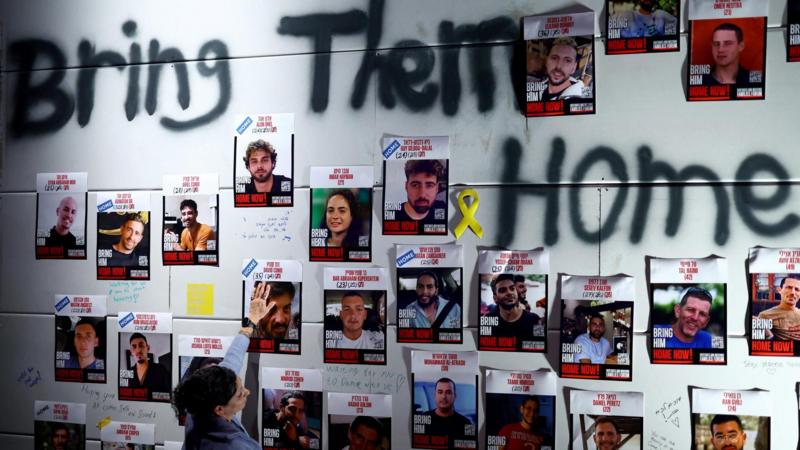
Israel has identified the bodies of four hostages returned by Hamas as part of a ceasefire agreement. The hostages, two of whom were Israeli citizens and one was a dual Israeli-South African citizen, were returned for burial. Israeli officials are demanding that Hamas return the bodies of additional hostages, and have threatened to limit aid to Gaza if the demand is unmet.
Key Facts
Israel identified the bodies of four hostages returned by Hamas, including two Israelis and one Nepalese citizen.
Hamas returned the bodies as part of a ceasefire agreement.
Israeli officials require Hamas to return 24 other bodies and have threatened to restrict aid to Gaza until this happens.
The four identified hostages were Guy Illouz, Bipin Joshi, Yossi Sharabi, and Daniel Peretz.
Guy Illouz reportedly died from injuries without medical treatment after being captured at a music festival.
Bipin Joshi was an agriculture student who allegedly saved many lives by deflecting a grenade and was later killed.
Yossi Sharabi was taken from his home during an attack while his brother was released in a previous ceasefire.
Daniel Peretz was an IDF captain whose body was taken as a hostage after he was killed in a tank attack.
Read the Original
Want the full story? Tap a source to open the original
article.
Drew Struzan, the artist known for creating famous movie posters, passed away at age 78. He was known for his work on posters for movies like Star Wars, Indiana Jones, and Harry Potter, and he died after a long battle with Alzheimer's disease.
Key Facts
Drew Struzan was known for designing iconic movie posters for films like Star Wars and Indiana Jones.
He passed away at the age of 78 due to Alzheimer's disease.
Struzan's death was announced on his official Instagram page on October 13th.
His wife, Dylan Struzan, confirmed his death to NPR.
He worked with famous directors like Steven Spielberg and George Lucas.
Tributes poured in on social media, highlighting his influence on many people.
Struzan was born in Oregon in 1947 and studied at the Art Center College of Design in Pasadena.
He began his career with album covers before moving on to movie posters, gaining fame in 1978 with a Star Wars poster.
Read the Original
Want the full story? Tap a source to open the original
article.
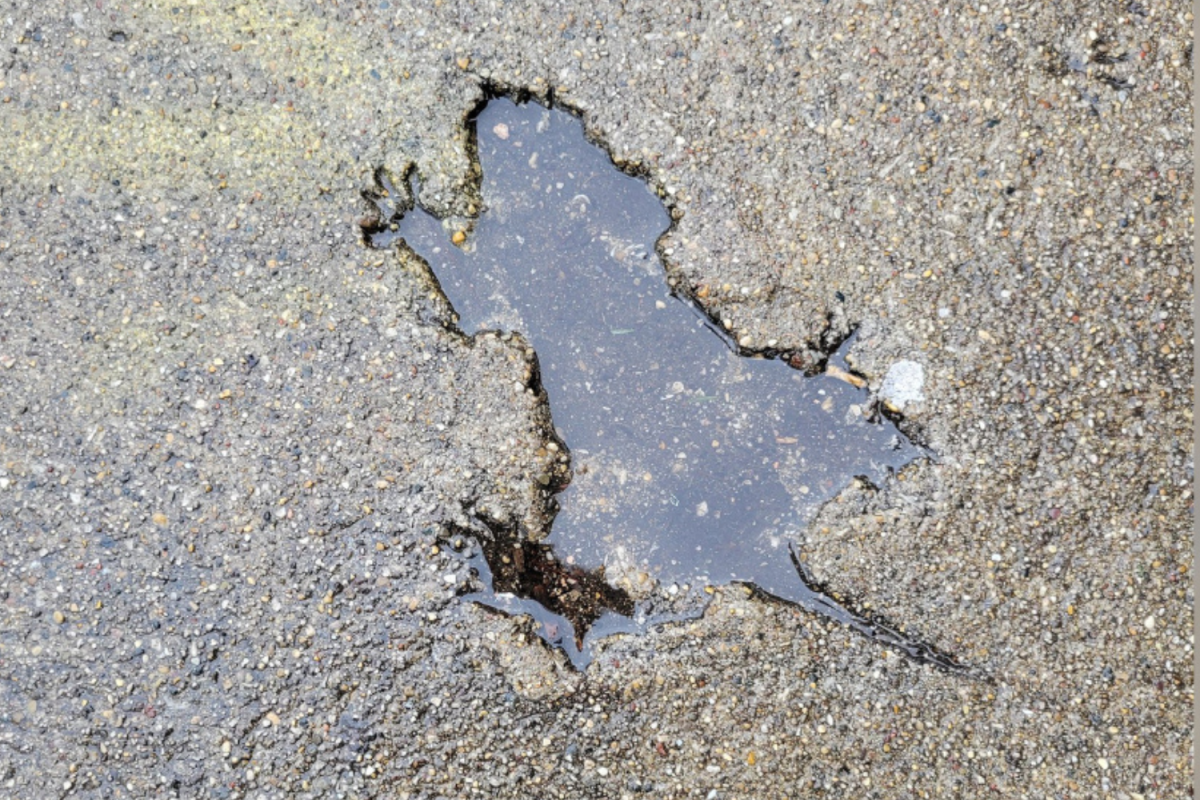
Scientists have discovered that the "Chicago rat hole," a popular viral mystery, was not caused by a rat but likely by a squirrel. Researchers compared the imprint to different local rodents and concluded it most likely matches the shape of an eastern gray squirrel. This finding comes from a study published in the journal Biology Letters.
Key Facts
A sidewalk imprint in Chicago known as the "Chicago rat hole" became famous online, believed to be made by a rat.
Researchers from the University of Tennessee and the New York Institute of Technology studied the imprint.
The analysis showed a 98.67% chance that the imprint was made by a squirrel, specifically pointing to the eastern gray squirrel common in Chicago.
The mark gained attention when a comedian posted about it online, and it became a quirky landmark called “Splatatouille.”
Experts noted that the absence of footprints around the imprint suggests the animal likely fell into the wet concrete from above.
The researchers suggested renaming the mark the "Windy City Sidewalk Squirrel."
The study highlights how surprising real-world events can lead to scientific investigations.
Read the Original
Want the full story? Tap a source to open the original
article.
A TikTok video showed a shelter dog named Ursa enjoying a break from the animal shelter, highlighting how short trips can reduce stress in shelter dogs. Taking dogs on short outings can help them relax and may increase their chances of getting adopted.
Key Facts
A video shows Ursa, a shelter dog, having a day outside the shelter, including walks and playtime.
Shelter environments can cause anxiety and stress in dogs due to limited social interaction and control.
A study found that short-term stays away from shelters can lower stress markers in dogs, although stress returns when they go back.
Such outings help dogs relax and feel secure, which can improve their mood and trust.
Ursa is waiting for adoption at Heartland Animal Shelter in Illinois.
Dog outings, or "doggy field trips," are common in shelters and can improve dogs' chances of adoption by making them more visible.
These trips allow volunteers to interact with dogs without long-term commitments or costs.
Read the Original
Want the full story? Tap a source to open the original
article.
Twenty living hostages were released in the Israel-Hamas ceasefire, but only eight of the bodies of 28 deceased hostages have been returned. The focus is now on supporting the freed hostages, while the wait for the remaining bodies continues.
Key Facts
A ceasefire between Israel and Hamas led to the release of 20 living hostages.
Only eight of the 28 deceased hostages' bodies have been returned so far.
The ceasefire situation is tense and uncertain.
The primary focus is on helping the released hostages recover physically and mentally.
There is a wait for the return of the remaining 20 bodies of the deceased hostages.
Read the Original
Want the full story? Tap a source to open the original
article.
Palestinian residents in the West Bank village of Khallet al-Daba faced mass demolitions by Israeli forces in May. Israeli military declared the area a military training zone, leading to the destruction of homes and infrastructure, forcing residents to find alternative shelter.
Key Facts
Israeli forces conducted demolitions in Khallet al-Daba in May, affecting several families.
At least four mass demolitions by Israeli forces occurred in the West Bank this year.
The demolitions left homes and infrastructure in ruins, affecting basic services like water and electricity.
The area of Khallet al-Daba is designated as a military training zone by Israel, known as 'Firing Zone 918'.
Residents are forced to live in caves and tents due to the destruction of their homes.
The United Nations had estimated 1,150 people in Masafer Yatta, although local estimates are higher.
The area was designated a military zone in the 1980s, allegedly as a tactic to remove Palestinians.
Organizations like Doctors Without Borders have criticized these actions, labeling them as ethnic cleansing.
Read the Original
Want the full story? Tap a source to open the original
article.
The article discusses the challenges in locating the remains of hostages in Gaza during the tense Israel–Hamas ceasefire. Geoff Bennett interviews Yousef Munayyer from the Arab Center Washington DC about the ongoing situation.
Key Facts
Israel and Hamas are experiencing tensions during a ceasefire.
There are challenges in finding the remains of hostages in Gaza.
Geoff Bennett and Yousef Munayyer had a discussion about the situation.
Yousef Munayyer is a senior fellow at the Arab Center Washington DC.
The Arab Center Washington DC is a non-profit research group focusing on the Middle East.
Hostage recovery efforts are expected to be difficult.
Read the Original
Want the full story? Tap a source to open the original
article.
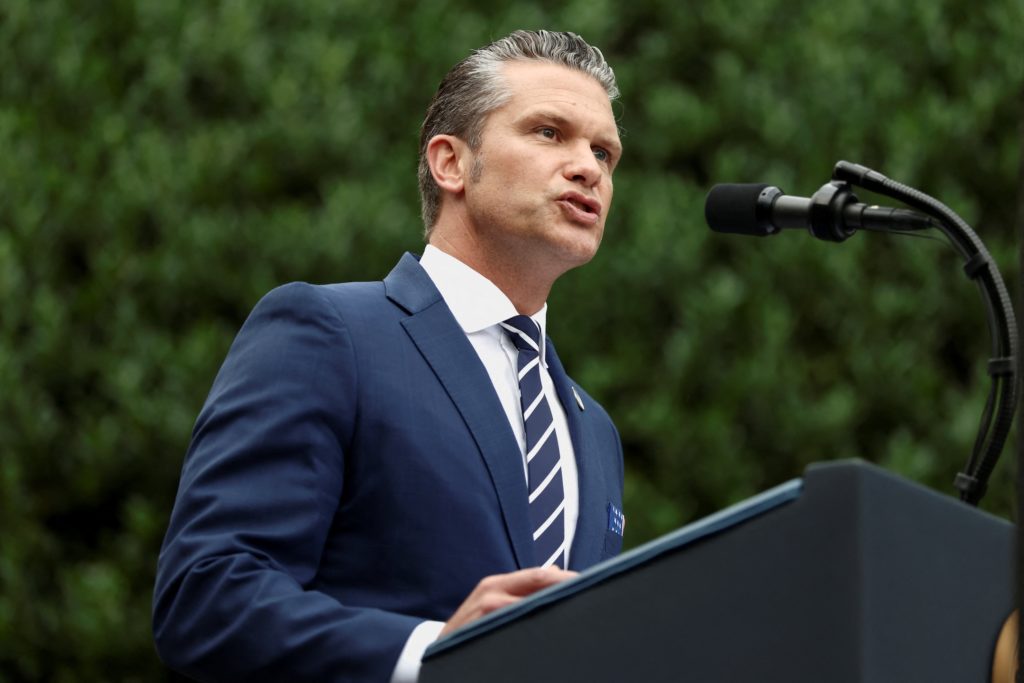
Many news organizations are refusing to agree to the Pentagon's new rules for journalists. They believe these rules might limit their First Amendment rights, which protect freedom of the press.
Key Facts
The Pentagon has introduced new rules for journalists who cover military news.
Journalists need to agree to these rules to keep their access credentials.
Tuesday is the deadline for journalists to decide whether to sign the rules.
Most news organizations, including PBS News, have chosen not to sign.
They argue the rules could interfere with First Amendment rights.
Geoff Bennett talked about the issue with experts from The Atlantic and a media freedom clinic.
Read the Original
Want the full story? Tap a source to open the original
article.