New cases of genital herpes have increased by 3% in England in 2025, despite an overall 8% drop in sexually transmitted infections (STIs). Experts advise people to get tested regularly, especially after sex with new partners, as many STIs can spread without symptoms.
Key Facts
In 2025, nearly 29,000 people in England were diagnosed with genital herpes, up 3% from the previous year.
Overall STI diagnoses fell from about 364,000 to 334,000, an 8% decrease.
Herpes spreads easily through skin-to-skin contact, including vaginal, anal, and oral sex, even without visible sores.
STI rates are still high among young people and gay and bisexual men.
Syphilis diagnoses dropped 19% in gay and bisexual men but rose 5% in heterosexual women.
Chlamydia is the most common STI, making up about half of all cases.
Testing for STIs, especially chlamydia, has declined, which is a concern for health officials.
Condoms and avoiding sex during herpes outbreaks can help prevent spreading infections.
Read the Original
Want the full story? Tap a source to open the original
article.
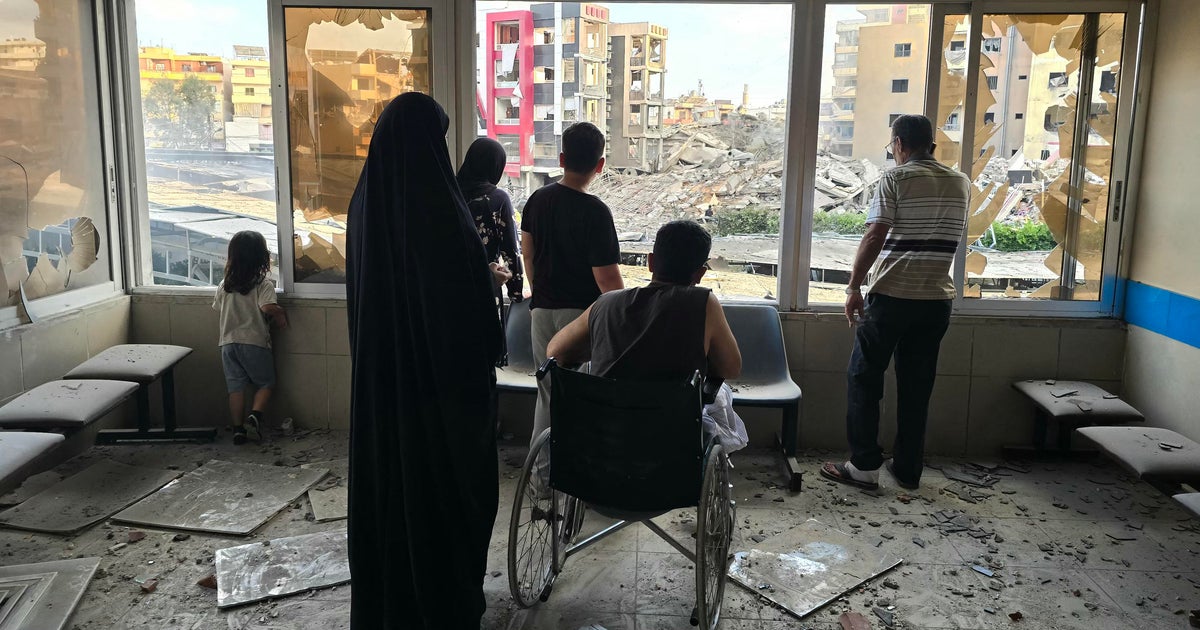
At least five people were killed in Israeli attacks in southern Lebanon hours after President Donald Trump announced an agreement to reduce fighting between Israel and Hezbollah. Despite the announcement, neither side has officially confirmed the deal, and violence, including drone strikes and military incursions, has continued.
Key Facts
Israeli attacks in southern Lebanon killed at least five people, including two Syrians and others targeted by drone strikes.
President Donald Trump said he had phone talks with Israeli Prime Minister Netanyahu and Hezbollah leaders about de-escalating the conflict.
The agreement reportedly includes Hezbollah stopping attacks on Israel in exchange for Israel ceasing strikes on Beirut suburbs.
Both Israel and Hezbollah have not publicly accepted the deal yet, and attacks have continued.
Israeli troops recently took control of Beaufort Castle, a strategic location in southern Lebanon.
Hezbollah has attacked Israeli troops in southern Lebanon but denied cross-border strikes after the announcement.
The situation remains tense and unstable despite efforts to stop the fighting.
Trump emphasized that no Israeli troops will advance into Beirut and expressed hope for lasting peace between Israel and Hezbollah.
Read the Original
Want the full story? Tap a source to open the original
article.
President Donald Trump announced that Israel and Hezbollah have agreed to stop attacking each other after indirect talks. He said Israeli Prime Minister Benjamin Netanyahu and Hezbollah representatives agreed to halt shooting and military actions. However, Israel warns it may strike Beirut again if Hezbollah attacks continue.
Key Facts
President Trump said Israel and Hezbollah agreed to stop all attacks after indirect talks through intermediaries.
No previous US president has communicated with Hezbollah, a group labeled as a terrorist organization by the US.
The agreement involves Hezbollah stopping attacks on Israel in exchange for Israel halting strikes on Beirut and southern Lebanon.
Israeli Prime Minister Netanyahu said Israel would continue attacking if Hezbollah fires rockets again.
Since early March, Israel has attacked Lebanon regularly, causing thousands of casualties and displacing over one million people.
Hezbollah started firing on Israel after US-Israeli strikes on Iran in late February.
Iran wants Israel to withdraw from Lebanon as part of any agreement to end conflict with the US.
Previous ceasefires between Israel and Lebanon have failed to stop fighting for long.
Read the Original
Want the full story? Tap a source to open the original
article.
Social media in Africa has changed how people share their lives and work, turning many into content creators and influencers who earn money through brand partnerships. Mobile phones and social media platforms like Instagram, X, TikTok, and Facebook are central to daily life, spreading a mix of news, entertainment, and advertisements across urban centers.
Key Facts
Many Africans use social media to share their personal lives, not just their work or art.
Brands offer contracts to influencers to include their products in daily content.
Mobile phones are the first thing many people check in the morning to get information and entertainment.
Social media carries a wide variety of content, from news and memes to political content and advertisements.
Marketing budgets have shifted online because social media is where most audiences spend time.
Social media algorithms change frequently to capture users’ attention, which is valuable like currency.
Social media helped organize social movements and responses to crises in African countries, such as Kenya’s famine relief efforts and South Africa’s #FeesMustFall protests.
Some users feel social media encourages capturing moments for sharing rather than fully living them.
Read the Original
Want the full story? Tap a source to open the original
article.
Joe Cole, an actor from "Peaky Blinders," and director Clio Barnard discuss their new film "I See Buildings Fall Like Lightning," which explores the lives of five childhood friends from working-class Birmingham. The film shows how success does not always free people from their background and looks at themes like class, masculinity, and the gap between youth dreams and adult reality.
Key Facts
The film "I See Buildings Fall Like Lightning" is based on a novel by Keiran Goddard.
It premiered in the Directors' Fortnight section at the Cannes Film Festival.
Joe Cole plays Rian, a character who left Birmingham and found financial success.
The story focuses on five friends whose lives ended up very different from what they hoped as kids.
The film explores issues of class, identity, and modern ideas about masculinity.
It shows how success does not always change where someone comes from.
The discussion took place during the Cannes Film Festival.
The themes include mourning lost dreams and facing adulthood realities by age 30.
Read the Original
Want the full story? Tap a source to open the original
article.
Sudanese refugee women in northeastern Central African Republic (CAR) are facing higher risks of dying during childbirth because US funding cuts have weakened maternity services. The arrival of many refugees from Sudan has overwhelmed already limited health facilities that rely on international aid to provide care.
Key Facts
Tens of thousands of people fled fighting in Sudan’s Darfur region to CAR’s Vakaga province.
CAR has one of the highest rates of mothers dying during childbirth in the world.
Clinics near the Sudanese border provide maternity care to both refugees and local women.
These health services depend heavily on US and other international funding.
Cuts in US foreign aid have led to reduced staff and fewer outreach activities at clinics.
Refugee women face risks like malnutrition, infections, and pregnancy complications needing urgent care.
Local women also struggle to reach clinics due to poor roads, insecurity, and limited ambulances.
Aid groups warn that ongoing funding cuts could force clinic closures and reduce access to trained midwives.
Read the Original
Want the full story? Tap a source to open the original
article.
A parakeet has been causing damage to cars in the Lochardil area of Inverness since February. The bird pecks at window seals and windscreen wipers, leading to costly repairs, and local authorities say it is difficult to manage because the bird is wild.
Key Facts
A parakeet has been seen in Inverness, Scotland, since February 2024.
The bird pecks away rubber parts on cars, such as window seals and windscreen wipers.
Damage caused by the bird has cost some residents hundreds or thousands of pounds.
Locals have tried covering their cars to protect them from the parakeet.
The parakeet is unusual in northern Scotland but common in southern England, where it is native.
Officials from Highland Council say they won’t intervene because the bird is wild.
NatureScot suggests the bird’s behavior may be due to it defending territory, seeking nutrients, or boredom.
They recommend protecting cars by covering them or blocking reflections that attract the bird.
Read the Original
Want the full story? Tap a source to open the original
article.
Iran is facing a severe water crisis caused by many years of drought, poor water management, and climate change. The ongoing war involving the US and Israel has damaged water facilities, making the problem worse for many communities.
Key Facts
Iran has experienced a long drought and less rainfall for several years.
The country’s main water sources like rivers, dams, and groundwater are nearly empty.
Iran uses over 80% of its renewable water each year, which is very high.
Poor farming methods, building too many dams, and drilling too many wells have worsened water shortages.
The war damaged important water structures like desalination plants, affecting village water supplies.
Water shortages have caused protests in recent years due to tough living conditions.
Iran’s policy to grow water-heavy crops in dry areas increased water use.
Sanctions have made it harder for Iran to improve its water systems and respond well to the crisis.
Read the Original
Want the full story? Tap a source to open the original
article.
A 21-year-old nightclub promoter named Qayyum Balogun was stabbed and killed after a fight between rival groups in Dublin’s busy tourist area early Monday morning. Police are investigating the incident, reviewing CCTV footage, and asking for witnesses to help with their inquiries.
Key Facts
The stabbing happened around 3 a.m. after a music event ended near Grafton Street in Dublin city centre.
Qayyum Balogun, originally from Nigeria, was chased and stabbed on Clarendon Street.
Balogun was taken to St James’s hospital but was declared dead.
A female bystander was also stabbed but her injuries are not life-threatening.
Police are examining forensic evidence and awaiting the post-mortem report.
The Irish justice minister expressed condolences to the victim’s family.
Local officials noted that while this incident is serious, overall crime and murder rates in Dublin have dropped recently.
Police are also looking into a separate death after a man entered the River Liffey following an assault.
Read the Original
Want the full story? Tap a source to open the original
article.
The European Union has approved new rules to speed up deportations and create offshore detention centers where migrants who fail asylum claims can be sent. Some EU countries will be able to send migrants to third countries like Rwanda and Uganda, a move that shows a stricter approach to migration. Meanwhile, other international issues such as political controversies in the UK and a potential Alberta secession vote in Canada are also developing.
Key Facts
The European Union agreed to new migration rules that speed up deportations and create offshore "return hubs" outside Europe.
Migrants who do not get asylum can be sent to countries like Rwanda, Uganda, or Uzbekistan, even if those countries have no direct connection to the migrants.
This decision shows a tougher stance on migration and reflects growing influence of right-wing parties in the EU Parliament.
Spain opposes the new rules, especially as Europe prepares talks with the Taliban about deportations to Afghanistan.
In the UK, new documents were released about Peter Mandelson, a former ambassador to the US, revealing political conflicts and criticism of Prime Minister Keir Starmer.
Canada’s Alberta province plans an October referendum to decide whether to hold a vote on secession from Canada.
Support for Alberta’s separatism has increased from 20% to 30% in recent years.
These events highlight rising political tensions and shifts in migration policies in different parts of the world.
Read the Original
Want the full story? Tap a source to open the original
article.
Recent changes in Ukraine’s military approach have affected the course of the war with Russia. Russia held its annual parade on Red Square for the first time in nearly 20 years without showing tanks or certain military hardware.
Key Facts
Ukraine has changed its military tactics in the ongoing conflict with Russia.
These changes are impacting how the war is progressing.
Russia held a major parade on Red Square in Moscow recently.
For the first time in almost 20 years, Russia did not display tanks during this parade.
The absence of tanks from the parade may signify shifts in Russia’s military strategy or situation.
The war and related events have affected global views on Russia’s actions.
Read the Original
Want the full story? Tap a source to open the original
article.
Russia launched one of its largest drone and missile attacks on Ukraine, firing over 700 weapons and killing at least 11 people. The strikes targeted several Ukrainian cities, damaging buildings and causing injuries amid ongoing conflict and battlefield losses for Russia.
Key Facts
Russia used 656 attack drones and 73 missiles in one of its biggest attacks on Ukraine.
At least 11 people were killed, with many injured, including 4 deaths and 65 injuries in Kyiv.
Cities hit include Kyiv, Dnipro, Poltava, Kharkiv, and Zaporizhzhia.
Ukraine's air defenses destroyed or blocked 40 missiles and 602 drones.
Russia says the attacks hit military factories and transport used by Ukraine’s forces.
Russian officials say this strikes back against what they call "terrorist acts" by Ukraine.
Many civilian buildings were damaged, including homes and public places like a metro station.
Analysts note Russia is losing ground and personnel in the war despite these attacks.
Read the Original
Want the full story? Tap a source to open the original
article.
That's the point of this site, and readers keep it that way. Support for any amount and the daily digest lands in your inbox every morning at 7am Eastern.
Russia attacked Kyiv and other Ukrainian cities with over 600 drones and 70 missiles on June 2, 2026. Dozens of people were hurt, and the number of deaths is increasing as the attacks continue to intensify.
Key Facts
On June 2, 2026, Russia launched a large attack on Ukraine using more than 600 drones and 70 missiles.
Kyiv and several other cities in Ukraine were targeted during this attack.
Dozens of injuries have been reported so far.
The death toll from the attacks is rising quickly.
Russia has increased the frequency and intensity of attacks on Ukraine in recent weeks.
The attacks have caused significant damage to buildings and infrastructure.
Ukrainian officials and the international community have condemned the attacks.
Read the Original
Want the full story? Tap a source to open the original
article.
In eastern Congo, volunteers are preparing meals to support patients and health workers at medical centers treating Ebola. The outbreak involves the Bundibugyo species of the Ebola virus, with over 300 cases confirmed in Congo and some cases in neighboring Uganda.
Key Facts
Volunteers cook and deliver meals to Ebola patients and medical staff in Bunia, Congo.
The Ebola virus strain involved is the Bundibugyo species.
As of early June 2026, there have been 321 confirmed Ebola cases and 48 deaths in eastern Congo.
Neighboring Uganda reported nine cases and one death and closed its border with Congo as a precaution.
The region was already facing a severe food crisis due to conflict and displacement before the Ebola outbreak.
The World Food Program is involved in food support but struggles due to cuts in international aid.
Local attacks on health workers have hindered Ebola containment efforts.
The World Health Organization has declared this Ebola outbreak a global health emergency.
Read the Original
Want the full story? Tap a source to open the original
article.
Archaeologists are digging under Notre Dame cathedral in Paris to uncover artifacts from the city's ancient past, including Roman and medieval times. They have found items like a coin with Emperor Constantine’s face and pottery with mysterious markings, revealing layers of history beneath the current city.
Key Facts
Excavation is taking place beneath the square in front of Notre Dame cathedral.
Notre Dame was damaged by fire in 2019 and rebuilt by late 2024.
Archaeologists have uncovered artifacts from around 2,000 years ago, including Roman-era and medieval objects.
Finds include a fourth-century coin with Emperor Constantine’s image and pottery shards with unknown markings.
The dig reveals multiple historical layers: medieval houses, Roman neighborhoods, and even older remains beneath.
The site is on the Ile de la Cité, the original location where Paris began.
Similar excavations in old cities like Athens show how modern streets are built on top of ancient ruins.
The findings add to the understanding of Paris's long history and show the city is still being discovered.
Read the Original
Want the full story? Tap a source to open the original
article.
During World War II, many groups such as the Romani, Sinti, Manush, Yenish, and travellers in France were forced into large internment camps and some were sent to camps where they were killed. Eighty years after the last travellers were freed, some French survivors are seeking official recognition for the suffering they endured.
Key Facts
Thousands of Romani, Sinti, Manush, Yenish, and traveller groups were displaced and imprisoned in France during WWII.
These groups were placed in large internment camps across France under discriminatory policies.
Many were deported to extermination camps in Eastern Europe.
The last travellers were freed from French internment camps about 80 years ago.
Some survivors still live today and are fighting for their history and suffering to be officially recognized.
The story highlights a part of WWII history that is less well known.
The topic is also linked to broader studies of Nazi occupation and its impacts.
Read the Original
Want the full story? Tap a source to open the original
article.
A large fire destroyed a market in Jakarta, Indonesia, causing many people to lose their homes. Video from a drone showed thick black smoke rising over the city during the fire.
Key Facts
The fire took place in a market in Jakarta, the capital of Indonesia.
Hundreds of people lost their homes because of the fire.
The fire was very large and intense.
Drone footage captured the scene, showing thick black smoke.
Authorities are likely responding to the incident (though not stated, this is typical in such events).
Read the Original
Want the full story? Tap a source to open the original
article.
Israeli drone strikes in southern Lebanon killed eight people, including a father and two children, despite President Donald Trump saying Israel and Hezbollah agreed to reduce fighting. The clashes come amid ongoing tensions and talks in Washington aimed at securing a lasting ceasefire between Israel and Lebanon.
Key Facts
Israeli drone strikes hit southern Lebanon, killing eight civilians including a father and his two children.
These strikes occurred a day after President Trump said Israel and Hezbollah agreed to de-escalate.
Israel threatened to attack Beirut’s southern suburbs, causing mass panic and people fleeing the capital.
Hezbollah responded by firing rockets into northern Israel and attacking Israeli troops in southern Lebanon.
Israeli forces made their deepest military move into Lebanon in 26 years.
A ceasefire brokered in April has not fully stopped fighting between Israel and Hezbollah.
Talks between Israel and Lebanon are ongoing in Washington to try to reach a full ceasefire agreement.
Hezbollah refuses direct talks and relies on Iran’s support, complicating peace efforts.
Read the Original
Want the full story? Tap a source to open the original
article.
On the biggest stories we show what the outlets agree on and where they differ. Readers keep that going, and get the daily digest by email every morning. Most choose $3.99/month.
A high-ranking Iranian military official said a return to war with the United States looks unavoidable because Iran refuses to surrender. Meanwhile, fighting between Israel and Hezbollah continued in Lebanon despite President Trump announcing an agreed halt to hostilities ahead of new peace talks in Washington.
Key Facts
Mohammad Jafar Asadi, an Iranian military leader, said war with the U.S. is "inevitable" as Iran will never surrender.
Iran is still reviewing a recent U.S. draft agreement but has not officially responded yet.
President Trump said Israeli Prime Minister Netanyahu stopped Israeli troops from conducting a major raid in Lebanon after their phone call.
Despite Trump's announcement of a ceasefire, Israel and Hezbollah exchanged attacks in southern Lebanon.
Hezbollah claimed rocket attacks on Israeli targets, while Israel intercepted some projectiles with no casualties reported.
Lebanon's government reported Israeli air strikes on southern towns and villages.
France’s foreign minister criticized Israel’s military presence deep inside Lebanon.
President Trump said both sides agreed to stop fighting, but recent clashes suggest the ceasefire may not hold.
Read the Original
Want the full story? Tap a source to open the original
article.
Armenian Prime Minister Nikol Pashinyan said no to Russian President Vladimir Putin's request to hold a public vote on joining the European Union. This refusal came just a week before Armenia's parliamentary elections on June 7th.
Key Facts
Armenian Prime Minister is Nikol Pashinyan.
Russian President Vladimir Putin asked Armenia to hold a referendum on joining the EU.
Pashinyan rejected Putin's request.
The pressure from Russia happened shortly before Armenia's parliamentary elections.
The elections are set for June 7th, 2026.
Armenia is being urged by Russia to reconsider closer ties with the European Union.
This situation highlights tensions between Armenia's leadership and Russia.
Read the Original
Want the full story? Tap a source to open the original
article.