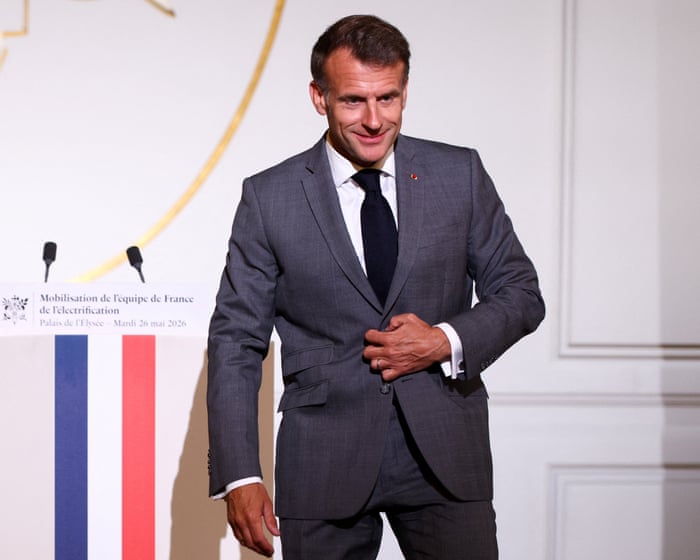
France is preparing for a presidential election next year with 35 people interested in running to replace Emmanuel Macron, who cannot run again. The many candidates, especially among the center and left, may split votes and increase the chance that a far-right candidate wins, which could impact France’s role in the European Union.
Key Facts
Emmanuel Macron will leave office after two consecutive terms due to constitutional limits.
Thirty-five people have declared or shown interest in running for president.
The large number of candidates is mainly from the moderate left, center, and center-right.
Polls show the far-right candidate currently leads in the first-round voting.
A far-right president could challenge EU laws and policies and promote a nationalist agenda.
Centrist candidates include former prime ministers Gabriel Attal and Édouard Philippe, and justice minister Gérald Darmanin.
The center-right is divided with multiple candidates and no clear agreement on a unified choice.
The left is also fragmented with many candidates including former president François Hollande and radical leftist Jean-Luc Mélenchon.
Read the Original
Want the full story? Tap a source to open the original
article.
Russia has developed systems that allow nuclear weapons to be launched without human control. This shows that some countries may be preparing for attacks without direct human decision. North Korea might also want to develop similar automatic nuclear launch abilities.
Key Facts
Russia has created automatic systems that can launch nuclear weapons without humans.
These systems reduce the need for human involvement in nuclear attacks.
The development implies readiness for possible aggression.
North Korea is interested in gaining similar automatic nuclear launch technology.
Such technologies could make nuclear strikes faster and less controllable.
Automated systems raise concerns about accidental or unintended nuclear war.
These developments show changes in how countries manage nuclear weapons.
Read the Original
Want the full story? Tap a source to open the original
article.
An unofficial draft peace deal between the U.S. and Iran aims to reopen the Strait of Hormuz to normal shipping and end the U.S. naval blockade. The deal does not address Iran’s nuclear program, and it is unclear if the U.S. has agreed to the terms.
Key Facts
The draft deal would restore shipping traffic through the Strait of Hormuz to pre-war levels within a month.
The U.S. would end its naval blockade and pull back military forces from near Iran.
Iran, in coordination with Oman, would manage shipping traffic through the strait.
The deal does not include any restrictions or inspections related to Iran’s nuclear program.
Iran stands to gain sanctions relief and control over shipping routes.
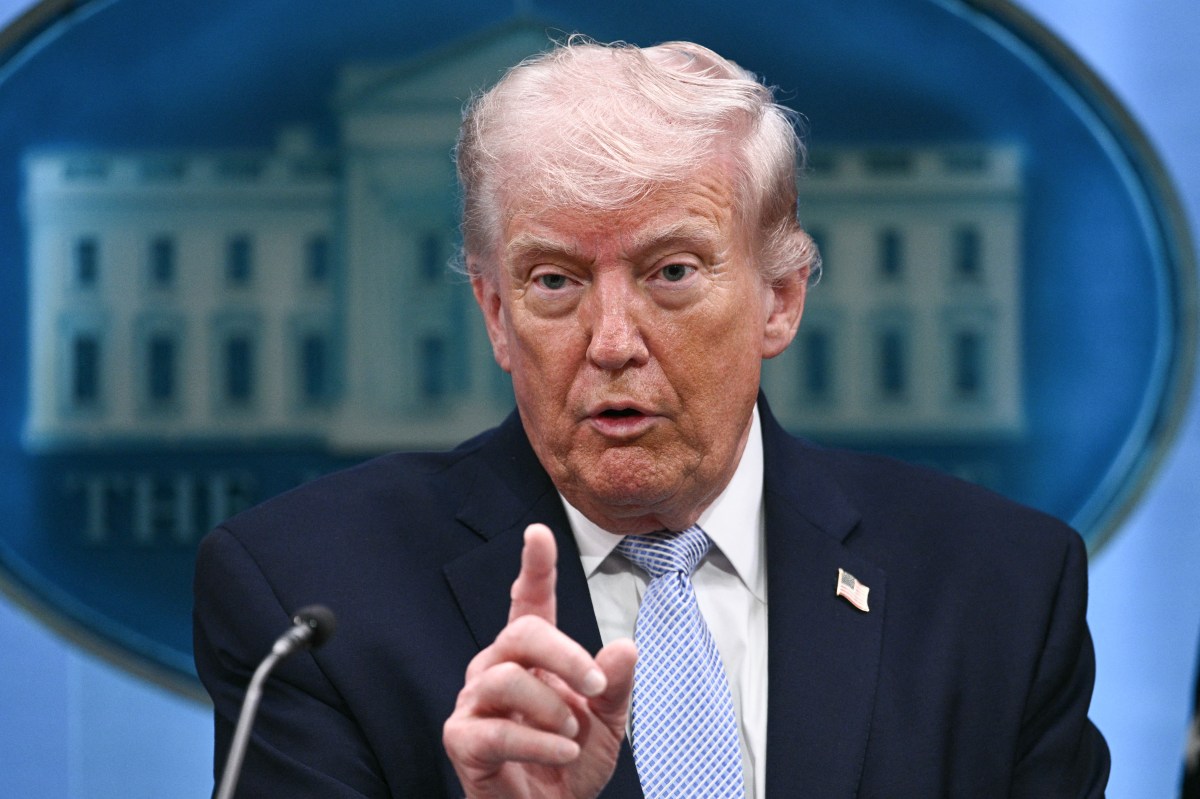
President Trump’s administration could claim a peace deal without a full-scale war escalation.
Pakistan acts as a mediator, increasing its diplomatic role.
Some U.S. and Israeli allies worry the deal leaves important security issues unresolved.
Read the Original
Want the full story? Tap a source to open the original
article.
Water safety experts in the UK have warned about the risks of swimming outdoors during a heatwave after several drownings, mostly involving young people. Cold water shock, caused by entering cold water too quickly, is a major danger even when air temperatures are very high.
Key Facts
At least nine people have died recently in water-related incidents across the UK during the heatwave.
Most victims were young people; incidents occurred in rivers, lakes, and beaches in various regions.
Cold water shock happens because water remains cold despite hot air temperatures, causing gasping and rapid breathing.
Experts advise entering cold water slowly to avoid sudden shock and to swim only in areas supervised by lifeguards.
Data shows drowning deaths rise in May and remain high through summer; young men and inland waters are most at risk.
The National Water Safety Forum recommends a "Float to Live" technique to survive if you fall into cold water.
Research reveals drowning deaths triple on days hotter than 25°C, with alcohol increasing danger.
Emergency services often struggle with multiple water rescues during heatwaves as many people seek to cool off outside.
Read the Original
Want the full story? Tap a source to open the original
article.
Uganda has closed its border with Congo to try to stop the spread of a rare type of Ebola virus. Congo is facing a large outbreak with many cases and deaths, and Uganda has reported a smaller number of cases but is concerned about infections spreading through health workers.
Key Facts
Uganda closed its border with Congo on May 27, 2026, because of rising Ebola cases.
The Ebola type is rare and called Bundibugyo Ebola.
Congo has nearly 1,000 suspected cases and at least 220 deaths.
Congo’s health ministry confirmed 101 Ebola cases and is tracking over 3,000 contacts.
Armed groups, displaced people, and poor infrastructure make fighting Ebola in eastern Congo harder.
Uganda has seven confirmed Ebola cases, including one death in its capital, Kampala.
Ugandan health workers have been exposed to Ebola after treating patients from Congo.
The World Health Organization advises against border closures, saying they can make disease spread worse by pushing travel to unofficial crossings.
Read the Original
Want the full story? Tap a source to open the original
article.
The United States and Iran are close to reaching a deal to end their conflict, but disagree on key issues like Iran’s nuclear program and control of the Strait of Hormuz. The deal may start by addressing urgent matters such as stopping the war and reopening the strait, with more complex topics to be discussed later.
Key Facts
President Donald Trump said a deal to end the Iran war is mostly negotiated and awaiting final approval.
Iran wants $25 billion in frozen assets released in the first phase of sanctions relief.
A key part of the deal is Iran reopening the Strait of Hormuz, a vital route for world energy shipments.
Iran claims control over the Strait of Hormuz and wants to charge transit fees, which the U.S. opposes.
The U.S. has blockaded Iranian ports since April 13 after failed talks in Islamabad.
Reports suggest the deal would remove the blockade in exchange for fully reopening the strait.
There is disagreement over Iran’s uranium enrichment and nuclear program limits.
Iran insists on “Iranian arrangements” for strait traffic, conflicting with the U.S. view of free international navigation.
Read the Original
Want the full story? Tap a source to open the original
article.
Muslims worldwide are celebrating Eid al-Adha, a major holiday that honors the story of Prophet Ibrahim’s willingness to sacrifice his son. The celebration coincides with the end of the Hajj pilgrimage in Saudi Arabia, where over 1.7 million people are participating this year despite ongoing conflicts in the Middle East.
Key Facts
Eid al-Adha falls on the 10th day of Dhul Hijjah, the last month of the Muslim lunar calendar.
The holiday marks the end of the annual Hajj pilgrimage, one of the largest religious gatherings in the world.
Over 1.7 million pilgrims are attending Hajj in Saudi Arabia in 2026, slightly more than the previous year.
Pilgrims perform prayers on Mount Arafat, collect pebbles at Muzdalifah, and throw stones at symbolic pillars in Mina.
The festival honors Prophet Ibrahim’s devotion when he was willing to sacrifice his son Ismail, but God replaced Ismail with a ram.
During Eid al-Adha, animals like sheep, goats, or cows are sacrificed, and the meat is shared with family, neighbors, and people in need.
In Gaza, many families are celebrating Eid under difficult conditions due to ongoing conflict and displacement.
The current conflict involves the United States and Israel on one side and Iran on the other, affecting the broader Middle East region.
Read the Original
Want the full story? Tap a source to open the original
article.
The Israeli army has detained at least 197 men in southern Syria since late 2024, with 43 still held in Israeli prisons. Israel says these arrests target suspected terrorists, while some families and witnesses claim the detentions are arbitrary and that their relatives have no links to armed groups.
Key Facts
Since late 2024, Israeli forces have arrested at least 197 men in southern Syria.
Forty-three detainees remain in Israeli prisons, according to a lawyer.
Israel says it targets people linked to armed groups or terrorism.
A November 2025 Israeli ground offensive in Beit Jinn involved arrests and clashes, causing deaths and injuries on both sides.
The Israeli army claims to have killed several terrorists and wounded six Israeli soldiers during the operation.
Some families dispute the accusations, saying their relatives are innocent civilians.
The Islamist group Al-Jamaa al-Islamiya, linked by Israel to some detainees, denies involvement in militant activities.
The arrests and detentions have raised concerns about arbitrary imprisonment and lack of information about detainees’ status.
Read the Original
Want the full story? Tap a source to open the original
article.
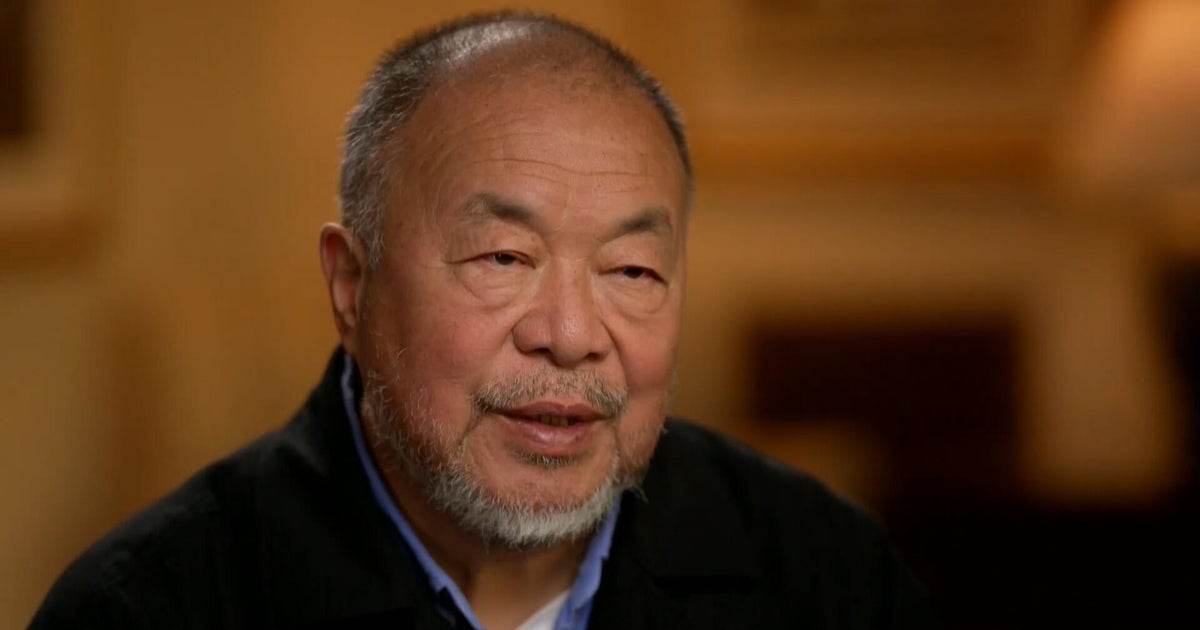
Ai Weiwei, a famous artist, warns that censorship is getting worse not only in China but also in Western countries. He shares his experiences with strict surveillance and detention in China and says censorship affects many parts of life wherever authorities have power.
Key Facts
Ai Weiwei is a well-known contemporary artist critical of censorship.
In 2009, Chinese police took him away, and he used photos to document surveillance around him.
He was held secretly for 81 days in 2011 and later created art showing his jail cell.
Ai livestreamed his home for a while to expose secret surveillance, but authorities made him stop.
He found listening devices in his studio's electrical sockets in 2015.
Ai left China in 2015 for his son's safety and returned in 2023 to visit his elderly mother.
He says censorship in China is constant and very sophisticated, hiding his identity from most people.
Ai believes censorship exists everywhere and feels it is worsening in Western democracies.
He compares people unaware of censorship to fish thinking a small tank is the whole ocean.
Read the Original
Want the full story? Tap a source to open the original
article.
Experts are seeking permission to access an infrared camera on a sailboat used by Brian and Lynette Hooker in the Bahamas. They hope the camera may have recorded information that could help explain Lynette Hooker’s disappearance.
Key Facts
The infrared camera is mounted on the sailboat owned by Brian and Lynette Hooker.
Lynette Hooker disappeared while in the Bahamas.
Experts want to review the camera’s footage for possible clues.
Infrared cameras capture heat signatures, which can reveal things not seen by normal cameras.
The investigation is ongoing, and law enforcement is involved.
The information could be crucial in understanding what happened to Lynette Hooker.
Read the Original
Want the full story? Tap a source to open the original
article.
HGTV host Ty Pennington talked about his mother’s long fight with bronchiectasis, a serious lung disease that is often not diagnosed. He also shared advice for people who take care of others with health problems on how to make a peaceful and supportive home.
Key Facts
Ty Pennington is a TV host and designer known for his work on HGTV.
His mother has struggled for many years with bronchiectasis.
Bronchiectasis is a chronic lung disease that damages the airways and causes breathing problems.
This condition is often not diagnosed, meaning many people may have it without knowing.
Pennington offered suggestions to caregivers on how to create calm and comforting spaces for those with lung conditions.
The interview was presented with sponsorship from Insmed, a company involved in treatments for lung diseases.
The story was featured on CBS News and is available on the CBS News App.
Read the Original
Want the full story? Tap a source to open the original
article.
Each summary links back to the original reporting, so you can check the work. Support that, and get the daily digest every morning. Most choose $3.99/month.
Five of seven people who were trapped in a flooded cave in Laos were found alive after being stuck for a week. The group entered the cave searching for gold but became trapped due to heavy rain that caused flooding.
Key Facts
Seven villagers from Laos entered a cave in Xaysomboun province on May 20.
They were looking for gold inside the cave.
Heavy rains caused flash flooding that blocked their exit from the cave.
Five of the seven trapped people were found alive on May 27.
Two people remain missing as rescue efforts continue.
Rescuers from Laos and Thailand are involved in the operation.
The incident lasted for about a week before the survivors were found.
Read the Original
Want the full story? Tap a source to open the original
article.
Israel has carried out air and artillery attacks on Nabatieh, a major city in southern Lebanon, aiming at Hezbollah targets. The attacks have caused forced displacement of civilians and hit the city's surrounding areas, while Hezbollah has responded with strikes on Israeli forces.
Key Facts
Nabatieh is a key city in southern Lebanon, near the border with Israel and above the Litani River.
Israel’s military campaign targets Hezbollah fighters but also affects the local Shia Muslim community.
Israel has forced people to leave Nabatieh amid heavy shelling and air strikes, including on nearby villages.
Hezbollah has launched artillery and drone attacks against Israeli forces around Nabatieh.
Since March 2, over 3,200 people have died in Lebanon due to the conflict, including civilians and paramedics.
Nabatieh is considered symbolic of resistance in Lebanon and is important economically and administratively.
Israel seeks to pressure Hezbollah by targeting Nabatieh to disrupt daily life and weaken the Shia community's support.
Israeli Prime Minister Netanyahu stated the goal of crushing Hezbollah through expanded military operations.
Read the Original
Want the full story? Tap a source to open the original
article.
Harvard economics professor Roland Fryer spoke on CBS Mornings about reasons why many people around the world are feeling lonelier. He shared ideas on what might cause this increase in loneliness.
Key Facts
Roland Fryer is a professor at Harvard University.
He appeared on the TV show CBS Mornings.
The discussion focused on why people globally feel more lonely.
Loneliness has been increasing internationally.
The expert shared possible explanations for this trend.
Read the Original
Want the full story? Tap a source to open the original
article.
Artist and activist Ai Weiwei spoke on CBS Mornings about his new book, "Ai Weiwei on Censorship." He discussed his concerns about censorship and authoritarian governments.
Key Facts
Ai Weiwei is a contemporary artist and activist.
He has written a book titled "Ai Weiwei on Censorship."
He appeared on the TV show CBS Mornings to talk about his book.
Ai Weiwei warned about the risks of censorship.
He also spoke about the threats posed by authoritarianism, where governments have strict control over people.
Read the Original
Want the full story? Tap a source to open the original
article.
Chinese authorities have executed Xu Yao for poisoning Lin Qi, a billionaire founder of a gaming company tied to the Netflix series "The Three-Body Problem." Xu was convicted in 2024 for killing Lin in 2020 after a professional dispute.
Key Facts
Xu Yao poisoned Lin Qi, founder of Yoozoo Games, in 2020 using toxic substances disguised as pills and drinks.
Lin Qi was a billionaire and linked to the Netflix adaptation of the sci-fi trilogy "The Three-Body Problem."
Xu was convicted of murder in 2024 and executed on May 21, 2024.
The poisoning included alpha-amanitin, a deadly compound from poisonous mushrooms.
Lin Qi died a few days after falling ill; several other employees who consumed the poison recovered.
Yoozoo Games confirmed the execution and expressed gratitude for justice served.
"The Three-Body Problem" trilogy is internationally popular and has expanded China's sci-fi industry.
Lin Qi ranked among China's richest entrepreneurs, with an estimated wealth of $1 billion.
Read the Original
Want the full story? Tap a source to open the original
article.
Resident doctors in England will strike for the 16th time, holding a four-day walkout in June over pay concerns. The doctors say their pay has not kept up with inflation despite recent raises.
Key Facts
Resident doctors in England plan to strike from June 15 to June 19.
This will be the 16th strike in a long dispute about their pay.
The British Medical Association (BMA) met with new health secretary James Murray before announcing the strike.
The last strike by resident doctors was a six-day walkout in April.
Doctors have had pay rises totaling 33% over the last four years, including a 3.5% increase this year.
Starting pay for resident doctors is just over £40,000; senior doctors earn about £76,500 basic pay.
Additional pay can come from working unpopular hours or doing extra shifts.
The BMA says doctors earn about 20% less than in 2008 when adjusted for inflation.
Read the Original
Want the full story? Tap a source to open the original
article.
On the biggest stories we show what the outlets agree on and where they differ. Readers keep that going, and get the daily digest by email every morning. Most choose $3.99/month.
Two skydivers collided during a group jump in Washington state, resulting in one death and one injury. Authorities are investigating the incident that happened at West Plains Skydiving during a scheduled jump.
Key Facts
The collision happened on Sunday evening during a group skydiving event in Adams County, Washington.
One skydiver, Randy Hubbs from Kennewick, died after becoming incapacitated and losing control of his parachute.
The other skydiver, Nicole Klein from Colville, was injured and taken to a medical facility.
The incident occurred at West Plains Skydiving at about 1,000 feet above ground.
Neither jumper was aware of the other’s position before their parachutes touched.
Weather conditions did not contribute to the accident.
Eleven people were part of the jump group.
Hubbs had done over 800 jumps, and Klein had completed 900 jumps before this event.
Read the Original
Want the full story? Tap a source to open the original
article.
The Lobito Corridor is a 1,300 km rail and transport route connecting Angola’s Atlantic port of Lobito to mineral-rich areas in the Democratic Republic of Congo and Zambia. The United States supports this project as a way to boost trade, create jobs, and strengthen regional cooperation in Africa, while also securing critical minerals needed for clean energy and defense.
Key Facts
The Lobito Corridor links the port of Lobito in Angola to mining regions in the DRC and Zambia.
It covers about 1,300 kilometers (810 miles) and uses the Benguela Railway as its main infrastructure.
The railway was originally built during colonial times and fell into disrepair after Angola’s civil war ended.
China renovated the railway through a $2 billion rail-for-oil program.
In 2023, a 30-year concession for the corridor was granted to a group including Trafigura and other companies.
The US pledged billions of dollars to improve transport capacity and support critical mineral supply chains.
The Biden administration signed a deal in 2022 to help fund this and other African infrastructure projects with partners like the EU and G7.
US official Frank Garcia said the corridor reflects a US focus on trade, jobs, and regional integration, linking it to the “America First” policy.
Read the Original
Want the full story? Tap a source to open the original
article.