Heavy rain over two days has caused serious flooding in Bangkok, Thailand. Authorities have issued red alerts in the hardest-hit areas to warn people of the danger and manage the situation.
Key Facts
Bangkok experienced continuous heavy rain for 48 hours.
The rain caused widespread flooding across the city.
Traffic was severely disrupted due to the floods.
Thai authorities issued red alerts for areas most affected by the flooding.
The alerts aim to help people stay safe and respond quickly to emergencies.
Floodwaters have impacted daily life and transportation in Bangkok.
Officials are monitoring the situation closely to provide assistance and manage risks.
Read the Original
Want the full story? Tap a source to open the original
article.
Bangkok declared a flood disaster after nearly 300 millimeters of rain fell in less than two days, causing canals to overflow and streets to flood. The city governor said the situation is stabilizing and urged people to stay home while officials work to drain the water.
Key Facts
More than 300 millimeters of rain fell in Bangkok in under 48 hours.
Canals overflowed, flooding streets, homes, shops, and restaurants.
The flood disaster was declared across all 50 districts of Bangkok.
Around 980 people are staying in temporary shelters; 36 bed-ridden individuals were moved to hospitals.
Bangkok’s canals are full, limiting drainage capacity; pumping stations are working at maximum.
The governor said if no more rain falls, floodwaters will take 2-3 days to drain.
Officials are working with nearby provinces to help drain water out of the city.
Roads are flooded, causing transport disruptions, but food shortages are not expected.
Read the Original
Want the full story? Tap a source to open the original
article.
A U.S. official said that President Donald Trump has a strong position in talks with Iran. Representatives from both countries met during the United Nations General Assembly, but they have not reached an agreement yet.
Key Facts
President Donald Trump is involved in talks with Iran.
The talks include officials from both the U.S. and Iran.
The meetings happened on the sidelines of the United Nations General Assembly.
A U.S. State Department spokesman named Tommy Pigott made statements about the talks.
Tommy Pigott said that President Trump "holds all of the cards," meaning the U.S. is in a strong position.
So far, no official deal has been reached between the U.S. and Iran.
Read the Original
Want the full story? Tap a source to open the original
article.
Iran has offered to reopen the Strait of Hormuz within seven days if the United States agrees to certain conditions. Talks between Iran and the U.S. are ongoing with the help of mediators during the United Nations General Assembly (UNGA), as leaders in the region consider the wider impacts of the conflict.
Key Facts
Iran proposed reopening the Strait of Hormuz in seven days.
The reopening depends on the U.S. meeting Iran’s conditions.
The proposal was made during the UN General Assembly meetings.
Negotiations are happening through mediators, not direct talks.
Regional leaders are concerned about the broader consequences of the war affecting the area.
The Strait of Hormuz is a key waterway for global oil shipments.
The conflict mentioned relates to tensions affecting regional security and trade routes.
Read the Original
Want the full story? Tap a source to open the original
article.
Morocco’s Authenticity and Modernity Party (PAM) won the most seats in the recent parliamentary election but did not get enough to control the government alone. PAM will need to team up with other parties to form a ruling coalition. The voter turnout was low, and the Islamist Justice and Development Party (PJD) increased its seats but will stay in opposition.
Key Facts
PAM won 97 out of 395 seats in Morocco’s House of Representatives.
A majority requires 198 seats, so PAM does not have enough to govern alone.
King Mohammed VI must appoint a prime minister from the party with the most seats.
The PJD increased its seats from 13 in 2021 to 54 but will remain in opposition.
PAM is likely to form a coalition with the monarchist Istiqlal party and others.
Voter turnout was 38%, one of the lowest since 1999.
Potential prime ministers from PAM include Fouzi Lekjaa and Fatima Ezzahra Mansouri.
Mansouri could become the first female prime minister of Morocco if chosen.
The new government will manage investments related to Morocco cohosting the 2030 World Cup.
Read the Original
Want the full story? Tap a source to open the original
article.
Yemen’s government has offered an amnesty to Houthi rebels who decide to leave their group. President Rashad al-Alimi also urged Yemeni citizens to join the armed forces as fighting continues near an important sea passage.
Key Facts
Yemen’s President Rashad al-Alimi offered amnesty to Houthi rebels who defect.
The Houthis are supported by Iran.
The Yemeni government is calling for more citizens to join the armed forces.
Fighting has increased recently near the Bab al-Mandeb strait, a key shipping route.
The amnesty aims to encourage Houthi fighters to leave the conflict.
The government controls part of Yemen, while the Houthis control other areas.
The conflict has caused a long and ongoing war in Yemen.
Read the Original
Want the full story? Tap a source to open the original
article.
Leaders met at the United Nations to discuss peace efforts, but ongoing wars continue. Experts are questioning what diplomacy can accomplish while fighting and bombings are happening.
Key Facts
Leaders gathered at the United Nations to talk about peace.
Wars and bombings are still ongoing despite diplomatic talks.
Al Jazeera reporter Emma Withrow interviewed Al Anoud Al Thani, a Middle East expert.
The interview focused on what diplomacy can realistically achieve during active conflicts.
The article highlights the challenge of making peace when violence continues.
Read the Original
Want the full story? Tap a source to open the original
article.
Brazilian President Luiz Inácio Lula da Silva has banned all online gambling and sports betting just days before the presidential election. The ban must be approved by Congress within 120 days to remain in effect, and it aims to stop gambling addiction and its negative effects on families.
Key Facts
Lula signed a provisional order banning online casinos and sports betting in Brazil.
Online gambling was legalized in Brazil in 2018 but has led to household income losses due to addiction.
The ban comes ahead of Brazil’s presidential election, where Lula is running for a fourth term.
Lula said online gambling grew without proper rules during the previous Bolsonaro administration.
The new ban needs congressional approval within 120 days to stay valid.
Lula described gambling addiction as harmful and mentioned families selling their possessions because of it.
Flávio Bolsonaro, Lula’s main opponent and son of former President Bolsonaro, criticized the ban as politically motivated.
Most types of gambling were already illegal in Brazil except for online betting, which became very popular.
A recent survey shows nearly 60% of Brazilian adults support banning internet betting.
Read the Original
Want the full story? Tap a source to open the original
article.
Yemeni leader Rashad al-Alimi asked citizens to join the Saudi-backed government forces to fight the Houthi rebels, who recently gained control of parts of the western Red Sea coast. He also offered an amnesty, or official forgiveness, to any Houthi fighters who leave the group and join the government forces.
Key Facts
Rashad al-Alimi is the head of Yemen’s Presidential Leadership Council, the country’s governing body.
Houthis have pushed forward toward the important Bab al-Mandeb strait, a key shipping route.
The Yemeni government wants to regain control of Sana’a, the capital taken by the Houthis in 2014.
Al-Alimi called for general and national mobilization, urging people to join security and armed forces.
He offered an immediate amnesty to Houthi fighters who defect, following legal procedures.
Military leaders from Saudi Arabia, Turkiye, and Pakistan met as part of a defense agreement called the Mecca Pact amid ongoing conflict.
The Saudi-led coalition intercepted missiles and drones launched by Houthis toward Saudi territory on March 29-30, 2026.
This speech and call to arms coincided with the 64th anniversary of Yemen’s 1962 military coup, which started a long civil war.
Read the Original
Want the full story? Tap a source to open the original
article.
Africa is pushing for permanent seats on the United Nations Security Council, a goal renewed at the 81st UN General Assembly. African leaders want the Security Council to better represent current global realities by giving Africa at least two permanent seats with veto power, but changes are difficult because all current permanent members must agree.
Key Facts
The UN Security Council has 15 members: 5 permanent members (China, France, Russia, UK, USA) with veto power, and 10 temporary members elected for two years.
Africa has never had a permanent seat on the Security Council, despite much UN work involving the continent.
Africa wants at least two permanent seats with veto power and five non-permanent seats on the Council.
Changing permanent membership requires amending the UN Charter, which must be approved by two-thirds of all UN members, including all permanent members.
The five permanent members currently hold veto power and must agree to any reform, giving them control over changes.
Nigeria consistently advocates for a permanent seat and renewed this push at the 81st UN General Assembly.
The UN has had talks about Security Council reform since 2008, but no agreement has been reached on membership or veto power.
Security Council resolutions related to Africa make up a significant portion of the Council’s 2025 work, highlighting Africa’s importance.
Read the Original
Want the full story? Tap a source to open the original
article.
Pope Leo XIV visited France, marking the first official Papal visit there in 18 years. During his visit, he held a large mass at the Stade de France and spoke to thousands of young people with a message of encouragement.
Key Facts
Pope Leo XIV made the first Papal visit to France in 18 years.
The visit attracted very large crowds.
The Pope held a mass at the Stade de France, a big stadium.
He addressed thousands of young people during the mass.
The Pope’s message focused on encouraging the youth.
Read the Original
Want the full story? Tap a source to open the original
article.
Iran offered a plan to the United States to reopen the Strait of Hormuz within seven days if certain conditions were met. However, President Donald Trump rejected the proposal, doubting Iran would follow through and expecting further military actions. The strait is a vital passage for global oil shipments and has been a point of conflict between the two countries.
Key Facts
Iran's Foreign Minister Abbas Araghchi presented a seven-day plan to reopen the Strait of Hormuz to a US envoy at a UN meeting.
The plan required a ceasefire, release of at least $12 billion of frozen Iranian assets, lifting of oil sanctions, and an end to the US naval blockade.
The US rejected the offer, with President Trump skeptical about Iran fulfilling the conditions.
Iran wants all hostilities to stop in the Middle East, including in Lebanon and Yemen.
The Strait of Hormuz is crucial for global oil transport and has been a conflict hotspot for months.
Iran requires ships to get authorization before passing through the strait and has attacked ships it says disobey.
The US has responded at times with military actions against Iranian coastal targets.
In June, the US and Iran had signed an agreement to end the conflict and reboot talks, but it fell apart when Iran fired on commercial ships.
Read the Original
Want the full story? Tap a source to open the original
article.
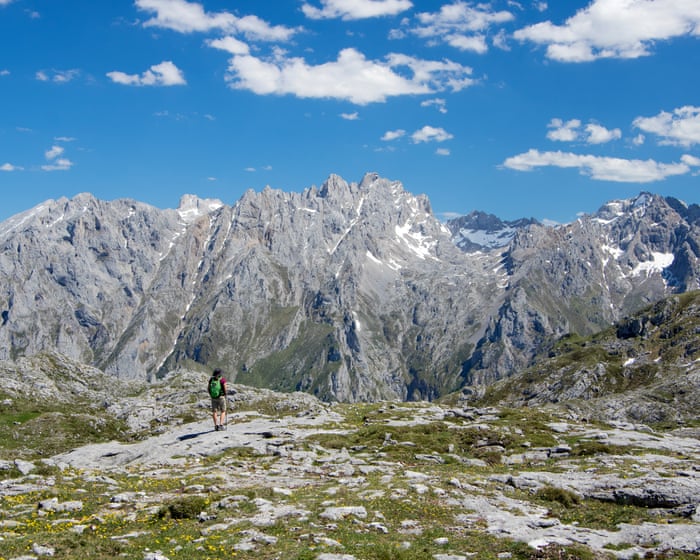
A 28-year-old British climber died after falling about 61 meters while coming down from the top of Torrecerredo mountain in northern Spain. Rescue teams found his body with the help of a helicopter, and local authorities handled the recovery and investigation.
Key Facts
The climber fell 61 meters (200 feet) down a steep gully on the east side of Torrecerredo.
Torrecerredo is the tallest peak in the Cantabrian Mountains, standing around 2,649 meters high.
The accident occurred during the descent, about 20 meters below the mountain's summit.
A helicopter rescue team helped locate the body and two specialists retrieved it and the climber’s scattered belongings.
The body was taken to La Morgal, a sports and aviation facility near Gijon, Asturias.
The UK Foreign Office contacted Spanish authorities about the death.
Torrecerredo is part of the Picos de Europa range within the larger Cantabrian Mountains.
Read the Original
Want the full story? Tap a source to open the original
article.
A military plane crashed in southwest Democratic Republic of the Congo, killing at least 14 people, including senior military officials. The plane tried to make an emergency landing in Kenge after a technical problem but crashed into a residential area.
Key Facts
The crash happened on a flight from Kikwit to the capital, Kinshasa.
The plane had a technical fault and tried to land in Kenge, where no proper runway exists.
Fourteen people died, including two generals, other military personnel, and civilians.
The pilot’s body was found outside the crashed plane.
Most bodies were badly burned, making identification difficult.
An official investigation has been started to find out what caused the crash.
The Democratic Republic of the Congo has ongoing conflicts, especially near its eastern border.
Armed groups in the eastern DRC compete to control valuable mining areas.
Read the Original
Want the full story? Tap a source to open the original
article.
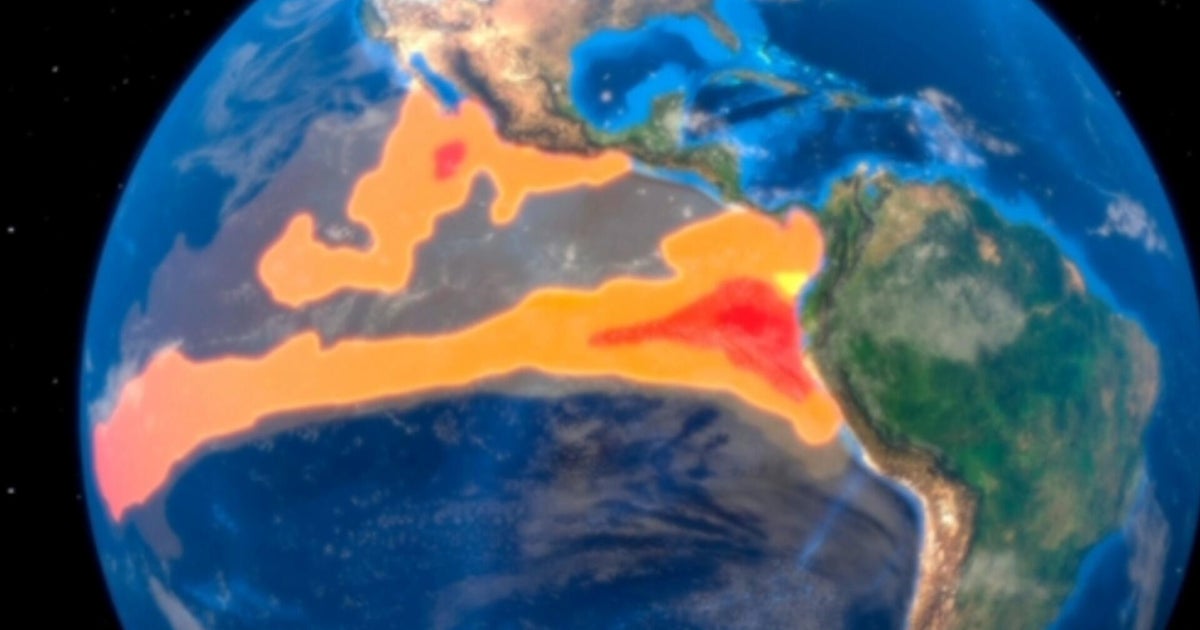
El Niño is a natural climate event in the Pacific Ocean that affects weather patterns worldwide. Scientists warn that the current El Niño may be one of the strongest ever, and climate change caused by humans is making its effects more intense.
Key Facts
El Niño is a natural shift in the Pacific Ocean’s climate system.
The current El Niño could be one of the strongest ever recorded.
This event influences weather patterns across the Pacific and beyond.
Human-caused climate change is increasing the strength of El Niño.
Stronger El Niño events can lead to more extreme weather, such as bigger storms.
Tracy Wholf from WereWHOLF Media discussed these effects on CBS News.
CBS News provides detailed coverage through their app and website.
Read the Original
Want the full story? Tap a source to open the original
article.
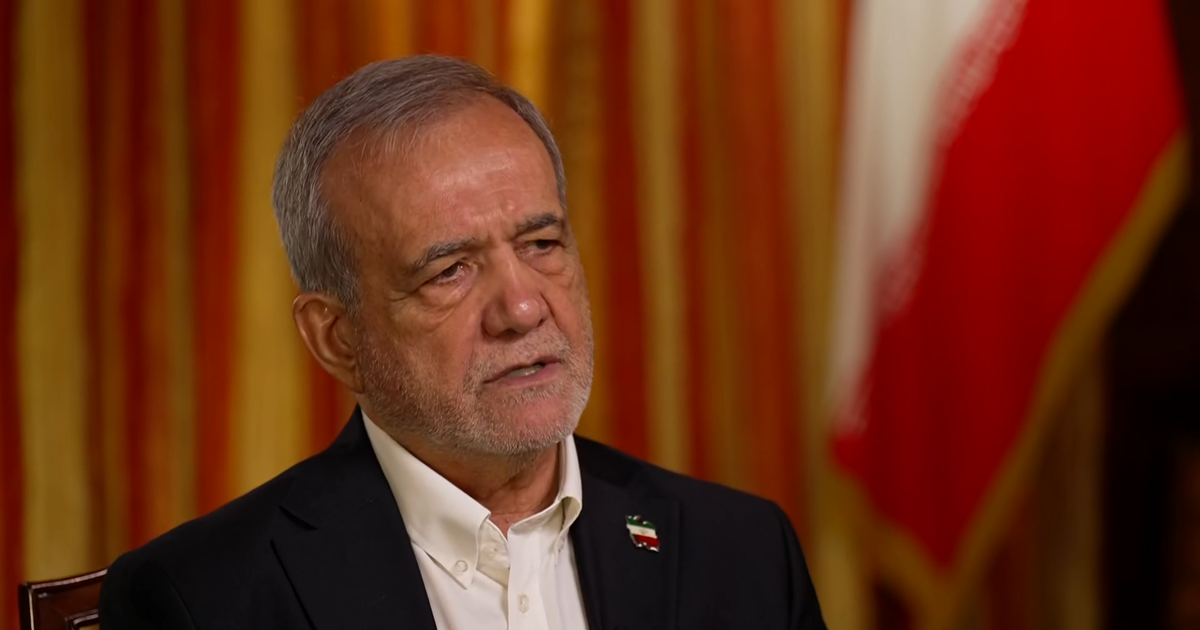
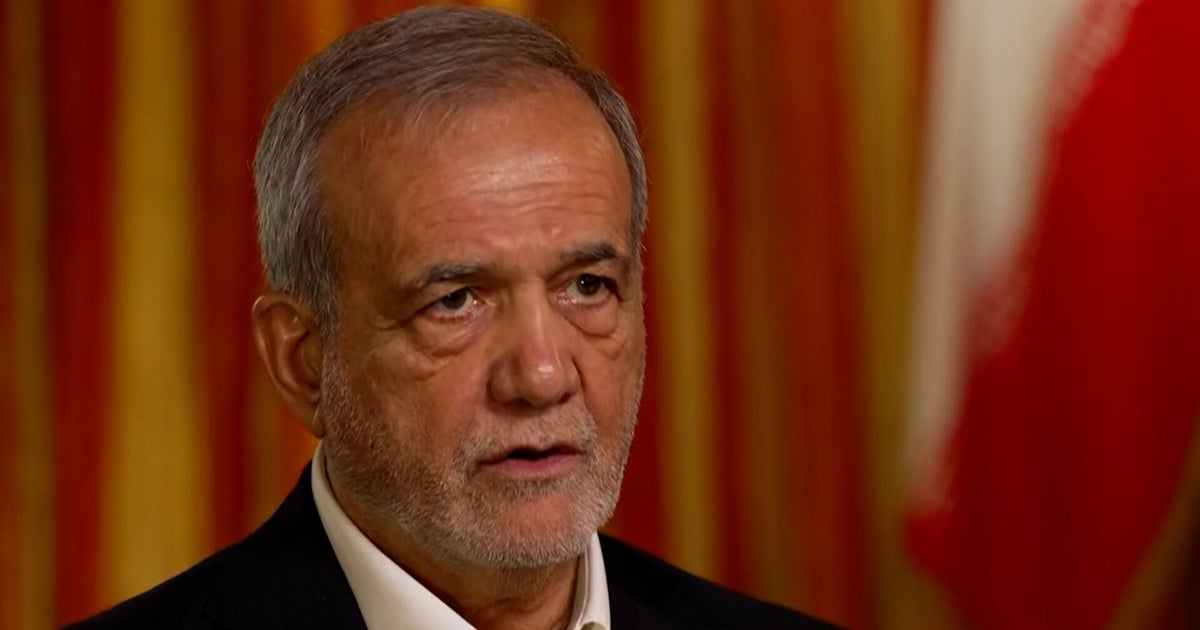
Iranian President Masoud Pezeshkian discussed a plan to reopen the Strait of Hormuz after seven days if the United States agrees to Iran's conditions. He mentioned a previous agreement signed by both Iran and President Donald Trump that was interrupted but could be resumed if both sides follow the outlined framework.
Key Facts
Iran proposes to reopen the Strait of Hormuz after seven days if the U.S. accepts their conditions.
Talks to end the war and discuss Iran's nuclear program could start after the strait reopens.
A memorandum of understanding (MOU) was signed in Pakistan by Iran’s President and President Trump in June, which was later disrupted.
Both sides have blocked passage through the Strait of Hormuz, but Iran says reopening depends on the U.S. lifting their block.
Disagreements over shipping lanes and military actions by Iran’s Revolutionary Guard Corps (IRGC) led to the breakdown of the earlier agreement.
Iran remains committed to the MOU and wants to continue it step-by-step.
The issue of charging fees for ships passing through the strait was not clearly resolved in the interview.
President Pezeshkian said Iran’s military would follow any agreement they commit to, stressing the need for dialogue and coordination.
Read the Original
Want the full story? Tap a source to open the original
article.
Iranian President Masoud Pezeshkian said there is a lot of distrust between Iran and the U.S., making talks difficult. Iran has proposed reopening the Strait of Hormuz and restarting negotiations, but the U.S. has not yet responded.
Key Facts
President Pezeshkian described an "atmosphere of distrust" between Iran and the U.S.
Iran offered to reopen the Strait of Hormuz after seven days and restart talks with the U.S.
The U.S. has not responded to Iran’s proposal yet.
President Trump expressed openness to meeting Iranian officials in New York but has not done so.
Iran blames the U.S. for ending a temporary ceasefire agreement after attacks on ships last summer.
The U.S. opposes Iran controlling waterways near the Strait of Hormuz or charging tolls for ships passing through.
Iran insists that ships follow Iran-approved routes and seek permission.
Iran says it will allow U.N. nuclear inspectors into the country if talks resume.
Read the Original
Want the full story? Tap a source to open the original
article.
Iranian President Masoud Pezeshkian spoke in an interview about the conflict between Iran and the United States. He discussed Iran’s offer to open the Strait of Hormuz, the condition of Iran’s supreme leader, and other related issues.
Key Facts
Iranian President Masoud Pezeshkian gave an extended interview to CBS News.
He talked about the ongoing tensions and conflict between Iran and the U.S.
Iran has offered to open the Strait of Hormuz, an important international waterway.
The interview also covered the health condition of Iran’s supreme leader.
The discussion was broadcast on the program Face the Nation by Margaret Brennan.
The Strait of Hormuz is a key route for global oil shipments.
Iran’s position and actions in the conflict with the U.S. remain important for world security.
Read the Original
Want the full story? Tap a source to open the original
article.
Two men with far-right links were sentenced to prison for the 2022 murder of Argentine rugby player Federico Martin Aramburu in Paris. The former soldier who fired the fatal shots received 26 years, and his accomplice got 19 years in jail.
Key Facts
Federico Martin Aramburu was an Argentine rugby player who played 22 times for his country and died in a shooting in Paris in March 2022.
The shooting happened after a fight broke out in a bar near Boulevard Saint-Germain.
Loik Le Priol, 32, fired the fatal shots and was sentenced to 26 years in prison.
Romain Bouvier, 35, who opened fire first, was sentenced to 19 years in prison.
Both men were linked to a far-right extremist group, which has since dissolved.
Le Priol was caught in Hungary while trying to cross the border into Ukraine to fight.
CCTV showed the victim and his friend sitting near the attackers before the fight and shooting.
The court described Le Priol as having strong anger that led to the killing, despite defense claims of trauma.
Read the Original
Want the full story? Tap a source to open the original
article.