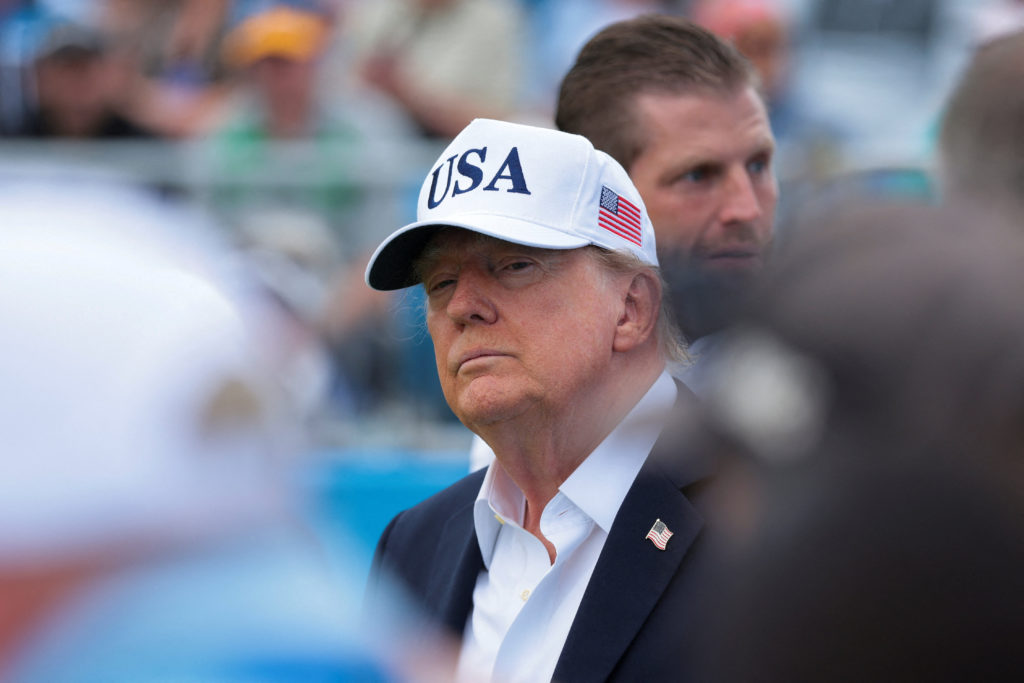
President Donald Trump expressed his support for uniting Northern Ireland with the Republic of Ireland, saying it would be natural to merge them. His comments revived a long-standing and sensitive political issue involving the history and identity of Northern Ireland, which remains divided between those who want to stay in the UK and those who want to join Ireland.
Key Facts
President Trump said combining Northern Ireland and the Republic of Ireland makes sense and called unification "fantastic."
Northern Ireland is part of the UK, while the Republic of Ireland is an independent country.
The divide dates back 100 years, when most of Ireland became independent but Northern Ireland remained in the UK.
"The Troubles" were a violent conflict from the late 1960s to the late 1990s between mainly Catholic nationalists and mainly Protestant unionists, causing thousands of deaths.
The 1998 Good Friday Agreement helped bring peace and allows for a future vote on Irish unification if public opinion supports it.
The UK government says such a referendum cannot happen until public opinion changes significantly.
Irish Prime Minister Micheál Martin urged calm after Trump’s remarks, while UK politicians downplayed and criticized them.
President Trump said his opinion had wide support but noted it was just his view.
Read the Original
Want the full story? Tap a source to open the original
article.
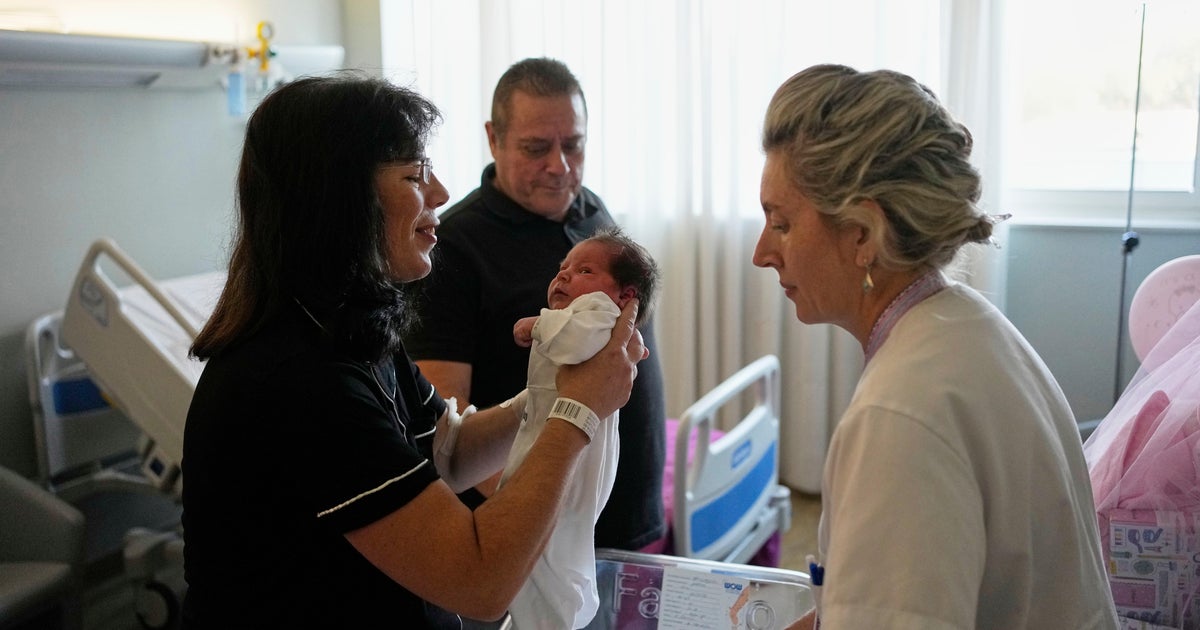
A Greek couple had a baby girl using an embryo that was frozen for 22 years. The mother, Cristina Rapti‑Tzelepi, gave birth shortly before reaching the government age limit for IVF treatments in Greece.
Key Facts
The couple lost their 21-year-old son in a car accident months before having the new baby.
The embryo used was frozen for more than 22 years before implantation.
Greece has a law that stops women from undergoing IVF treatments after age 54.
Cristina gave birth in Athens to a baby girl named Georgia.
Her doctor said the age limit law might need to change due to Greece’s low birth rate.
The couple’s first child was also born through IVF.
Embryo donation and use of long-frozen embryos are becoming more common worldwide.
The couple may try for another child, possibly by seeking treatment abroad.
Read the Original
Want the full story? Tap a source to open the original
article.
The leaders of Scotland, Wales, and Northern Ireland's main pro-independence parties met in Cardiff and agreed that their nations have the right to decide their own futures. They seek greater independence from the UK, saying the UK government should not block referendums or democratic decisions about their futures.
Key Facts
The Scottish National Party (SNP), Plaid Cymru (Wales), and Sinn Féin (Northern Ireland) signed a joint agreement supporting self-determination.
They want more autonomy and eventually full independence from the UK, but differ on timing and referendum details.
The leaders stressed that no UK government can block democracy or stop their people from deciding their future.
The agreement expresses a desire for closer ties with the European Union.
UK Prime Minister Andy Burnham said that new independence referendums for Scotland and Northern Ireland are “off the table”.
UK consists of four countries with different legal systems and has a devolved government system where some powers are controlled locally, but key issues like defense remain with the UK government in London.
Sinn Féin aims for Northern Ireland to join a united Ireland.
President Donald Trump said a united Ireland would be “a great thing” during his visit to Ireland.
Read the Original
Want the full story? Tap a source to open the original
article.
President Donald Trump said that Russia and Ukraine have agreed not to attack each other's energy infrastructure during their conflict. This announcement comes as global fuel prices are increasing.
Key Facts
President Trump announced an agreement between Russia and Ukraine to avoid targeting each other's energy facilities.
The statement was made on Trump’s social media platform, Truth Social.
The agreement is related to the ongoing war between Russia and Ukraine.
Fuel prices such as gasoline and diesel are rising worldwide.
Both countries agreed to protect energy targets, which are important for fuel production and supply.
The war has affected global energy markets and contributed to higher fuel costs.
No official confirmation from Russia or Ukraine about this agreement was mentioned in the article.
Read the Original
Want the full story? Tap a source to open the original
article.
A UK armed forces member died in a traffic accident while in Ukraine, according to the UK's Ministry of Defence. This was not caused by hostile action, and the family has been informed but asked for privacy. The conflict between Russia and Ukraine is ongoing, with recent attacks including one near a train that may have targeted a former UK prime minister.
Key Facts
A UK military member died in a road traffic incident in Ukraine on Saturday.
The death was not caused by enemy action.
The family has been notified and requested time before more details are shared.
The UK has a small group of military personnel in Ukraine helping diplomats and supporting Ukrainian forces.
In December, British paratrooper George Hooley died in Ukraine in a separate accident.
Russia’s invasion of Ukraine is in its fifth year and continues with new attacks.
A recent drone strike targeted a train station near the Polish border.
The strike may have been aimed at a train carrying former UK Prime Minister Boris Johnson and other officials.
Read the Original
Want the full story? Tap a source to open the original
article.
Ro$ama, a rapper from Paris, Texas, started making music as a child using video game instrumentals and freestyle sessions with family. His new album, My Forte, combines personal stories and diverse topics, showcasing his wide range in rap through thoughtful wordplay and storytelling.
Key Facts
Ro$ama began rapping at nine years old using instrumentals from the video game 50 Cent: Blood in the Sand.
Music was a family activity, with Ro$ama often freestyling at reunions.
His album My Forte is named after his mother's last name and the musical term "forte," meaning strength.
The album includes 20 songs covering a variety of themes, from personal reflections to stories about his region.
Influences include Lil Wayne, T.I., DMX, Notorious B.I.G., Tupac Shakur, Nipsey Hussle, and Ludacris.
Ro$ama writes lyrics starting from the last line and works backward to build his verses.
The song “E.T.” on the album features a beat change that matches shifts in the story and emotion.
His music blends his East Texas background with complex rap techniques like metaphors and storytelling.
Read the Original
Want the full story? Tap a source to open the original
article.
NATO has not yet clearly decided when certain kinds of attacks, like active measures or hybrid warfare, should cause the alliance to use Article 5. Article 5 is the rule that means if one member is attacked, all members respond together.
Key Facts
NATO is a military alliance of countries that agree to defend each other.
Article 5 says if one country is attacked, others will help defend it.
Active measures are actions like propaganda or covert efforts to harm members without open fighting.
Hybrid warfare mixes traditional military attacks with things like cyberattacks and misinformation.
NATO has not set clear rules on when these less obvious attacks count as an attack under Article 5.
This lack of clarity may cause problems in deciding when to respond to threats.
Read the Original
Want the full story? Tap a source to open the original
article.
A jury in London was dismissed after they could not decide on a verdict in the case of Tim Speers. He was accused of planning to disrupt Boris Johnson’s wedding party in Gloucestershire by using spray paint and superglue. The court will decide later if there will be a new trial.
Key Facts
Tim Speers was accused of carrying spray paint and superglue to disrupt Boris Johnson’s wedding reception.
The event took place on July 29, 2022, at the Doylesford Estate in Gloucestershire.
Speers said he did not intend to cause damage and stopped his plan before police arrived.
Police stopped Speers and another man because they were carrying beer and did not explain their presence.
A voice note showed Speers agreed to take part in an activist action requested by Palestine Action members.
The jury could not agree on a verdict and was discharged by the judge.
A potential retrial is set to be discussed on September 29.
Boris Johnson and Carrie Johnson held their wedding celebration outdoors with marquees and hay bale seating.
Read the Original
Want the full story? Tap a source to open the original
article.
Turkish police carried out raids on gay bars, nightclubs, LGBTQ offices, and activists' homes in several cities. More than 60 people were arrested as part of the government's "My Family is Safe" operation.
Key Facts
The police raids targeted LGBTQ-related places and people in multiple Turkish cities.
At least 63 people were arrested during these raids.
The operation is called "My Family is Safe" by the Turkish government.
The crackdown has been reported by the state news agency.
Human rights groups have criticized the arrests and raids.
The justice minister of Turkey confirmed the details of the raids and arrests.
These events took place on Sunday, as reported on September 14, 2026.
The raids involved police entering private homes and association offices connected to LGBTQ groups.
Read the Original
Want the full story? Tap a source to open the original
article.
Macklemore has been removed from the remaining US shows of Ed Sheeran’s Loop tour after he spoke in support of Palestine during a concert. Some venues objected to his comments, which led to concerns about canceling shows and the decision to drop him from the tour.
Key Facts
Macklemore made a speech on 4 September at MetLife Stadium, saying “free Palestine” and expressing support for people in Gaza and the West Bank.
A petition from the Israeli American Council called for Macklemore’s removal from the tour.
Messina Touring Group, the tour promoter, said some venues would not allow concerts if Macklemore remained on the lineup.
Macklemore was scheduled to open at 8 of the last 10 US dates of Sheeran’s Loop tour.
He also criticized US Immigration and Customs Enforcement (ICE) and showed images of damage from Israeli attacks in Gaza during his performance.
Some groups accused Macklemore of pushing anti-Israel views and using the tour to promote a political agenda.
Macklemore later said his criticism was not aimed at Jewish people and called for peace and equality for all.
The US part of Ed Sheeran’s Loop tour will continue without Macklemore and ends in November in Tampa, Florida.
Read the Original
Want the full story? Tap a source to open the original
article.
Ahead of Israel’s October 27 elections, two Israeli youth groups with leftist identities are promoting Zionism in different ways. One group supports peace efforts abroad, while another plans to build a settlement in the West Bank, leading to debate over whether leftist politics and Zionism can coexist given Zionism’s history and impact.
Key Facts
Two Israeli youth groups, Israel’s Young Democrats and Hamahanot Haolim, take leftist positions but support Zionism.
Israel’s Young Democrats partnered with Austria’s Young Greens to promote peace before the October elections.
Hamahanot Haolim plans to build a new kibbutz (community) in the occupied West Bank near Jericho.
The director of Hamahanot Haolim says left-wing Israelis should populate settlements rather than far-right settlers.
Critics argue “leftist Zionism” is a political idea used to defend Zionism while upholding systems they say oppress Palestinians.
Zionism began in 19th-century Europe as a Jewish nationalist movement aiming to create a Jewish state in Palestine.
Early Zionism mixed nationalist ideas with socialist language but carried out settler-colonial policies.
The United Nations once called Zionism a form of racism in 1975 but withdrew that stance in 1991.
There is ongoing debate about whether Zionism based on Jewish statehood and displacement of Palestinians can align with leftist values like equality and justice.
Read the Original
Want the full story? Tap a source to open the original
article.
In the village of al-Mughayyir near Ramallah, Palestinian children must pass Israeli soldiers to get to school. On April 21, a 14-year-old student named Aws was shot and killed by an Israeli settler while at school, and his teacher’s brother was also killed that day when he tried to help.
Key Facts
Al-Mughayyir is a village northeast of Ramallah in the West Bank.
Children in the village pass Israeli soldiers on their way to school.
On April 21, 14-year-old Aws was shot and killed by an Israeli settler on school grounds.
Aws’s teacher carried him out of the school after he was shot.
The teacher’s brother was also killed that same day while trying to help.
Several Palestinian children in the village have died this year under similar circumstances.
The article describes the difficult conditions for Palestinian children living in the West Bank under Israeli occupation.
Read the Original
Want the full story? Tap a source to open the original
article.
Fighting between Yemen’s Iran-backed Houthi rebels and Saudi Arabia, along with attacks by other Iranian proxy groups on Saudi oil infrastructure, is disrupting oil shipping routes in the Middle East. These conflicts are raising global oil prices by threatening tanker traffic through key waterways like the Strait of Hormuz and the Bab el-Mandeb Strait.
Key Facts
The conflict involves Yemeni Houthi rebels supported by Iran and Saudi Arabia.
Iran-backed groups have attacked Saudi oil pipelines and infrastructure.
The Strait of Hormuz and Bab el-Mandeb Strait are vital chokepoints for about 30% of the world’s oil supply.
A recent drone attack damaged Saudi Arabia’s East-West pipeline, which connects the Persian Gulf to the Red Sea.
This pipeline attack has reduced Saudi oil exports and tightened global oil supply.
Brent crude oil price recently hit about $108 per barrel, up from $67 before the conflict began.
Saudi Arabia’s oil output dropped to under 6 million barrels per day in August, below its target.
The pipeline damage could take 3-5 weeks to repair and could remove 4% of global oil supply if disrupted long-term.
Read the Original
Want the full story? Tap a source to open the original
article.
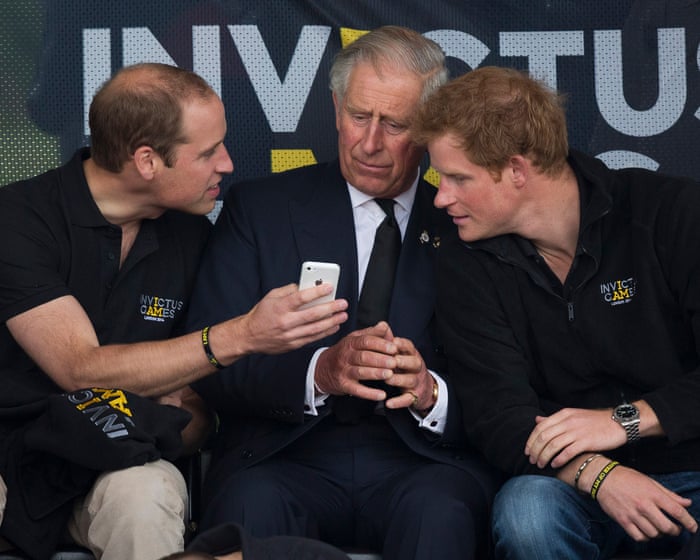
Uganda first said it would not join the Invictus Games, a sports event for wounded military members, but later changed its mind after talking with King Charles. The military chief of Uganda, Gen Muhoozi Kainerugaba, was assured by the king that Uganda’s participation was welcome, so the country will now take part in the 2027 games.
Key Facts
Uganda initially decided to withdraw from the Invictus Games, causing surprise.
The country’s military chief, Gen Muhoozi Kainerugaba, made the withdrawal announcement.
Kainerugaba was concerned about disrespecting King Charles due to issues around Prince Harry and Meghan.
A phone call with King Charles’ private secretary cleared up that the king supports Uganda’s participation.
Uganda will now prepare to compete in the 2027 Invictus Games in Birmingham.
The Invictus Games focus on wounded, injured, or sick service members and veterans.
Gen Kainerugaba is the son of Uganda’s president and is seen as a future leader.
Prince Harry helped announce Uganda’s involvement in the Invictus Games earlier this year.
Read the Original
Want the full story? Tap a source to open the original
article.
Heavy flash flooding hit parts of New York, New Jersey, and Connecticut, causing water rescues and difficulties for people, including runners in a half-marathon. Some areas in Connecticut received up to seven inches of rain very quickly, leading to waist-deep floodwaters.
Key Facts
Flash flooding occurred in New York, New Jersey, and Connecticut.
The floods caused water rescues and stranded drivers.
Half-marathon runners had to run through waist-deep water.
Connecticut saw up to seven inches of rain in a short time.
Flooding submerged cars and disrupted events.
Emergency officials responded to help those affected.
Read the Original
Want the full story? Tap a source to open the original
article.
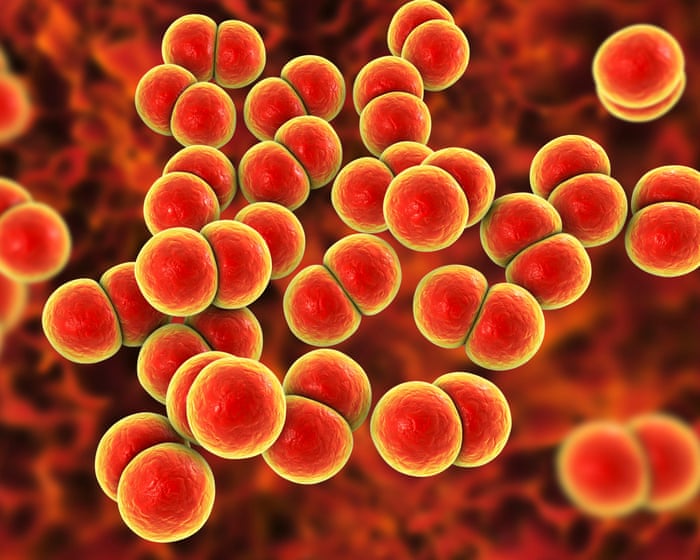
In Australia, cases of gonorrhoea and infectious syphilis increased by more than 50% over the past ten years, with a notable rise in syphilis among women. Experts highlight serious health risks, especially for pregnant women, and emphasize the need for better testing and treatment, particularly for Indigenous communities.
Key Facts
From 2015 to 2025, gonorrhoea cases rose by 57% and infectious syphilis cases by 56% in Australia.
In 2025, there were 42,393 reported gonorrhoea cases and 5,986 syphilis cases.
Men made up most cases (73% of gonorrhoea, 78% of syphilis), with many infections transmitted between gay and bisexual men.
Syphilis cases among women increased by 167%, indicating more spread through heterosexual contact.
Syphilis during pregnancy can cause miscarriage, stillbirth, and infant death; 113 cases of congenital syphilis were reported in 10 years, with 40 infant deaths.
Around half of congenital syphilis cases involved Aboriginal and Torres Strait Islander infants.
Indigenous Australians have much higher STI rates than non-Indigenous Australians: over four times for gonorrhoea and six times for syphilis.
Experts call for culturally safe sexual health services and community-led programs to improve testing, treatment, and prevention.
Read the Original
Want the full story? Tap a source to open the original
article.
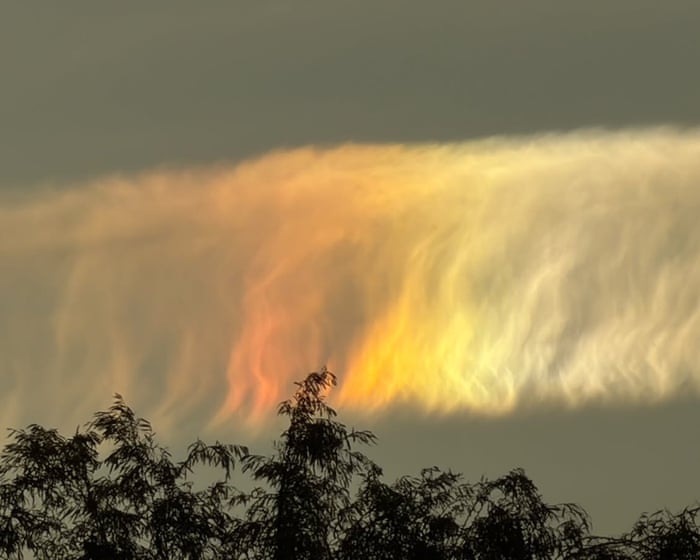
Rainbow-colored clouds, called iridescent clouds, appeared over parts of Victoria, Australia. These clouds show colors when sunlight bends around ice crystals in high, cold clouds called cirrus clouds.
Key Facts
Iridescent clouds were seen in Melbourne suburbs including Mount Waverley and Caroline Springs.
The phenomenon happens when sunlight bends (diffracts) around ice crystals in cirrus clouds.
Cirrus clouds are high-altitude clouds made of ice crystals and appear in the coldest part of the atmosphere.
Iridescent clouds show colors in irregular patterns due to diffraction, unlike rainbows which have neat color bands.
These clouds are short-lived and often go unnoticed because they disappear quickly.
Sun dogs are another sky phenomenon but appear as bright spots or pillars near the sun and are caused by water crystals at lower altitudes.
Iridescent clouds form from ice crystals of similar size in newly formed clouds.
The Bureau of Meteorology says iridescent clouds are not uncommon in Australia but rarely photographed.
Read the Original
Want the full story? Tap a source to open the original
article.
A new poll shows Marine Le Pen, a far-right politician in France, is likely to lead in the first round of the 2027 presidential election. The poll surveyed over 13,000 voters who appear to want significant change in the country.
Key Facts
Marine Le Pen is a far-right veteran candidate in France.
A poll indicates she may lead the first round of the French presidential vote next year.
The poll included more than 13,000 French voters.
Voters seem increasingly unhappy and want real change.
This election will take place in 2027.
The article references other current global events but focuses mainly on the French elections.
Read the Original
Want the full story? Tap a source to open the original
article.
South African police found the body of Elizabeth Moselakgomo, a missing jogger, in Kempton Park near Johannesburg. Her death is one of five recent cases where women’s bodies were discovered half-naked and bruised, prompting police warnings and public concern about safety for women.
Key Facts
Elizabeth Moselakgomo went missing during a regular run; her body was found east of Johannesburg.
Five women’s bodies, including Moselakgomo’s, were found in the Kempton Park area with similar injuries.
Police do not officially link the deaths to a serial killer but have issued a public safety warning.
One person has been arrested in connection with the first body found and is in custody.
Police advise women not to walk or run alone, especially in isolated areas.
South Africa has a high rate of gender-based violence, with women killed five times more often than the global average.
Community members and advocacy groups expressed fear and frustration about women’s safety and the effectiveness of police protection.
Moselakgomo’s family thanked the public for support and noted her young daughter raised the alarm when she disappeared.
Read the Original
Want the full story? Tap a source to open the original
article.
In 2025, former Labour leader Jeremy Corbyn proposed an independent inquiry into Britain’s role in the Gaza conflict, including UK cooperation with Israel. The government blocked the inquiry, arguing it was unnecessary. Corbyn then organized a public tribunal to gather testimonies and investigate the issue.
Key Facts
Britain took six years to start an inquiry into its role in the 2003 Iraq war, which revealed mistakes and misleading information by the government.
Jeremy Corbyn proposed a bill in June 2025 for an independent inquiry into Britain’s involvement in the Gaza conflict since October 2023.
The bill was supported by over 50 MPs but was blocked by Prime Minister Keir Starmer’s government.
The government stated there was no need for an inquiry and no confusion about UK military actions in Gaza.
Corbyn organized a public tribunal in September 2025, modeled after the 1966 Russell Tribunal on Vietnam.
The tribunal heard 29 testimonies from witnesses, experts, journalists, and survivors of the Gaza conflict.
At that time, nearly 65,000 people had died in Gaza, including about 20,000 children, with widespread destruction of homes and infrastructure.
The tribunal revealed serious allegations about Britain’s role and reported a culture of deception in the government to hide wrongdoing.
Read the Original
Want the full story? Tap a source to open the original
article.