Religious disputes over mosques and temples are appearing again in India's courts despite a law meant to prevent them after the Babri Masjid conflict. Rising Hindu nationalism has increased concerns among Muslims about their legal protections.
Key Facts
India has a history of religious conflicts involving mosques and temples.
The Babri Masjid dispute was a major conflict that led to new laws to stop similar fights.
Despite these laws, new court cases about religious sites are increasing.
Hindu nationalism is growing in India, influencing these disputes.
Many Muslims feel that promised legal protections are weakening.
The issue is currently being discussed in media and podcasts, including a report by Al Jazeera.
The podcast episode was produced and edited by a team including Yashraj Sharma and Malika Bilal.
Read the Original
Want the full story? Tap a source to open the original
article.
Western governments are encouraging companies to move production away from China to reduce risks and reliance. China has introduced new rules to limit how foreign companies shift their supply chains, saying these rules protect its economy and security.
Key Facts
For many years, companies used China for cheap and fast manufacturing.
Western countries now want businesses to reduce their dependence on China.
China has created strict new rules to make it harder for foreign firms to move supply chains out of the country.
China says its rules protect national and economic security.
Western nations accuse China of unfair trade practices.
The United States and Europe have launched policies to strengthen their own industries.
The West calls this shift “de-risking” while China calls it protectionism.
This situation affects global trade and international economic relations.
Read the Original
Want the full story? Tap a source to open the original
article.
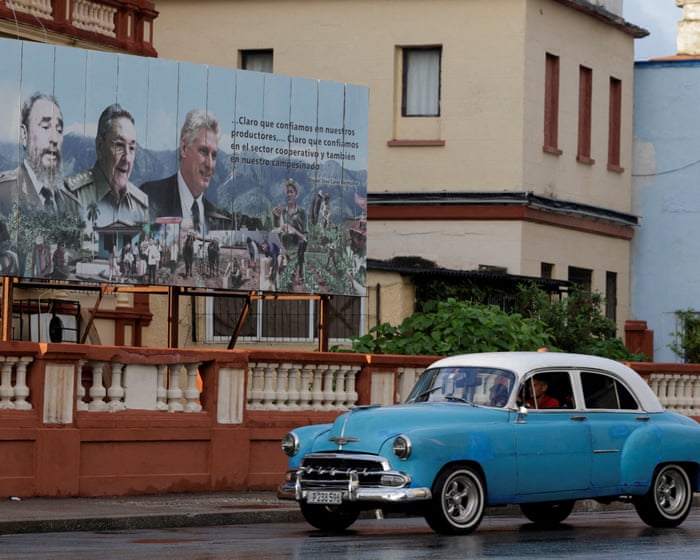
Cuba is facing ongoing energy shortages, and the recent legal charges against former leader Raúl Castro have not improved the situation. Experts say the Cuban people continue to experience hardships despite the U.S. indictment of Raúl Castro.
Key Facts
Cuba is dealing with a continuing energy crisis.
The energy problems have not improved following the indictment of Raúl Castro.
Raúl Castro, a former leader of Cuba, has been charged by the United States.
The indictment has not led to any immediate relief for Cuban citizens.
Roxanna Vigil, an expert in international affairs and national security, discussed the situation on CBS News.
The article focuses on the Cuban people’s reaction to these events.
The U.S. indictment is seen as a significant political action but has unclear effects on Cuba’s internal issues.
Read the Original
Want the full story? Tap a source to open the original
article.
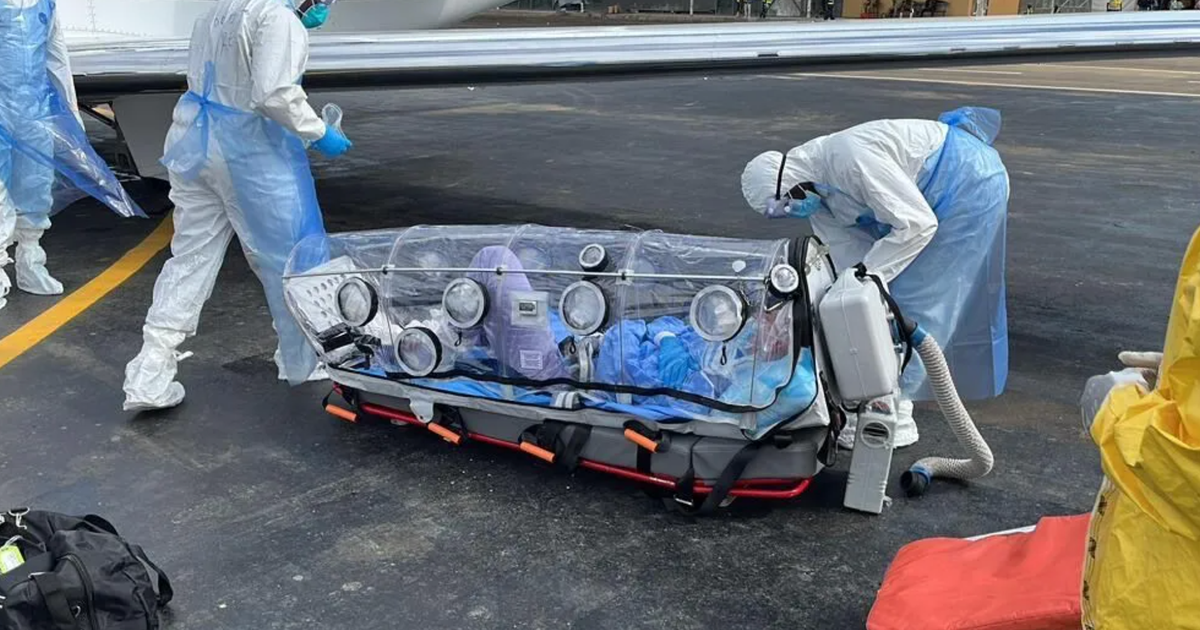
An American doctor, Peter Stafford, caught the Bundibugyo strain of Ebola while working in the Democratic Republic of Congo and was evacuated to Germany for treatment. He is feeling better but still sick, and his family was also evacuated and is being monitored.
Key Facts
Dr. Peter Stafford was infected with Ebola while working with the group Serge in Congo.
He was evacuated to a hospital in Berlin, Germany, for care.
His wife, Dr. Rebekah Stafford, and their four children were also evacuated and are symptom-free but isolated.
The Ebola outbreak in Congo has spread to Uganda and South Sudan, with nearly 600 suspected cases and 139 suspected deaths.
Stafford was exposed during surgery at Nyankunde Hospital in eastern Congo, where he has worked since 2023.
The Bundibugyo strain is rare, has no known vaccine or treatment, and has a fatality rate of 30 to 50%.
Stafford is receiving supportive care like fluids and symptom treatment and is showing mild improvement.
Another doctor from Serge, Dr. Patrick LaRochelle, was potentially exposed and is quarantined in Prague but has no symptoms.
Read the Original
Want the full story? Tap a source to open the original
article.
A 34-year-old man went to the emergency room because of stomach pain and was diagnosed with a rare and advanced liver cancer called intrahepatic cholangiocarcinoma. After initial treatments failed, he used a special drug targeting a rare genetic mutation, which shrank his tumors and made him eligible for a liver transplant.
Key Facts
The man first thought his stomach pain was from something he ate but later suspected a gallbladder infection.
An ultrasound and CT scan revealed several large cancerous masses on his liver.
He was diagnosed with Stage 4 intrahepatic cholangiocarcinoma, a rare cancer in the bile ducts.
His liver was covered with cancer, but it had not yet spread to other parts of the body.
Standard chemotherapy did not stop tumor growth after three months of treatment.
Genetic testing showed he had an NRG1 fusion mutation, a rare genetic change.
He used an antibody drug called Zenocutuzumab, which targeted this mutation but was only approved for other cancers.
The drug was expensive, costing over $77,000 per infusion, but it significantly shrank his tumors.
Tumor shrinkage allowed doctors to consider him for a liver transplant, although insurance approval was a challenge.
Read the Original
Want the full story? Tap a source to open the original
article.
The US has charged Cuba’s 94-year-old former president, Raúl Castro, and is considering military action against Cuba. This has caused concern among people living near top Cuban officials and anger towards the US government. The charges relate to a 1996 incident when Cuban jets shot down two unarmed US planes, killing four people.
Key Facts
The US has brought criminal charges against Raúl Castro, Cuba’s former president.
The charges are linked to the 1996 shooting down of two unarmed planes belonging to an exile group called Brothers to the Rescue.
Four people died in that 1996 incident, which happened in international airspace near Havana.
Brothers to the Rescue originally helped Cuban refugees but later provoked Cuba by flying close to Havana and dropping leaflets.
Cuba had asked the US to stop these flights, but they continued until the Cuban government took action.
Recently, US surveillance planes have been flying over Cuba, and a US aircraft carrier entered the Caribbean.
The US accuses Cuba of having drones that could threaten US security and criticizes Cuba’s government for causing energy blackouts.
US officials, including Marco Rubio, have addressed the Cuban people with offers to help improve conditions.
Read the Original
Want the full story? Tap a source to open the original
article.
Itamar Ben-Gvir, Israel’s national security minister, is being criticized after a video showed him mocking activists who were detained during a flotilla. The incident has caused a negative reaction from the public and media.
Key Facts
Itamar Ben-Gvir is Israel’s national security minister.
A video appeared showing him taunting activists who were detained.
The activists were part of a flotilla, which usually means a group of boats sailing for a cause.
The video led to public and media backlash against Ben-Gvir.
The incident was reported by CBS News and covered by journalist Imtiaz Tyab.
The flotilla activists were detained by Israeli authorities.
The controversy focuses on the way Ben-Gvir treated the activists during their detention.
Read the Original
Want the full story? Tap a source to open the original
article.
The US government predicts a below-normal 2026 hurricane season with eight to 14 named storms, including some strong hurricanes. Scientists expect that El Niño conditions will affect storm activity, leading to fewer hurricanes in the Atlantic but more in the Pacific.
Key Facts
NOAA forecasts 8 to 14 named storms in the US for 2026, with one to three major hurricanes (Category 3-5).
There is a 55% chance that the 2026 Atlantic hurricane season will be below normal.
El Niño is likely to develop this season, which usually reduces Atlantic storms but increases Pacific hurricanes.
In the eastern Pacific, NOAA expects above-normal activity with 15 to 22 named storms and up to 14 hurricanes.
Experts warn that budget cuts under President Trump’s administration have reduced staff and equipment for hurricane forecasting.
These cuts may lower the accuracy of weather models and limit emergency management capabilities.
Other forecasts also predict an average to below-average hurricane season in the Atlantic for 2026.
Despite the below-average forecast, officials advise people to stay prepared for hurricanes.
Read the Original
Want the full story? Tap a source to open the original
article.
The International Energy Agency (IEA) chief warned that oil supplies may become very tight by July and August due to a lack of new exports from the Middle East and rising demand from summer travel. He said the key solution to the energy crisis linked to tensions around Iran is to fully reopen the Strait of Hormuz, a vital passage for oil shipments.
Key Facts
Oil stocks are shrinking ahead of the busy summer travel season.
No new oil exports are coming from the Middle East, causing supply shortages.
The IEA suggests releasing more strategic reserves to ease the shortage.
About 80% of the IEA’s collective oil reserves have not been used yet.
The Iran-related conflict is causing a significant disruption in global oil supplies.
It may take at least a year for oil production to fully recover.
Countries may pay more for oil from secure sources and will look for alternative energy options.
Peace talks involving Iran, the US, and Pakistan are ongoing but facing difficulties.
Read the Original
Want the full story? Tap a source to open the original
article.
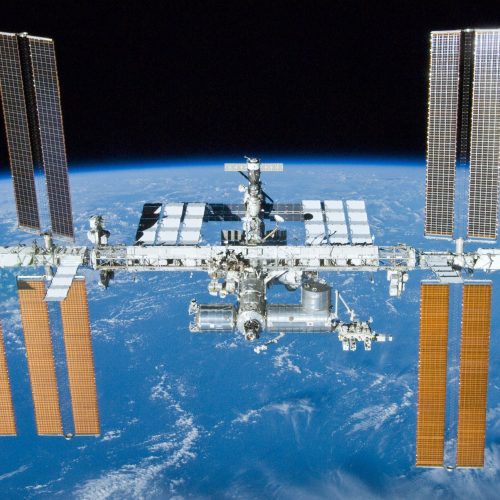
NASA confirmed that the Russian part of the International Space Station (ISS) is leaking air again from the PrK module, despite recent repairs. The leak is slow and not currently affecting astronauts or station operations, but it raises concerns about the station’s long-term safety and usability.
Key Facts
The leak is happening in the Russian PrK module, a tunnel connected to the Zvezda Service Module.
NASA and Roscosmos (the Russian space agency) have been tracking this leak for over five years.
The leak was thought to be fixed in January after inspections and sealant applications.
The leak returned around May 1st, causing a slow drop in pressure.
The pressure is now kept lower in the affected area, with small repressurizations as needed.
The leak rate is about one pound of air lost per day.
NASA says the leak does not impact the astronauts or station operations currently.
The ISS has modules that have been in space for almost 30 years, raising concerns about aging hardware.
NASA and partners are debating whether to extend the ISS’s life beyond 2030, possibly to 2032 or longer.
NASA plans to eventually replace the ISS with privately owned space stations, but plans face challenges.
Read the Original
Want the full story? Tap a source to open the original
article.
Russian President Vladimir Putin and Belarusian President Alexander Lukashenko took part in joint nuclear military exercises for the first time via video conference. The drills tested the use and coordination of nuclear forces between Russia and Belarus amid global tensions, while Ukraine increased security along its border with Belarus in response.
Key Facts
Putin and Lukashenko joined a joint nuclear forces exercise through video link.
The exercise is the first time the two presidents have directly participated, though their military officials hold such drills quarterly.
The drills involved launching various missiles, including intercontinental ballistic missiles and hypersonic missiles.
The goal was to practice managing strategic and tactical nuclear forces and improve coordination between Russia and Belarus.
Putin called nuclear weapons an “extreme and exceptional” measure for national security.
Lukashenko said the joint exercises are defensive and a show of readiness to protect their shared territory.
Ukraine and NATO have expressed concern about these drills, fearing potential new attacks from Belarus.
Ukraine increased security measures and border checks in northern areas next to Belarus in response.
Read the Original
Want the full story? Tap a source to open the original
article.
The video titled "The 'Payam Method' | Sunday on 60 Minutes" features piano teacher Payam Khastkhodaei, who has developed a new way to teach piano. He believes his method helps students enjoy their lessons more.
Key Facts
Payam Khastkhodaei is a piano teacher.
He created a new teaching method called the "Payam Method."
The method aims to make piano lessons more fun for students.
The story aired on the TV program 60 Minutes.
The episode was shown on a Sunday.
The content is available through CBS News and their app.
Read the Original
Want the full story? Tap a source to open the original
article.
Iran is considering the newest peace offer from the United States. President Donald Trump has indicated that he is willing to wait and delay any military strikes while talks continue.
Key Facts
Iran's state media reported that the country is reviewing the latest peace proposal from the U.S.
President Donald Trump has signaled that he will delay any planned strikes for now.
The situation involves diplomatic efforts to resolve tensions between the U.S. and Iran.
The news comes from CBS News and was reported by Olivia Rinaldi.
No immediate military action is being taken as discussions proceed.
The peace proposal aims to reduce conflict and improve relations.
This development reflects ongoing diplomatic negotiations between the two countries.
Read the Original
Want the full story? Tap a source to open the original
article.
Actor Rami Malek is starring in a new film called "The Man I Love," which premiered at the Cannes Film Festival. He plays a performance artist in New York during the late 1980s AIDS crisis and said this role is similar to his past role as Freddie Mercury in "Bohemian Rhapsody."
Key Facts
Rami Malek is featured in the film "The Man I Love" by director Ira Sachs.
The movie premiered at the Cannes Film Festival on the Croisette.
Malek's character is a downtown New York performance artist from the late 1980s.
The film is set during the AIDS crisis.
Malek compared this role to his portrayal of Freddie Mercury in "Bohemian Rhapsody."
Co-stars include Rebecca Hall, Ebon Moss-Bachrach, and Tom Sturridge.
Cannes also featured other cultural stories, including Norwegian pop star Girl in Red’s debut.
The article comes from FRANCE 24’s Culture coverage.
Read the Original
Want the full story? Tap a source to open the original
article.
The U.S. government has charged Cuba's former leader Raúl Castro with crimes. This news comes as President Donald Trump considers possible actions related to Cuba.
Key Facts
Raúl Castro is the former leader of Cuba.
The U.S. has officially indicted, or formally charged, him with crimes.
These charges are related to events or actions linked to Cuba.
President Donald Trump is currently thinking about how the U.S. might respond to the situation in Cuba.
The report was provided by CBS News correspondent Cristian Benavides.
The details on the charges or possible U.S. actions were not fully explained in the article.
Read the Original
Want the full story? Tap a source to open the original
article.
Russia and Belarus are conducting a three-day military exercise. The drills include practicing how to prepare and use nuclear weapons if there is an attack.
Key Facts
Russia sent nuclear warheads to Belarus for the military drills.
The exercises last three days and involve both Russia and Belarus troops.
The drills focus on preparing and using nuclear forces.
The rehearsals are meant to respond to possible aggression.
This is part of military cooperation between Russia and Belarus.
Read the Original
Want the full story? Tap a source to open the original
article.
The National Oceanic and Atmospheric Administration (NOAA) expects the 2026 Atlantic hurricane season to have below average storm activity because of the upcoming El Niño weather pattern. The season runs from June 1 to November 30 and may see between eight and 14 named storms, including three to six hurricanes.
Key Facts
NOAA predicts below average hurricane activity for the 2026 Atlantic season.
El Niño is expected to develop and reduce storm formation this year.
The season starts on June 1 and ends on November 30.
NOAA forecasts 8 to 14 named storms for the season.
Between 3 to 6 hurricanes could form, with 1 to 3 reaching major (Category 3 or stronger) status.
An average season usually has 14 named storms, 7 hurricanes, and 3 major hurricanes.
The 2025 season had 13 named storms, slightly below average but included three Category 5 hurricanes.
NOAA’s forecast does not predict where storms will hit land or exact landfall numbers.
Read the Original
Want the full story? Tap a source to open the original
article.
Ecuador is experiencing a violent drug war with many killings and military presence in the streets. Since 2024, at least 50 people detained by security forces have gone missing, including Jonathan Villon, who was taken by soldiers and never seen again.
Key Facts
Ecuador has a violent drug war causing many deaths.
The military has been deployed on the streets to respond.
Since 2024, at least 50 people detained by security forces have disappeared.
Jonathan Villon, a father of three, was taken by soldiers in daylight in December 2024.
Villon was recorded getting into a military truck and has not been seen since.
Investigative files have been used to trace what might have happened to him.
The "Malvinas 4" were four boys detained by air force officers and later found dead.
The deaths of the "Malvinas 4" led to rare convictions, but many families still seek answers.
Read the Original
Want the full story? Tap a source to open the original
article.
Iran is looking over a new peace proposal from the United States aimed at ending the conflict. This comes after President Donald Trump delayed military strikes related to the situation.
Key Facts
Iran is considering a recent peace offer made by the U.S. government.
The goal of the proposal is to stop ongoing fighting.
Iranian state media reported that Tehran is reviewing the offer.
President Donald Trump postponed planned military attacks before this review.
The situation involves tensions between the U.S. and Iran.
CBS News reporter Aaron Navarro covered the story.
Read the Original
Want the full story? Tap a source to open the original
article.
The ongoing war in Ukraine is harming the country's bird populations. Drones and air attacks have damaged birds’ habitats along a long frontline, leading volunteers and soldiers to rescue and care for injured birds.
Key Facts
The war in Ukraine has affected birds and their natural environment.
Birds’ nesting places and migration paths have been destroyed in fighting areas.
Skies previously full of birds now have many drones flying overhead.
The frontline affected stretches about 1,200 kilometers.
Volunteers and soldiers are working to save and treat injured birds.
The conflict is disrupting Ukraine’s delicate ecosystem.
The article highlights a new environmental impact of the war.
The source includes video footage showing these effects.
Read the Original
Want the full story? Tap a source to open the original
article.