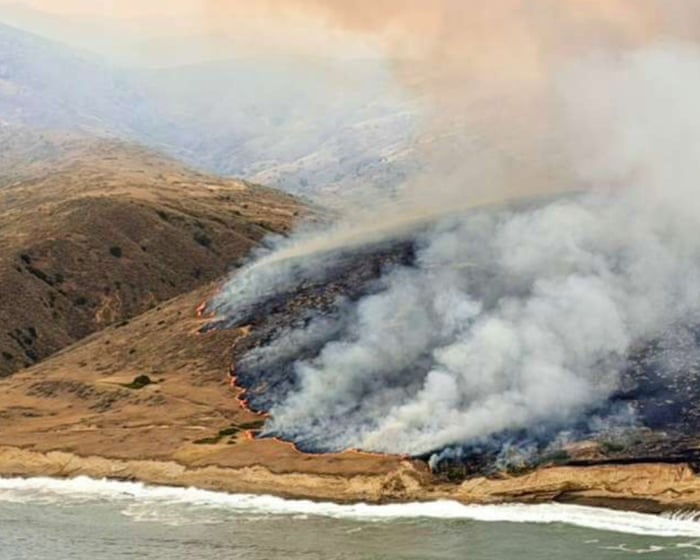
A wildfire on Santa Rosa Island, part of California’s Channel Islands national park, has burned over 10,000 acres and destroyed historic buildings. The fire began after a sailor stranded on the island set off distress flares, which may have started the blaze.
Key Facts
The fire started on Friday and has burned more than 10,000 acres, making it California’s largest wildfire so far this year.
About 60 firefighters are working to control the fire, but strong winds have made it difficult.
The fire is currently 0% contained.
A 67-year-old sailor crashed his boat, got stranded, and shot flares to call for help.
The flares likely caused the wildfire, but the National Park Service is still investigating.
The sailor was rescued by the Coast Guard and taken to a hospital; he was not injured.
Two historic structures were destroyed by the fire.
The island is home to rare plants and ecosystems that have been partly restored after removal of non-native animals.
Santa Rosa Island is closed to visitors while firefighters work to control the fire.
Read the Original
Want the full story? Tap a source to open the original
article.
Mark Fuhrman, a former Los Angeles police detective involved in the O.J. Simpson murder trial, died on May 12 at age 74. He was known for his controversial testimony during the trial and later became a media commentator and author.
Key Facts
Mark Fuhrman was one of the first detectives to investigate the 1994 murders of Nicole Brown Simpson and Ronald Goldman.
He found a bloody glove at O.J. Simpson’s home, which became a key piece of evidence in the trial.
During the trial, Fuhrman was accused of lying and racial bias after recordings revealed he used racist language.
In 1996, Fuhrman was charged with perjury (lying under oath) and pleaded no contest.
After retiring from the police, he moved to Idaho with his family and started a farm.
He later worked as a TV and radio commentator and wrote a book about the case.
O.J. Simpson was acquitted in the criminal trial but found liable in a civil trial and ordered to pay damages.
Mark Fuhrman died on May 12, 2026, but the cause of death was not disclosed.
Read the Original
Want the full story? Tap a source to open the original
article.
The United States has stopped its participation in a long-standing joint defence board with Canada, citing concerns that Canada is not meeting its defence responsibilities. This move follows growing tensions between the two countries under President Donald Trump’s second term, including disagreements over military spending and trade policies.
Key Facts
The U.S. will halt involvement in the Permanent Joint Board on Defense, a group established during World War II for North American security cooperation.
U.S. Undersecretary of Defense Elbridge Colby said the decision is to “reassess” the board’s value, blaming Canada for not fulfilling defence commitments.
Canada’s Prime Minister Mark Carney has focused on reducing Canadian reliance on U.S. military and economic power.
At a NATO summit, member countries, including Canada, agreed to increase defence spending to 5% of their GDP. Canada plans to allocate 3.5% to core military abilities.
President Trump has criticized Canada’s trade policies and border controls, imposing tariffs and suggesting Canada could become a U.S. state to avoid penalties.
Some U.S. politicians have expressed concern that harsh rhetoric has damaged the U.S.-Canada relationship both economically and militarily.
Canada, the U.S., and Mexico will negotiate updates to their regional trade agreement, USMCA, later this year.
Read the Original
Want the full story? Tap a source to open the original
article.
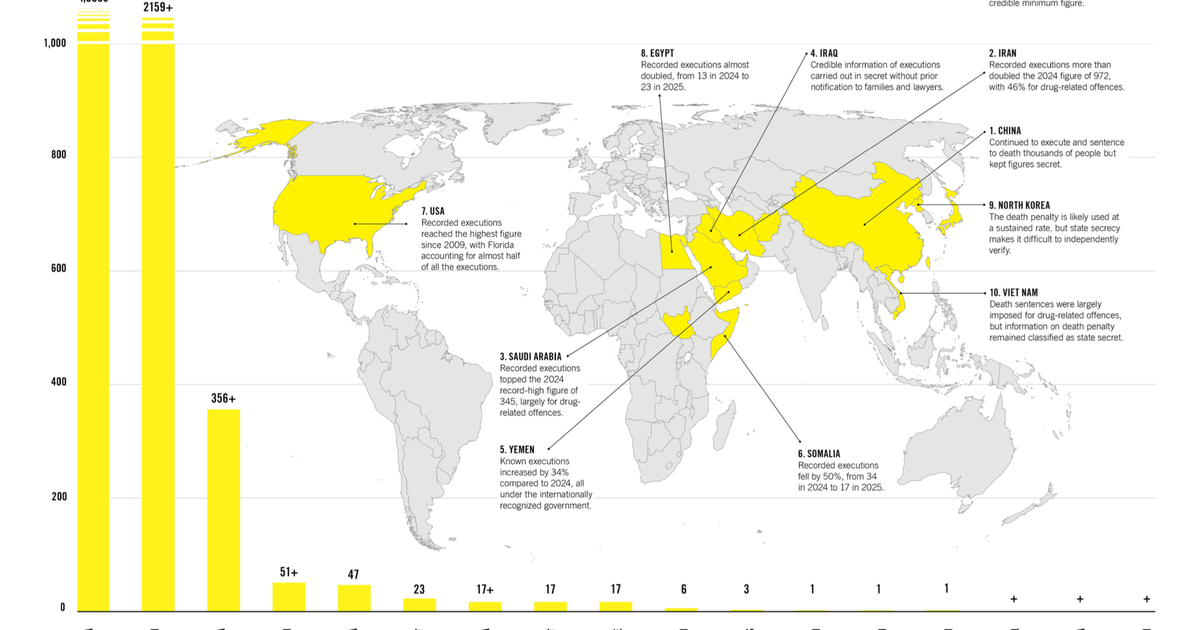
A report by Amnesty International found that the number of executions worldwide in 2025 reached its highest level since 1981. Most of the increase came from Iran, where executions more than doubled, while several other countries also raised their use of the death penalty.
Key Facts
At least 2,707 executions were documented globally in 2025, a historic high since 1981.
Iran accounted for at least 2,159 executions, more than twice its 2024 figure.
Saudi Arabia executed at least 356 people, breaking its previous record.
The United States carried out 47 executions, its highest number since 2009.
Executions nearly tripled in Kuwait and nearly doubled in Egypt, Singapore, and the U.S.
Some countries like China and Vietnam keep death penalty data secret, so actual numbers may be higher.
Japan, South Sudan, Taiwan, and the UAE resumed executions in 2025 after pauses.
The ten countries with the most executions over the last five years include China, Iran, U.S., Saudi Arabia, Egypt, and others.
Read the Original
Want the full story? Tap a source to open the original
article.
A former British soldier, Hayden Davies, was captured in Ukraine by Russian forces and sentenced to 15 years in a Russian prison for fighting as a volunteer. He says he feels abandoned by the UK government and has serious untreated injuries from when he was captured. The UK government denies the charges and is providing consular support to his family.
Key Facts
Hayden Davies, a former British soldier, joined Ukraine’s foreign legion as a volunteer.
He was captured by Russian forces more than 18 months ago after being injured.
Davies was sentenced to 13 years by a court in occupied Donetsk; later 2 years were added in Moscow.
The UK government does not recognize the Russian-controlled court or occupation in Donetsk.
Davies says he was left alone in prison for a year and has had little contact with UK officials.
His injuries include bones protruding from his leg, and he has received no proper medical treatment.
Russia denies mistreating prisoners and says they follow international laws.
The International Red Cross says it lacks full access to prisoners in Russian custody, which violates the Geneva Convention.
Read the Original
Want the full story? Tap a source to open the original
article.
China and Russia have a close but uneven relationship, with China holding more economic power. Russia relies heavily on China for trade and technology, especially due to Western sanctions, but it wants to keep an equal partnership rather than being dominated.
Key Facts
Chinese President Xi Jinping and Russian President Vladimir Putin have been in power for a combined 39 years and describe each other as close friends.
Putin is visiting Beijing to mark the 25th anniversary of a treaty of good relations between the two countries.
China is Russia’s largest trading partner, while Russia accounts for only 4% of China’s trade.
Western sanctions have pushed Russia to deepen trade ties with China, especially in technology and telecommunications.
Huawei, a Chinese tech company, plays a major role in Russia’s telecommunications sector after Western companies left.
Russia imports over 90% of its sanctioned technology items from China, increasing its dependence.
Russian officials emphasize they want to maintain equality and not become subordinate to China.
China’s economy is much larger than Russia’s, allowing China to set the terms in their deals.
Read the Original
Want the full story? Tap a source to open the original
article.
A survey by King’s College London found that one in three university students in Great Britain believe artificial intelligence (AI) will cause rapid job losses that could lead to social unrest. The survey also showed students use AI heavily and have mixed feelings about its effects on jobs and society.
Key Facts
34% of university students think AI will cause job losses fast enough to trigger civil unrest.
77% of students use AI at least a few times a month; 27% use it daily or almost daily.
More than half of the students believe AI’s job losses will be worse than in a normal recession.
Male students tend to view AI more positively than the general public, with 52% saying AI benefits humanity.
Nine out of ten students reported problems with AI, like factual errors and made-up sources.
Less than half of the students regularly check AI outputs before using them.
78% of students said they would still choose to attend university despite AI growth; 30% would have chosen a different subject.
60% believe universities can prepare them for an AI-driven job market, but only 36% feel they are actually being prepared.
Read the Original
Want the full story? Tap a source to open the original
article.
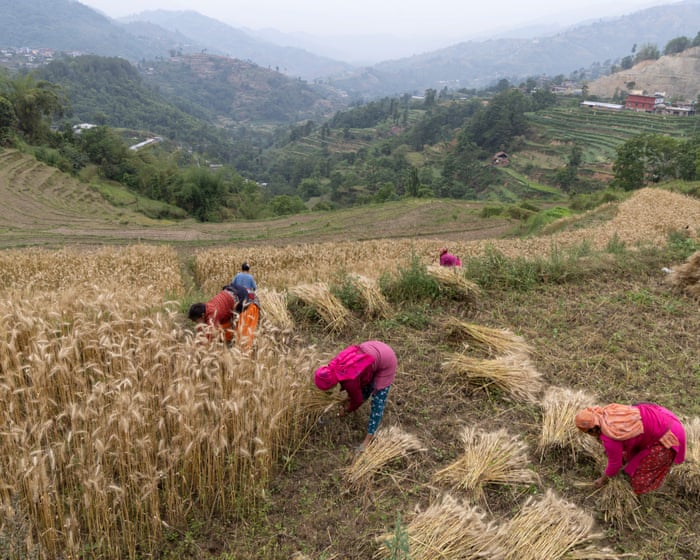
The UK’s foreign secretary, Yvette Cooper, warns that global food production is at risk because fertiliser shipments through the Strait of Hormuz are blocked due to the war involving Iran. She urges international action to reopen this shipping route quickly to prevent food shortages and rising prices, especially in developing countries.
Key Facts
Fertiliser shipments through the Strait of Hormuz are blocked by the conflict involving Iran.
This blockage is causing shortages and higher prices of fertilisers in the UK, Europe, the US, and worse in developing countries.
Spring is a critical planting season in the northern hemisphere, and delays in fertiliser delivery will impact harvests for the whole year.
The blockage risks causing a global food crisis and increasing hunger, with the World Food Programme estimating 45 million more people may face severe food insecurity.
Yvette Cooper called for global pressure to reopen the shipping route to restore fertiliser and fuel supplies.
The UK and South Africa are hosting a Global Partnerships conference to find new ways to help developing countries and improve international aid.
Despite growing global needs, some rich countries, including the UK and the US under President Trump, have recently cut overseas aid budgets.
The UK plans investments in climate finance, medical health partnerships, and science to support global development and resilience.
Read the Original
Want the full story? Tap a source to open the original
article.
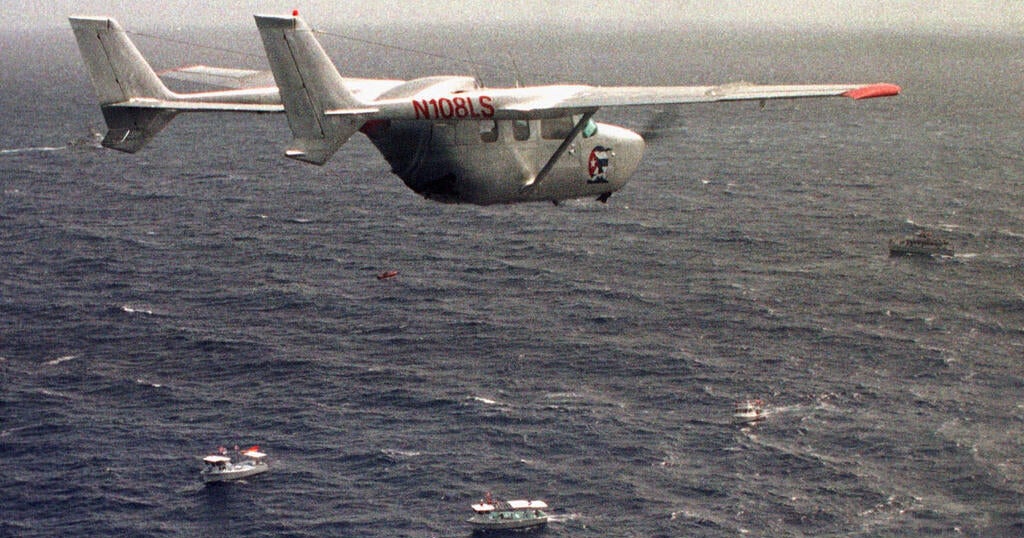
In 1996, two civilian planes from a Cuban exile group were shot down by a Cuban fighter jet, killing four people. Thirty years later, the U.S. is considering charging Raúl Castro, Cuba’s former leader, in connection with this incident.
Key Facts
In 1996, three small civilian planes flew from Miami towards Cuba, operated by the group Brothers to the Rescue.
Two of these planes were shot down by a Cuban MiG-29 fighter jet, killing four people onboard.
Brothers to the Rescue searched for Cuban refugees at sea and supported opponents of the Cuban government.
The Cuban government accused the group of entering its airspace illegally and doing hostile acts like dropping leaflets.
Raúl Castro led Cuba after his brother Fidel retired and is now 94 years old.
The U.S. is preparing a possible criminal case against Raúl Castro due to the shootdown.
The incident increased tensions between the U.S. and Cuba and marked a new phase in their complicated relationship.
One plane with José Basulto, the group’s founder, and three others returned safely to Florida.
Read the Original
Want the full story? Tap a source to open the original
article.
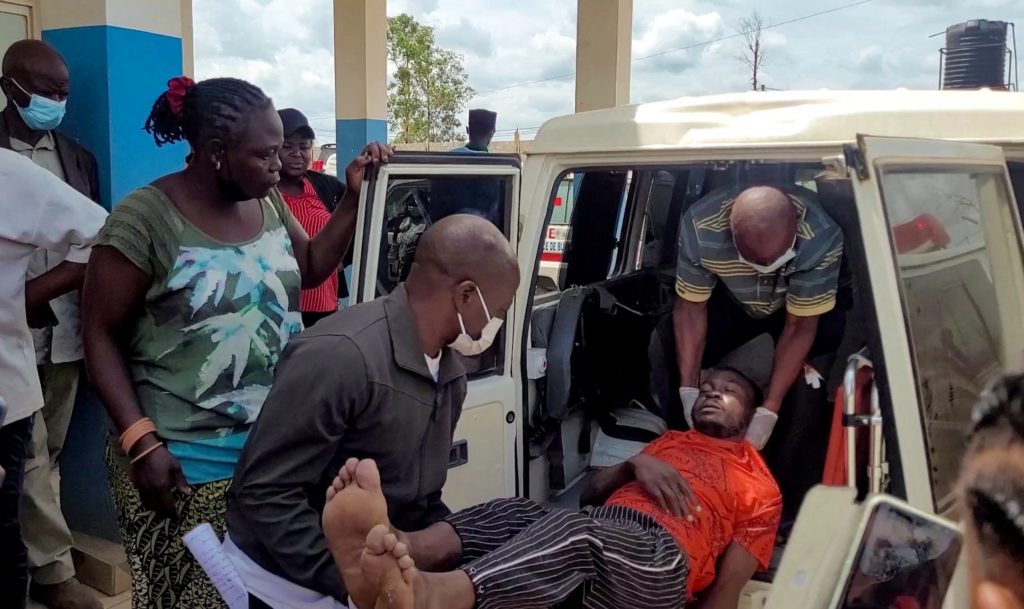
Health officials are working to stop a fast-growing Ebola outbreak in Central Africa. Over 100 people have died, and more than 300 others are sick in the Democratic Republic of Congo and Uganda. An American medical worker has also caught the disease.
Key Facts
At least 116 suspected deaths from Ebola have been reported.
More than 300 cases are suspected in the Democratic Republic of Congo and Uganda.
The outbreak is spreading quickly and causing concern among health officials.
The U.S. Centers for Disease Control and Prevention (CDC) confirmed an American medical missionary has the illness.
Dr. Craig Spencer, who survived Ebola in 2014, discussed concerns related to the outbreak.
The Ebola virus can cause severe illness and has a high death rate.
Health teams are working to contain and control the spread of the virus.
Read the Original
Want the full story? Tap a source to open the original
article.
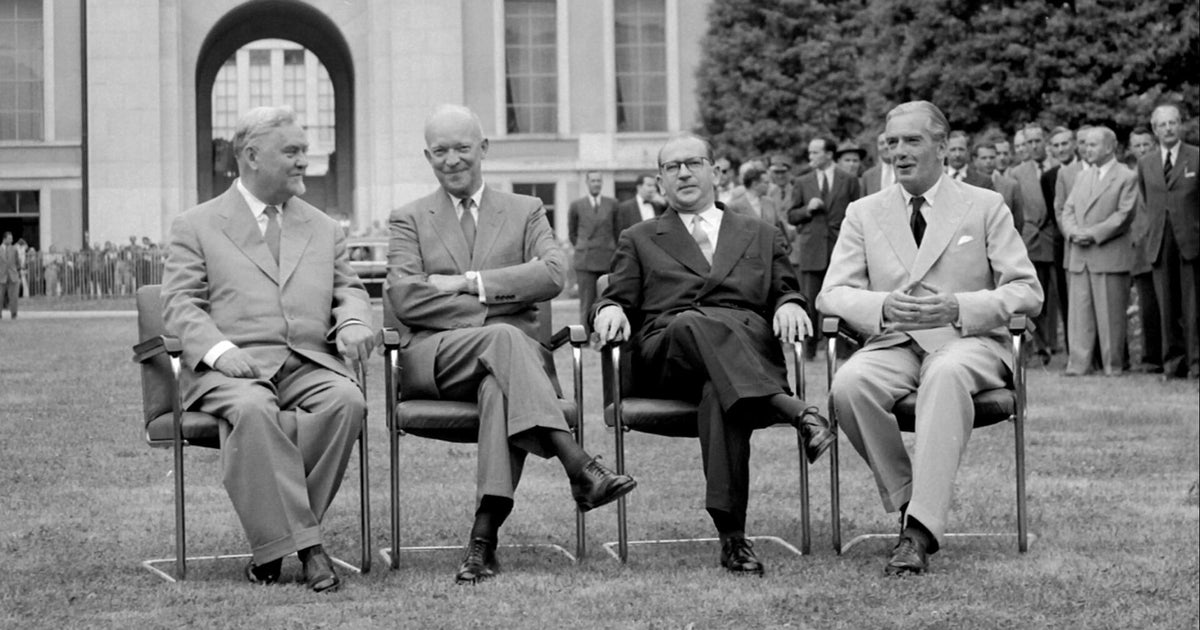
In 1955, leaders of the four major powers met at the Geneva Summit to discuss ways to maintain peace after World War II. They talked about trade, peace agreements, and controlling weapons to prevent another global conflict.
Key Facts
The Geneva Summit took place in 1955.
It was held by the "Big Four" powers after World War II.
The summit aimed to avoid a third world war.
Leaders discussed trade relations among countries.
Peace talks were a major focus at the meeting.
Arms control, or limiting weapons, was also discussed.
The summit represented a new approach to global cooperation after the war.
Read the Original
Want the full story? Tap a source to open the original
article.
Cuba has obtained over 300 military drones and is considering using them to target the U.S. detention center at Guantanamo Bay and possibly areas in the U.S. mainland. This information was reported by Axios and covered by CBS News.
Key Facts
Cuba acquired more than 300 military drones.
Cuban officials are discussing possible attacks using these drones.
The Guantanamo Bay detention center is a potential target.
There is talk of possibly targeting parts of the U.S. mainland.
The report comes from Axios, a news outlet.
CBS News covered the report and discussed it with Axios’ White House correspondent.
Guantanamo Bay is a U.S. military base located in Cuba.
The use of drones in attacks would mark a new development in regional security concerns.
Read the Original
Want the full story? Tap a source to open the original
article.
Staying informed here is free for everyone. If it's worth something to you, pay what you want. Supporters also get the daily digest by email every morning.
President Donald Trump told Taiwan not to declare independence to avoid conflict with China. China considers Taiwan part of its territory and has warned it may use force if Taiwan seeks full independence. Taiwan’s government prefers to keep things as they are without formally declaring independence.
Key Facts
President Trump warned Taiwan against seeking independence during a recent interview.
China claims Taiwan as part of its territory and has increased military pressure around the island.
China’s Anti-Secession Law allows the use of force if Taiwan formally declares independence.
Taiwan has its own democratic government separate from China’s rule.
Most people in Taiwan want to keep the current situation without declaring independence or unifying with China.
Taiwan’s leaders say they consider Taiwan already independent, so no formal declaration is needed.
China’s President Xi Jinping views Taiwan’s reunification with China as inevitable.
The U.S. is Taiwan’s closest ally and is legally required to help Taiwan defend itself.
Read the Original
Want the full story? Tap a source to open the original
article.
President Donald Trump announced on social media that the United States will cancel planned attacks on Iran that were scheduled for the next day. This decision was made after allies in the Middle East requested the U.S. to postpone the attacks.
Key Facts
The U.S. had planned attacks on Iran set for Tuesday.
President Trump decided not to carry out these attacks.
The cancellation came after requests from Middle Eastern allies.
President Trump shared this update through social media on Monday afternoon.
The situation involves U.S. foreign relations and security decisions concerning Iran.
CBS News political reporter Zak Hudak provided coverage of the event.
Read the Original
Want the full story? Tap a source to open the original
article.
Violence happened in West Bengal, India, after Prime Minister Narendra Modi’s party won important elections. Some Muslims there say they faced problems voting and now must prove they belong to India.
Key Facts
Political violence took place in West Bengal state, eastern India.
Prime Minister Narendra Modi’s party won key elections in this area.
There are claims that Muslims were stopped or made to struggle when voting.
Families of Bengali Muslims are trying to prove their legal right to live in India.
The conflict relates to disputes over citizenship and belonging in India.
The report was made by Zeba Warsi with support from Unity Productions Foundation.
Read the Original
Want the full story? Tap a source to open the original
article.
Ankita Shrivastav, a comedian from Mumbai, shared her experience of being caught in a "digital arrest" scam where fraudsters pretending to be police forced her to stay on a video call and made her approve money transfers. Cybercrimes in India increased significantly in 2024, with many victims falling for scams involving fake authorities, investment apps, and voice cloning.
Key Facts
Shrivastav was told by a caller claiming to be from FedEx that a parcel she sent contained drugs.
She was kept on video call for eight hours by scammers pretending to be police officers.
She approved transactions totaling about 900,000 rupees ($9,300) during the scam.
India saw a nearly 18% rise in cybercrimes in 2023-2024, with over 220 billion rupees lost to digital fraud.
In 2024, more than 100,000 cybercrime cases were registered, nearly double the number in 2021.
"Digital arrests" scams involve criminals impersonating police to intimidate victims into giving money.
Scammers also use fake investment apps and AI tools like voice cloning to steal or trick people.
Many cybercrime cases are still pending investigation or court trials, showing law enforcement challenges.
Read the Original
Want the full story? Tap a source to open the original
article.
Cuba is experiencing country-wide power outages after the US stopped sending oil and pressured other countries not to supply Cuba. The US is now offering $100 million in aid, but only if Cuba allows the US to influence its government’s future.
Key Facts
Cuba faces large-scale electricity blackouts.
The blackouts follow the US cutting off oil supplies to Cuba.
The US threatened other countries with tariffs to stop their fuel shipments to Cuba.
The US is offering $100 million in aid to Cuba.
The aid comes with the condition that Cuba accepts US influence over its future government.
The US has made repeated efforts to change Cuba’s government.
Cuba is currently in a fuel crisis caused by the blockade.
Read the Original
Want the full story? Tap a source to open the original
article.
Cuba's leader, President Miguel Diaz-Canel, warned that an American attack on Cuba would lead to a "bloodbath." The United States responded by sanctioning Cuba's main intelligence agency and top officials amid rising tensions between the two countries.
Key Facts
Cuba warned of severe violence if the US attacks.
President Diaz-Canel emphasized Cuba’s right to defend itself.
US news reported that Cuba acquired over 300 military drones from Russia and Iran.
There are concerns Cuba may use these drones against US targets.
The US Treasury imposed sanctions on Cuba’s main intelligence agency and key leaders.
These actions reflect growing tensions between the US and Cuba.
The warning came shortly after the US sanctions were announced.
President Donald Trump’s administration is involved in the US response.
Read the Original
Want the full story? Tap a source to open the original
article.
On the biggest stories we show what the outlets agree on and where they differ. Readers keep that going, and get the daily digest by email every morning. Most choose $3.99/month.
More than $57 billion worth of public infrastructure in Victoria, Australia, faces risk from extreme weather like bushfires, floods, and heat by 2030, with this risk expected to increase by 2070. The government is urged to improve and fund plans to make infrastructure stronger against climate hazards. Additionally, changes to private health insurance rebates for seniors aim to shift support based on income rather than age, with savings directed to aged care.
Key Facts
$57 billion of Victorian government-owned or regulated infrastructure is at risk from climate hazards by 2030.
Bushfires, flooding, and heat are the main threats to Victoria’s infrastructure.
By 2070, the value of infrastructure at risk could rise to over $71 billion.
Transport, energy, and health assets are the most vulnerable to extreme weather.
Experts say updating and funding climate adaptation plans can save money in the long run.
Changes to private health insurance rebates will reduce subsidies for Australians over 65, shifting support from age-based to income-based.
Savings from insurance rebate changes will be used to support aged care services.
A proposal to restrict welfare payments to citizens aims to encourage permanent residents to become Australian citizens.
Read the Original
Want the full story? Tap a source to open the original
article.
Iran has created a new agency called the Persian Gulf Strait Authority (PGSA) to control and manage the Strait of Hormuz, a key global shipping route. This move comes amid ongoing conflict with the United States and Israel, and follows Iran’s actions to restrict shipping and collect tolls in the area. Meanwhile, Iran and the U.S. continue limited talks to resolve the conflict.
Key Facts
Iran announced a new body, the Persian Gulf Strait Authority (PGSA), to oversee maritime traffic in the Strait of Hormuz.
The Strait of Hormuz is a crucial waterway used for about 20% of the world’s oil and natural gas shipments.
Iran has largely blocked shipping through the strait since the war with the U.S. and Israel began on February 28, 2026.
Iran wants to charge ships tolls to pass through the strait and says it has already received some revenue from this.
A fragile ceasefire has been in place since April 8, 2026.
Iran says the new body will provide real-time updates and manage traffic through the strait.
The U.S. has also imposed a naval blockade on Iranian ports in response.
Diplomatic talks continue in a limited way, with Iran demanding the release of frozen assets, lifting of sanctions, and war reparations.
Read the Original
Want the full story? Tap a source to open the original
article.