Scientists discovered a new large dinosaur species in Thailand called Nagatitan chaiyaphumensis. This long-necked plant-eater weighed about 27 tonnes, similar to nine adult Asian elephants, and is the largest dinosaur found in Southeast Asia.
Key Facts
Nagatitan chaiyaphumensis is a newly identified dinosaur species unearthed in northeast Thailand.
It was a long-necked herbivore about 27 meters (88 feet) long.
The dinosaur weighed around 27 tonnes, equal to the weight of nine adult Asian elephants.
It lived roughly 100 to 120 million years ago.
It is the biggest dinosaur ever discovered in Southeast Asia.
The dinosaur was found in one of the youngest dinosaur rock formations in Thailand.
The species is named after a serpent from Southeast Asian folklore and the Chaiyaphum province where it was found.
A full-size replica is displayed at the Thainosaur Museum in Bangkok.
Read the Original
Want the full story? Tap a source to open the original
article.
On May 15, Palestinians remember the Nakba, meaning "catastrophe," which refers to events in 1948 when many Palestinians lost their homes. During that time, around 800,000 Palestinians were displaced as Zionist militias acted after British policies contributed to their removal.
Key Facts
Nakba means "catastrophe" in Arabic.
It is commemorated every year on May 15 by Palestinians worldwide.
The Nakba refers to the displacement of about 800,000 Palestinians in 1948.
The displacement happened after fighting involving Zionist militias.
British actions before 1948 helped set the stage for Palestinian loss of land and homes.
The event marks a key moment in Palestinian history and conflict over land.
Commemorations take place both in historic Palestine and in Palestinian communities abroad.
Read the Original
Want the full story? Tap a source to open the original
article.
Millions of Palestinians are marking 78 years since the Nakba, the large-scale displacement of about 750,000 Palestinians during the 1948 war that led to the creation of Israel. Today, many Palestinians remain displaced, especially in Gaza, where over two million people live in a small area under tight restrictions.
Key Facts
The Nakba means "catastrophe" in Arabic and refers to Palestinians being forced from their homes in 1948.
Around 750,000 Palestinians, about a third of the population then, were expelled or fled during that time.
Over 400 Palestinian villages and neighborhoods were emptied or destroyed as new Jewish immigrants settled the area.
Many Palestinians and their descendants now live in refugee camps in places like Gaza, the West Bank, Jordan, Lebanon, and Syria.
Palestinian refugees keep keys and documents from their original homes as symbols of their lost property and hope to return.
The "right of return" is supported by a UN resolution but remains a major, unresolved issue in peace talks with Israel.
Gaza is home to more than two million Palestinians who live in a small coastal strip under Israeli control, with limited freedom to leave.
Palestinians view the Nakba not just as a past event but as an ongoing process, marked by continued displacement and conflict.
Read the Original
Want the full story? Tap a source to open the original
article.
In 1948, Zionist leaders like David Ben-Gurion believed Palestinians would leave and assimilate into neighboring countries after Israel’s creation, but this did not happen. Instead, Palestinian national identity and resistance grew stronger over time, fueled by ongoing Israeli policies and violence.
Key Facts
Zionist leaders expected Palestinians to leave and not return after Israel’s establishment in 1948.
Palestinians developed a strong national identity and continued to claim their rights decades later.
Palestinian refugees have played a central role in resistance movements, including the Intifadas in 1987 and 2000.
Israel’s efforts to control and isolate Palestinian refugees have largely failed.
Refugee camps became centers for both peaceful and armed Palestinian activism.
Israeli violence, including repeated attacks and displacement, has not ended Palestinian resistance.
The Gaza Strip, where most people are refugees, highlights the failure of Israeli policies to suppress Palestinians.
The ongoing conflict, including recent mass casualties and displacement in Gaza, has reinforced Palestinian determination to oppose Israeli actions.
Read the Original
Want the full story? Tap a source to open the original
article.
Palestinians in Gaza are marking the 78th anniversary of the Nakba, the mass expulsion of around 750,000 Palestinians in 1948 during the creation of Israel. Many Palestinians say the current war and displacement they are experiencing are even worse than the Nakba, with buildings destroyed and most of Gaza’s population confined to a small area.
Key Facts
The Nakba means "catastrophe" in Arabic and refers to the forced removal of Palestinians in 1948.
Yusuf Abu Hamam, a Nakba survivor, lost his family’s village, which was demolished and replaced by neighborhoods in southern Israel.
Gaza has suffered heavy Israeli bombardment for over two years, leading to widespread destruction in refugee camps like Shati.
More than two million people live in Gaza, now limited to less than half of the 25-mile-long coastal territory.
Israeli forces control most of Gaza, restricting movement and access outside a small area near the sea.
Palestinians say the current conditions in Gaza, with dense population and damaged homes, are worse than during the original Nakba.
The anniversary is occurring amid an ongoing conflict and efforts to achieve ceasefire plans by President Donald Trump.
Read the Original
Want the full story? Tap a source to open the original
article.
Lebanon is facing a deep economic crisis worsened by ongoing conflict in the Middle East, including the U.S.-Israeli war with Iran. The war, along with Lebanon's existing financial problems and weak market regulation, has caused job losses, rising prices, and struggling businesses.
Key Facts
Lebanon’s sports clothing shops and other businesses have been destroyed in Israeli airstrikes linked to fighting with Hezbollah.
The current conflict involves the U.S. and Israel fighting Iran, which has affected the whole Middle East economy.
The closure of the Strait of Hormuz, a key shipping route, has also disrupted trade and caused economic problems.
Lebanon has had serious economic troubles since 2019, including bank collapses that wiped out many people’s savings.
Half of Lebanon’s population of 6.5 million now live in poverty.
The Lebanese pound has lost more than 90% of its value against the U.S. dollar.
Lebanon suffers from unregulated markets that allow price gouging, making goods more expensive.
The country’s electric power is unreliable, with many relying on diesel generators, which raises costs when fuel prices increase.
Read the Original
Want the full story? Tap a source to open the original
article.
Six passengers from a cruise ship with a hantavirus outbreak arrived in Australia for a three-week quarantine. They flew from the Netherlands to a military base near Perth and will stay in a nearby quarantine facility.
Key Facts
The passengers came from the MV Hondius cruise ship, which had a hantavirus outbreak.
Three people on the ship died from the virus.
The six passengers include five Australians and one New Zealand citizen.
All six tested negative for the virus before leaving the Netherlands and had no symptoms.
They arrived at RAAF Base Pearce near Perth, Western Australia.
They will spend at least three weeks in quarantine at the Bullsbrook facility.
The quarantine facility was built in 2022 for COVID-19 and has been mostly unused since.
The ship is sailing back to the Netherlands for cleaning and disinfection after all passengers and many crew members were evacuated.
Read the Original
Want the full story? Tap a source to open the original
article.
President Donald Trump and Chinese President Xi Jinping discussed keeping the Strait of Hormuz open for energy trade amid rising tensions from the Iran war. Meanwhile, Iran urged BRICS countries to condemn the US and Israel, and peace talks between Israel and Lebanon continue despite ongoing attacks.
Key Facts
President Trump and President Xi agreed the Strait of Hormuz must stay open for energy shipping.
Iran’s Foreign Minister asked BRICS nations to oppose the US-Israel conflict, calling it illegal.
Iran accused the United Arab Emirates of being involved in the war against it.
Iran allowed over 30 ships, including Chinese-linked ones, to pass through the Strait of Hormuz under new security terms.
President Trump said Xi offered China’s help to keep Hormuz open but would not send weapons to Iran.
Peace talks between Israel and Lebanon are ongoing in Washington, aiming to extend a ceasefire.
President Trump expressed frustration with stalled talks and said Iran should accept a deal soon.
Israel plans to sue The New York Times over a report on alleged abuse by Israeli forces against Palestinian detainees.
Read the Original
Want the full story? Tap a source to open the original
article.
The Australian government has officially banned the neo-Nazi group National Socialist Network (also known as White Australia) under new hate group laws passed after the 2025 Bondi terror attack. This makes supporting or being involved with the group a crime punishable by up to 15 years in prison.
Key Facts
The National Socialist Network is now a banned hate group under Australian law.
Activities like supporting, funding, training, recruiting, or joining the group can lead to 15 years in prison.
The ban takes effect at midnight following the government announcement.
The group tried to disband before the law but continued activities under different names.
The government previously banned Islamist group Hizb-ut Tahrir under the same laws.
The laws were introduced after a terror attack in Bondi in December 2025.
Australia’s spy agency, ASIO, advised the government to list the group.
Organisations like the Executive Council of Australian Jewry support the ban to stop hate and extremist activities.
Read the Original
Want the full story? Tap a source to open the original
article.
King’s College London will merge with Cranfield University, a smaller postgraduate technology and management school. The merger aims to help both universities grow and improve their global rankings, with no immediate changes expected for current students or staff.
Key Facts
King’s College London will absorb Cranfield University in a merger planned to complete by 2027.
Cranfield University reported a financial loss of £8 million in 2024-25 due to fewer international students.
Cranfield specializes in postgraduate technology and management courses and operates its own airport.
The merger is intended to combine King’s broad academic strengths with Cranfield’s focused expertise.
The combined university is projected to rank 21st in the QS world university rankings, higher than King’s current 31st position.
No immediate job cuts or course changes are planned as part of the merger.
Current and incoming students at both institutions will experience no immediate changes.
The merger hopes to offer more interdisciplinary options and new resources for students in the future.
Read the Original
Want the full story? Tap a source to open the original
article.
India’s Rashtriya Swayamsevak Sangh (RSS), a right-wing Hindu group, is organizing trips to the United States and other Western countries to improve its public image amid international criticism about violence against religious minorities in India. The group is linked with the ruling Bharatiya Janata Party (BJP) and has faced accusations of promoting Hindu nationalism and intolerance.
Key Facts
The RSS was founded in 1925 as a Hindu volunteer organization promoting the idea of Hindutva, which seeks to make India a Hindu-majority nation.
The group runs schools, hospitals, and media outlets to spread its ideology.
RSS leaders in the past admired fascist leaders like Mussolini and Hitler, and their writings praised policies targeting minorities.
RSS has been banned multiple times in India, including after the assassination of Mahatma Gandhi by a former member.
The RSS is closely linked to the BJP, India’s ruling party, and many BJP leaders, including Prime Minister Narendra Modi, have been members of the RSS.
Modi has been prime minister since 2014 and was re-elected for a third term in June 2024.
The RSS announced plans to visit Western countries to counter claims it supports violence against minorities.
A US federal agency reported that the RSS has been involved in violent acts against minorities in India for decades.
Read the Original
Want the full story? Tap a source to open the original
article.
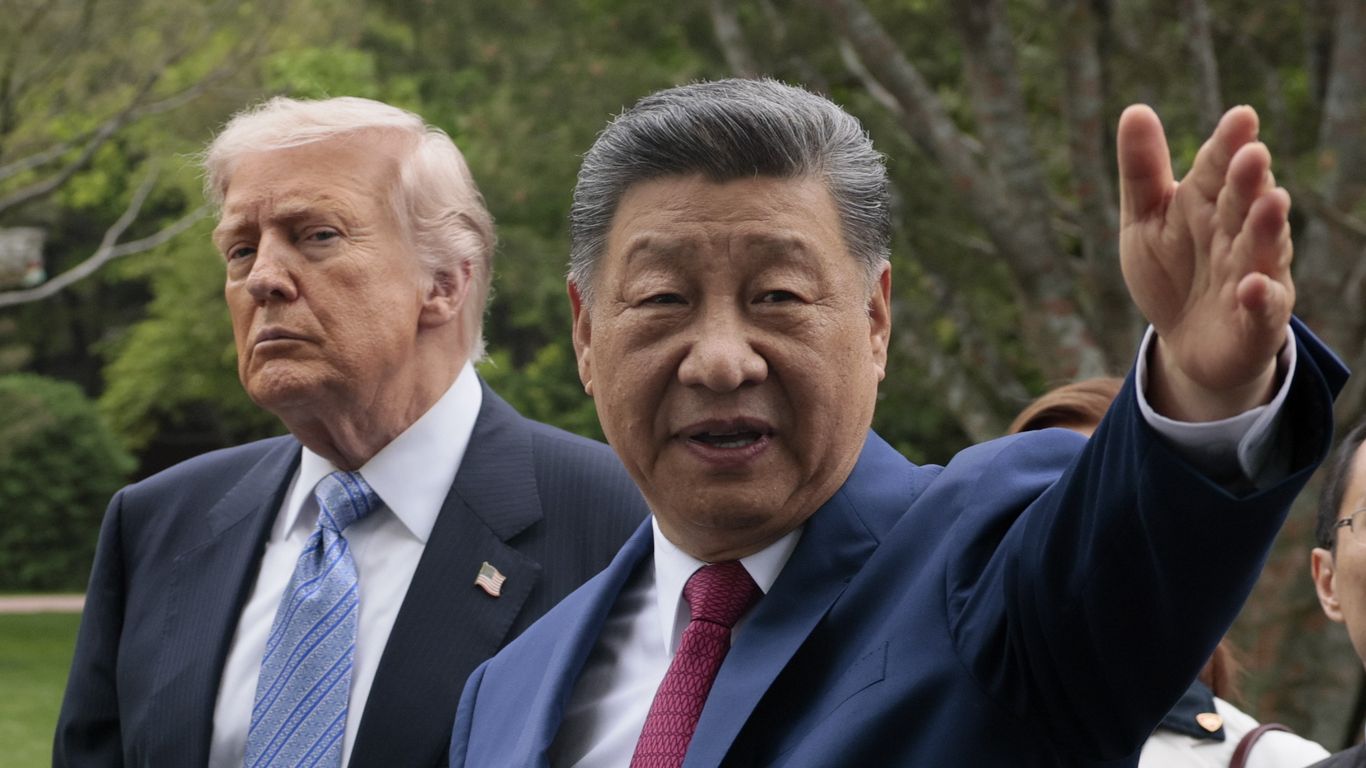
President Donald Trump and Chinese leader Xi Jinping met in Beijing to discuss ending the war in Iran. Both leaders agreed on the importance of keeping the Strait of Hormuz open and preventing Iran from obtaining nuclear weapons, but no clear agreement was reached.
Key Facts
President Trump said the US and China have similar views on ending the Iran conflict.
The leaders emphasized that Iran should not have nuclear weapons.
The Strait of Hormuz, a key shipping route for oil, must stay open according to both leaders.
The US is pressuring China, Iran’s largest oil buyer, to use its influence on Iran.
China’s foreign ministry called for a ceasefire in Iran and the reopening of the strait.
Some Chinese officials feel the Iran crisis is not China’s responsibility.
US officials had mixed statements about needing China’s help on Iran.
Talks also focused on “constructive strategic stability,” meaning cooperation despite differences.
Read the Original
Want the full story? Tap a source to open the original
article.
President Donald Trump and Chinese President Xi Jinping are meeting in Beijing for a second day. Their talks focus on reducing tensions over trade, Taiwan, and global issues, including Iran.
Key Facts
President Trump and President Xi are holding a two-day summit in Beijing.
The leaders aim to ease tensions between the U.S. and China.
Topics include trade disputes and issues related to Taiwan.
They also discussed global conflicts, including the situation in Iran.
President Trump said they resolved many problems related to Iran.
The meeting is being closely watched worldwide as it involves two major powers.
This is part of ongoing efforts to improve U.S.-China relations.
Read the Original
Want the full story? Tap a source to open the original
article.
The federal court confirmed that the women-only social app Giggle for Girls and its founder discriminated against Roxanne Tickle, a transgender woman, by blocking her access twice because of her gender identity. The court doubled Tickle’s damages to $20,000 and ordered Giggle and its founder to pay legal costs.
Key Facts
Roxanne Tickle, a transgender woman, was denied access to the Giggle for Girls app in 2021 after submitting a selfie.
The federal court ruled this denial was direct discrimination based on her gender identity.
Tickle experienced two separate acts of discrimination: initial exclusion and refusal of re-admission.
The court’s decision is based on the Sex Discrimination Act 1984, which protects against gender identity discrimination.
Tickle has lived as a woman since 2017 and has legal and medical recognition of her female gender.
The app’s founder, Sall Grover, argued the app was a “women-only safe space” and a “special measure” under the law to protect women.
The court doubled Tickle’s damages from $10,000 to $20,000 and ordered Giggle and Grover to pay up to $50,000 in legal costs.
This is the first case about gender identity discrimination to reach the federal court in Australia and could affect policies in public spaces globally.
Read the Original
Want the full story? Tap a source to open the original
article.
Britain is holding its first-ever public vote to choose the nation’s favorite butterfly. The Butterfly Conservation charity is running the contest, inviting people to pick their favorite from 60 butterfly species found in Britain during summer.
Key Facts
The voting runs until June 7.
The charity Butterfly Conservation organizes the poll.
Butterflies are very popular in Britain, with many people taking part in butterfly counting events.
The contest follows similar polls for favorite British birds and invertebrates.
Some featured butterflies include the purple emperor, small copper, small tortoiseshell, large blue, and swallowtail.
The large blue butterfly was once extinct in Britain but has been successfully reintroduced and is now thriving.
The small tortoiseshell butterfly has declined in southern and central England, possibly due to climate change.
The purple emperor butterfly is known for its purple color and unusual feeding habits like feeding on animal droppings.
Read the Original
Want the full story? Tap a source to open the original
article.
President Donald Trump met with Chinese President Xi Jinping in Beijing for a summit focused on improving U.S.-China relations after years of tension. They announced modest trade agreements, including planned Chinese purchases of U.S. Boeing jets and agricultural products, while discussing concerns about Iran and regional security.
Key Facts
The summit included a private tour by Trump of Zhongnanhai, the Chinese Communist Party’s leadership compound.
Trump highlighted trade deals, saying China committed to buying 200 Boeing jets.
The U.S. expects China to purchase at least $10 billion in U.S. agricultural goods annually for the next three years.
The two countries are negotiating a joint trade board for about $30 billion in non-sensitive goods.
Trump and Xi discussed Iran, with Trump stating China promised not to supply Iran with military equipment.
U.S. agencies sanctioned Chinese firms for supporting Iran and for alleged technology theft related to AI.
Intelligence reports suggest China is using the Iran conflict to strengthen its position against the U.S.
Xi warned Trump that mishandling Taiwan could cause serious conflict but maintained a friendly tone during the summit.
Read the Original
Want the full story? Tap a source to open the original
article.
The United States signed a deal to gain a presence at the Strait of Malacca, a key waterway used for global trade. This location is very important because many ships pass through it, making it a strategic point for international shipping.
Key Facts
The Strait of Malacca is one of the busiest natural waterways in the world.
It connects the Indian Ocean and the Pacific Ocean.
Many ships carrying goods between Asia and Europe use this strait.
The U.S. agreement allows America to have a presence near this critical route.
This foothold could help the U.S. monitor shipping and influence trade in the area.
Control or presence at such chokepoints can impact global trade and security.
The agreement marks a significant step in U.S. international relations and strategy.
Read the Original
Want the full story? Tap a source to open the original
article.
Admiral Brad Cooper, head of US Central Command, testified before the Senate about the military strikes against Iran. He said the US and Israeli attacks greatly weakened Iran’s military and defense abilities.
Key Facts
Admiral Brad Cooper leads US Central Command.
He spoke to the US Senate about recent strikes on Iran.
The strikes were done by the US and Israel together.
Some lawmakers questioned if the strikes hurt Iran’s military enough.
Admiral Cooper said the strikes severely damaged Iran’s military and defense.
The discussion took place on Capitol Hill.
This testimony was covered by Al Jazeera reporter Patty Culhane.
Read the Original
Want the full story? Tap a source to open the original
article.
Each summary links back to the original reporting, so you can check the work. Support that, and get the daily digest every morning. Most choose $3.99/month.
Most of England’s official river bathing sites have poor water quality, with warnings in place advising people not to swim. The government is adding six new river bathing sites to be tested this summer, but concerns remain about pollution from sewage and farming.
Key Facts
Out of 14 tested river bathing sites in England, 12 have poor water quality.
Only the River Stour in Suffolk and the River Thames in Oxfordshire are considered safe for swimming.
Six new river bathing sites will be monitored this summer, including one on the River Thames in London.
The Environment Agency tests over 460 sites regularly; most are coastal but more lakes and rivers are now included.
Water quality in coastal areas tends to be better than in rivers, which often suffer from sewage and farm runoff pollution.
To be an official bathing site, a location must meet rules about visitor numbers and nearby toilet facilities.
Campaigners say naming a river a bathing site helps push water companies to reduce sewage pollution.
Water companies warn that designating sites before they are clean may mislead the public about safety.
Read the Original
Want the full story? Tap a source to open the original
article.
A new drug has been developed that could nearly double the life expectancy for people with pancreatic cancer. The drug was created by a team led by Dr. Brandon Huffman and offers hope for improving outcomes in this serious disease.
Key Facts
The drug targets pancreatic cancer, a disease known for poor survival rates.
It significantly increases how long patients live compared to existing treatments.
Dr. Brandon Huffman and his team were behind the development of this new drug.
The treatment improves prognosis, which means the expected course and outcome of the illness.
Pancreatic cancer is one of the deadliest cancers, making new treatments critical.
The information was explained by ABC News’ Linsey Davis, who presented the data clearly.
The drug represents a major advance in pancreatic cancer care.
Read the Original
Want the full story? Tap a source to open the original
article.