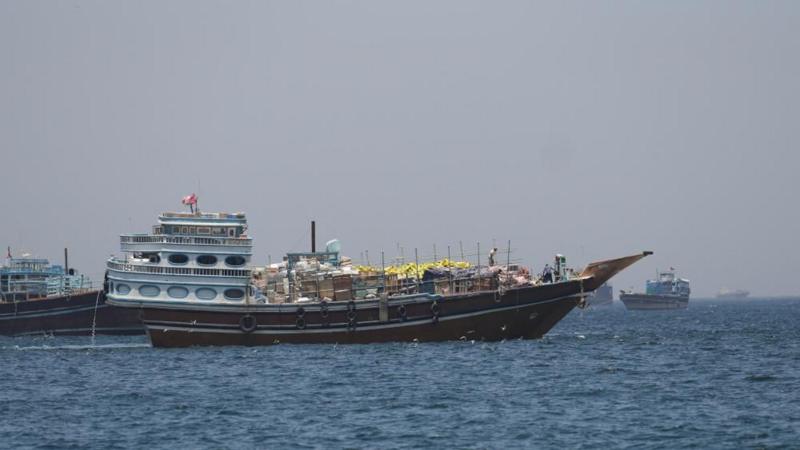
President Donald Trump announced that the U.S. Navy will help guide ships trapped in the Gulf region through the Strait of Hormuz as part of a humanitarian effort called Project Freedom. Iran’s military leadership warned that foreign armed forces entering the strait would face attacks and urged commercial ships to avoid movement without coordination.
Key Facts
President Trump said the U.S. will assist ships stuck in the Gulf during the conflict with Iran by helping them safely pass through the Strait of Hormuz.
The effort, called Project Freedom, is described as humanitarian and aimed at helping Iran and other Middle Eastern countries.
Iran’s military unified command warned that any U.S. or foreign military entering the strait would be attacked.
Iran advised commercial ships and oil tankers to avoid movement in the area unless coordinated with its military.
The Strait of Hormuz is a key passageway for global oil shipments and a critical location in the Gulf region.
Tensions remain high due to the ongoing war involving the U.S., Israel, and Iran.
This development follows increased conflict and political instability in the Middle East.
Iran’s military stance reflects a strong warning against foreign military presence in the strategic waterway.
Read the Original
Want the full story? Tap a source to open the original
article.
The article discusses concerns about current federal government policies and their impact on climate change. It highlights the risks these policies pose to the environment and future generations.
Key Facts
The article talks about federal government actions related to climate change.
It describes the policies as regressive, meaning they move backward or reduce progress.
There is a significant threat to the quality of life for people now and in the future.
The focus is on how these policies affect the environment and sustainability.
The article expresses worry about the long-term effects on children and coming generations.
Read the Original
Want the full story? Tap a source to open the original
article.
The Met Gala is a major fashion event held at New York City's Metropolitan Museum of Art. It features many famous celebrities, and this year’s co-hosts include Beyoncé, Nicole Kidman, and Venus Williams.
Key Facts
The Met Gala is considered the biggest night in fashion.
It takes place at the Metropolitan Museum of Art in New York City.
The event gathers many famous stars from Hollywood and beyond.
Beyoncé, Nicole Kidman, and Venus Williams are the celebrity co-hosts this year.
The event is often compared to the Super Bowl but for fashion, highlighting its importance in the industry.
CBS News covered behind-the-scenes stories about the event.
Read the Original
Want the full story? Tap a source to open the original
article.
Iran warned on Monday that it will not allow ships to pass through the Strait of Hormuz and said it would fire on U.S. combat ships. This came after President Donald Trump said the U.S. would help free ships stuck in the waterway amid rising tensions between the two countries.
Key Facts
Iran issued a warning on Monday about blocking ship movement through the Strait of Hormuz.
Iranian state media said Iran would fire on U.S. military vessels in the area.
President Donald Trump announced on Sunday that the U.S. would assist ships trapped in the Strait of Hormuz.
The situation follows increasing conflict and war-related tensions between Iran and the United States.
The Strait of Hormuz is a crucial waterway for global shipping and oil transport.
The U.S. Navy is actively working to help ships navigate safely through this region.
Heightened military warnings have increased concerns about conflict in the area.
Both nations are involved in a standoff that affects international maritime routes.
Read the Original
Want the full story? Tap a source to open the original
article.
About 50 leaders from Europe and Canada met in Armenia for the first-ever European Political Community (EPC) summit. The meeting served as a chance to discuss shared issues and find solutions amid changing global relationships, but it was seen as limited in its formal power.
Key Facts
The summit took place in Armenia and was the first EPC meeting hosted there.
Leaders from Europe and Canada attended, around 50 in total.
The EPC summit is an informal platform, not a formal organization with binding decisions.
The summit happened during tensions between the US and Europe and changing US involvement in the region.
Canada is becoming a more noticeable presence in European diplomatic talks.
Experts describe the summit as symbolically important but not evidence of a major new global power shift.
The event allowed countries to explore and discuss a wide range of issues collectively.
Discussions relate to concerns like security, trade, and political cooperation beyond EU and NATO frameworks.
Read the Original
Want the full story? Tap a source to open the original
article.
Keir Starmer, the UK Prime Minister, said tensions between President Donald Trump and Europe are high as leaders meet to discuss issues like the Ukraine and Iran conflicts. Starmer aims to negotiate the UK’s participation in the EU’s loan program for Ukraine and seek closer economic ties with the EU.
Key Facts
Starmer highlighted growing tensions between President Trump and European countries.
European leaders worry about the US president’s lessening focus on the Ukraine war.
The UK wants to join the EU’s £78 billion loan scheme to support Ukraine’s recovery.
Joining the scheme could allow UK defense companies to supply equipment to Ukraine.
The EU asks the UK to make more financial contributions to access EU markets after Brexit.
Talks began on the UK joining the EU innovation fund and expanding economic cooperation.
The UK may need to contribute to EU structural funds to participate in the EU electricity market.
Starmer said Brexit has hurt the UK economy and emphasized stronger ties with Europe on security, defense, energy, and the economy.
Read the Original
Want the full story? Tap a source to open the original
article.
A Russian missile hit the town of Merefa in Ukraine’s Kharkiv region, killing five people and injuring at least 18. The attack damaged homes, shops, and public buildings in an area far from the front lines. Ukrainian officials said a ballistic missile was likely used in the strike.
Key Facts
The missile strike occurred in Merefa, a town in northeastern Ukraine’s Kharkiv region.
Five people died: two men and three women; 18 people were injured, including four seriously.
The attack damaged at least 10 houses, an administrative building, four shops, a car repair workshop, and a food establishment.
Ukrainian regional prosecutors said Russia used an Iskander-type ballistic missile.
The strike hit civilian infrastructure far from Ukraine's front line with Russia.
Emergency services showed photos of damaged buildings, a burning car, and wounded people.
Russia has not commented on this specific attack.
Since February 2022, Russia’s full-scale invasion has caused many civilian deaths in Ukraine.
Read the Original
Want the full story? Tap a source to open the original
article.
Iran warned that it would block the passage of American combat forces through the Strait of Hormuz following President Trump’s announcement that the U.S. would help protect ships passing through this important waterway. Iran compared its position to a previous 40-day conflict, emphasizing it will not allow certain military transit.
Key Facts
President Trump said the U.S. will guide and protect vessels in the Strait of Hormuz.
Iran responded by threatening to block American combat forces from passing through the strait.
The Strait of Hormuz is a vital waterway for international shipping and oil transport.
Iran mentioned a prior 40-day conflict as a reference point for its military stance.
This exchange highlights rising tensions between the U.S. and Iran over control of the strait.
The U.S. action aims to ensure safe passage for commercial ships in the region.
Iran’s armed forces issued the threat in direct response to the U.S. announcement.
Read the Original
Want the full story? Tap a source to open the original
article.
Iran has executed three men tied to political protests that took place in January in the city of Mashhad. These executions are part of a series of hangings amid ongoing internal unrest and conflict with the US and Israel.
Key Facts
The three men executed were Mehdi Rassouli, Mohammad Reza Miri, and Ebrahim Dolatabadi.
Authorities say they were convicted for their roles in protests and the death of a security officer.
The executions were announced by Iran’s judiciary news agency but the exact time and place were not specified.
Human rights groups consider these men political prisoners and say their trials were unfair.
Since March, Iran has executed 24 political prisoners amid tensions related to conflict with the US and Israel.
Amnesty International and other rights groups call on the international community to respond to these executions.
Iran is the country with the second highest number of executions worldwide, after China.
Protests began in December over economic issues and grew into large anti-government demonstrations in January, leading to a harsh crackdown.
Read the Original
Want the full story? Tap a source to open the original
article.
The article discusses how the ongoing conflict involving Iran carries political risks but may lead to long-term strategic benefits. It suggests that while the war has immediate challenges, it could improve the overall situation over time.
Key Facts
The war with Iran involves significant political risks.
The conflict is ongoing and has uncertain immediate effects.
There may be long-term strategic advantages from the war.
Public opinion or sentiment could improve over time due to these strategic outcomes.
The article focuses on weighing short-term dangers against potential long-term gains.
It does not provide specific details about military actions or political decisions.
The conflict is considered important for future regional or global strategy.
The analysis calls for attention to both risks and benefits of the war.
Read the Original
Want the full story? Tap a source to open the original
article.
Jean-Luc Mélenchon, leader of France’s radical left party La France Insoumise, confirmed he will run for president again in 2027. He said France faces many crises, including war, climate change, and economic challenges, and called for unity against the far-right and international conflicts.
Key Facts
Mélenchon is 74 years old and has run for French president three times before (2012, 2017, 2022).
He led the Socialist party before leaving in 2008 to form his own more left-wing party, La France Insoumise.
Mélenchon finished third in the 2022 presidential election, behind Marine Le Pen and President Emmanuel Macron.
He criticizes wars involving the US and Israel in the Middle East and wants France to oppose these conflicts.
Mélenchon’s political program is very left-wing and aims to fight social inequality and privilege in France.
There are many other candidates on the French left for 2027, which might divide the vote.
Some criticize Mélenchon for controversial remarks seen as offensive toward Jewish people, but he denies being antisemitic and apologized for the comments.
President Macron cannot run again in 2027, and other candidates like Edouard Philippe, a former prime minister, have announced plans to run.
Read the Original
Want the full story? Tap a source to open the original
article.
Health officials reported that six people on a cruise ship became ill with a suspected hantavirus infection, and three of them have died. Hantavirus is a rare virus that people can catch from rodents.
Key Facts
Six people on a cruise ship got sick with a suspected hantavirus.
Three of the sick people have died.
Hantavirus is spread by rodents, such as mice or rats.
The outbreak occurred on a cruise ship, which involves people traveling by sea.
Health officials are investigating the situation.
The virus is considered rare and not common among humans.
Read the Original
Want the full story? Tap a source to open the original
article.
Prime Minister Narendra Modi’s Bharatiya Janata Party (BJP) won the West Bengal state elections in India for the first time, defeating the long-ruling All India Trinamool Congress (TMC) led by Mamata Banerjee. The BJP secured a strong majority by winning or leading in 200 out of 294 seats, while the TMC won or led in 87 seats.
Key Facts
West Bengal had been governed by Mamata Banerjee’s TMC since 2011.
The BJP traditionally had little presence in West Bengal before this election.
The state’s legislature elections were held in April 2026, with votes counted on May 4.
BJP increased its seat count from 77 in 2021 to about 200 in 2026.
TMC emphasized protecting minority rights, especially Muslims, while BJP appealed to Hindu voters.
Other Indian states also held elections on the same day, with mixed results for different parties.
The BJP-led alliance also won in Assam and Puducherry, while Congress won in Kerala.
Mamata Banerjee’s TMC faced anti-incumbency issues and criticism over interference in people’s daily lives.
Read the Original
Want the full story? Tap a source to open the original
article.
President Donald Trump said the United States will help guide ships stuck in the Strait of Hormuz if they belong to countries not involved in the conflict with Iran. The U.S. is also keeping its blockade on Iranian ports. This situation is causing gas prices in the U.S. to rise by 35 cents in the last week.
Key Facts
President Trump announced the U.S. will guide ships trapped in the Strait of Hormuz.
The help is only for ships from countries not involved in the Iran conflict.
The U.S. is maintaining a blockade on ports in Iran.
The Strait of Hormuz is a key waterway for global oil transport.
Gas prices in the U.S. have increased by 35 cents over the past week.
The situation in the Strait of Hormuz is affecting fuel costs in the U.S.
The news was reported by CBS News on Sunday.
Read the Original
Want the full story? Tap a source to open the original
article.
China has told its companies to ignore U.S. sanctions on oil refineries linked to Iran. This move challenges U.S. efforts to pressure Iran and comes just before President Donald Trump’s state visit to China.
Key Facts
China instructed its firms to defy U.S. sanctions targeting Iranian oil refineries.
This is the first time China has openly ordered companies to resist these foreign sanctions.
The Chinese Commerce Ministry used a law from 2021 designed to protect firms from unfair foreign rules.
The U.S. Treasury warned it would use secondary sanctions against entities dealing with Iranian oil refineries in China.
"Teapot refineries" in China’s Shandong province process much of the Iranian and Russian oil hit by sanctions.
Since 2025, the U.S. designated five Chinese refineries for dealing with Iranian oil.
The U.S. sees these refineries as helping Iran’s military and weapons programs.
This situation may affect the upcoming meeting between President Donald Trump and Chinese President Xi Jinping in Beijing.
Read the Original
Want the full story? Tap a source to open the original
article.
Sarah Sackman, the Labour MP for Golders Green, said some parts of the liberal left have not spoken out enough against antisemitism amid rising attacks on the Jewish community. She called for more visible support from anti-racist groups, trade unions, and public institutions after recent violent incidents in her area.
Key Facts
Sarah Sackman represents Golders Green and serves as courts and legal services minister.
A man named Essa Suleiman has been charged with attempted murders in attacks on Jewish individuals in Golders Green and Southwark.
There have been other violent acts recently, including an attempted arson on a Jewish memorial and a fire damaging community ambulances.
Police are investigating whether Iran-linked groups may be involved in some incidents.
Sackman praised faith leaders who showed support but said anti-racist groups and unions have been mostly silent.
She emphasized Jewish people want to live without fear while practicing their culture and faith.
Sackman highlighted past examples of community support across religions as a model to follow now.
She urged institutions like universities and the NHS to address hate and intimidation inside their organizations.
Read the Original
Want the full story? Tap a source to open the original
article.
Photographer Peter van Agtmael has spent over 20 years capturing images of war, working closely with US soldiers in Iraq and Afghanistan. His photo book, "Look at the U.S.A.: A Diary of War and Home," shows how these wars affect life in America by combining pictures of conflict with everyday scenes from the country.
Key Facts
Peter van Agtmael is a photographer who has documented wars for more than two decades.
He worked alongside US soldiers in Iraq and Afghanistan.
His work focuses both on battlefields and the effects of war on life in the United States.
Van Agtmael’s photo book is titled "Look at the U.S.A.: A Diary of War and Home."
The book pairs war images with photos of everyday American life after 9/11.
His work highlights the connection between wars abroad and their impact at home.
He discussed his work in an interview on the show Perspective by FRANCE 24.
Read the Original
Want the full story? Tap a source to open the original
article.
U.S. Central Command (Centcom) rejected a report from Iranian state media that said Iranian missiles hit a U.S. warship. Centcom stated that no U.S. ship was damaged or attacked.
Key Facts
Iranian state media claimed Iran’s Islamic Revolutionary Guard Corps hit a U.S. warship with two missiles.
Centcom posted on social media that this claim was not true.
Centcom confirmed no U.S. ships were hit or damaged.
The statement was made early Monday morning on the platform X.
The incident involved military forces from the U.S. and Iran.
The report highlights ongoing tensions and conflicting information between the two countries.
Read the Original
Want the full story? Tap a source to open the original
article.
President Donald Trump announced "Project Freedom," a plan where the US will help ships stuck in the Strait of Hormuz due to Iran's blockade after recent US and Israeli air strikes on Iran. The US said it aims to guide these ships safely through the waterway, but Iran warned it would attack any foreign military forces entering the area without permission.
Key Facts
The Strait of Hormuz has been mostly blocked since the US and Israel attacked Iran by air.
About 20% of the world’s oil and liquefied natural gas passes through this Strait.
Iran closed the Strait in response to these attacks.
President Trump said the US will help guide ships trapped in the Strait so they can move safely.
The US said this is a humanitarian effort as many ships have low food and supplies on board.
Iran’s military threatens to attack any foreign military forces entering the Strait without coordination.
The US Central Command announced it would deploy warships, aircraft, drones, and 15,000 personnel to support the operation.
The United Arab Emirates reported a drone attack on one of its oil tankers in the Strait, but no injuries were reported.
Read the Original
Want the full story? Tap a source to open the original
article.
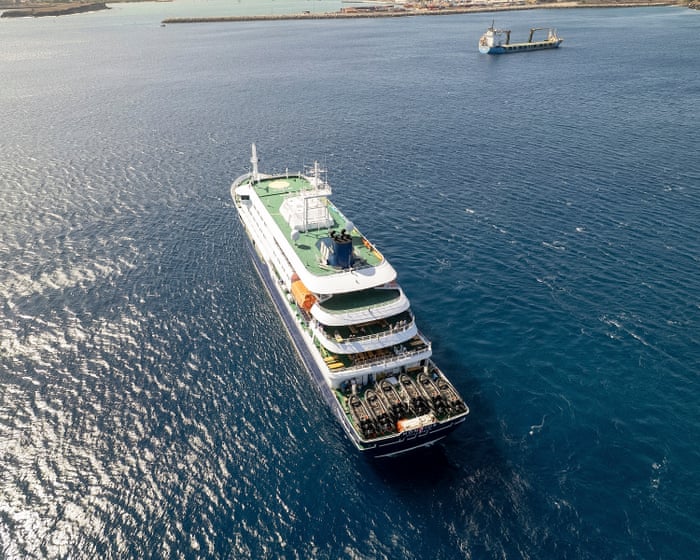
Cape Verde officials have stopped a cruise ship suspected of carrying a hantavirus outbreak from docking in their ports after three passengers died. Health authorities from multiple countries are working together to monitor the situation and provide medical care to those affected.
Key Facts
Three passengers on a cruise ship have died from a suspected hantavirus outbreak.
The cruise ship, named MV Hondius, carries 147 passengers and crew.
Hantavirus is a rare respiratory virus usually found in rodents.
Cape Verde blocked the ship from docking to protect public health.
One infected passenger is in intensive care in South Africa.
The ship left Argentina about three weeks ago and is flagged in the Netherlands.
Health officials from Cape Verde, the Netherlands, the UK, and South Africa are coordinating a response.
Efforts include medical evacuation of sick passengers and repatriation of deceased and crew members.
Read the Original
Want the full story? Tap a source to open the original
article.