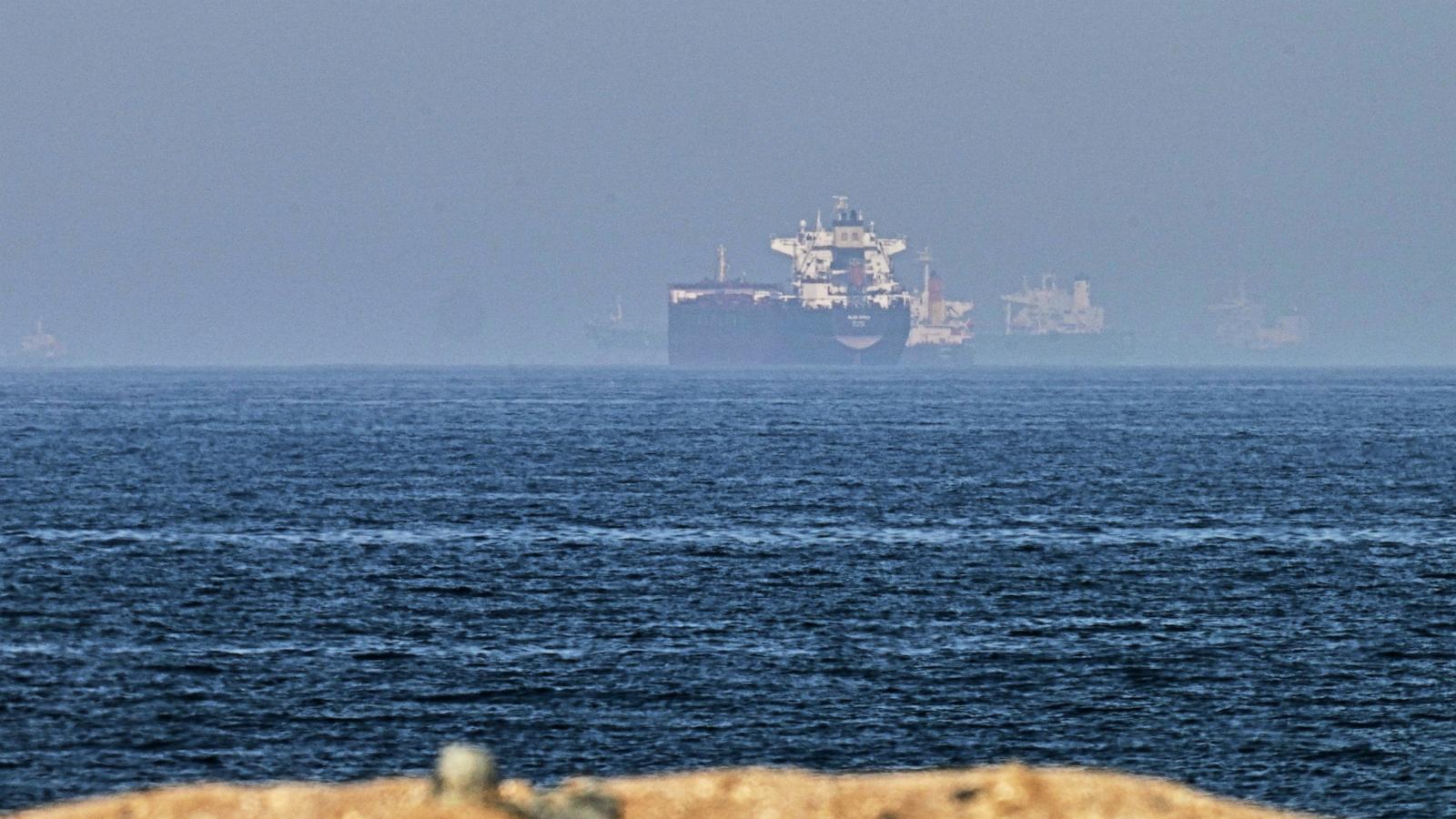
Iran warned the US navy not to enter the Strait of Hormuz after President Donald Trump announced a US effort to help ships stuck there. A tanker was hit by unknown projectiles in the strait, and maritime security remains critical due to military operations in the area.
Key Facts
Iran said it controls security in the Strait of Hormuz and that ships must coordinate with its armed forces.
President Trump said the US will guide ships safely out of the strait as a humanitarian gesture.
The US plans to use destroyers, aircraft, and thousands of service members for support.
A tanker was hit by unknown projectiles 78 nautical miles north of Fujairah, UAE, but the crew is safe.
The UK Maritime Trade Operations warned of mines in the strait and advised careful navigation.
Iran received a US reply to its peace talks offer and is reviewing it, but nuclear negotiations are on hold.
Iran has blocked most shipping through the Gulf for over two months, except its own vessels.
Read the Original
Want the full story? Tap a source to open the original
article.
A 24-year-old Russian man named Oleg joined what he thought was a civilian security job at a nuclear power plant in Ukraine but ended up forced to serve as a soldier on the frontlines. Many Russian soldiers have deserted the army since 2022, with a group called “Idite Lesom” helping thousands to escape harsh military conditions.
Key Facts
Oleg believed he was signing up for a civilian job but was actually enlisted in the Russian military.
He was forced to become a a drone pilot or driver despite having schizophrenia, a condition that should have exempted him from service.
Many soldiers face harsh treatment, including beatings and being forced to fight on the frontlines.
About 50,000 Russian soldiers, roughly 10% of those fighting in Ukraine, have deserted since 2022, according to the UN.
The Kremlin does not release official data on deserters or absences.
The group “Idite Lesom” has helped at least 3,000 Russian soldiers escape the military.
Russian mobilisation efforts increasingly include prisoners, migrants, and students through various incentives or deception.
Deserters are vetted by “Idite Lesom” before receiving help to leave the army.
Read the Original
Want the full story? Tap a source to open the original
article.
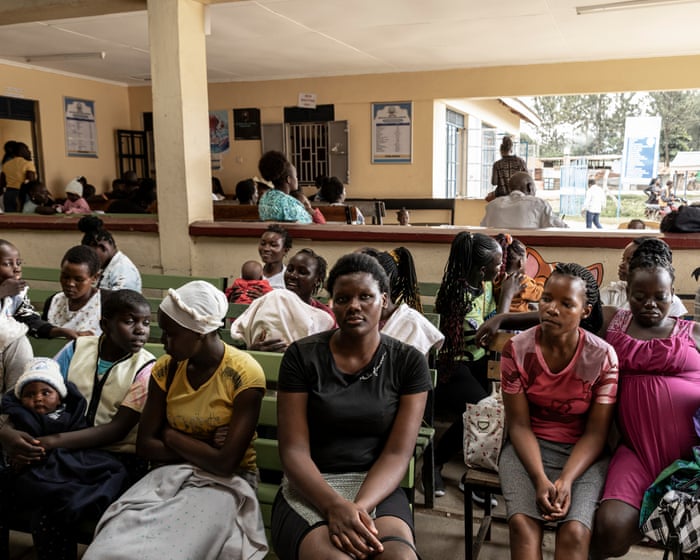
Kenya launched a new AI-driven healthcare system in October 2024 to replace its old insurance program and improve access for informal workers. An investigation found that the AI system is charging poor people too much by overestimating their incomes, while charging wealthier people too little, causing protests and difficulties accessing care.
Key Facts
Kenya’s new healthcare system uses a computer program (machine learning algorithm) to predict how much people should pay for health insurance.
The system was a key promise by President William Ruto to expand affordable care to informal workers making up 83% of the workforce.
The AI aims to calculate fees by asking households detailed questions about their living conditions and possessions.
Investigations showed the AI overcharges the poorest people by estimating their incomes too high.
Wealthier individuals are undercharged because the system underestimates their income.
Many poor families are paying between 10% and 20% of their small incomes as premiums.
Some critically ill people cannot access treatment because they cannot afford the fees the system assigns.
The Social Health Authority faces criticism for misclassifying people and setting premiums that many cannot understand or afford.
Read the Original
Want the full story? Tap a source to open the original
article.
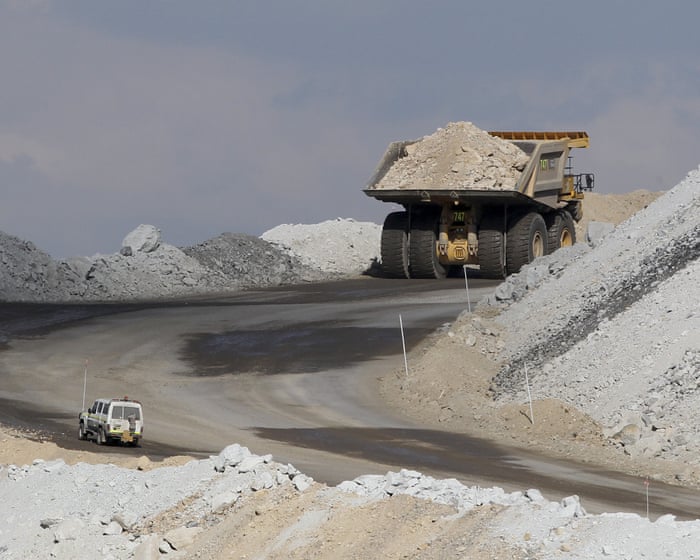
A new report by the International Energy Agency (IEA) finds that methane emissions from Australian coalmines are more than twice the amount reported by the Australian government to the United Nations. This difference is due to the IEA using satellite data, which the government does not include, highlighting that Australia may be underestimating its coal mine methane emissions.
Key Facts
The IEA report estimates Australian coalmines will emit 1.7 million tonnes of methane in 2025.
The Australian government’s official data reports coalmine methane emissions as 0.82 million tonnes.
Methane is a powerful greenhouse gas that contributes about 30% of global warming since the Industrial Revolution.
Methane heats the planet 80 times more than carbon dioxide over 20 years but stays in the atmosphere for only about 12 years.
The IEA uses satellite measurements to estimate emissions, a method not currently used by the Australian government.
Independent studies and experts say Australia’s methane emissions from coal mines are under-reported.
The Australian government created an expert panel in 2024 to review methane measurement methods.
Australia's agricultural sector officially emits more methane than the energy sector, but questions remain about the accuracy of fossil fuel sector data.
Read the Original
Want the full story? Tap a source to open the original
article.
Two cargo ships were attacked in the Strait of Hormuz, a key waterway for global shipping, according to the UK Maritime Trade Operations (UKMTO). President Donald Trump has ordered the U.S. military to support "Project Freedom," which aims to protect ships and maintain navigation through the strait amid ongoing tensions with Iran.
Key Facts
The Strait of Hormuz is a vital shipping route near Iran and the United Arab Emirates.
UKMTO reported two attacks on cargo ships in the strait on May 3, 2026.
One ship was attacked by small boats near Sirik, Iran; another was struck by unknown projectiles near Fujairah, UAE.
All crew members on both ships are safe with no reported environmental damage.
President Trump directed U.S. Central Command to begin "Project Freedom" to defend shipping in the area starting May 4, 2026.
"Project Freedom" is meant to protect shipping routes, not to escort ships directly.
U.S. forces involved include guided-missile destroyers, over 100 aircraft, drones, and about 15,000 personnel.
An Iranian ship seized by the U.S. after attempting to breach a blockade was transferred to Pakistan for handover to Iran along with its crew.
Read the Original
Want the full story? Tap a source to open the original
article.
A woman named Kirsty Geddes found many objects from the 1940s under the floorboards of her flat in Dumfries, Scotland. Items include newspapers from World War II, an old fire extinguisher, and other household items. She wants to learn more about the history of the building by studying these finds.
Key Facts
Kirsty Geddes bought her flat in Dumfries in 2025 and has been renovating it.
Under the floorboards, she found a fire extinguisher from 1942 and newspapers from just after D-Day in 1944.
Other items found include an empty tin of chicken, old cigarette packs, insect repellent powder, and beer bottles.
The newspapers report war events like battles in Normandy and plans for an autumn attack on Germany.
Kirsty hopes to identify former residents by studying old envelopes and the building’s original title deeds.
She is interested in the building’s past and welcomes information from anyone who might know more.
The discoveries show a mix of everyday life and war history from the 1940s.
Kirsty works as a marketing and communications manager, and a local joiner helped with the renovation.
Read the Original
Want the full story? Tap a source to open the original
article.
A baby was found dead in a tent at a homeless camp near Wagga beach in New South Wales. The mother and her other infant were taken to hospital, with the surviving baby in serious condition. Police said there were no signs of suspicious activity.
Key Facts
The incident happened at a homeless camp by the Murrumbidgee River near Wagga beach.
A 37-year-old woman was with two infants; one baby was dead, and the other was critically ill.
The mother and surviving infant were taken to hospital for treatment.
Police found no suspicious circumstances in the baby’s death.
Local officials say the homeless camp has grown larger each year due to a rise in people sleeping rough.
Homelessness in Wagga Wagga has increased by 71% over eight years, with 257 homeless people recorded in 2024.
The rental housing availability is extremely low, with a vacancy rate of 0.6% in the area.
Local leaders call for urgent government action and more public housing to address the crisis.
Read the Original
Want the full story? Tap a source to open the original
article.
Japan’s Prime Minister Sanae Takaichi wants to start serious talks about changing the country’s pacifist constitution, especially the part that bans military force. Large protests took place across Japan, with many people supporting the current constitution, which has kept Japan out of wars since 1947.
Key Facts
Prime Minister Sanae Takaichi says Japan’s constitution should be updated to meet current security challenges.
The constitution was made by US occupation forces after World War II.
Article 9 of the constitution prevents Japan from using military force to settle disputes.
Takaichi and her party want to revise Article 9 to give Japan more military power, partly due to threats from North Korea and China.
Changing the constitution requires approval by two-thirds of Japan’s parliament and a national vote.
Polls show mixed public opinions: some support changes, others want to keep the current pacifist rules.
About 50,000 people protested in Tokyo on Constitutional Memorial Day to keep the peace clause unchanged.
Critics of the revision say the government should focus on healthcare, education, and jobs instead of military changes.
Read the Original
Want the full story? Tap a source to open the original
article.
Iran is facing a serious economic crisis caused by war damages, inflation, currency drop, high unemployment, and falling oil revenue. These problems might make Iran less tough in negotiations with the United States. Despite a U.S. naval blockade aiming to stop Iran from exporting oil, Iran still manages to export some, but its economy is under increasing pressure.
Key Facts
Iran’s economy suffers from war damage costs estimated at nine times its last year’s budget.
The UN says 4.1 million more Iranians could fall into poverty soon.
President Donald Trump predicted Iran’s oil wells would “explode” due to storage limits caused by the U.S. blockade.
The U.S. naval blockade started on April 13 to block Iranian oil exports via the Strait of Hormuz.
Iran’s oil storage, mainly on Kharg Island, has not yet run out thanks to flaring and tanker shipments.
The Iranian currency, the toman, lost nearly 22% of its value, dropping to 190,000 tomans per US dollar.
Inflation in Iran is about 73.5%, with food prices rising over 115%.
Over 23,000 Iranian businesses were damaged by U.S.-Israeli airstrikes, causing about 1 million job losses and higher unemployment.
Read the Original
Want the full story? Tap a source to open the original
article.
King Charles made a state visit to the United States in 2026 during a time of political and global crises. The visit highlighted ongoing issues in both the U.S. government under President Trump and the British monarchy, while offering a moment of traditional diplomacy between the two countries.
Key Facts
King Charles’s 2026 visit to the U.S. took place amid global problems like wars and energy crises.
The event included many influential figures such as members of the Trump family, major business leaders, and media personalities.
Despite serious political conflicts in the U.S., formal diplomatic protocols and respect were observed during the visit.
Media coverage focused heavily on the visit’s social and ceremonial aspects like speeches, menus, and guests.
The visit showed both the U.S. presidency and British monarchy facing challenges to their authority and reputation.
Both nations appeared to use the visit to reinforce their historical ties and present a united front despite internal struggles.
The article refers to ongoing scandals affecting both the U.S. government and the British royal family.
The state visit was described as a symbol of changing times and the end of an old era in politics and international relations.
Read the Original
Want the full story? Tap a source to open the original
article.
Two activists from the Global Sumud Flotilla arrived in the Netherlands after being released by Israeli authorities. The flotilla had been stopped in international waters while trying to bring aid to the Gaza Strip. Two other activists are still in Israel for questioning.
Key Facts
The Global Sumud Flotilla was carrying aid to the Gaza Strip.
Israeli forces intercepted the flotilla in international waters.
Two activists were detained by Israel and later released.
These two released activists arrived in the Netherlands.
Two other activists remain in Israel for questioning.
The flotilla's goal was to deliver humanitarian help to Gaza.
The incident involves international movement between Gaza, Israel, and the Netherlands.
Read the Original
Want the full story? Tap a source to open the original
article.
A Syrian intelligence officer, Amjad Youssef, was arrested for his role in the 2013 Tadamon massacres where civilians were killed. While some Syrians see this arrest as a step toward justice for regime crimes, critics say the government is only targeting a few individuals and making deals with others to maintain security and control.
Key Facts
Amjad Youssef is a Syrian intelligence officer arrested for involvement in the 2013 Tadamon massacres.
The Tadamon massacres killed at least 300 civilians.
Youssef appeared in a confession video claiming he acted alone, which many believe hides the involvement of others.
Some Syrians celebrated Youssef’s arrest as a move toward justice after years of suffering.
Experts warn that Syria’s government is using "selective justice" by punishing a few while protecting others to maintain internal security.
The trial of Atef Najib, Assad’s cousin and former political security chief, is also seen as a notable event in Syria’s justice process.
Critics say real transitional justice should rebuild trust and society, not just punish a few individuals.
The government has made deals with some former regime figures to secure information and assets, risking a return to past authoritarian practices.
Read the Original
Want the full story? Tap a source to open the original
article.
There are no ads, so there is no reason to bait you. Readers who chip in keep it that way. Most choose $3.99/month, and get the daily digest every morning.
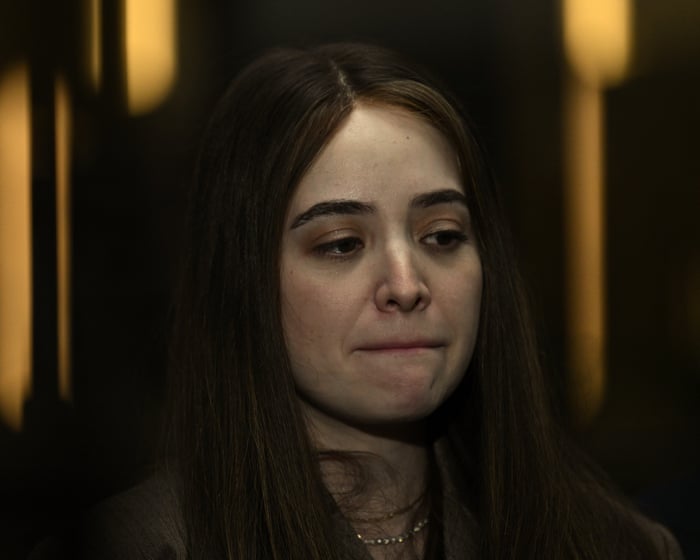
Sheina Gutnick, whose father was killed in a shooting at a Hanukkah event in Bondi Beach, Australia, shared her experience of rising antisemitism in the country. The royal commission into antisemitism is hearing testimonies about the recent attack and increasing antisemitic attitudes linked to events in the Middle East.
Key Facts
The Bondi Beach attack in December killed 15 people during a Hanukkah event.
Gunman Sajid Akram was killed by police; his son Naveed Akram was injured and charged with murder and terrorism offences.
Sheina Gutnick's father died trying to stop the attackers.
Gutnick reported receiving threatening messages and noted antisemitism becoming more openly expressed in Australia since October 2023.
The royal commission into antisemitism has received nearly 7,500 submissions and will hold public hearings until 15 May.
An interim report recommended gun reform and better policing at Jewish events.
The rise in antisemitism is partly linked to events in the Middle East and reflects a pattern seen in other Western countries.
The commission will release its final report on the shooting's first anniversary.
Read the Original
Want the full story? Tap a source to open the original
article.
The European Union (EU) is sending experts to Armenia to help stop Russian interference and support the country ahead of its June elections. EU leaders will meet with Armenia’s prime minister at a summit to strengthen ties and discuss areas like energy, transportation, and economic aid.
Key Facts
The EU is creating a team of 20-30 experts to help Armenia fight Russian cyber-attacks, propaganda, and illegal money flows.
This EU mission will last two years but may be extended and will begin after Armenia’s June 7 parliamentary elections.
The EU also set up a fast-response team to counter foreign interference before the elections.
The summit in Yerevan marks the first meeting between EU leaders and Armenia’s prime minister.
Armenia is shifting closer to the EU as Russian influence weakens since Russia’s invasion of Ukraine.
Armenia was once a strong Russian ally but has grown disappointed after Russia did not help during recent conflicts with Azerbaijan.
Armenia wants closer ties with the EU, including possible visa-free travel and adopting EU standards.
Russia remains important to Armenia’s security and trade but has imposed economic restrictions to influence Armenia’s decisions.
Read the Original
Want the full story? Tap a source to open the original
article.
Ana Viladomiu is the last person living in Casa Milà, a famous building in Barcelona designed by architect Antoni Gaudí and recognized as a world heritage site. She has lived in her large, unique apartment there for almost 40 years under a special fixed-rent contract that lets her stay until she dies, after which a foundation will take over the building.
Key Facts
Casa Milà, also called La Pedrera, is a well-known building in Barcelona designed by Antoni Gaudí and finished in 1910.
It is located on Passeig de Gràcia, a prestigious and expensive street in Spain.
Ana Viladomiu, 70, has been living in her apartment in the building since 1988.
She has a “renta antigua,” a fixed-rent contract that started before 1985 and grants her the right to live there for life.
The building attracts about a million visitors every year because it is a popular tourist attraction and a UNESCO world heritage site since 1984.
The rest of Casa Milà is used for offices and cultural events like concerts, managed by a not-for-profit foundation.
Over the years, the building has served different roles, including housing consulates, a bingo hall, and political groups.
Viladomiu respects the original design of her apartment and does not want to make any changes to Gaudí’s artistic features.
Read the Original
Want the full story? Tap a source to open the original
article.
A royal commission in Australia is holding public hearings on antisemitism after a terrorist attack at Bondi Beach killed 15 people, including Reuven Morrison, who died defending others. Witnesses described their experiences of antisemitism and fear, highlighting growing concern about hatred against Jewish people in Australia.
Key Facts
Reuven Morrison died in an antisemitic attack at Bondi Beach in December 2025 while protecting others.
He was one of 15 people shot by two Isis-inspired gunmen targeting a Jewish Hanukkah event.
Morrison and his wife, both Jewish refugees, met at Bondi Beach and had strong ties to Australia.
Witnesses to the royal commission shared stories of antisemitic abuse and feeling unsafe in public.
The commission’s hearings focus on understanding antisemitism’s history, modern forms, and effects on Jewish Australians.
Anonymized testimonies revealed concerns about rising antisemitism and its impact on community members’ sense of security and future in Australia.
The royal commission is examining intelligence and security responses to the Bondi attack and plans further investigations.
The hearings noted connections between spikes in antisemitism in Australia and international events in the Middle East.
Read the Original
Want the full story? Tap a source to open the original
article.
President Donald Trump announced "Project Freedom," a naval mission to escort ships through the Strait of Hormuz starting Monday. He warned that any interference with the mission will be met with force, amid a tense truce between the US and Iran.
Key Facts
The mission is called "Project Freedom."
It involves escorting stranded ships through the Strait of Hormuz.
The operation starts on Monday.
President Trump warned that any interference will be met forcefully.
The announcement comes during a fragile truce between the US and Iran.
Iran has said it would see US intervention as a violation of the truce.
The Strait of Hormuz is a key waterway for global oil shipments.
Read the Original
Want the full story? Tap a source to open the original
article.
Oil prices stayed nearly the same after President Donald Trump announced a plan to guide stuck ships out of the Strait of Hormuz. However, experts and officials doubt the plan will quickly solve the major disruptions to global oil supplies caused by tensions in the area.
Key Facts
Brent crude oil prices were mostly unchanged at about $108.25 per barrel following Trump’s announcement.
President Trump said the US would help free vessels stuck in the Strait of Hormuz starting Monday, calling it “Project Freedom.”
The plan lacks details and may not include US Navy escorts, which government officials had previously rejected.
Iranian leaders warned that any US interference in the strait would break the current truce.
Recent attacks on ships near the Gulf were reported but caused no crew injuries.
The Strait of Hormuz normally carries 20% of the world’s oil, but traffic has dropped drastically due to threats from Iran.
Goldman Sachs estimates the closure and attacks have cut global oil production by 14.5 million barrels per day.
Oil prices have risen about 50% since the start of the conflict and may remain high even after peace talks because of blocked shipments and mine threats in the waterway.
Read the Original
Want the full story? Tap a source to open the original
article.
Each summary links back to the original reporting, so you can check the work. Support that, and get the daily digest every morning. Most choose $3.99/month.
A comet named C/2025 R3 PanSTARRS will be visible in the southern sky over the next two weeks, including in New Zealand, before it disappears for about 170,000 years. The comet comes from the outer edge of the solar system and can be seen with binoculars or a telescope just after sunset near the western horizon.
Key Facts
C/2025 R3 PanSTARRS is a comet from the Oort Cloud, far beyond the solar system.
It was discovered in 2025 and takes about 170,000 years to orbit the sun.
The comet moved from the northern to the southern hemisphere and is now visible in places like New Zealand, Australia, and South Africa.
People need binoculars, a telescope, or a camera to see it; it is not bright enough to see with the naked eye.
The best time to see the comet is just after sunset, low on the western horizon.
The comet appears as a blue-green fuzzy ball with a tail, called the coma and tail.
The comet’s brightness will fade over two weeks, so viewing should happen soon.
The comet might lose mass or break apart, which could change its orbit or even push it out of the solar system.
Read the Original
Want the full story? Tap a source to open the original
article.
Australia is holding public hearings about a shooting at a Hanukkah festival on Bondi Beach that killed 15 people in December 2025. The inquiry focuses on a recent rise in anti-Semitism linked to the war in Gaza, with Jewish community members sharing their fears and experiences of increased hostility.
Key Facts
The attack happened in December 2025 during a Hanukkah celebration at Bondi Beach, killing 15 people.
Public hearings are part of a federal royal commission investigating causes of the shooting and rising anti-Semitism.
Witnesses described a sharp increase in anti-Semitic acts in Australia since the Gaza war began in 2023.
Jewish community groups recorded over 2,000 anti-Semitic incidents in 2024.
There were arson and graffiti attacks on synagogues and Jewish businesses in Sydney and Melbourne in 2023.
Some witnesses spoke anonymously due to fear of threats or violence.
Protesters at an October 2023 rally in Sydney chanted anti-Semitic slogans, causing concern.
The inquiry highlighted the impact on Jewish families, including fear for children’s safety and calls for more police protection.
Read the Original
Want the full story? Tap a source to open the original
article.