U.S. forces secretly captured Venezuelan President Nicolas Maduro and took him to the United States to face charges of narcoterrorism. Despite his arrest, Maduro still has supporters who want to continue his political movement, some using peaceful methods and others using force.
Key Facts
U.S. forces captured Venezuelan President Nicolas Maduro in Caracas during a nighttime operation.
Maduro was taken to the United States to be tried for narcoterrorism, which means using drugs to fund terrorism.
Maduro has a loyal group of supporters who defend his political revolution.
These supporters use different methods to continue their cause, including art, education, and violence.
Venezuela’s government has used armed civilian militias for decades to maintain control on the streets.
Critics say these militias often use violence and intimidation against people.
The story follows individuals committed to keeping Maduro’s revolution alive and seeking his return.
Read the Original
Want the full story? Tap a source to open the original
article.
Israel’s National Security Minister Itamar Ben-Gvir marked his 50th birthday with a cake showing a noose. This decoration referred to a new law allowing the death penalty for Palestinian prisoners, which Ben-Gvir supports but many people have criticized as unfair.
Key Facts
Itamar Ben-Gvir is Israel’s National Security Minister.
He turned 50 years old.
For his birthday, he had a cake decorated with a noose.
The noose symbolized the death penalty recently approved for Palestinian detainees.
Ben-Gvir was a leading supporter of the new death penalty law.
Many people have condemned the law as discriminatory, meaning it treats people unfairly.
The death penalty applies to Palestinian prisoners.
The cake’s decoration drew attention because of the serious topic it represented.
Read the Original
Want the full story? Tap a source to open the original
article.
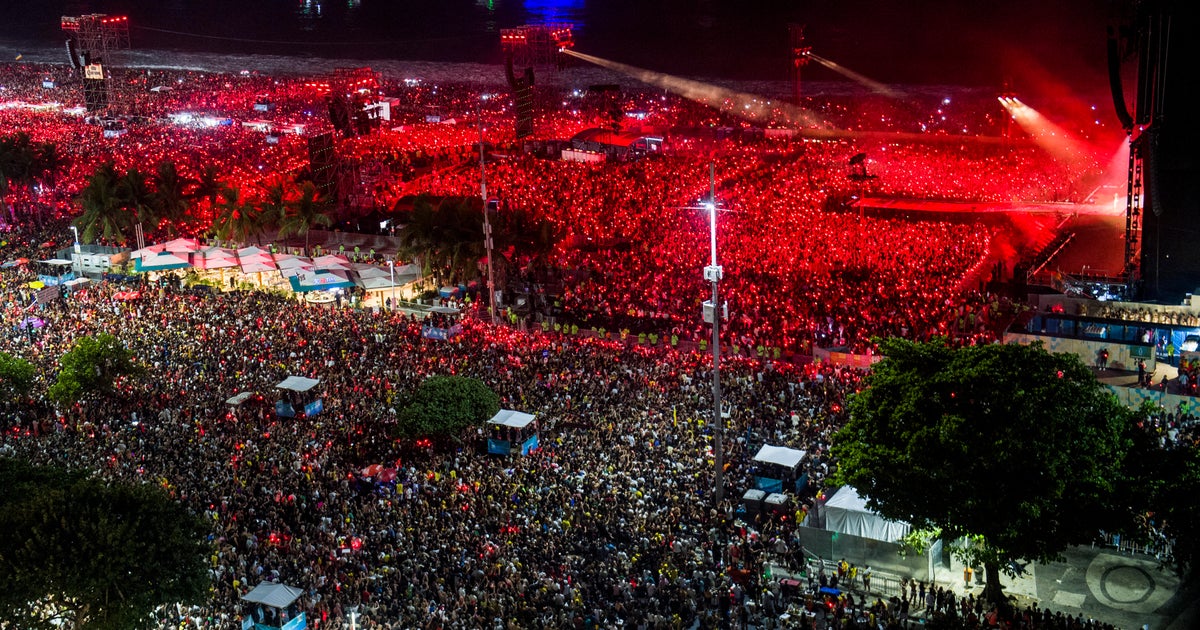
Colombian singer Shakira performed a free concert on Rio de Janeiro’s Copacabana Beach, attracting 2 million people, according to the city’s mayor. The show was part of her 2024 world tour and followed successful free concerts by Madonna and Lady Gaga in Rio.
Key Facts
Shakira’s concert took place at night on Copacabana Beach in Rio de Janeiro.
The mayor of Rio said about 2 million people attended the free event.
The concert was part of Shakira’s "Las Mujeres Ya No Lloran" world tour.
Shakira delayed starting by over an hour but fans cheered loudly when she appeared.
Drones flew overhead writing “I love you Brazil” in Portuguese during the show.
Shakira performed popular songs like "Hips Don’t Lie" and "La Bicicleta."
The event aimed to boost Rio’s economy after Carnival and before June festivals.
Local vendors sold food, drinks, and other supplies to concertgoers.
Read the Original
Want the full story? Tap a source to open the original
article.
Zack Polanski, leader of the Green Party and a London Assembly member, remains concerned about the police response to a violent attack in Golders Green, London. He apologized for sharing a critical social media post about the police but said public service workers must be open to scrutiny and that his concerns continue. The attack involved stabbings that police declared a terror incident, and the suspect has been charged with multiple attempted murders.
Key Facts
Zack Polanski criticized police actions during the arrest of a suspect in the Golders Green attack and later apologized for sharing an unverified social media post.
Polanski said public servants, including police officers, should face appropriate scrutiny and proportionate actions.
Two Jewish men were stabbed in Golders Green in an attack labeled a terror incident by police.
Essa Suleiman, 45, was charged with three attempted murders related to the Golders Green attack and another assault in Southwark.
Communities Secretary Steve Reed and Metropolitan Police Commissioner Sir Mark Rowley criticized Polanski for questioning the police’s response.
Prime Minister Keir Starmer called for prosecution of people chanting "globalise the intifada," calling it extreme racism.
Polanski described himself as pro-Palestinian and committed to Jewish safety, supporting freedom of speech and protest.
The controversy includes debates over the use and meaning of the term "intifada," which different groups interpret differently.
Read the Original
Want the full story? Tap a source to open the original
article.
Tensions between the US and Iran over the Strait of Hormuz are worsening, causing disruptions in oil supplies. This situation is speeding up global efforts to move away from oil and gas toward cleaner energy sources like wind, solar, and electric vehicles.
Key Facts
The US has imposed a blockade on Iranian oil exports, leading to conflict over the Strait of Hormuz.
Iran’s leader threatened that foreign powers interfering in the strait have “no place there except at the bottom of its waters.”
About 40 countries have taken emergency steps due to rising oil and gas prices, including reducing school days or limiting cooking gas.
High oil prices hit both rich and poor countries, with poor countries facing severe energy and fertilizer cost increases.
Clean energy options like electric vehicles and renewable power are becoming cheaper and more popular worldwide.
Car sales for electric vehicles increased by 51% in Europe compared to the previous year due to the crisis.
The United Arab Emirates recently left OPEC, possibly to increase fossil fuel exports before global demand declines.
Experts say countries will try to improve energy security by rapidly building solar, wind, battery, and nuclear power capacity.
Read the Original
Want the full story? Tap a source to open the original
article.
Nigeria has called South Africa’s acting High Commissioner to discuss recent attacks on Nigerian and other African migrants in South Africa. The Nigerian government expressed deep concern about these incidents, which include violence and mistreatment, and said they could harm relations between the two countries.
Key Facts
Nigeria summoned South Africa’s acting High Commissioner to address attacks on Nigerians and other African migrants.
The meeting will focus on violence during marches by anti-immigrant groups and attacks on businesses owned by foreigners.
At least two Nigerians and four Ethiopians have been killed in recent weeks in South Africa.
South African President Cyril Ramaphosa condemned the violence but urged foreigners to respect local laws.
Some South Africans accuse foreign migrants of illegal residency and taking jobs from locals.
Anti-immigrant groups have been stopping people outside hospitals and schools to check their identity papers.
South Africa hosts about 2.4 million migrants, mostly from nearby countries; many more might be living there without official permission.
Ghana also summoned South Africa’s envoy after a video showed a Ghanaian man being asked to prove his immigration status.
Read the Original
Want the full story? Tap a source to open the original
article.
Reports show that harassment and violence against Christians are increasing in parts of Israel, especially in Israeli-controlled East Jerusalem. The Old City of Jerusalem is an important religious area for Jews, Christians, and Muslims.
Key Facts
Religious groups have noticed more anti-Christian aggression in Israel.
East Jerusalem, controlled by Israel, is a main area where these problems happen.
The Old City of Jerusalem contains sacred sites for three religions: Judaism, Christianity, and Islam.
This rise in violence is part of a wider regional situation involving religious communities.
The issue has attracted attention during ongoing Middle East developments.
Read the Original
Want the full story? Tap a source to open the original
article.
Cuba is experiencing a serious economic and energy crisis, making daily life very hard for its people. The country relies on imports for about 80% of its food, and now essential goods are becoming scarce and very expensive.
Key Facts
Cuba is facing a deep economic and energy emergency.
Many Cubans say this crisis is worse than the 1990s Special Period, when Soviet support ended.
Cuba imports up to 80% of the food it consumes.
Essential goods are becoming hard to find across the island.
Prices for basic items are rising sharply.
The crisis is affecting daily life for many people.
The economic collapse is part of a long-term struggle with shortages.
The report was made by Gabrielle Nadler and published by France 24.
Read the Original
Want the full story? Tap a source to open the original
article.
President Donald Trump has openly criticized German Chancellor Friedrich Merz for his statements about the U.S. involvement in the Iran war. This conflict between the two leaders is affecting the relationship between the United States and Germany, which are usually close allies.
Key Facts
President Trump has publicly attacked Chancellor Merz multiple times.
The attacks relate to Merz’s comments on the U.S. role in the Iran war.
Chancellor Merz has tried to maintain a good relationship with President Trump.
Germany is considered one of the United States’ strongest allies.
These disagreements are damaging the U.S.-German diplomatic relationship.
The conflict is part of broader tensions between President Trump and European countries.
Both leaders hold important positions: President Trump as U.S. President and Merz as German Chancellor.
The situation could impact cooperation between the two countries on international issues.
Read the Original
Want the full story? Tap a source to open the original
article.
Ukrainian forces launched a drone attack on the Russian Baltic port of Primorsk, causing a fire but no oil spill. Both Ukraine and Russia reported drone strikes that resulted in deaths and damage on each side, continuing the conflict between the two countries.
Key Facts
Ukraine attacked the Russian Baltic Sea port of Primorsk using drones.
The attack caused a fire in Primorsk, which was quickly put out, with no oil spill reported.
Over 60 drones were shot down over the northwestern Russian region overnight.
Ukraine also struck two oil-transporting tankers near the Russian Black Sea port of Novorossiysk.
Russia’s Moscow area and the Smolensk region suffered drone attacks, with several casualties and injuries reported.
Russian drone strikes on Ukraine killed at least three people, including two in the Odesa region and one in Kherson.
Russia claimed it launched 268 drones and one ballistic missile in overnight attacks.
Russian troops are advancing toward Kostiantynivka city in eastern Ukraine’s Donetsk region.
Read the Original
Want the full story? Tap a source to open the original
article.
The UK government has introduced new rules to let airlines cancel or combine flights early this summer to save jet fuel. These steps come as ongoing conflict in the Middle East disrupts the supply of jet fuel, which the UK imports in large amounts.
Key Facts
UK airlines can cancel or consolidate flights ahead of time to conserve jet fuel.
New rules allow airlines to give up some takeoff and landing slots temporarily without losing them permanently.
Normally, airlines risk losing slots if they cancel flights, causing them to sometimes fly planes that are half empty.
Airlines will cancel flights at least two weeks before departure to avoid last-minute disruptions.
Flights with low ticket sales may also be canceled to save fuel.
These changes were agreed upon by government officials and major UK airports and airlines.
The closure of the Strait of Hormuz since March has caused jet fuel shortages in Europe.
The UK imports about 65% of its jet fuel, much of it from the Middle East.
Read the Original
Want the full story? Tap a source to open the original
article.
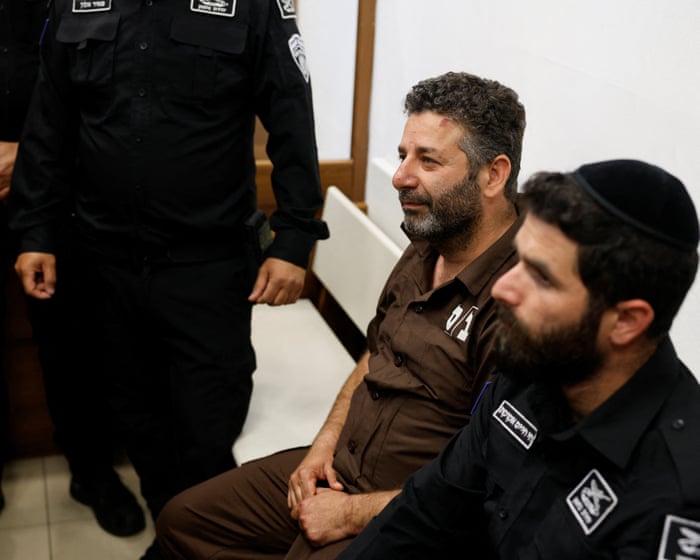
Two activists from a Gaza-bound flotilla, Saif Abu Keshek from Spain and Thiago Ávila from Brazil, appeared in an Israeli court after being detained by Israeli forces. The flotilla aimed to break the Israeli blockade of Gaza but was intercepted far from Gaza, leading to the activists being held for questioning amid accusations of links to a group sanctioned by the US.
Key Facts
The flotilla had over 50 vessels sailing from France, Spain, and Italy to Gaza to bring supplies.
Israeli forces intercepted the flotilla in international waters near Greece.
Two activists, Abu Keshek and Ávila, were taken to Israel for questioning and appeared in court in Ashkelon.
Israeli officials said the activists were linked to the Popular Conference for Palestinians Abroad, a group sanctioned by the US for ties to Hamas.
The activists reported harsh treatment, including being blindfolded, tied, isolated, and beaten during capture.
Spain condemned the detention and denied Israel’s accusations against its national Abu Keshek.
Most other activists disembarked in Crete, Greece, after the interception.
The flotilla’s organizers said the interception took place more than 1,000 km from Gaza and damaged their equipment.
Read the Original
Want the full story? Tap a source to open the original
article.
Two young women died while trying to cross from northern France to the UK in a small boat with about 82 people. The boat’s engine failed, it drifted, and eventually ran aground near Neufchatel-Hardelot, where the victims were found dead inside.
Key Facts
The two women who died are believed to be around 20 years old and of Sudanese origin.
The boat left northern France at night but had engine trouble and drifted at sea.
Seventeen people were rescued and taken to the port of Boulogne-sur-Mer.
The boat carrying the remaining 65 people ran aground on a beach, where two women were found dead.
Several passengers were injured and taken to hospital, including some with burns.
French authorities are investigating and will interview survivors to find out who organized the crossing.
This is the third deadly incident at the French-British border in just over a month.
France and Britain recently signed a three-year deal to strengthen security and reduce migrant crossings.
Read the Original
Want the full story? Tap a source to open the original
article.
Two young women died while trying to cross the English Channel from northern France to the UK on a small boat carrying 82 people. The boat's engine failed, causing it to drift and eventually run aground, where the victims were found inside.
Key Facts
The two women who died are believed to be around 20 years old and from Sudan.
The boat left during the night with 82 people on board but the engine would not start.
Seventeen people were rescued at sea and taken to a port in Boulogne-sur-Mer, France.
The boat with 65 people ran aground near Neufchatel-Hardelot, about 12 kilometers south of Boulogne-sur-Mer.
Thirteen survivors have moderate injuries, and three have serious injuries including burns.
Authorities are investigating who is responsible and confirming the victims’ nationalities.
This is the third fatal incident of migrants crossing the channel in a little over a month.
Britain and France recently signed a new three-year security deal to prevent these crossings by increasing patrols and funding.
Read the Original
Want the full story? Tap a source to open the original
article.
A woman shares her experience growing up after the 1986 Chernobyl nuclear disaster, where her father worked as a senior engineer. The disaster forced her family to evacuate their home and has led to ongoing health problems, including her father’s death from radiation-related cancer.
Key Facts
The Chernobyl nuclear accident occurred on April 26, 1986, in Pryp’yat, Ukraine.
The author’s father was a senior reactor control engineer working during the accident.
The author and her mother were evacuated to Kharkiv and later moved to Kyiv.
Many evacuees, including the author, faced health issues caused by radiation exposure, especially thyroid problems.
The father continued working at the plant and founded a research center studying radiation effects.
He died from bone cancer linked to long-term radiation exposure.
The author took part in programs that allowed young evacuees to spend summers in Germany and France.
The disaster deeply influenced her family's life path and health for many years.
Read the Original
Want the full story? Tap a source to open the original
article.
Press freedom around the world has dropped to its lowest point in 25 years, according to Reporters Without Borders (RSF). This report was released just before World Press Freedom Day, highlighting the ongoing challenges faced by journalists globally.
Key Facts
Reporters Without Borders (RSF) publishes an annual index measuring press freedom worldwide.
The latest RSF index shows the lowest level of press freedom in 25 years.
World Press Freedom Day is celebrated annually to promote free and independent journalism.
To mark the event, Cartooning for Peace released animated films based on cartoons by artists from Russia, Canada, and Turkey.
RSF’s Director General, Thibaut Bruttin, spoke with France 24 about the current state of press freedom.
The decline in press freedom affects journalists’ ability to report without fear or restrictions.
The issue is part of broader concerns about freedom of speech worldwide.
Read the Original
Want the full story? Tap a source to open the original
article.
Ukrainian forces attacked two Russian tanker ships near the Port of Novorossiysk in the Black Sea, using long-range weapons to target locations on sea, land, and air. In the Donetsk region, an elderly Ukrainian woman was rescued with the help of an unmanned ground vehicle.
Key Facts
Ukrainian forces struck two tankers from Russia’s "shadow fleet" at the entrance to Novorossiysk port.
The attack was announced by Ukrainian President Volodymyr Zelenskyy on the Telegram app.
Ukraine plans to continue using long-range weapons for attacks on sea, land, and air targets.
An elderly woman in Donetsk Oblast was rescued using a robotic ground vehicle.
The unmanned ground vehicle can operate without a person inside and helps in dangerous conditions.
The Port of Novorossiysk is located on the Black Sea.
The attack is part of the ongoing conflict between Russia and Ukraine.
Read the Original
Want the full story? Tap a source to open the original
article.
Inflation in Iran has risen to over 50%, causing prices for everyday goods to increase sharply. This economic problem follows a U.S. naval blockade that has significantly cut Iran's oil exports, leading to job losses and ongoing financial hardship for many people.
Key Facts
Inflation in Iran has surged past 50%.
A fragile ceasefire has paused fighting but did not stop economic problems.
The U.S. navy has blocked Iranian ports, reducing Iran's oil exports.
Reduced oil exports have hurt Iran’s economy, contributing to rising prices.
Prices of everyday goods in Iran are increasing rapidly.
Many Iranians face job losses because of the economic situation.
People in Iran expect prices and unemployment to climb further.
The blockade also affects global supply chains and other countries’ imports.
Read the Original
Want the full story? Tap a source to open the original
article.
Iranian Nobel Peace Prize winner Narges Mohammadi, who is in prison, was urgently taken to the hospital due to a serious decline in her health. She fainted twice recently and had a suspected heart attack in late March, which has raised worry among people who support her.
Key Facts
Narges Mohammadi won the Nobel Peace Prize.
She is currently imprisoned in Iran.
Her health has worsened significantly while in prison.
She fainted twice on a recent Friday.
She had a suspected heart attack in late March 2026.
Her foundation reported the health emergency.
Supporters are increasingly concerned about her condition.
She was urgently transferred from prison to a hospital.
Read the Original
Want the full story? Tap a source to open the original
article.
An Iranian military official said new fighting with the United States is likely after President Donald Trump rejected Iran’s recent peace proposal and threatened military action. The situation highlights rising tensions between Iran and the U.S.
Key Facts
A senior Iranian officer warned that more fighting with the U.S. is possible.
President Donald Trump dismissed Iran’s latest offer to negotiate peace.
President Trump issued new threats to attack Iran.
The news reflects increased tensions between Iran and the United States.
Iran recently made a new proposal to end the ongoing conflict.
The report comes amid other regional challenges, including economic issues in Iran and global concerns linked to the Middle East.
Read the Original
Want the full story? Tap a source to open the original
article.