Jason Scott & The High Heat, a country band from Oklahoma City, performed the song "When Love Tries To Hurt You" on CBS News Saturday Sessions. The band's lead singer, Jason Scott, used to train as a preacher but changed his path after a personal crisis, which influenced his music. Their new album is called "Playboy."
Key Facts
Jason Scott & The High Heat is a country band based in Oklahoma City.
Jason Scott, the lead singer, was once training to become a preacher.
He had a crisis of faith that influenced his writing and music.
The band performed the song "When Love Tries To Hurt You" on CBS News Saturday Sessions.
Their upcoming album is titled "Playboy."
The band’s music features a roots-driven and electrifying sound.
Read the Original
Want the full story? Tap a source to open the original
article.
Jason Scott & The High Heat, a country band from Oklahoma City, performed their song "Too Good, Too Bad" on CBS News Saturday Sessions. Lead singer Jason Scott's past as a preacher influenced his songwriting. The band is preparing to release a new album called "Playboy."
Key Facts
Jason Scott & The High Heat are a country music band based in Oklahoma City.
Jason Scott, the lead singer, trained as a preacher before changing careers.
His personal crisis of faith influenced the themes in his songs.
The band performed "Too Good, Too Bad" on CBS News Saturday Sessions.
They have a new album titled "Playboy" coming out soon.
The band's music features a roots-driven, electrifying sound.
The performance was featured on CBS News and its app.
Read the Original
Want the full story? Tap a source to open the original
article.
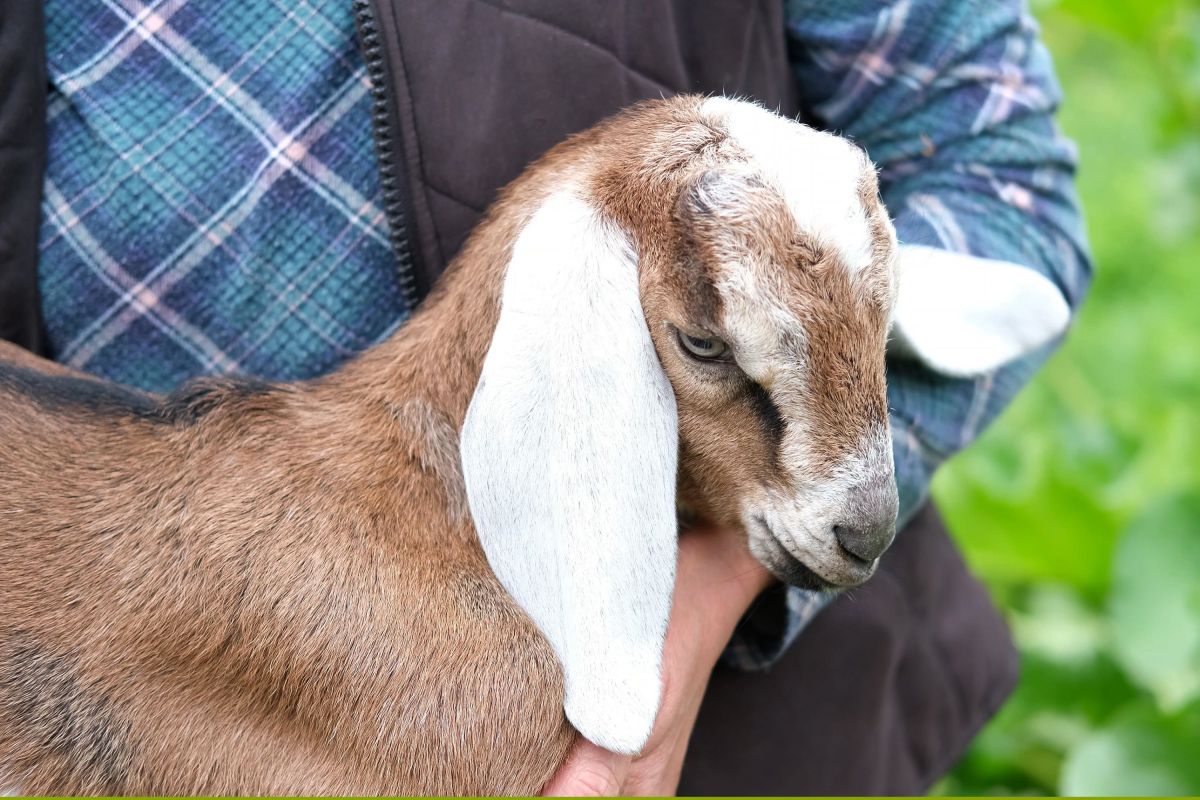
A music video shoot in North Carolina used baby goats that were later found to have rabies after contact with a skunk. Health officials warned people who interacted with the goats to seek medical advice because rabies is a deadly virus spread through saliva.
Key Facts
Baby goats used in a music video tested positive for rabies about a month after filming.
The goats were from Farm Adventures in Harmony, North Carolina.
A skunk entered their pen and bit the goats, spreading rabies.
Three goats tested positive and were euthanized; a fourth was also put down without testing.
The goats appeared at public events in at least seven counties, including assisted living homes and back-to-school events.
People who contacted the goats from late July to late August may have been exposed and should contact health departments.
Rabies is a fatal virus that attacks the nervous system but is rare in humans in the U.S. due to strong prevention measures.
The virus spreads through saliva, usually by bites or scratches from infected animals.
Read the Original
Want the full story? Tap a source to open the original
article.
A man appeared in court after being accused of throwing a bottle at police during an anti-migrant protest in Portsmouth. The protest blocked roads to stop coaches carrying migrants who crossed the Channel, and the man was charged with violent disorder and assaulting a police officer.
Key Facts
The protest in Portsmouth occurred on 6 September at Eastney Marina.
Around 120 migrants who had crossed the Channel were being transported by coaches.
Del Leon Somerville, 42, was charged for violent disorder and assaulting a police officer.
He allegedly threw a bottle at police and kicked one officer in the thigh.
Somerville was remanded in custody and will appear at Portsmouth Crown Court on 16 September.
Groups plan more protests with some banning face coverings to prevent violence.
Hampshire Police used new legal powers to manage protests and keep peace.
Similar actions to limit protests and face coverings are happening in other UK cities like Tamworth and Newcastle.
Read the Original
Want the full story? Tap a source to open the original
article.
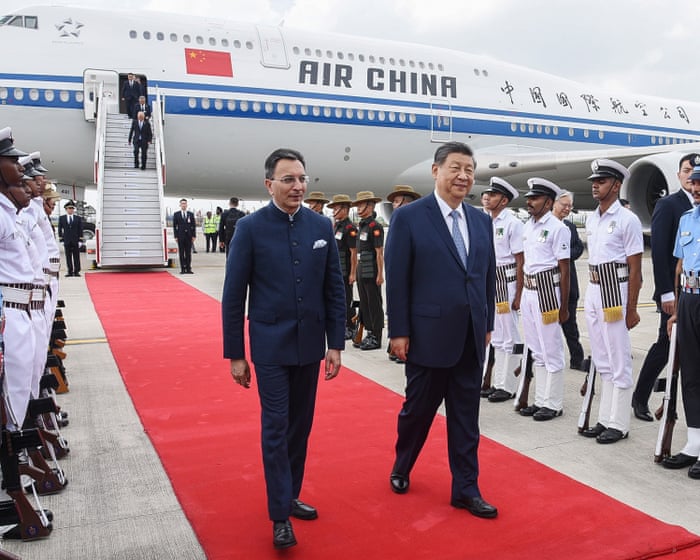
Chinese President Xi Jinping received a formal welcome in India for the Brics summit, signaling a warming of relations between China and India after years of tension following a deadly border clash in 2020. The summit gathers leaders from major emerging economies to discuss cooperation amid global challenges like conflicts in Ukraine and the Middle East and rising US-China tensions.
Key Facts
Xi Jinping visited India for the first time in seven years for the Brics summit.
India and China had a deadly military clash in 2020 with casualties on both sides.
The welcome included a formal honour guard and traditional dance performances.
The summit includes countries like Brazil, Russia, South Africa, and newer members such as Egypt and Saudi Arabia.
Brics aims to counterbalance western-led groups like the G7 and represents half the world's population.
Despite the summit, members have differing views and struggles to agree on all issues, such as recent conflicts involving Iran and Saudi Arabia.
China sees Brics as a way to challenge US global influence, while India prefers it to be a bridge between the west and developing nations.
The summit’s joint declaration condemns all unilateral wars without naming any specific country.
Read the Original
Want the full story? Tap a source to open the original
article.
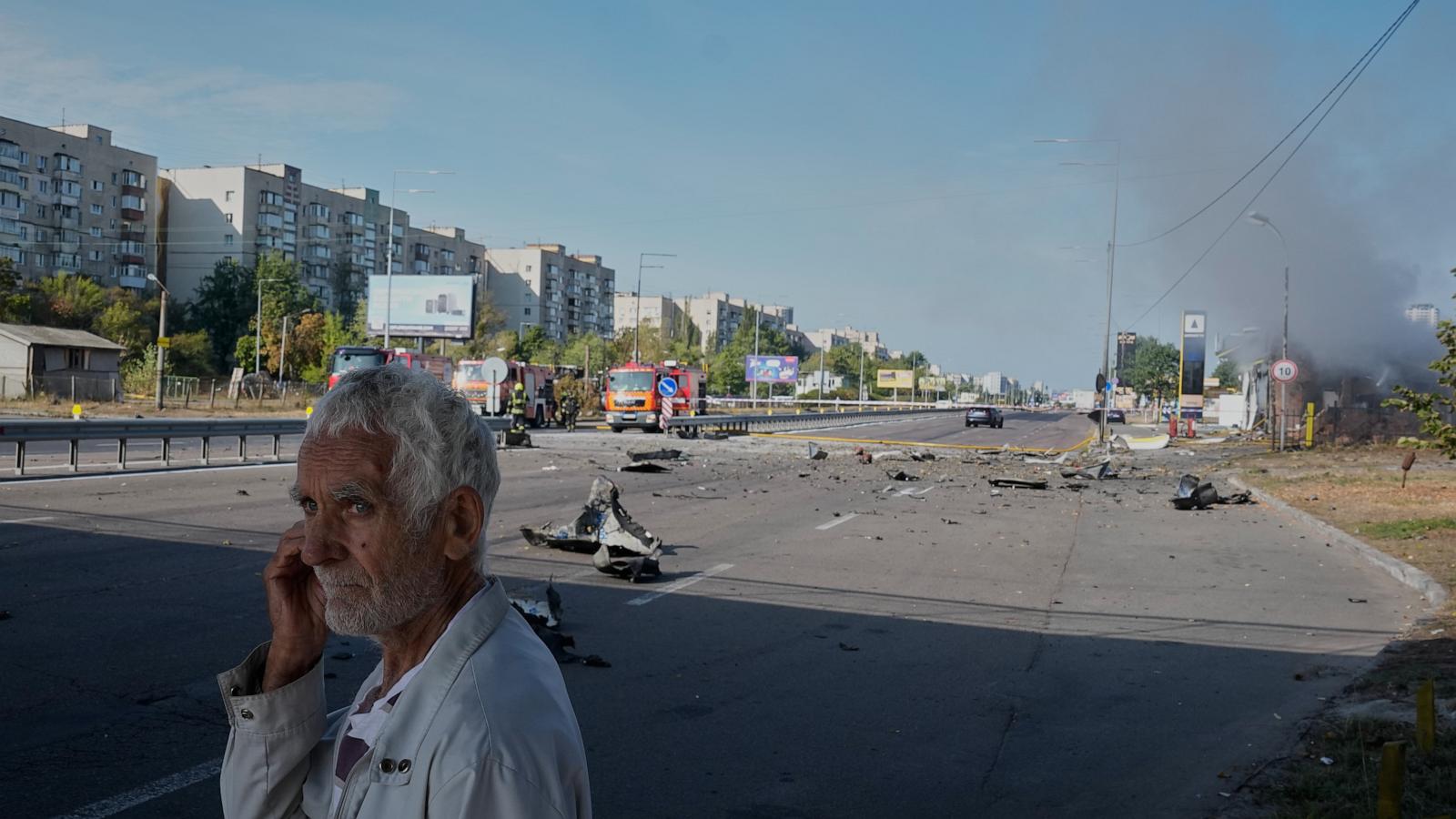
Russian attacks in Ukraine have killed three civilians and injured many others, mainly through missile and drone strikes targeting cities and infrastructure. President Vladimir Putin warned Europe that sending troops to Ukraine would lead to direct conflict with Russia.
Key Facts
Russian strikes used ballistic missiles and drones to hit Ukrainian cities.
Three civilians were killed: two in Zaporizhzhia and one in Kryvyi Rih.
Around 28 people were wounded in a large attack on Odesa.
Russian strikes have targeted Ukraine’s power grid, aiming to affect civilians before winter.
Putin stated that European troops entering Ukraine would mean war with Russia.
Some European leaders have considered sending peacekeeping forces to Ukraine.
Ukrainian President Zelenskyy said he might meet Putin if invited to the upcoming G20 summit.
Incidents near Ukraine’s borders with Poland and Moldova suggest rising tensions in the region.
Read the Original
Want the full story? Tap a source to open the original
article.
This news piece highlights Dolly Parton’s career and contributions. It focuses on her music, acting, style, and charitable work, especially her love for books under the nickname "The Book Lady."
Key Facts
Dolly Parton is famous for her music and acting.
She is known for her glamorous style and public image.
She has a strong history of giving to charity.
Dolly Parton is also called "The Book Lady" because of her work promoting reading and literacy.
The article celebrates both her entertainment career and her philanthropy.
The content was shared by CBS News.
Read the Original
Want the full story? Tap a source to open the original
article.
Oliver was stung by a wasp and his mother, Bailey Cary, first thought it was nothing serious. Soon, his face swelled quickly, showing he had an allergic reaction that needed medical attention. He recovered after treatment and was referred to an allergist to understand his allergy better.
Key Facts
Oliver was stung by a wasp while near a local dock.
His mother gave him Benadryl and an ice pack initially.
Oliver’s face swelled quickly, indicating a serious allergic reaction.
About 0.5% to 3% of U.S. adults may have severe allergic reactions to stings.
Severe reactions can include breathing problems and anaphylaxis.
Oliver got a steroid shot at urgent care and recovered.
The CDC reports about 72 deaths per year in the U.S. from stings, mostly due to allergic reactions.
Bailey Cary now warns other parents to watch for signs of allergies, even if there is no family history.
Read the Original
Want the full story? Tap a source to open the original
article.
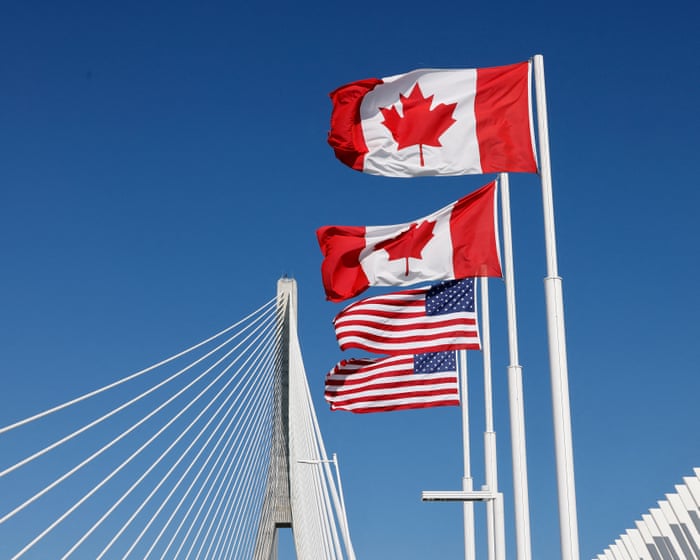
Two neighboring towns on the US-Canada border, Fort Frances in Canada and International Falls in the US, depend heavily on each other for business and social life. Recent trade tensions and tariffs caused by President Trump’s policies have reduced cross-border shopping and increased economic strain in both towns, despite their leaders’ efforts to maintain friendly relations.
Key Facts
Fort Frances, Ontario, and International Falls, Minnesota, are closely connected towns divided by the US-Canada border.
Many residents frequently cross the border for shopping, services, and visiting family.
President Trump’s trade war and critical remarks about Canada have angered many Canadians.
Canadian consumers are buying more Canadian-made products and less from US businesses.
US businesses in International Falls have seen fewer Canadian customers and face added costs from tariffs.
Canada recently applied retaliatory tariffs on US goods as part of the ongoing trade dispute.
Local leaders of both towns remain friendly but cannot control national trade policies causing economic harm.
Both towns hope for an end to tensions but worry about lasting damage to their economic and social ties.
Read the Original
Want the full story? Tap a source to open the original
article.
Kenyan President William Ruto ordered a crackdown on foreign nationals working in small businesses, telling them to leave by September 7. This has caused fear and hardship among many migrants, especially from Burundi, who depend on these jobs to survive and support their families.
Key Facts
President Ruto told foreign small business owners to shut down and leave by September 7.
The crackdown targets foreigners working in petty trade and small-scale jobs in Kenya.
Many migrants, including Burundians, are experiencing harassment and threats.
Some foreign nationals are rushing to border crossings to leave Kenya, with some becoming stranded.
Families have been separated due to the crackdown, causing emotional and financial distress.
Kenya is part of the East African Community, which allows free movement but requires work permits.
Kenyan law allows refugees to work but requires them to have proper documentation.
The crackdown has raised concerns about xenophobia and sparked diplomatic tensions, especially with Burundi.
Read the Original
Want the full story? Tap a source to open the original
article.
A Florida mom found her 3-week-old baby on the couch after her 2-year-old son unzipped the baby’s bassinet and carried her there. She discovered what happened by watching footage from a security camera set up in the living room.
Key Facts
The baby’s name is Everleigh; her older brother is Greyson, who is 2 years old.
Everleigh was asleep in a bassinet with a zip-up mesh cover when Greyson opened it.
The mom, Jessica Fortner, was alone parenting that day while her partner was away.
Security camera video showed Greyson carefully carrying Everleigh to the couch.
Fortner felt a mix of relief and concern watching the footage because Greyson did not support her head and neck.
Greyson said he was “helping” his baby sister.
The mom shared the video as a reminder that kids can be unpredictable.
A survey found many parents use smart cameras and technology to watch their children at home.
Read the Original
Want the full story? Tap a source to open the original
article.
President Donald Trump is visiting Ireland, where protests are planned against his arrival. The comedian Rosie O'Donnell, who now lives in Ireland and has a long-running dispute with Trump, supports these protests and urges Irish leaders to challenge him during his visit.
Key Facts
President Trump arrived in Dublin, Ireland, on Air Force One.
Protests are planned in Dublin, Doonbeg, and Shannon Airport during his visit.
Rosie O'Donnell, who moved to Ireland after President Trump’s 2025 return to office, supports the protests.
O'Donnell and President Trump have had a public feud since 2006, exchanging insults over the years.
Irish president Catherine Connolly is a critic of President Trump and will meet him during the visit.
White House says the visit will focus on economic cooperation, business opportunities, and international issues.
Trump is scheduled to meet Irish Prime Minister Micheál Martin and U.S. ambassador Edward Walsh.
After Dublin, President Trump will go to his golf club in Doonbeg, County Clare, for the Irish Open.
Read the Original
Want the full story? Tap a source to open the original
article.
A commercial pilot named Hanna has found that facts about flying alone do not stop passengers from feeling scared during flights. She combines her experience as a pilot with knowledge of psychology, yoga, and breathing exercises to help nervous flyers calm down.
Key Facts
Many passengers still feel scared on flights despite knowing safety facts.
Hanna has over 28,000 followers on Instagram where she shares her calming techniques.
She began studying psychology and training in yoga and breathwork six years ago.
Fear causes the brain to shut down logical thinking, making facts less helpful during panic.
Deep breathing exercises help reset the mind and body, reducing panic during flights.
Passengers who use her breathing techniques report feeling calmer and flying without panic.
Some people have flown for the first time in many years after following her advice.
Hanna emphasizes understanding and support without judgment for fear of flying.
Read the Original
Want the full story? Tap a source to open the original
article.
Fifa President Gianni Infantino wants to privatize the World Cup by raising $20 billion from private investors, including ties to people connected to President Donald Trump. Infantino's leadership style at Fifa has become more authoritarian, with critics saying he avoids transparency and limits democratic processes within the organization.
Key Facts
The 2026 World Cup brought people from many backgrounds together to watch soccer.
Infantino proposed to privatize the World Cup with $20 billion from private companies like JP Morgan and Thrive Capital.
Thrive Capital is run by Joshua Kushner, brother of Jared Kushner, who is President Donald Trump’s son-in-law.
Infantino has shown favoritism, rewarding associations that support his private funding plan and punishing those that don’t.
Despite Fifa rules limiting presidents to three terms, Infantino says he may run again in 2027 after serving since 2016.
Infantino avoids press conferences and criticizes journalists who ask tough questions.
Some regional soccer groups oppose Infantino, but others, including major organizations in Africa, Mexico, and Qatar, support him.
Infantino is expected to be the frontrunner in the next Fifa presidential election, making it hard to remove him.
Read the Original
Want the full story? Tap a source to open the original
article.
Yemen’s Houthi group has taken control of key locations near the Red Sea, increasing tension in the Middle East. Their recent attacks threaten global trade routes and complicate President Trump’s efforts to manage conflicts involving Iran and Saudi Arabia.
Key Facts
The Houthis are a non-state movement from Yemen, one of the world’s poorest countries.
They recently captured the port of Mokha and Mayun Island near the Bab el-Mandeb Strait, a vital waterway for global trade.
Around 12 percent of global trade passes through the Bab el-Mandeb Strait.
From late 2023 to late 2025, the Houthis attacked more than 100 commercial ships, affecting over 60 countries.
Oil flows through the Strait of Hormuz dropped sharply between late 2025 and mid-2026, while flows through Bab el-Mandeb increased as Saudi Arabia shifted routes.
Iran demands that U.S. negotiations on regional conflicts include ending attacks by its allies like the Houthis in Yemen.
Saudi Arabia faces significant damage to its oil infrastructure due to recent Houthi attacks.
Saudi Arabia joined a defense agreement with Turkey and Pakistan as tensions rise in the region.
Read the Original
Want the full story? Tap a source to open the original
article.
El Niño is a climate pattern that warms the Pacific Ocean and changes weather worldwide. This year, forecasters say it will become very strong, likely causing more rain, flooding, and storms in U.S. cities like Los Angeles, Atlanta, and Houston during fall and winter.
Key Facts
El Niño is the warm phase of a Pacific climate cycle called ENSO, which affects global weather.
There is over a 90% chance El Niño will strengthen through the end of 2026 and winter 2027.
Cities such as Los Angeles, San Francisco, Houston, and Atlanta may see heavier rainfall and flooding.
Strong storms could also hit East Coast cities like Norfolk, Atlantic City, and Boston, causing coastal flooding.
The National Oceanic and Atmospheric Administration (NOAA) predicts warmer temperatures across much of the U.S. this winter.
Wetter-than-normal weather is expected in Southern California, the Southwest, southern Plains, Gulf Coast, Florida, and parts of the East Coast.
The chance El Niño will reach historic strength this fall is now 75%, higher than earlier forecasts.
While a strong El Niño raises the chance of typical weather effects, these impacts are not guaranteed.
Read the Original
Want the full story? Tap a source to open the original
article.
The conflict between the United States and Iran is intensifying, causing political difficulties for both countries' leaders. In the U.S., President Donald Trump faces growing opposition within his own political base over the war, while in Iran, President Masoud Pezeshkian is challenged by hard-line rivals as he continues to support diplomacy.
Key Facts
The U.S. and Iran are involved in an open war that began on February 28, with joint efforts from the U.S. and Israel.
President Trump has changed his messages about U.S. goals in the war but has avoided setting a deadline.
Mid-term elections on November 3 weigh on Trump, as many Republican voters and some MAGA supporters are unhappy with the war.
Democrats have gained votes in special elections during this conflict, while Republican enthusiasm is declining.
Prominent right-wing figures have criticized President Trump for not keeping his promise to avoid new wars.
Most Americans (about 56%) oppose the war, and only around one-third approve of Trump's performance.
Iran’s political system shares power among several leaders, including the president and the supreme leader.
President Pezeshkian supports diplomacy with the U.S., but hard-line factions in Iran want to remove him.
Read the Original
Want the full story? Tap a source to open the original
article.
President Donald Trump visited Ireland for two days and met with Ireland’s president, Catherine Connolly, despite her previous criticisms of him. Connolly has expressed concerns about Trump’s policies, especially related to international conflicts and U.S. support for Israel during the Gaza war.
Key Facts
President Donald Trump arrived in Ireland by Air Force One for a two-day visit.
Irish President Catherine Connolly has called Trump a "bully" and criticized his policies.
Connolly said she would still meet Trump if he visited Ireland, despite disagreements.
Connolly has expressed distrust in America’s international actions, highlighting issues with U.S. foreign policy during debates about Ukraine and Gaza.
Trump was scheduled to meet Connolly, Irish Prime Minister Micheál Martin, and U.S. Ambassador Edward Walsh.
Trump planned to visit his golf course in Doonbeg, County Clare, during the visit.
Sinn Féin, the main opposition party in Ireland, planned protests against Trump’s visit, focusing on U.S. support for Israel.
Thousands were expected to attend a demonstration in Dublin during Trump’s visit.
Read the Original
Want the full story? Tap a source to open the original
article.
President Donald Trump visited Dublin, Ireland, for talks with Irish leaders and to watch the Irish Open golf tournament at his golf club in Doonbeg. During his visit, he met with Irish President Catherine Connolly and Prime Minister Micheál Martin and spoke to U.S. and Irish business leaders.
Key Facts
President Trump arrived in Dublin for a weekend visit focused on meetings and the Irish Open golf event.
He held talks with Irish President Catherine Connolly and Prime Minister Micheál Martin.
Trump gave a speech to U.S. and Irish business leaders at the U.S. ambassador’s residence in Dublin.
After meetings, he traveled to his golf club in Doonbeg on the west coast of Ireland to watch the Irish Open.
Police created security zones around key locations, including Phoenix Park and government residences.
Some local residents and groups protested his visit due to his political views and actions.
Trump regularly attends golf events at his properties and has hosted professional tournaments at his clubs in the U.S. and Europe.
The Irish Open is the second European golf event held at a Trump-owned property this year, following one in Scotland.
Read the Original
Want the full story? Tap a source to open the original
article.
President Donald Trump arrived in Dublin for a two-day visit to Ireland. During his trip, he will meet with Irish leaders, attend business meetings, and play golf at his Doonbeg golf resort.
Key Facts
President Trump landed in Dublin on Air Force One, a Boeing plane gifted to him by the Qatari royal family.
The plane, worth $400 million, had previously raised security concerns after a reported threat during a trip to Turkey.
In Dublin, Trump was greeted by the tánaiste (deputy prime minister), Simon Harris.
He will meet Irish president Catherine Connolly, known for her criticism of Trump, and later the taoiseach (prime minister) Micheál Martin.
Trump will also meet American and Irish business leaders at the U.S. ambassador’s residence.
The visit coincides with the Irish Open golf tournament, held at Trump’s Doonbeg golf course.
Some Dublin residents expressed frustration that Trump is playing golf while global issues continue.
Read the Original
Want the full story? Tap a source to open the original
article.